Vietnam Cobra

excellent information, snakedriver…

I’ve found a lot of emails and such from my father…I will try and post a few if people are interested.

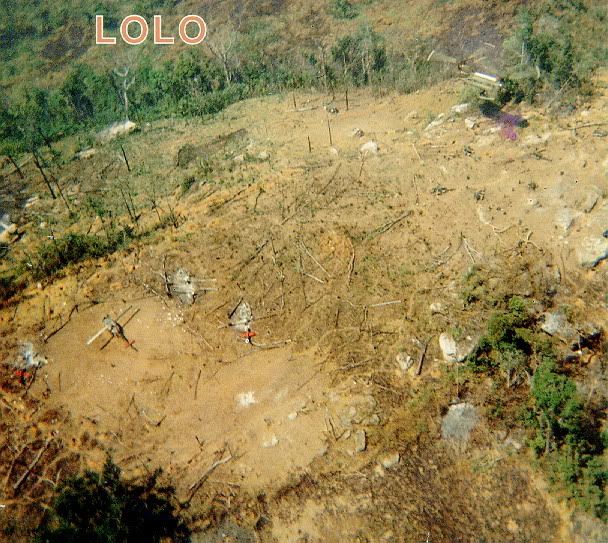
This is his response to this photo of LZ Lolo, in Laos, during Lam Son 719…this photo is cut and pasted from the 174 AHC website;

(CW4 (ret) Barry Martens wrote; )

I’m not sure of the details… I do remember flying gun cover for Lolo several times and I definitely remember 5 slicks buringin in the LZ. I remember a total of 8 aircraft going down on one mission. If I added this account up correctly there are 7 counting the Charlie models. Might have been one or more that didn’t make it back to base.

An awful lot of confusion during these operations as soon as the shooting started. Many times there was no shooting until one or more slicks were in the LZ. The all hell would break lose. The bad guys figured they could choke the LZ if they could cripple a couple of Hueys in the middle of the LZ. Sure made it harder for the next Huey to get in there to start extracting crews.

This happened many times in Laos.

DAD

this is regarding the battle damage reports that can be found on the www these days. This adds further information to them;

(CW4 (ret) Barry Martens wrote; )

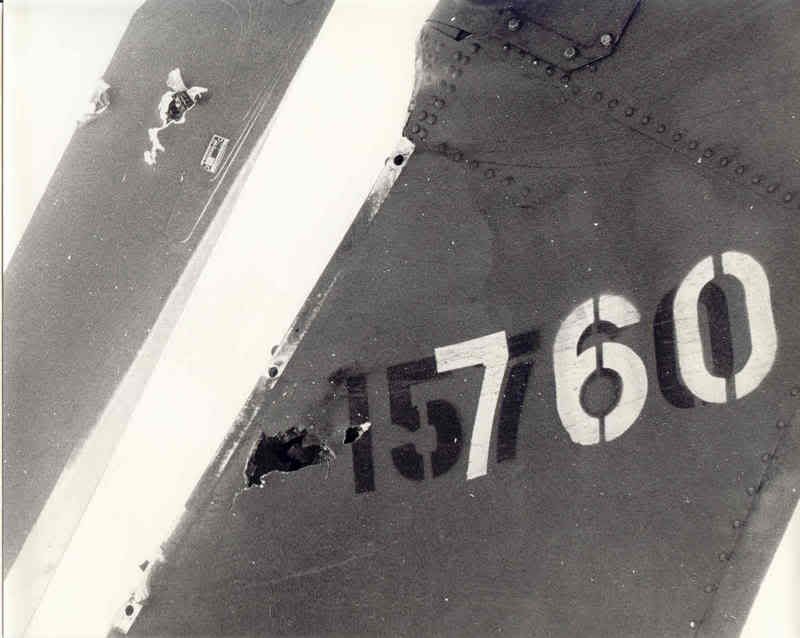
This is one instance of battle damage that was not listed. It was 67-15760 with the #5 driveshaft and tail rotor control shot out. That is not even mentioned in the aircraft history and the picture certainly tells a different story. 67-15760 is one of the aircraft that was lost in the midair collision and I think that is correct.

The oil cooler was 68-15153 and the day after that there was 68-15018 with a hole in the transmission. We made it back to the border with the transmission problem, primarily because of the day before and going down about 25 miles inside Laos. We decided that we would get back as close to the border as we could and kept going until there was no oil pressure at all.

The oil cooler will bypass after you lose a few pints of oil and when it does the oil temperature goes through the roof. It only takes a few minutes to cook and engine and then you have a bigger problem than a bad LZ. That would be no choice in which bad LZ you pick and no engine. No transmission is pretty bad too but, there is time to work things out, point it towards home and get on the deck so you can land quickly.

I think they have 68-17025 listed as a hit in the tail rotor and that is the wrong aircraft.

Lets just say that the record keeping is not very good.

DAD

(in an earlier response, CW4 (ret) Barry Martens wrote; )

These records are interesting but, incomplete to say the least. I recognize several tail numbers and the incidents. A couple are mine. I know the oil cooler landing was one I made. They aircraft was in good shape but, mortar and small arms sent it back to the states.

There was another aircraft that we set down in Laos that made it all the way back to Phu Bai and Chinook dropped it on shor final, oscillating load they said. I think the flight engineer kicked the cargo hook release to soon.

It landed on the PSP they were aiming for, just a little bit to soon.

The other was a midair collision that I just happen to witness. We lost 2 ships that night and all on board were killed. Weather closed in before we could get to the crash sites and it was 7 days before we could get back in the mountains to get the bodies out.

DAD

(link to official report)

http://www.flyarmy.org/incident/71070301.HTM

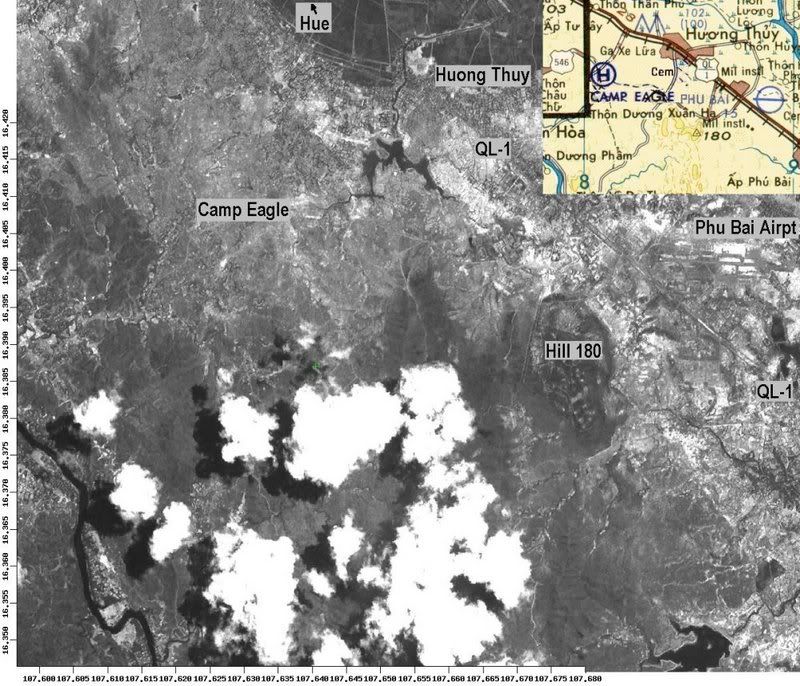
this is an overview of the phu bai / 101st / I corp AO

(CW4 (ret) Barry Martens wrote; )

This shows that Eagle is directly off the runway at Phu Bai to the West and the whole Phu Bai/Camp Eagle complex is South of Hue city.

Hill 180 is Gia La mountain and there was an outpost up there and all of the artillery was controlled from that location. Every time we pulled pitch for the AO our first radio call was to “Gia La Arty” to get all current fires from all of the firebases. To head out the highway toward the A Shau Valley you take off West and hang a left around Gia La mountain. We couldn’t fly over the mountain because it took several miles to get any altitude because we were loaded too heavy. Had to have as much airspeed as possible and try to maintain a couple hundred feet a minute climb so we could get to where we needed to be as quickly as possible.

By the time we reached the mountains to the West were could get up to 3000-4000 feet. If we had to go all the way to the A Shau Valley we needed to get up to 6000-7000 to have safe clearance over the mountains surrounding the valley, especially on the North end.

DAD

further info regarding phu bai;

(CW4 (ret) Barry Martens wrote; )

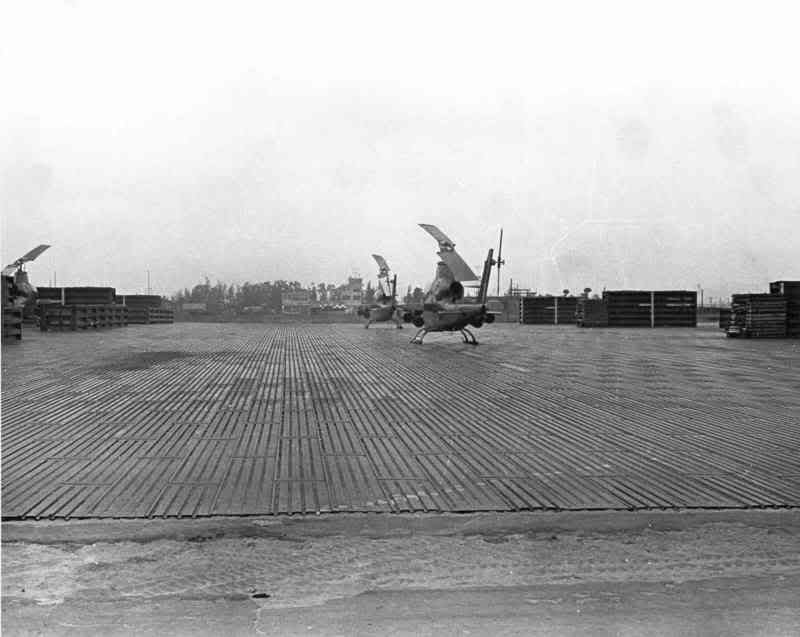
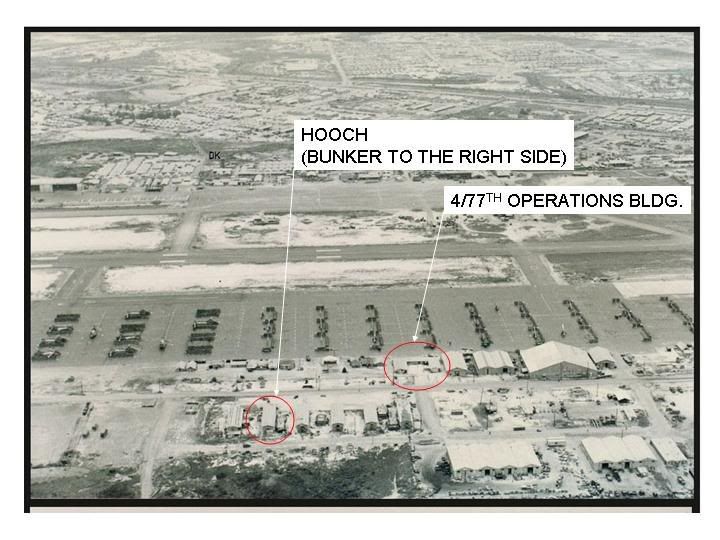
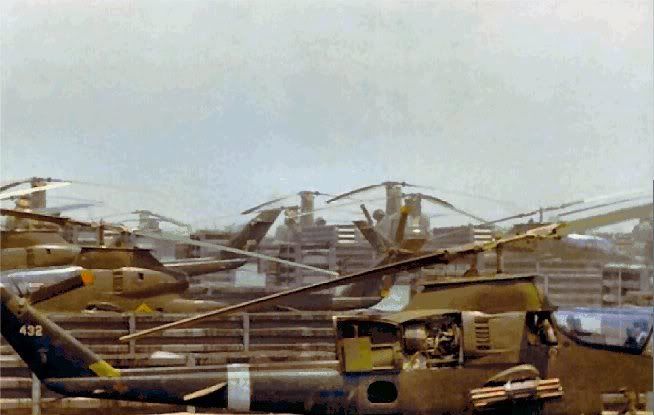
Here is a shot right out the door of the operations building looking straight across to the tower. We had 3 rows of revetments to the left and one to the right for our Cobras. D/101 had the next 4 rows and after that was C/101 [Black Widows - lift unit and then after that was the CAV].

The CAV was all the way on the West end and the Chinooks were on the East end. If you took off due West it was about a 3-4 minute flight to Camp Eagle.

The Mohawks were across the runway to the East of the tower along with the bird dogs, Cat Killers, and the 85th Evac was West of the tower.

DAD

regarding Lam Son 719; CW4 (ret) Barry Martens wrote;

"We didn’t get assigned to the full operation on a big lift and stuff like that. We would fly the LZ prep and escort and then we would be off to Khe Sanh for fuel and rockets and on to the next mission. They had ARA bouncing around all over the AO and we would hardly ever come back to the same target right away after refueling. Another section would be inbound as we were pulling out. We’d brief them on the radio and then go on to the next mission.

We worked heavily with the ARVN’s on the firebases and scattered around on the ground. As you can tell from the other’s accounts and the record, there aren’t very many of those guys left to tell the stories. We would fly 10 to

25 sorties per crew during the daylight hours and then we had quite a few night calls. Nobody liked the night missions at all and we never really knew if we were doing any good or not. We tried to find the good guys and attempted to shoot where they needed the fire. I guess it was successful if there was anybody still alive in the morning because we managed to keep them alive through the night. It seems like Khe Sanh would get socked in just about every night sometime between midnight and first light. The fog would roll over the place and it would be zero-zero for several hours. If you didn’t make it back before the fog you had your hands full trying to climb out over the ridge and make it back to Quang Tri, already low on fuel. It was the longest 30 miles in the world having already flown 10 minutes into your 20 minute fuel light. You made one attempt to make it into Khe Sanh and if you didn’t make it you better sky up and head toward the beach.

There were many days where the smoke was so bad it was practically IFR. The smoke was from the bombing, artillery, rockets and all the fires we started.

We would have to climb out to 7,000-8,000 feet to get on top of the smoke and then spiral down when we reached the target area. You could work low or high and not much in between. Like I mentioned earlier, we had about 700lbs of fuel, 76 10lb rockets and whatever 7.62 and 40mm we could carry. That equated to about 45 minutes of air time, max. You hustled to the target, made contact with the ground guys, expended your ordinance and headed back for more fuel and rockets. We never brought any ammunition back. It was a full load each trip no matter what. If you couldn’t find your target or make your mission there was always somebody calling for fire somewhere so we had something to shoot.

At night you felt like you could walk on the AA fire. They had everything, 37mm, 57mm, 100mm and it was streaking into the sky in every direction.

Thank goodness they were mostly trying to hit the Air Force and Navy guys but, they usually had a few rounds for us. We were normally to low for the heavy stuff anyway and you just hoped you didn’t get in between them and the Air Force guy they were trying to hit. During the day, with all the smoke and haze, you couldn’t see the heavy AA fire and that was a good thing.

When it came close though, you could hear the rounds go by and going off.

Our biggest challenge was the smaller caliber machine guns, 12.7mm, 14.5mm and 23mm. You could not get low enough or high enough in a helicopter to get out of range. If you were real high they would not shot at you as much, probably because they knew if they waited a little bit you would come down lower, well within their reach. They were real good at setting up triangles of fire and drawing you into the middle gun and the others would open up when you started to break out of the dive. Pretty vulnerable when you were breaking out and it was up to the wingman to lay back far enough to cover your break with some good area fire. A good wingman could send a couple pair of rockets at each position in a few seconds if he was positioned just right. That would distract them long enough for you to turn away. If your wingman was a dork, he would be out of position, following your same path and then there would be nobody to cover his break. You just had to be in position to shoot all the time no matter who or what you were covering."

DAD
regarding night flying and fire missions, CW4 (ret) Barry Martens wrote;

"Big problem over there at night. This was long before night vision devices where even a dream. They had starlight scopes for rifles and that was the best there was at the time. You flew in basically total darkness unless there was a moon. When you got to the target area you would start getting artillery, mortar or hand flares for illumination. If it was a big operation you might get a Huey flare ship dropping flares or, if it was really big, you might get a C47/C119/C130 dropping the big flares.

Worst case scenario was no flares and a guy on the ground with an Army flashlight giving you a “wink” to go by. You’d fire rockets with one eye closed and the switch eyes to pull out of the dive. Kept switching eyes until you were done. Rockets just light up the whole world and if you messed up and kept both eyes open you were effectively blind for a couple minutes. It was hard to even read the instruments to pull out of the dive because all you could see was big red spots. Muzzle flash from the minigun was almost as bad and we also had one aircraft with twin miniguns for a while. The muzzle flash from a twin would cause almost as much trouble as rockets.

After your first shot for the guy with the flashlight all you hoped for was that he answered the radio. If he didn’t you hit the flashlight."

DAD

regarding weapons and tactics, CW4 (ret) Barry Martens wrote;

"The whole idea behind the 20mm was to get the standoff range for the 12.7mm.

The only problem, the bad guys would set-up in gulley’s or ravines and the only way you could get to them was in a dive. Then you were head to head again and it was the ultimate game of chicken. The 20mm has a max effective range of way less that 2000 meters. Tracer burn out is just over a 1000 meters so it was hard to shoot in the jungle. Once the tracers burn out the only way to adjust your fire was to watch for the round burst on impact. In triple canopy jungle that was next to impossible. Not many of the 20mm ships were deployed because they just didn’t work that well. Plus it was very heavy. They finally took off 3 barrels and lightened it up a lot for the turret. Big heavy gun, bad recoil, devastating muzzle blast, relatively small amount of ammo and limited range. Not the best combination.

The combat sight setting a 50 cal, or 12.7mm, was 2500 meters. It was good to 3000 with the right gunner. That’s 10,000 feet of air you needed to be completely out of range. Not enough air for a helicopter, and a slow target to boot.

Good rocket shooting was the best in these situation. You could let them loose anywhere inside of 4000 meters hit the target if you were good. The guys in the pit still required a dive and you could easily lay in 10-15 pair on a dive with your wingman following up with just as many. If you had a few pair of nails on board so much the better. When the red powder started popping overhead everybody that saw it go down in their holes. They covered such a large area with devastating effects. You could get home early if you have a few pair of nails on board.

When we were not going out for troops in contact we normally carried 3 pair of nails in the first 3 holes of the outboard pods. We could control what we shot by starting with the outboard nails if needed or go with inboard 10lb warheads and wait to see what happened. Sometimes we could use the nails and we would have to move off target and bury them in the jungle.

Usually they guys on the ground would have a target for you when they found out you had nails onboard. If the friendlies weren’t to close we would always find a home for the nails."

DAD

Phantom,

Great info there, makes for a very interesting read, thanks to you and your dad. I just been reading through the stories about LZ Lolo on the 174th AHC site you mentioned, its mad! all those hueys going down in one LZ. I listened to an interview with a guy from the infantry The other day and regardless of all the patrols, he never saw the enemy or fired his rifle during his entire tour, then there’s other guys who were upto their eyeballs in it, its all mad. The more i read about Vietnam the more i grow to respect the guys who were there.

Another thing i keep coming across, that’s a bit shocking is the amount of pilots and crew who ended up being killed by their own rotor blades, i never realised this was such a common problem, its so tragic. From what i’ve read it mostly happened when fleeing from a downed helo while under fire when i suppose caution and training kinda take second place to bullets buzzing all around you. But i’ve also read alot about people walking into the tail rotor while back at base.

Jon,

just out of curiosity is this still a problem today? or are things a bit better?

Taking things back to modeling has anyone got any pictures of their cobra builds to add on here, would be great to see what you guys have done with your snakes [:)]

Thanks

Andy

Andy,

Unfortunately, no. There was an incident last year, where a newby lieutenant jumped out of his blackhawk at Ft. Campbell, thinking the aircraft was on fire. He ran uphill within the rotor disk. Results were not conducive to continued operations.

We have issues with forward cyclic at times, and it is possible to dip the rotor disk so far forward that you knock the PNVS turret off the airframe. Record right now is 635 feet from the nose. That’s one I don’t plan on trying to beat, especially because if the rotor blade hits the PNVS, all the pilot has to do is sneeze and the next thing it hits is my noggin…

Jon

I can see some fundamental reasons for different ARA tactics between 2/20th and 4/77th. The 101 guys had to deal with more severe terrain problems than we did. Our AO was pretty flat with a few rolling hills under the jungle cover. I don’t think our base at Quan Loi was much more than 500 feet above sea level. Until we started working the II Corp fringe, we only had to deal with three “Bumps” in the ground; Nui Ba Den near Tay Ninh, Nui Ba Ra near Song Be, and Nui Chau Chan near Gia Ray (FSB Mace). We normally flew with 900 pounds of fuel versus the 700 pound standard load your dad mentions which gave us 70 minutes of flying time with a twenty minute reserve. We worried about density altitude, but not as much as the 101 guys. We would normally depart at low level and as high a cruise as possible and wait until we were close to the target and had burned off some gas before climbing to attack altitude. We didn’t have to dig the NVA and VC out of ravines or gullies therefore we could use some pretty tame angles of attack and use the covering effect of the jungle foliage to disrupt the enemy’s view of our aircraft. Our SOP directed that we were to break at 1500 feet. That altitude restriction was observed only on our aircraft commander check ride. As far as shooting from 4000 meter range (12,000 feet), I don’t think any of us could see that far! We liked to get close, stick the gun up their nose and pull the trigger! I recall several contacts when we got so close the rockets didn’t have time to arm before impacting. On one mission I hovered at 50 plus feet over our guys doing pedal turns while we dipped the nose and fired rockets at bunkered bad guys. Our guys had run out of smoke so I “volunteered” to mark their position for Air Force fast movers and my wingman. Rockets are darned scarey when they are being fired in front of your nose. I got a new dose of respect for what the grunts went through when we were shooting “danger close”.

The DShKM - 38/46 and Chicom derivitives of this 12.7 mm heavy machine gun had an EFFECTIVE range of about 2500 meters ( it could still reach out and hurt you from greater distances) with tracer burnout occuring sooner. You need to take into consideration that the condition of the ammo and gun could also affect range. Effective range of the 20mm was slightly less, but a heck of a lot better than the minigun or chunker. The 12.7 mm was a heavy gun with a low rate of fire. In a one-on-one fight with the 20mm, we never lost. The tough stuff came when a pilot got complacent or careless and was ambushed by a multiple gun site. I don’t ever recall firing rockets from a slant range of more than 1500 meters (that’s 1.5 kilometers) except on TOT missions with three other aircraft. We could have fired from greater distances at steeper angles, but we didn’t need to. If you are dodging hills and ridges, you need to be light and steep.

In talking to 101 friends we always compared tactics and preferences. I think they preferred the 10 pound rocket warhead which had less “bullet drop” than the 17 pounder. We were able to get in close so I preferred the bigger boom of the 17 pounder. Everybody loved nails. During the Cambodian operation, when attacks on forward fire bases occurred almost nightly, we kept one aircraft in each section loaded with nails outboard. At low angles and altitudes the “spread” would cover a huge area.

My main interest is Vietnam era Hueys, but I couldn’t resist a chance to post a few snake pics. This bird belonged to the 334th AHC at Bien Hoa. The pics are from Dec '68. Maybe Cobrahistorian could elaborate on the pariculars of this bird, since he knows as much about these early cobras as anyone. As I understand it, this should be an early variant of the G model with the landing light in the nose. Also, is there a specific name for this loadout (two minigun pods and two 19-shot rocket pods)? I believe that the FFAR rocket my father is holding has a 17lb HE (high explosive) warhead (please correct me if I’m wrong). [Note, Cobrahistorian informs me that I am wrong and the warhead is actually 10lbs. (thanks Jon).] I hope these are of interest to some of you.

Ray


Those of you who are very observant may have noticed the Aussie kangaroo just below the CPG position. Cobrahistorian has indicted to me that he has at least heard that some 334th birds carried Aussie front seaters. Perhaps he would be so kind as to elaborate on this photo if at all posssible.

Ray,

GREAT pics! From what I can tell, that’s 67-15454, or the 4th bird in the second production block of AH-1Gs, or the 122nd one built overall. Loadout seems fairly standard for the mid-1968 time frame that you mentioned. The rocket your dad is holding is actually a 10lb’er, the 17 has a much longer warhead.

Interesting, the landing lights in the nose have been removed.

Fantastic stuff!

Jon

Jon,

Thanks, I figured you would know something about the aircraft. Thanks for the info. I fixed my original post to reflect the correct info about the warhead. I totally missed the missing landing lights. So there’s no name for the armamant configuration above (i.e. hog, heavy hog, frog, etc.)? Do you have any more info about the Aussie roo under the CPG position? Also, in the third photo it looks as if the tail rotor is missing.

Ray

I find it difficult to believe, but i seem to have run across a AH-1 video that skypirate missed:

http://www.youtube.com/watch?v=28RpUmrtGHE

http://www.youtube.com/watch?v=KWZ5qv1hOXo

This two part video covers the development of the AH-1G and includes lots of interesting facts and footage, including info on the SCAS system which eliminated the blade counterweight from the 540 rotor system in the AH-1. Anyway, I found it of interest so I thought I would post the links.

Ray

Ray

Thanks for the links. Great pictures of your dad with the cobra btw. Its great to see results of the work your doing with your dads negatives, i bet its bringing back some forgotten memories for him.

Thankyou so much for sharing them with us.

Andy

P.S. As far as the Roo on the cobra, the only place i have seen that symbol is on the nose of most RAAF 9 sqdn Bushranger huey gunships

Under the numbers on the nose.

Andy

one more regarding a possible marking on the doghouse of a cobra picture he has on the re-arm pad, I highlighted the snippet I think most of you will find interesting…

(CW4 (ret) Barry Martens wrote; )

I can’t make it out. I really don’t remember if we had any aircraft with a dragon patch painted up there. We did get a few birds from down south and they had a blue max Maltese cross on them. We lost all of those birds in Laos and it is possible that they rearmed a few times at the dragon pad.

Hard to say. If there is a red arrow it is in the shadow. I can’t make out the tail number either.

DAD

Just a guess on the Roo - maybe it was just grafitti. We had some aircraft “tagged” like that by the Aussie when we worked with them in East Timor.

you know, being an aerospace design engineer, I’m probably just as fascinated with the bell people that designed the original cobra as I am any other part of the story…John, if I remember correctly, your book mentioned they brought in a consultant, or a contract engineer who had done design for cessna. I forget the man’s name. But knowing how things work still today…the actual outer moldline shape of any aircraft is still determined by a very few people, sometimes a single person, putting pen to paper (or in this day and age by computer)…I’ve worked on teams where one guy did the configurating, and I’ve worked on teams where it was two guys…but that’s about it. Too many cooks spoil the stew otherwise, until you get down into the nitty gritty of production layout and detail design…anyway, back to the bell cobra story, I wonder if this man wasn’t the main driver behind the shape of the original…and the reason I say this, in part is because I’ve always noticed what are for lack of a better word “similar engineering artistic tendencies” between the lines of the orginal cobra and the lines of various cessna products…for instance, the sheer view of the fins for each has a similar look and feel (as in, the same guy drew them both)…you see, an aircraft (or helicopter, or car, or skyscraper, or etc, etc) starts it’s life as a piece of art…it’s based on science and engineering but it is essentially art.

do you know enuff of the history to follow up on these thoughts???

235th AWC Death Dealers

334th AHC Playboys

I only have eyes for the AH-1G

Dear Jon

I could recently buy a Zippo lighter (made in 1970) with the NETT patch engraved on the frontside and the engravings “AL SNAKE 16” on the back. I am wondering if there is a way to trace the original owner.

Best regards

Rolf