Rinji new wo moshi agemasu. Rinji news wo moshi agemasu.
Aoshima no Gojira puramoderu wa Ginza hoomen ni mukatte imasu.
Daishikyu hinan shite kudasai. Daishikyu hinan shite kudasai.
Godzilla (2023) (Plastic model) - HobbySearch Gundam Kit/etc. Store
Rinji new wo moshi agemasu. Rinji news wo moshi agemasu.
Aoshima no Gojira puramoderu wa Ginza hoomen ni mukatte imasu.
Daishikyu hinan shite kudasai. Daishikyu hinan shite kudasai.
Godzilla (2023) (Plastic model) - HobbySearch Gundam Kit/etc. Store
Your Jack is looking very good I have to say dadoffour. The problem with looking at other people’s Builds is that it makes me want to build the same thing and the next thing you know I’m gonna have a shelf full of half started kits – oh wait I already have that 
I know what you mean. Every time I see a cool build, I start looking for that model on eBay. I have at least a dozen in my eBay watch list right now.
Enjoying the builds and wondered if it would be ok to enlist with an Otaki 1/48 Zero build?
Scratch one Oscar.
 rtftab by Eric Bergerud, on Flickr
 rightrearbad by Eric Bergerud, on Flickr
The Plane:
Years back I wrote a book about air warfare in the South and Southwest Pacific so I did a lot of reading about the Ki-43 Oscar and interviewed some pilots of 5th AF who fought the thing in New Guinea. (Unless an USAAF fighter pilot served very early in the war or took part in one of the rare raids on Rabul in October 1943 they would never have seen a Zero. So it was the Oscar or Ki-61 Tony that was the opponent. When 5th and 13th AF combined to make FEAF in mid-44 all bets were off.)
There were three aspects of the Oscar that can be rated good. First, it was almost certainly the most nimble fighter of WWII. Robert DeHaven, a triple ace with the illustrious 49th Fighter Group, told me he saw an Oscar do a “double Immelmann” - that’s an aerobatic maneuver and not intended for a prop powered fighter. It was light, had extremely low wing loading and sported “bitterly flaps” which meant you didn’t want get into a turning match with an Oscar. Second, like all IJ combat planes it had very good range - not quite what a Zero could do, but long legs even without a drop tank. Third, the Nakajima Sakae double row radial engine used (also found in the Zero) was within the capabilities of Japanese industry to produce and proved a reliable power plant - probably the only engine that would have met the allied (or German) definition of reliable. Like the Zero it was well designed and did not put unneeded burdens on Japanese ground crew who were not always the best. Consequently the Oscar was built almost to he end of the war - long after it should have been retired.
Everything else was bad. Even the late model Oscars (like Ki-43 II in this build) could only do about 330 mph at 12,000 feet. That made it the slowest plane in the theater. I’ve read that the Oscar could match the P-40. I have no idea where that idea came from. Even a P-40B - as flown by “Flying Tigers”, much less anything after, was faster at all altitudes and could dive away with ease. When Oscars came up against P-38s, P-47s and Mustangs they were in trouble. In theory a Ki-43II had armor and self sealing fuel tanks. Well, that was the theory, but the Japanese never made a good self-sealing tanks and armor would, if lucky, be proof against a rifle caliber MG. That meant the Oscar, like the Zero was not only fragile, it was also a “burner.” When the Oscar I was first deployed it carried twin .303 MGs - the same armament as a Sopwith Camel. The Oscar II was given twin .50 cals - a real improvement but feeble when facing the six .50s of a P-40, the eight 50s of a P-47, or the wicked 4 50s plus a 20mm “mike mike” cannon center fired from a P-38. Add to that the huge speed advantage held by the second generation US fighters over 15,000 feet and that puts the Oscars in a very bad situation. And it showed. After the nasty victory at Buna in January 1943 5th AF (ably assisted by the Aussies) started their brutal air assault up the coast of New Guinea against the IJAAF. It was not a contest. The worst day of the entire campaign for 5th AF was caused by an unexpected typhoon. When it came to air combat the Japanese were … crushed, and easily crushed. The Oscar did pretty well when fighting over the skies of China where opposition was much weaker. Mind you, any WWII fighter was potentially dangerous. An Oscar bounced a 4 plane element led by the second ranking US ace Tom McGuire - McGuire tried to come to the assistance of the plane under attack at low altitude without releasing drop tanks and stalled into the water. But it was a rare day for an Oscar to bounce low flying US aircraft - the opposite was far more likely. So the Oscar was a graceful aircraft (it did not have, in my eyes, the beautiful lines of the Zero) but belonged in a different war. So did Japan when you get down to it.
The Kit:
I’ve already noted that I’m a Hasegawa liker but not a lover. By and large the fit was pretty good. But the Hasegawa engineers did make some odd decisions. As every reviewer noted the wing tips cut into the ailerons for no obvious reason. I did not like the fit of the “bitterly flaps”. The instructions are not very good. Maybe I’ve built too many Tamiya kits but it’s very nice to see what an assembly should look like when it’s assembled. No luck here. I guess they’re better than Dragon and on a par with older Eduard instructions - but there were a few occasions when I was glad to check video builds on YouTube.
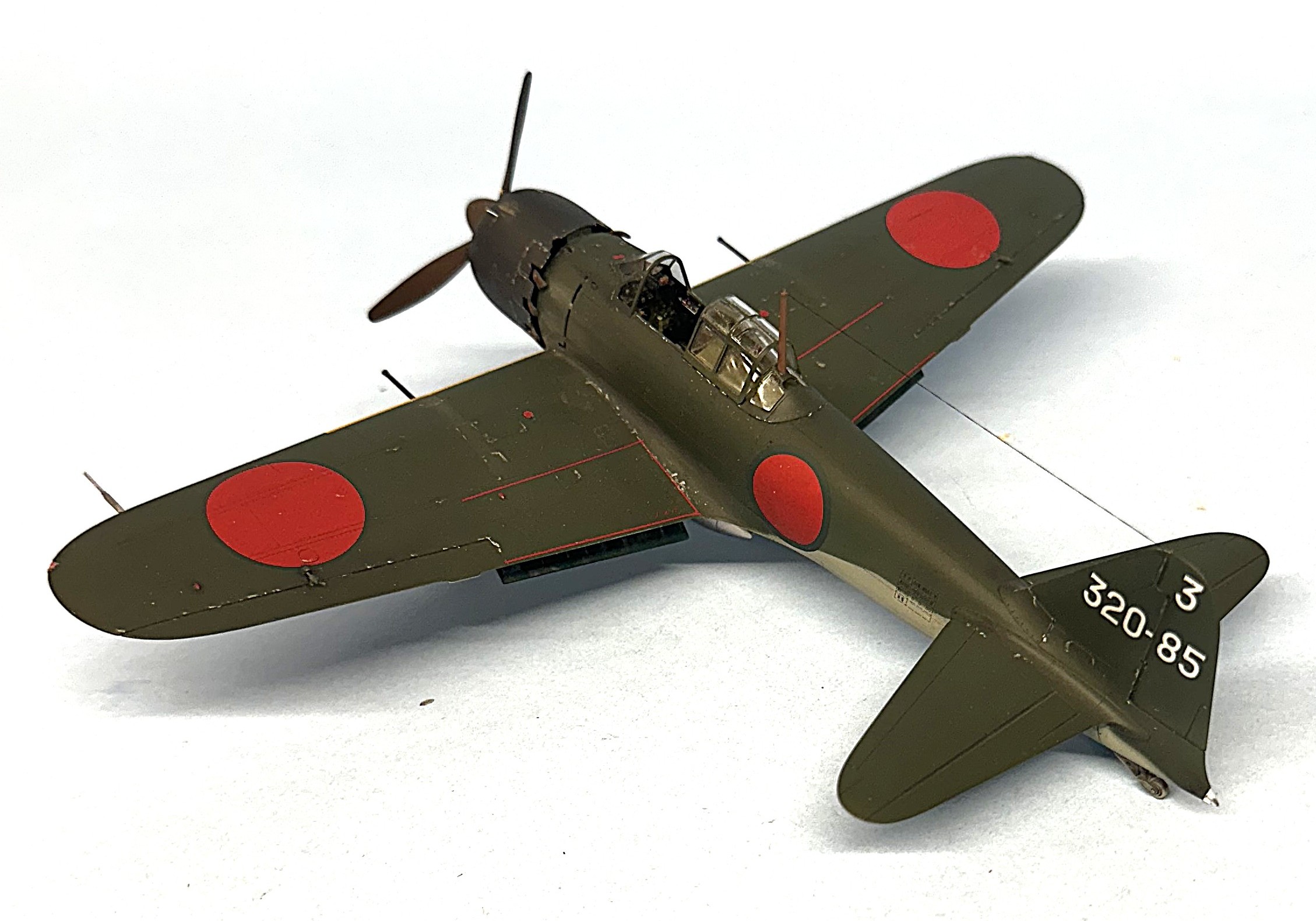
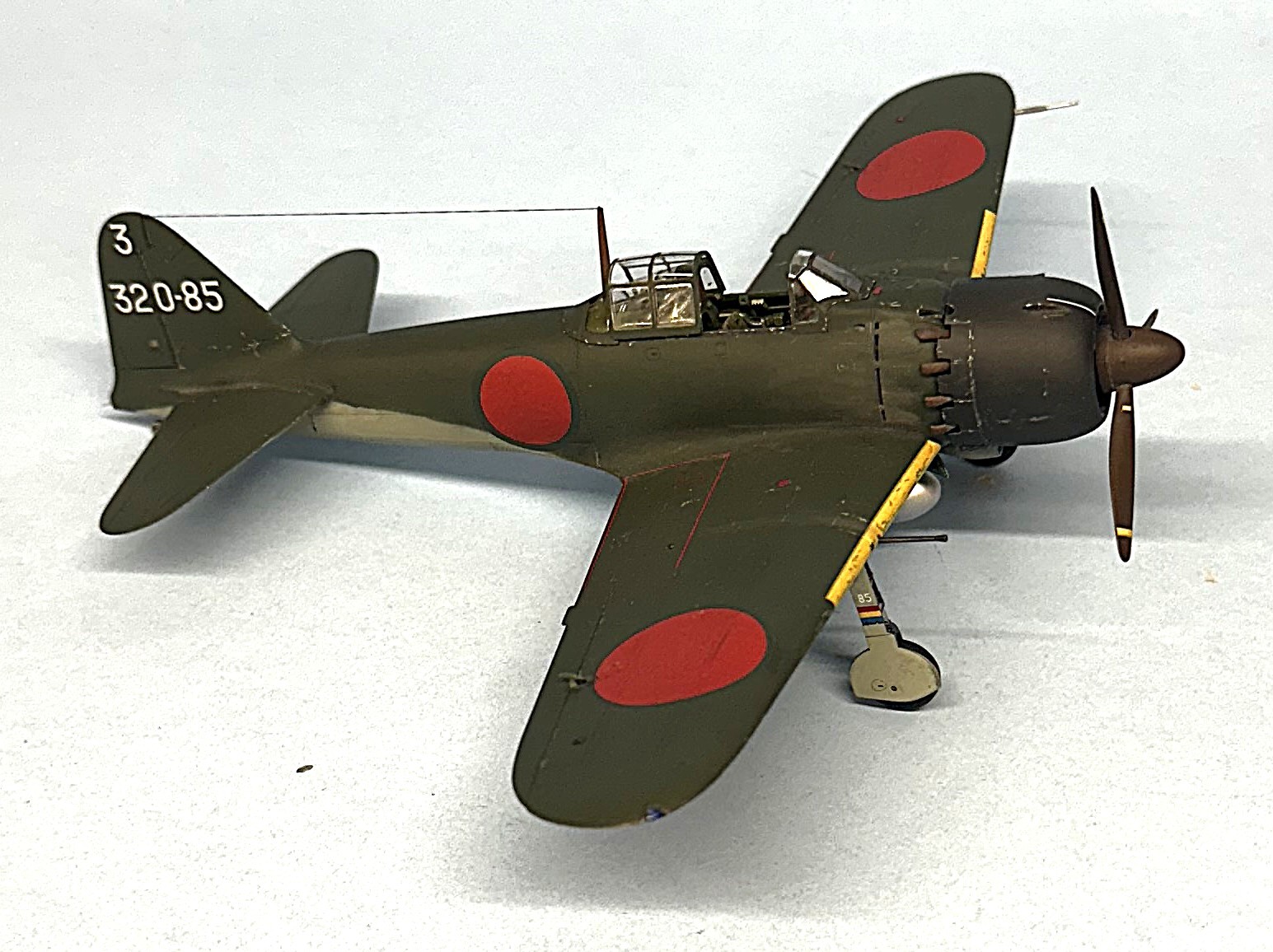
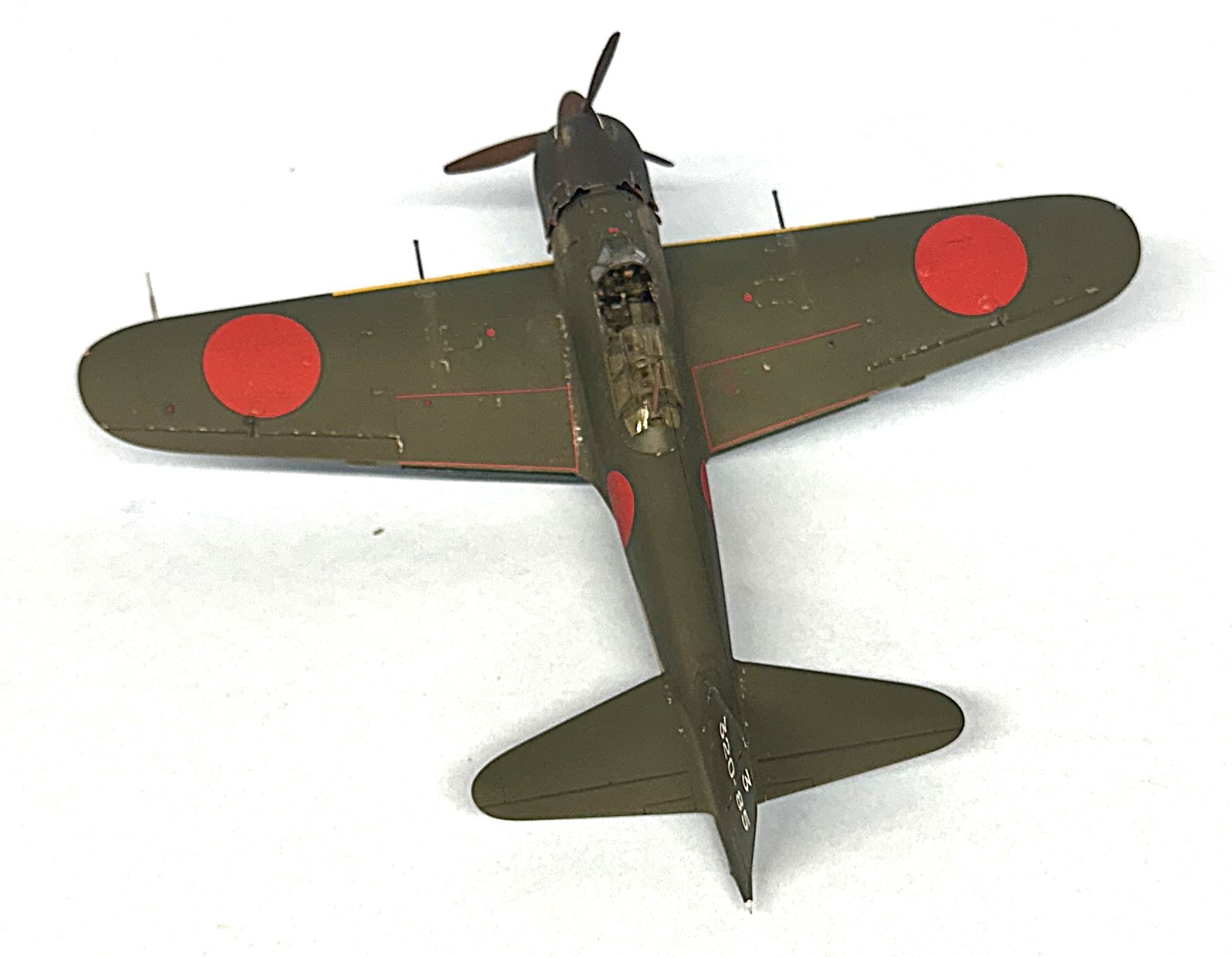
A couple of notes on final assembly. Hasegawa thought it a good idea to put the land gear struts in two pieces - it worked, but I put on CA to make it solid. Hasegawa called for a metallic blue-green paint for the aotake found underneath the bitterly flaps and landing gear. Aotake was a solution made to guard the metal, not a paint. Anyway, I used some transparent blue and transparent green Iwata Com art paints and applied them over the Vallejo aluminum color used on the plane. (Com.Art is a great paint for weathering - by all means track down some transparent “black smoke” - I use a lot. On this kit there’s some around the cowl and behind the exhaust ports. I also dappled it on the wing areas where the pilots and ground crew would have walked to service the cockpit.) I did weather the plane. I used some salt fading and then covered with some Com.Art transparent dust. So if the plane looks a little dirty and the national markings a bit faded, it’s supposed to. In retrospect I think I should have done some more. The decals were fine overall. However, Japanese Army planes were adorned with fancy images on the tail - lightning bolts etc. Unfortunately the decals for the tail disintegrated once in water. I didn’t have a good replacement, so I raided decals intended for an A6M2 and put my Oscar in an elite early war Japanese fighter unit based in Lae New Guinea - although moved out the second news from Guadalcanal came in. Anyway, it’s in Japanese and looks the part.
I think the kit looks pretty good and that’s important. I like glancing at my kits and the new ones have a kind of place of honor. As noted the Oscar is a handsome bird and looks good from ten feet. More pics below.
Eric
 right by Eric Bergerud, on Flickr
 rear by Eric Bergerud, on Flickr
 lftrear2 by Eric Bergerud, on Flickr
 lftftab by Eric Bergerud, on Flickr
 left by Eric Bergerud, on Flickr
 bottom by Eric Bergerud, on Flickr
@EBergerud beautiful job and thanks for the well detailed history on the plane! I never really realized how bad the japanese industrial machine was. I always imagined that we beat them by outproducing them and cutting off their supply chain.
@cbaltrin your idea paid dividends! I now have a Tamiya Jake on it’s way from eBay and it appears that it has decals for 2 options so I might as well build that one too. I mean no sense wasting it, right?
@Mobious I’m not in charge of the group build but I would love to see your otaki zero!
@EBergerud Great work on that Oscar camo. Thanks for the detail on Oscar’s history.
Absolutely Mobious. Welcome & glad to have you aboard!
Great work on the Oscar Eric and thank you for the historical context. I think your camo looks very realistic. I have updated the roster with your completed build. Nice Job!
Otaki makes good kits - probably made in Japan if you can believe it.
I’m signed up for a plane for the Battle of Britain GB. When done, I may revisit. I’ve got a 1/35 Dragon Japanese tank (type 95 I think) - it’s supposed to be a terrific kit. Make some terrain - evoke the Singapore campaign. We’ll see.
Japan’s biggest military asset was it’s people. The society had been militarized from top to bottom (the army ran the schools) and the Emperor Cult was a real deal after war with China broke out. General Slim, who commanded British forces in Burma, commented that Japanese soldiers had a courage that “came from within.” They would not surrender - so we quit trying to take prisoners. So despite the fact that the Japanese had few weapons that could be called excellent (mind the torpedoes - now those were good) and were often outnumbered, fighting Japanese infantry was like getting a tooth pulled. And then there were the Kamikaze attacks - Hitler asked his soldiers to fight until the end - the Japanese soldiers did it. Let’s be glad it was German and not Japanese infantry at Omaha.
@EBergerud There was even at least one Japanese soldier who did not believe his country had surrendered. He was finally pulled out of some island jungle in the 1970s, when his former commanding officer convinced him that the war had long been over.
I think this real life story might have served as the inspiration for a novel that I read many years ago, titled Amok.
I think I read one of your books! I love early South Pacific WW2 history. The blind aggressiveness of the Japanese v. the rag tag Allied forces whose racism didn’t allow them to think of the Japanese as a worthy enemy.
On the flip side, the Japanese had such a superior sense of honor and bushido, they thought that’s all they needed to win.
And it worked until it didn’t. I know this is a very simplistic version but I highly recommend any reading about the first 6 months of the war…
So interesting from all perspectives.
Nice work and outstanding background.
Real Nice!! The spray mask is a neat tool too! I might have to get one of those myself. Great work so far!!
Calling this one as finished!! Took a little more time to get over the finish line, but that was due to time spent with the family. It’s not always about models ya know… 
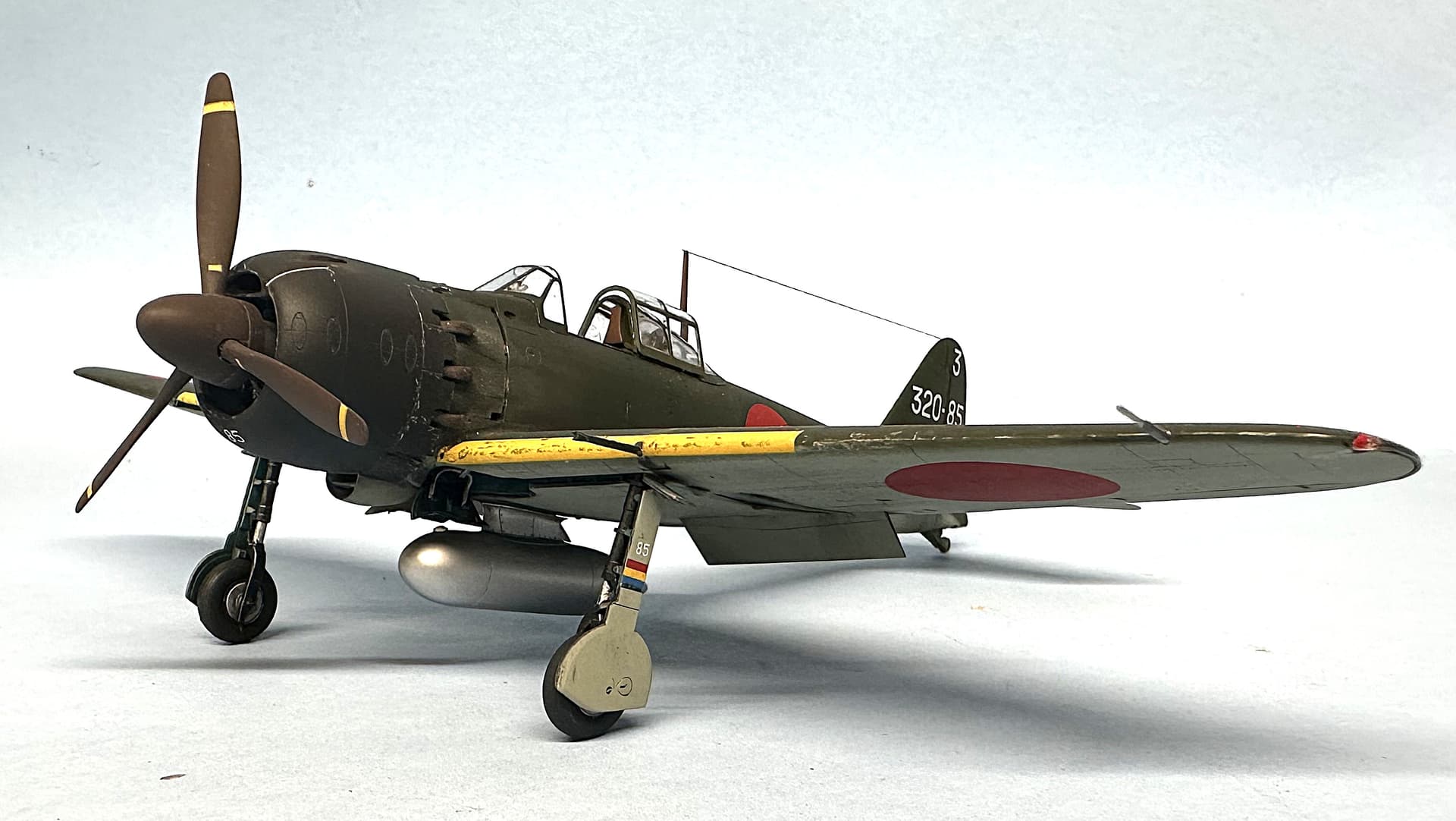
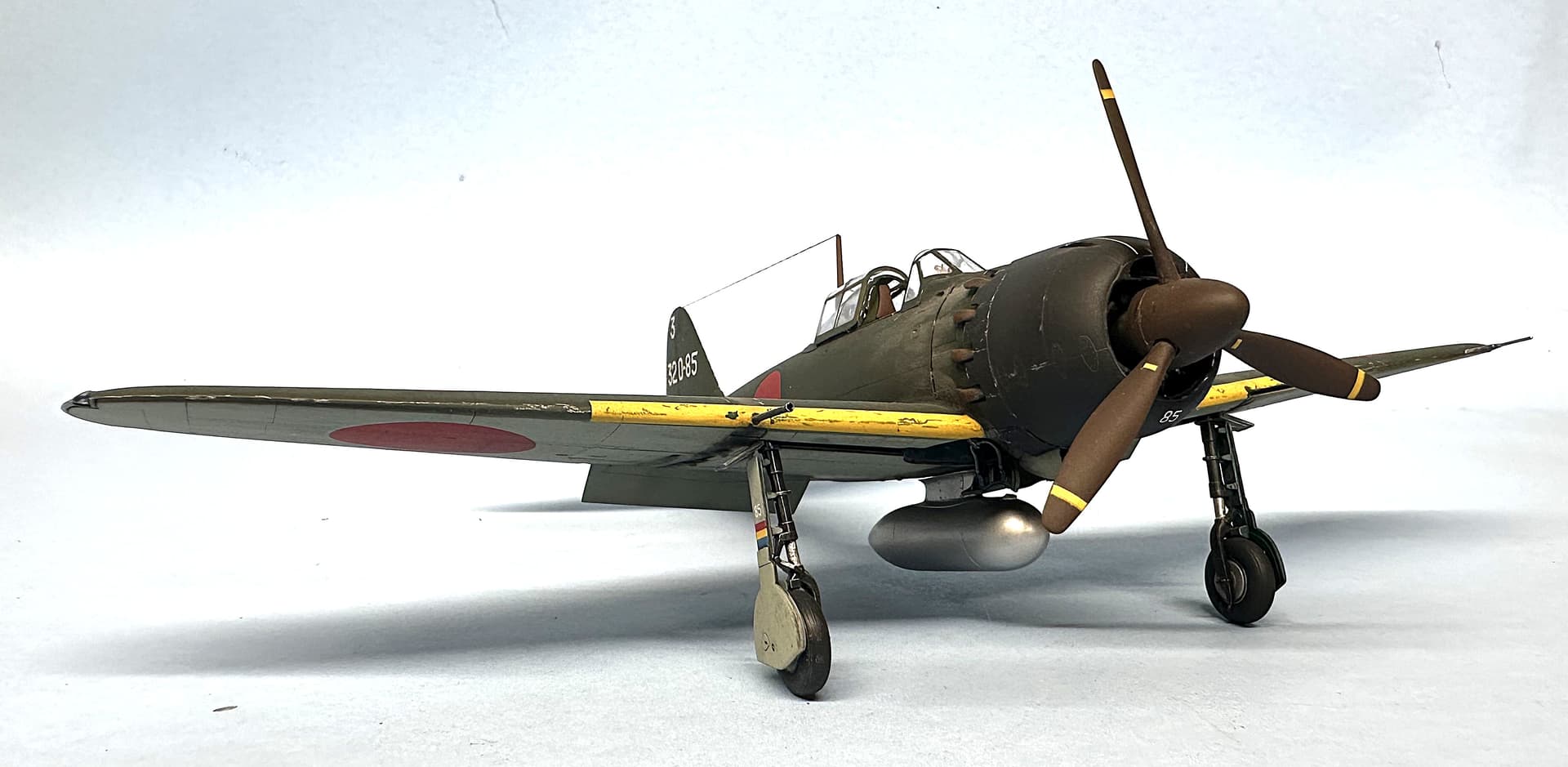
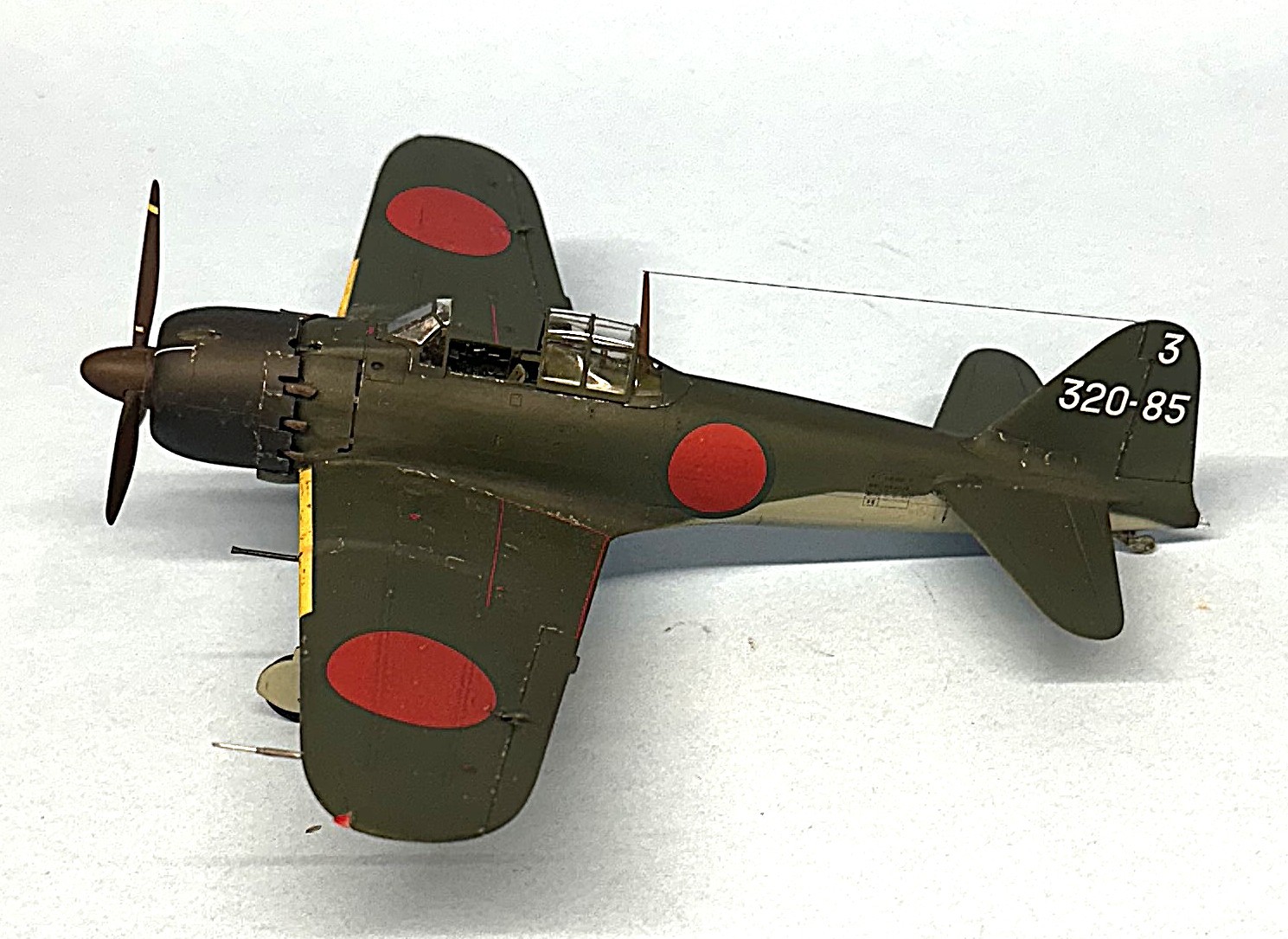
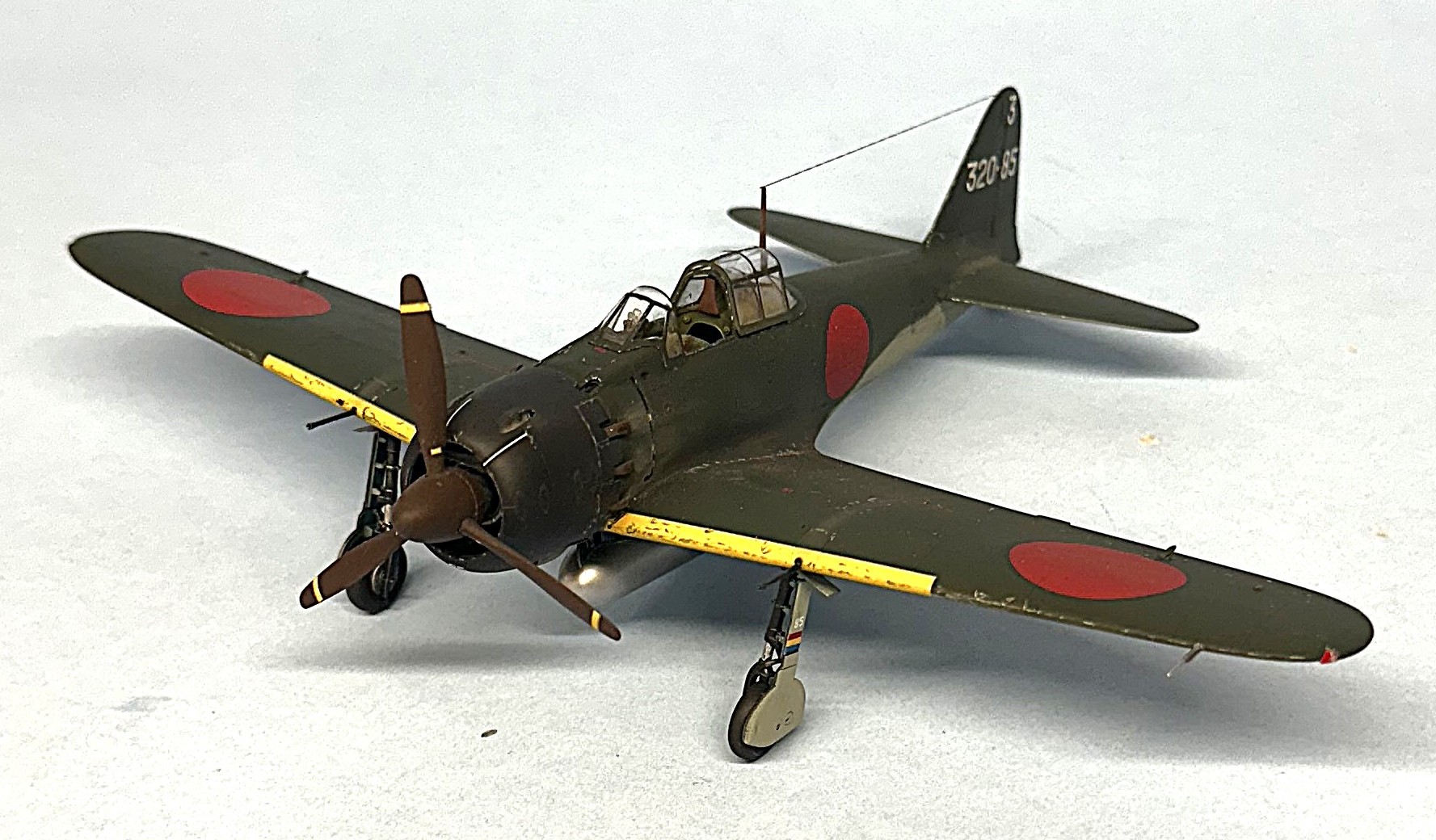
1:48 scale Tamiya kit, (The later release), 652nd Kokutai, HMIJS Jun’yo, Battle of the Philippine Sea, 19 June, 1944. To US Navy pilots, it will foreveer be known as the “Great Marianas Turkey Shoot”. I have no information on the pilot, or whether on not this plane was one of the hundreds lost to marauding “Hellcats” that day.
Picture 8905 is a good one to use?
Thanks again and model on everyone!
You did a great job with it. I especially like your chipping.