HobbyBoss 1/48 Hurricane Mk. I, F/O McKnight, Aug 1940

I signed up for @GreySnake01’s Battle of Britain group build nearly a year ago now, and am finally just getting to the build. “Real” life, right?

Vintage Wings of Canada flew their superb Hurricane Mk XII to the Airventure show in Oshkosk, WI, in 2024, and had it painted in honor of their native son, Flying Officer William McKnight. Right away I knew that I’d have to build a model to match.

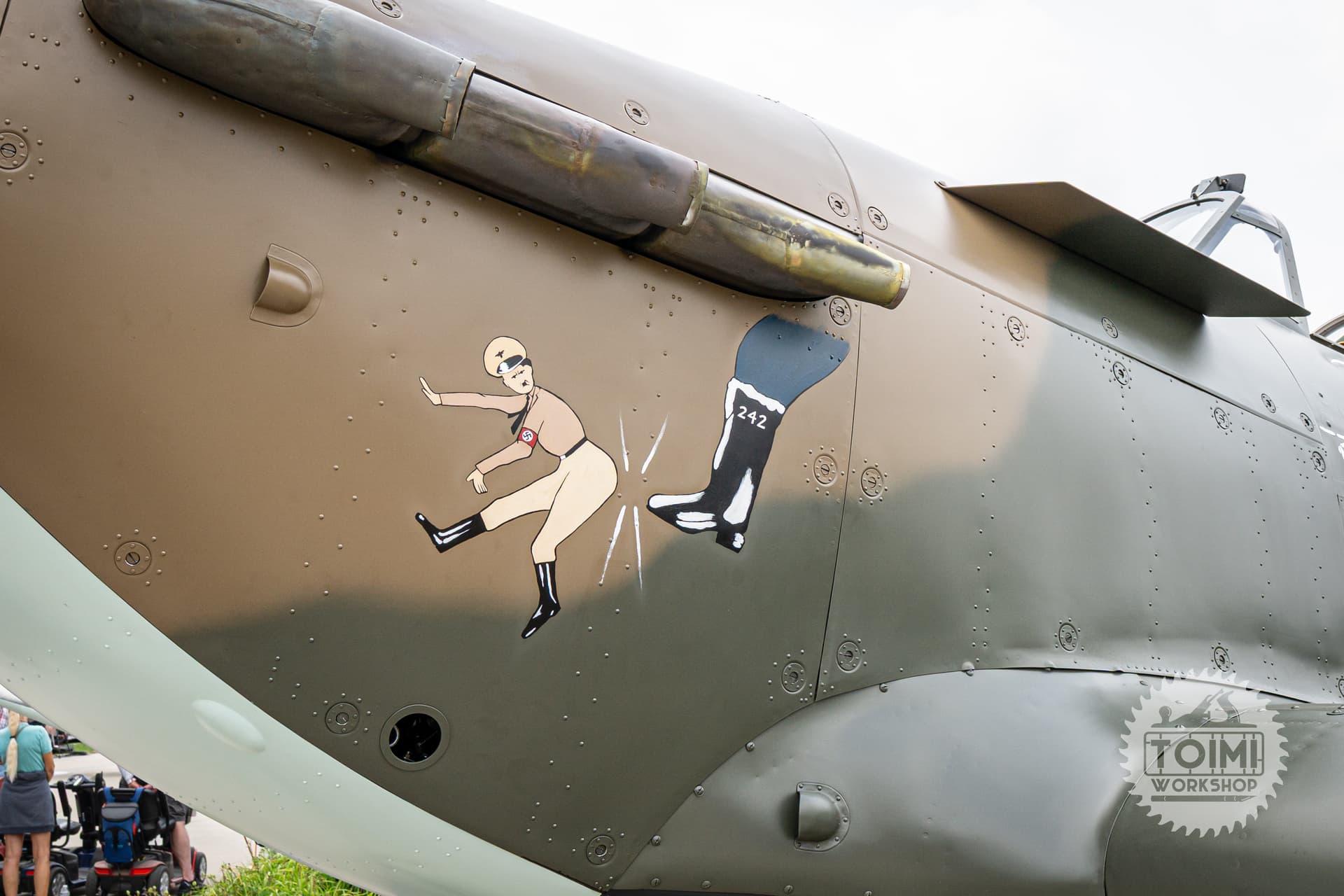
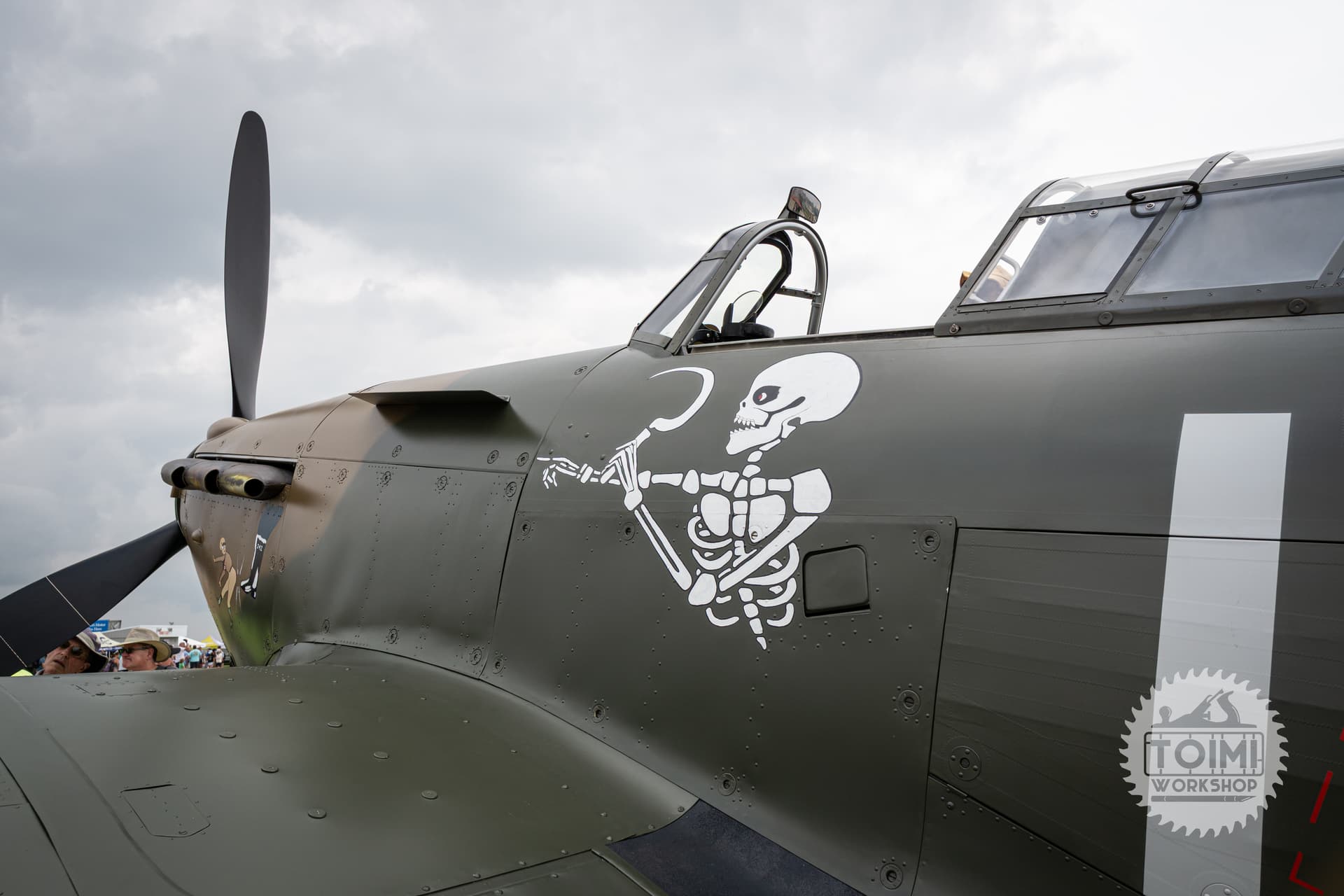
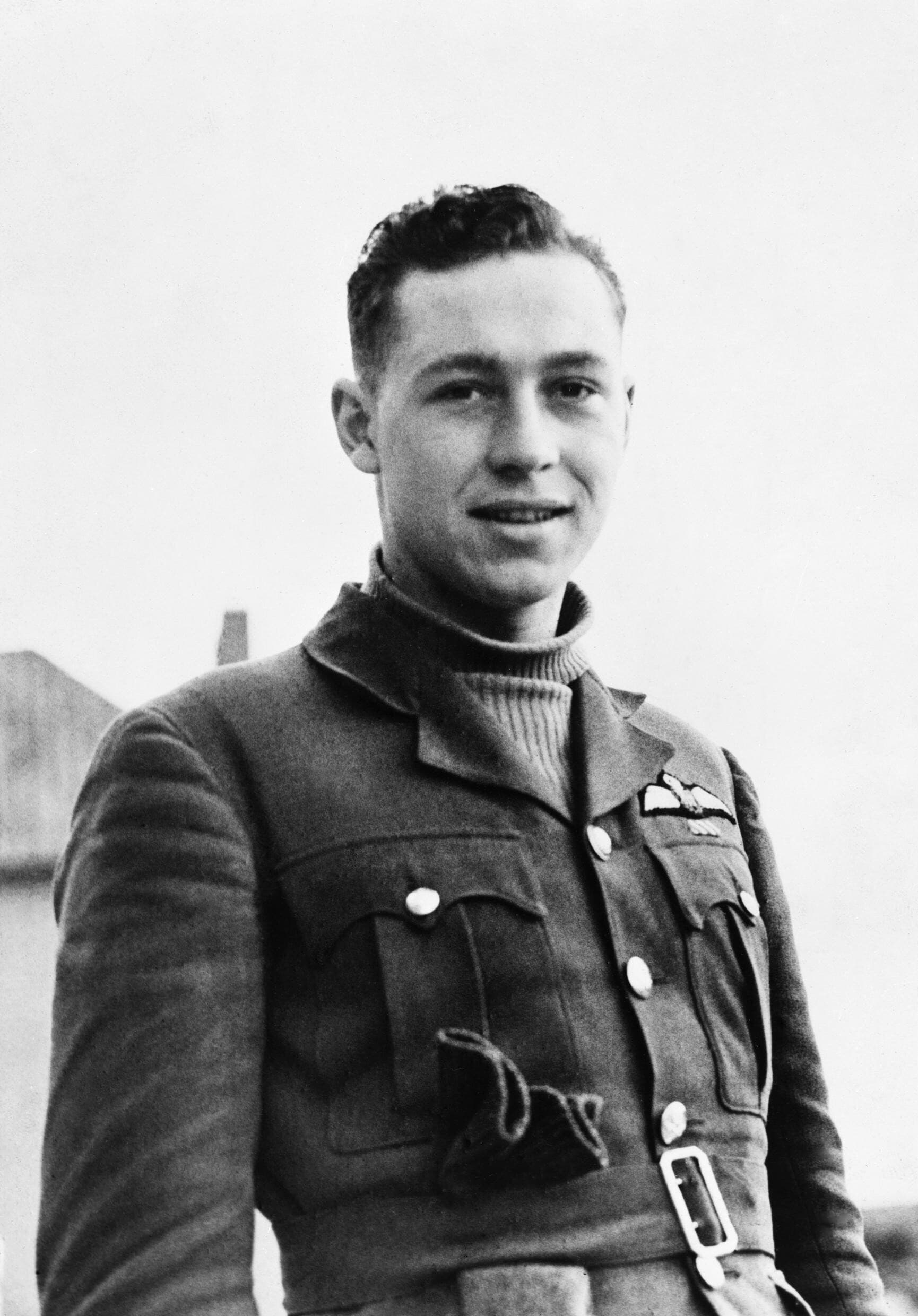
McKnight was from Alberta and flew with the storied 242 “Canadian” Squadron during the Phony War and the Battle of Britain. McKnight scored 19 confirmed kills, earned two DFCs, and flew wingman for the infamous Doug Bader with regularity. On 30 Aug 1940, flying alongside Bader, McKnight scored a “hat trick” – shooting down two 109s and a Heinkell 111.
His Gloster-built Hurricane, Serial P2961, was made famous by the distinctive nose art: the 242 Squadron emblem of Adolf getting the boot, and McKnight’s own grim reaper, pointing a bony finger in the direction the bullets go.
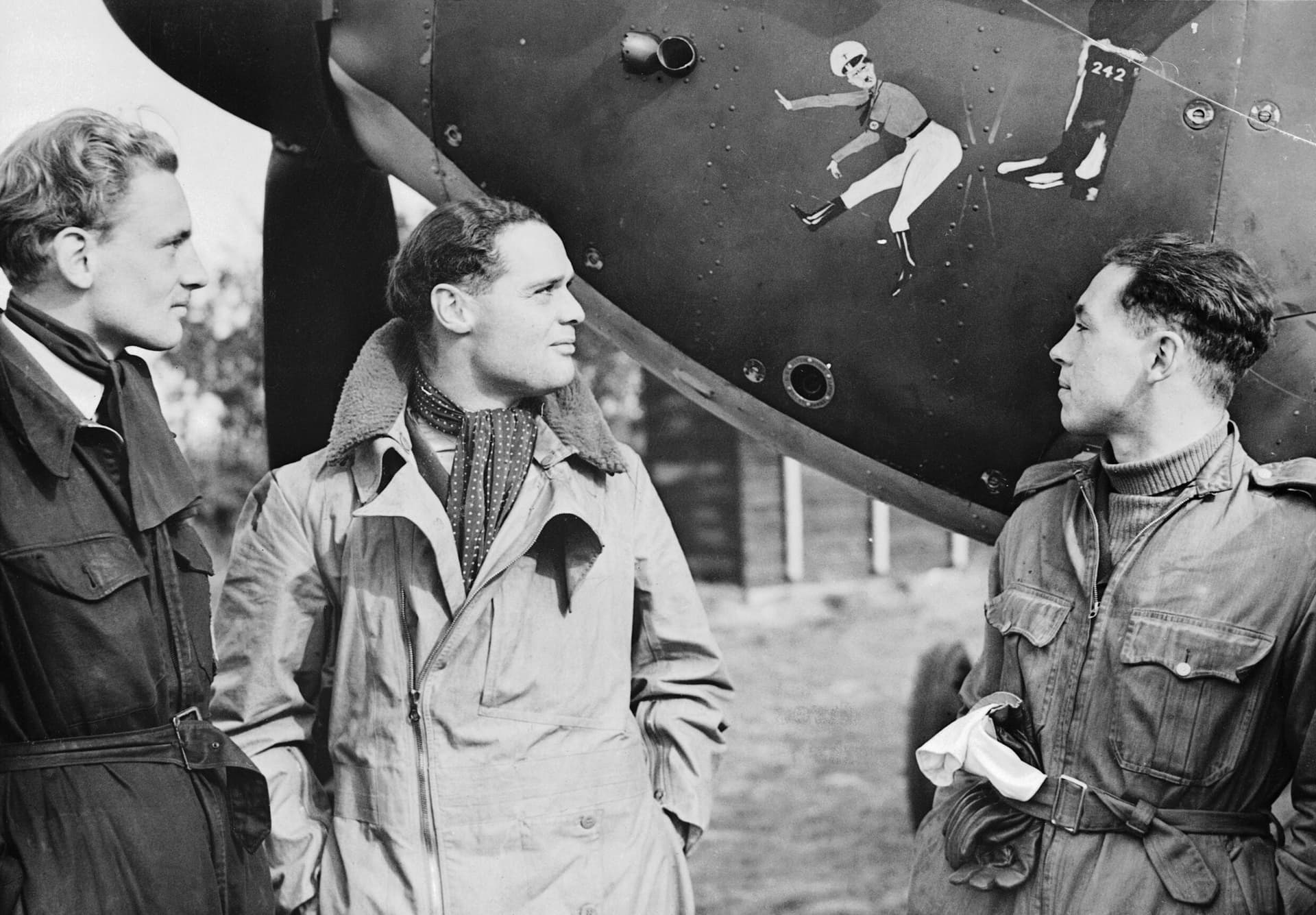
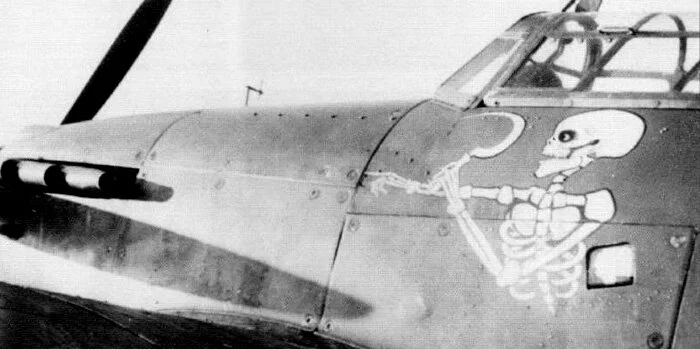
McKnight and Hurricane No. P2961 disappeared in action over France on 12 Jan 1941.

I had almost given up finding the proper aftermarket decals for McKnight’s machine when I came across @Grant_Dalzell’s stunning build of this kit last year, and I immediately ordered it up. In the intervening months while I haven’t had much bench time, I’ve accumulated a shocking pile of aftermarket bits. Even open gun bays – why would I do that to myself?!
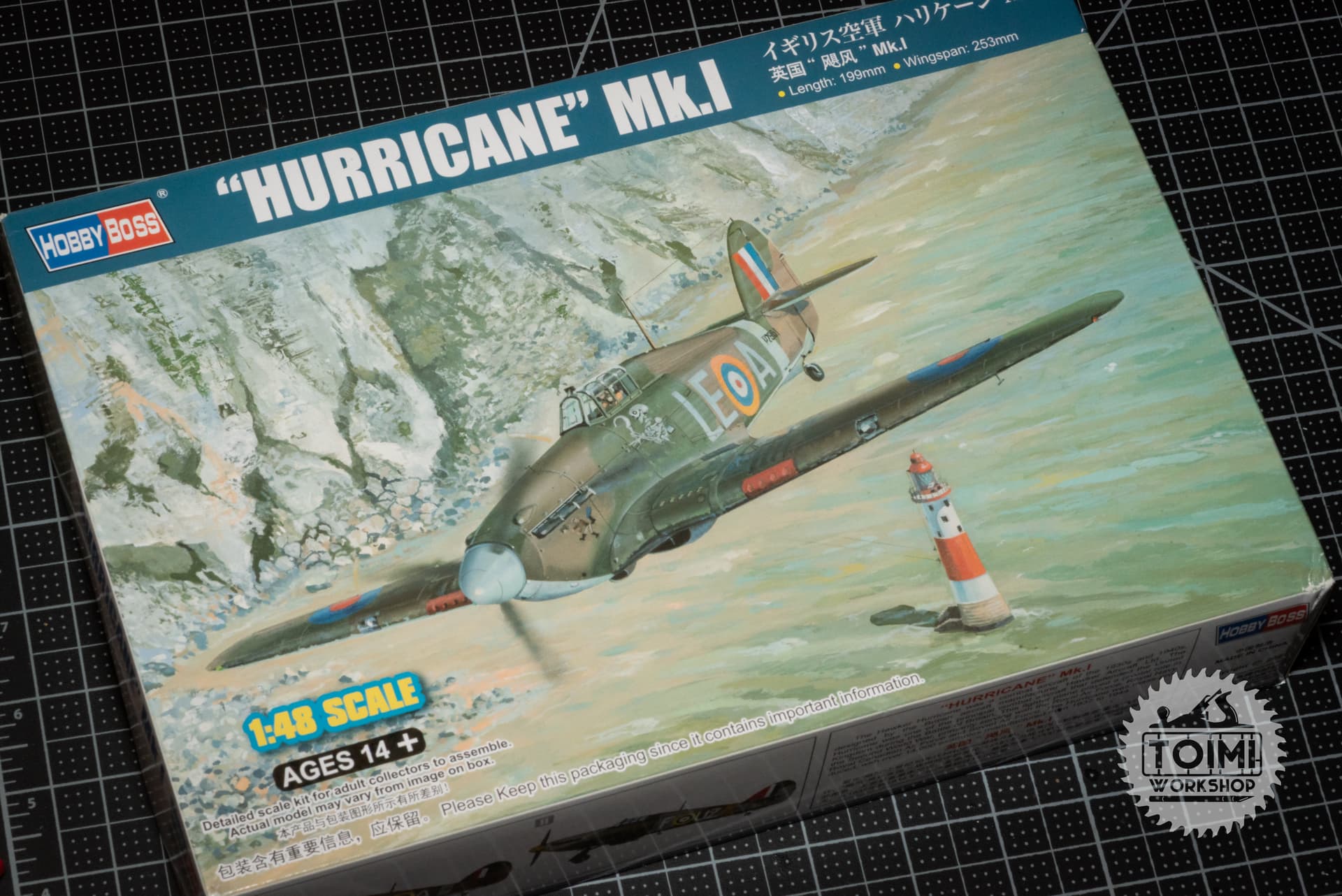
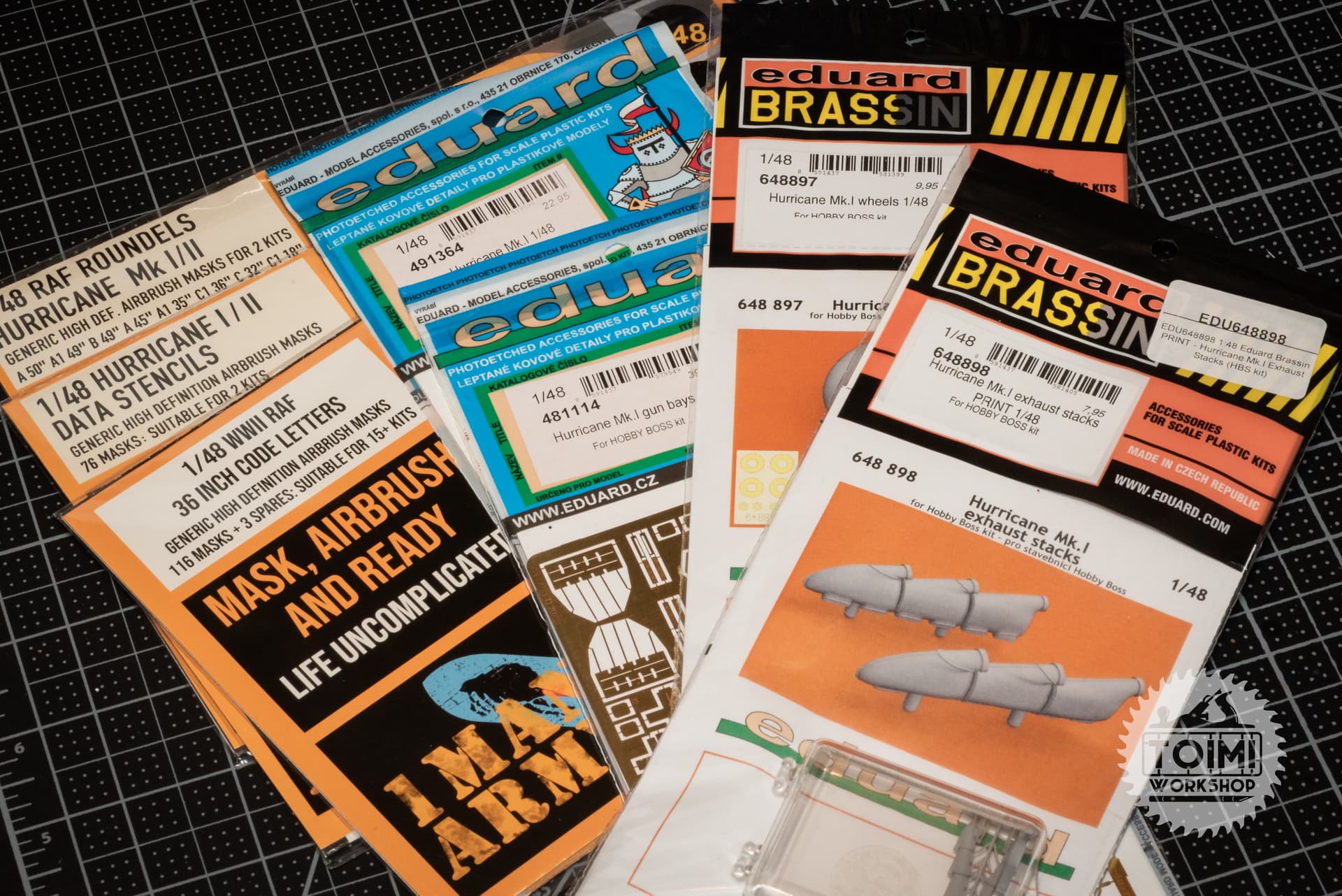
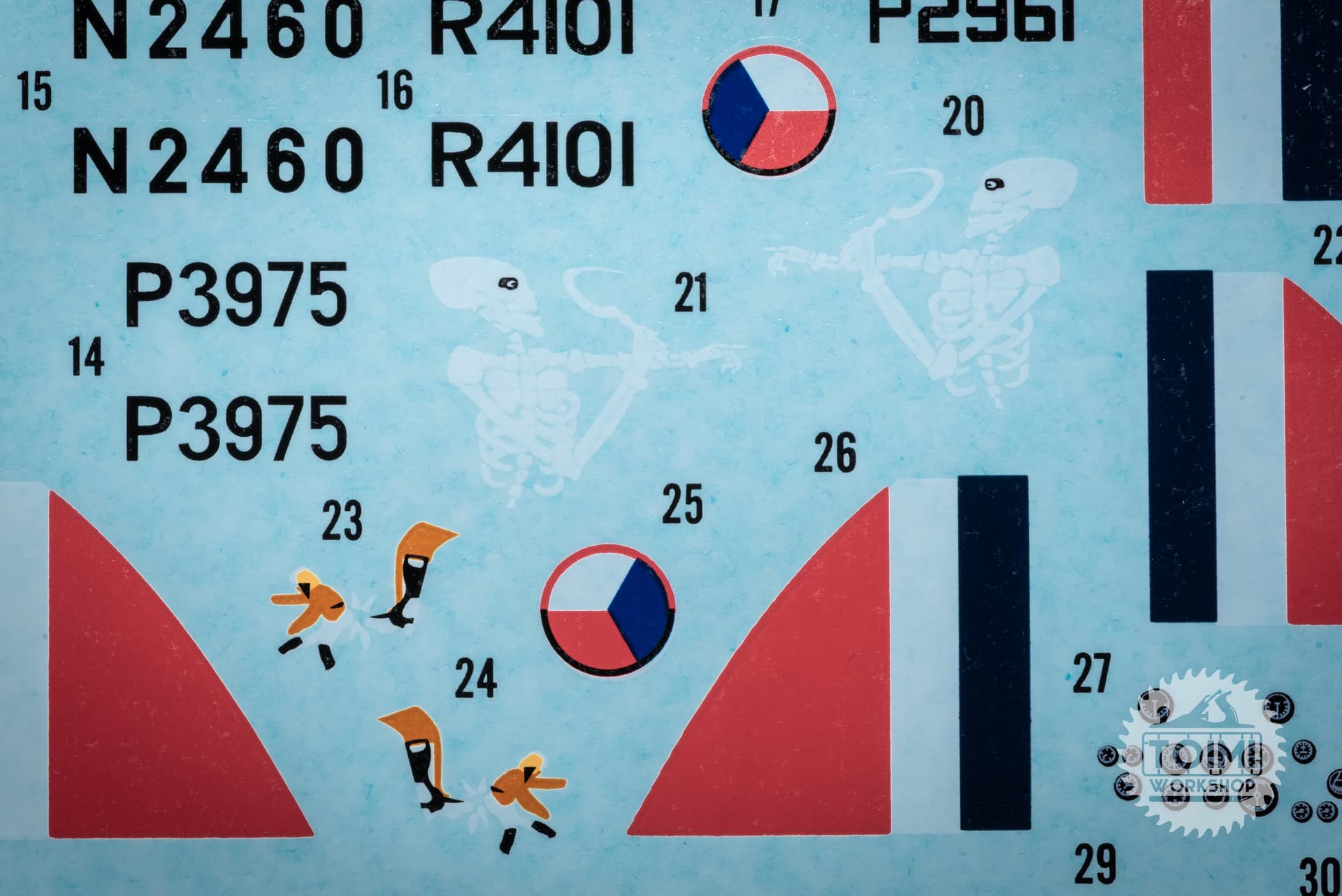
It wasn’t until the other day when I started taking stuff out of the plastic wrap that I took a good look at the kit’s decals, and I must say I’m disappointed at the lack of detail. They didn’t even put the “242” on the boot, and the real “reapers”, being hand painted, were different on the port vs. the starboard side, not mirrored as on this sheet.
The lack of aftermarket options remains a problem. There is one option: a BofB set of Aeroscale decals from some decades ago that includes this machine – and a handful of others – and it’s upwards of $50 on the secondary market. Pretty steep price for literally three decals, let alone decals so old they might crumble at the first hint of moisture. I’m thinking about it – open to suggestions.

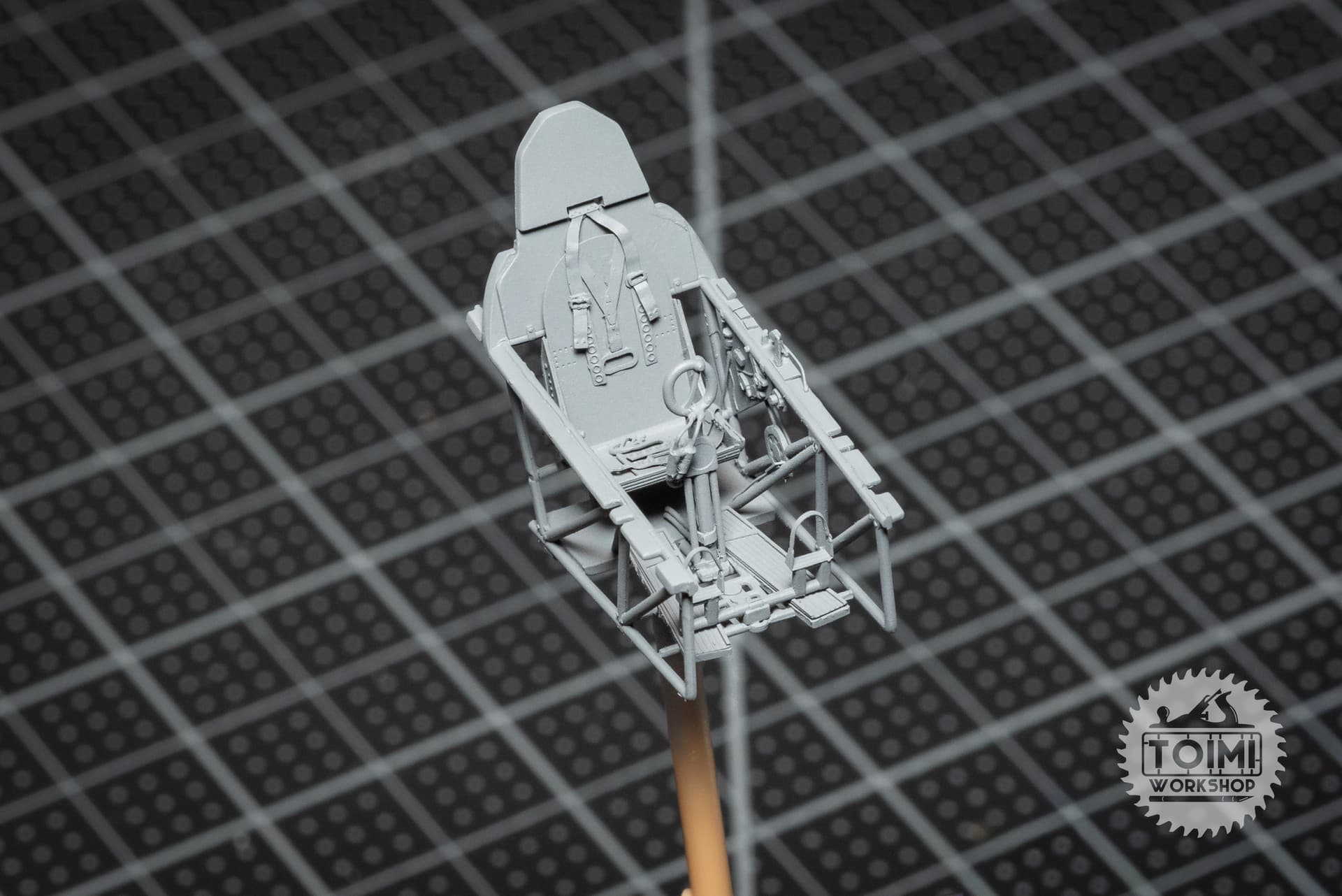
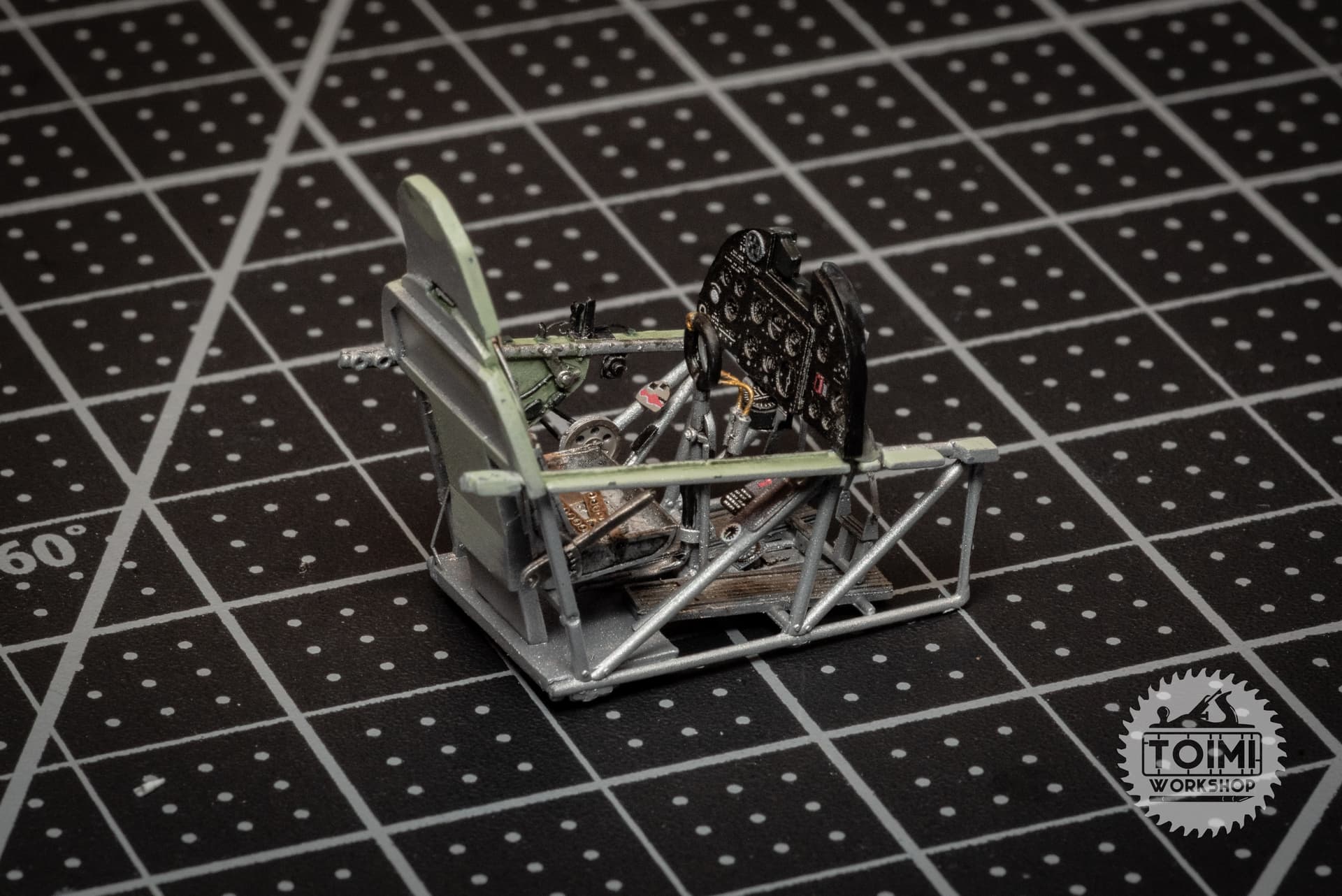
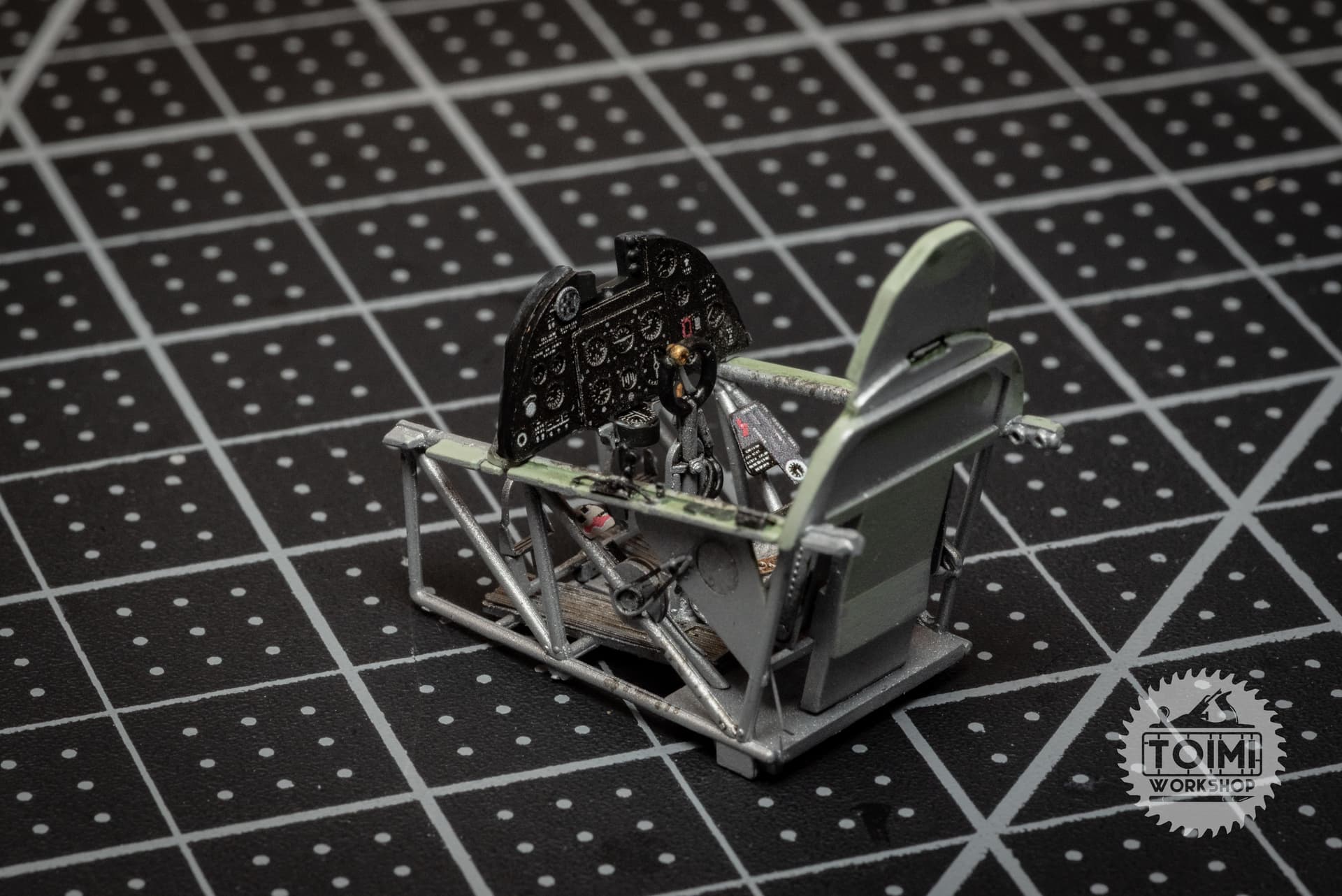
Anyway, I’ve found the plastic to be nice to work with. Rivet and panel line details on the exterior look good; dry fitting of major parts seems fine. Out of the box, the cockpit has about the same level of detail as the Airfix 72nd scale Hurricane I built a few years ago – which is to say, not much, and not very crisply molded. The addition of the standard Eduard set has helped, and once I got up the courage to chisel and sand off the molded sidewall details, I struggled with some highly fiddly scratch building. The “office” is a bit busier now. The three-layer instrument panel from Eduard is pretty impressive!
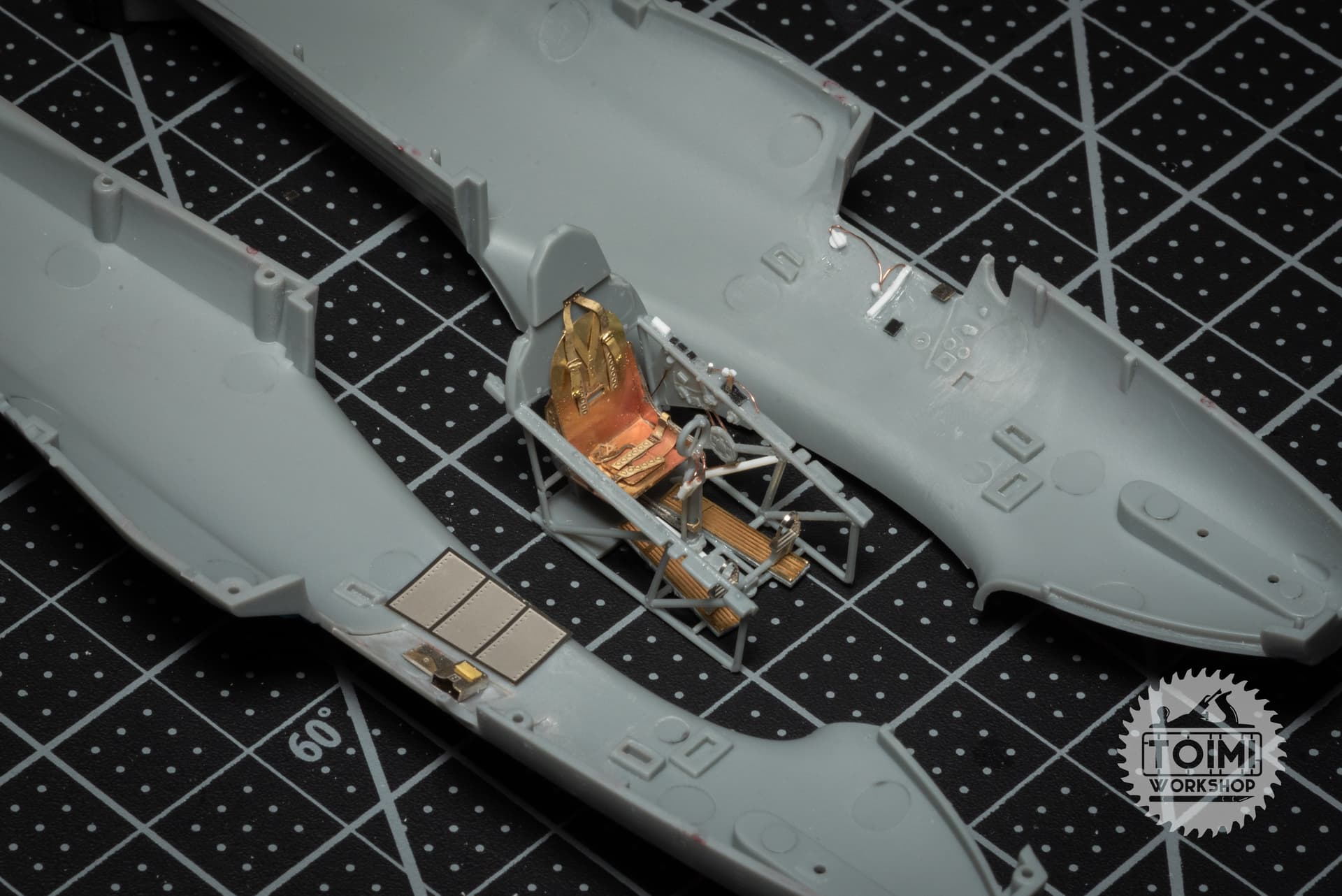
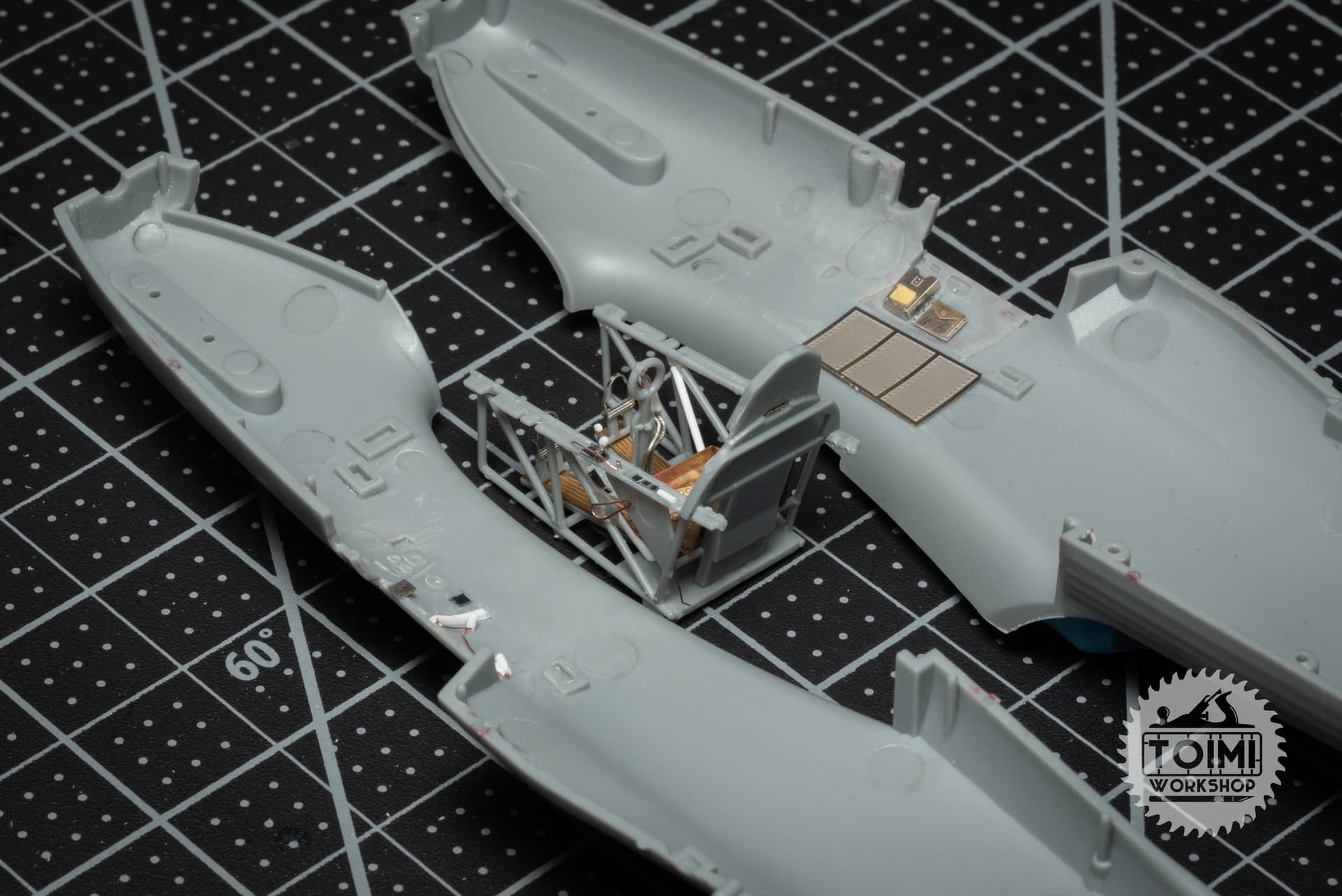
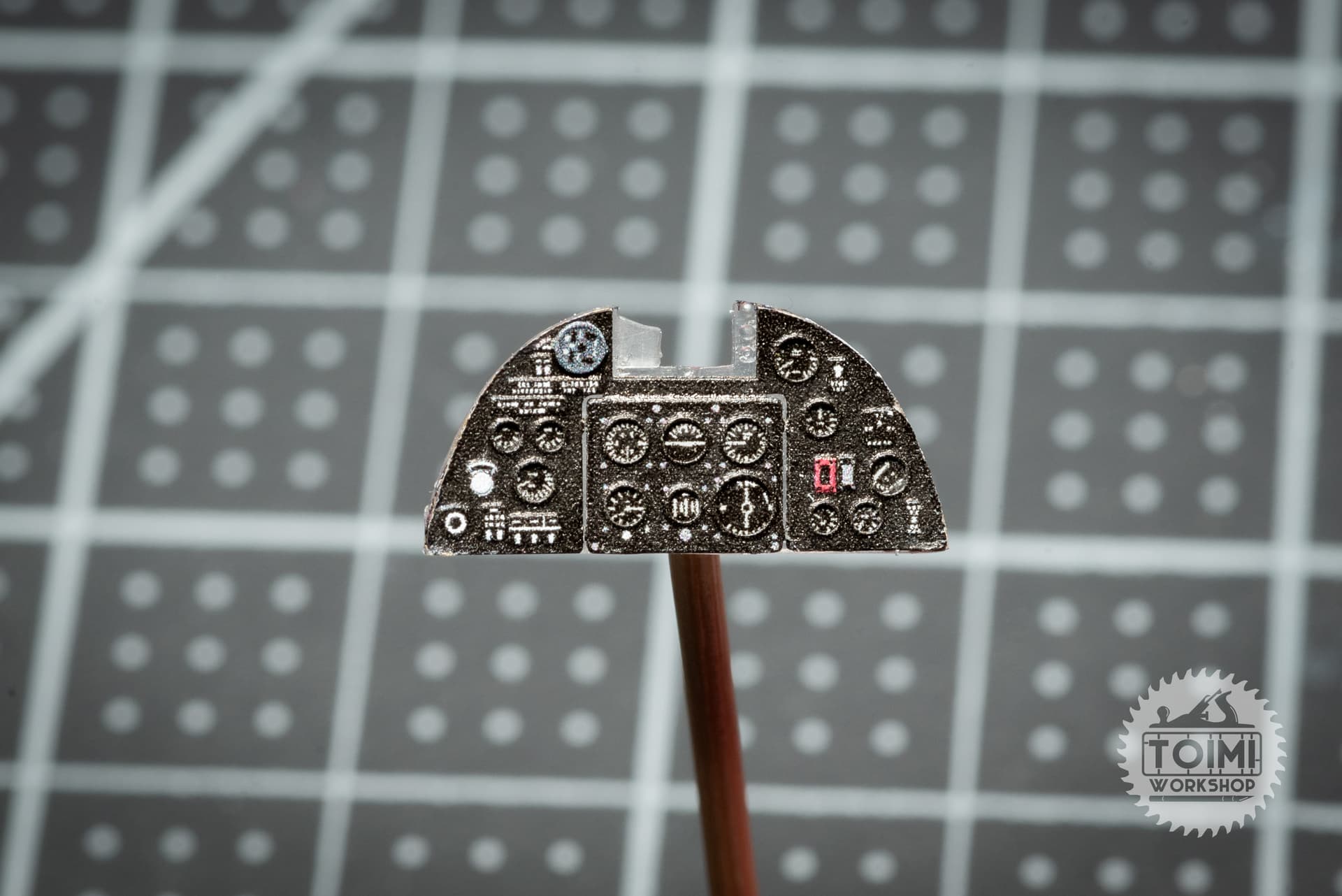
I’m anxious to see how these scratchbuilt details will look under some primer. Hopefully they haven’t been a waste of time. There’s still a handful of additional PE parts, plus the gunsight and compass, to add after primer and paint are on.

Those decals. Arrgh!

7 Likes

Well, better late than never! Nice work on the Hurricane. I’m sure the scratchbuilt parts will look fine once painted.

Gary

You’re right, they do. As long as you don’t look too closely at a high-resolution macro photo, the whole thing looks pretty good. :grin:

5 Likes

You are off to a good start Tom! Tamiya reboxed Italeris Hurricane and one of marking options is of this plane!
Actually, the Italeri kit is not all that bad from what I see in the box!
Ugh, I haven’t even started my BoB build yet.. When does it need to be completed? July/26 or October?
Something makes me think the later.
Happy Modeling,
Mike

1 Like

Well, I’ll be dipped. I’ve been stewing over whether or not to just order a copy of the Italeri kit for the decals, but somehow overlooked the Tamiya rebox. Took only about a minute to find a set of the decals on eBay. They’re not perfect, but a major upgrade over the HobbyBoss sheet. I think my problem is solved! Thanks a million!

I think the BoB build is through October of this year. Plenty of time!

1 Like

Ah ok, I looked through my decal stash and I don’t have that particular sheet.
I am also thinking of doing this scheme and hopefully the Tamiya/Italeri decals work. Hopefully the decals were redone by Tamiya?

Ok perfect and I did comment in the BoB GB in regards to what I was going to do and the last I chekced, I didn’t see my name added? This was a few months ago too.

Happy Modeling,
Mike

1 Like

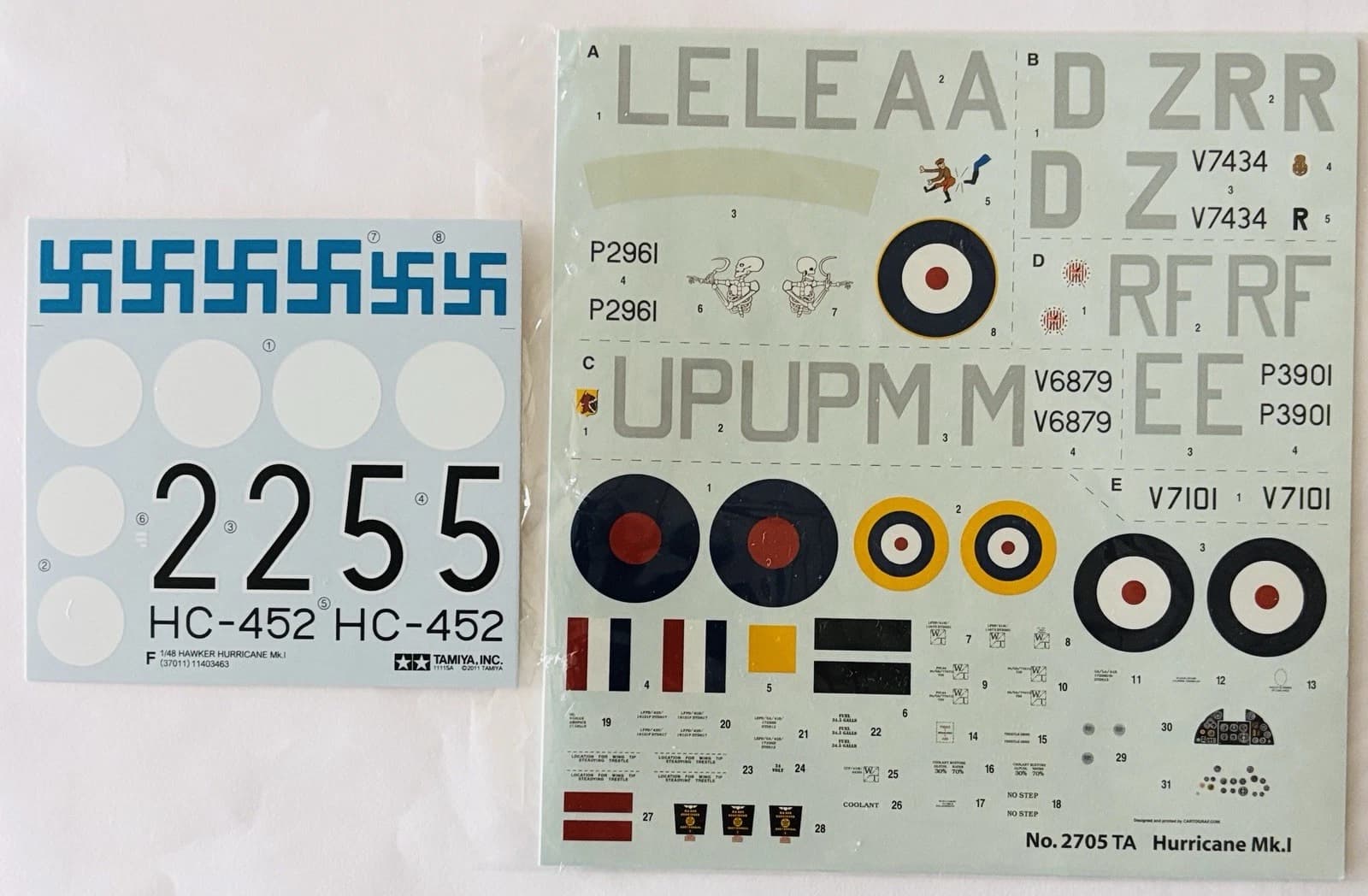
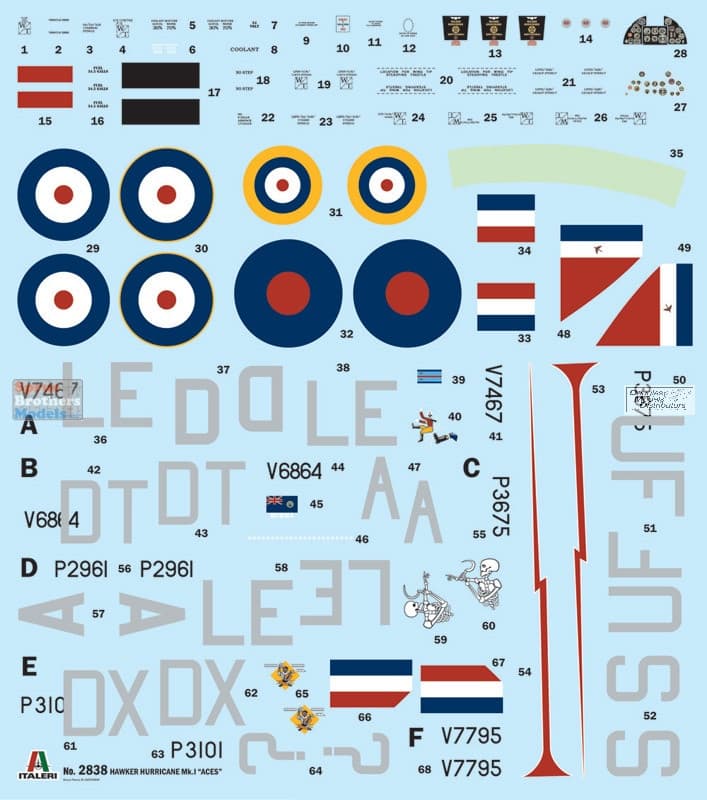
The sheet in the Tamiya kit was apparently made by Cartograph, and is different than the sheet included with the Italeri offering. The Tamiya box also includes a second sheet (branded Tamiya) for the Finnish markings (which I’ll surely use on another project!). It appears that the only common marking option between the two kits is McKnight’s P2961!

In the Tamiya boxing:

In the Italeri boxing:

2 Likes

At least the shape of the skulls were not altered but I do not see the “242” w/ the white outline on the boot.
I just took another peek(thanks) at the Tamileri kit and forgot that they threw in a three figure set!
Happy Modeling,
Mike

1 Like

Yeah, that’s a bummer, but the detail is still waaaay better than the HobbyBoss set. Maybe I can use a Fineliner pen or something to get the “242” in place? The crew figures are a value add for sure.

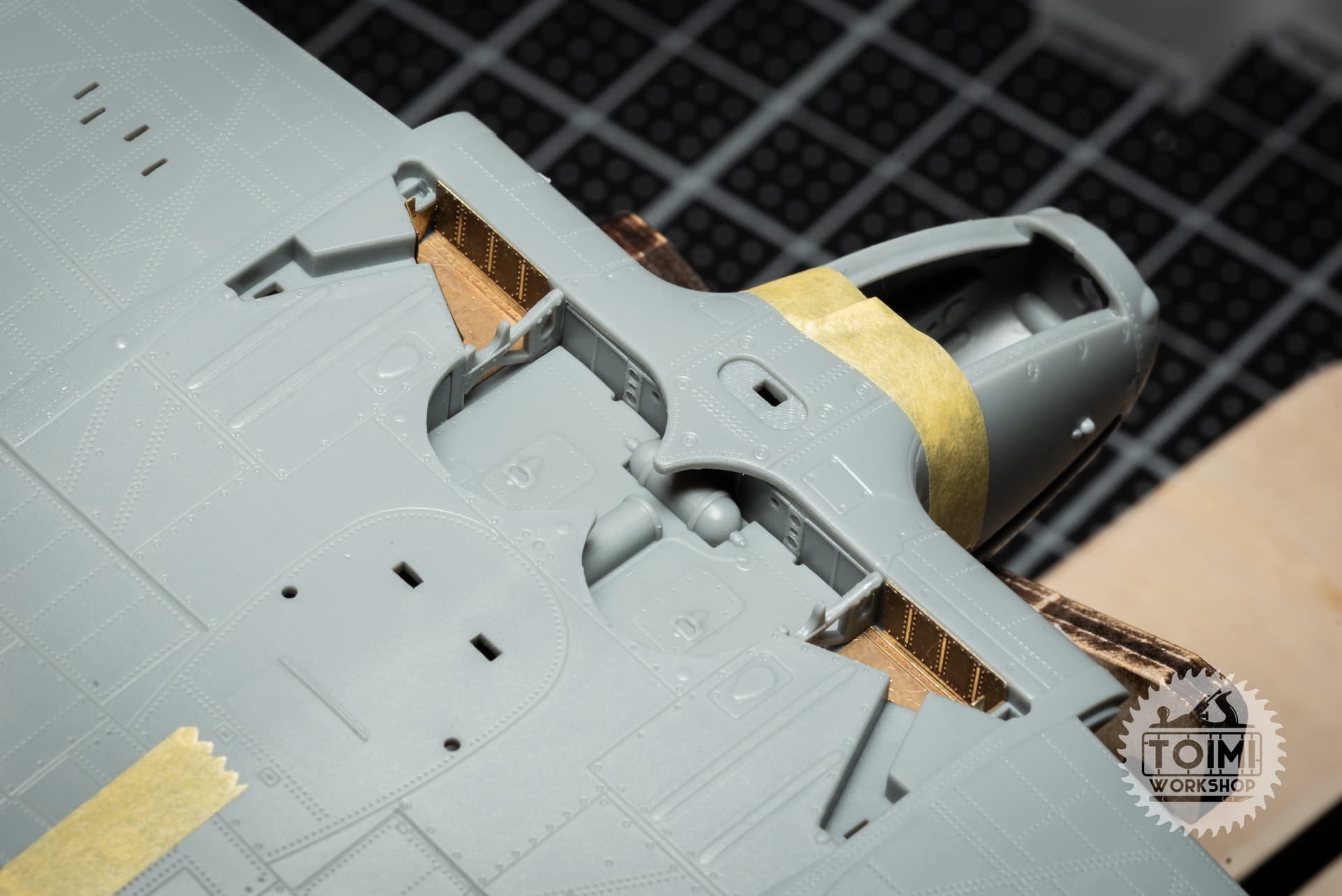
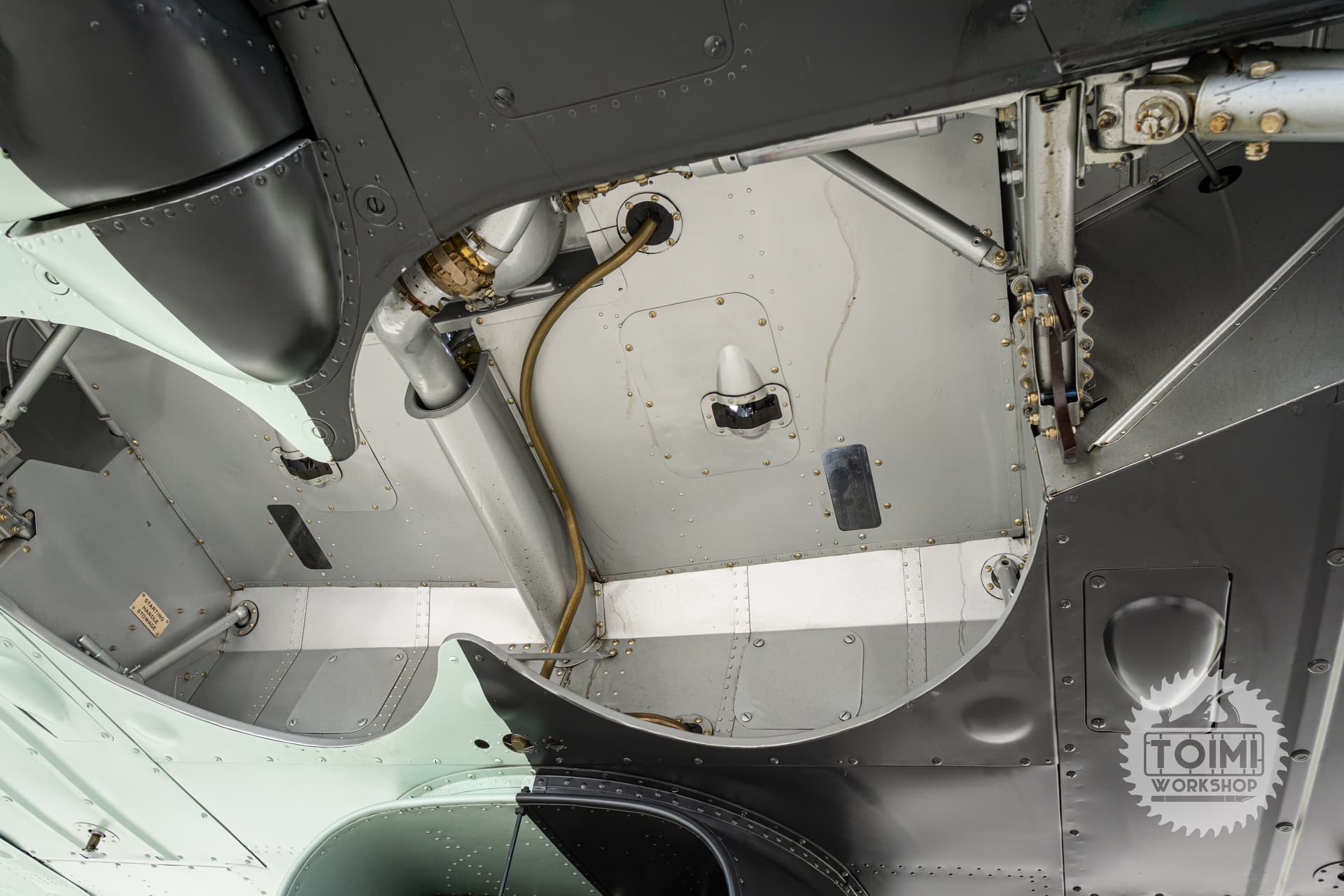
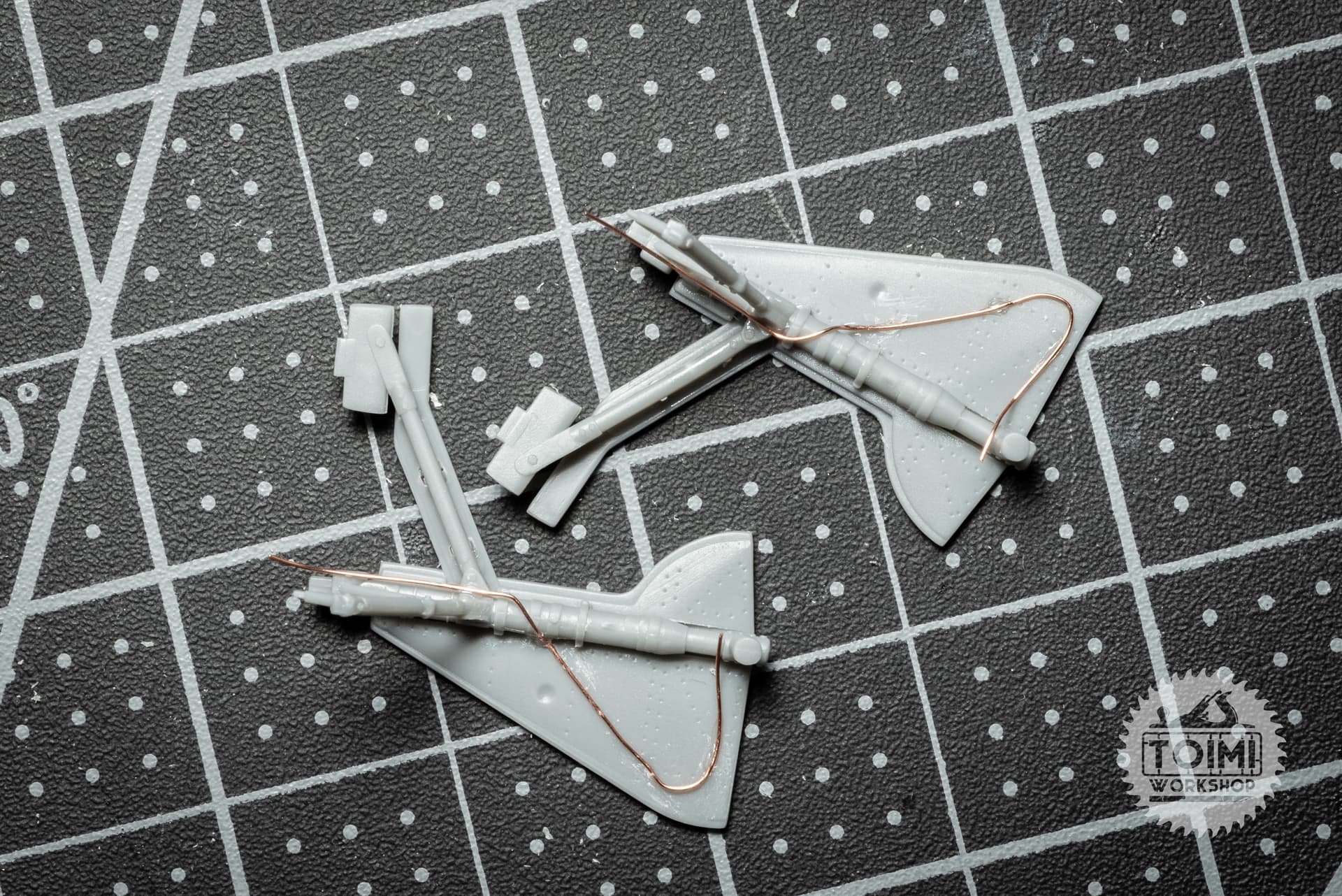
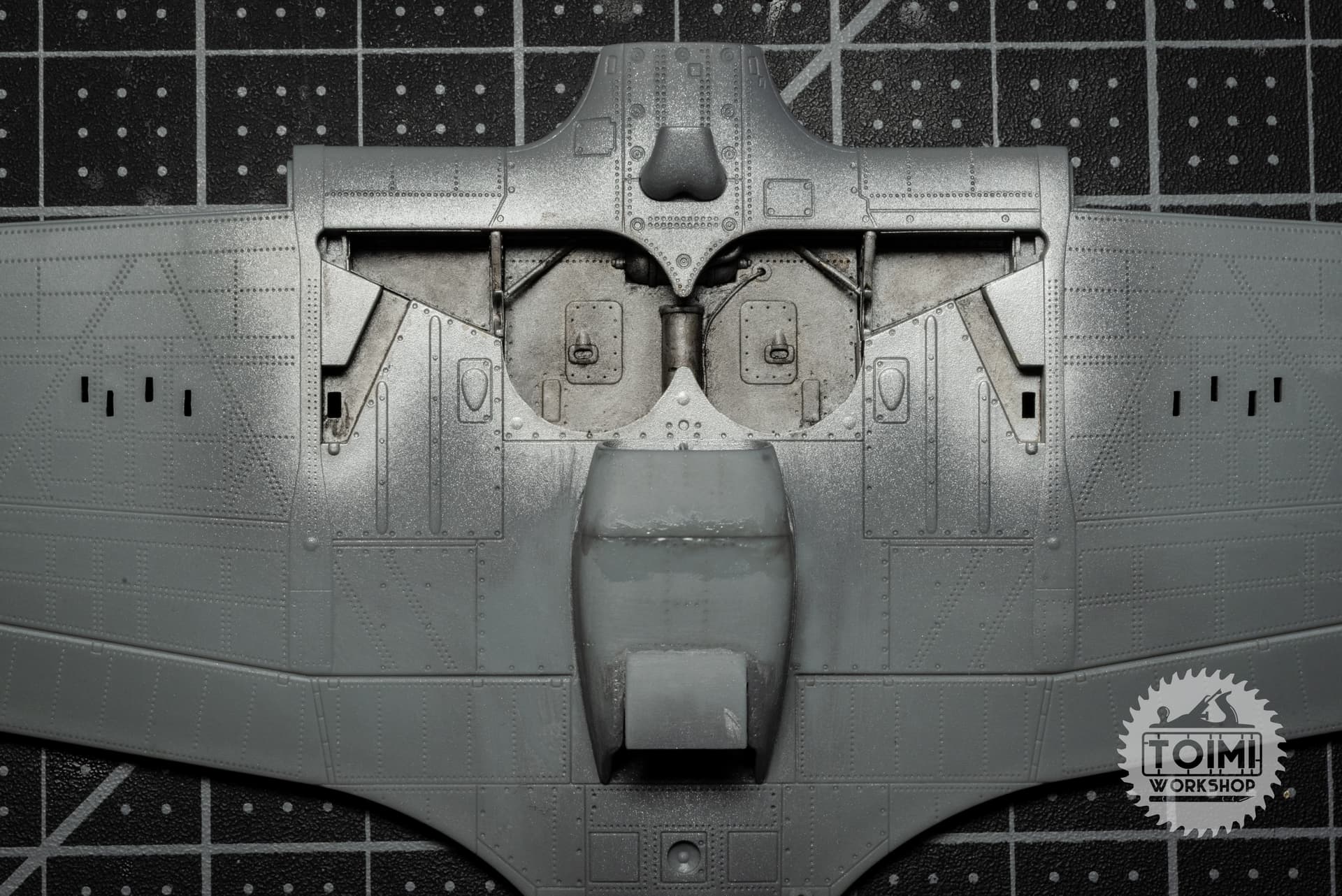
Got a little more detail work done, skipping ahead to the landing gear bays since all my PE tools were out. Lots of good reference photos out there!

5 Likes

I added some basic brake lines to the gear struts; can see now in the photo that I have a little glue cleanup to do.

Next, I skipped ahead to the wing machine gun bays – can you tell that I’m procrastinating the cockpit detail painting? :unamused:

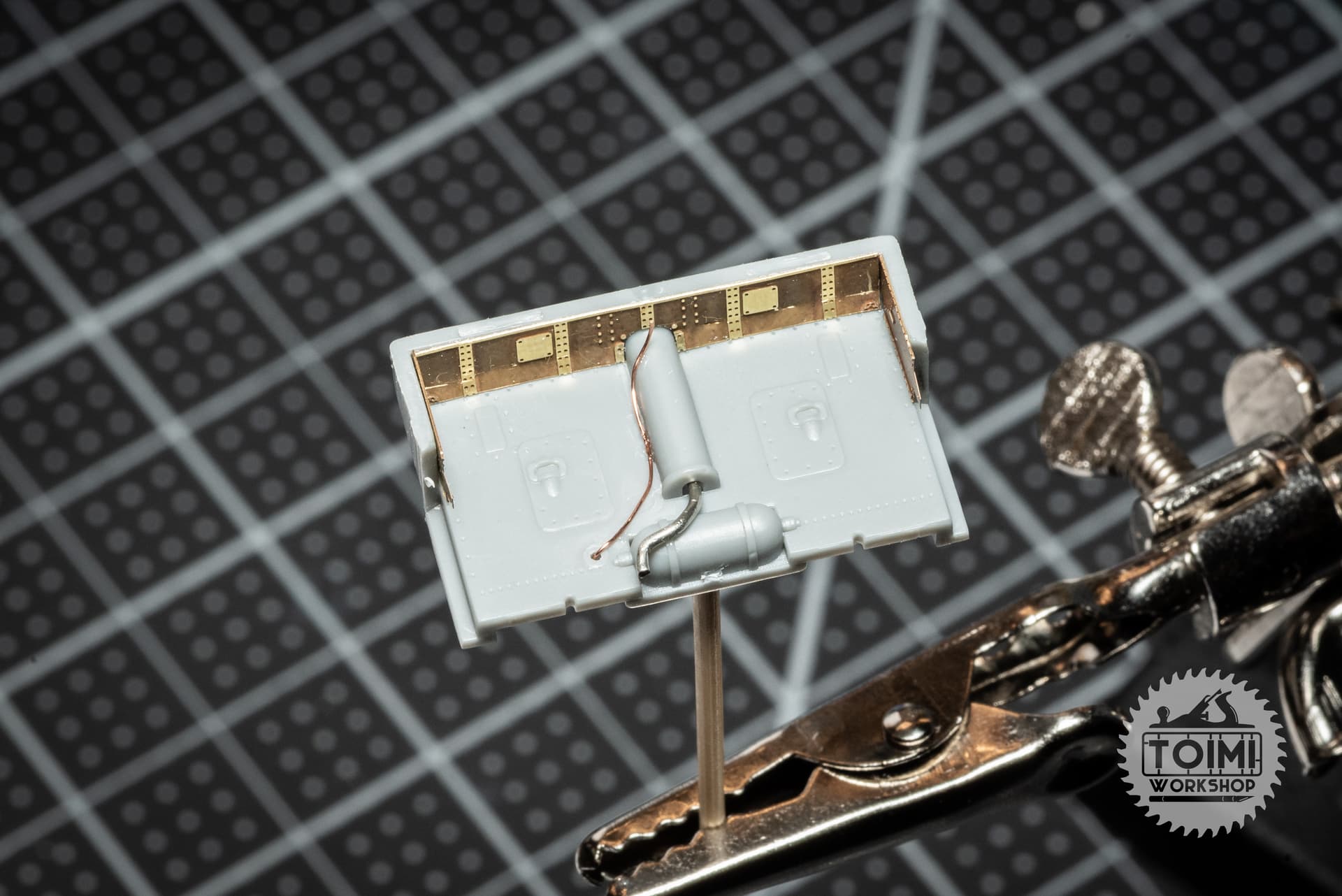
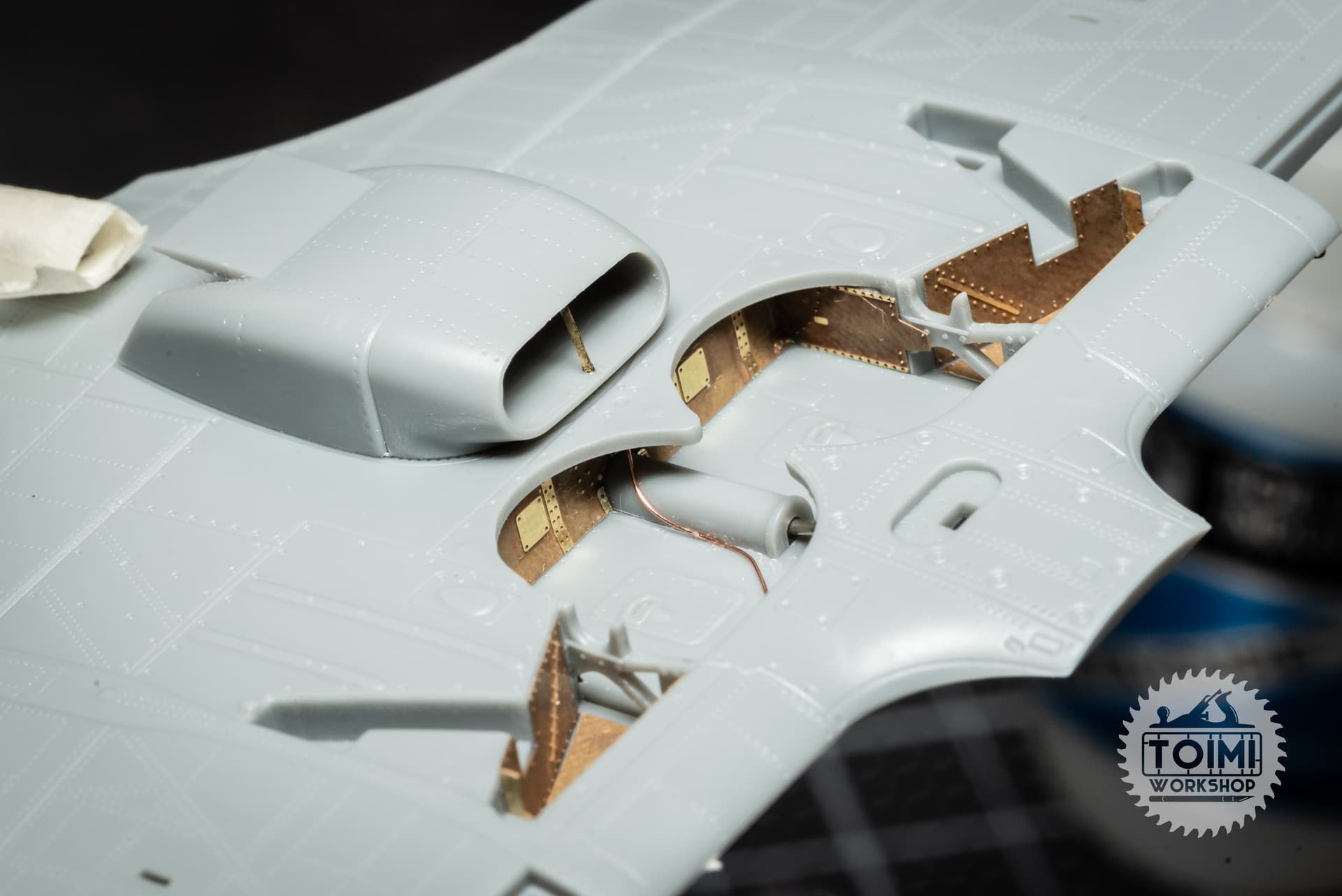
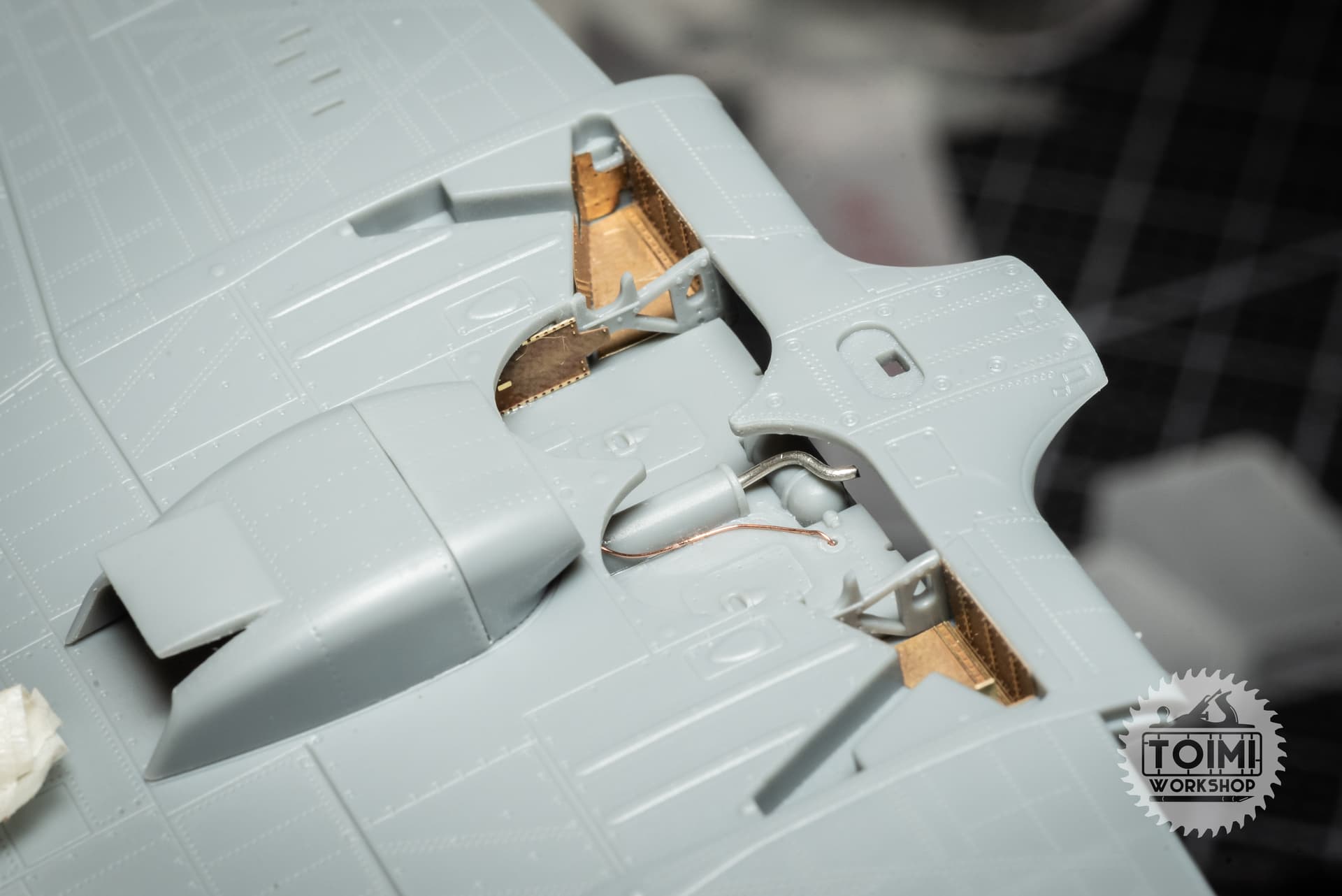
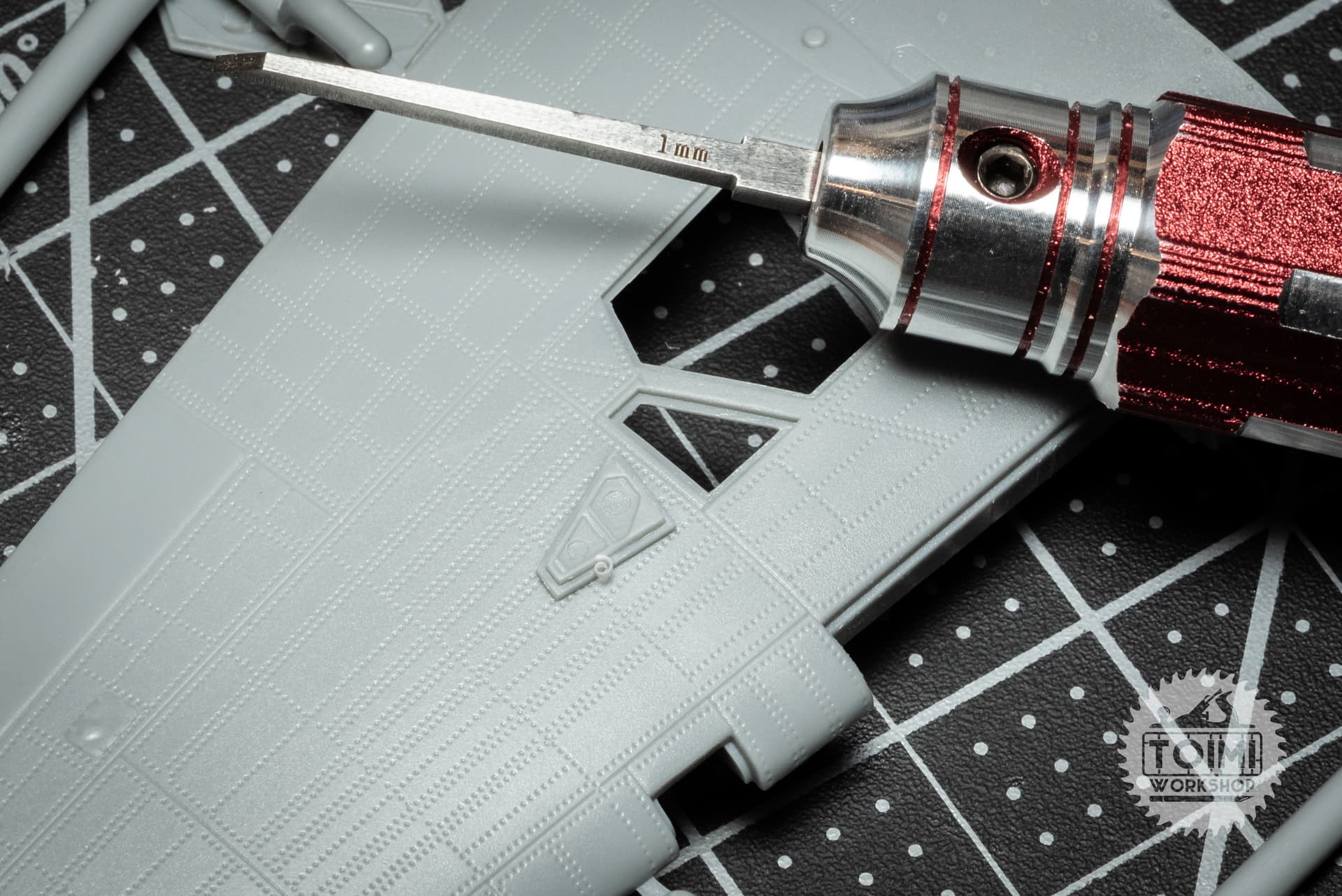
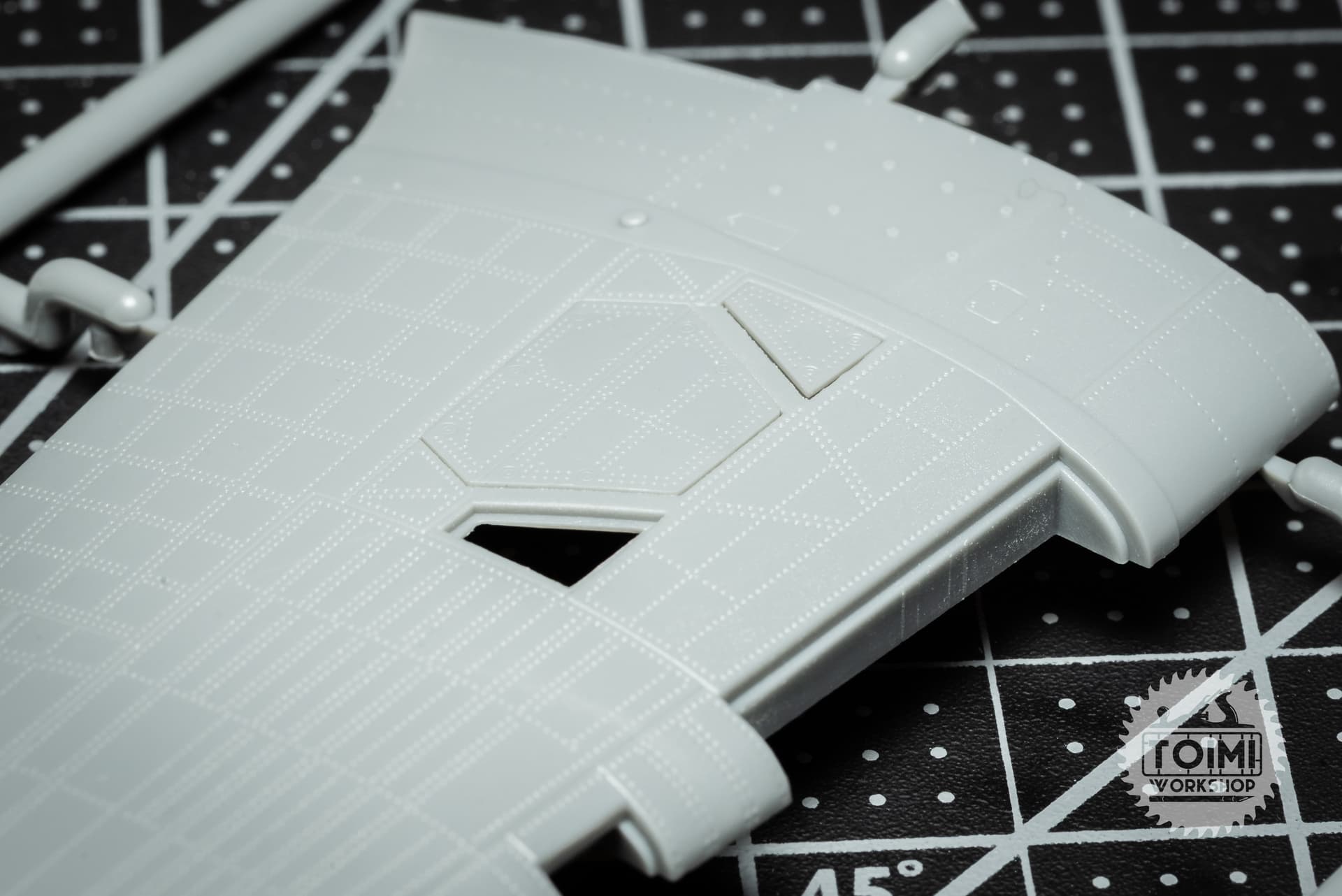
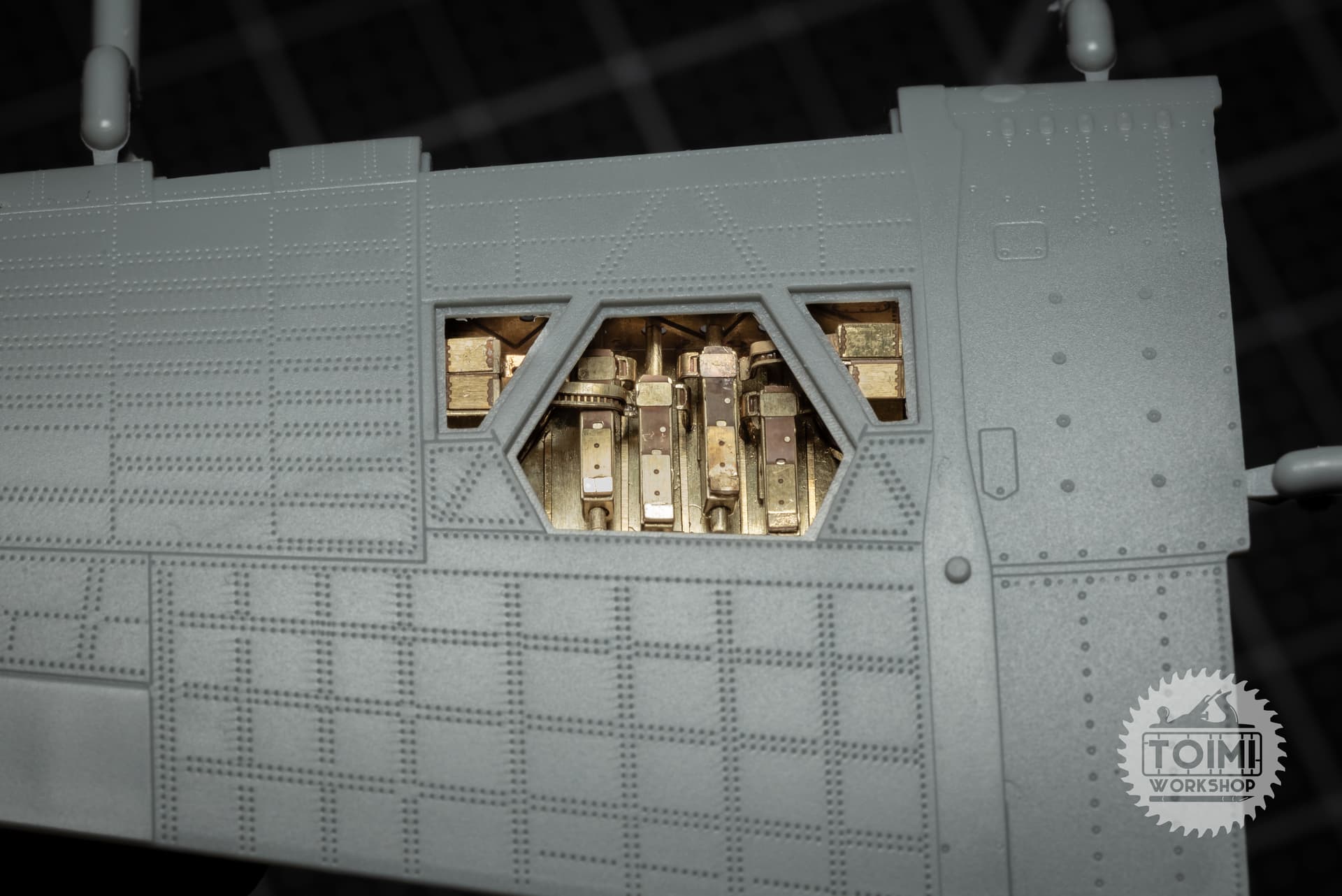
For the starboard wing, I’m going to have the panels closed up. The “lids” took some VERY careful fitting. This little tool was sold as a scriber, but it never dawned on my until this project that it’s really just a chisel. The woodworking mantra of “happiness is a sharp chisel” holds true in plastic, too.

Here you can see the main panel mostly fits now; the smaller one still needs some more passes with the chisel.

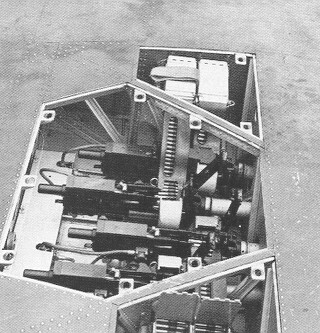
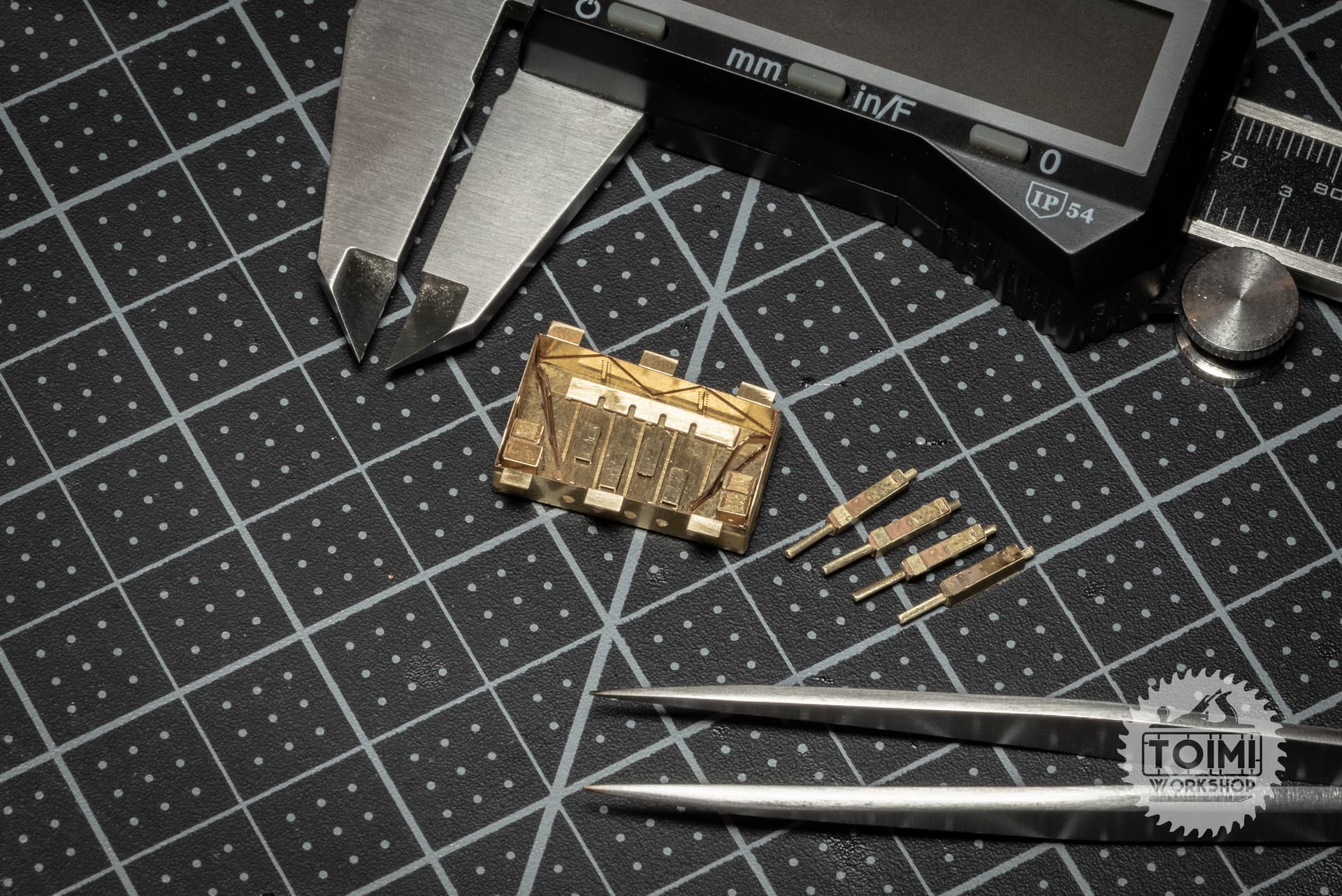
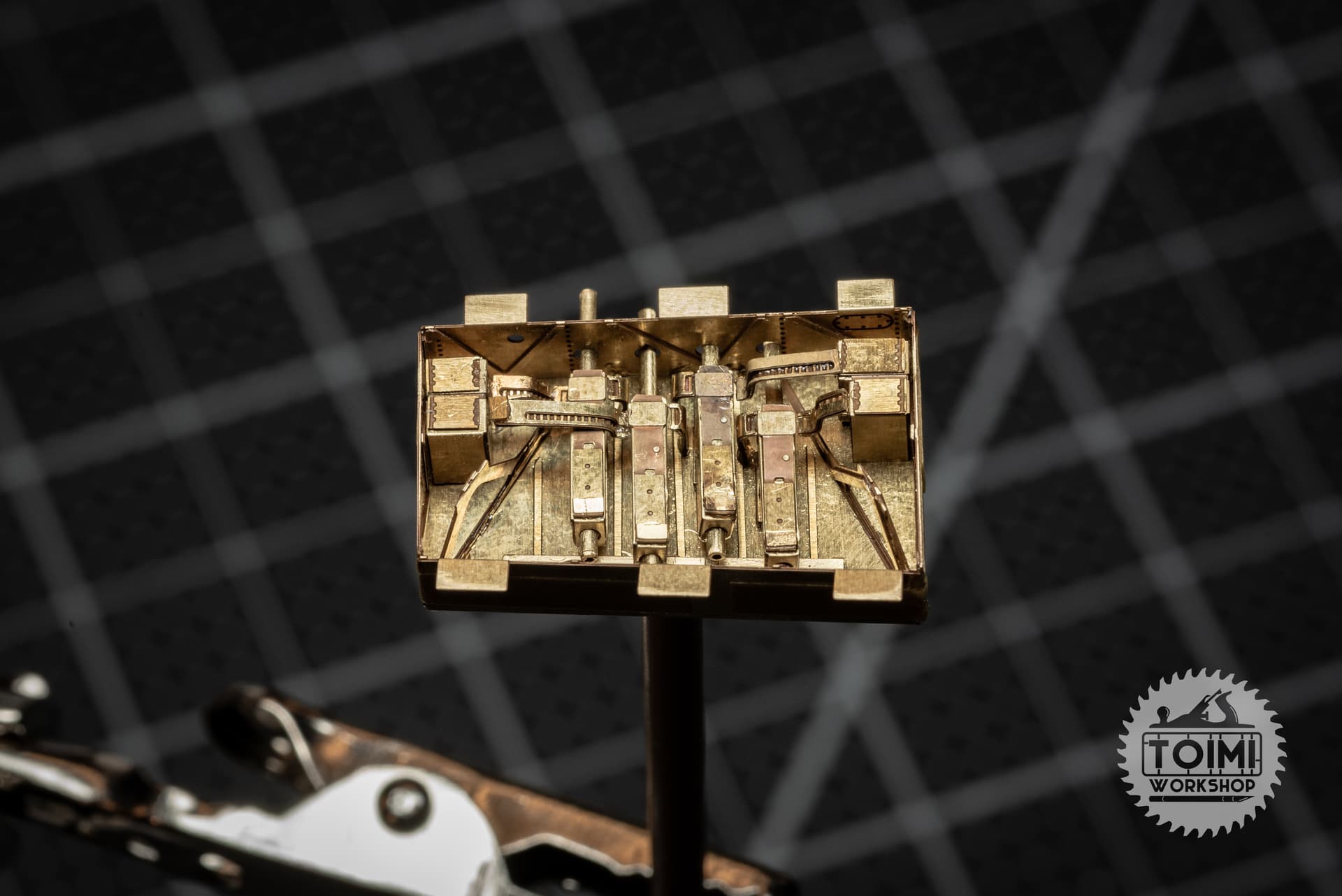
The port wing guns will be exposed. The Eduard photo etch set is actually really fun to work on – it looks intimidating, but it goes together well and needs only a few small mods to match the reference photos. One trick for PE “boxes” like this is to use some Tamiya tape to strap the outer corners. Then some CA glue can be smeared into the joins from the inside. If the exterior of the box won’t be visible, the tape can stay in place.

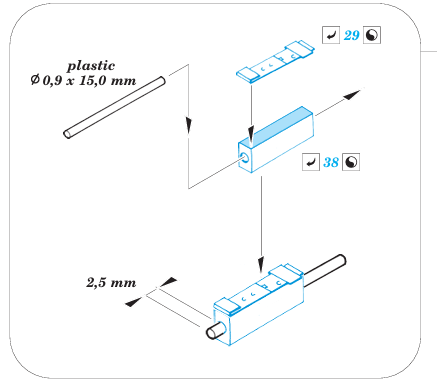
One other note for anyone else working on this in the future: Eduard’s instructions offer dimensions for the rod you must supply to assemble the guns. However, the 2.5mm measurement for the portion that sticks out the rear of the gun must be a misprint.

A stub that long doesn’t allow for the proper staggered fitment of the guns in the bay, which means the ammo chutes won’t line up correctly.

Last night I sat staring at the misaligned guns and tried to decide whether to leave them as “good enough” or tear the assembly apart and start over. This morning I decided to follow Will Pattison’s rule of “fix that s*&!t.” Luckily, the parts popped apart without too much trouble and the final result, with the rear “stub” at 1mm, is much better, and matches both the drawings in the instructions and the reference photos. (Obviously I have yet to reinstall the guns in the bay.)

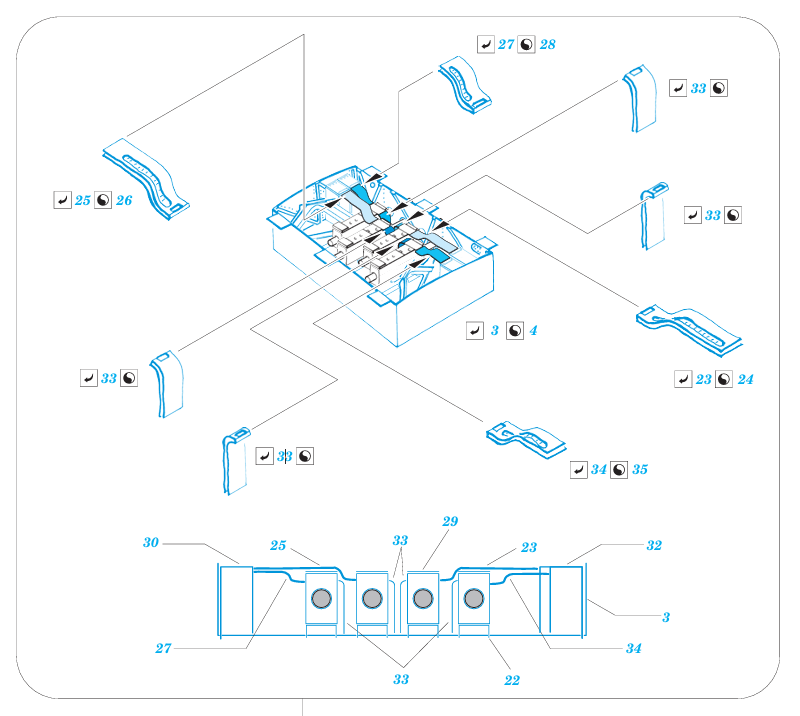
I’m currently stalled, however, trying to get the belt chutes properly fit. They require compound bends that must result in a perfect overall span from the magazines to the guns. If I come up with any tricks, I’ll share them here.

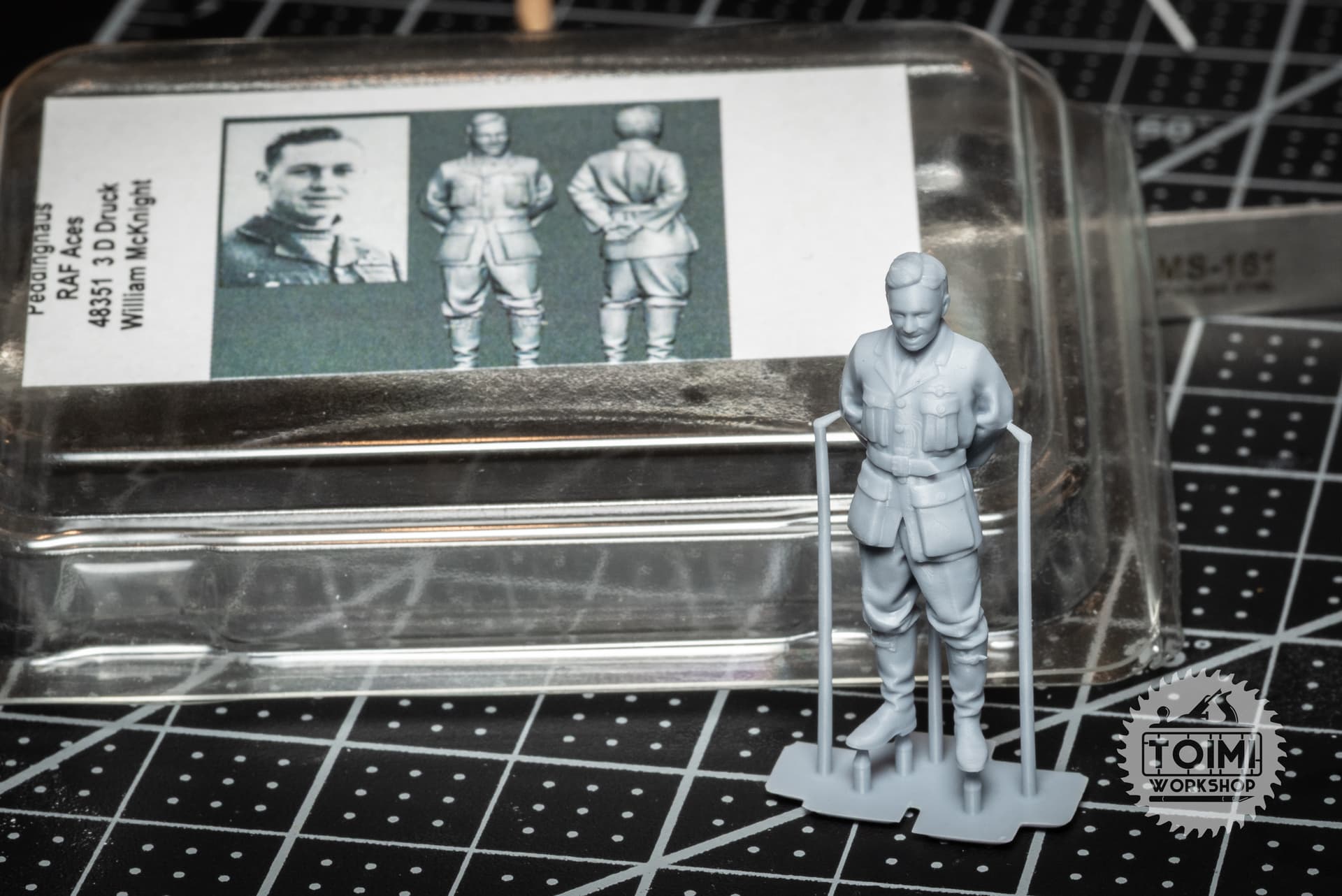
Lastly, I just got this in from SuperHobby in Poland. If I can get the painting right, it’ll be a nice add-on to the final display!

4 Likes

Interesting that the wheel wells aren’t treated in the same zinc chromate that you see in so many other aircraft. Is this because the early marks used a different material? I know they went to metal-skinned wings at some point but I’m pretty sure there was a lot of doped linen over a steel and wooden that went into much of the rest of the structure

1 Like

Thanks Darren – interior paint colors of RAF aircraft, particularly of the prewar and Battle of Britain period, is a rabbit hole you are welcome to jump into if you are interested. However, I have never seen the zinc chromate yellow/green mentioned or used on an early Hurricane. Instead, surviving examples and period photos show that these surfaces were either treated with aluminum paint or, in the case of the undercarriage wells, sometimes the actual underside color was painted over the aluminum (maybe!).

In any case, “aluminum” is the “most correct” choice as far as I can tell for all interior bits, including the cockpit framing and landing gear bays – and not counting the plywood cockpit “walls” or fabric fuselage covering.

This particular aircraft, Gloster number P2961, was delivered brand-new to 242 Squadron in May 1940, and was definitely a metal-winger. Metal Hurricane wings began to replace fabric ones at Gloster in April 1939. (per production page 006 and “Hurricane” by Leo McKinstry.)

2 Likes

Boy am I glad THAT is done. Those ammunition chutes! The compound bends, and the resulting change in span, was so frustrating. The instruction sheet makes it look easy, and maybe it would have helped if they’d had this bending guide printed at 1:1 scale.

Instead I had to keep re-doing them, they’d work-harden and then break into pieces, and then when glued back together, the spring tension would pop them apart just as I put them into place. Luckily I’m only doing one wing, so I had spares – I needed most of them. I’m still not 100% happy with the fit, but once installed into the wing, they should be fine.


2 Likes

Ha, yes there’s quite a few rabbit holes one can jump through in this hobby! I think you’re on the money seeking the “most correct” approach, with your intent reflecting a surviving example.

Your PE work is absolutely phenomenal here - I note you’re experiencing many of the same frustrations as you did with the BA-6 tracks, with unforgiving pieces that would work to failure on the second attempt - While I don’t have any experience with PE, I’m classically trained as a civil engineer and reaching between the beers of my university days to the actual academic content I wonder if some sort of annealing process will make your life easier?

1 Like

My goodness, the details are wonderful. I did the Airfix Hurricane for the BOB gb. Your work is definitely kicking it up a few notches!

3 Likes

I have annealed PE before – it’s easy, with the brass being so thin, but also risky as sometimes the parts are SO FINE that the brass goes from “red hot” to “evaporated” in about a half second. The more I think about it, the difficulties with these ammo chutes is really hard to describe – it would require its own post. In any case, annealing definitely would have helped!

Thanks @waikong-- I missed it until now, but your Hurricane looks great! In fact the Airfix plastic wing guns look so good it makes me wonder if all this PE work was worth it!

1 Like

That is some amazing detail on the seat, machine gun bays, and wheel wells. It’s going to be a stunner!

1 Like

Everytime I use PE, I wonder if its worth it. :grinning_face:

1 Like

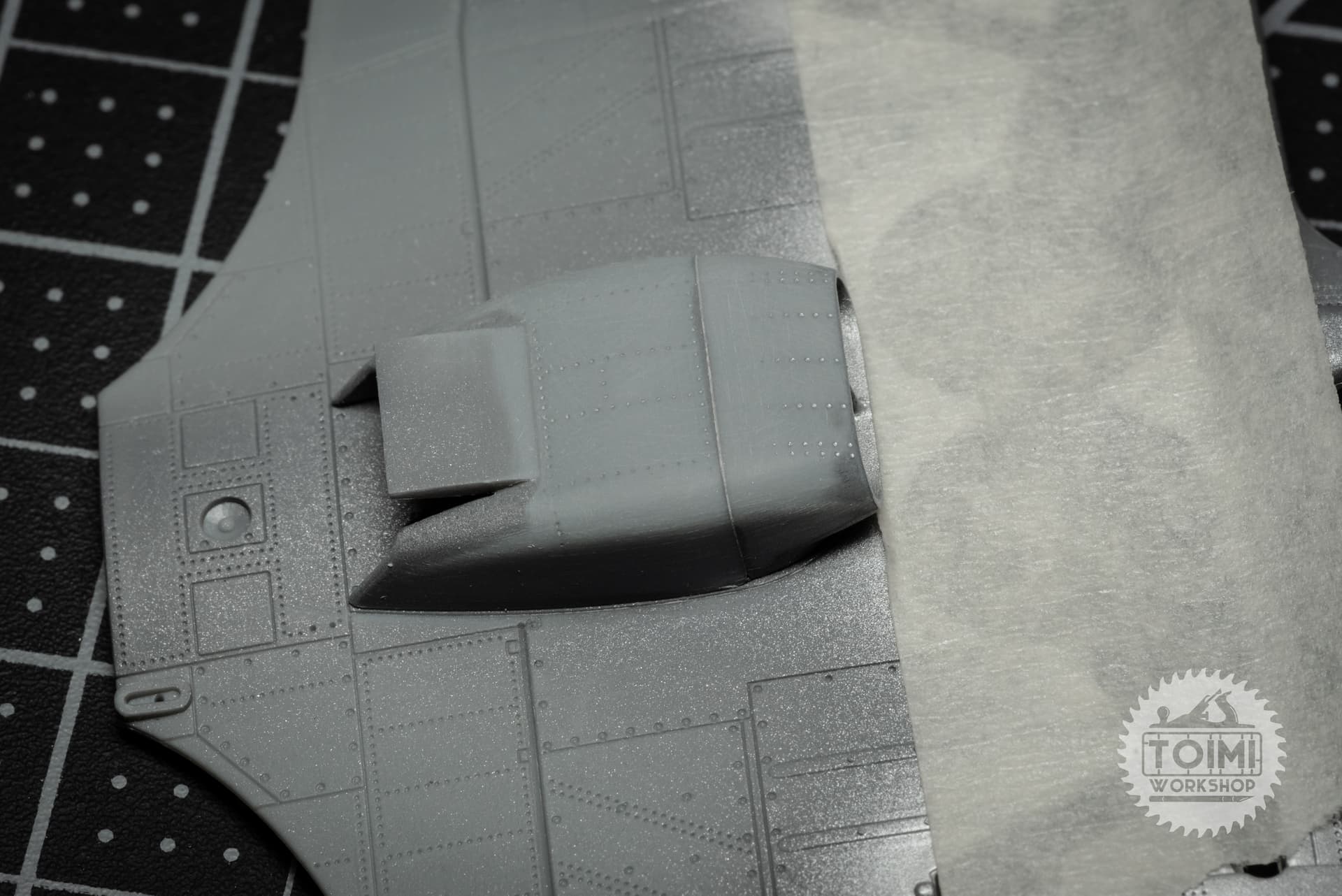
The radiator scoop on this kit is nicely detailed but the front half of it, a separate part, is about 5% undersized, leaving a nasty step at the seam. I avoided thinking about it long enough that I actually installed the scoop and got all the PE parts fitted before deciding I couldn’t leave it alone, so I started doing some sanding; setting myself up for some rescribing and maybe even riveting not too far down the road. Hope I don’t regret this move.

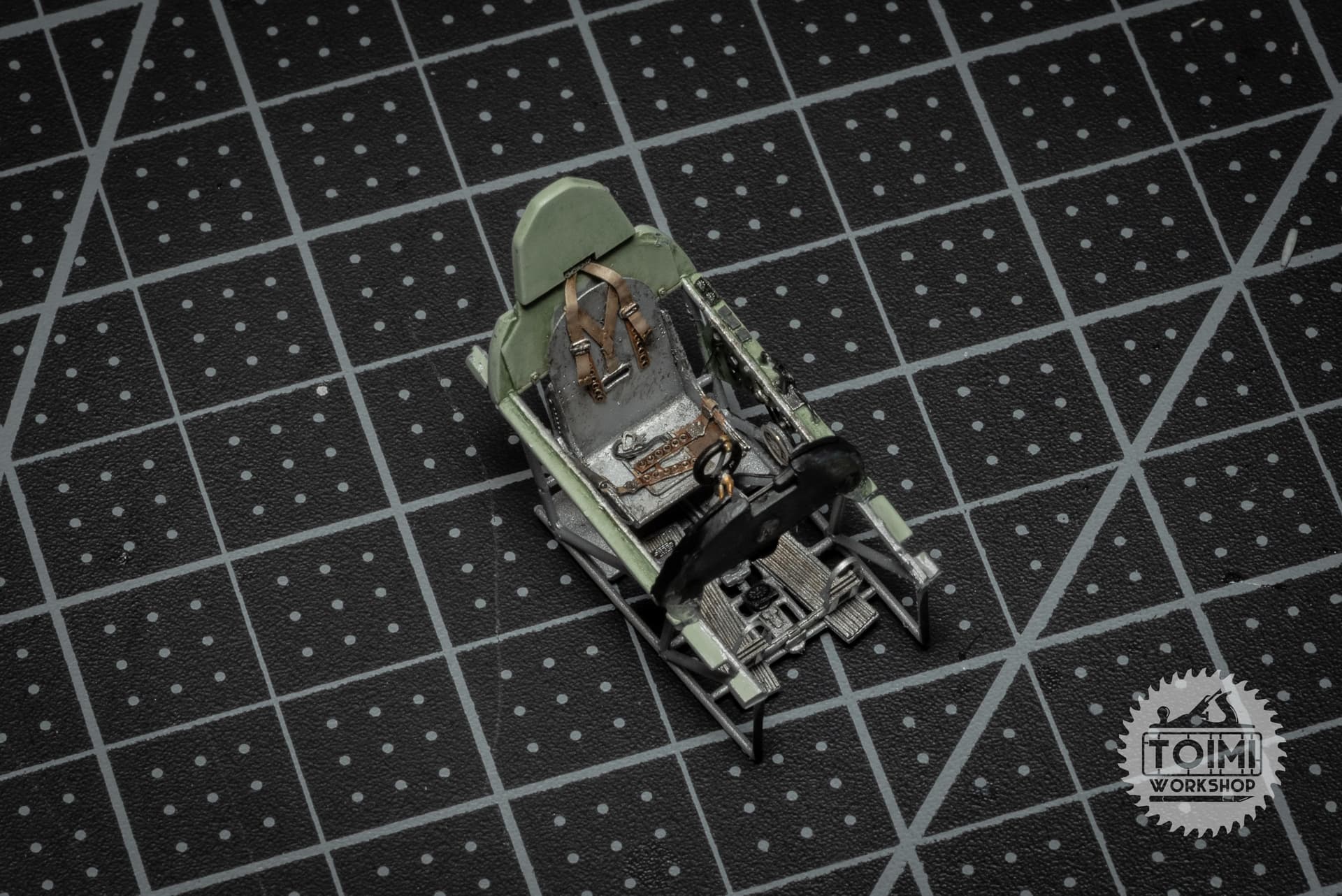
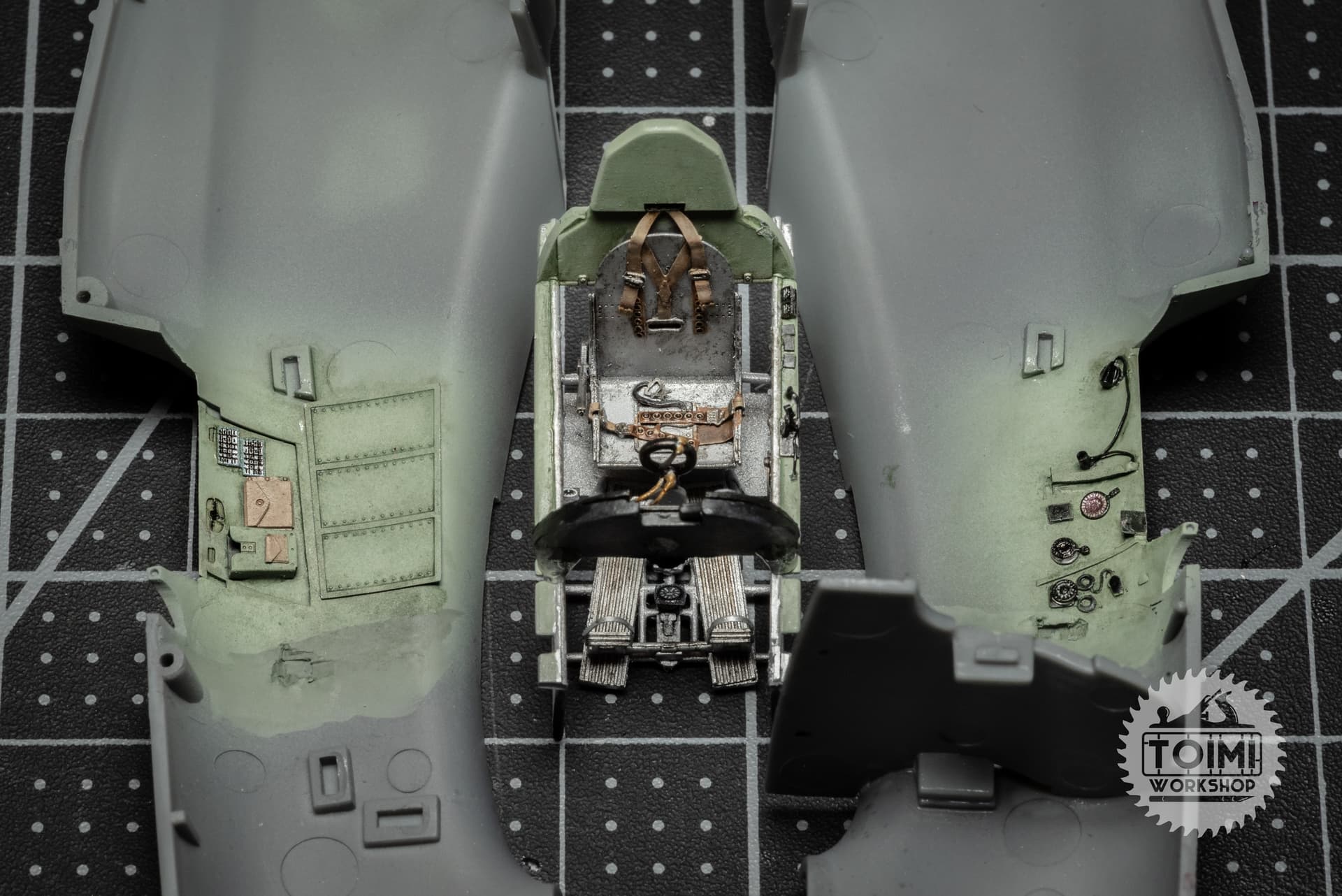
In more fun news, I got the old hairy sticks out and got the cockpit detailing (mostly) done. This meant acrylic painting first, then the addition of the remaining PE gauges/levers/etc, and then some chipping – reference photos show lots of aluminum paint chipped off the aluminum seat and tube structure, particularly where it might be stepped on while entering the cockpit. This just meant using various shades of Vallejo aluminum with some fine sponges to hit the high-traffic areas. Then it was on to oil paint washes and weathering to add some contrast, grime, and wear/tear.


I really like the way the Eduard instrument panel parts look. However, it’s worth noting that they are slightly wider than the kit IP part, and require some pretty significant filing on the sides to allow for a proper fit within the fuselage. Doing this without damaging the delicate three-layer, factory-painted part was a challenge.

I also didn’t care for the glossy black finish, and found that hand-brushing some matte varnish around the raised instrument bezels was really easy and really improved the look, at least to the Mk.I eyeball. The camera flash is washing out some of that contrast.

Aside from a some final weathering touch-ups, I think this fuselage is ready to close up!

Lastly, some initial oil paint weathering of the gear bays, and some progress was made on the radiator scoop fitting. That is a particularly slow process, because I’m using slow-drying sprue goo for fear of having difficulty rescribing if I use putty.

4 Likes

Lovely work, that photetch set, where i can find it? or what brand is it ?

1 Like