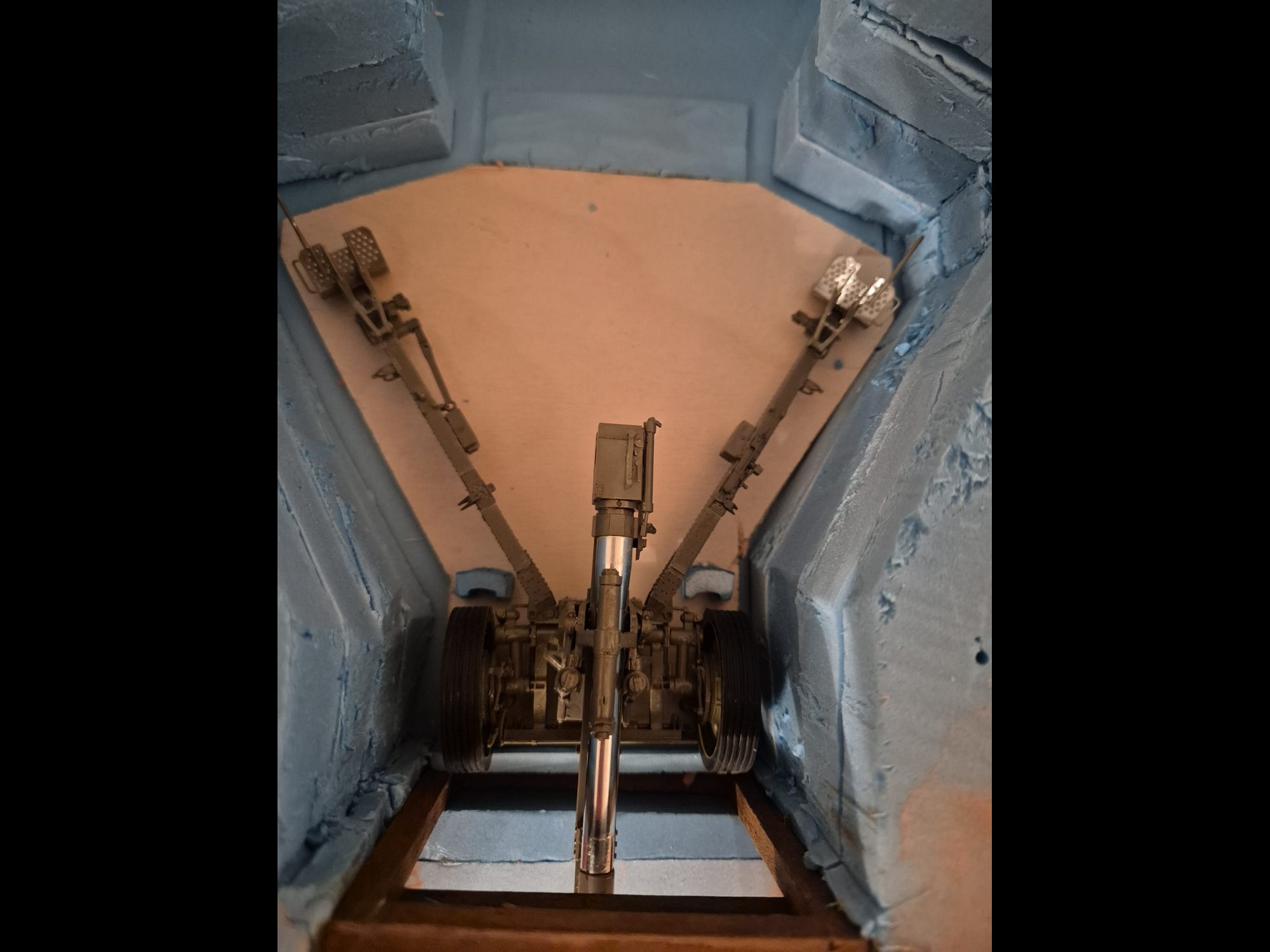
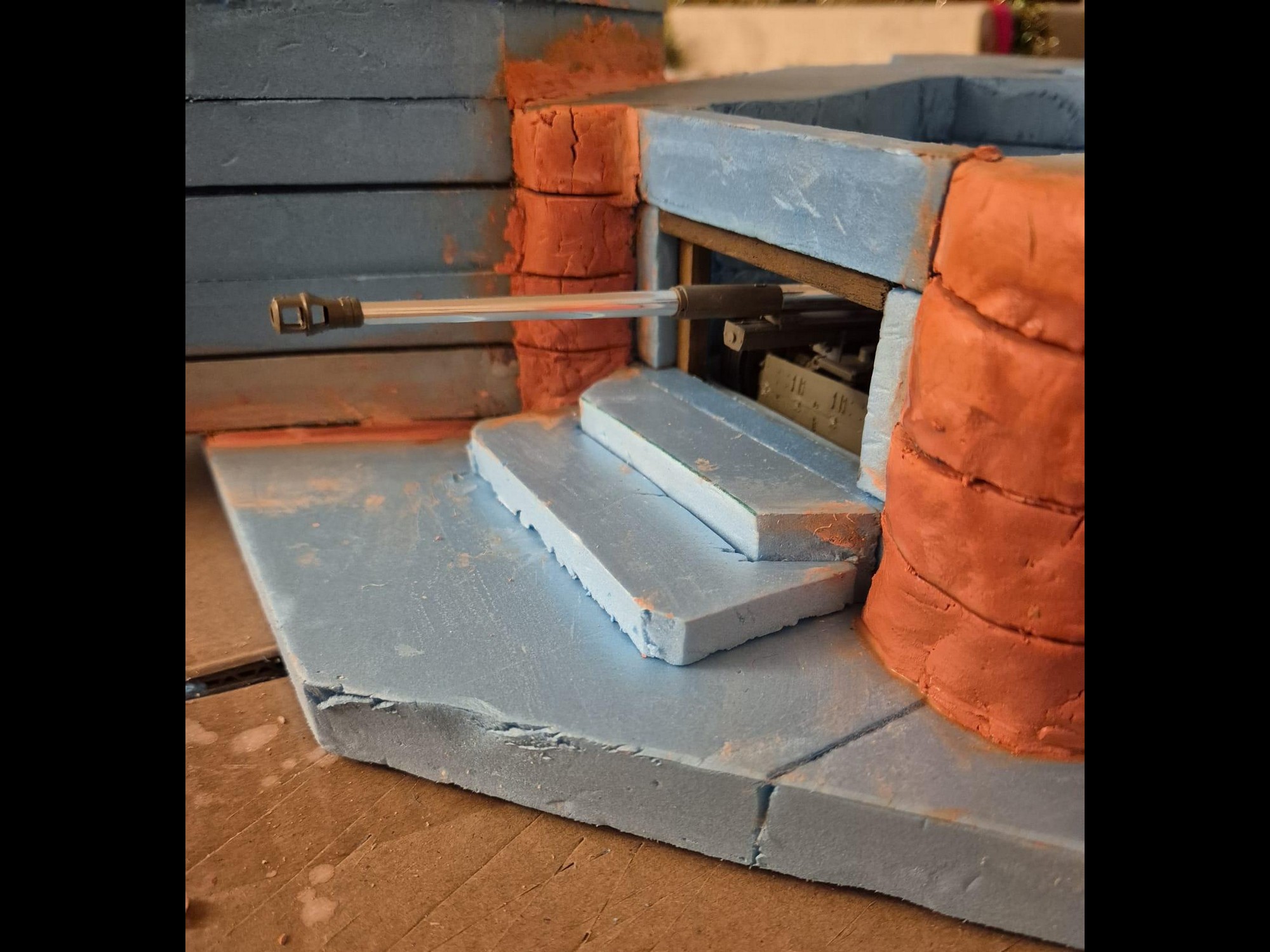
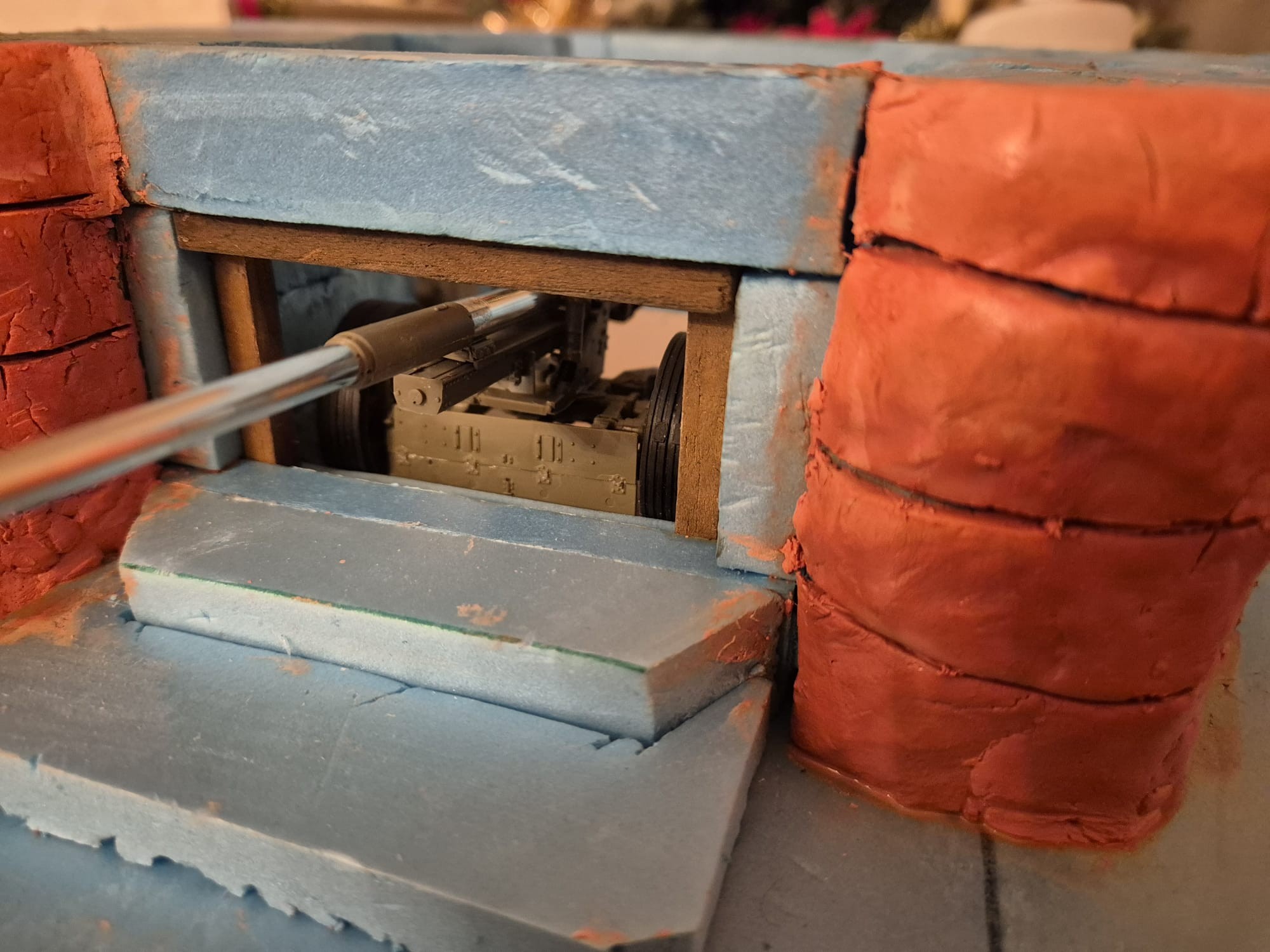
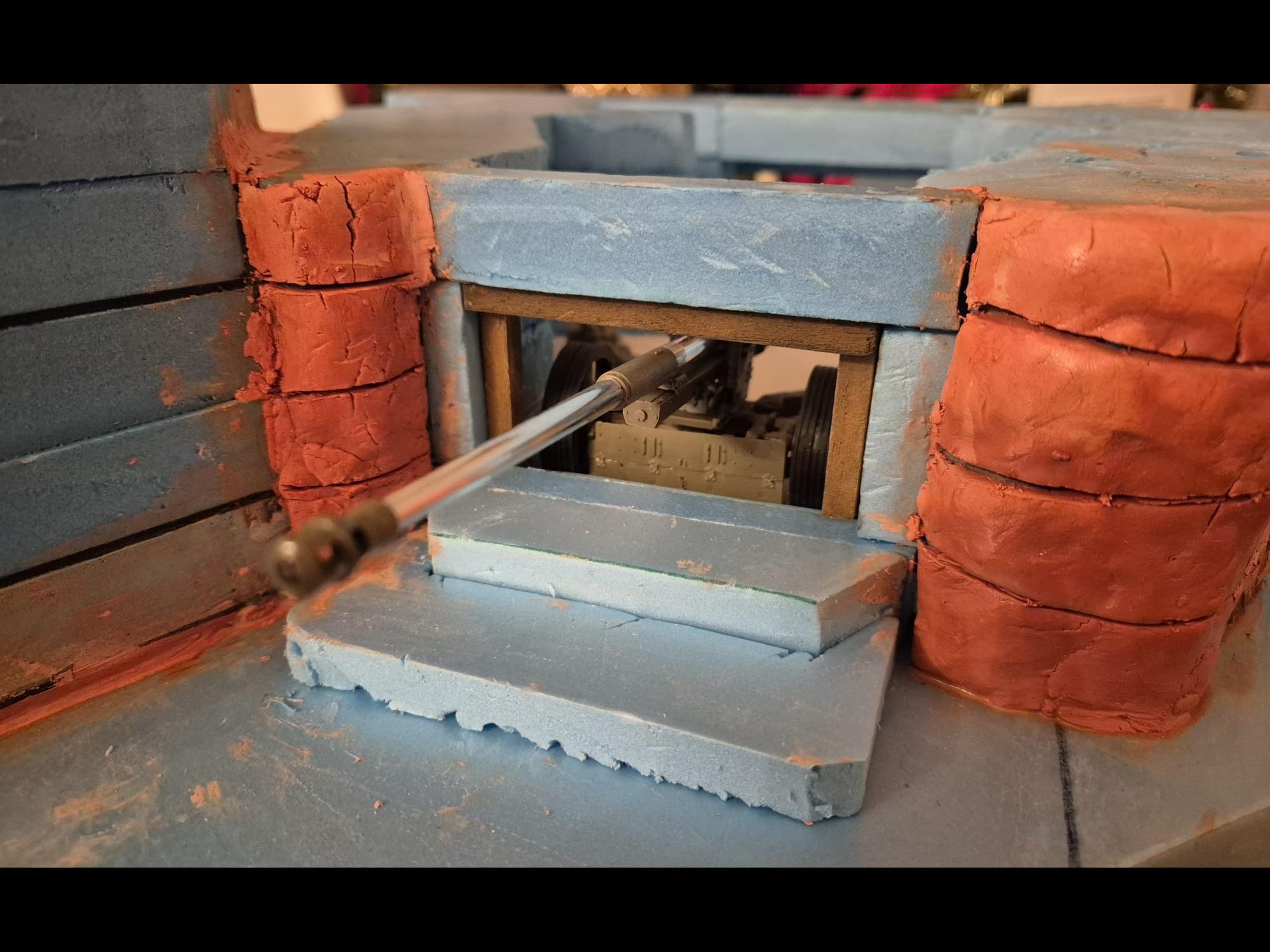
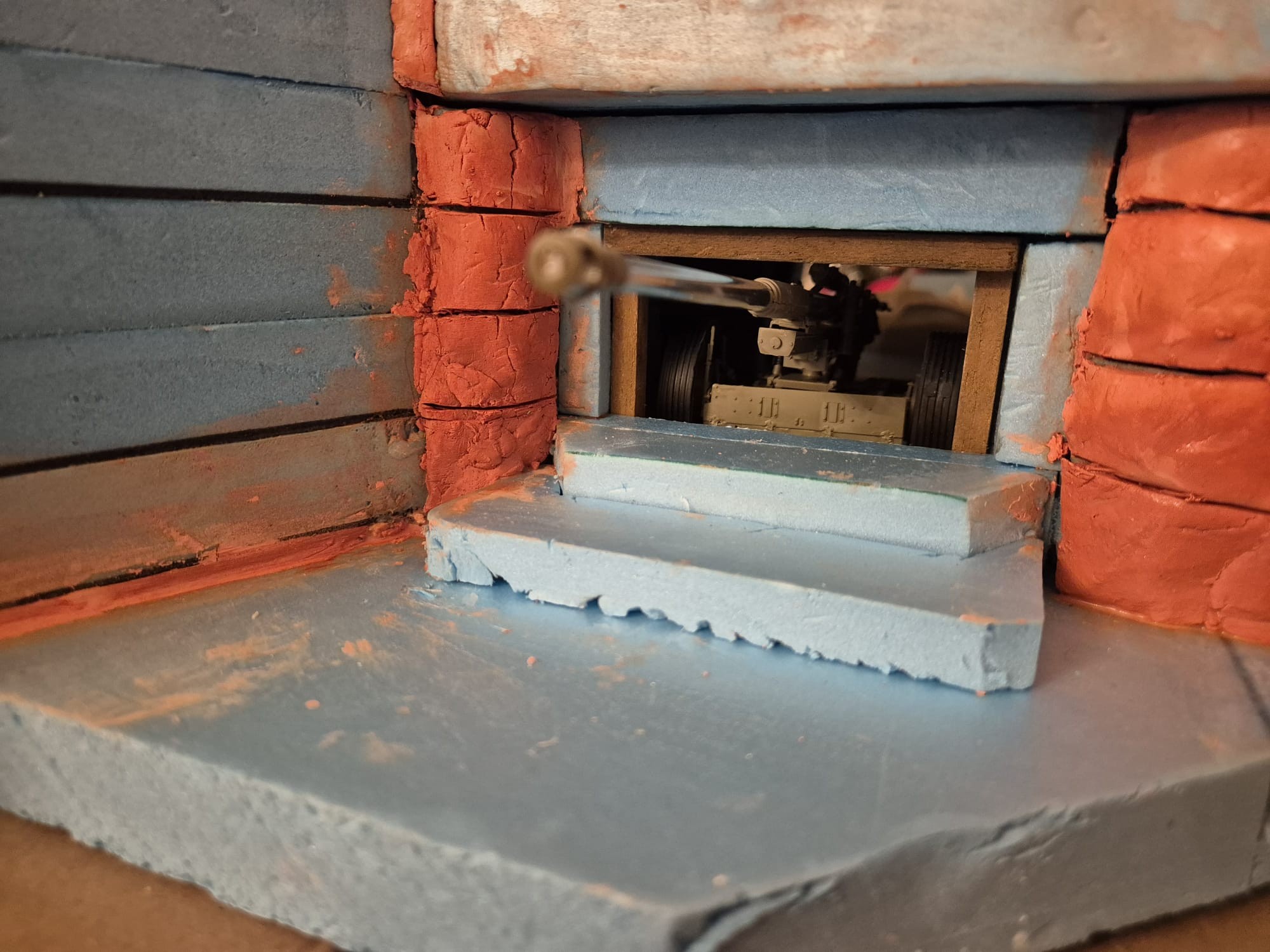
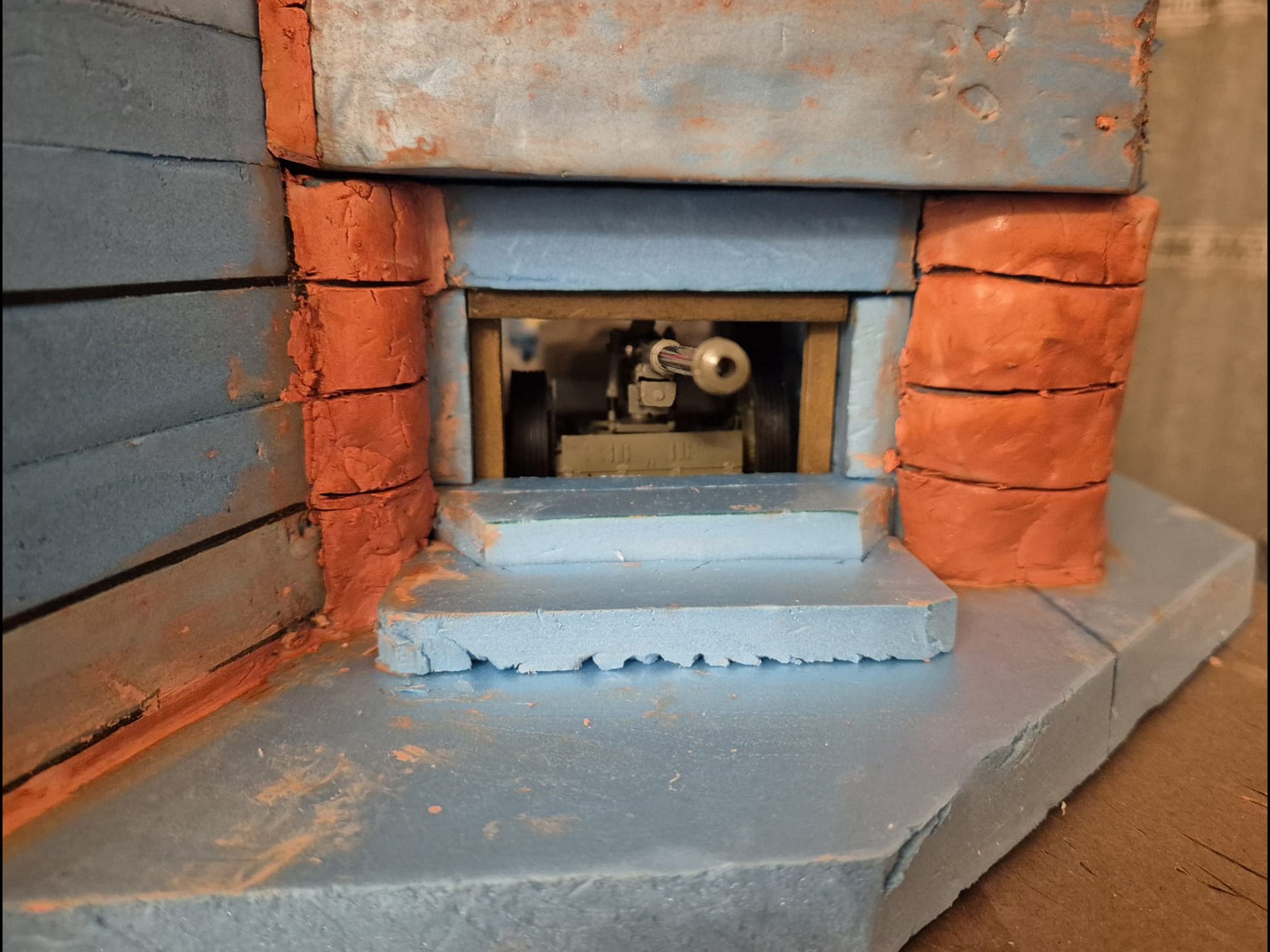
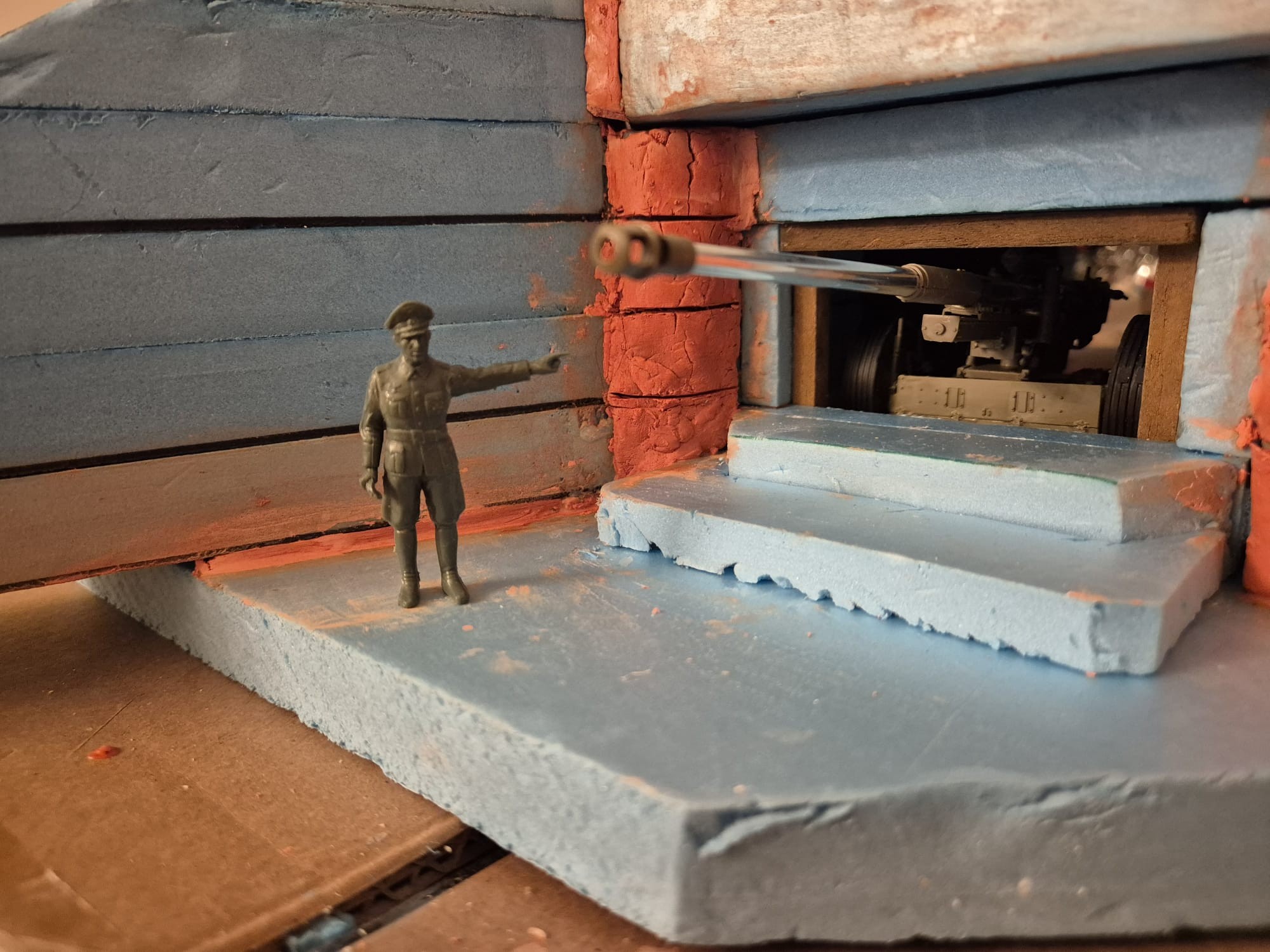
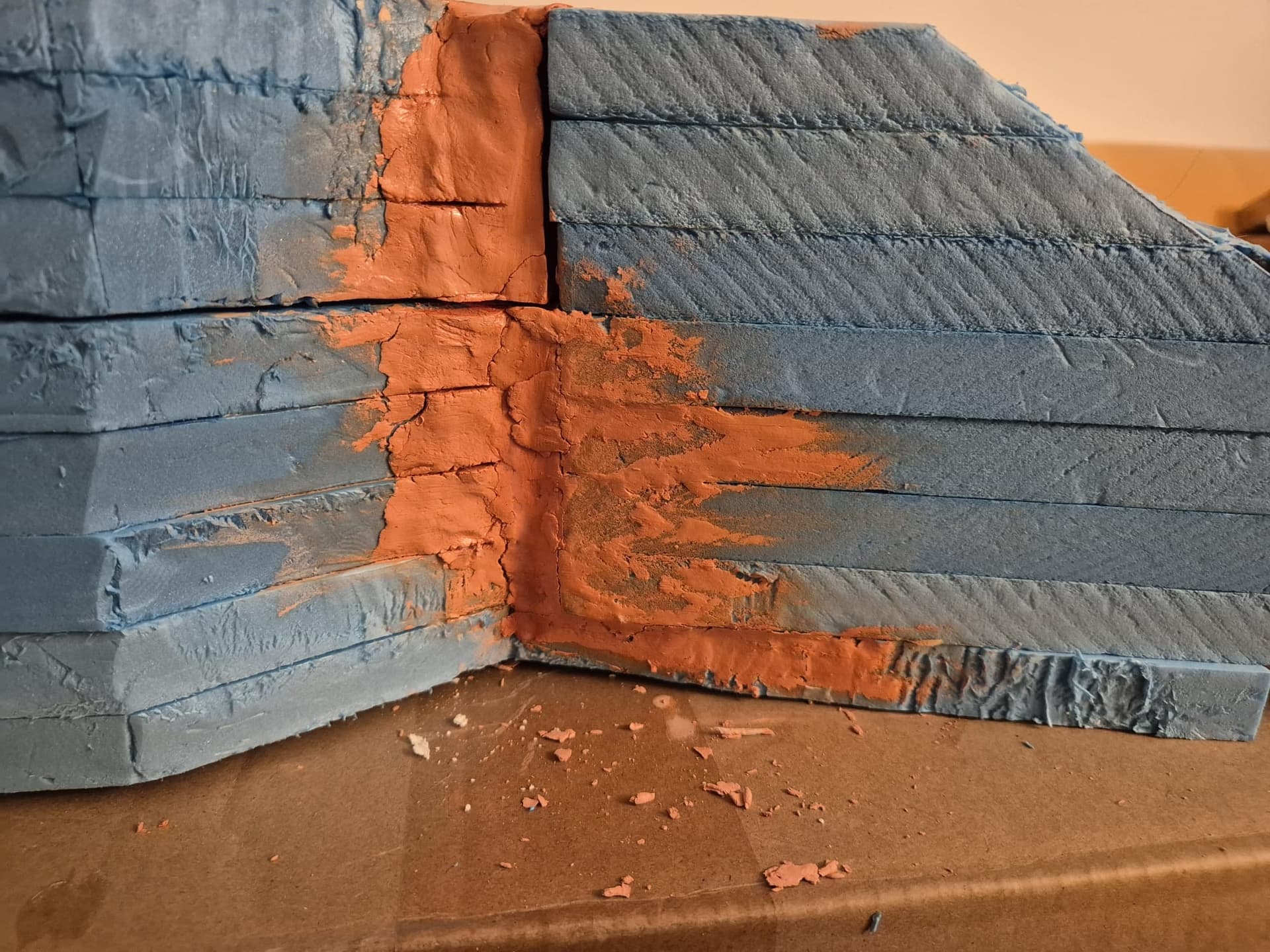
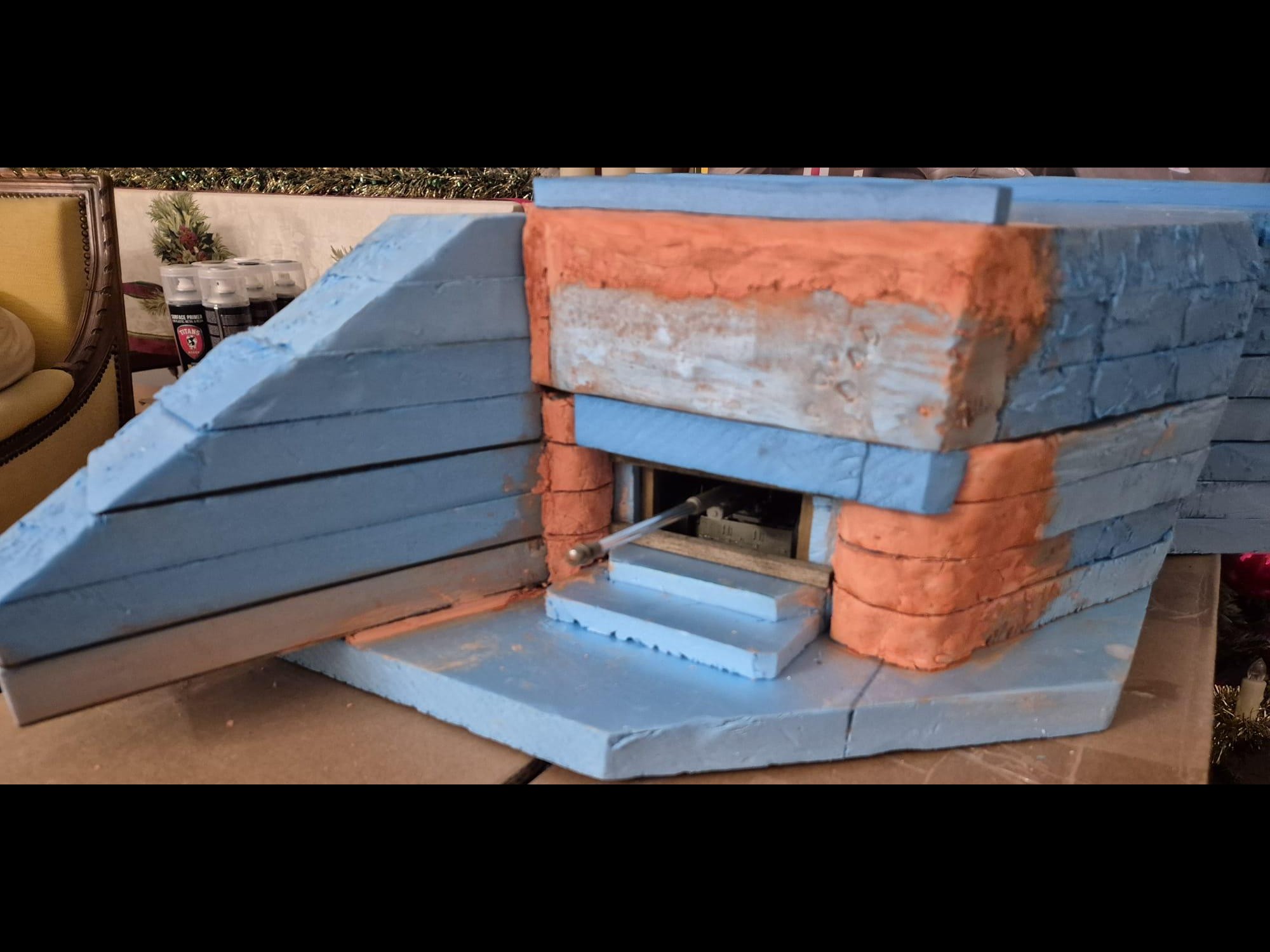
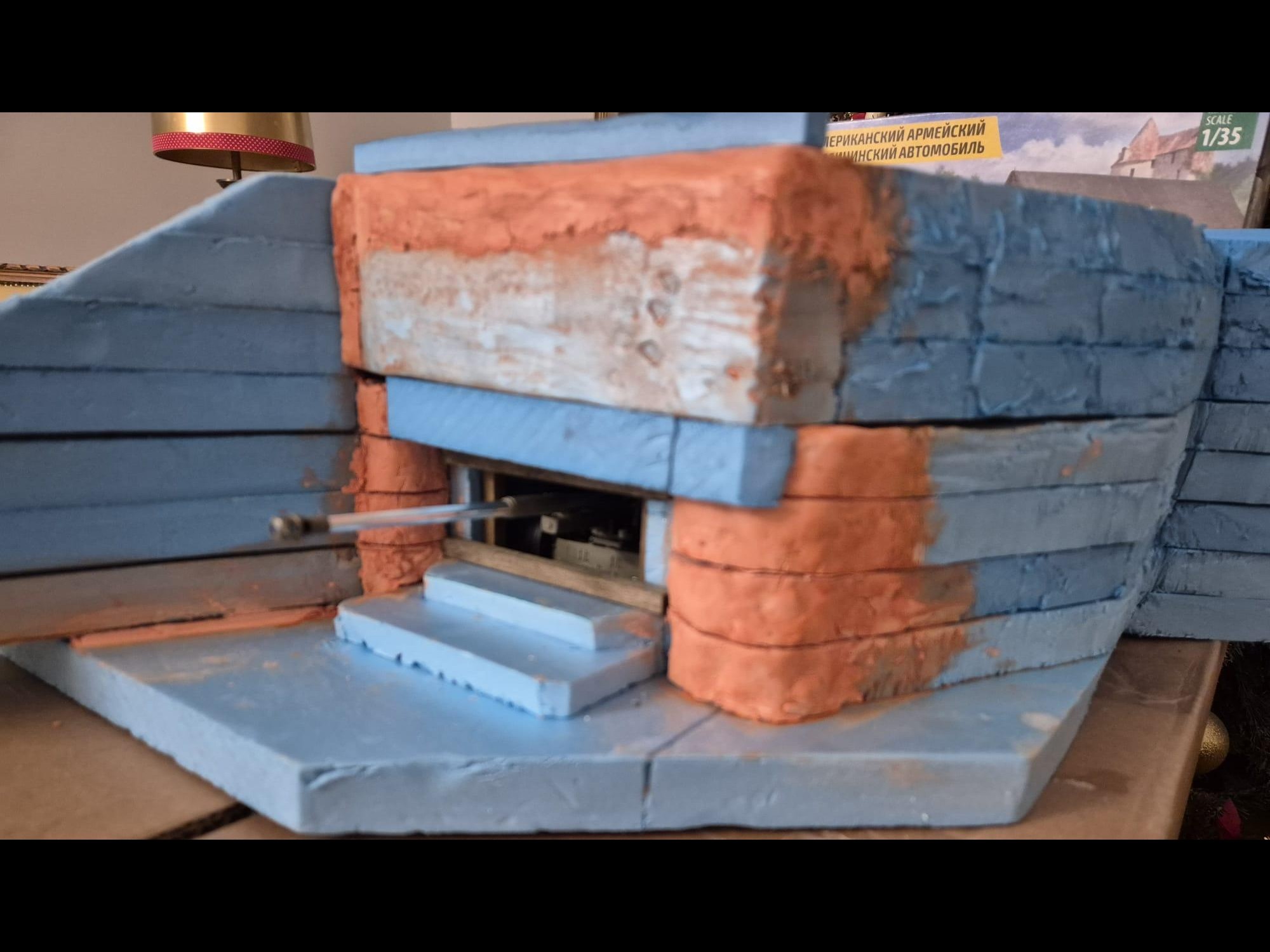
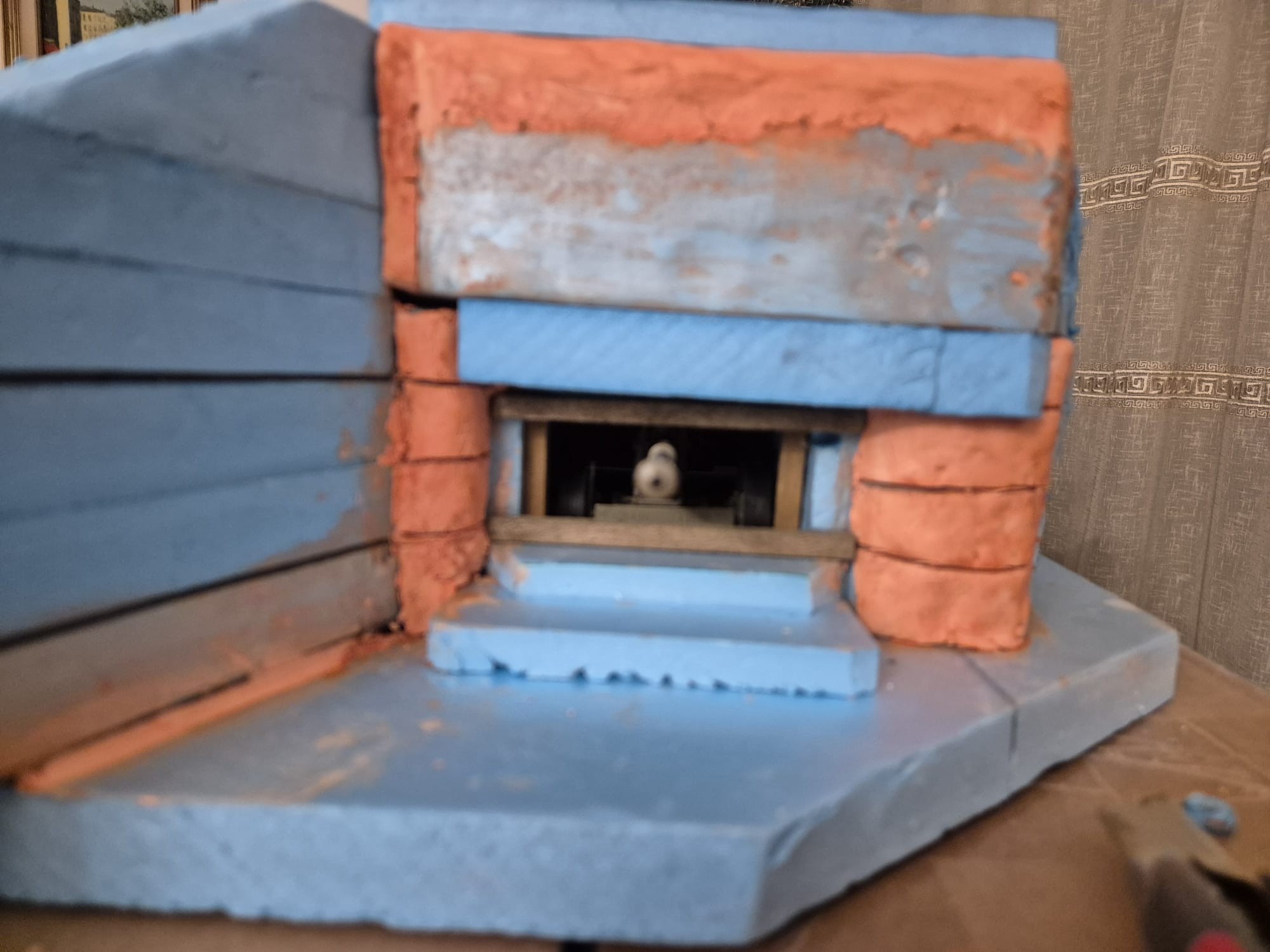
Building a scratch built R677 Bunker containing the PAK43/41 "Scheunentor" 88mm AT Gun

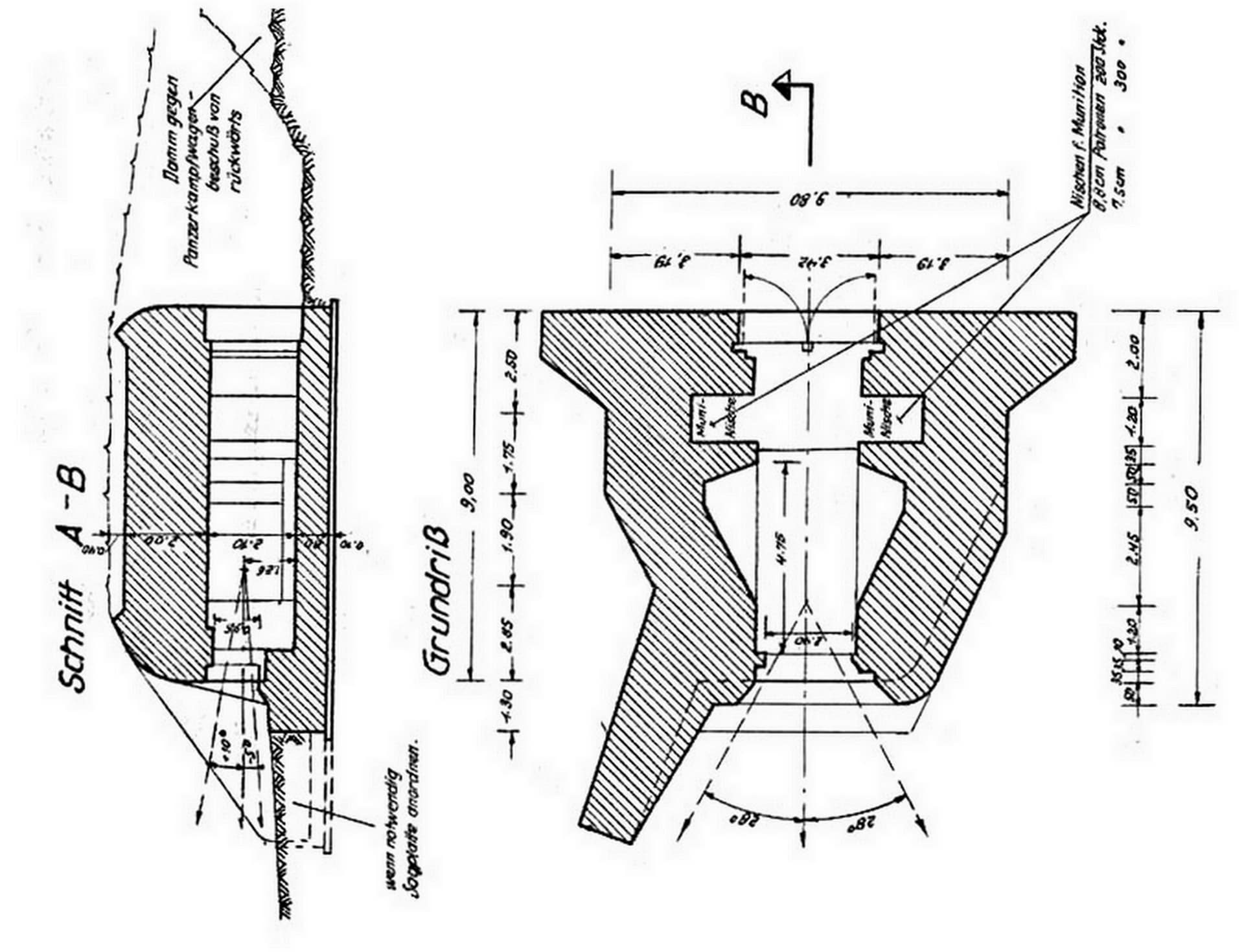
I gave it a rest with my current diorama to dedicate my full attention to reproduce a correctly shaped and fully detailed R677 Bunker as it appeared on the Fox Green sector of Omaha Beach.

I still don’t have pictures to show since I am still in the planning and designing phase, but at first glance it will be a huge one, much bigger than the one I had mistakenly commercially acquired.

But by bigger I mean, a bit taller than the previous one, which I will still keep but reserve for a Battle of Hurtgen Forest scenario in which it will be partially encased in a rocky hill.

Especially the top roof will have a rather tall and heavier appearance. Also, there will be more accurate chambers in it containing ammunition and soldier’s quarters to the rear.

Furthermore, the rear wall will be outstretched in angular wings. Most of it, alas, will then be covered in soil and vegetation, but the front and rear will indeed be well visible and if I do not mess things up, the frontal protection wall will have the correct angle of descent.

I also plan to have the massive roof able to be removed to display the scene inside the bunker.

All this of course can only be achieved with lighter material such as rigid foam boards only slightly covered with plaster and concrete compounds by either AK Interactive or AMMO MiG, or even both.

Since I do not have a 3D printer I will have to carve the foam with a dedicated hot wire following the drawings I have made on paper by just copying them from my PC screen in the right scale.

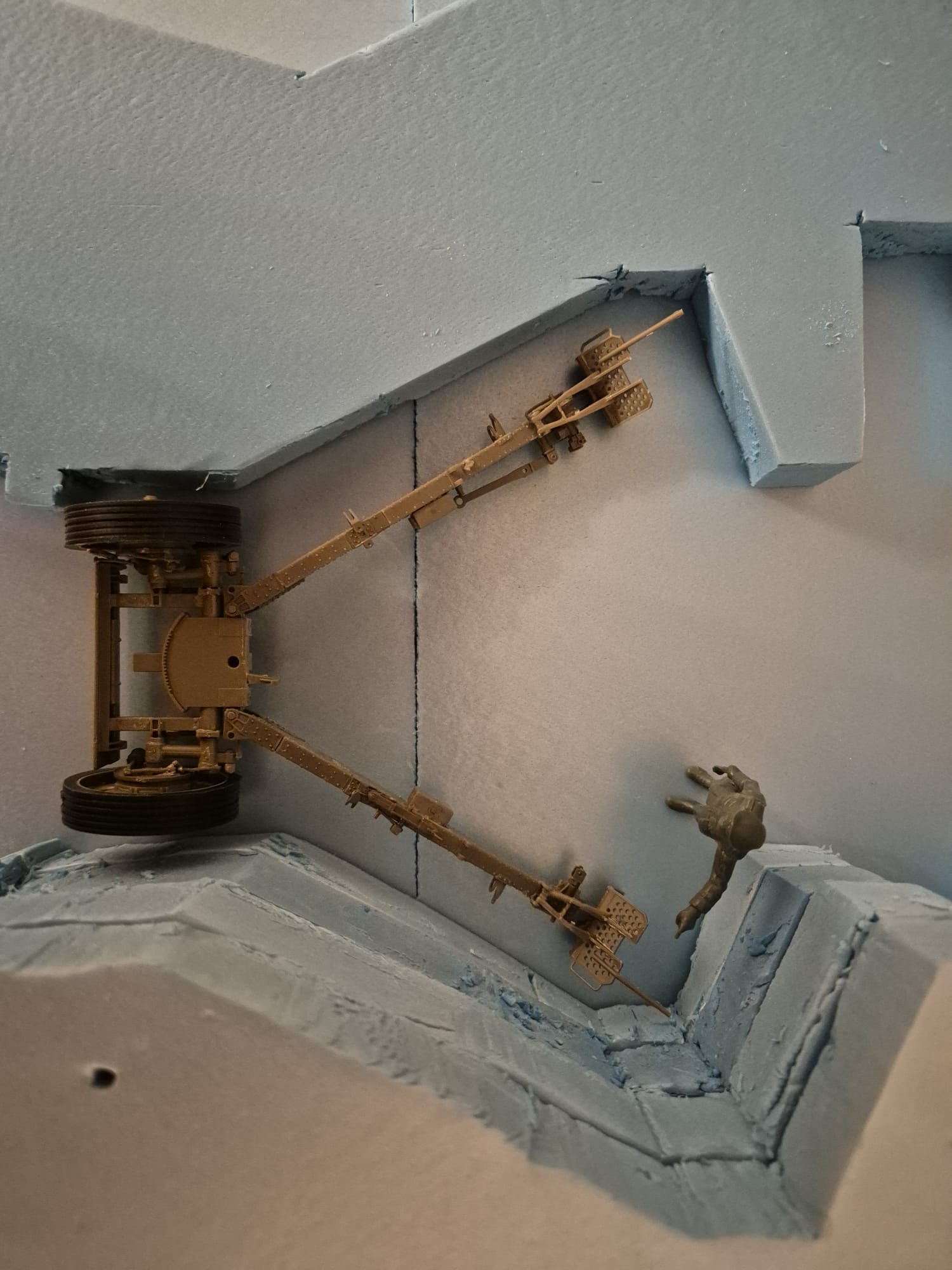
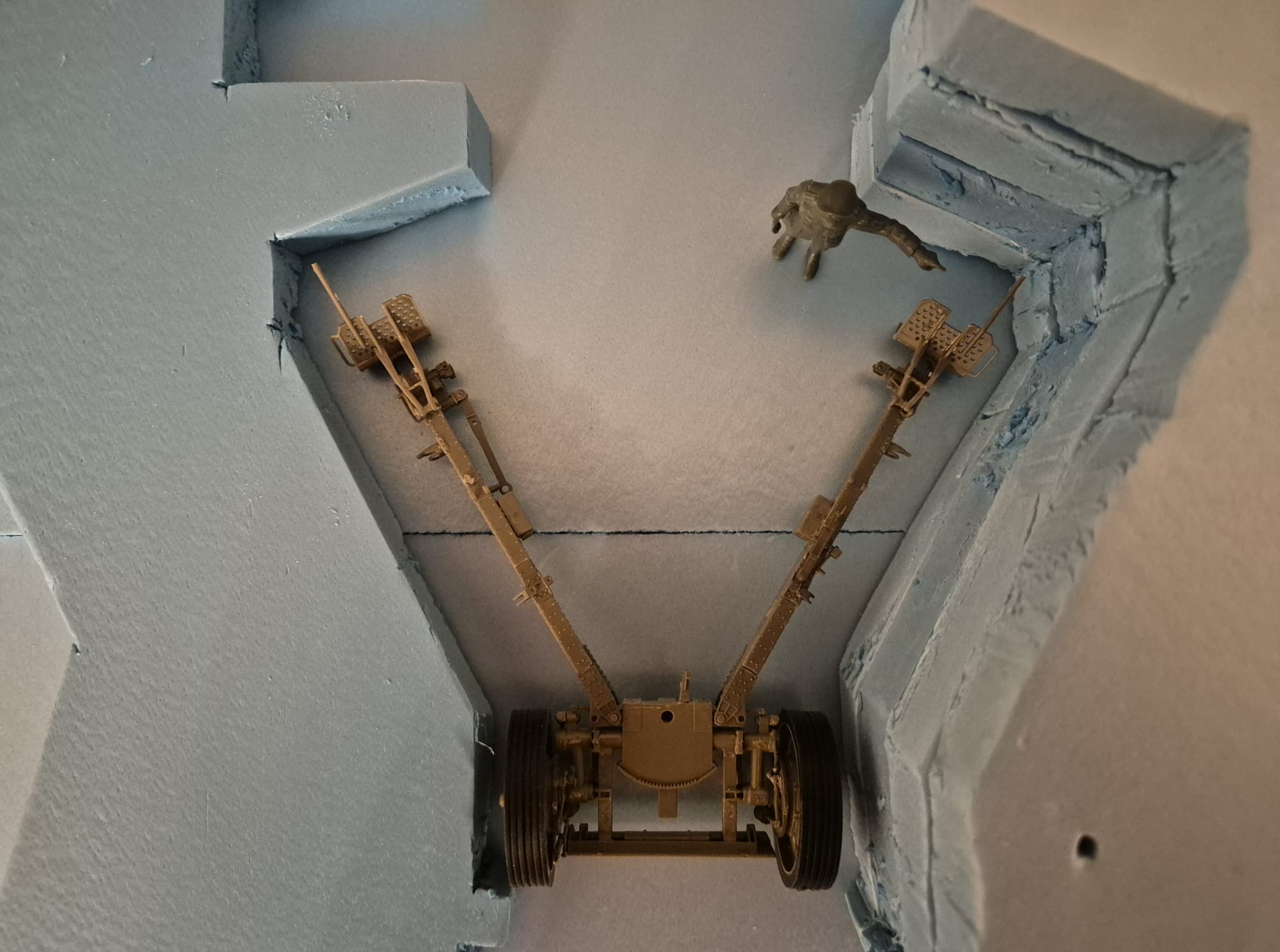
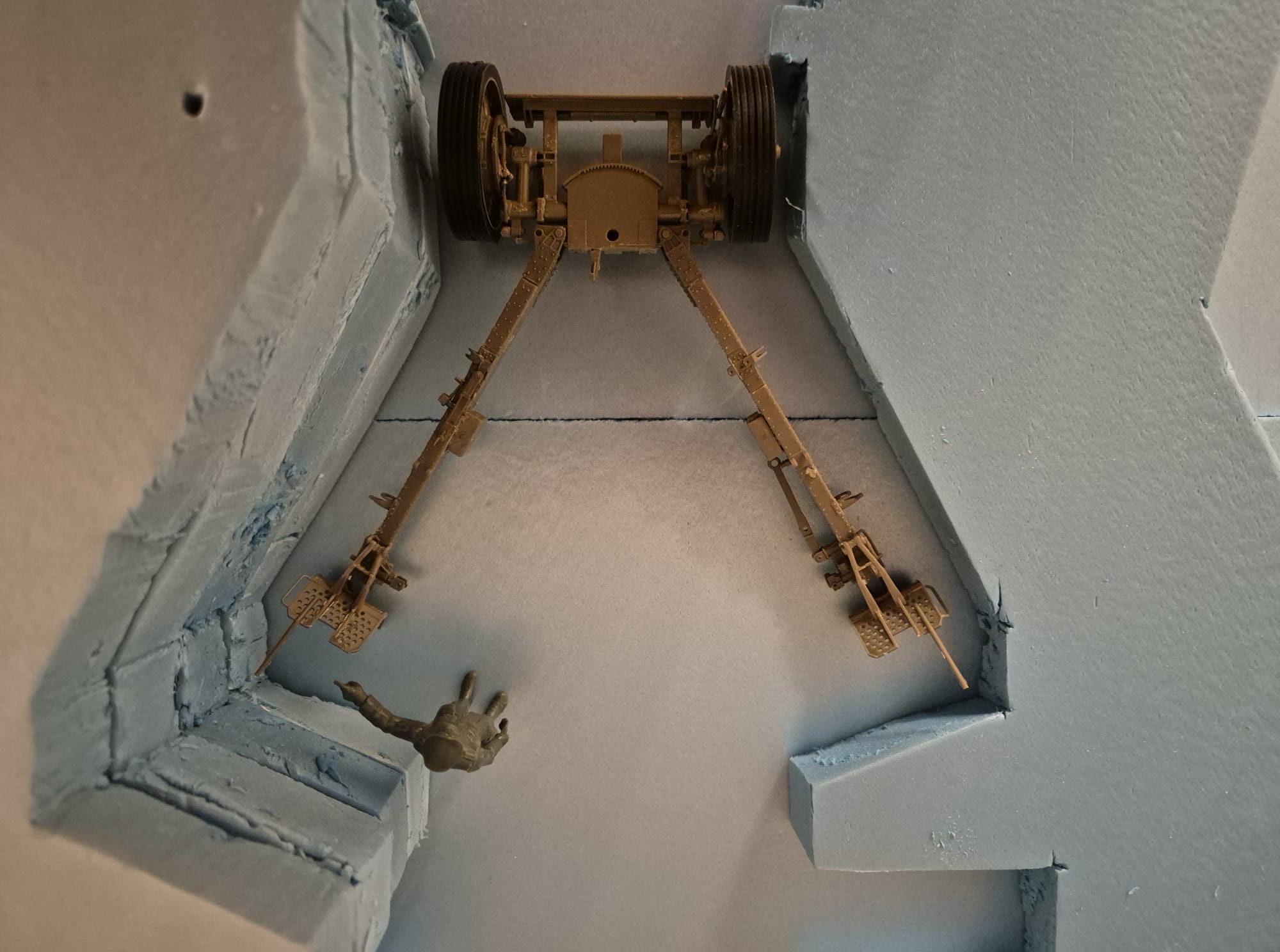
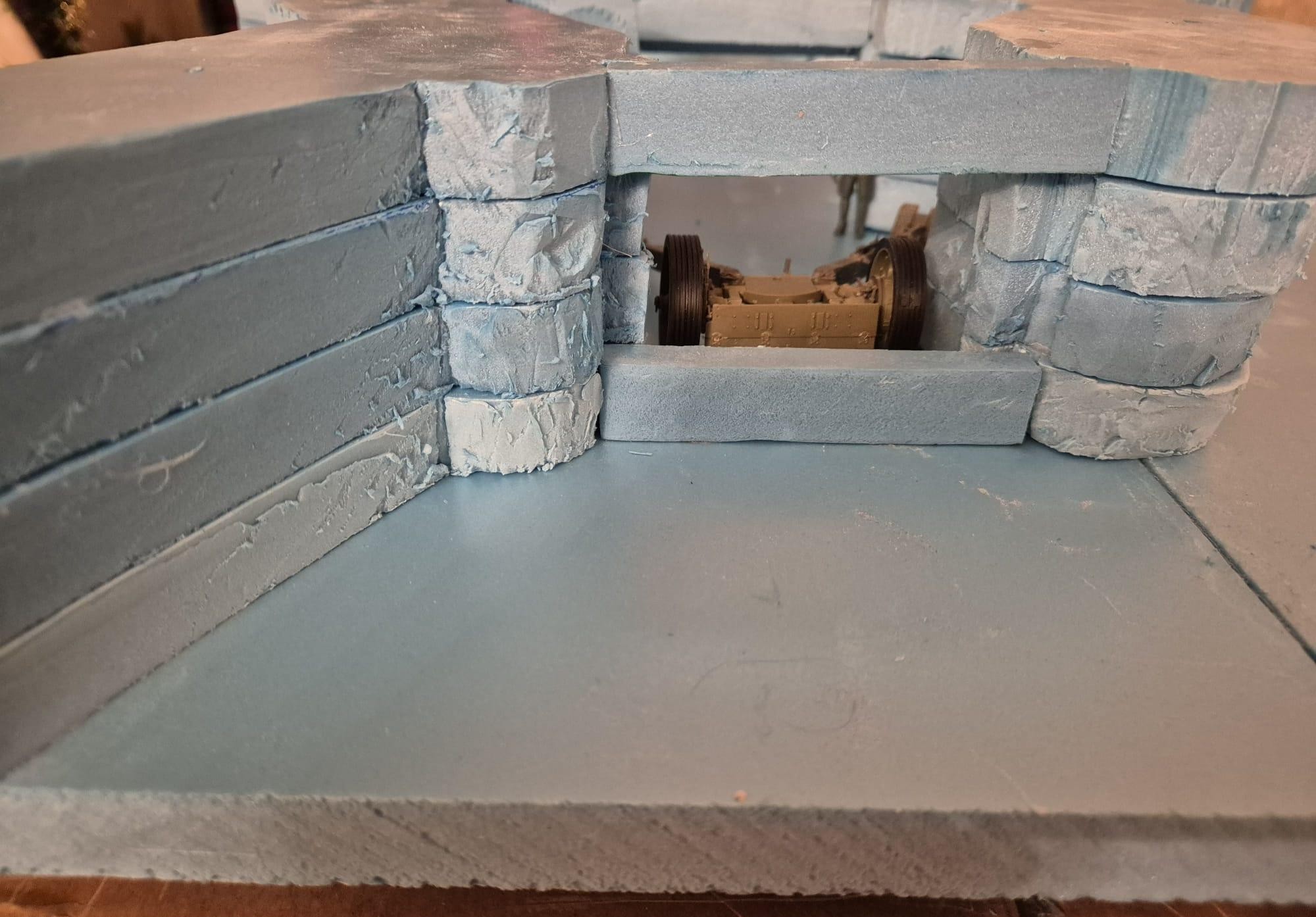
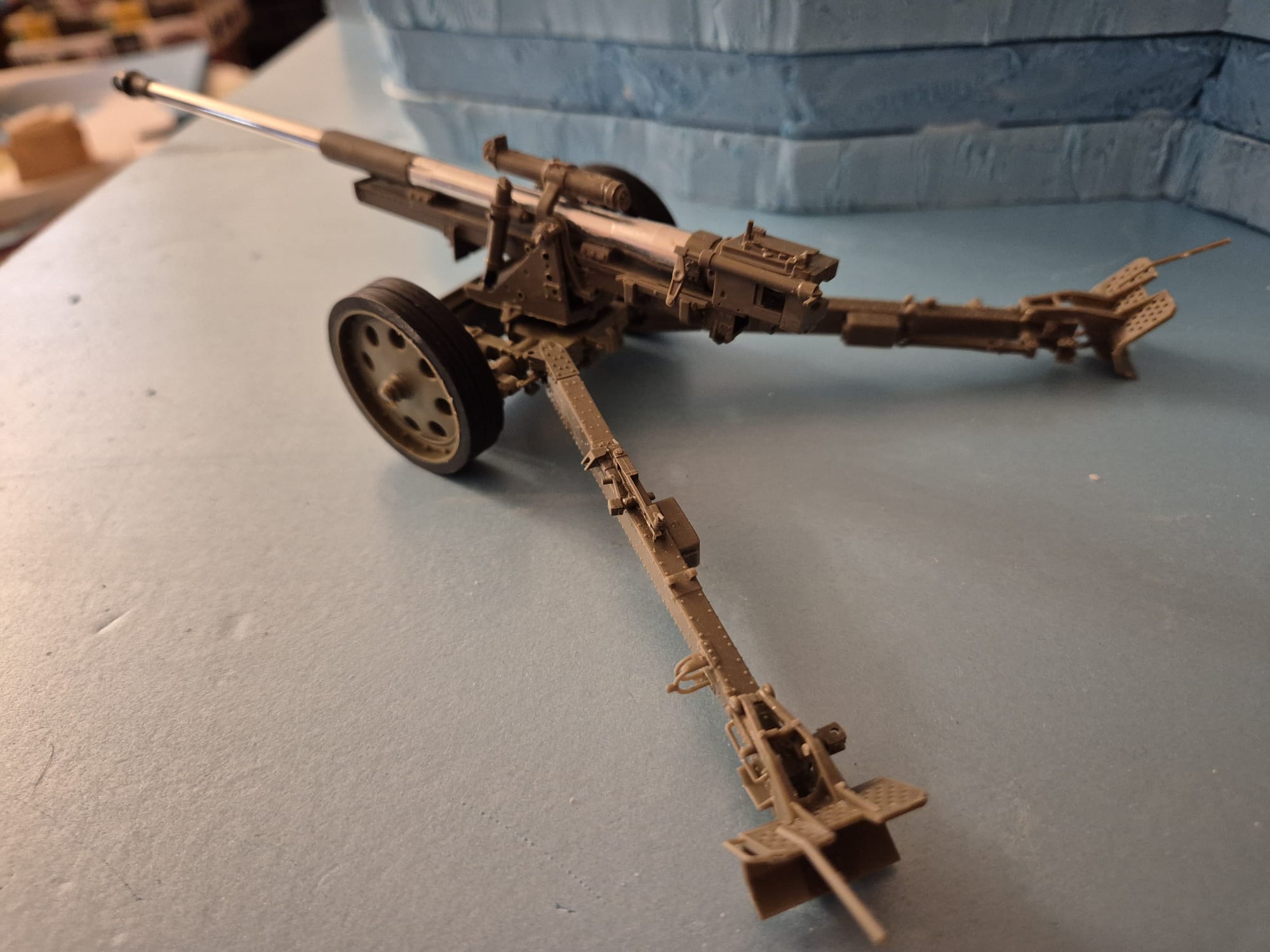
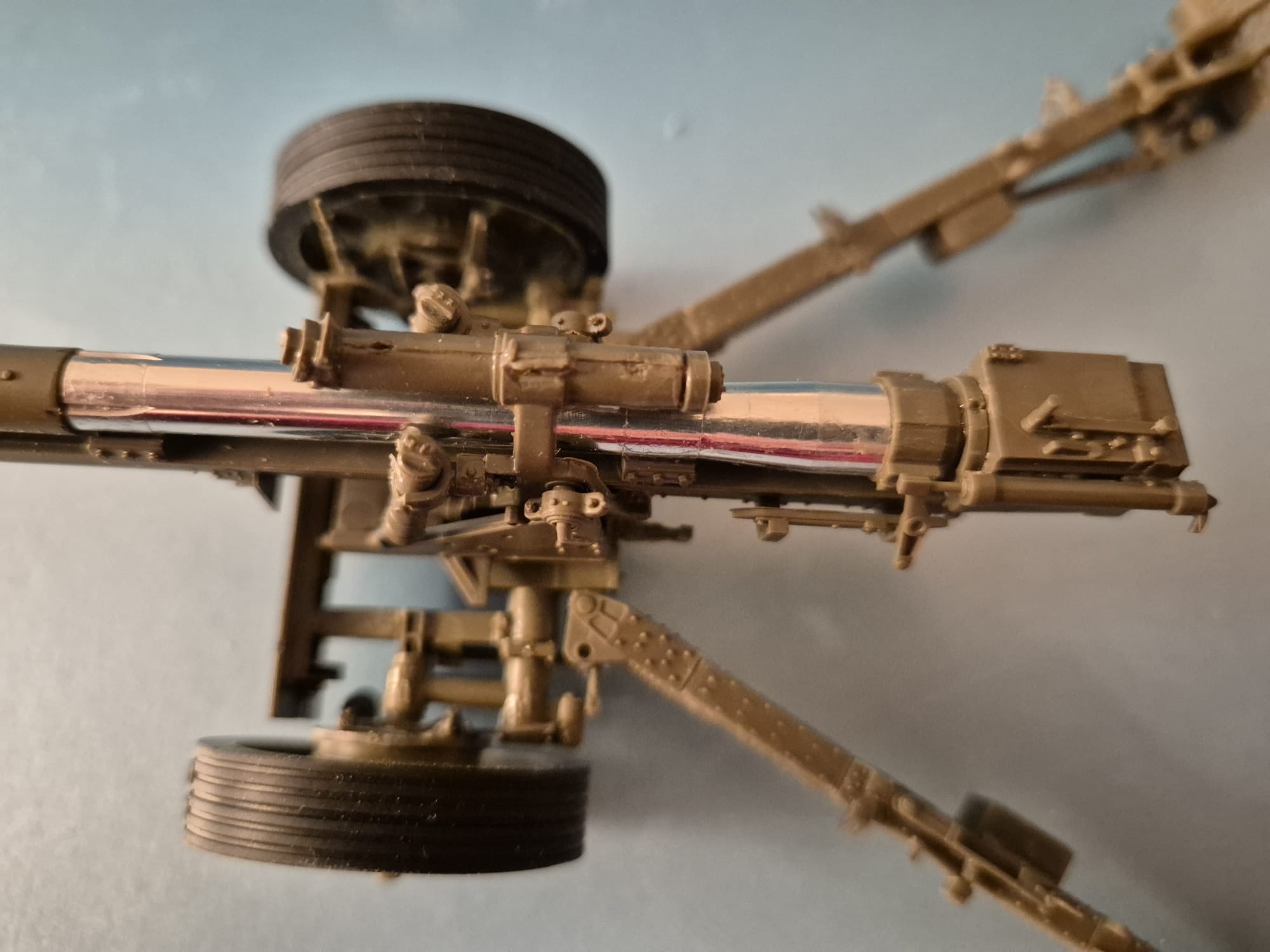
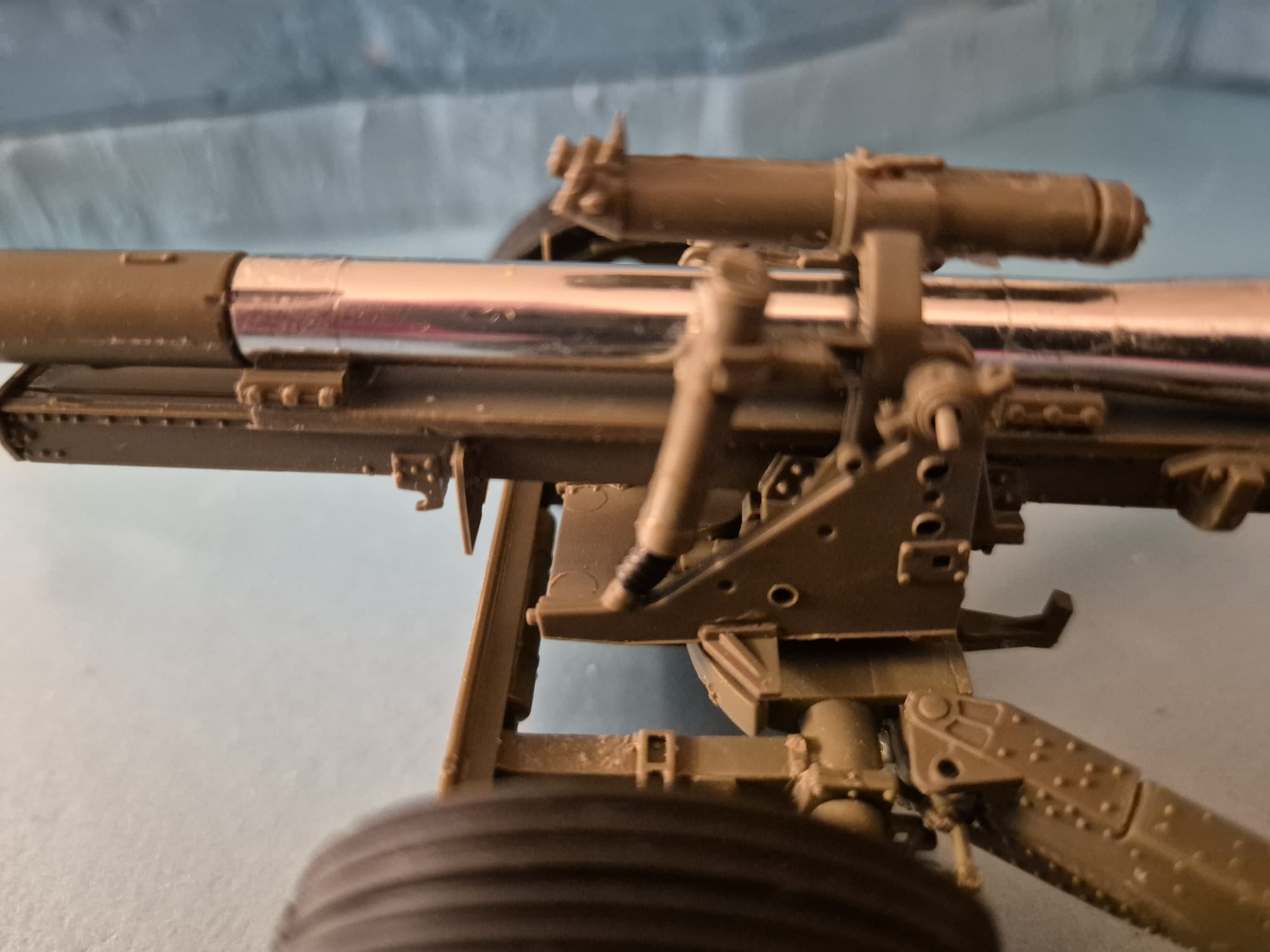
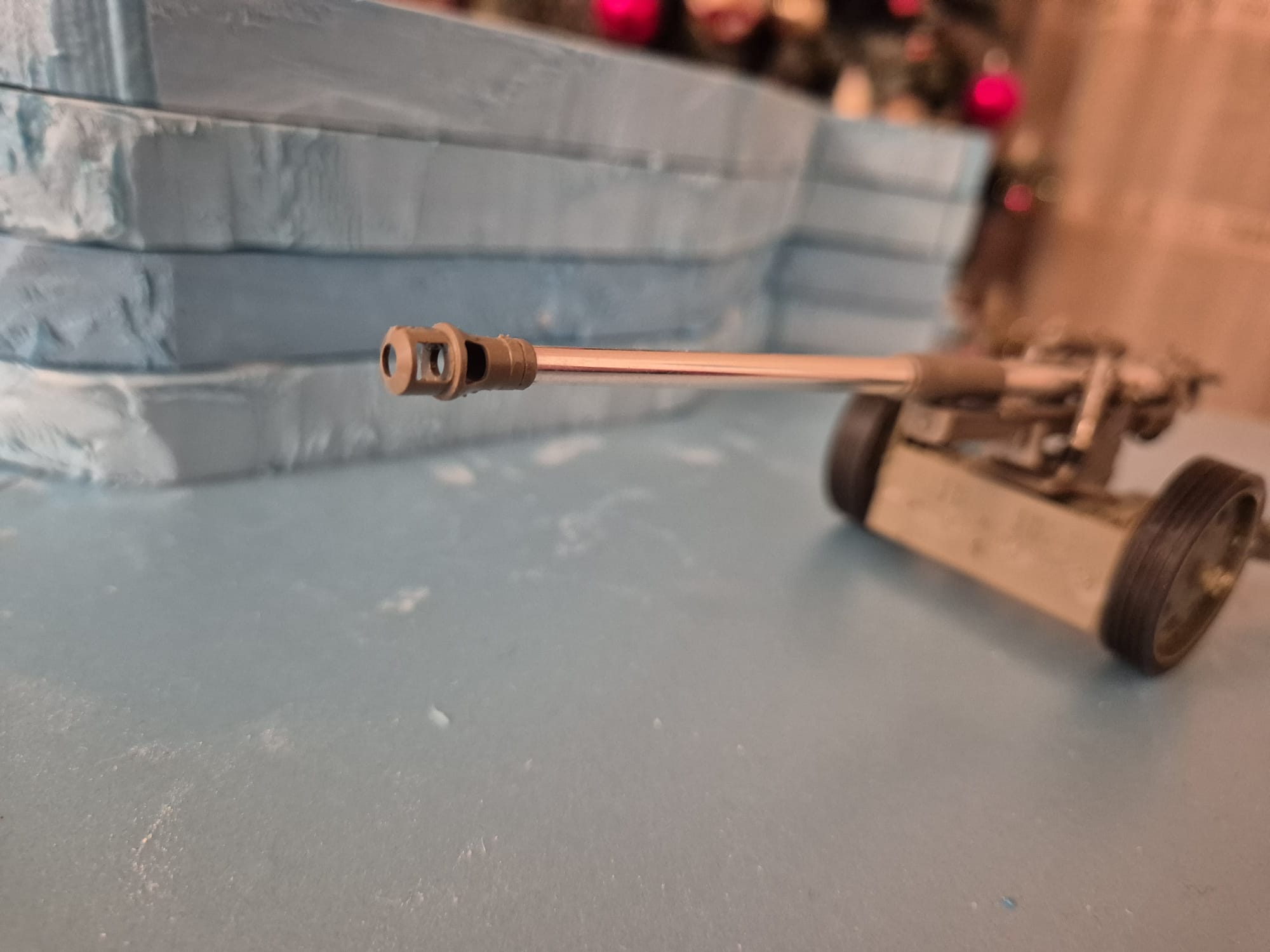
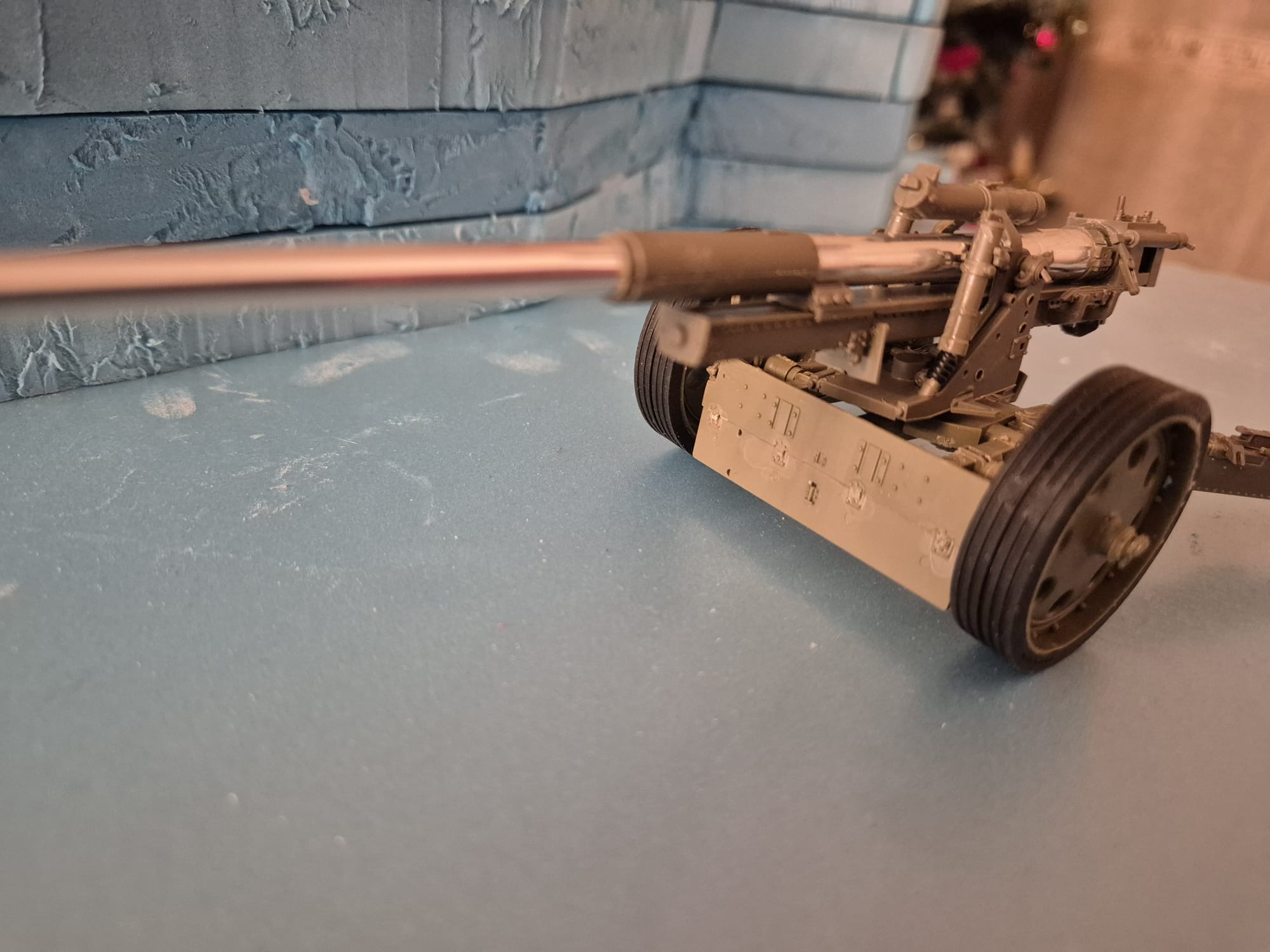
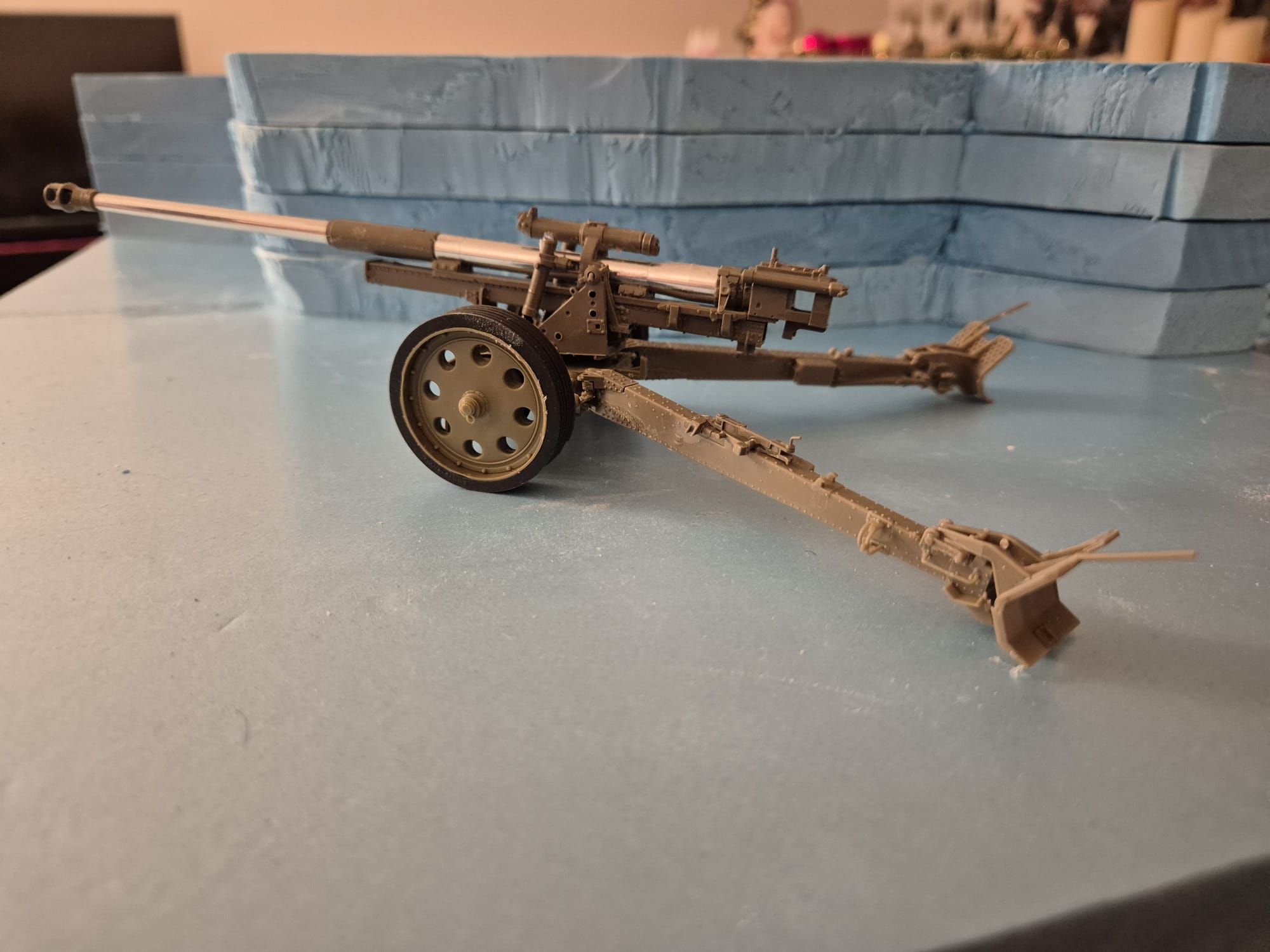
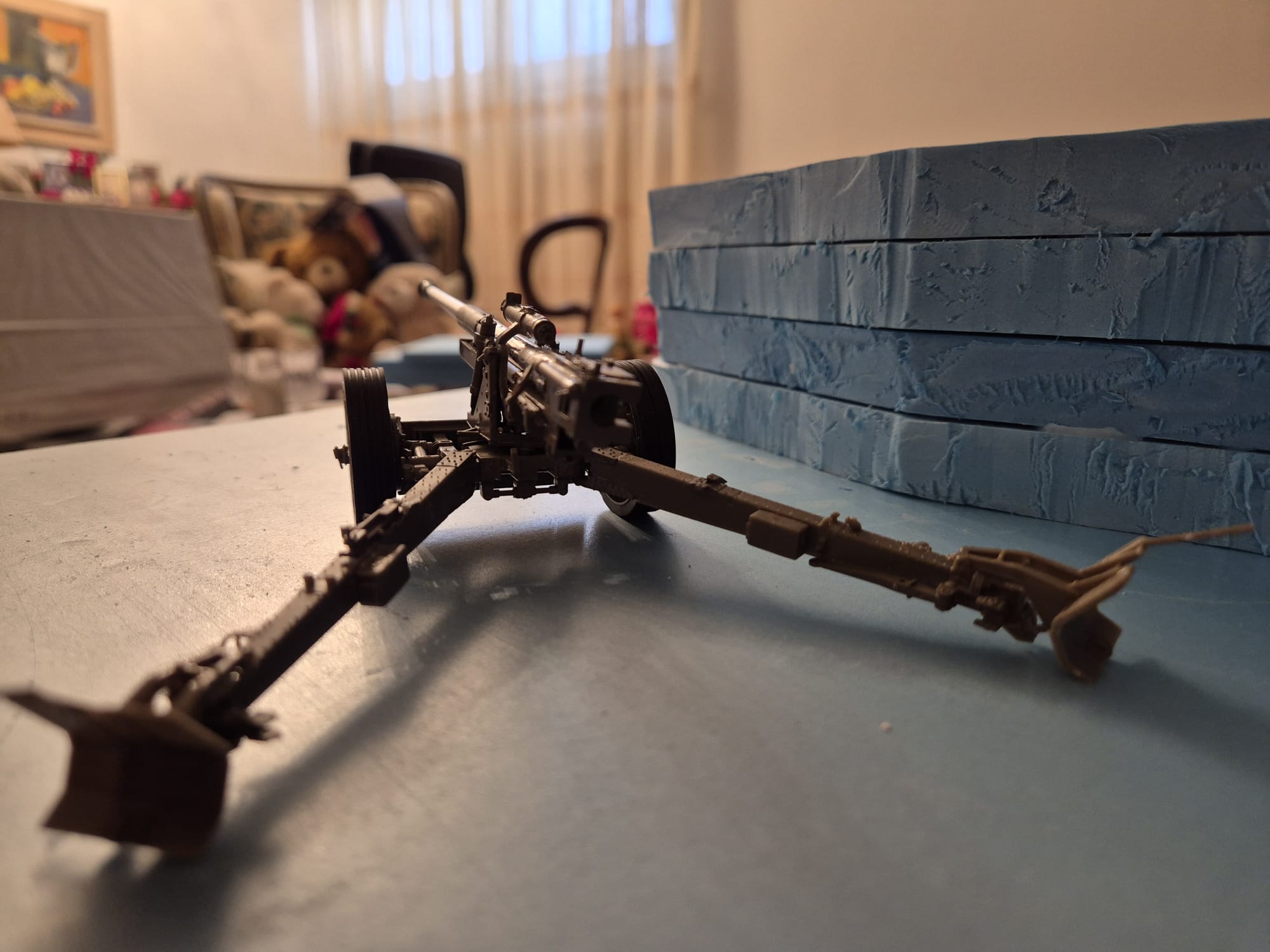
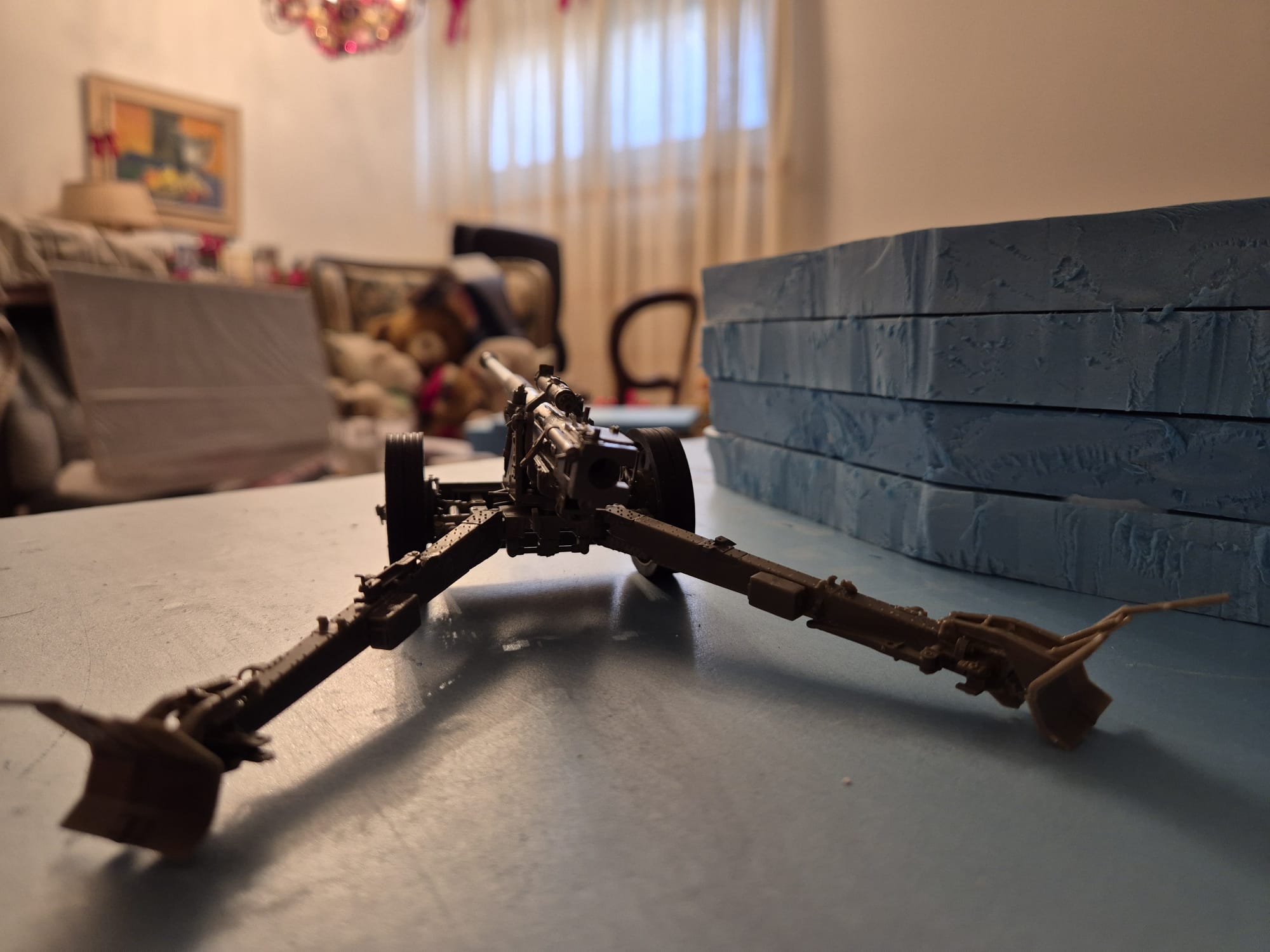
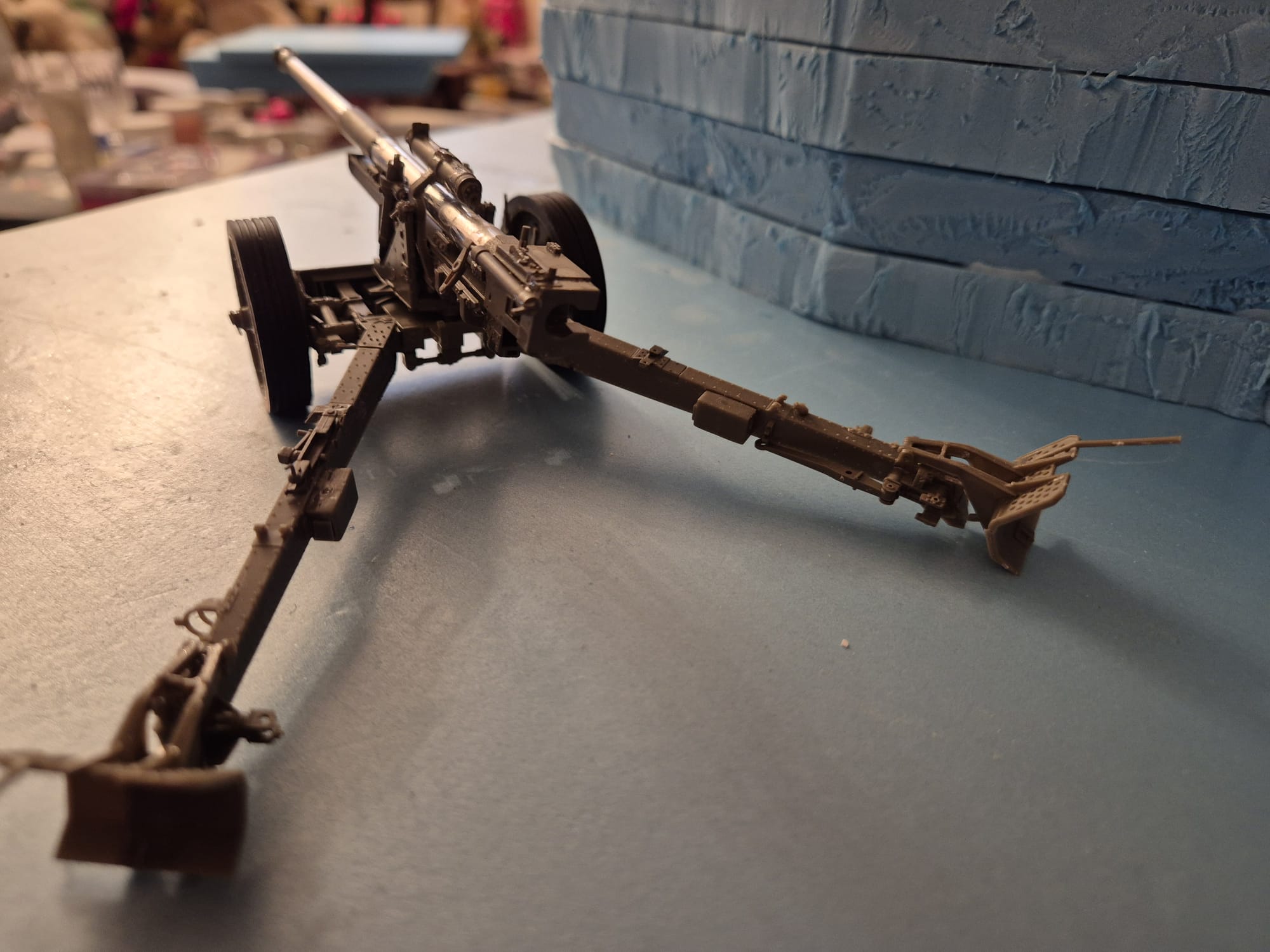
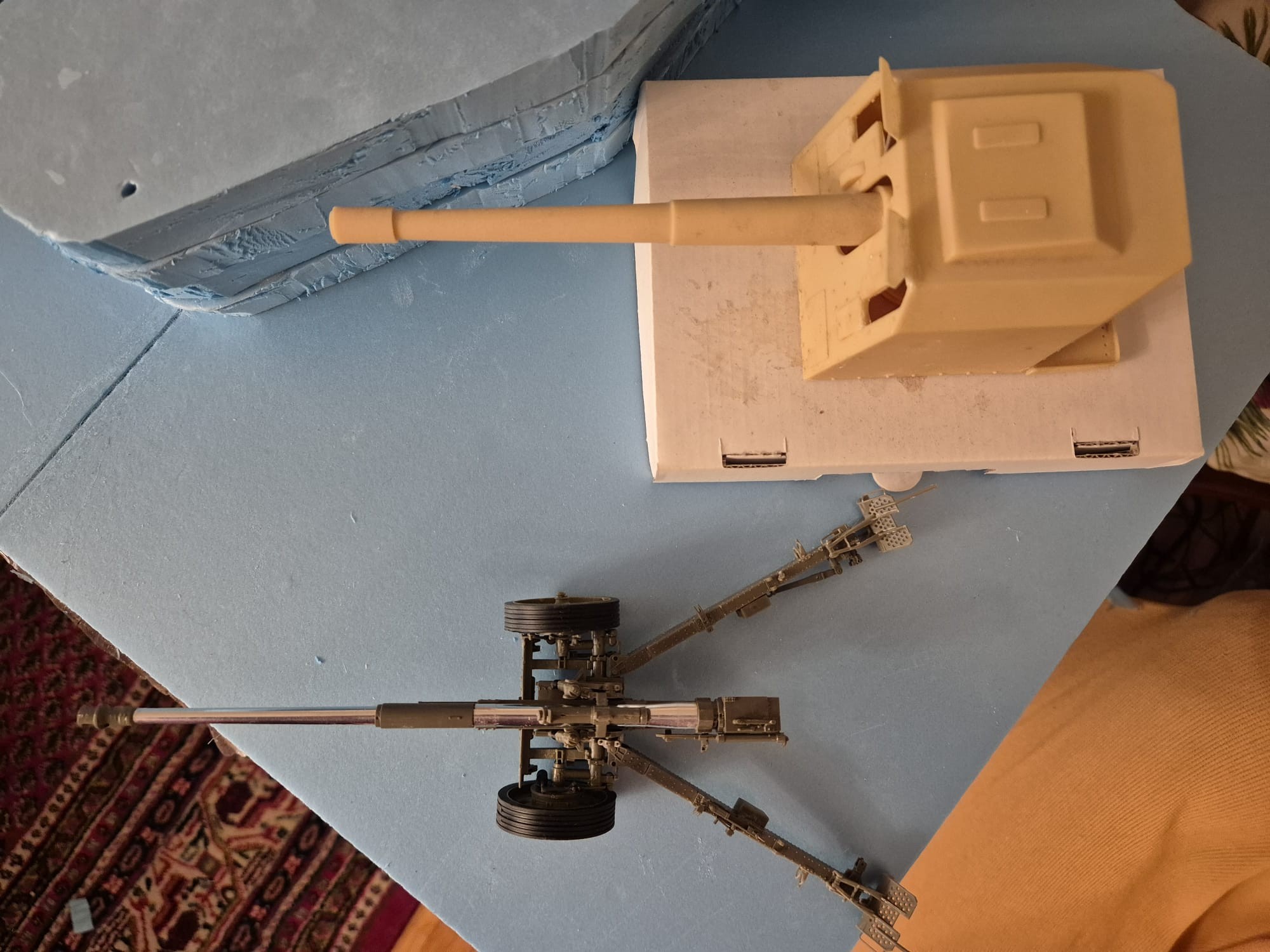
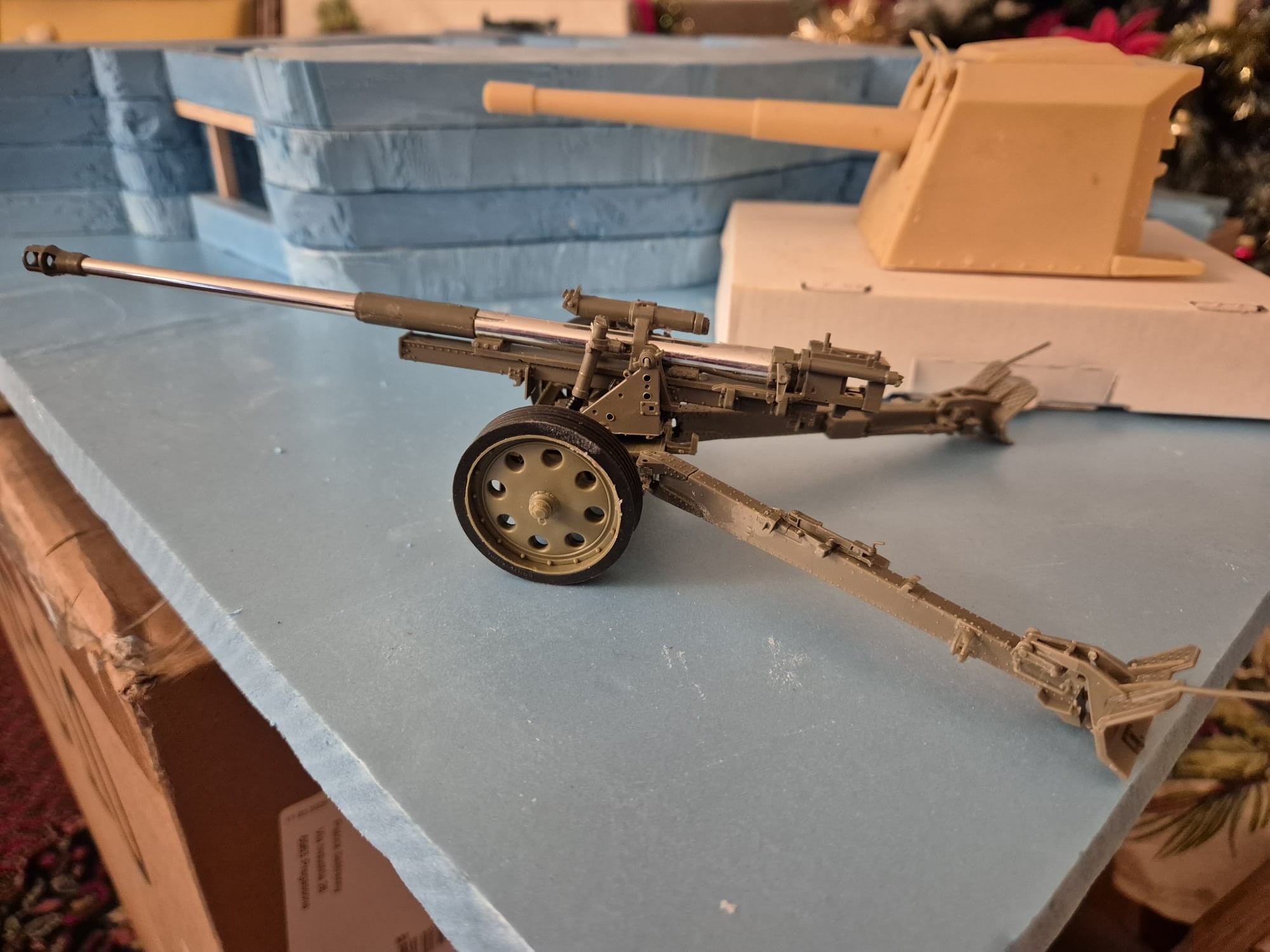
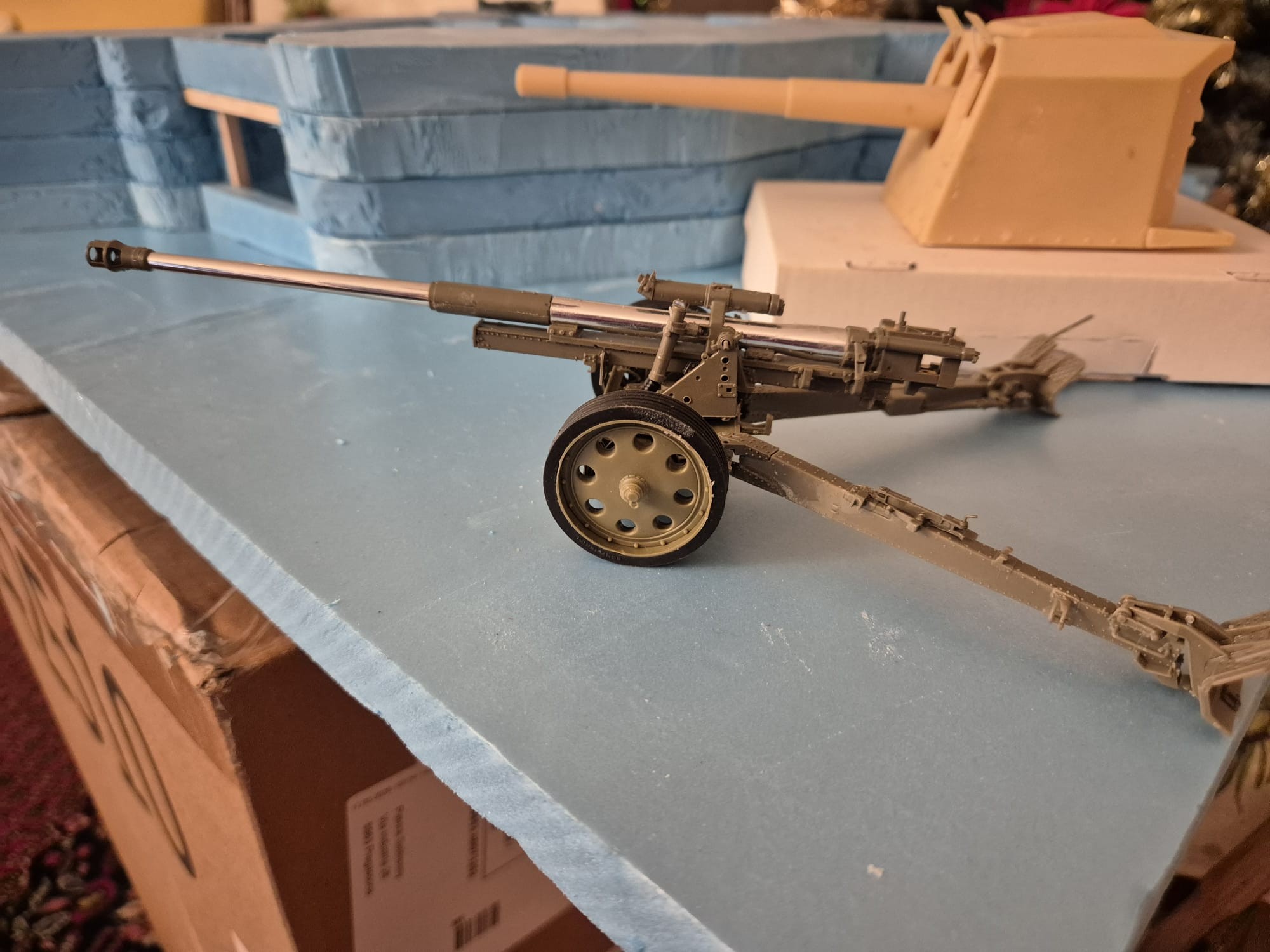
For this task I have also started to build the PAK 43/41 Gun’s undercarriage to measure if it would fit inside of the so drawn out plan of the bunker, again applying it to my PC screen superimposing it on the scaled original blueprints.

The measurements thus far are as follow:
Length of the Right Supporting Wall: 19cm - 7.48"
Length of the Left Supporting Wall: 43cm (including the protective wall) - 16.92"
Overall width of the Rear Wall: 43cm - 16.92"
Overall width of the main section Wall: 32cm - 12.6"
Overall thickness of the walls: varies between 6 and 8cm - 2.36" > 3.15"
Length of the Protective Wall: 13cm - 5.12"
Thickness of Protective Wall: between 7cm and 4.5cm - 2.75" > 1.77"
Height of the bunker base: between 2.5 and 5.5cm this includes the Gun platform and plinth. 0.98" > 2.17"
Overall height of the supporting walls: between 7 and 7.5cm - 2.75" > 2.95"
Roof thickness (lowest point): 7cm - 2.75"
Roof thickness (with parapets): 7.5cm - 2.95"
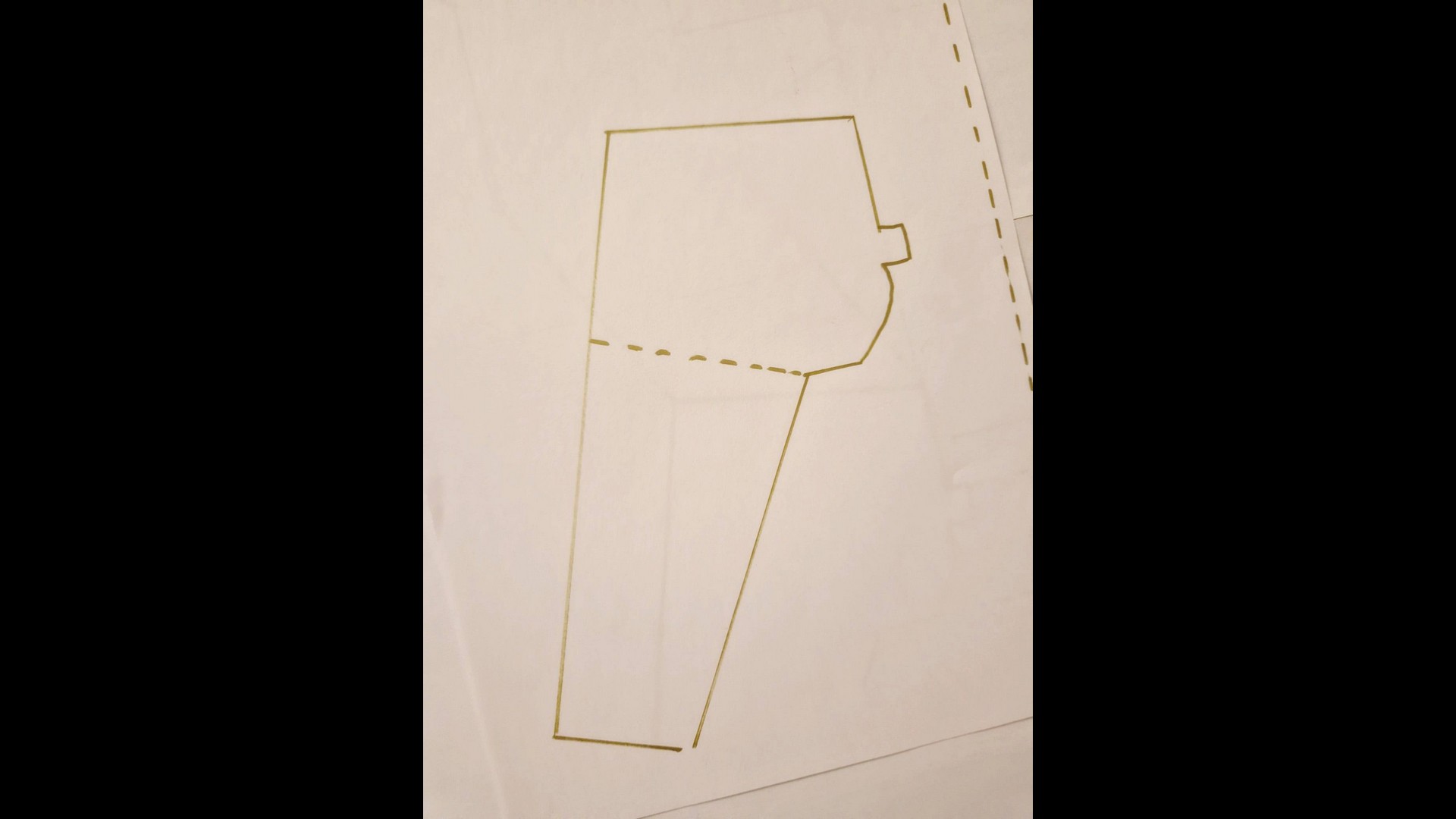
Sloping degree of protective wall: 35° angle
Width of the Gun Platform: 8cm - 3.15"

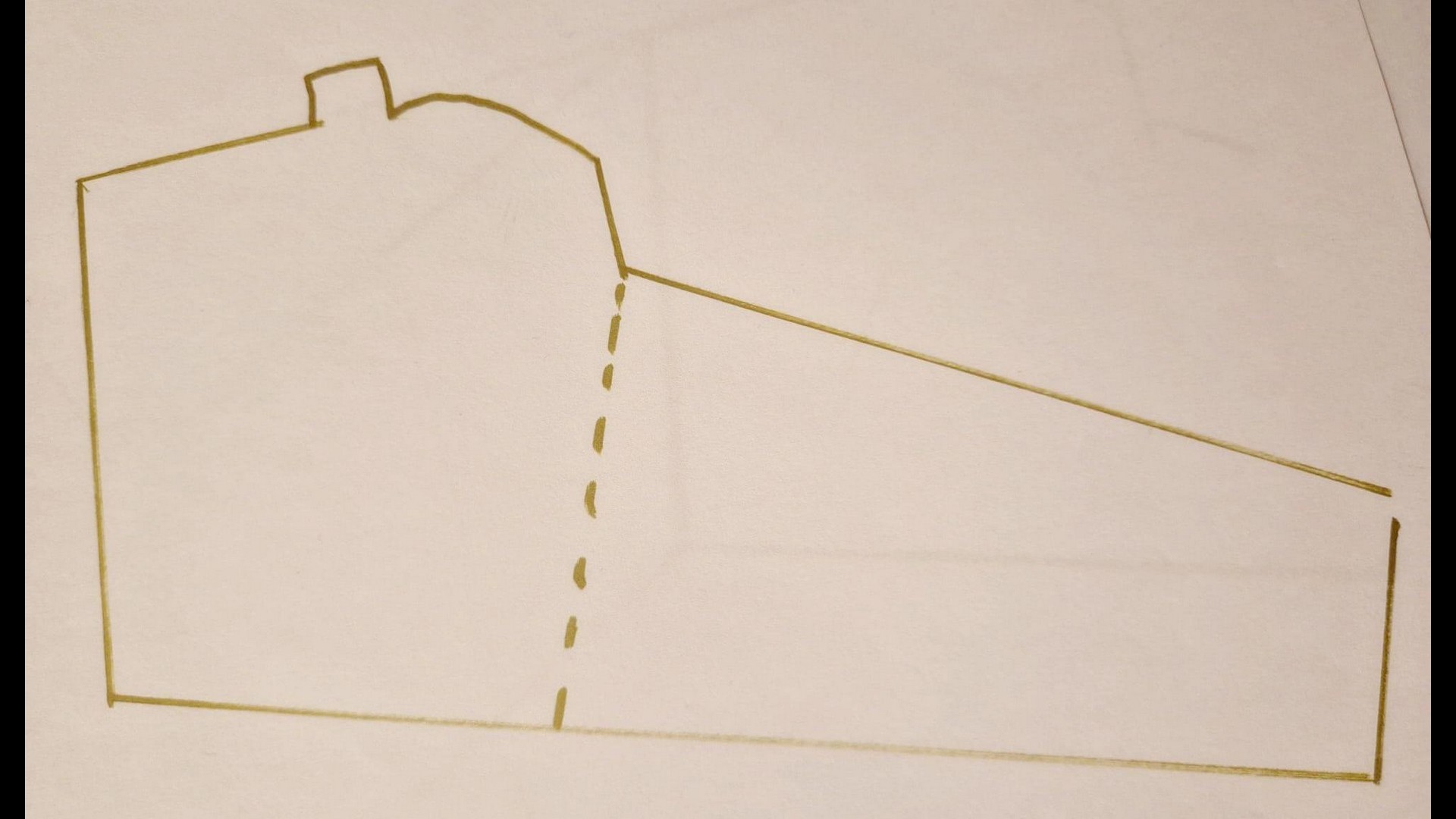
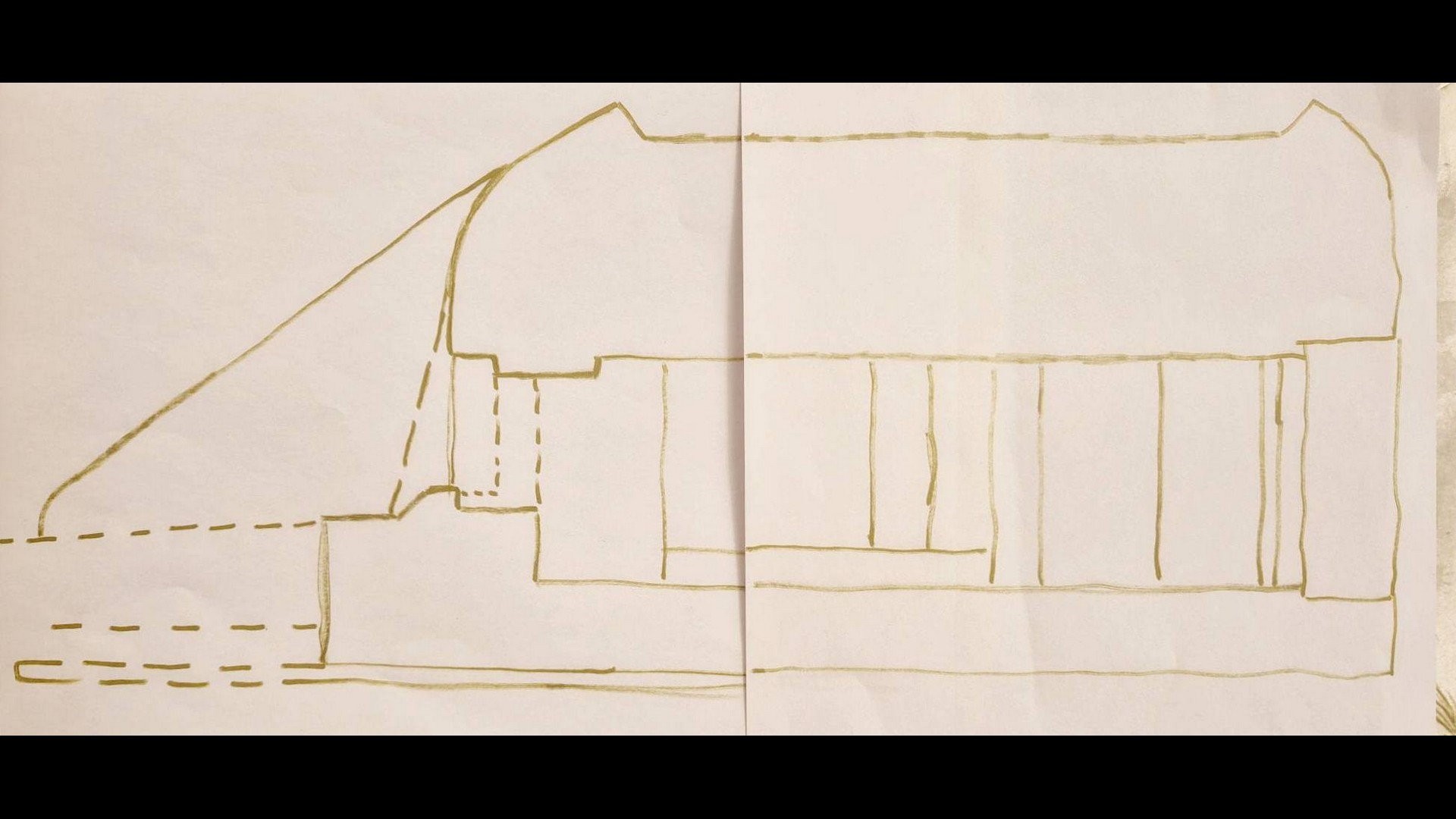
I anyway took some pictures of my primitive drawings of this massive bunker, but this time it will take the shape of the real one and no more inventions or modifications. This will be the real R677 bunker.

The original plans from which I took the measurements:
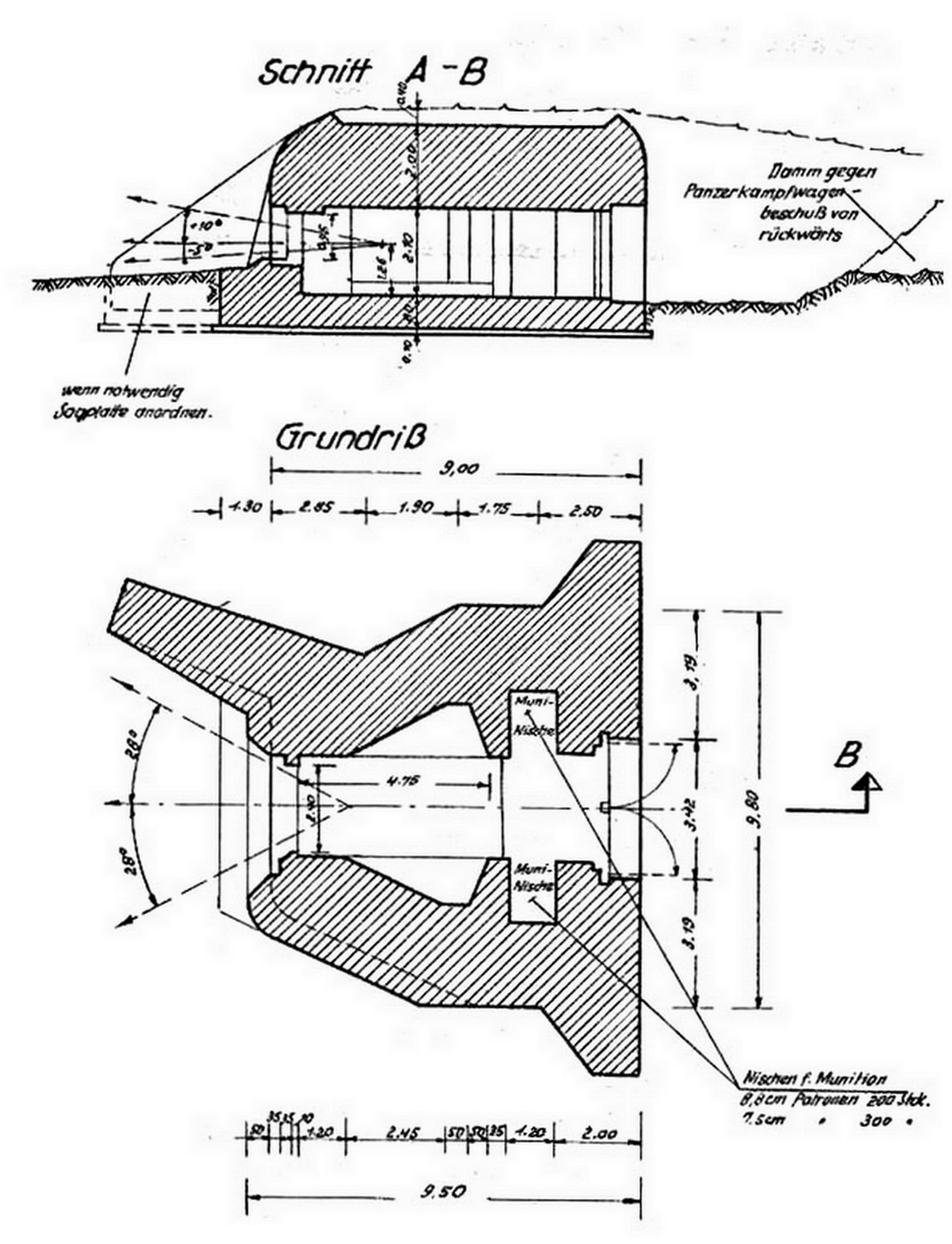

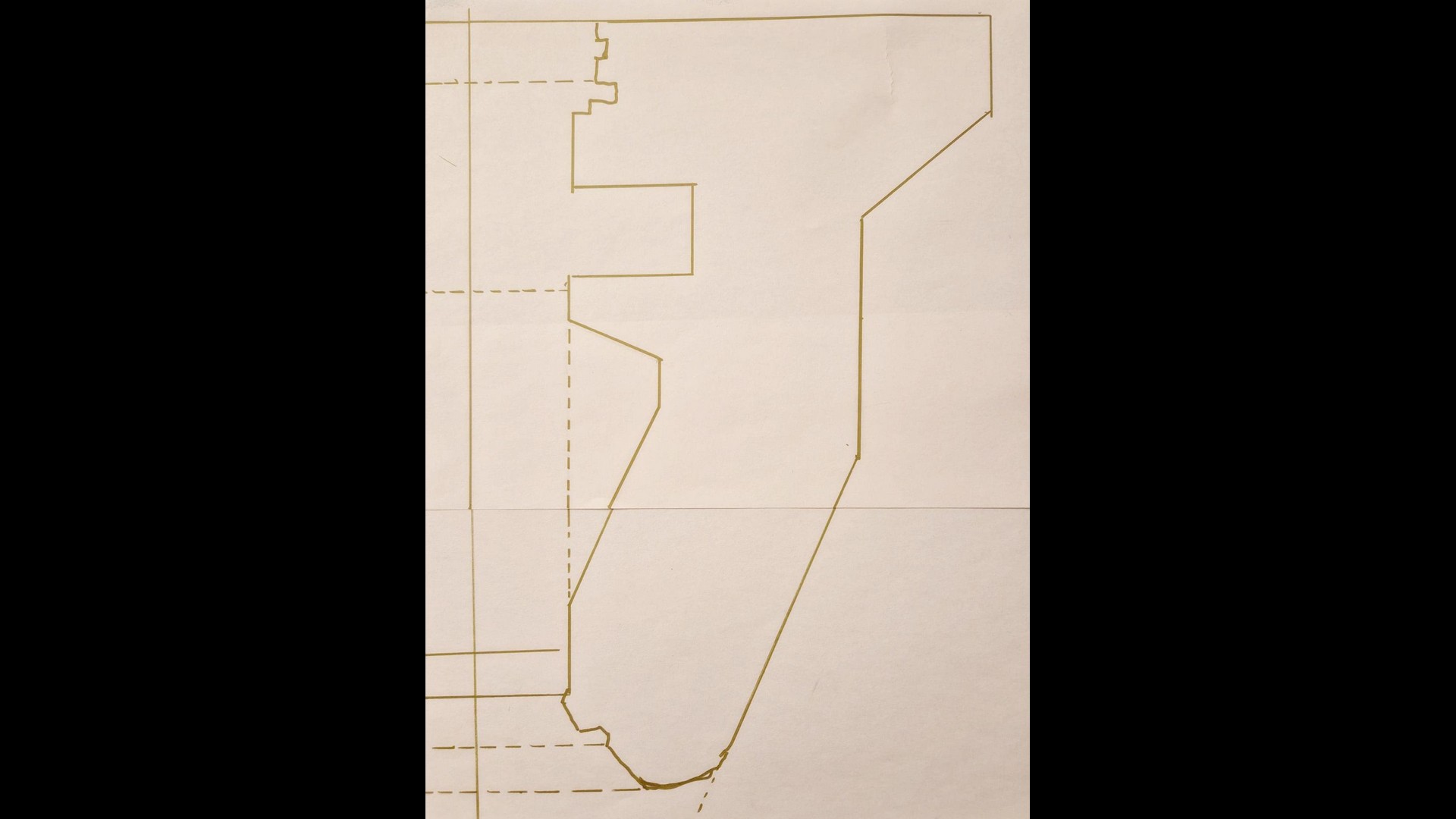
And here are my drawings:

The side view of the finished bunker
The Left Wall:
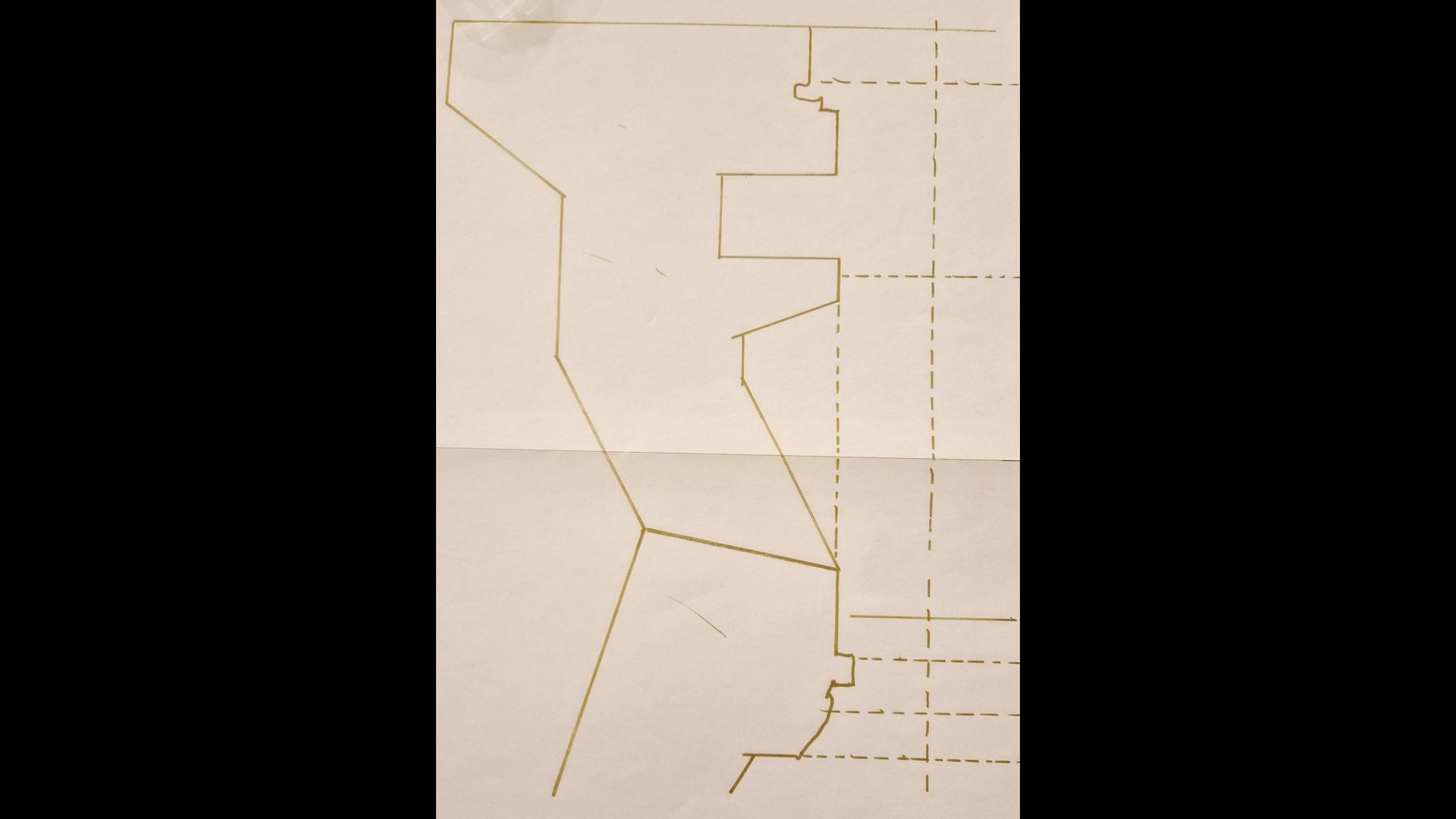
The Right Wall:
The protective side wall:

The Gun undercarriage built to measure the size of the bunker:
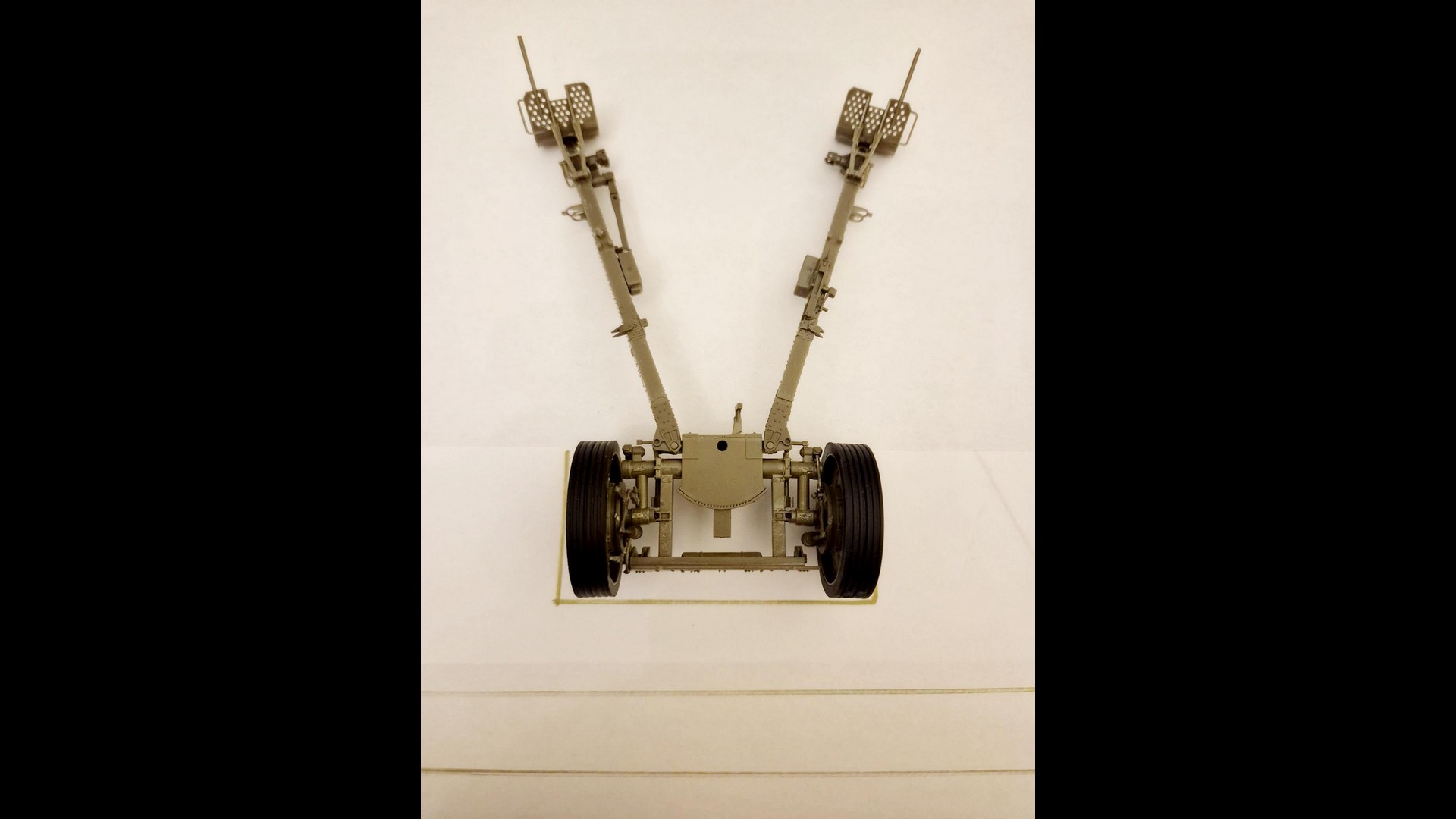
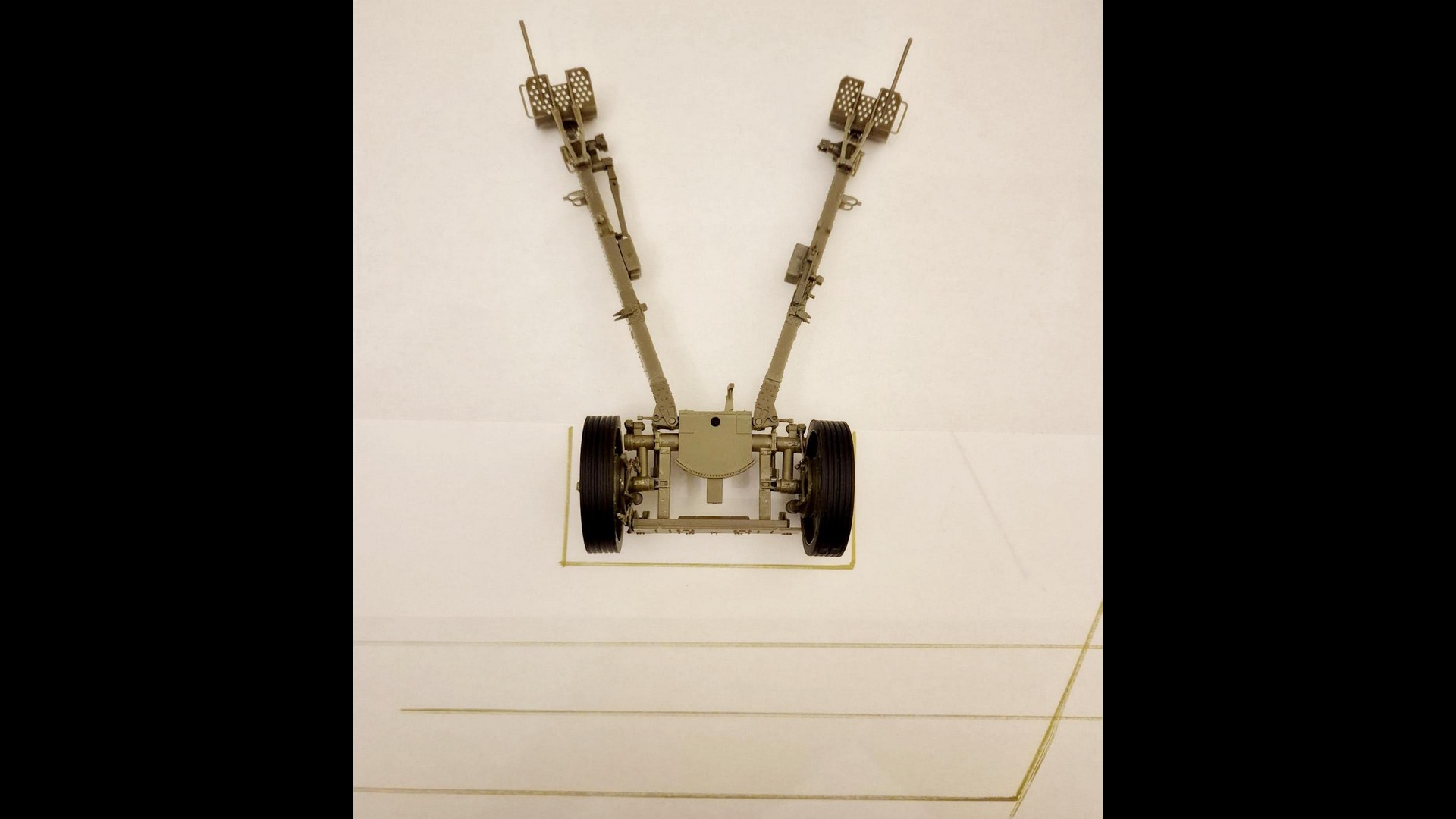
And finally the approximate view of the protective wall and part of the front stepped platform:
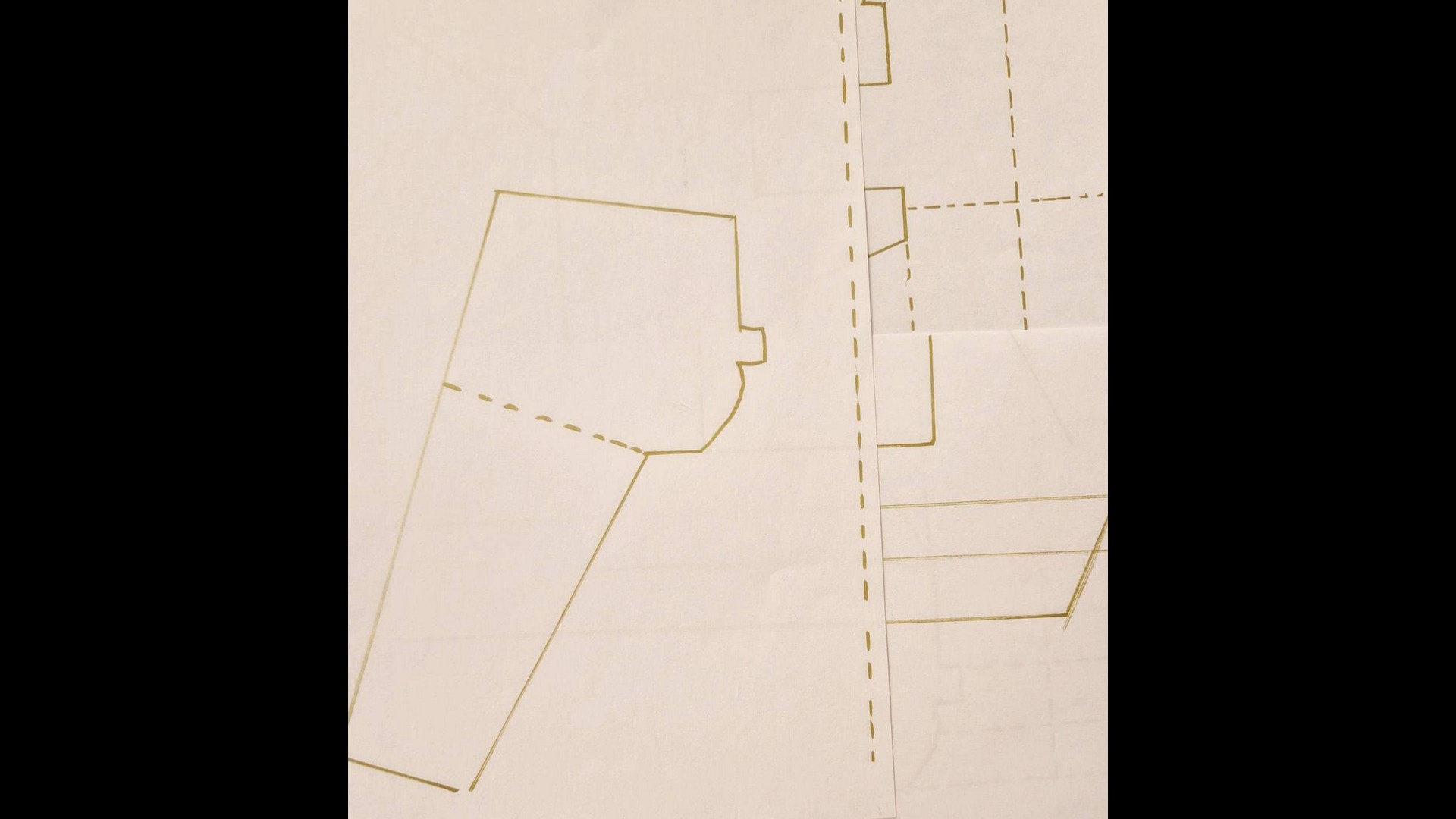
As said, for a while I will dedicate myself to this build just because it has caused me a couple of sleepless and torturing nights.

I hope I will be able to scratch build it correctly, since this will really be my true first in modeling, at least without having at least a base from which to start from, so please cross your fingers for your poor crazy sod who’s attempting to be an architect.

Be well all, see you soon with more progress in action… :grinning_face: :waving_hand:

5 Likes

The scale of your efforts is daunting! But you are making progress and watching your efforts is both entertaining and informative. The gun trailer is looking good!

2 Likes

Thank you PaulC, yes it is, as you correctly said daunting and I really hope it will come together the right way. Not an easy task, since I will have to do it all by hand without any 3D printer (too costly for me), but with a tiny bit of patience and dedication I do not consider it impossible.

And yes, now that I tackled with the trailer I am happy with the result, but it will need to be painted still.
Now the real difficult part will be the entire Gun assembly. Part of it has already been mounted (the easiest part).
I am still waiting for the brass bolts to arrive from Poland. I ordered two bags instead of one, just for safety sake, since those tiny bits can so easily roll all over the place.

But for the time being I am more concentrated in gluing some foam boards together and then cutting them into the designated shape of the walls and roof. The floor will only be a flat balsa wood board which will have the surface covered with some plaster to make it more rigid and look rough.

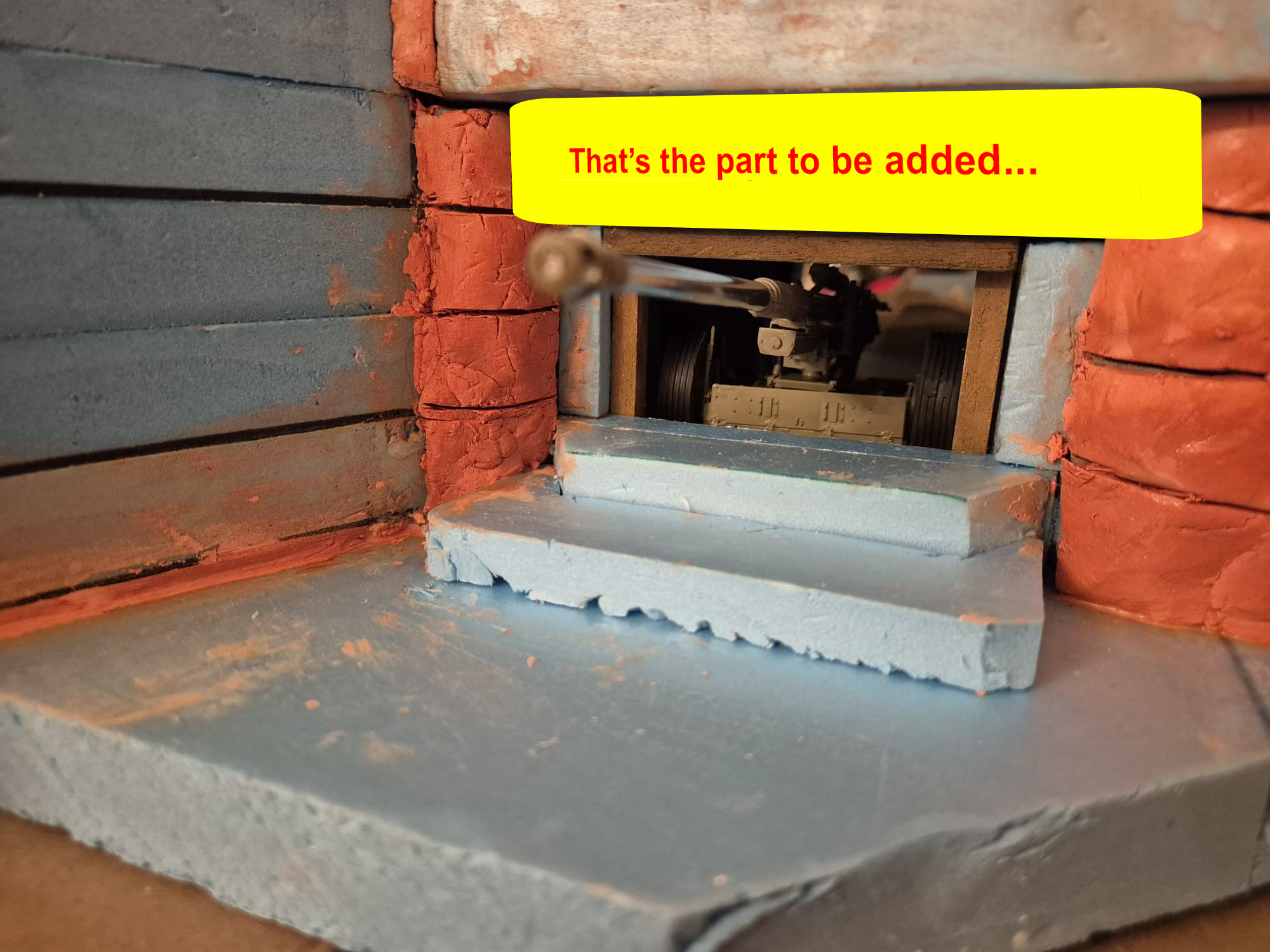
The real difficult parts, although seemingly easier at first glance, are the roof, the protective wall and the frontal stepped platform, as well as the embrasure which is composed in various pieces being also somewhat stepped.

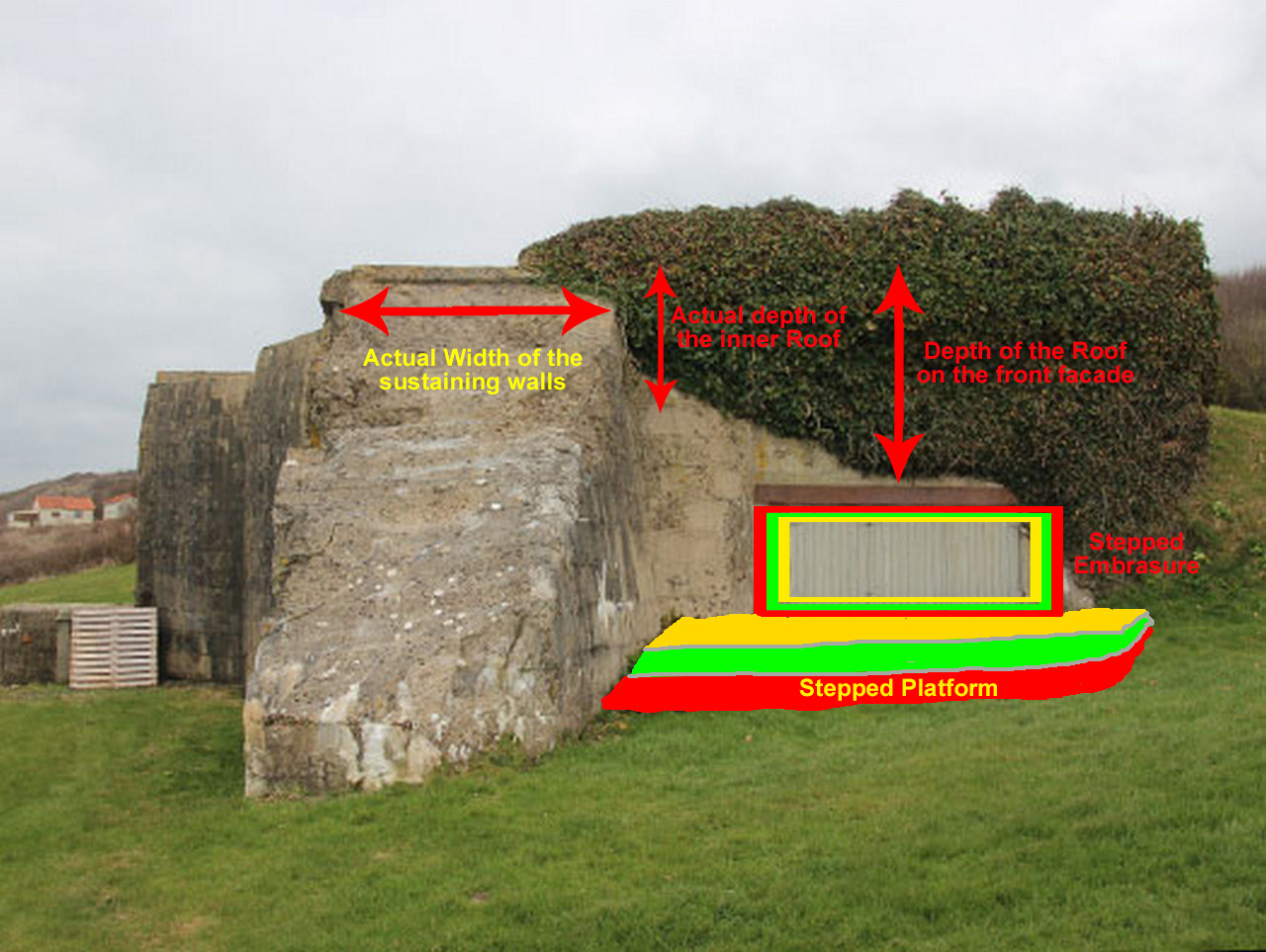
Here you have a picture of the actual R677 on Fox Green.
Observe the depth of the upper section of the bunker and also note the width of the interior walls and how the embrasure and front platform are meant to be layered into stepped concrete, and the width of the embrasure itself.
This must absolutely be correctly reproduced, as well as the rear wall too.

I hope I have given you some idea on how intricate this build will be.

All this I will certainly include in my next postings as soon as the parts are ready. The foam then will be fully covered (outside and inside) with plaster and additionally covered with AK Interactive/AMMO MiG acrylic “Concrete” compound to make it appear more rough and offer it some solidity.
The roof itself will be detachable to be able to see the interior installments.

Be well and stay tuned. The long journey to achieve all that is just starting and it is all uphill…

4 Likes

Wow! Such an ambitious project. I will be following with great interest. Best of luck with your project!

2 Likes

Remember this?.. The previous drawing of the Left Wall?


OK, I did call it the Right Wall, depending on how you look at the Bunker, but if you look at it while entering it is indeed the Left Wall and not the Right.
Why did I then call it the Right Wall, because when I drew it I looked at it from above and from the front.
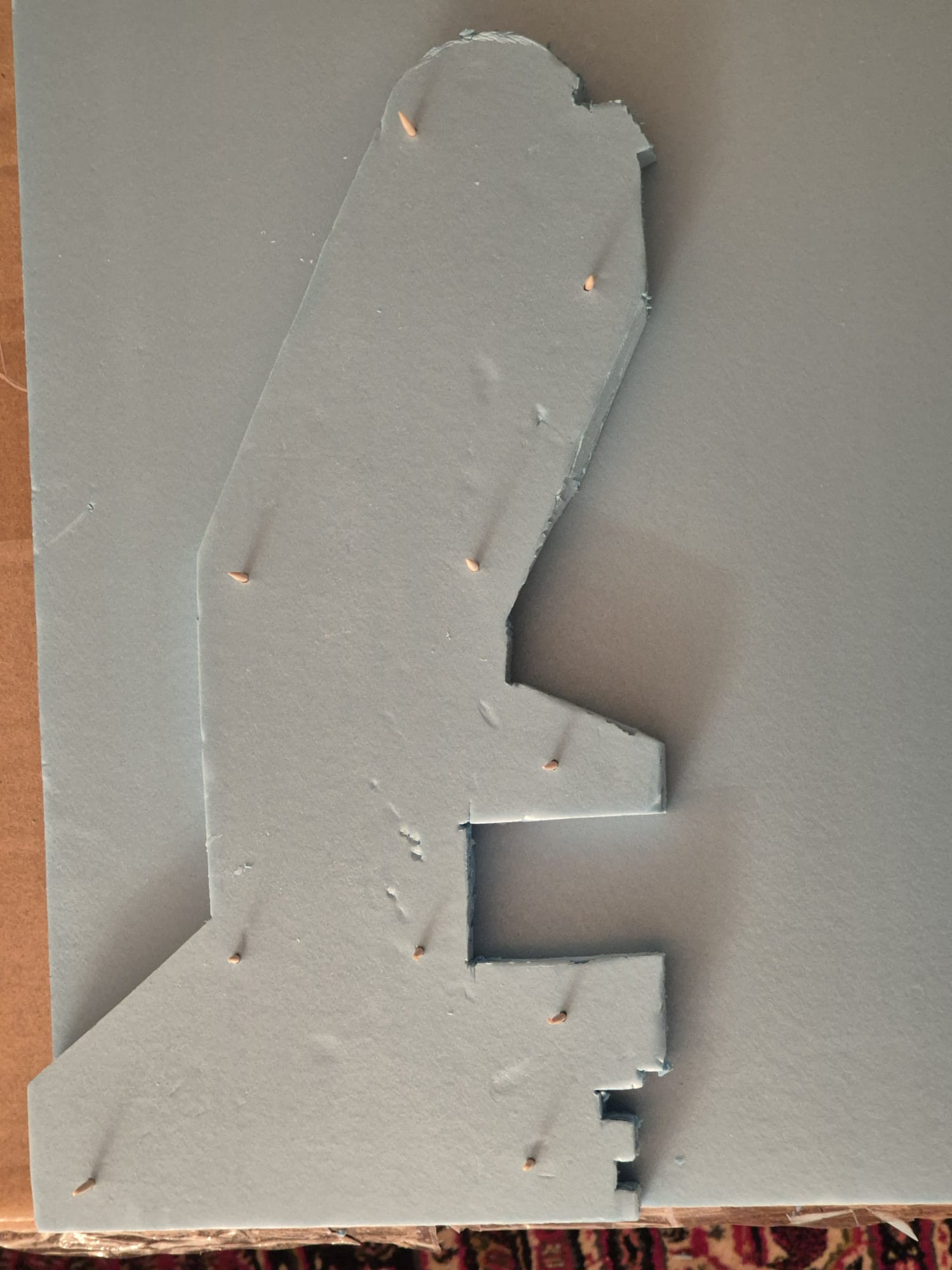
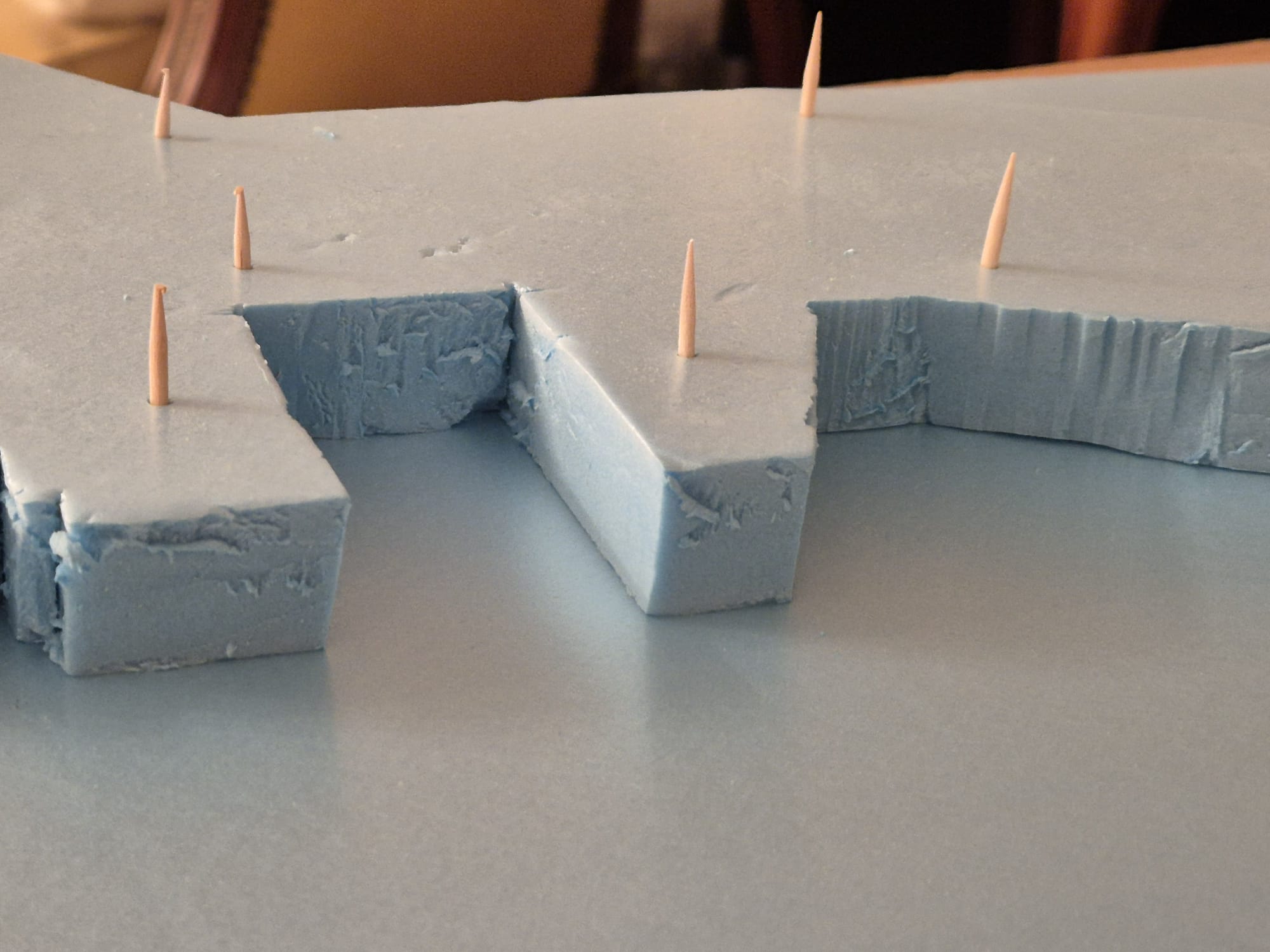
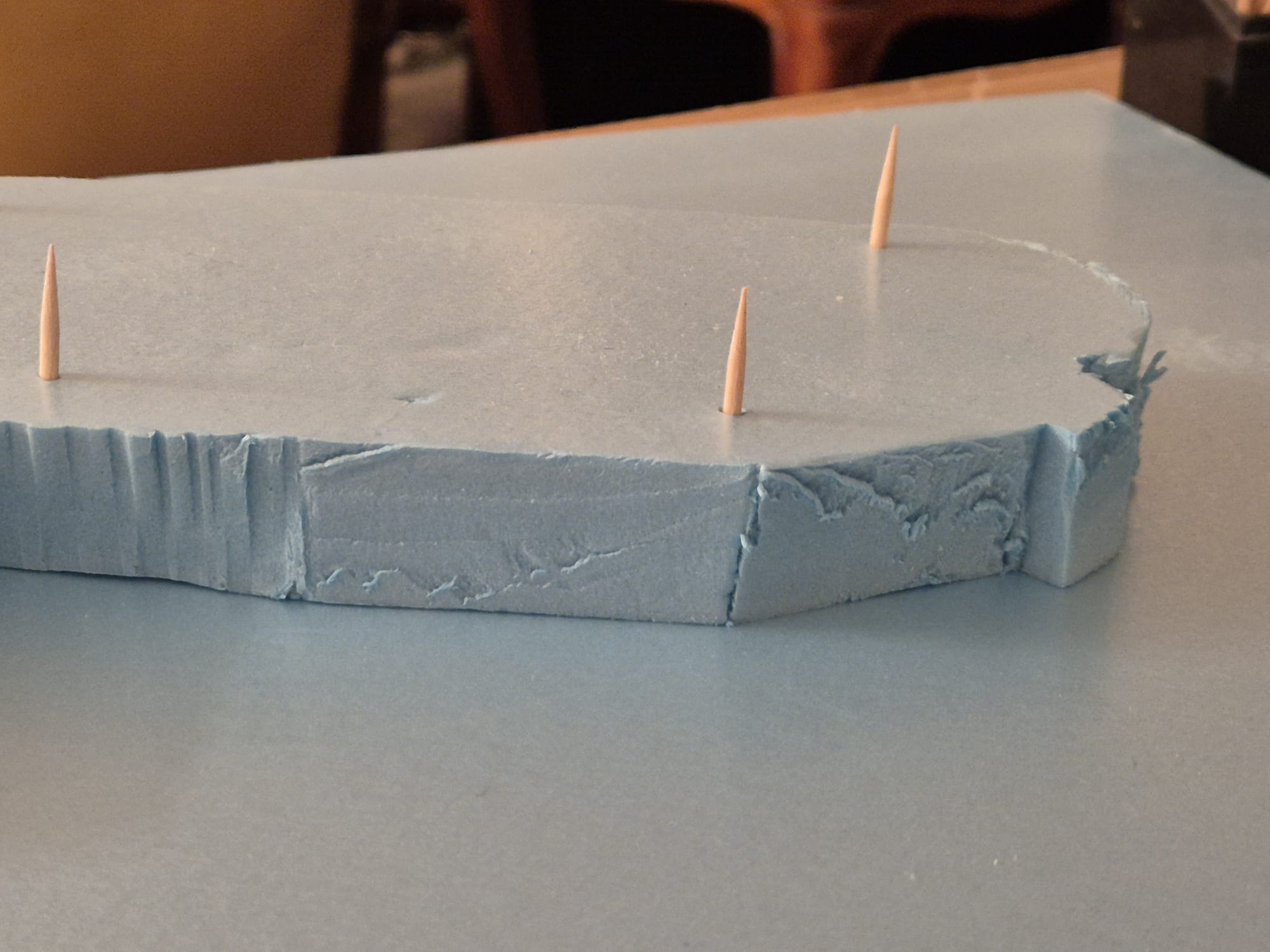
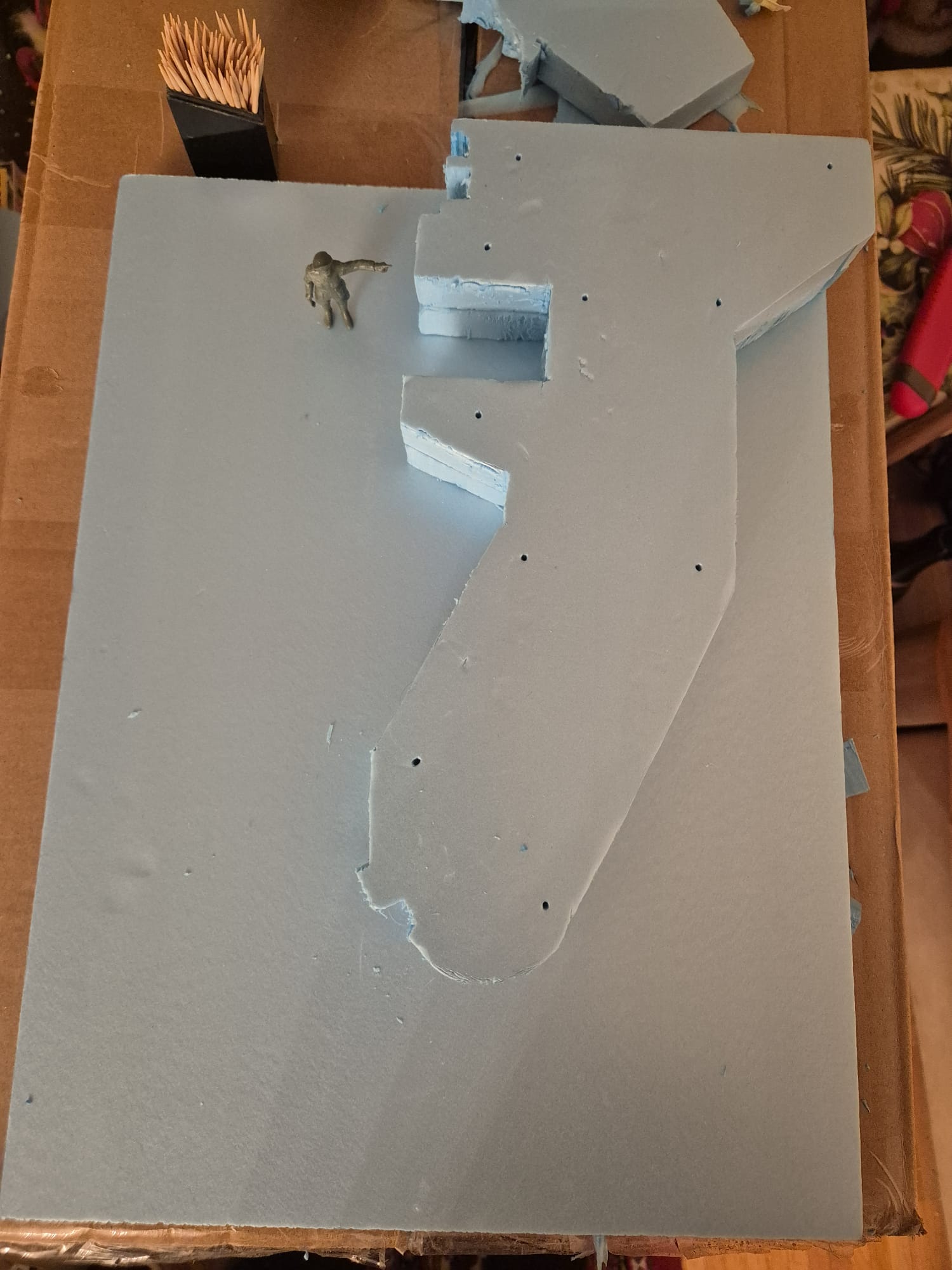
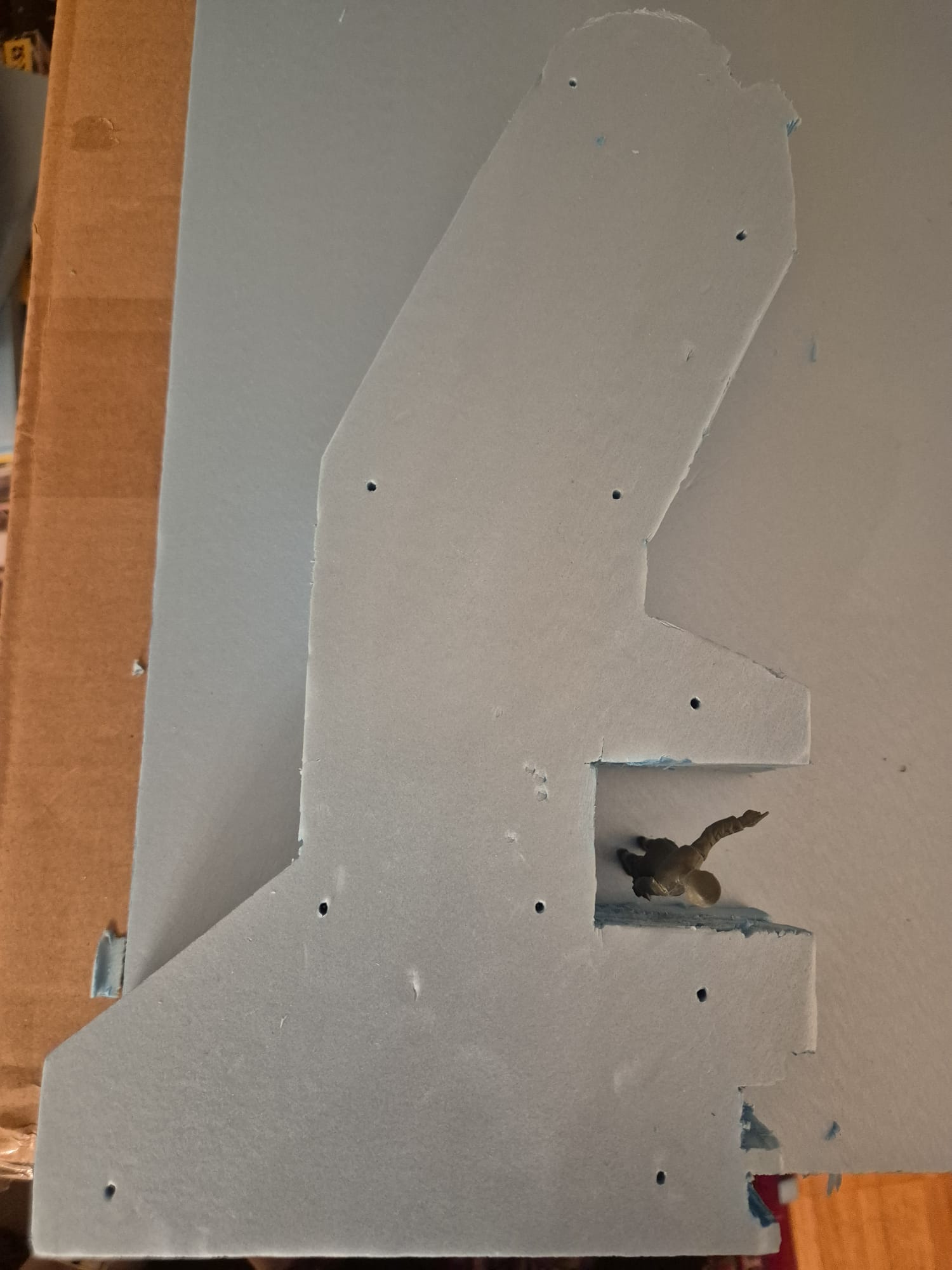
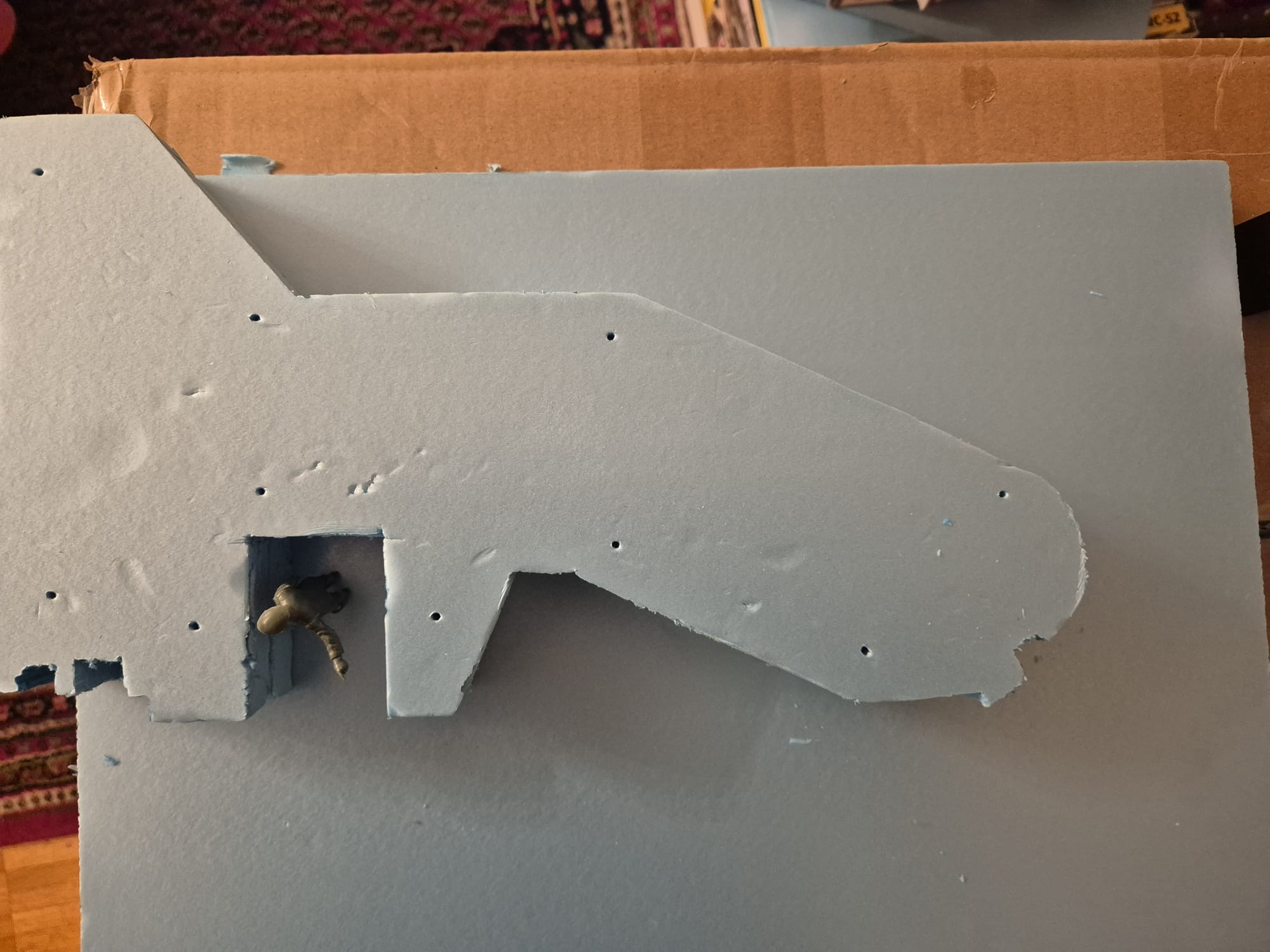
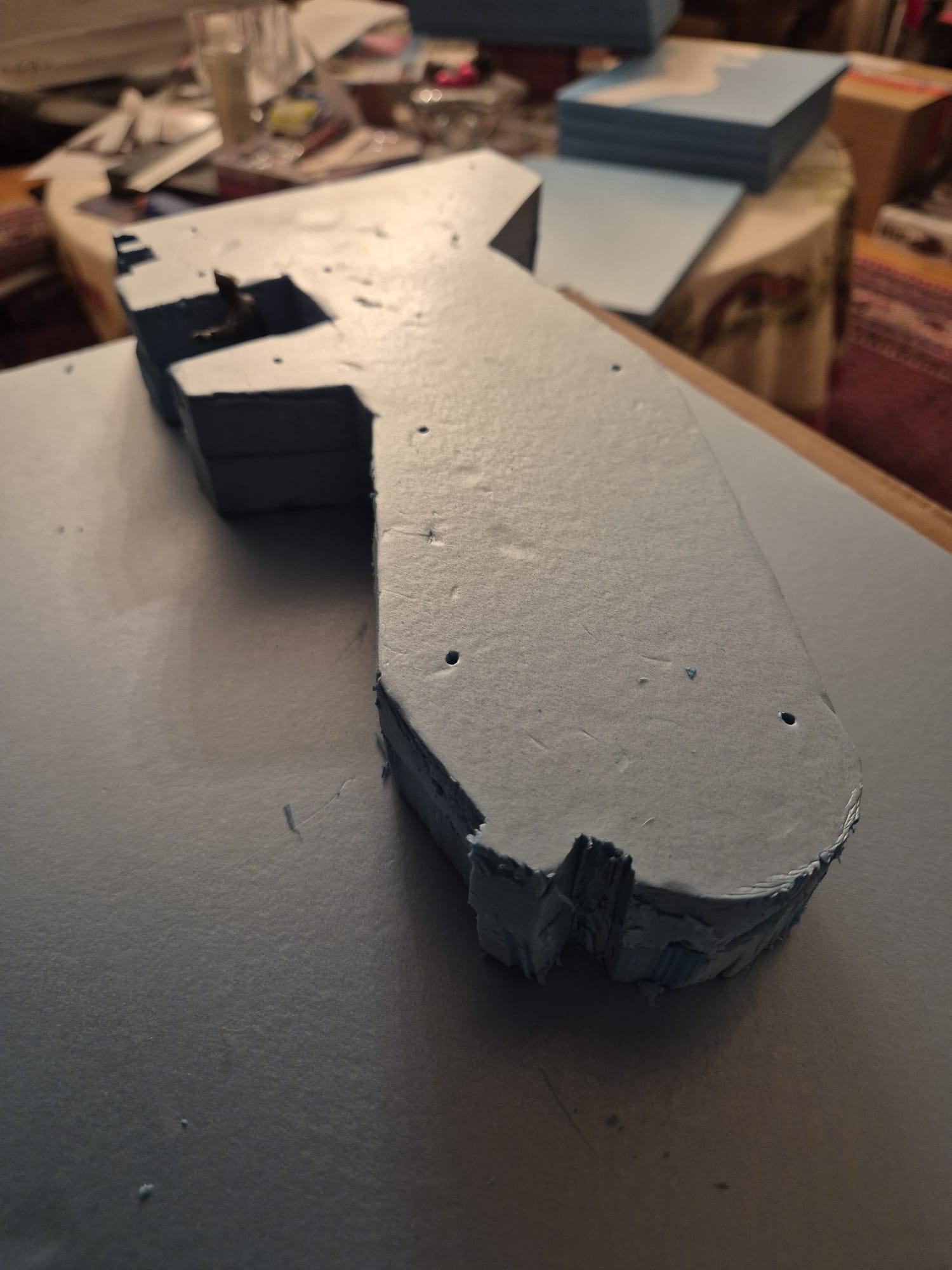
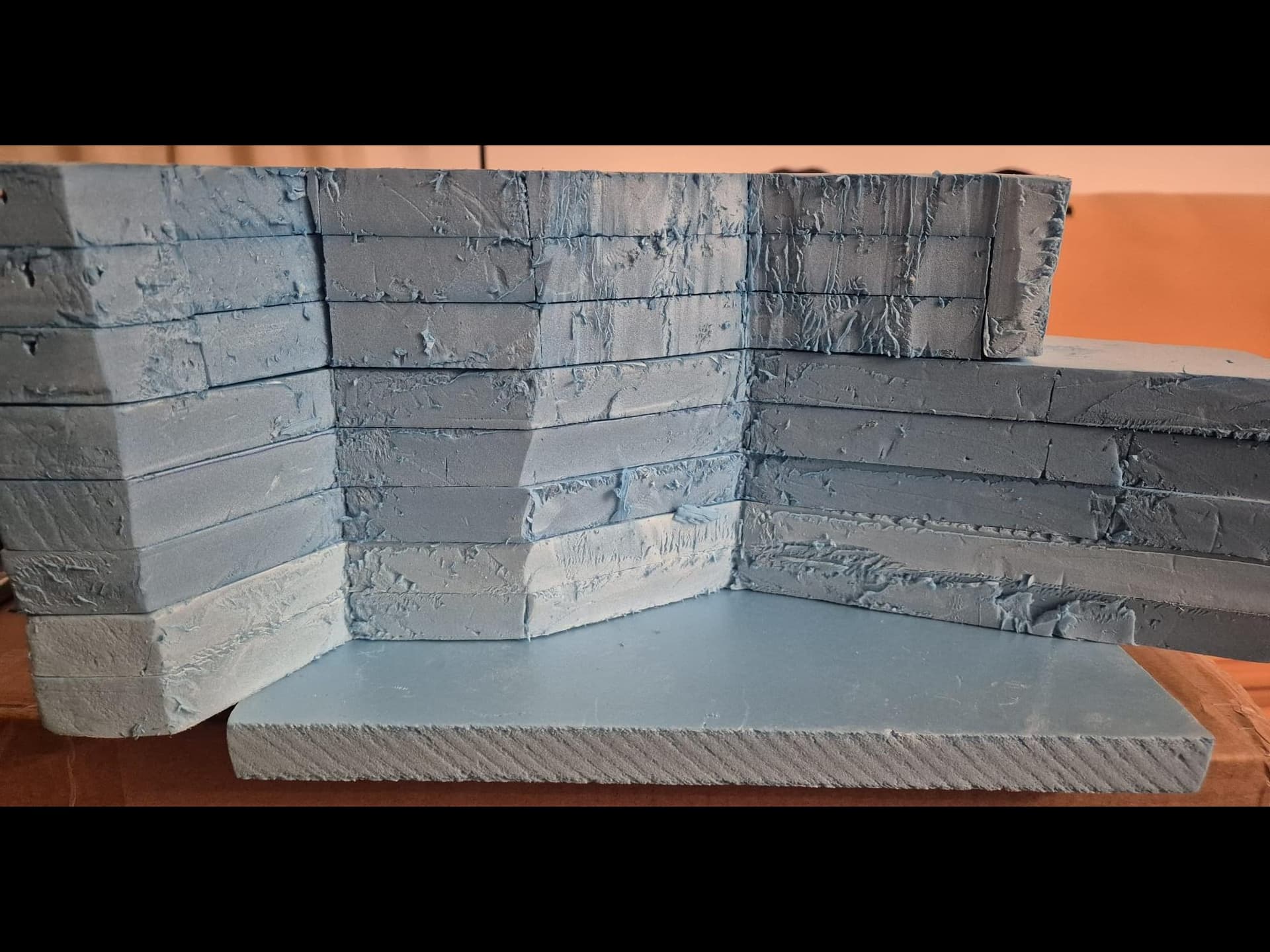
So it is indeed the Left Wall and this is how I have proceeded so far…

As seen here, you immediately recognize its true position.

Turning it you start to guess the various recesses in the inner part of the wall.

This is how it would look from the front.


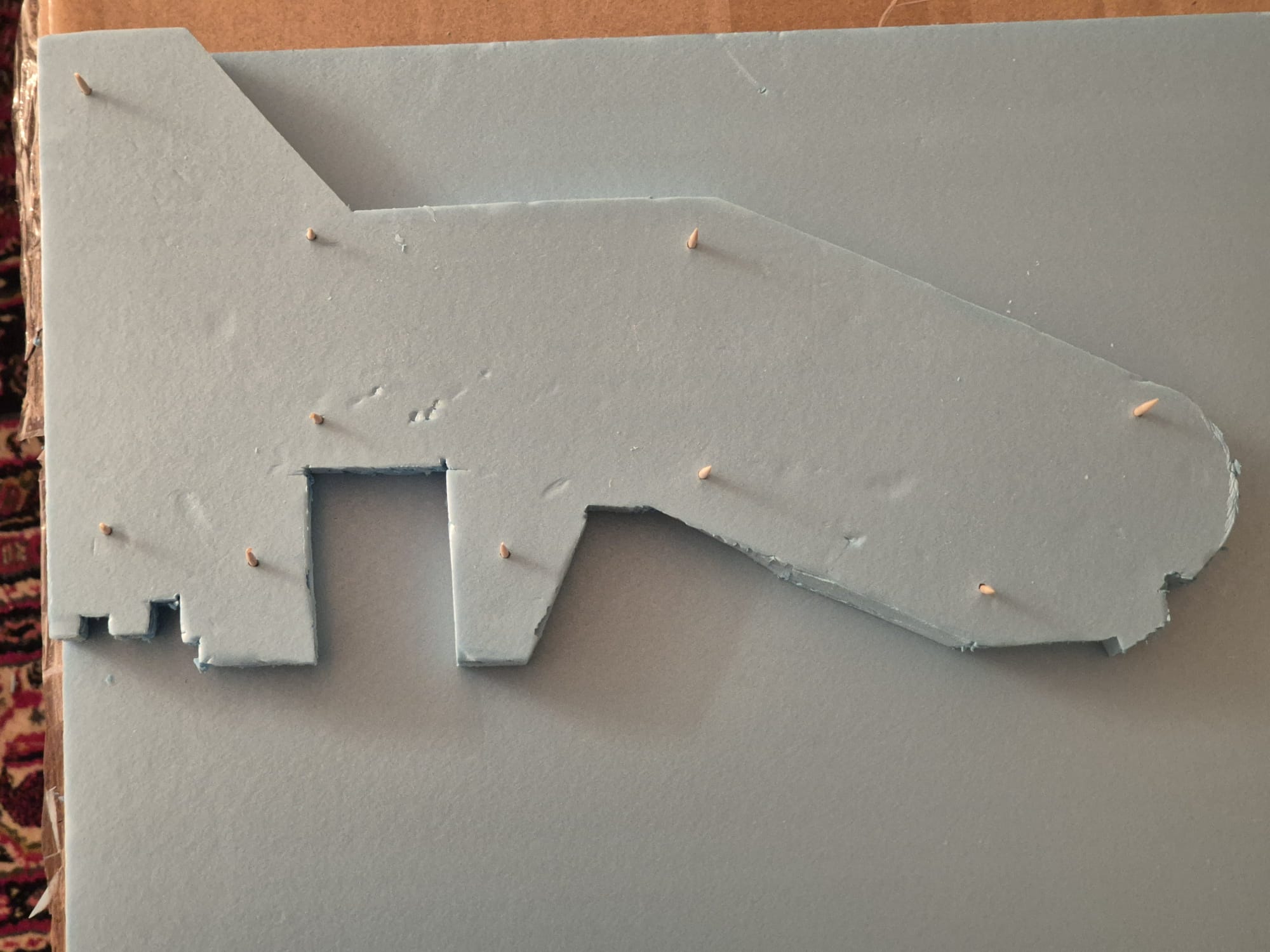
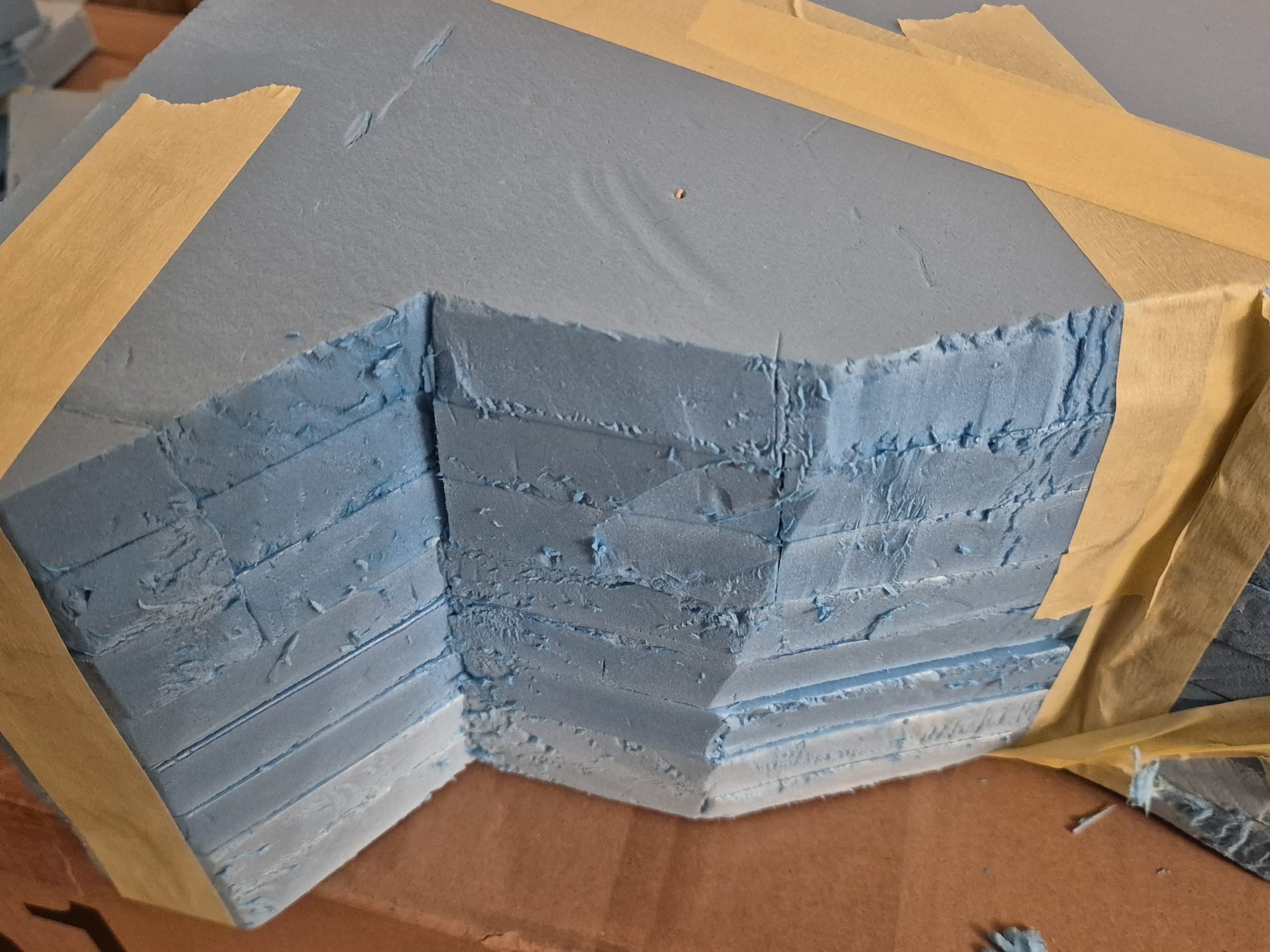
This is how the outer side of the wall looks like when cut accordingly.


This instead is how the interior wall looks when cut.

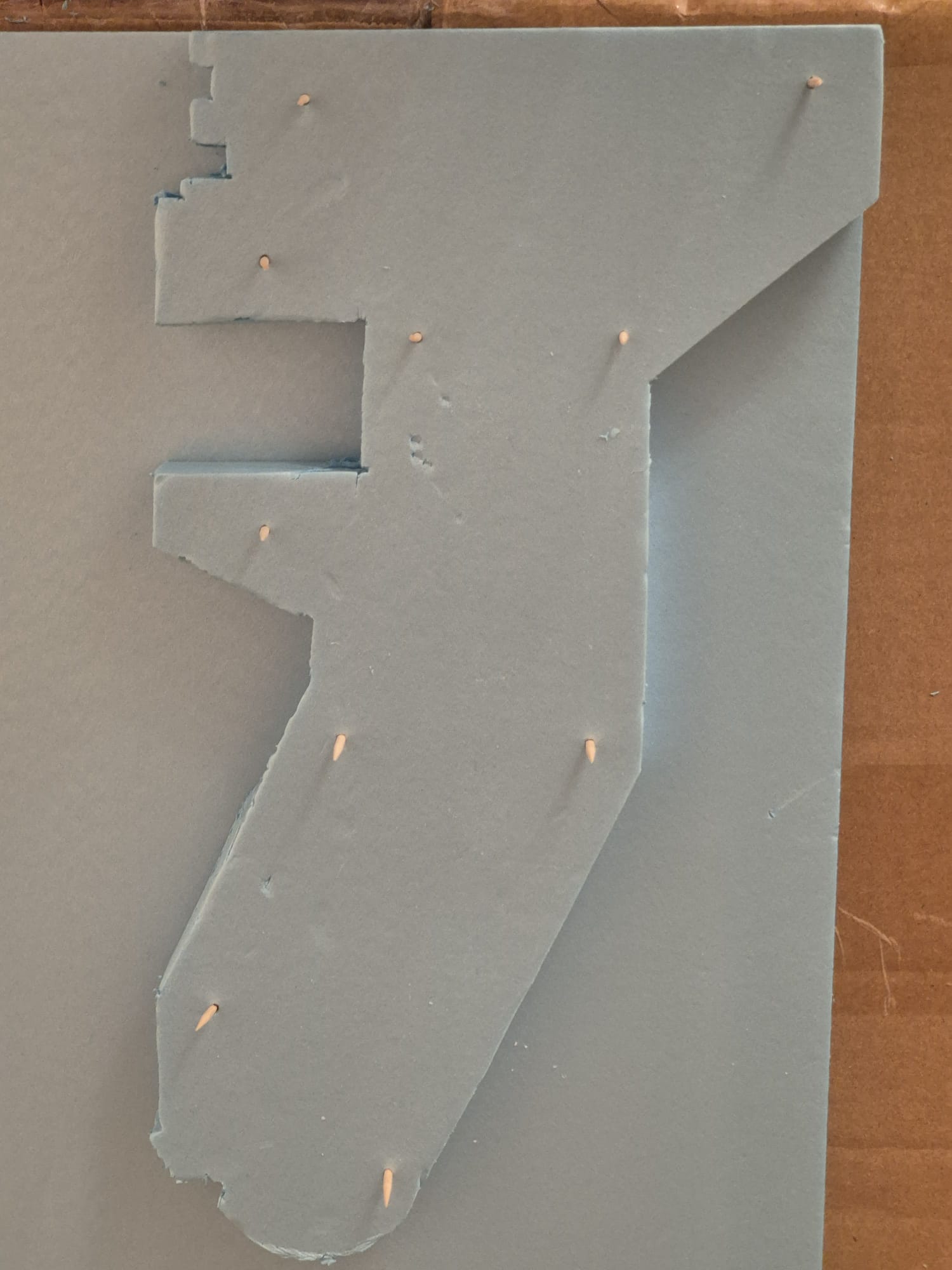
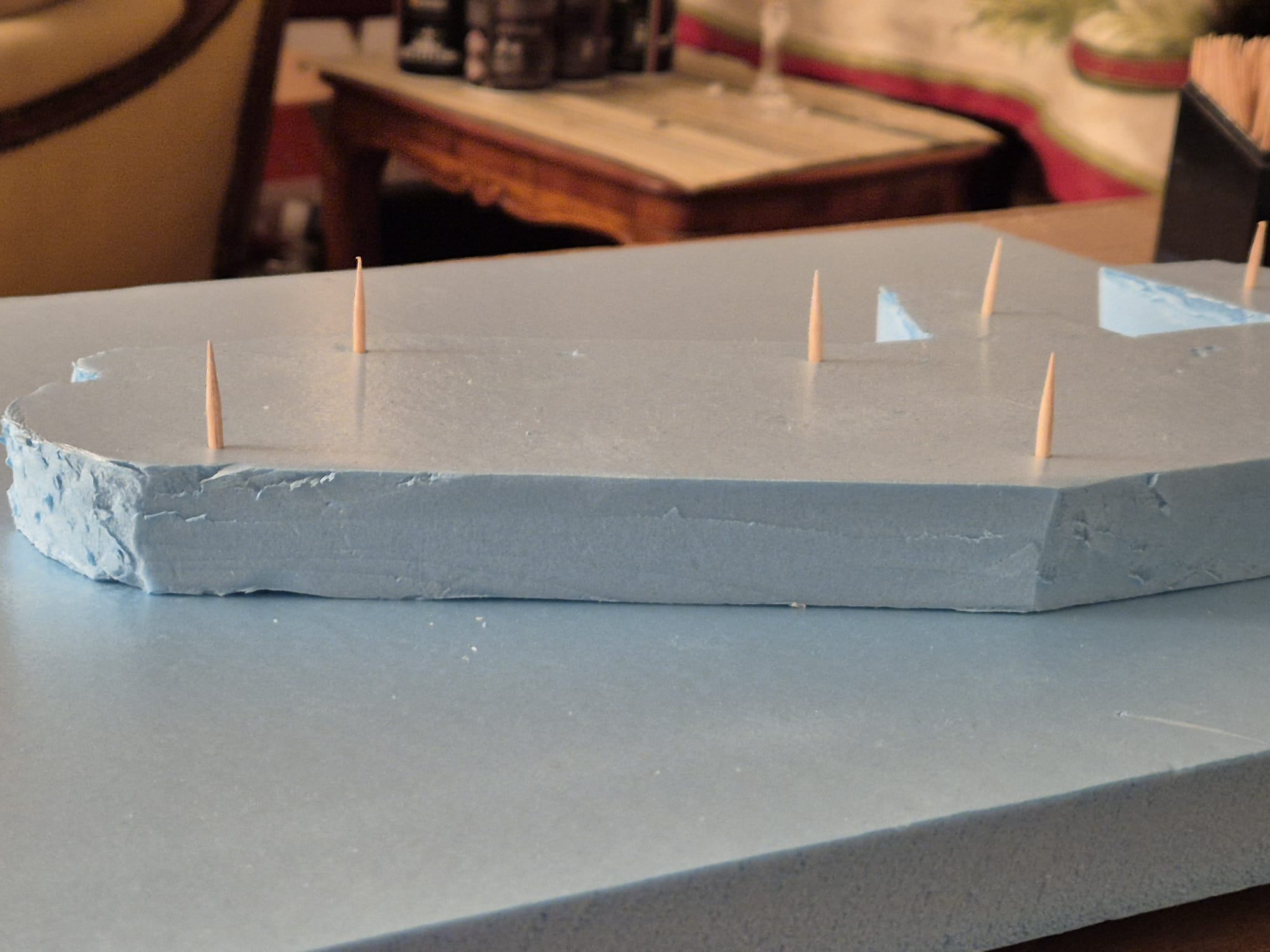
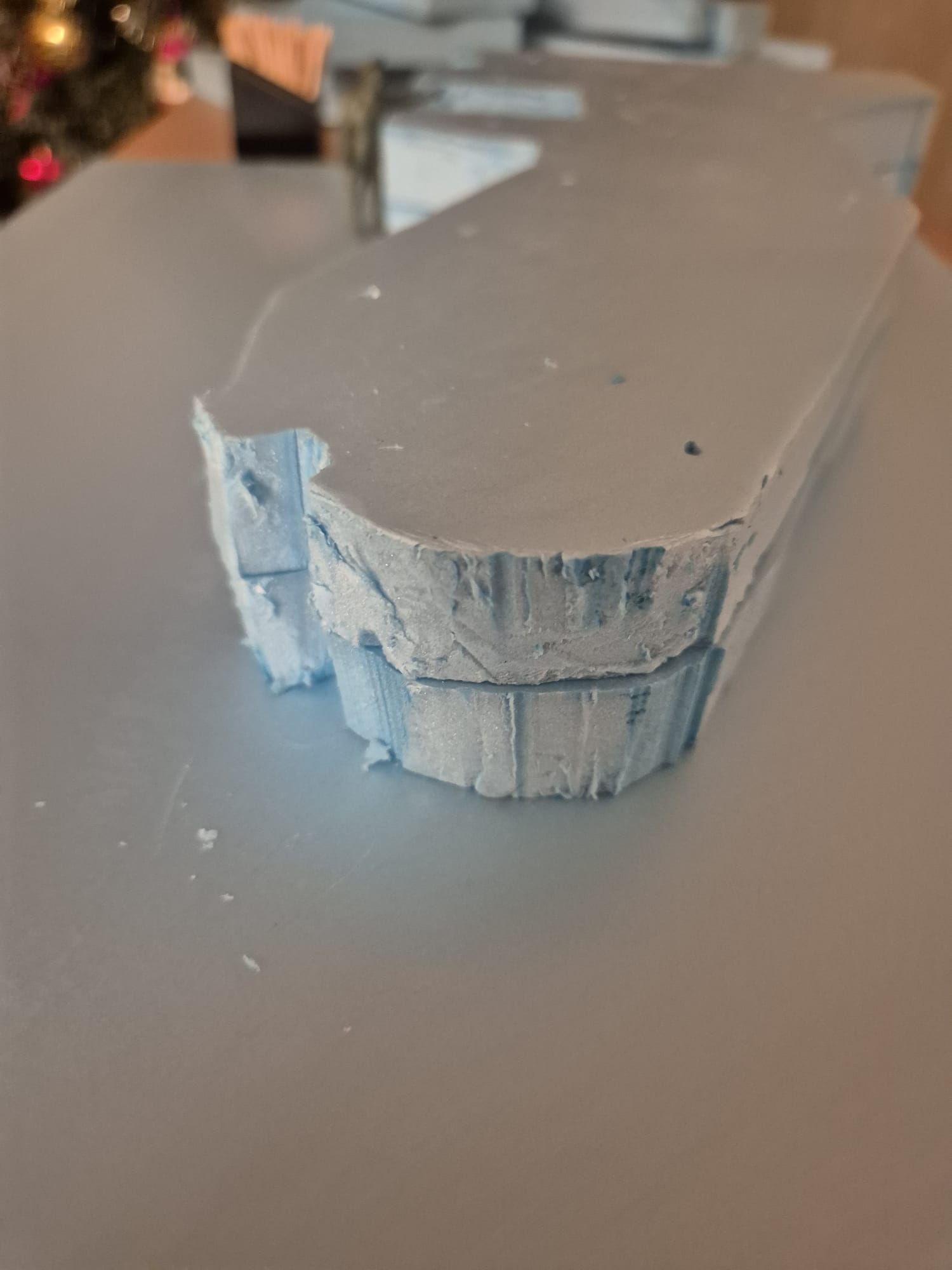
Mind you, this is only the first segment of four. Since I do not own a tabletop foam cutter I had to cut it with a simple hand cutter and the worst part was indeed the round part in the front of the wall, but this will then be corrected later on when all four segments are cut to size and glued together.

I will then apply a thin layer of plaster all over it and further cover it with a special concrete compound - always in a fine layer - just to add roughness to the wall and of course add a smoother roundness to the frontal curved part.

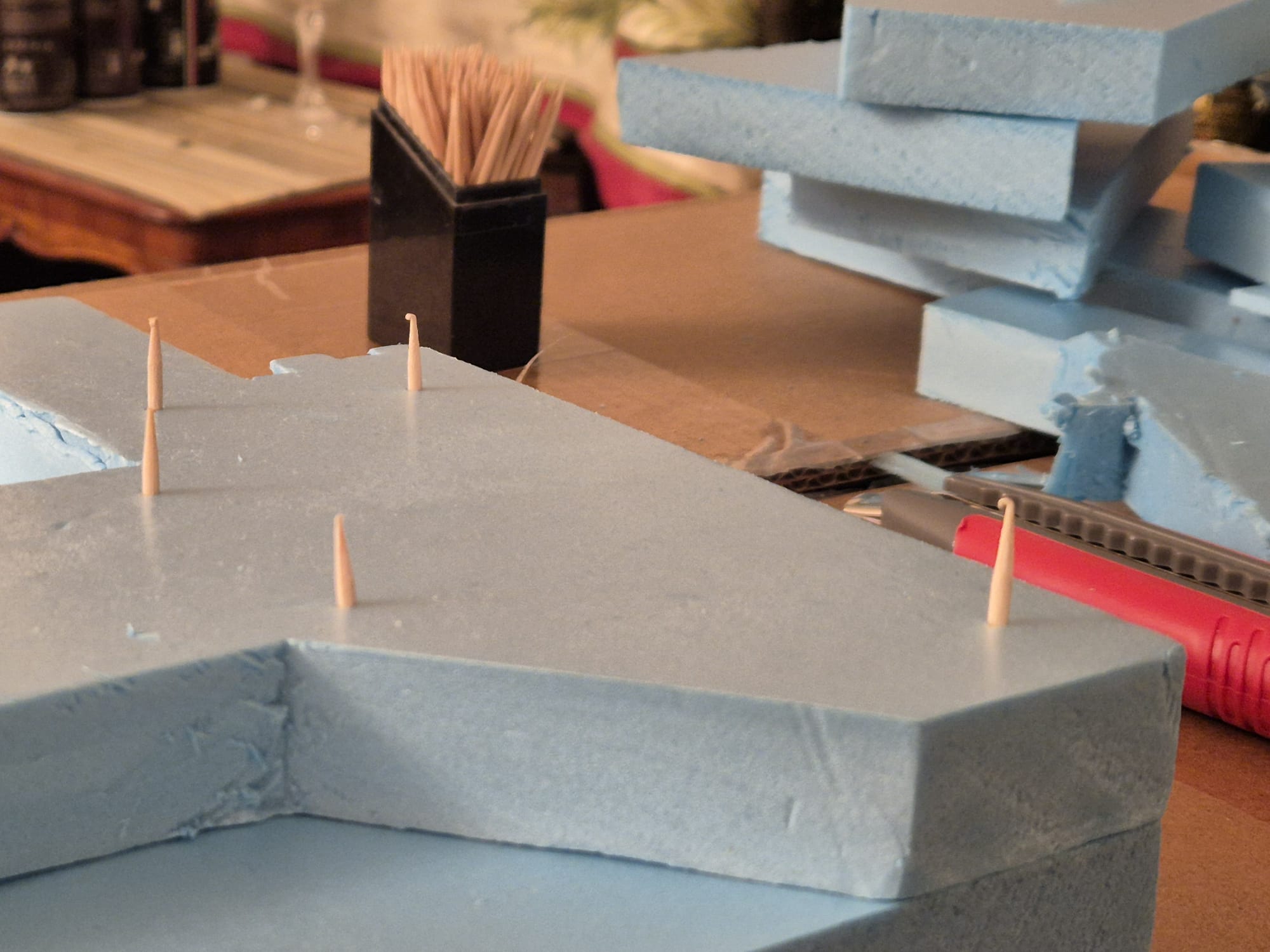
As you have observed, I have fixed the first segment with toothpicks to the second, since gluing it at this point makes no sense, since if I did already glue it, the glue would stand in my way of cutting the second one.

Due to the fact that now I will proceed with a hot blade for the second, third and fourth segments, I will do the same as here, fixing them with toothpicks first and once cut into shape firmly glued with hot glue.

Next will then come the Right Wall, which I first called the Left. And there too I will use the very same procedure.

I didn’t take a picture of the base since the foam boards which I glued together are still drying. To stabilize them further, I will add two balsa plates of the same size underneath.

This is so far what I have achieved. Not too difficult nor too easy, but applying the drawing unto the first wall segment helped me a lot to figure out on how to cut it, Now I have a lot of foam board leftovers from which I will realize the other intricated details of the interior walls and the parapets on top of the roof.

BTW, the roof will be built after the walls and the floor will be glued together in order to take further measurements of its size in width and length.
Lastly, I will then proceed with the protective side wall, since it will he have to be slanted at angle and have to directly touch the roof and the Right Wall.
Then I will also apply the stepped platform in front of the finished Bunker.

Hang on, I will be back as soon as further developments happen.

Stay healthy, stay sharp and always keep on building your marvels.

4 Likes

The second segment of the Left Wall already done.


As you can see, it is rather difficult to perfectly replicate the very same shape twice.
In fact I did some tests with the hot scalpel but all it did were far too big gashes in the foam and therefore I used the hot wire to start with, NOT to duplicate the previous shape but to cut the unnecessary rest of the foam board and by doing that, try to cut as close as possible to the contours of the 1st segment.

The problem with the hand held hot cutting wire is that its length to cut deep is far too short and therefore one can only cut little parts at a time. And yet, it is useful because it literally melts the foam and therefore the cuts are efficiently clean.

Unfortunately, it is impossible to cut a straight line with it due to its fast melting power and this is why I abstained from following too closely the previous lines.

I then proceeded as before to cut the angles and corners with the regular foam blade and shave off the rest of the protruding parts that the wire could not get near to.

All in all the result is not too bad although as I mentioned before I would really like to possess a tabletop hot wire cutter, but the good ones cost a bundle and require a special additional space where to place them and therefore would occupy a space that I need to do other things.

For the time being I cannot really complain because the size is just right and as you certainly observed, starts to slowly take shape. I am sure that I will then be able to compensate the minor imperfections with the application of some plaster.

Curiously, you might not have seen the toothpicks this time but I can reassure you that they are firmly planted between the 1st and 3rd layer which will indeed receive the same treatment as those above it.

The real difficult work is with the tiny niches next to the rear wall and the protruding little part after the wall bend to the front, since the foam blade is far too large to define them perfectly. I will see if I can do it with a tiny surgical scalpel I have which has a very sharp and slender blade.

Still, the irregularities in the inner walls are not that bad, since as I have observed even on true bunker interiors, in which there are some vertical snake formed indents in the walls. I have no idea what they were for, but since they are there why not allow mine to have them as well?

I suppose it was due to either the last concrete filling of the walls which for some reason may have been subject to some deformations, or done expressly to make the holding structure of the walls lighter.

I will follow with more later. Continue to wish me luck if you please. I really need it.

To tell you the full truth, I thought it would come out much worse than it did but I still cross my fingers with the entire procedure.

It is said that luck smiles at the fools. Well, I’m indeed that… :sweat_smile: :rofl:

Be well my deat fellow modelers.

4 Likes

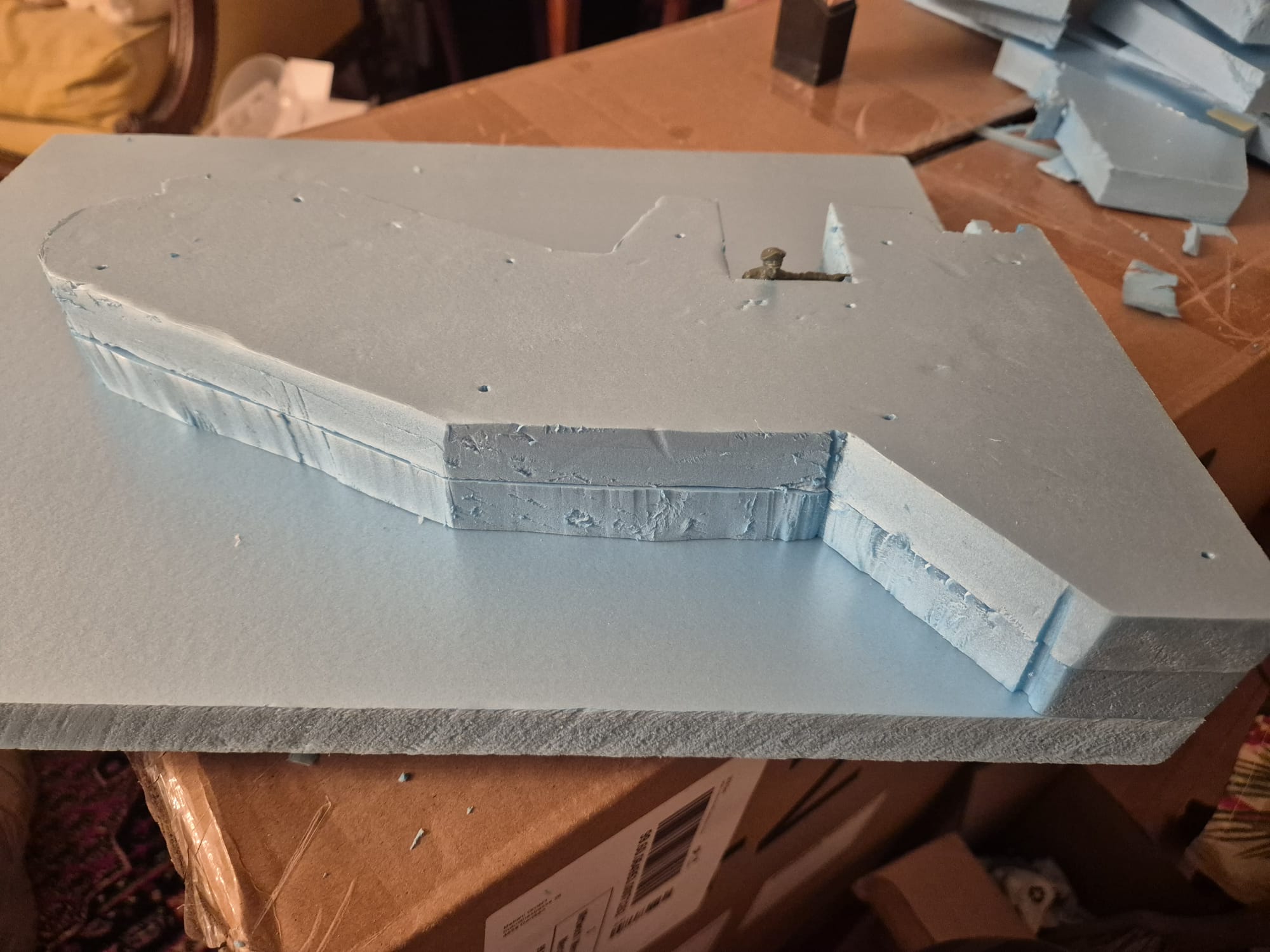
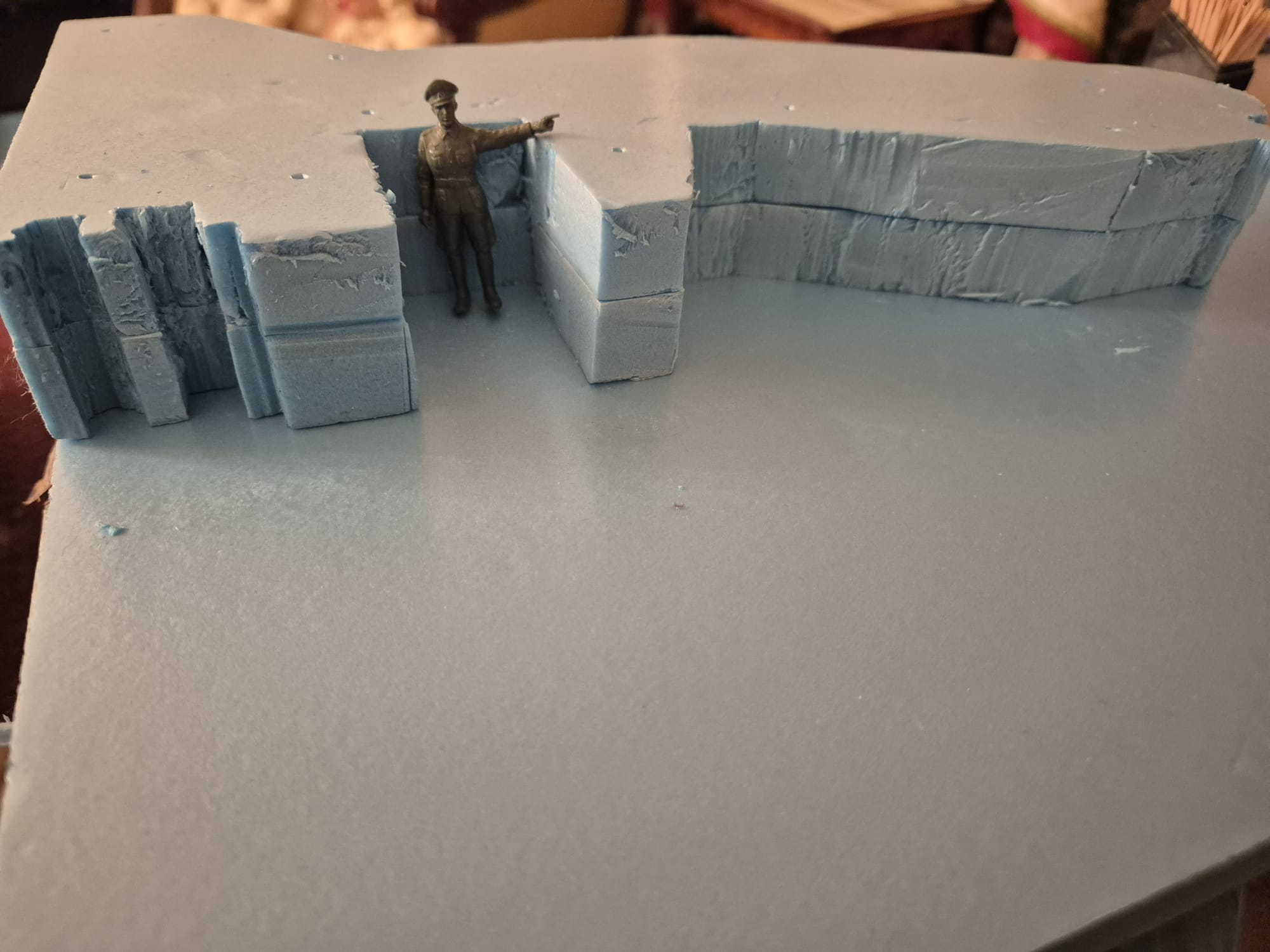
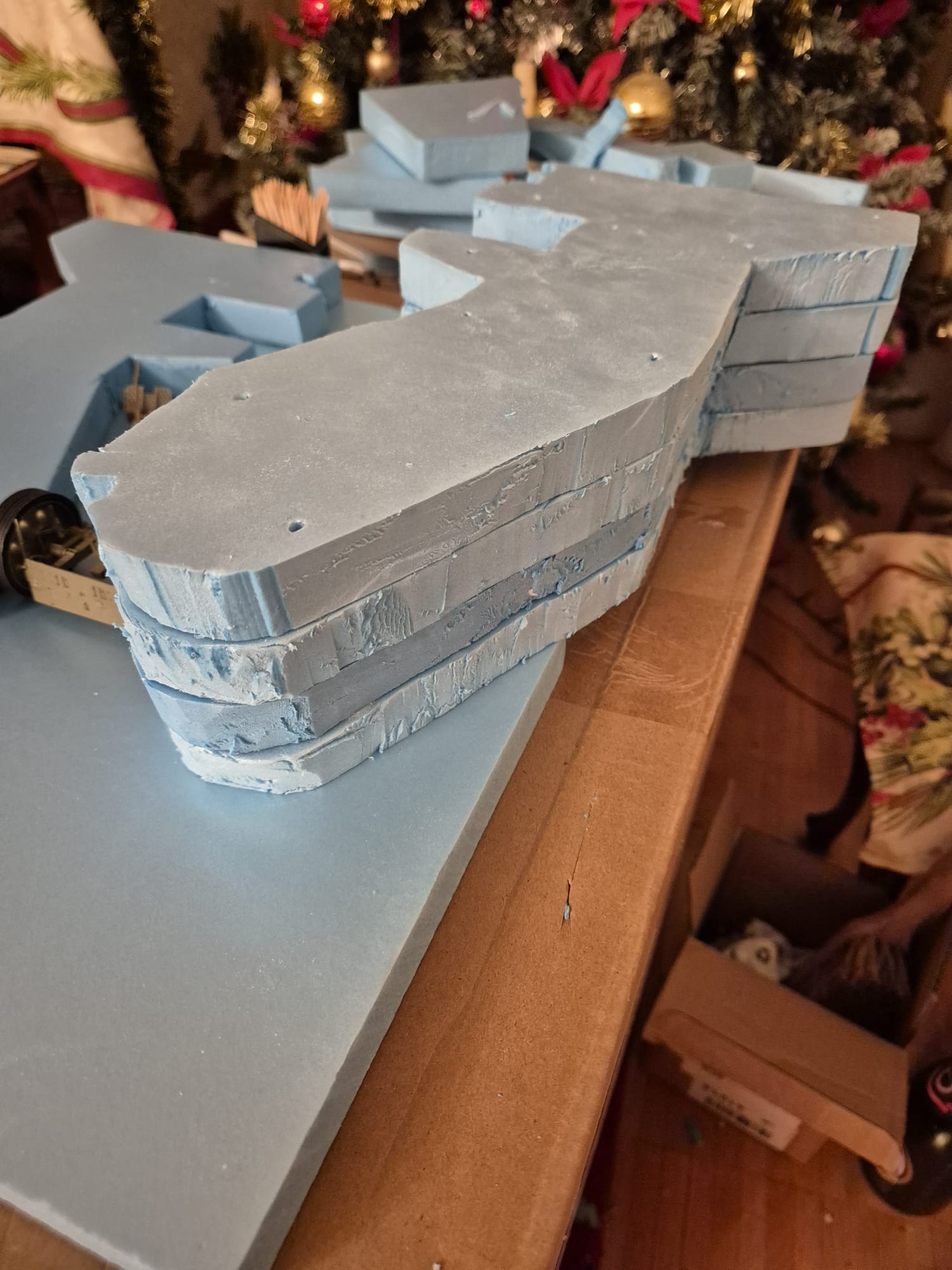
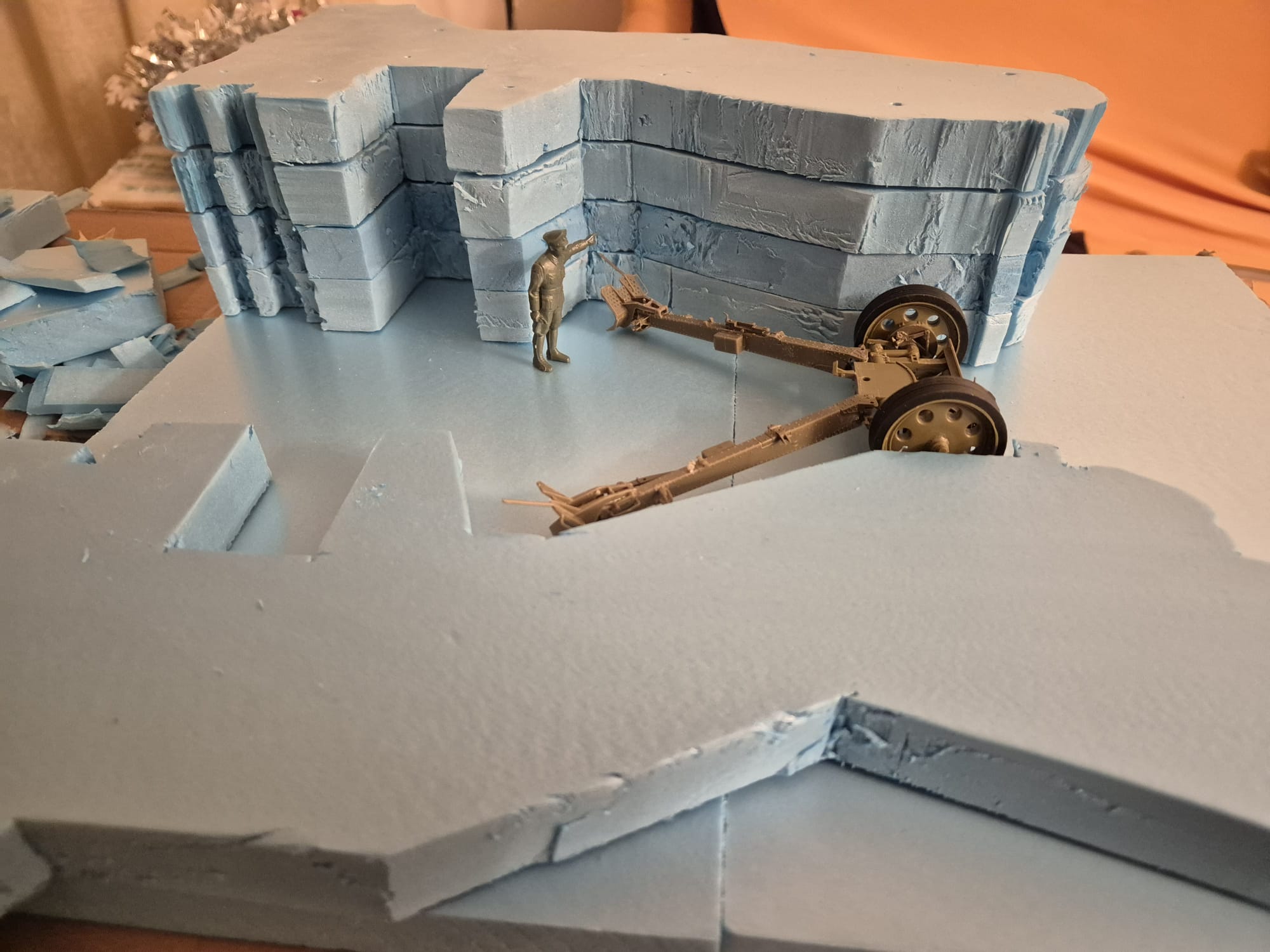
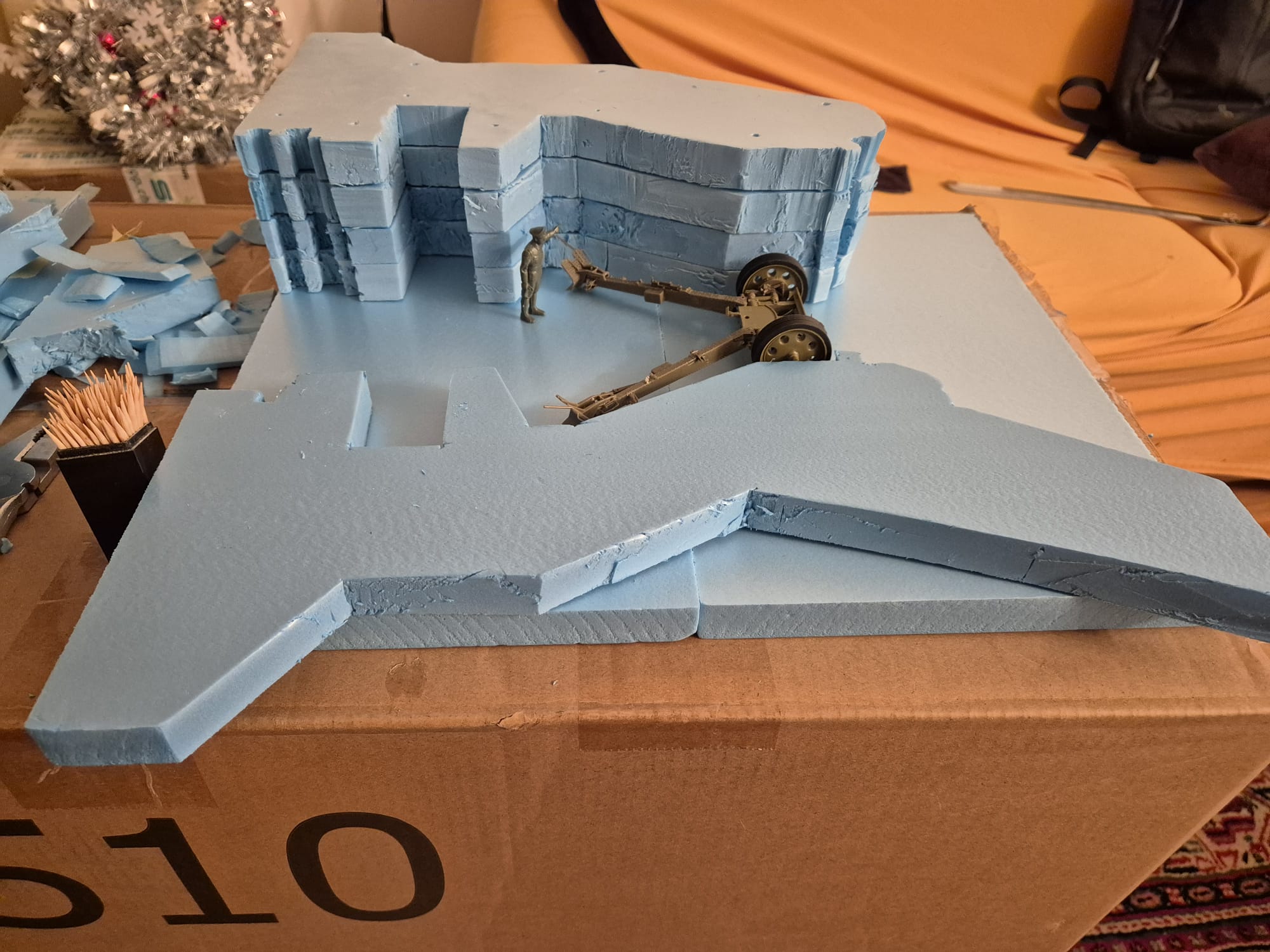
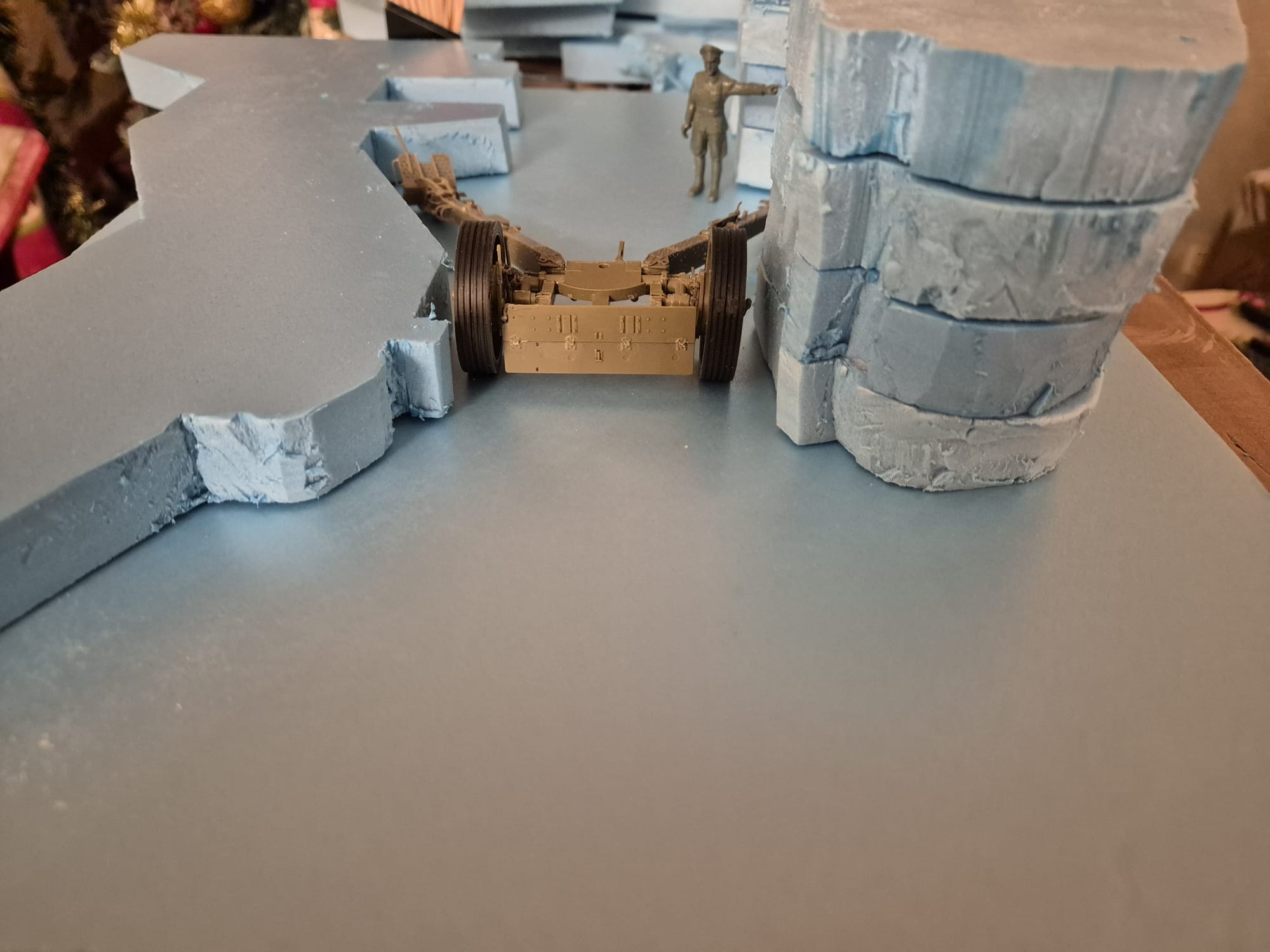
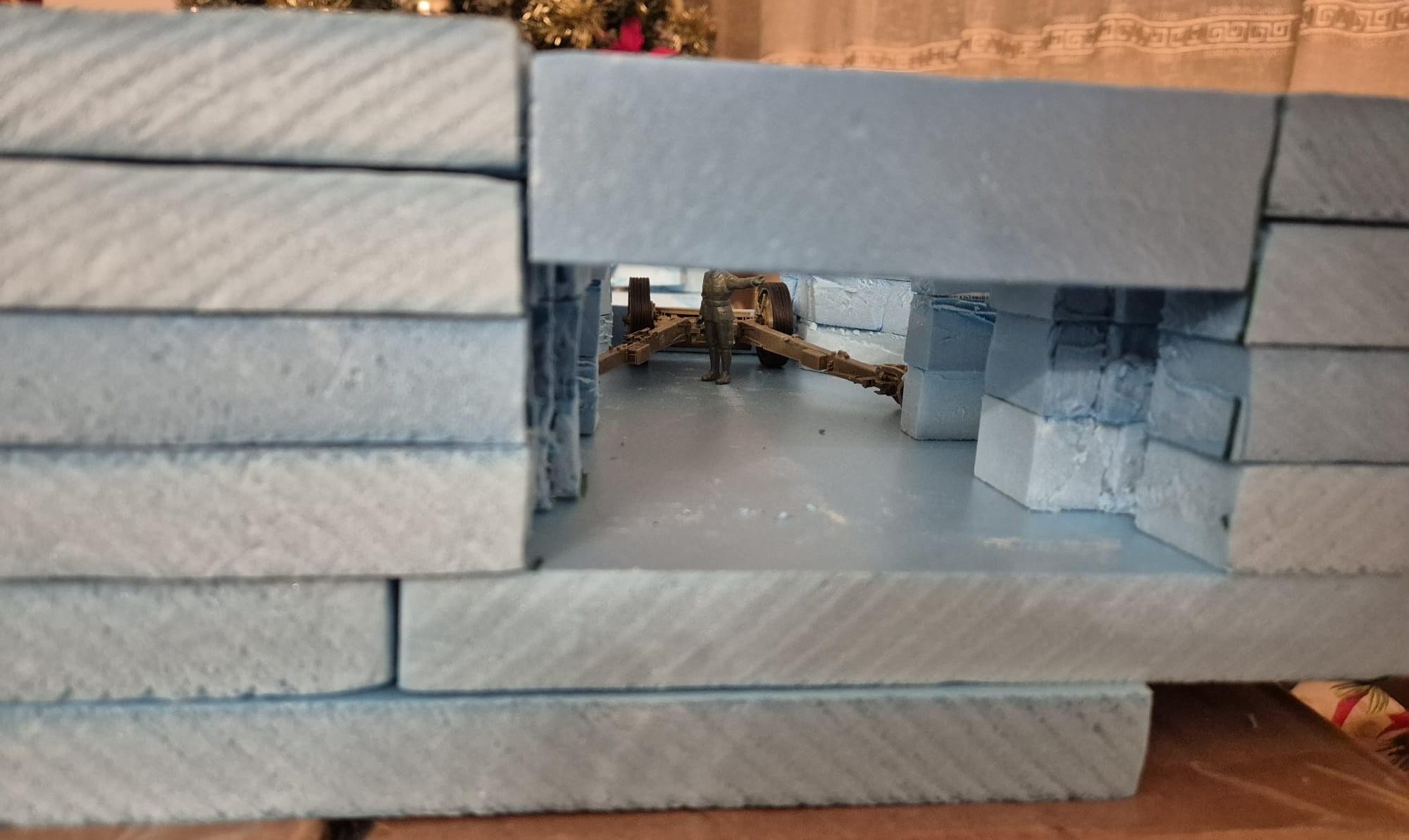
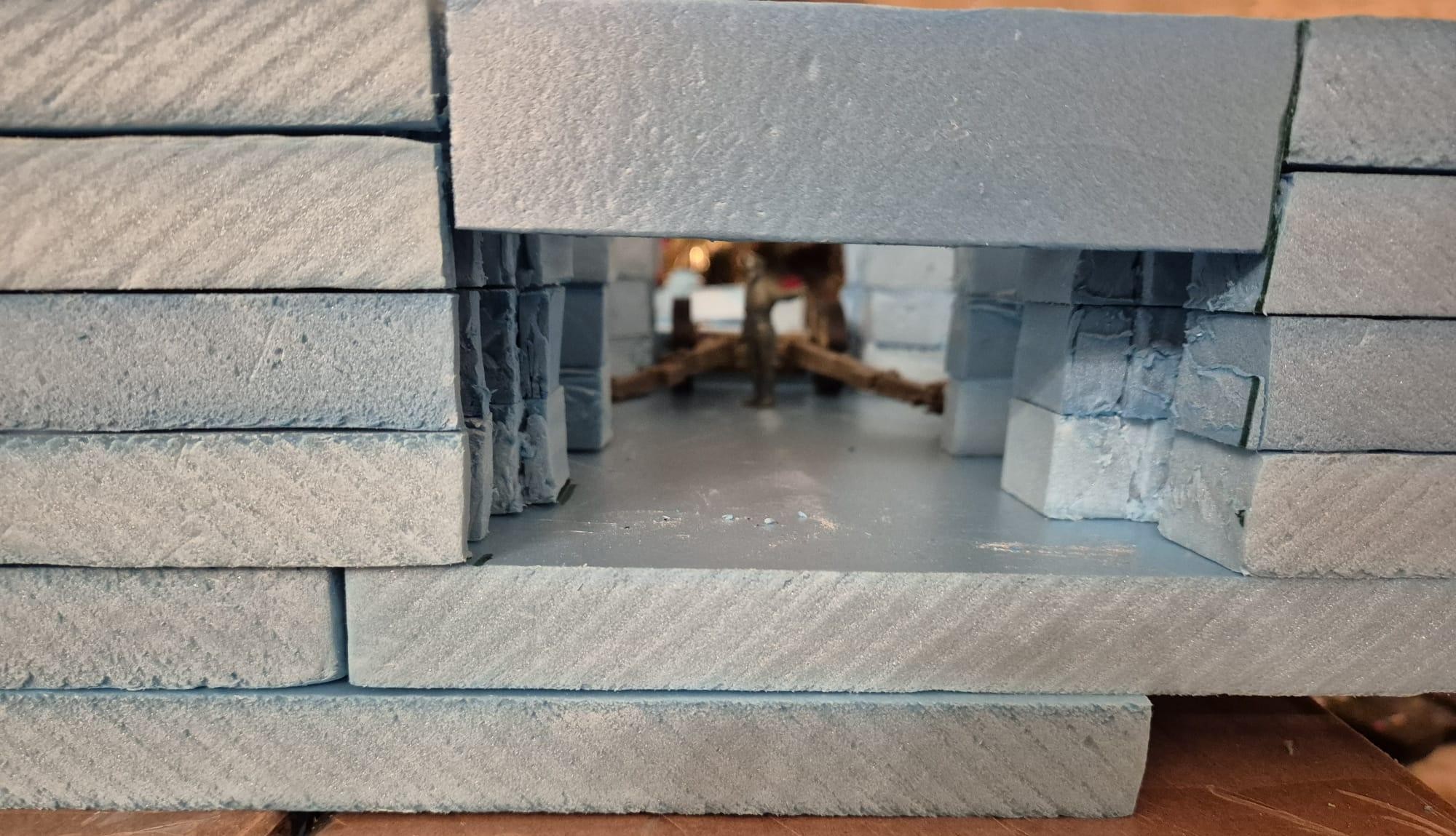
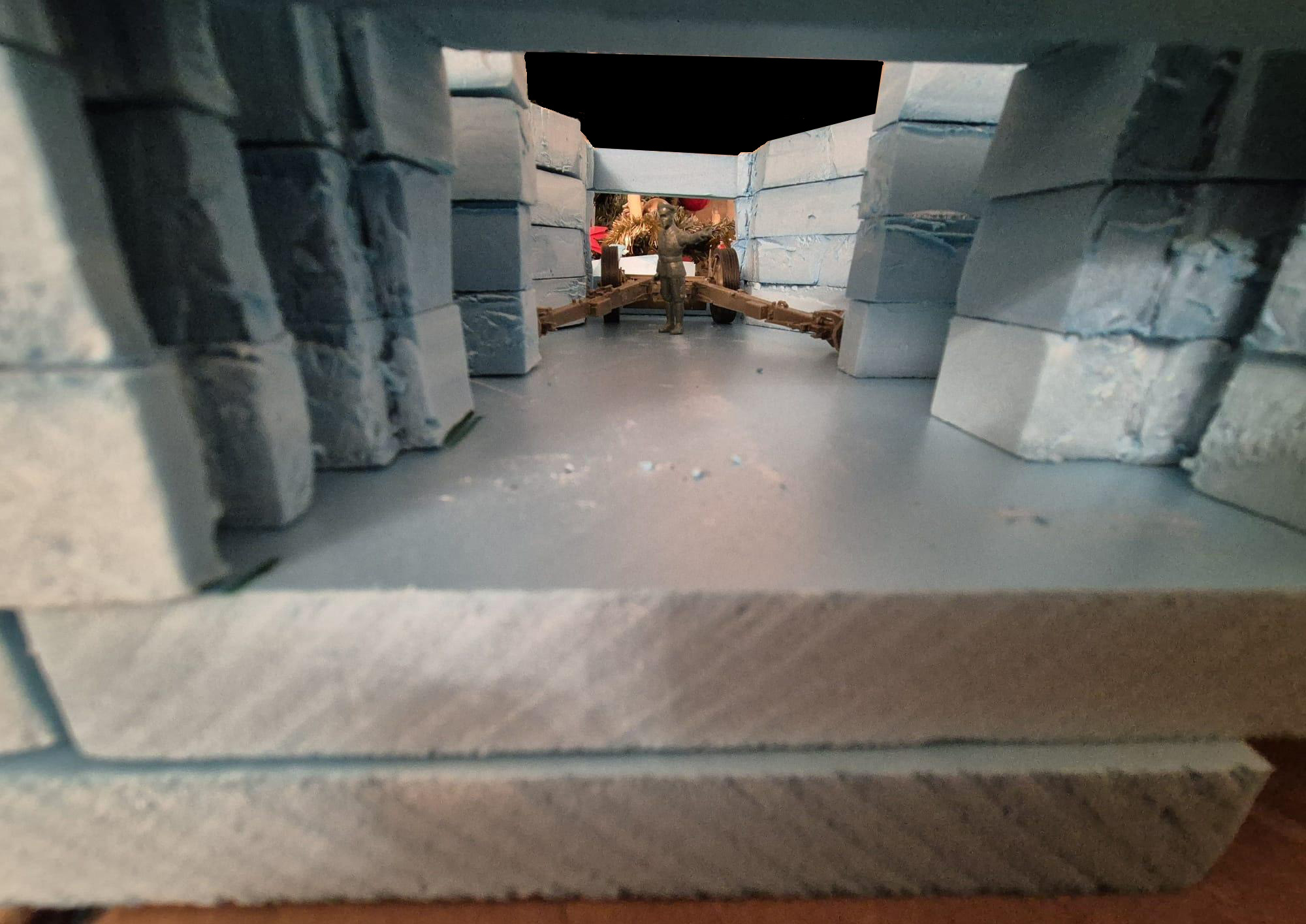
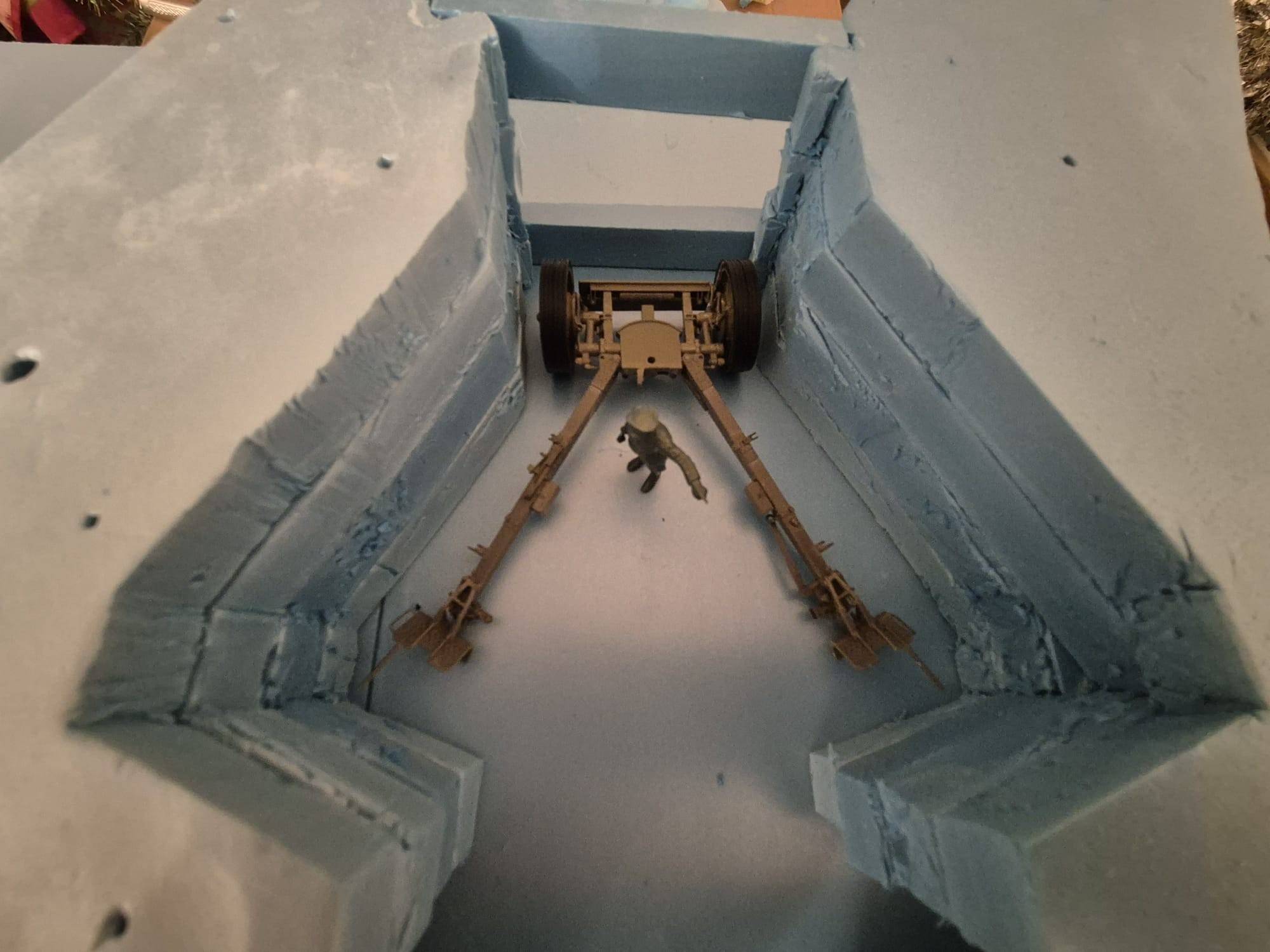
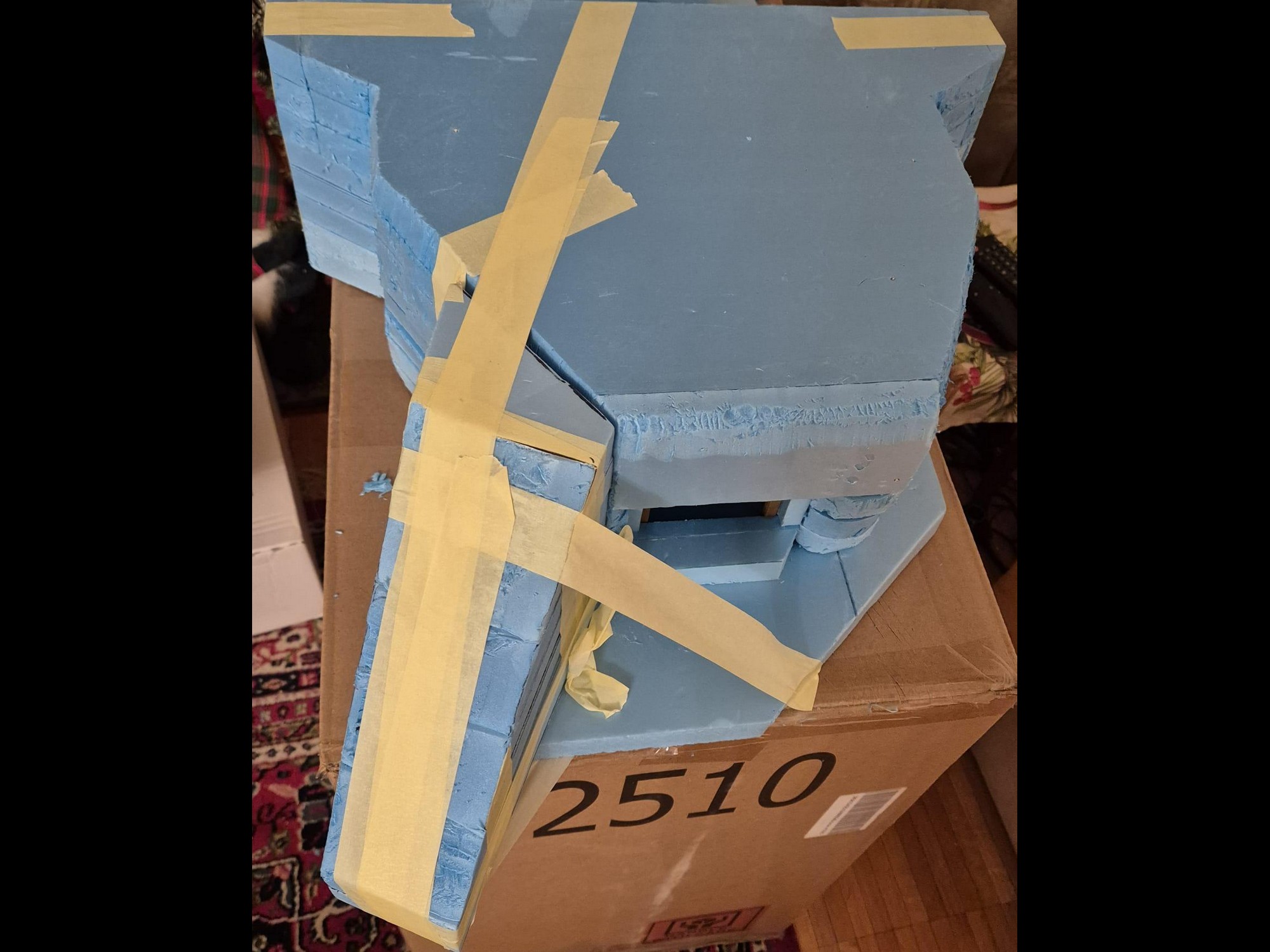
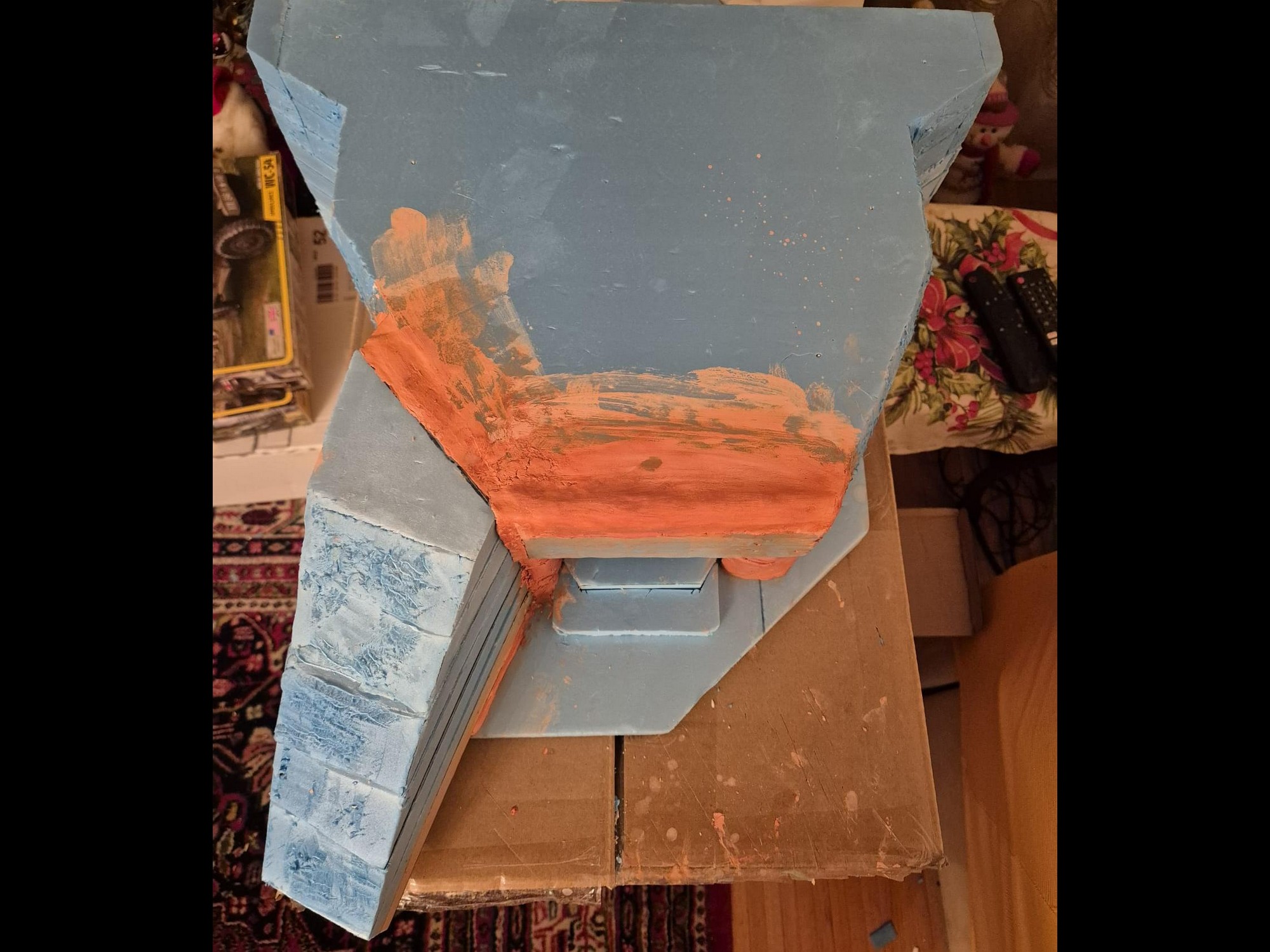
Another day, another job done.

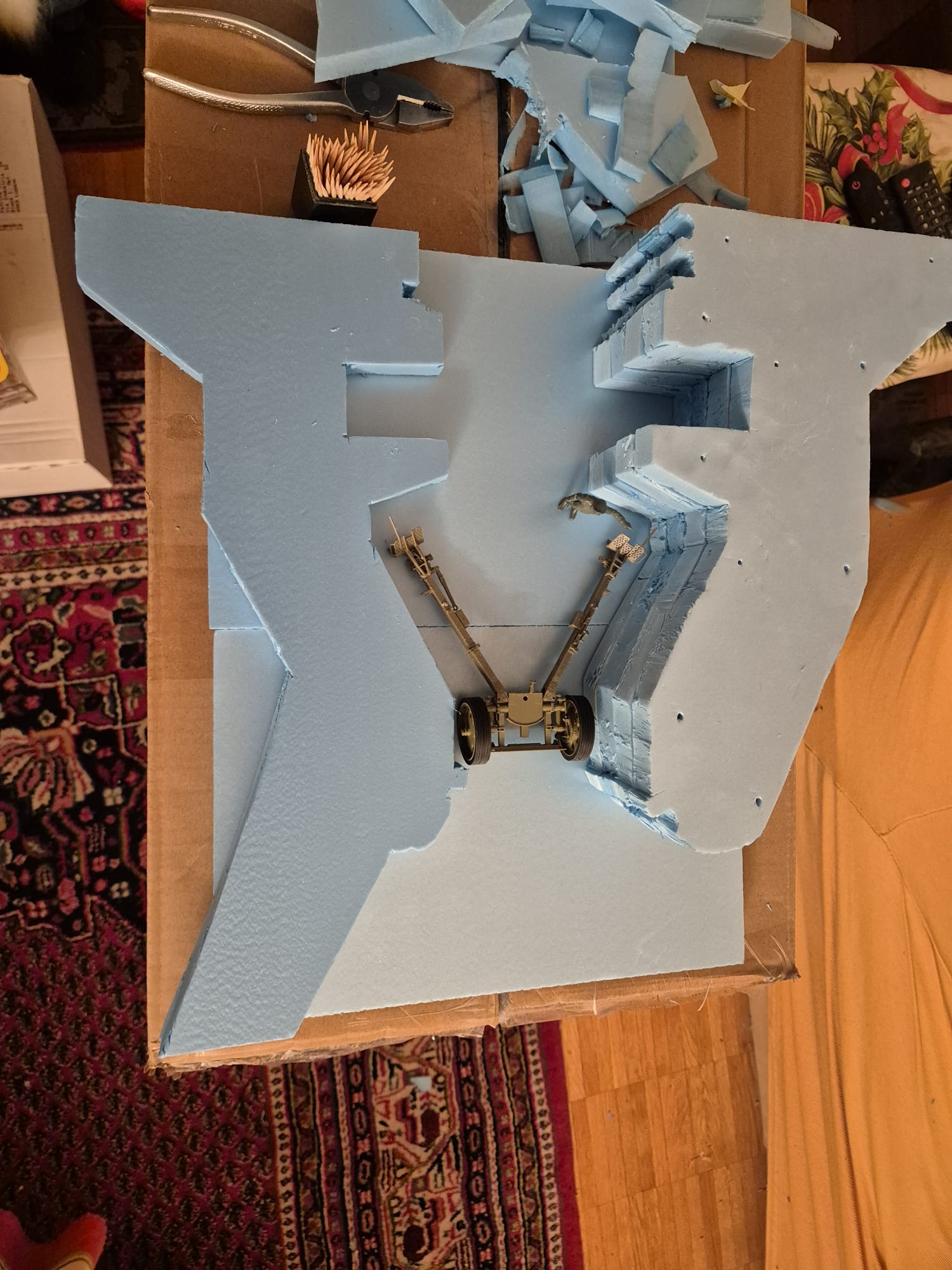
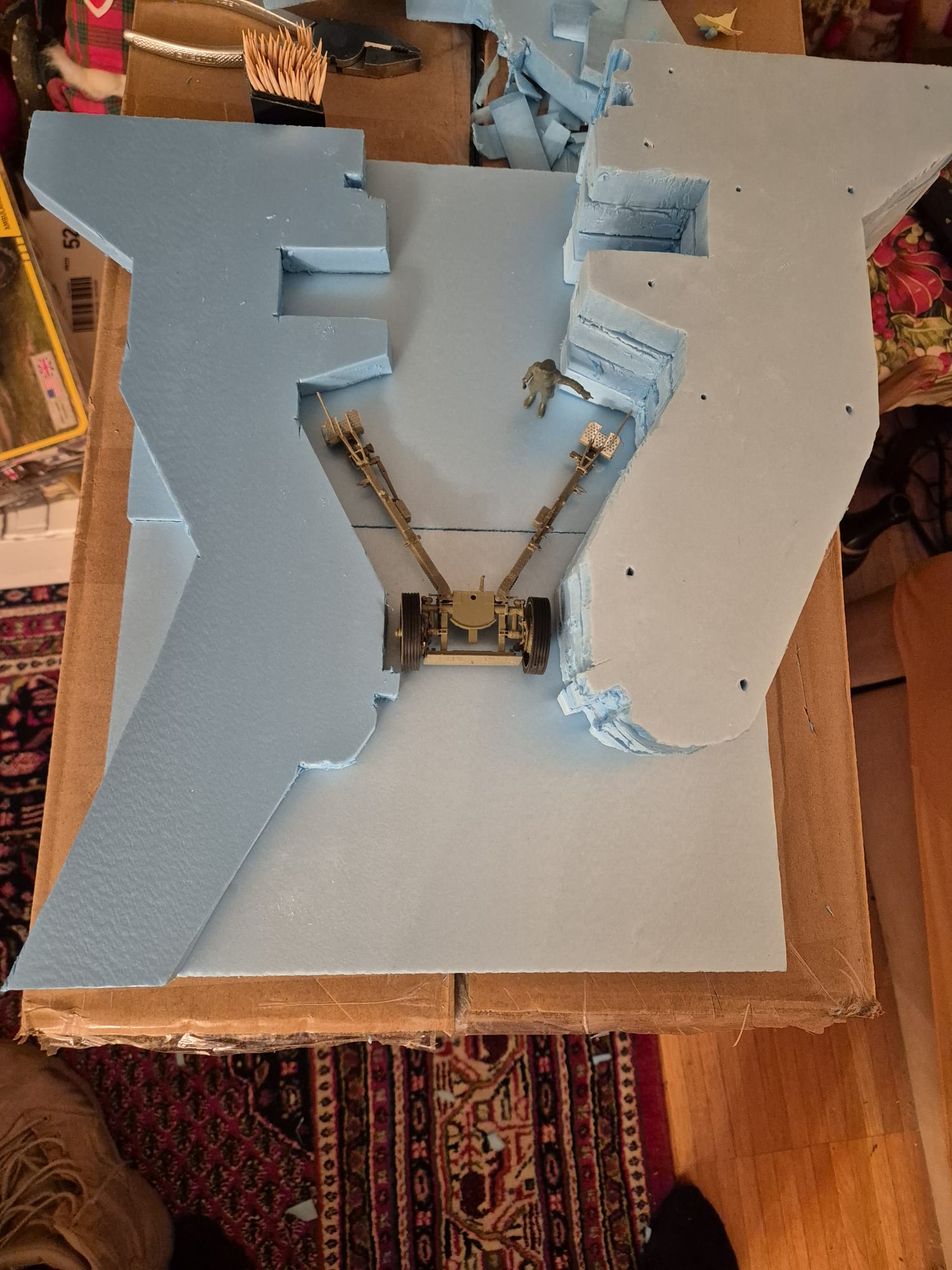
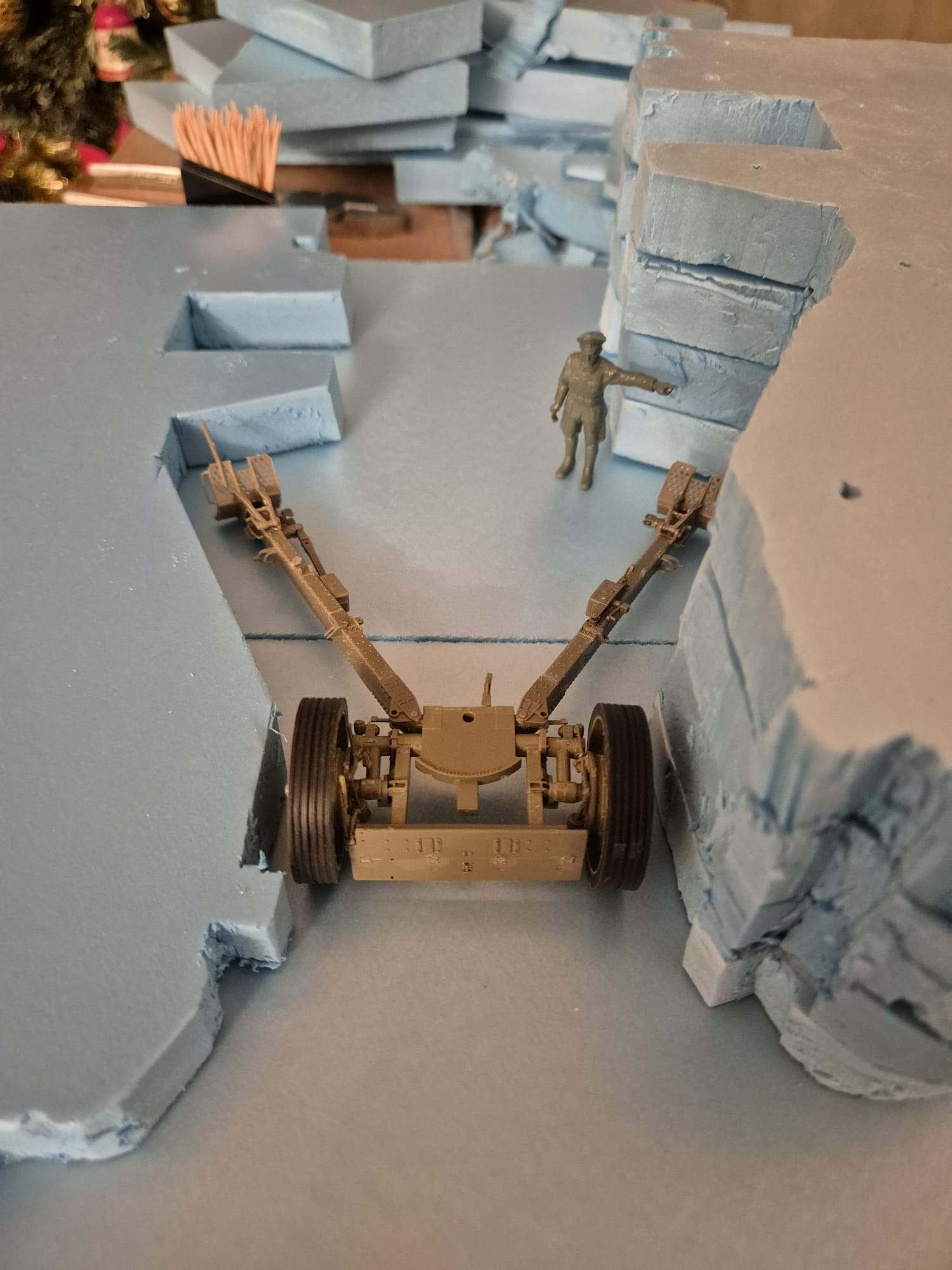
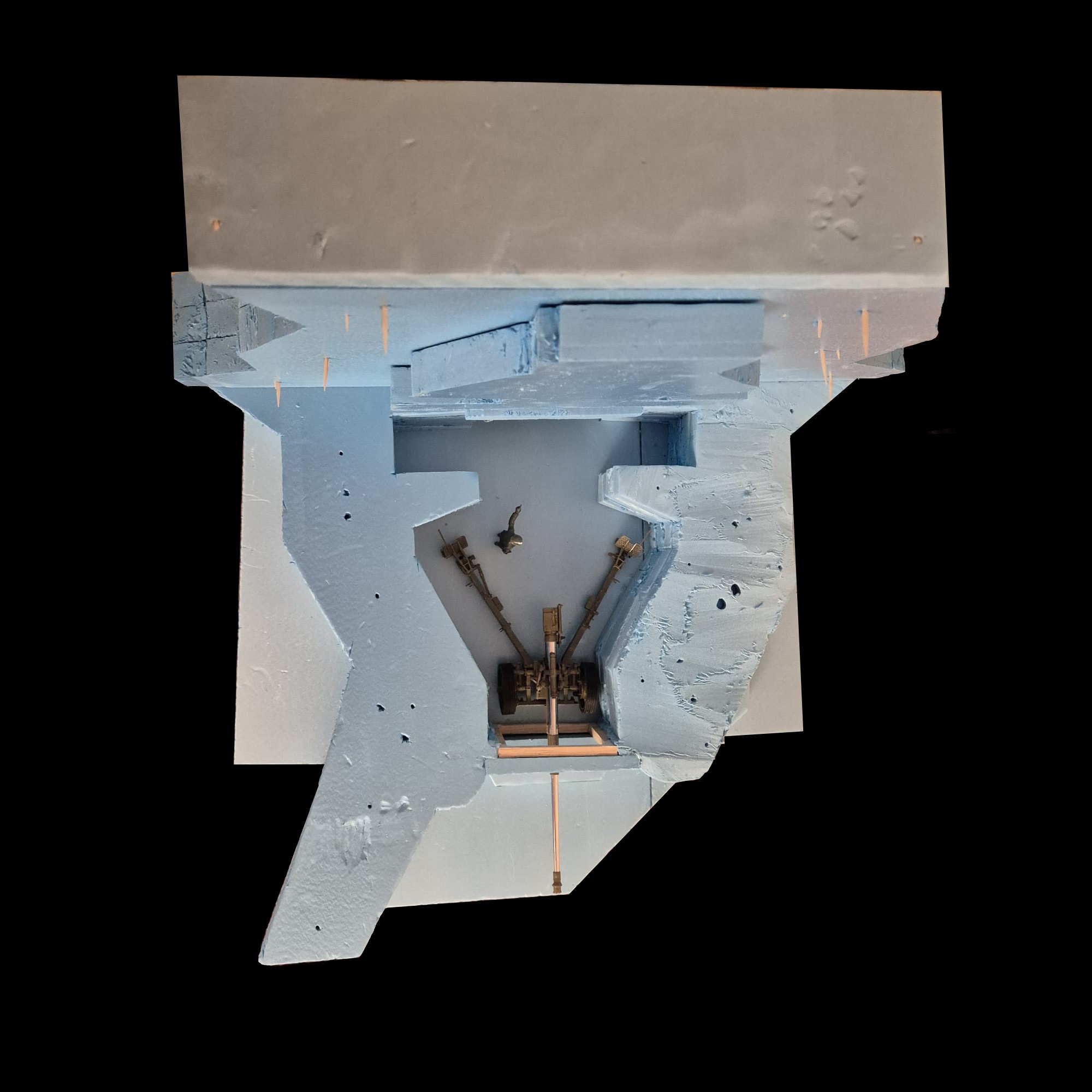
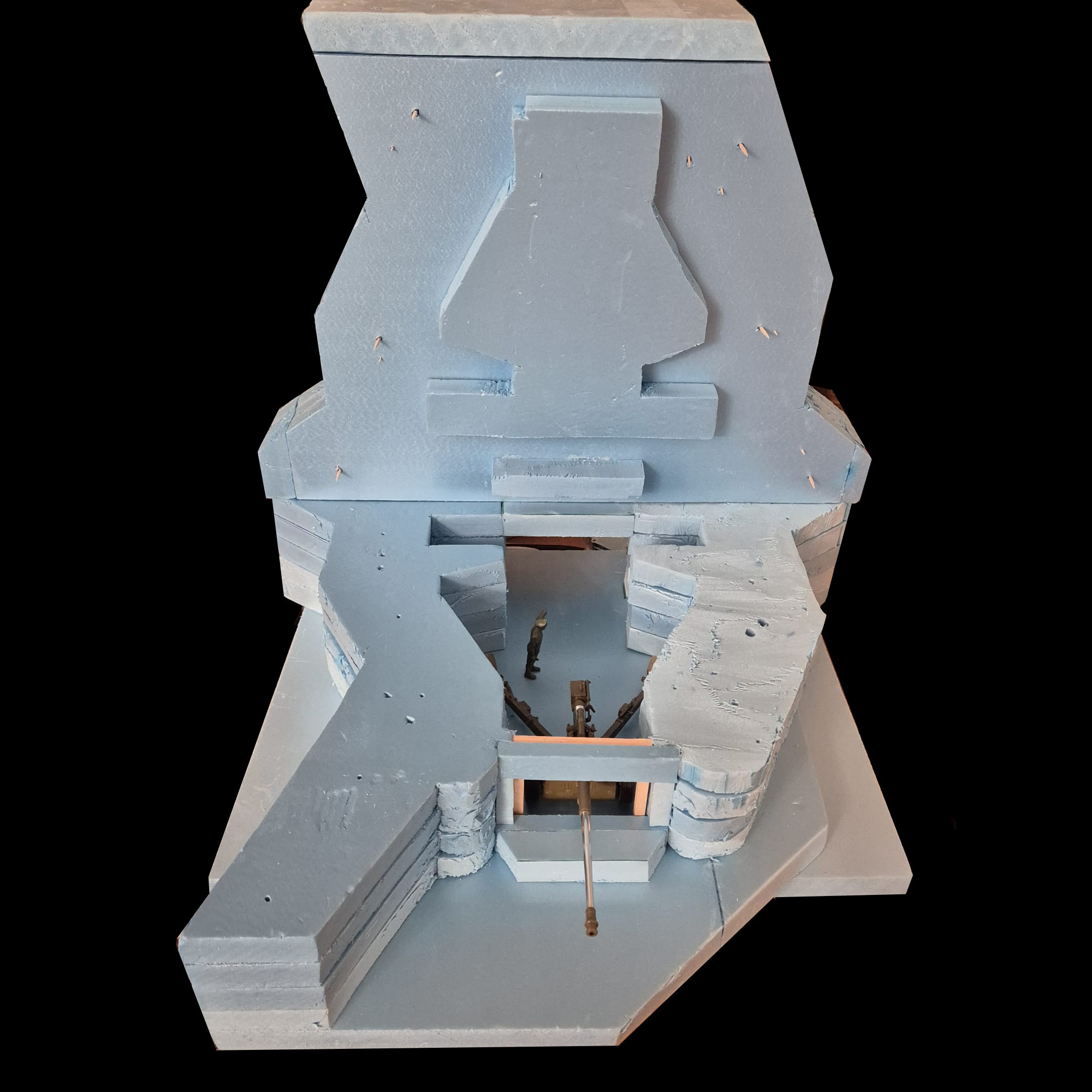
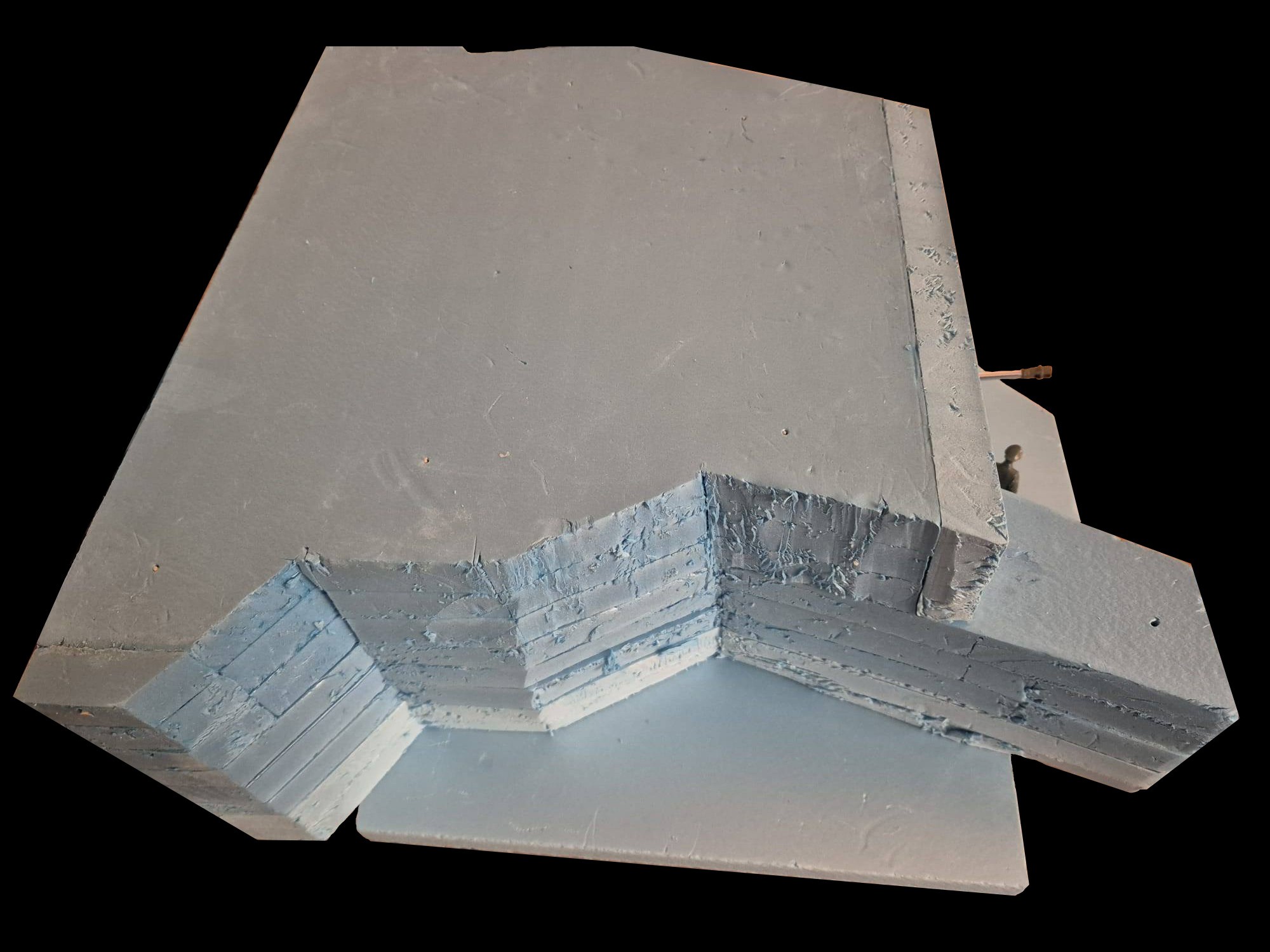
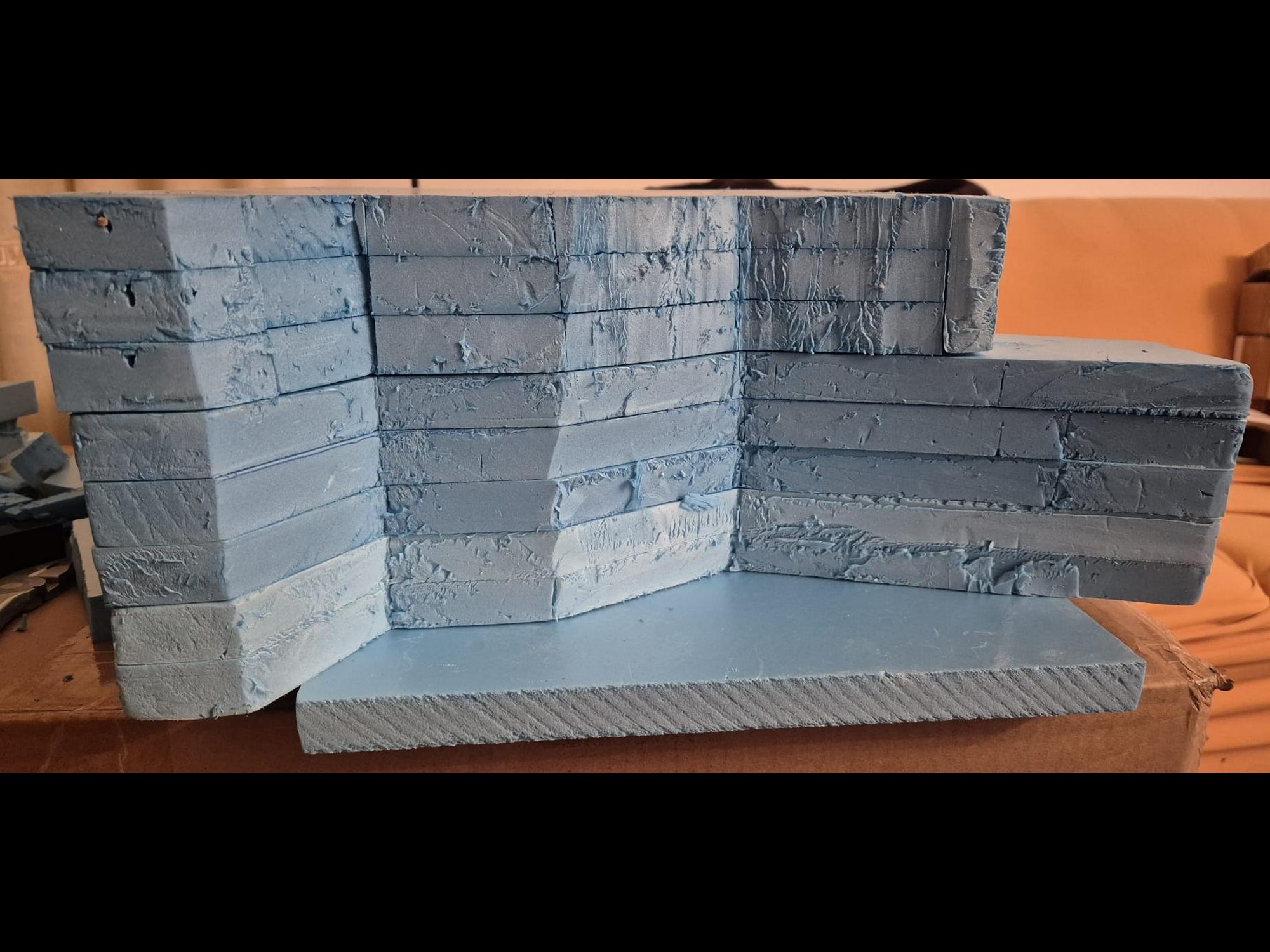
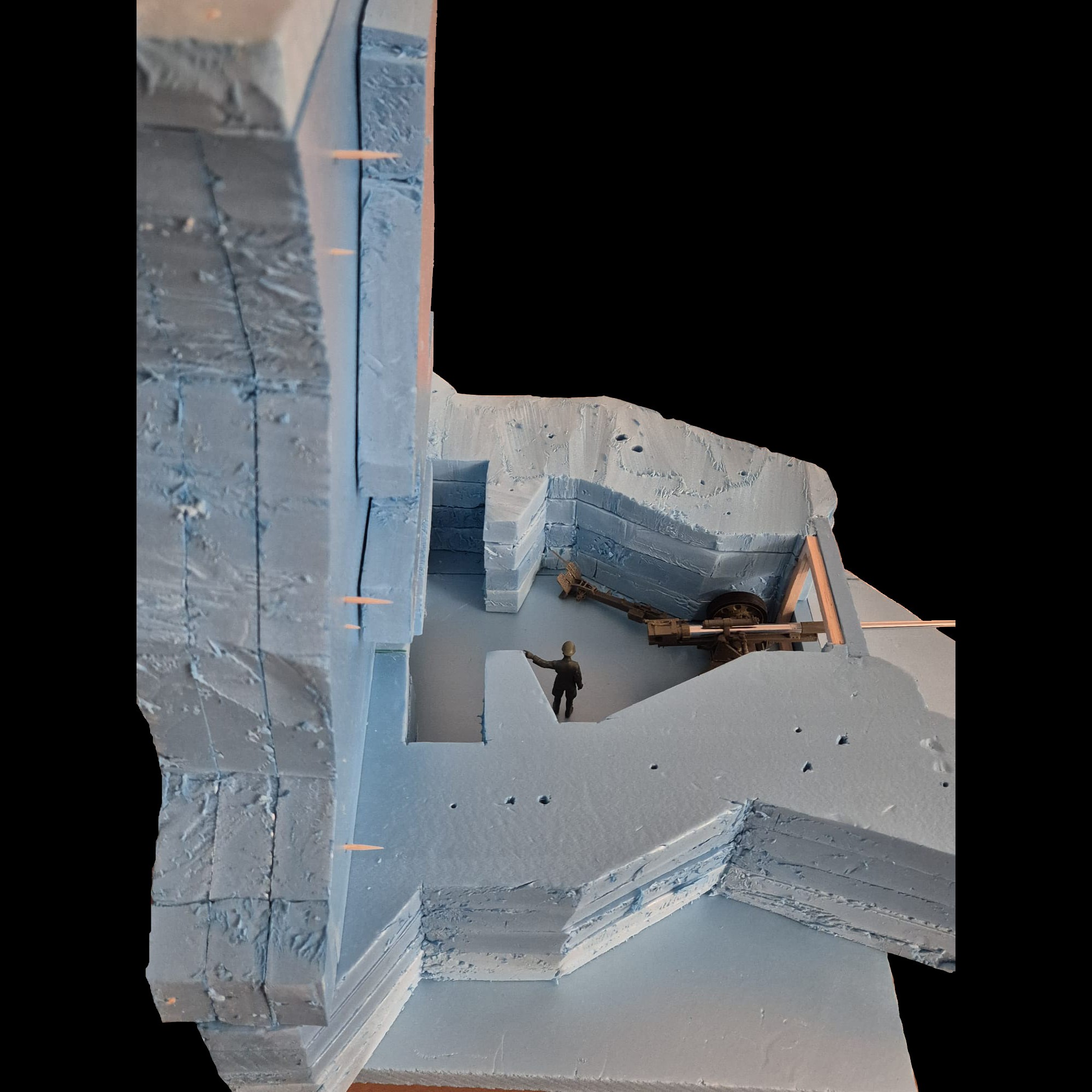
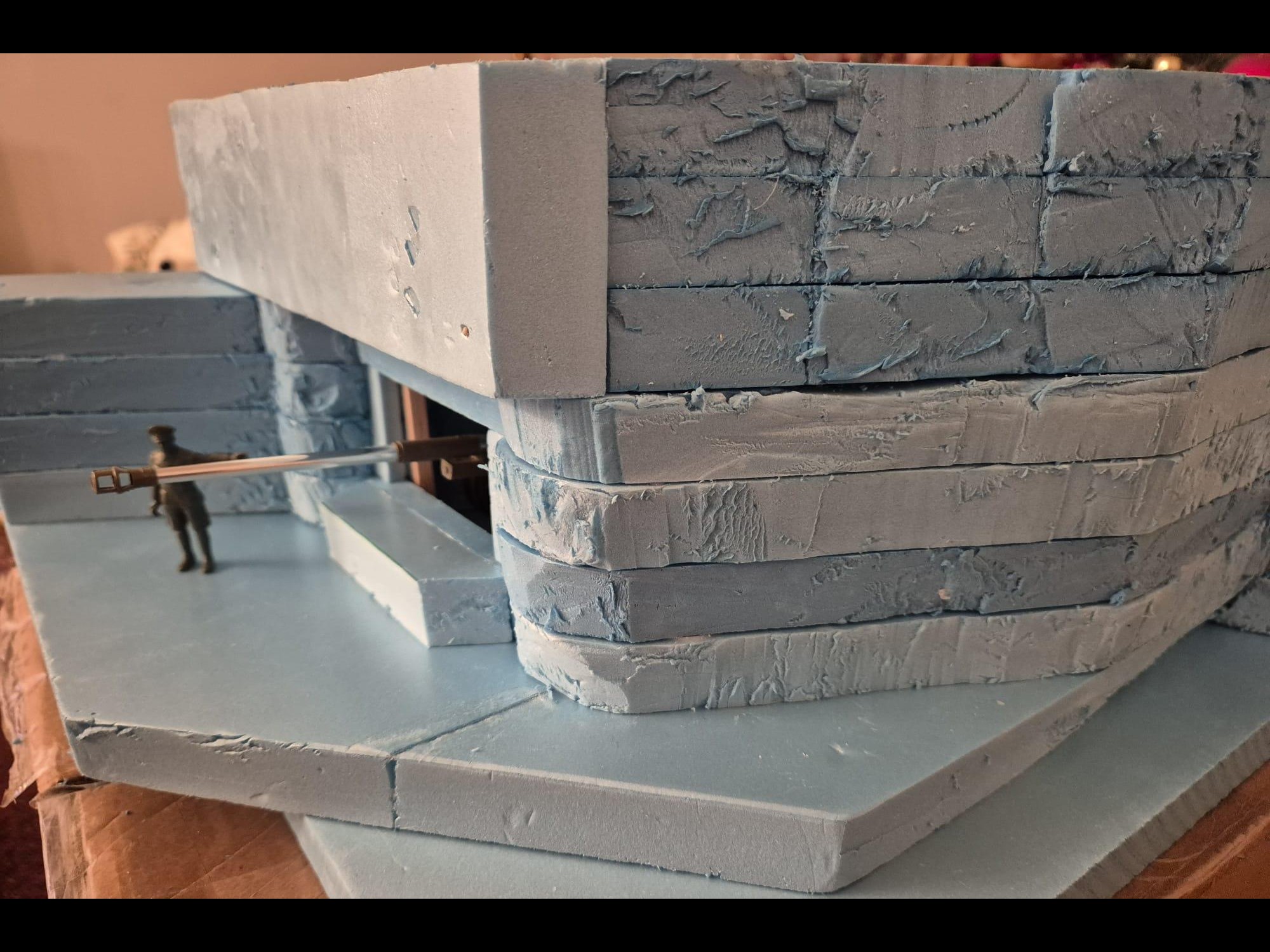
What you will soon see is the completed Left Wall of the R677 Bunker, at least with the foam boards glued together, and the first segment of the opposite wall.

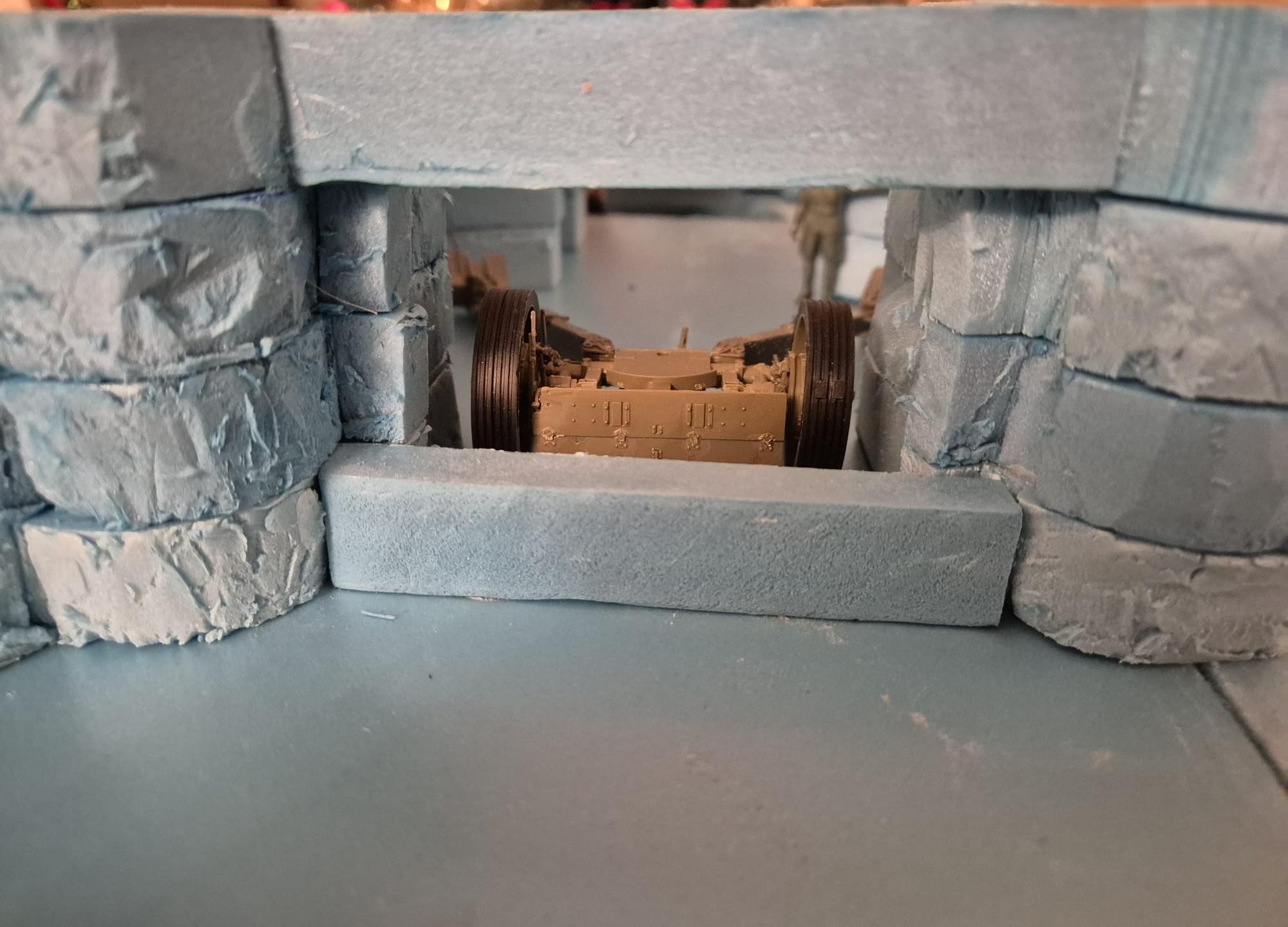
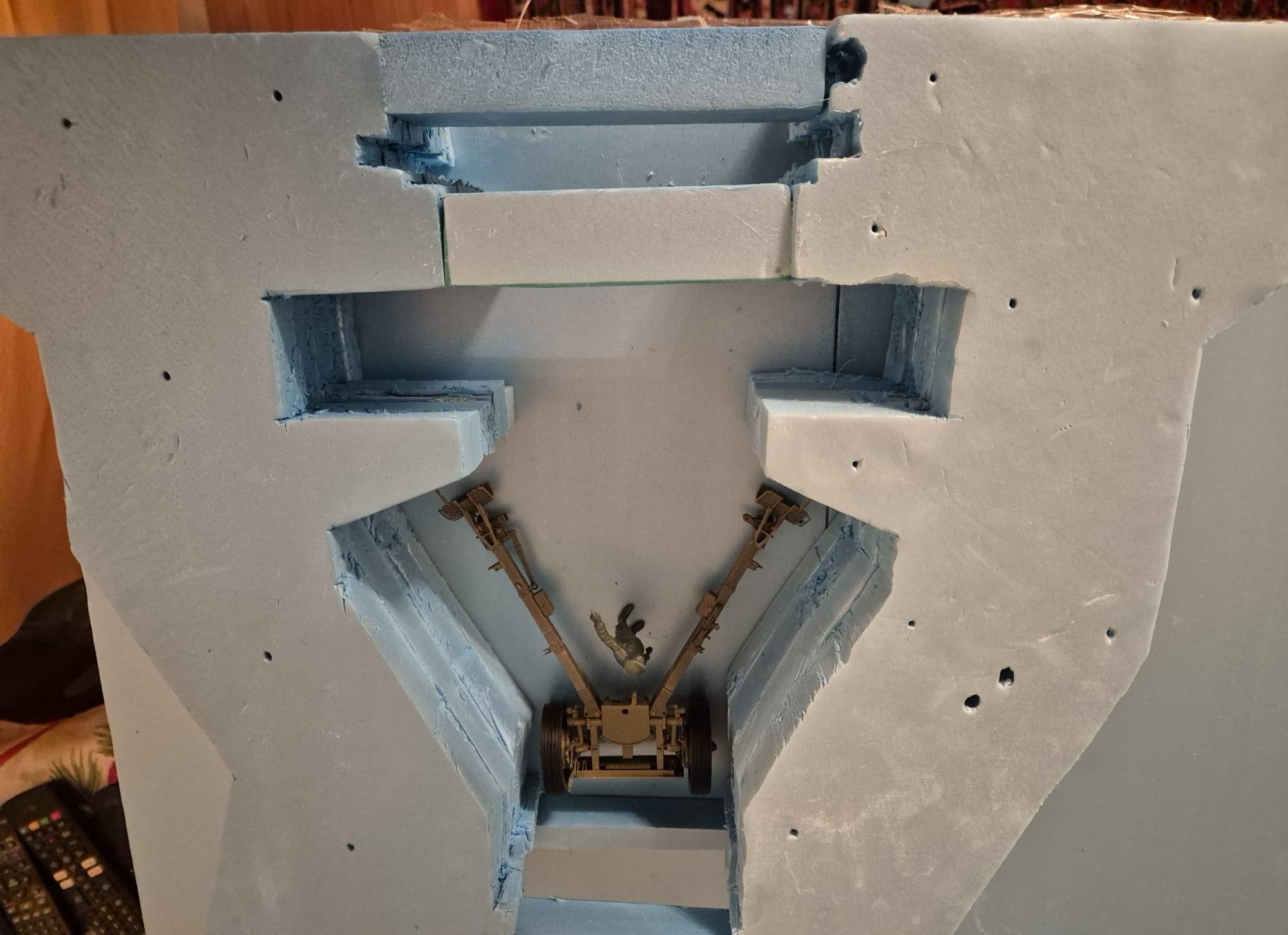
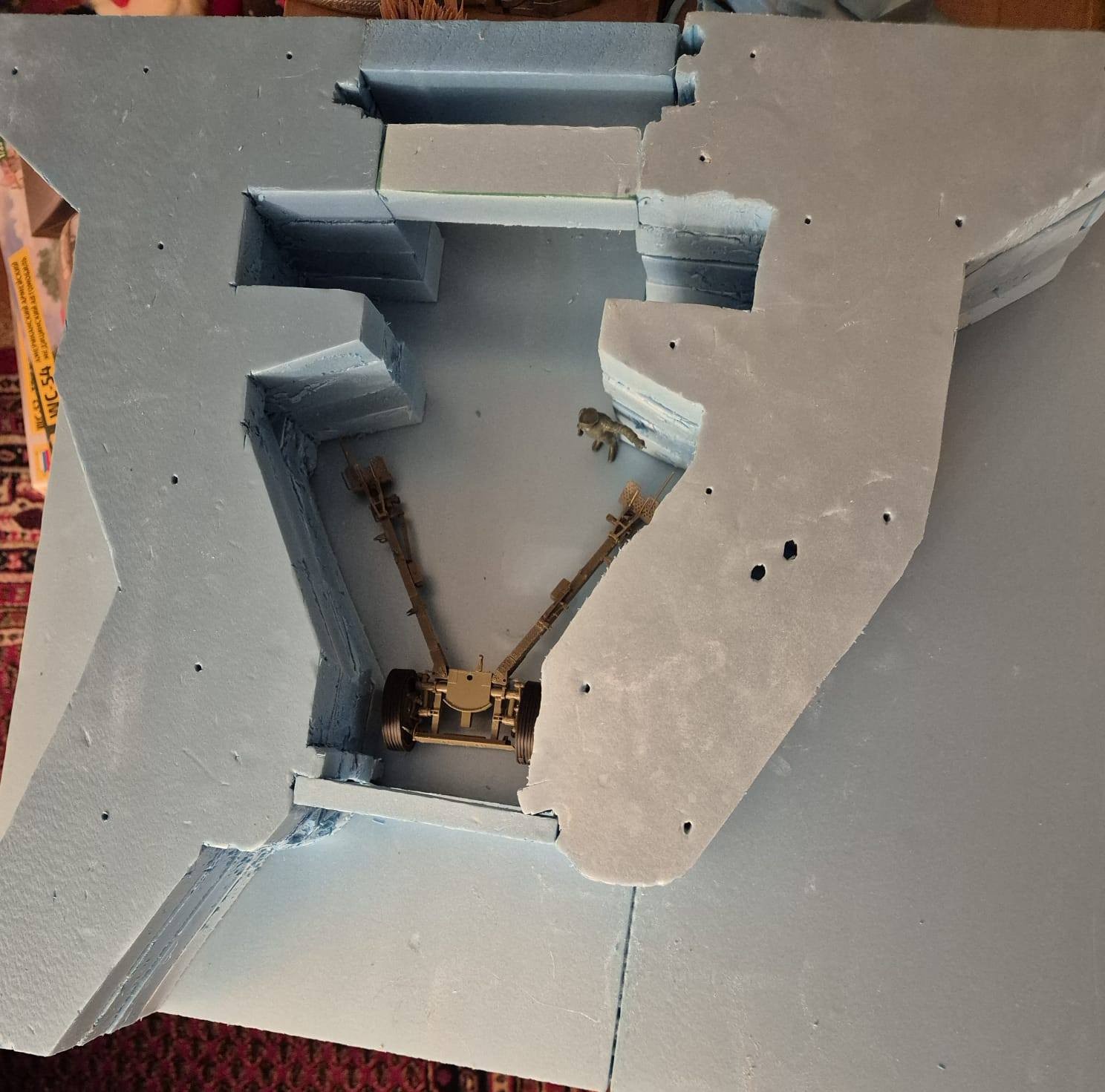
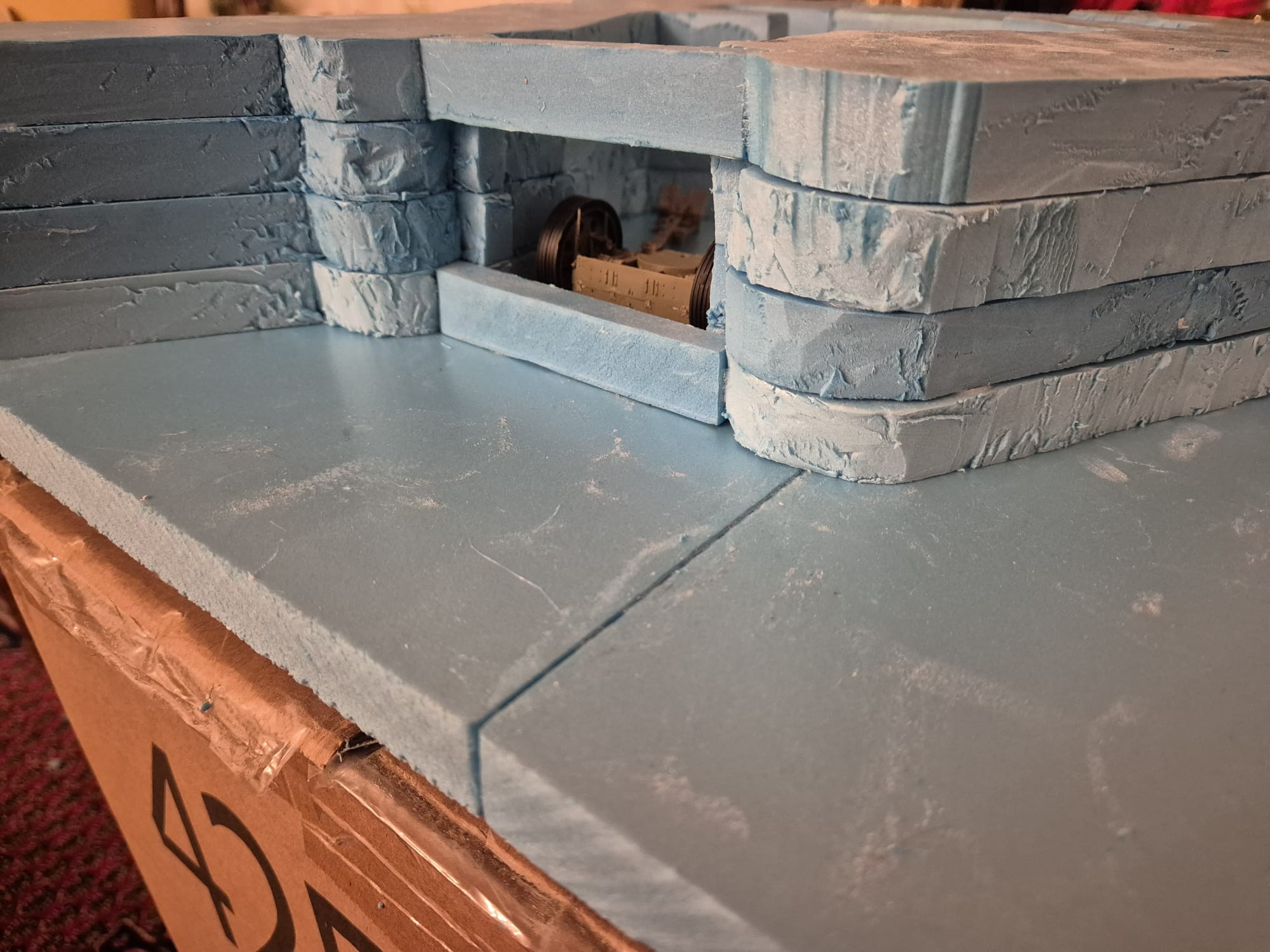
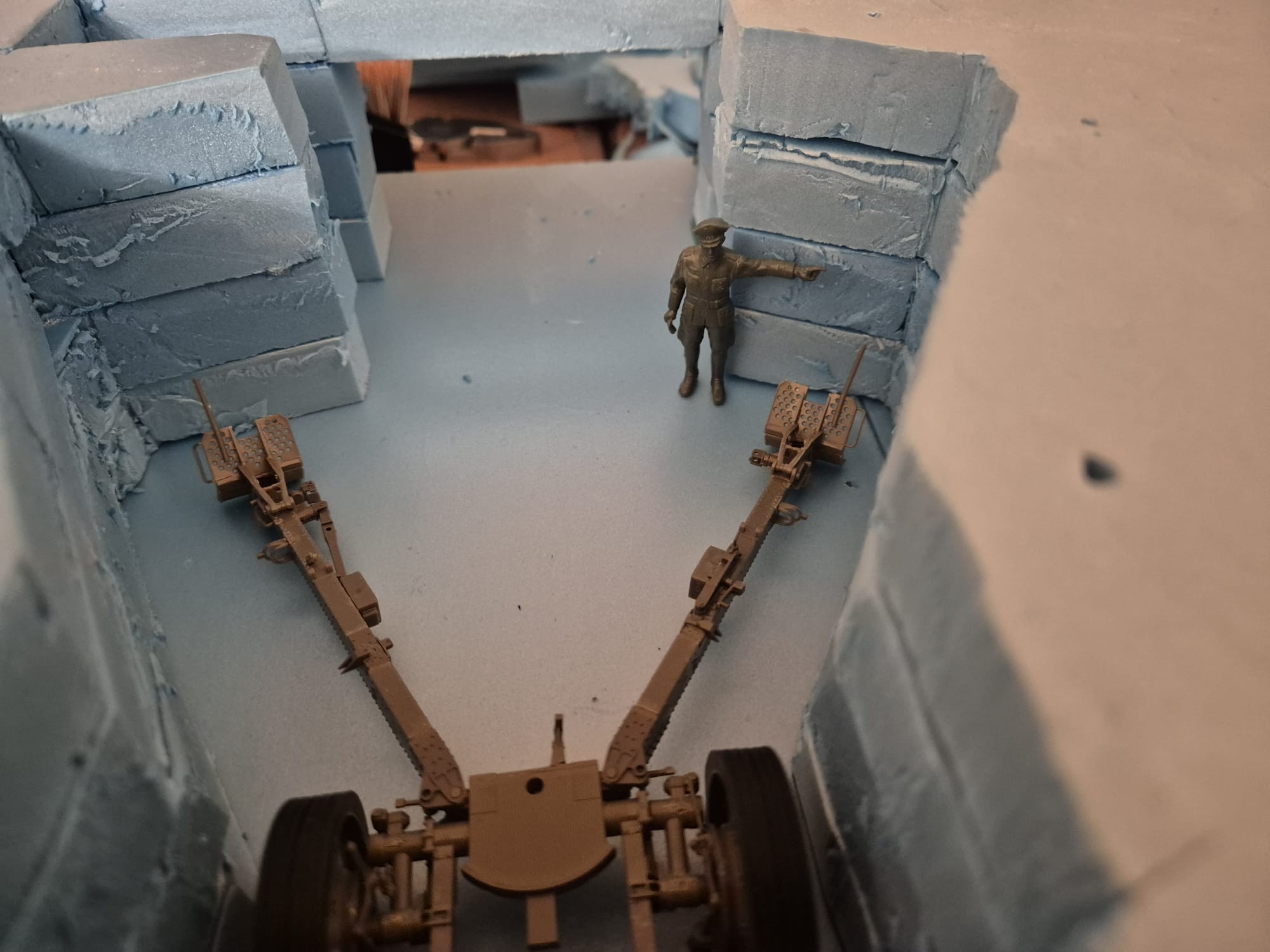
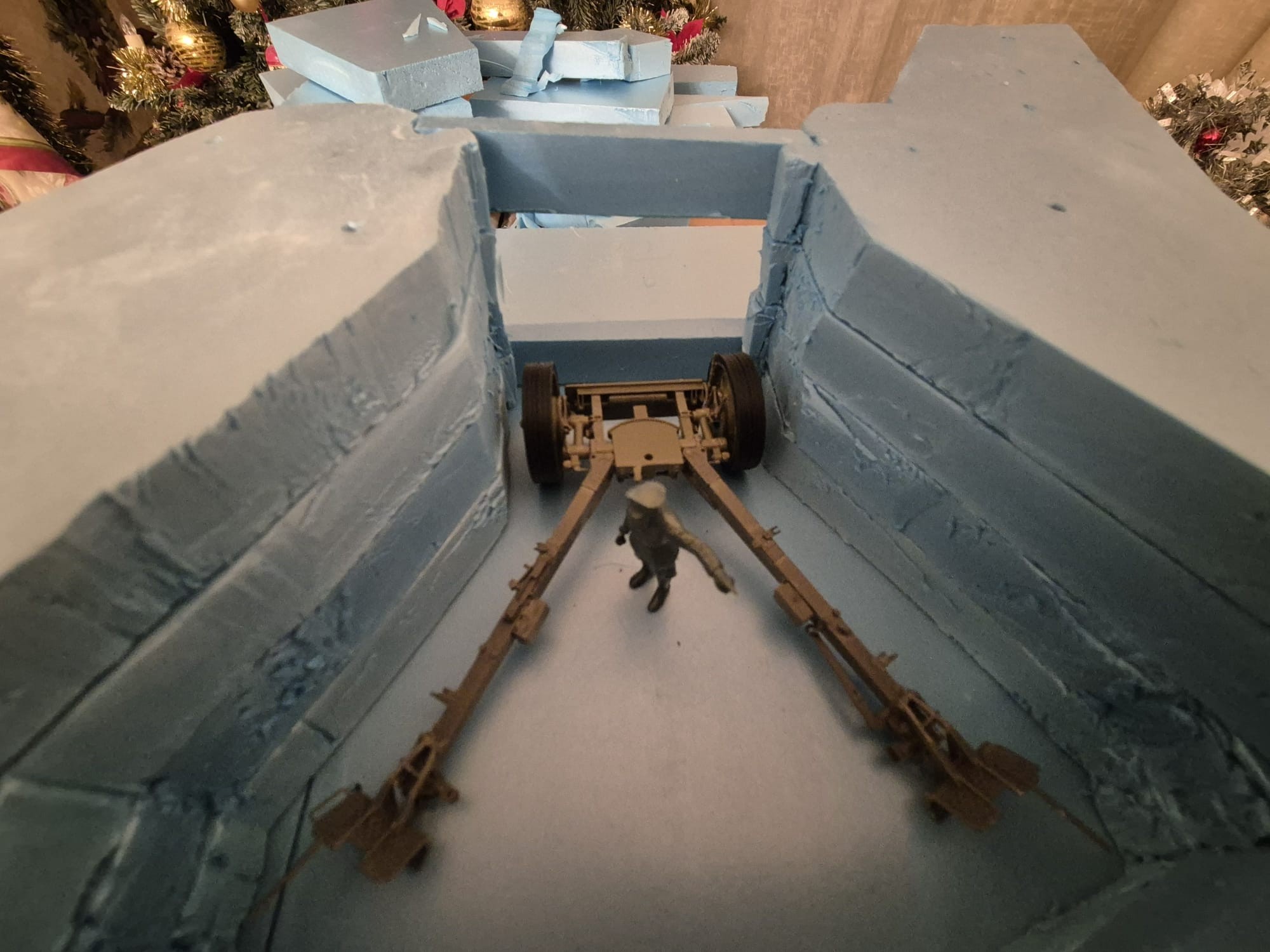
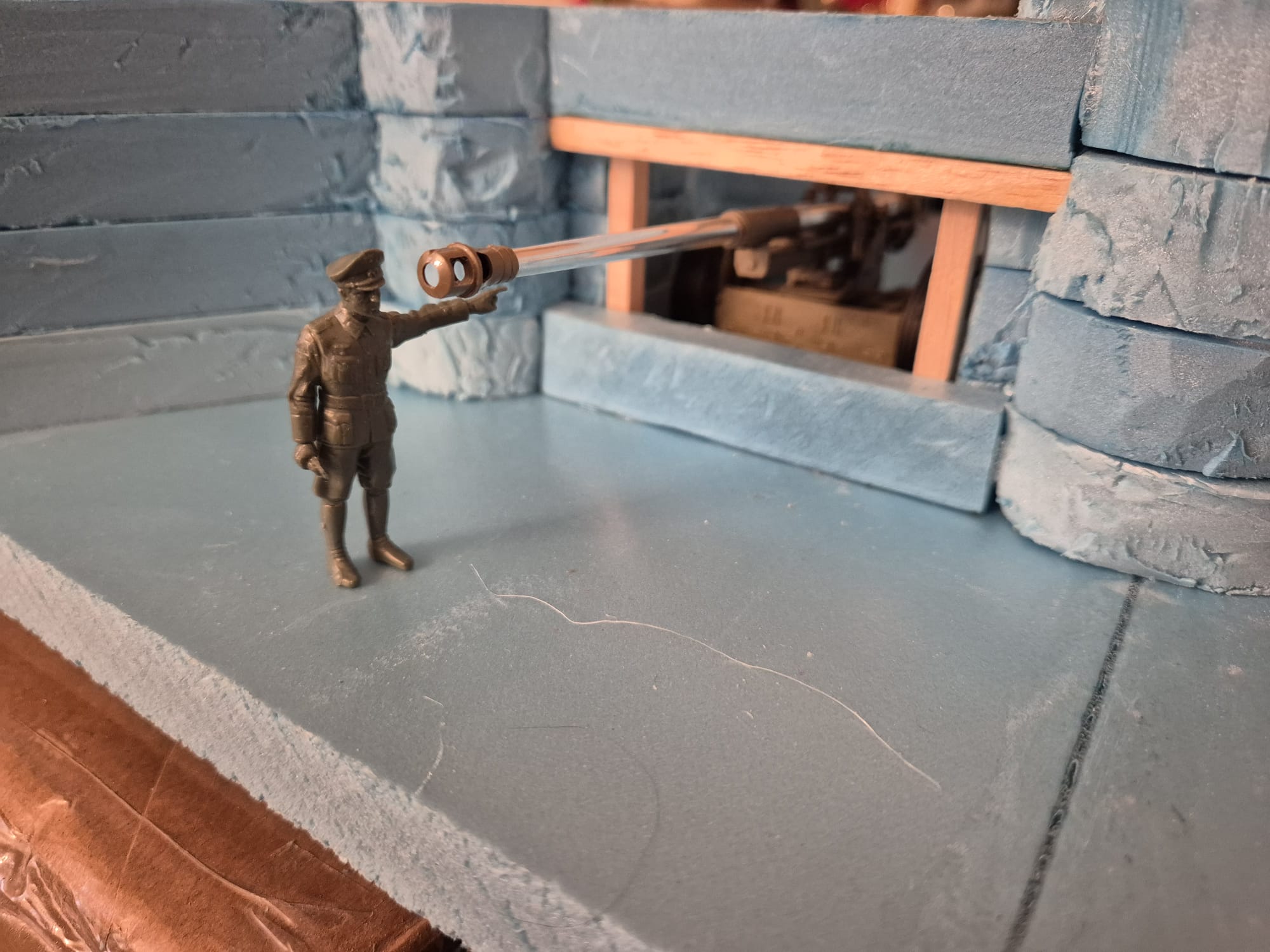
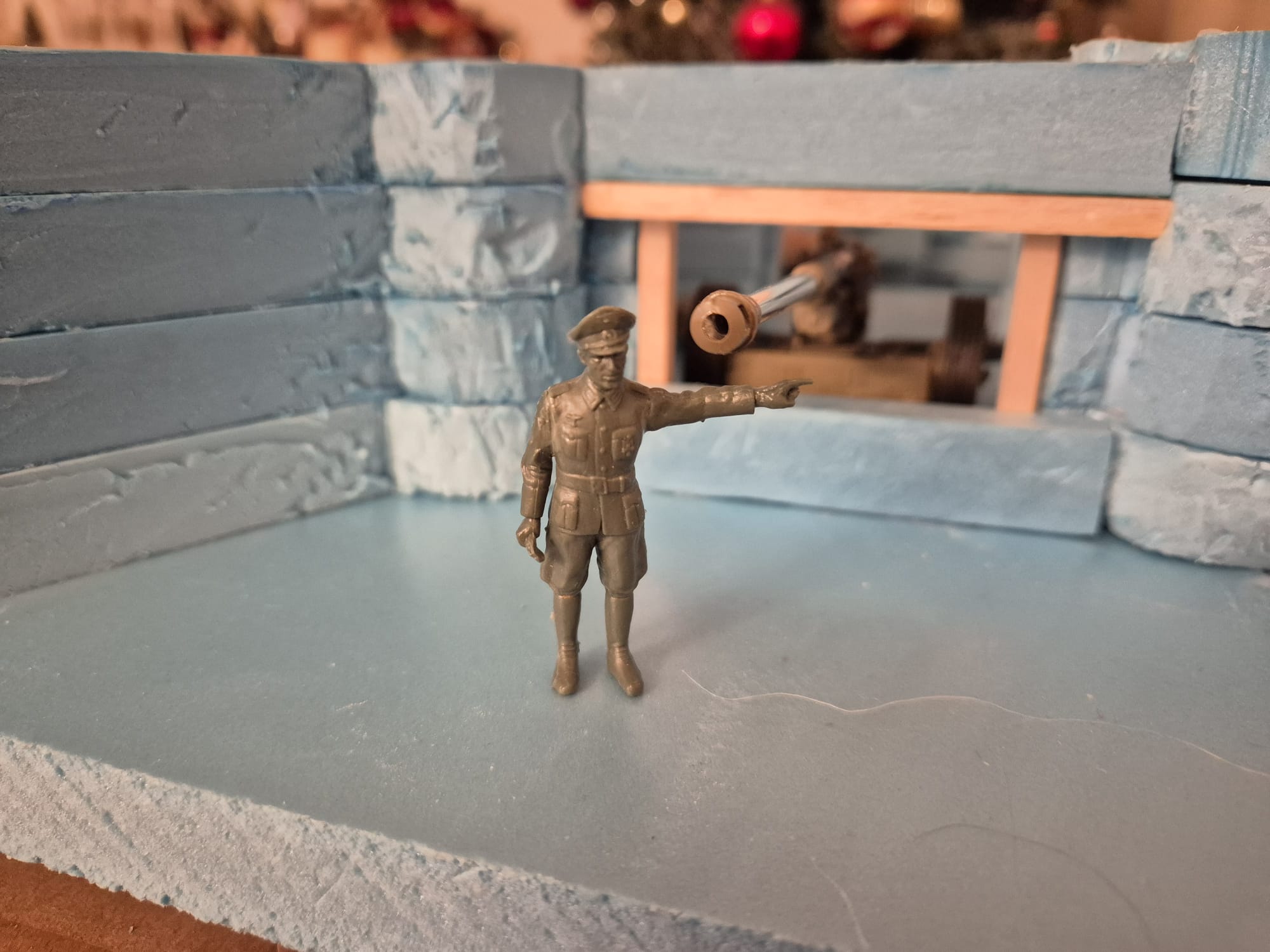
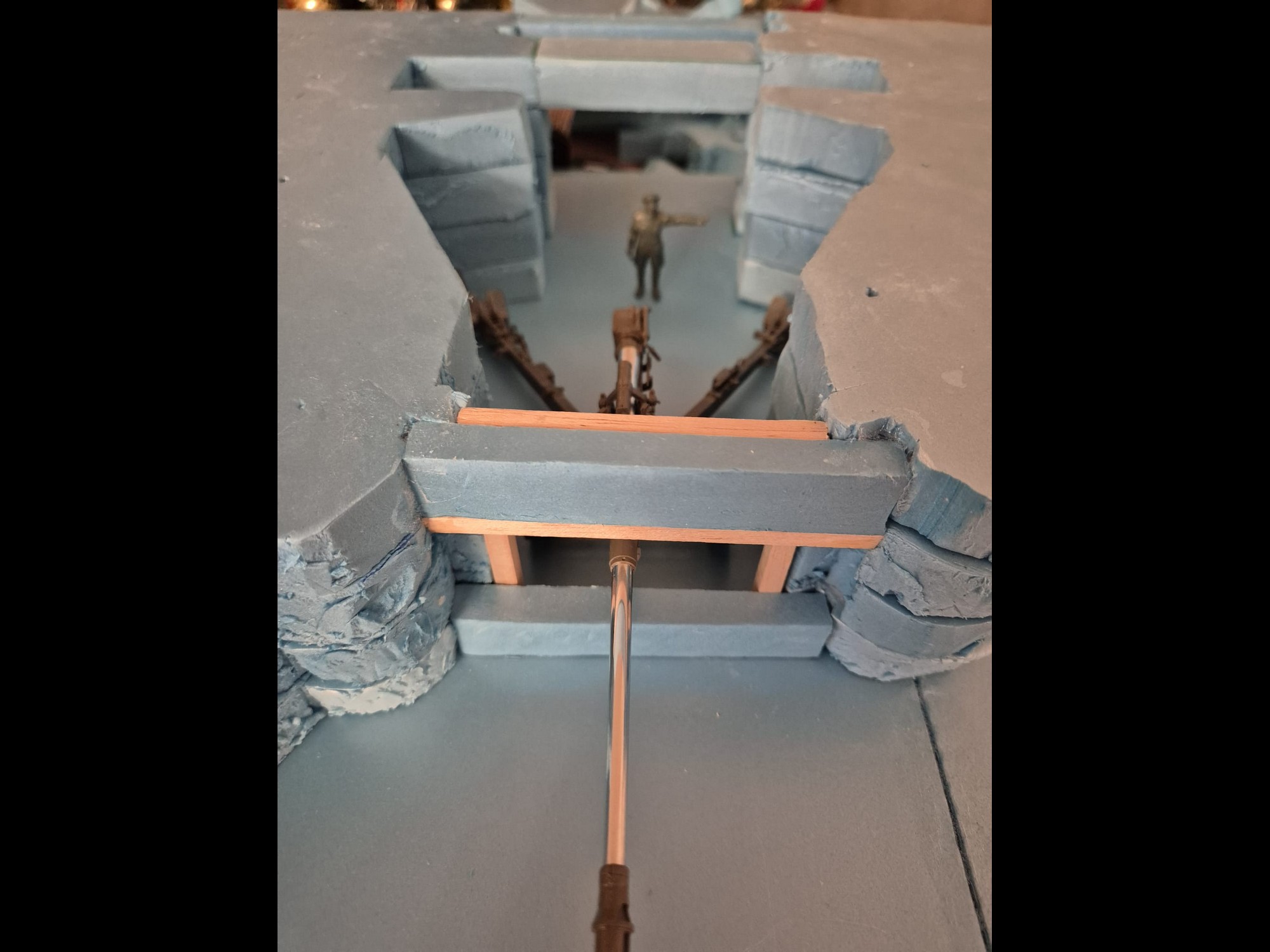
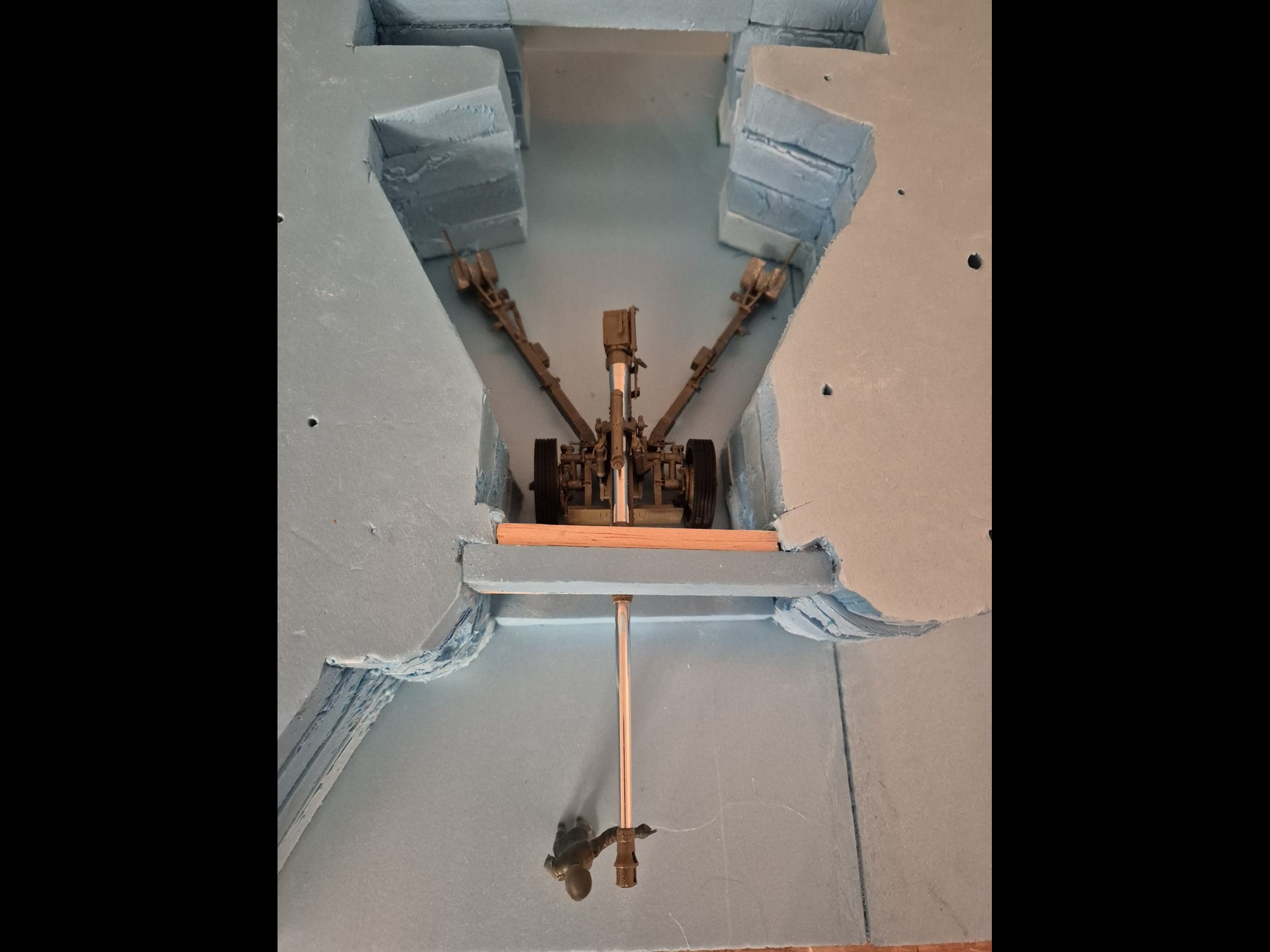
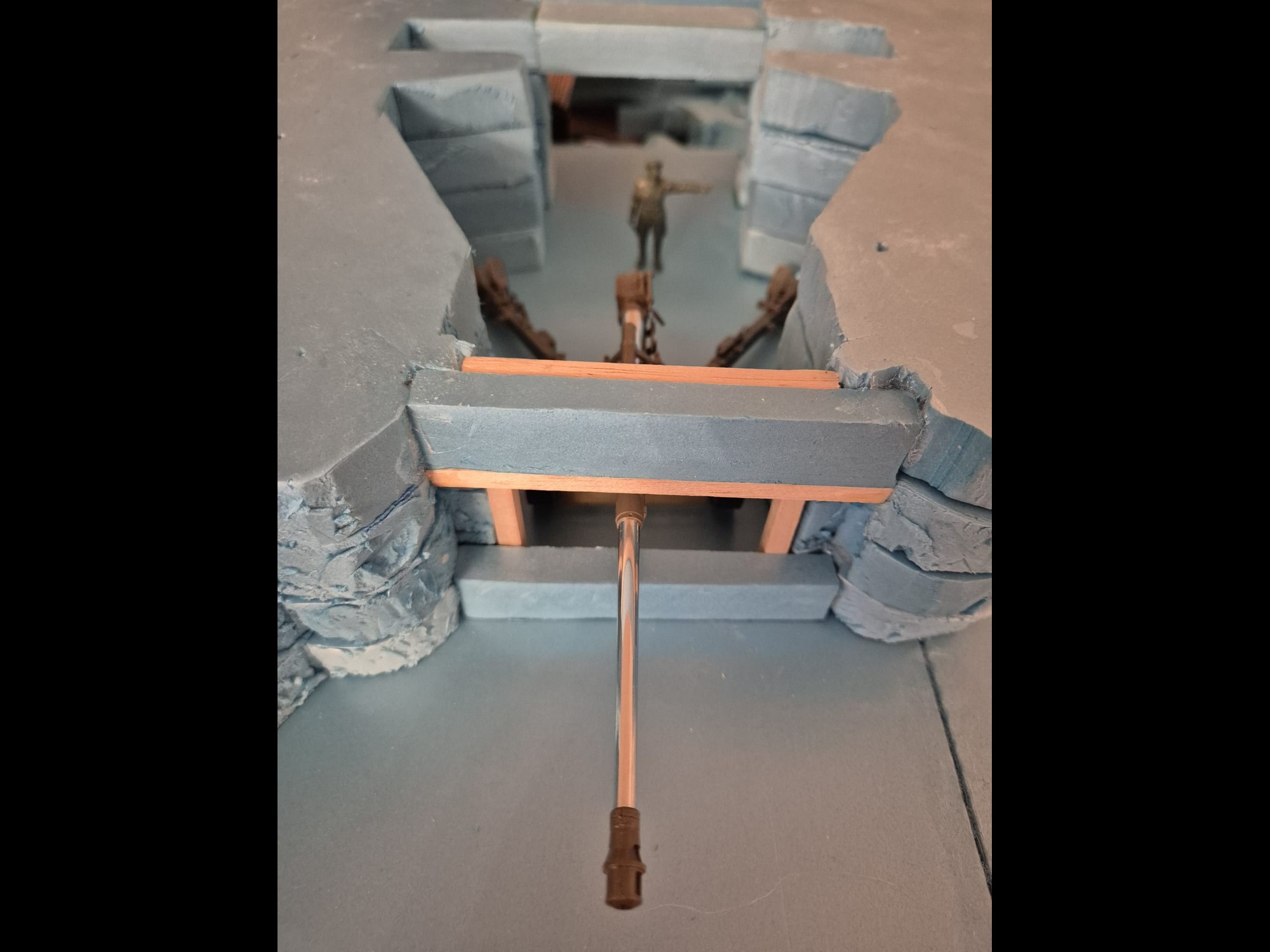
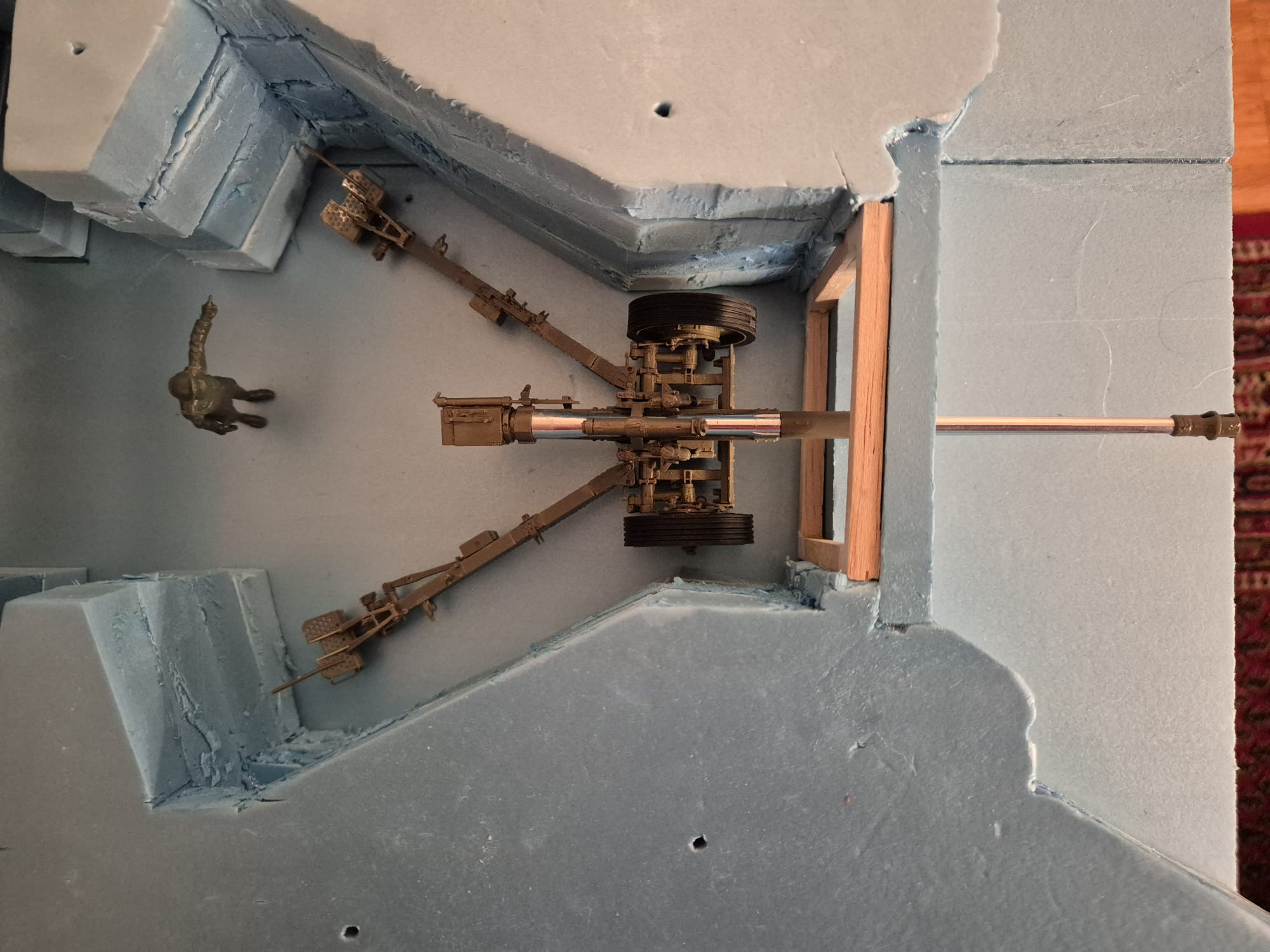
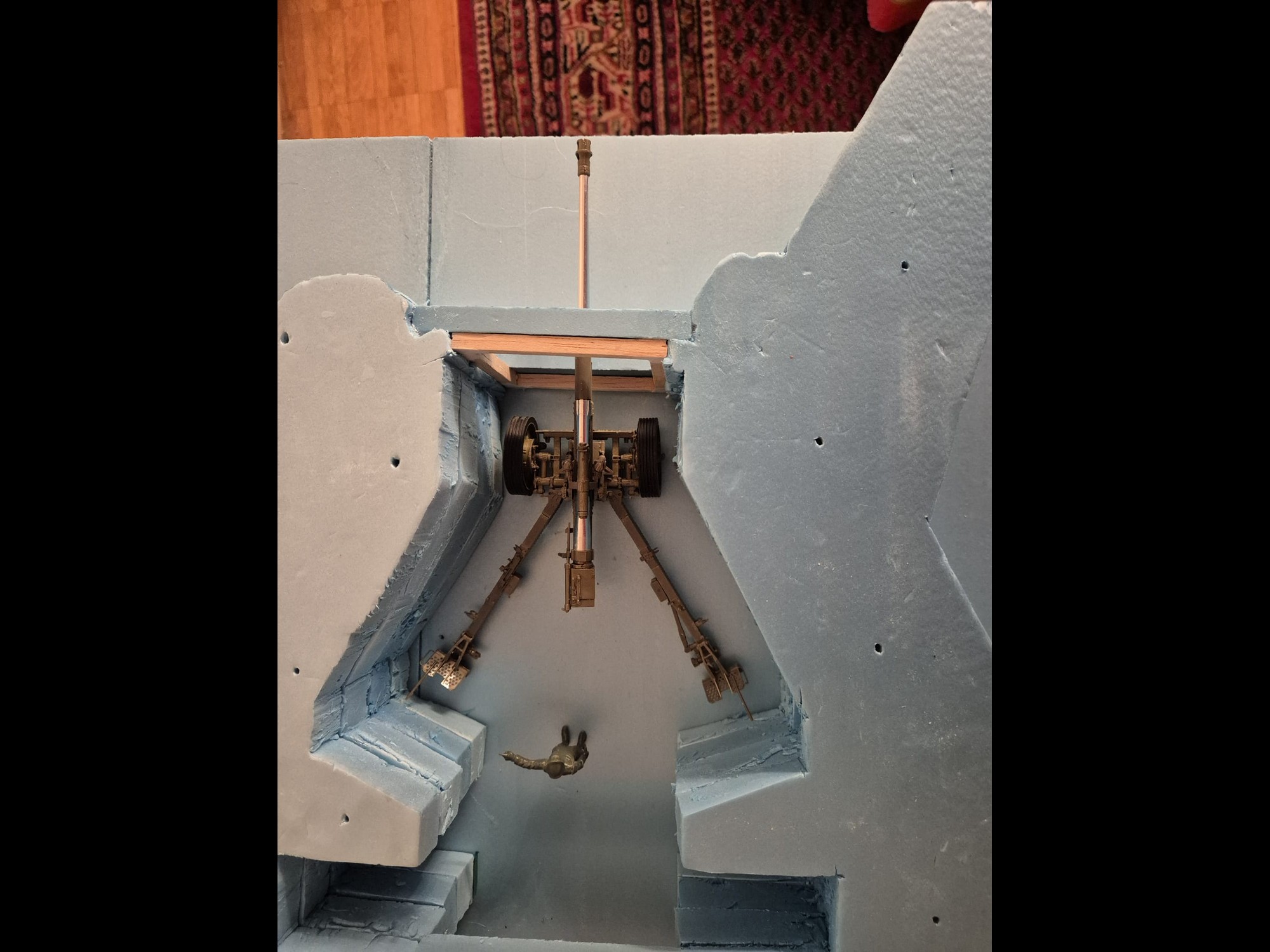
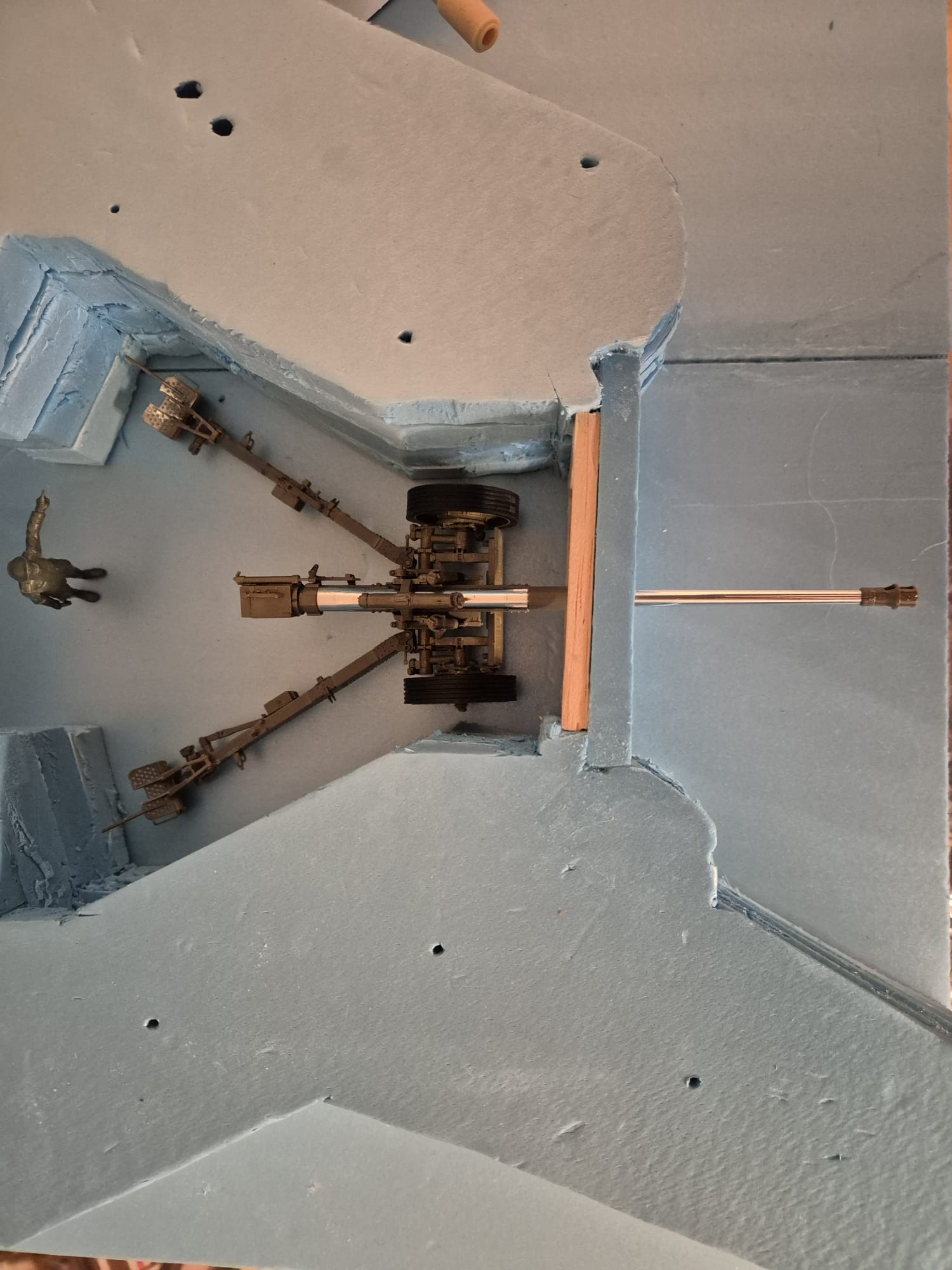
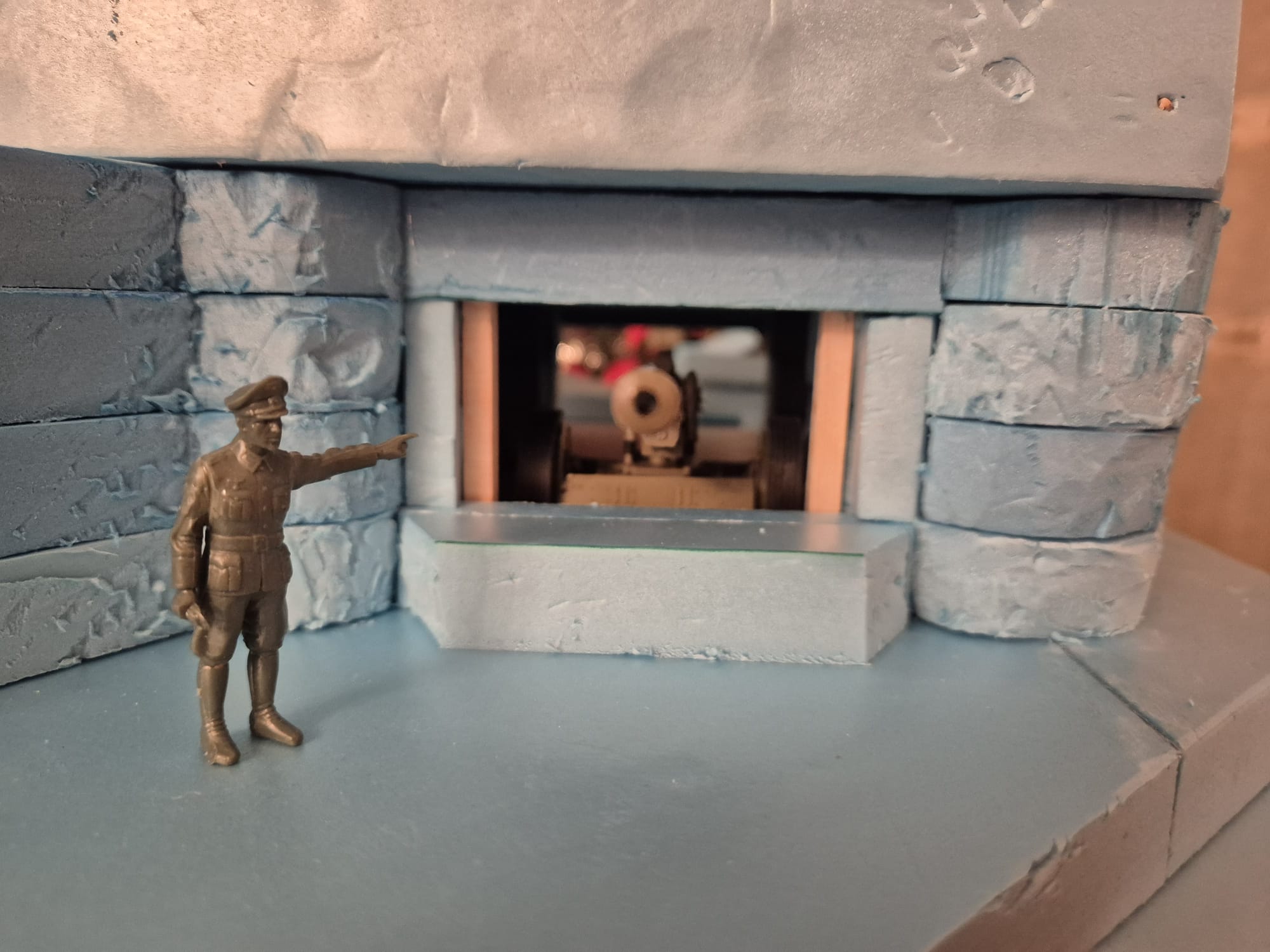
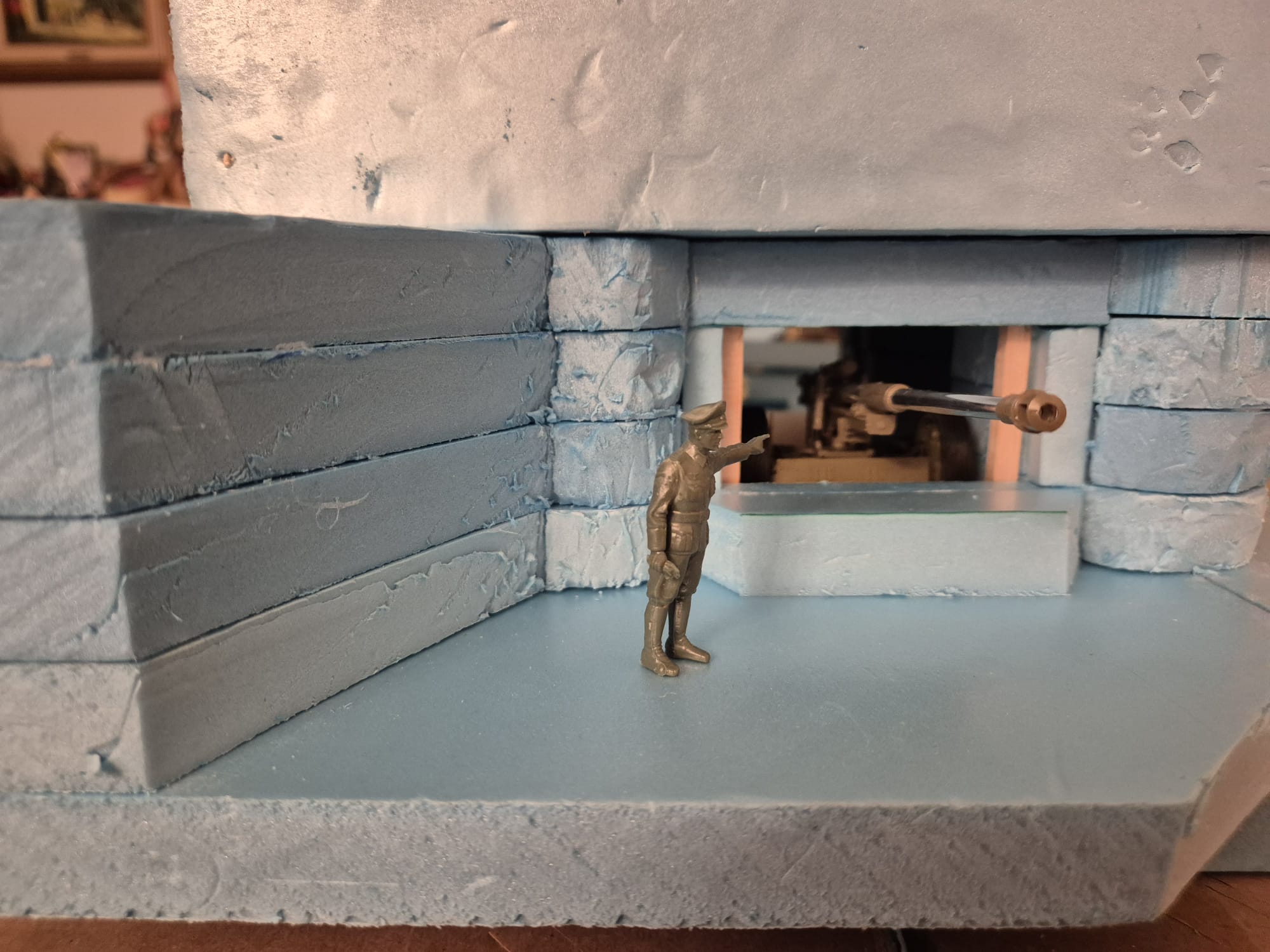
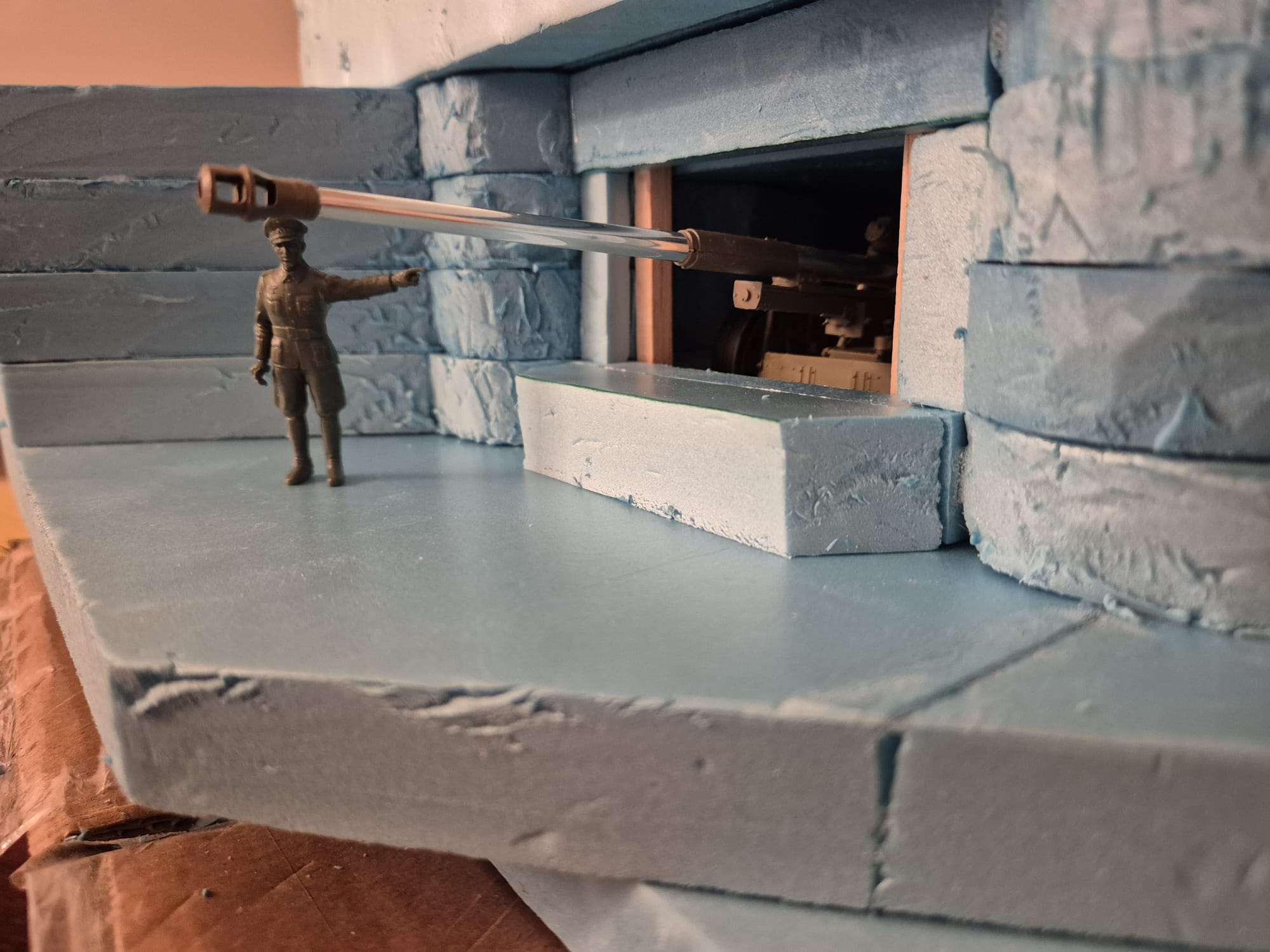
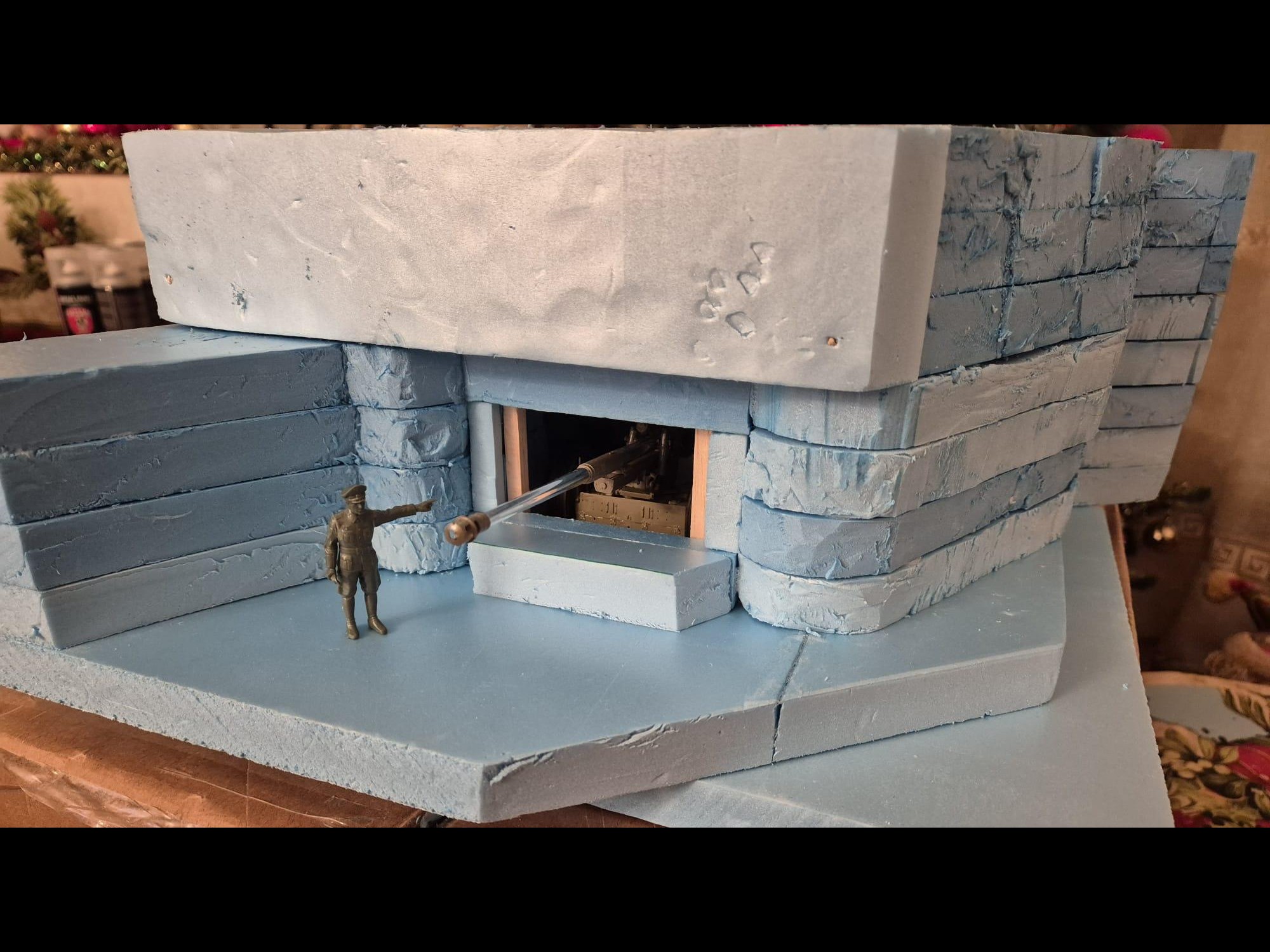
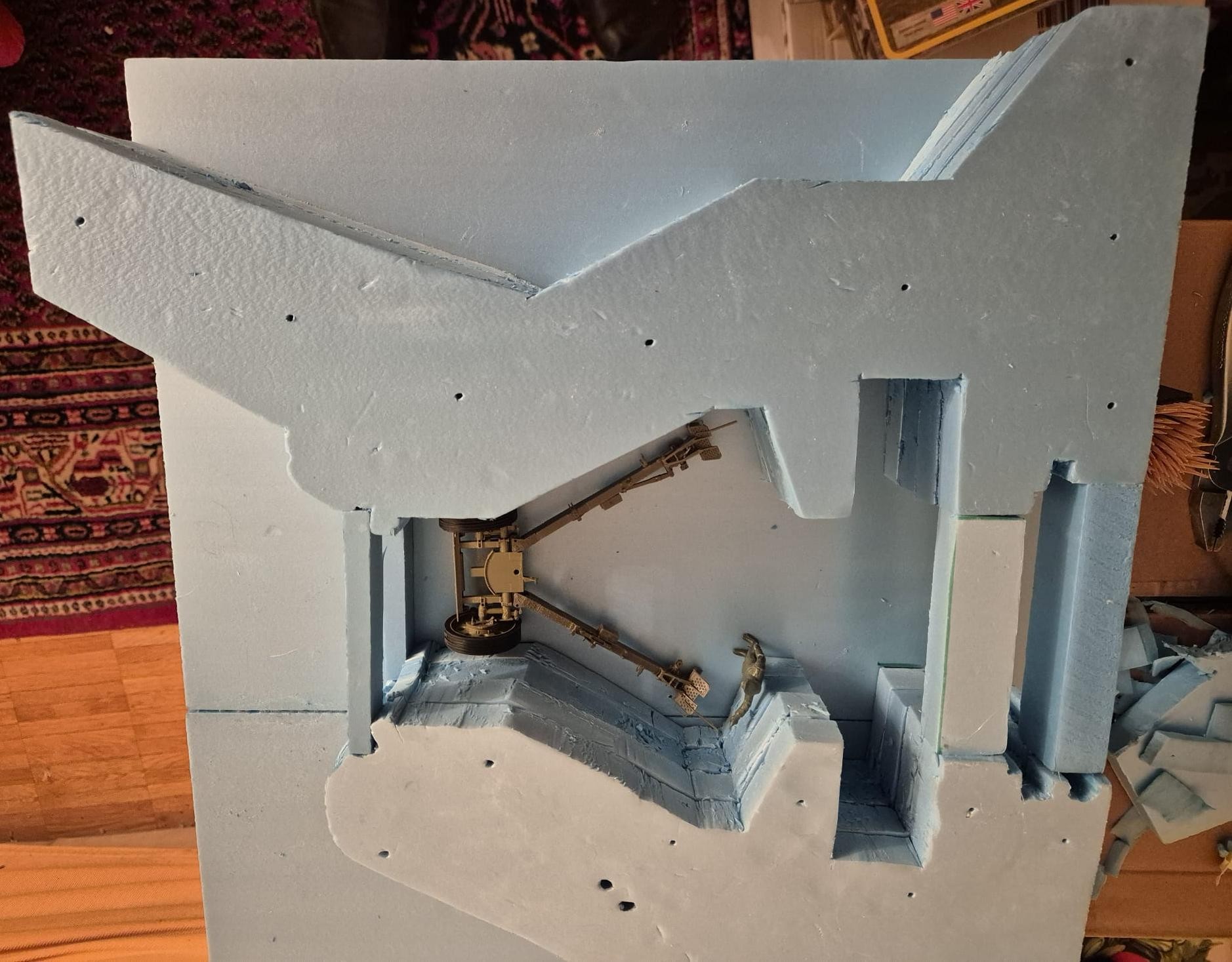
I provisionally assembled them with a mockup figure and the trailer of the PAK 43/41 gun as it will then appear once also the base is completed to show you the dimensions of the complex.

The last layer on top will be part of the roof.

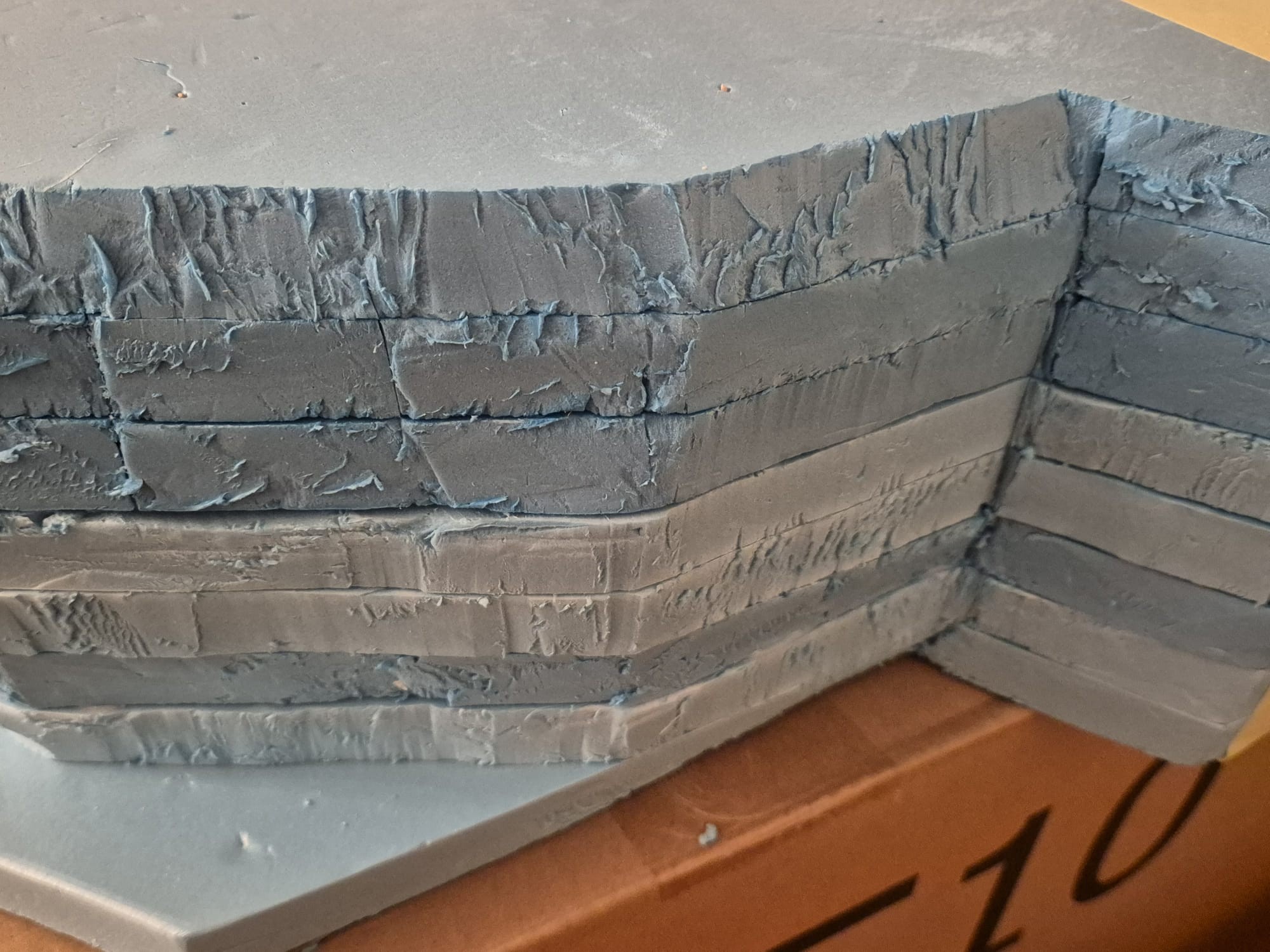
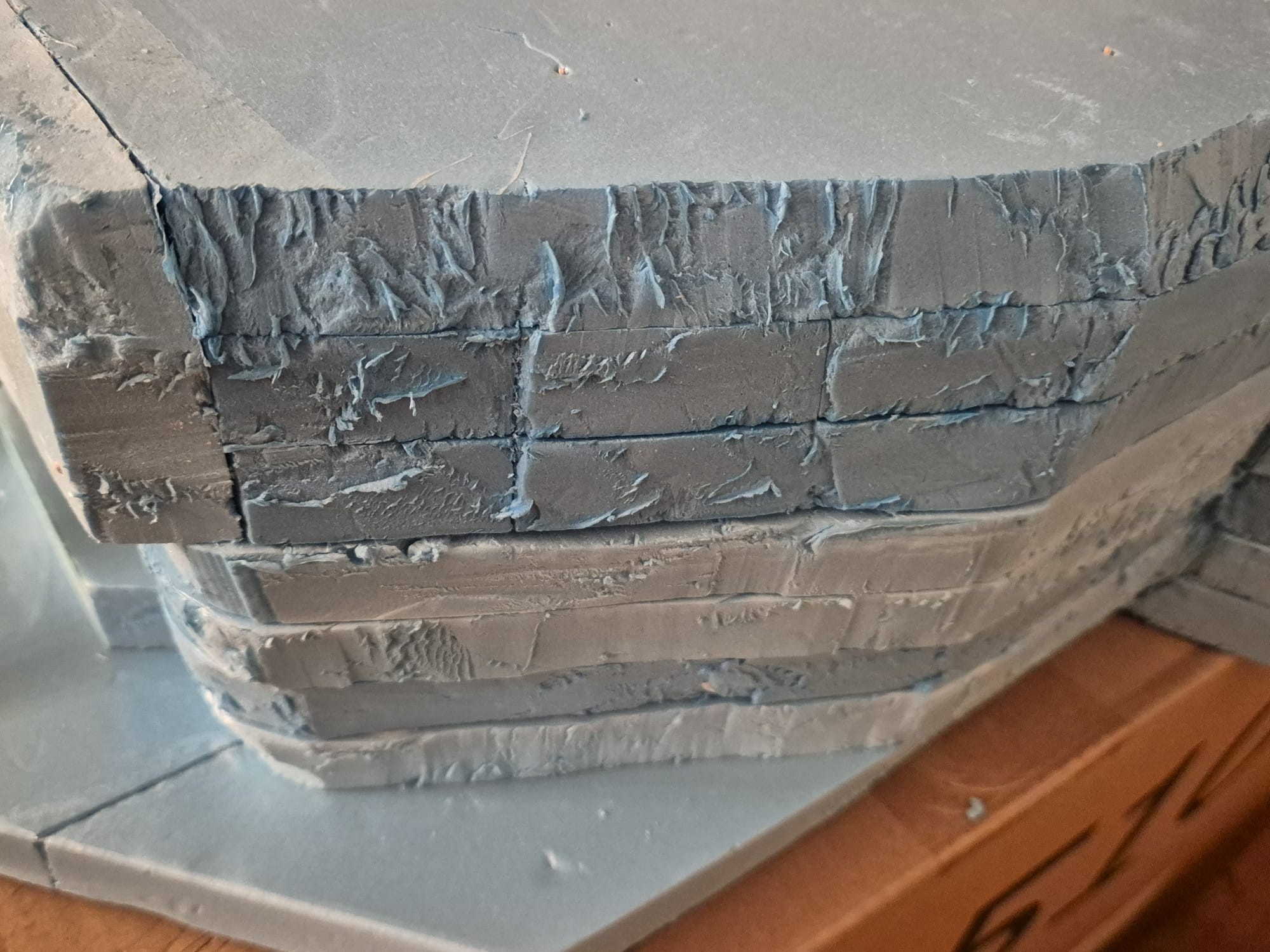
It looks terrible at the moment because I had to shave off some protruding parts of the outer and inner wall in order to make them level with the rest of the segments so glued together.

It appears though that hot glue is not really as friendly as I thought since it tends to cool off far too fast leaving some ugly gaps.
But that’s not a problem once I will have applied the plaster and the concrete cover unto them.

Even the frontal rounded part on the Left Wall looks dreadful, but again, once covered in plaster and concrete compound it will come out smoothly,

The Roof is the most complex structure to build since it is slanted on its sides and appears to be unified with the front wall reaching the embrasure.

Another difficult build will be the protective wall which will both be leaning against the Right Wall and the Roof and comes down narrower than the top at an approximate 35 degree angle.

But for now I still have to build the remaining segments of the Right Wall and then glue them all together. Even its top level will be part of the roof.

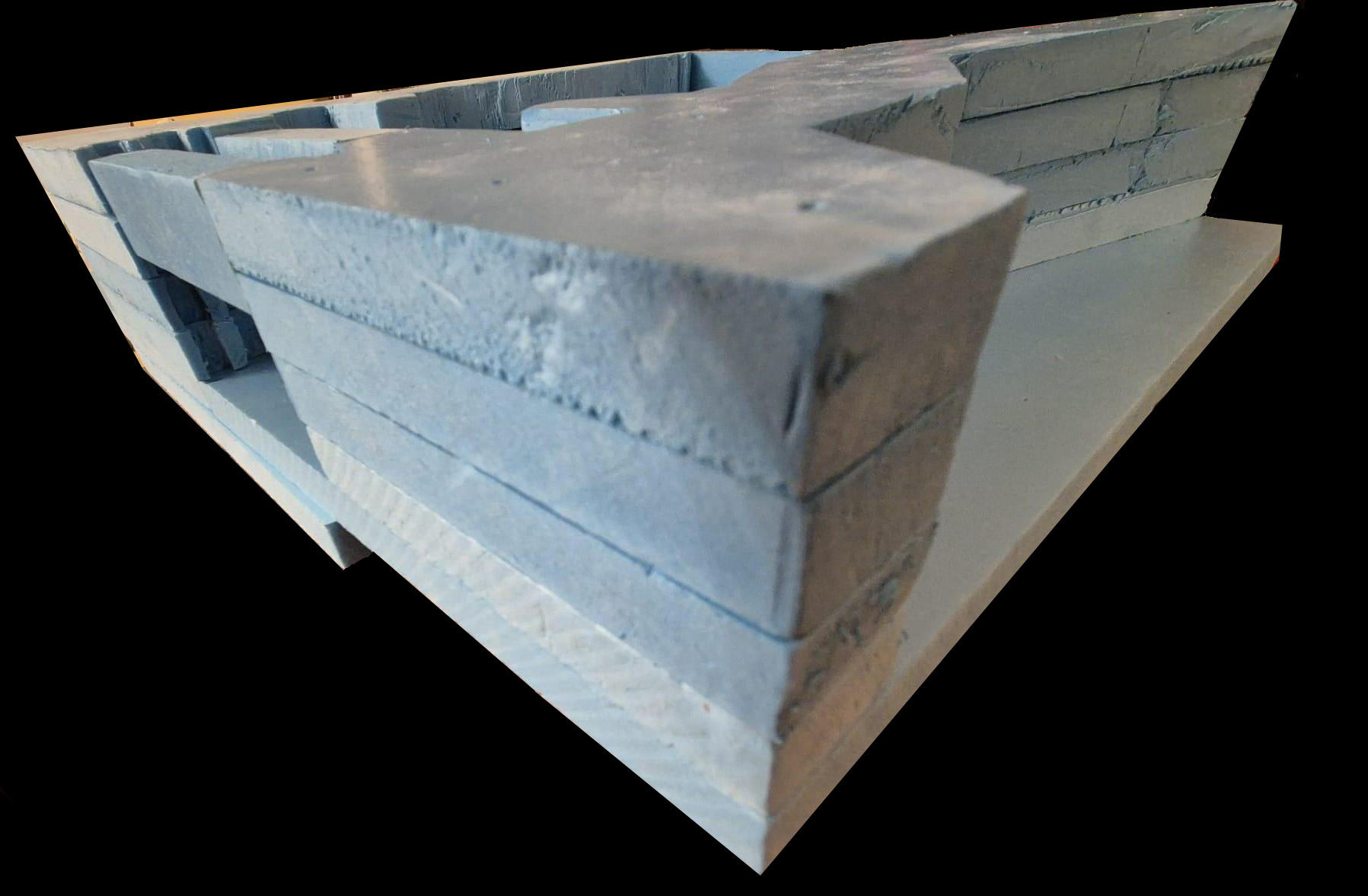
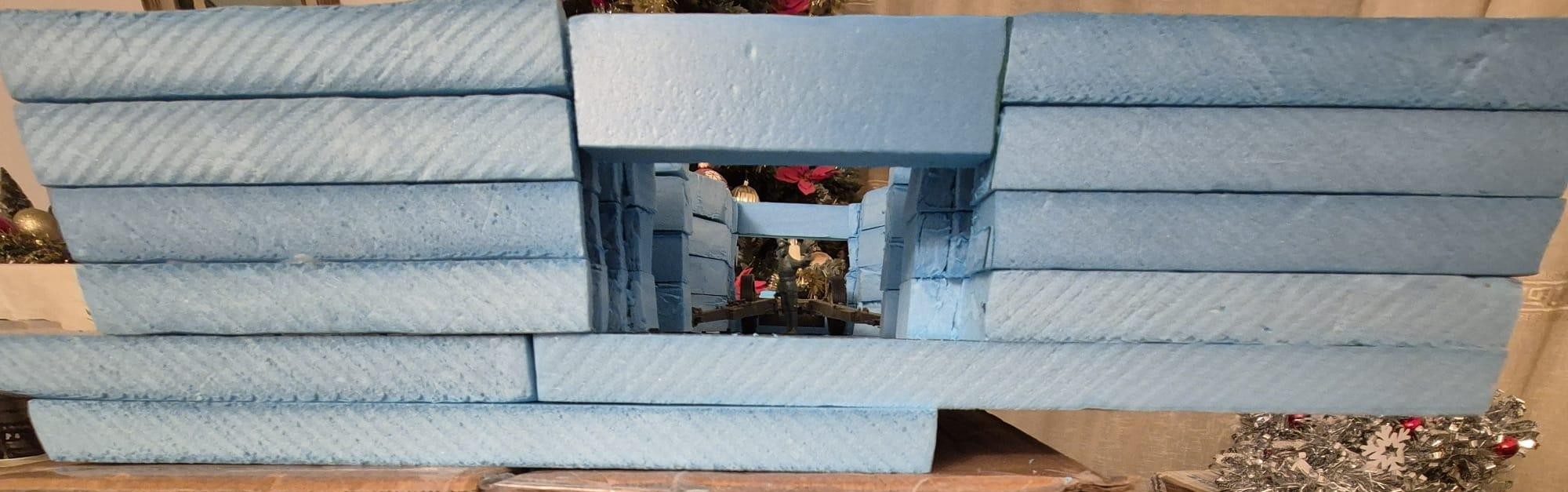
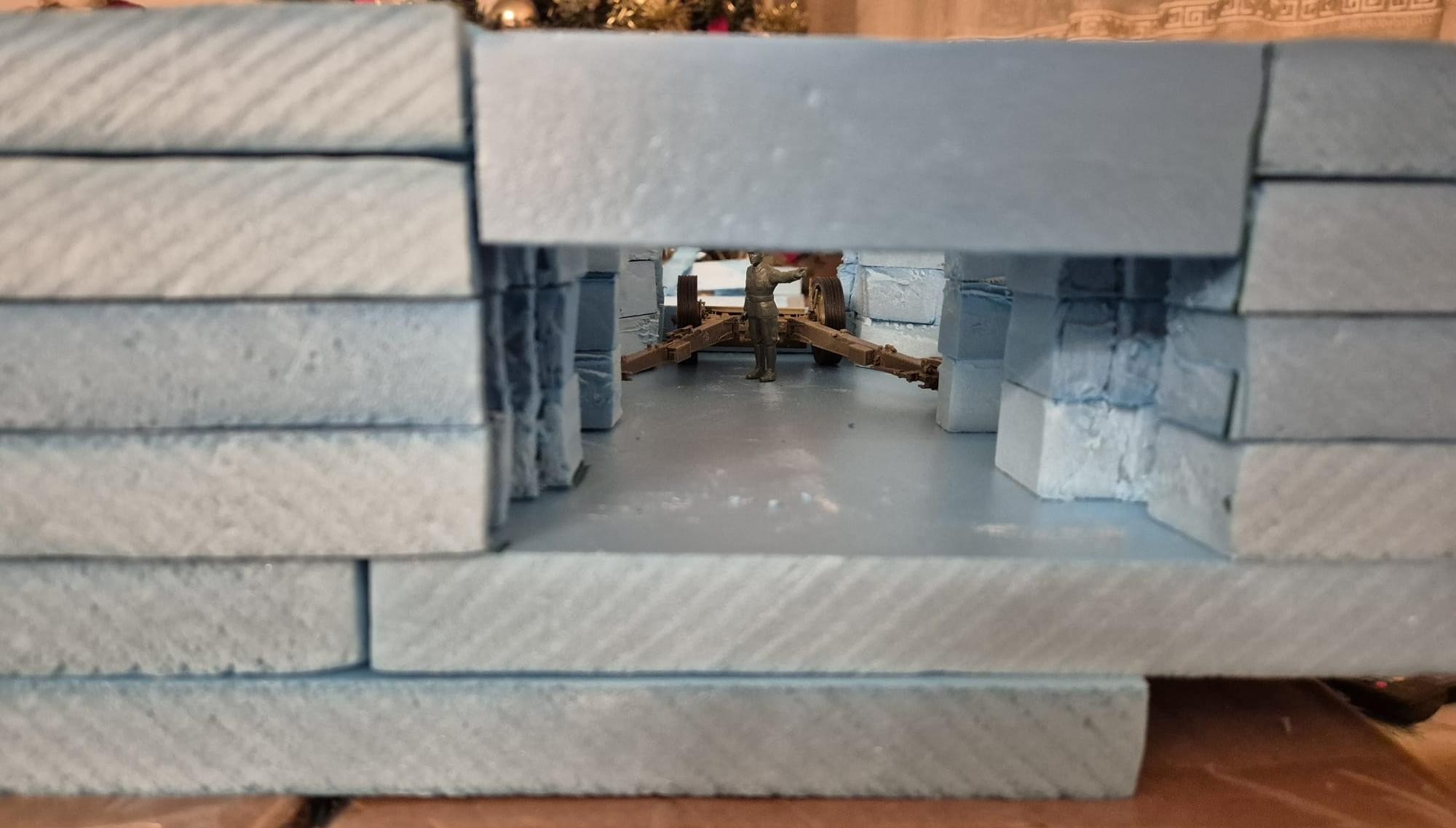
Here are the pictures:


I hope you are the forgiving kind and understand the difficulty to reproduce such a massive object by hand only using a foam blade which cannot truly be used to cut round corners.

Be patient, and once I will have covered it with plaster and AK Interactive Concrete compound you shall see that it won’t be that bad after all.

Until my next challenge, please stay safe and enjoy our common hobby.

4 Likes

Latest news from the Monster… :rofl: Well, indeed it is a monster what I am building.
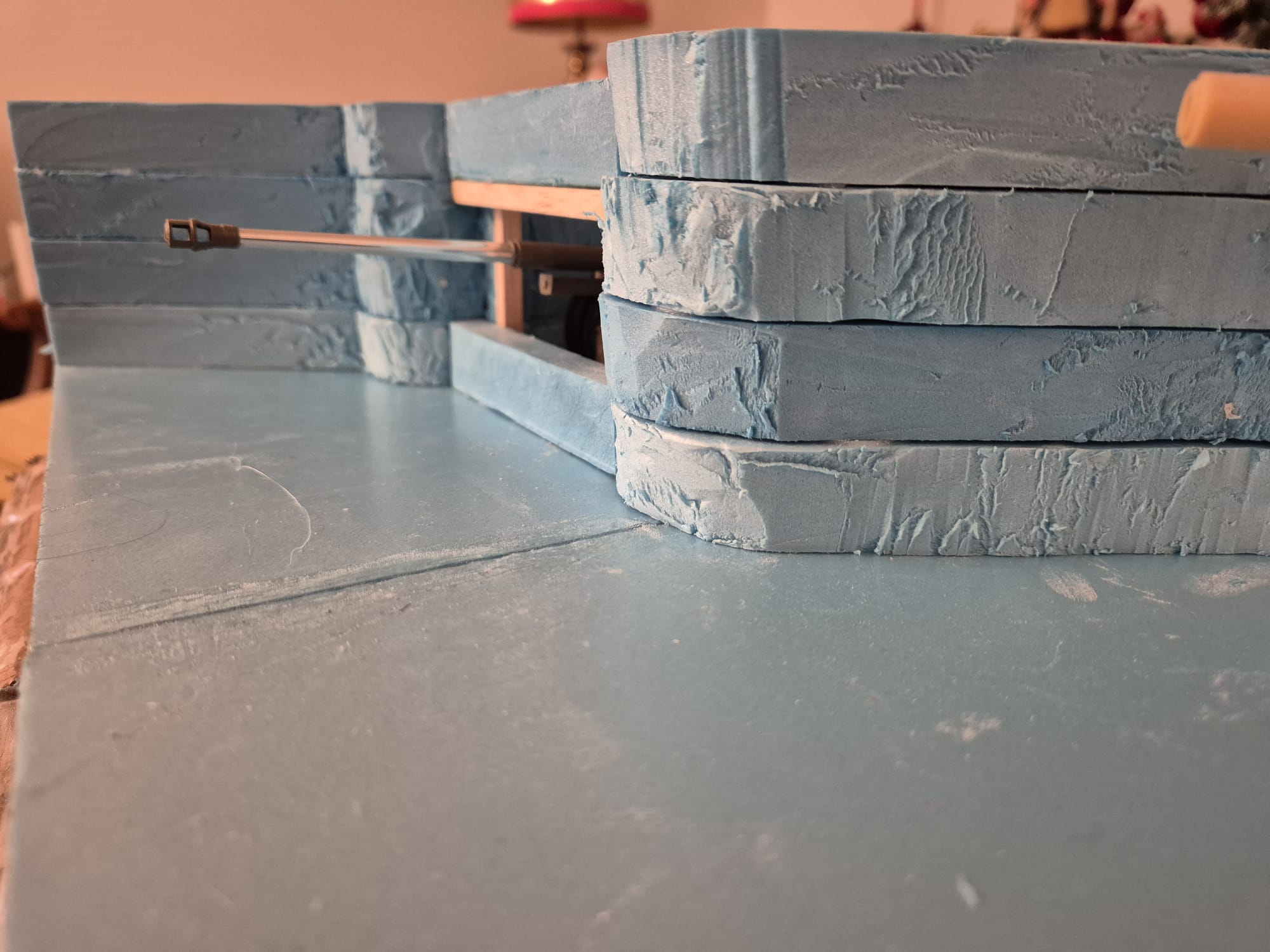
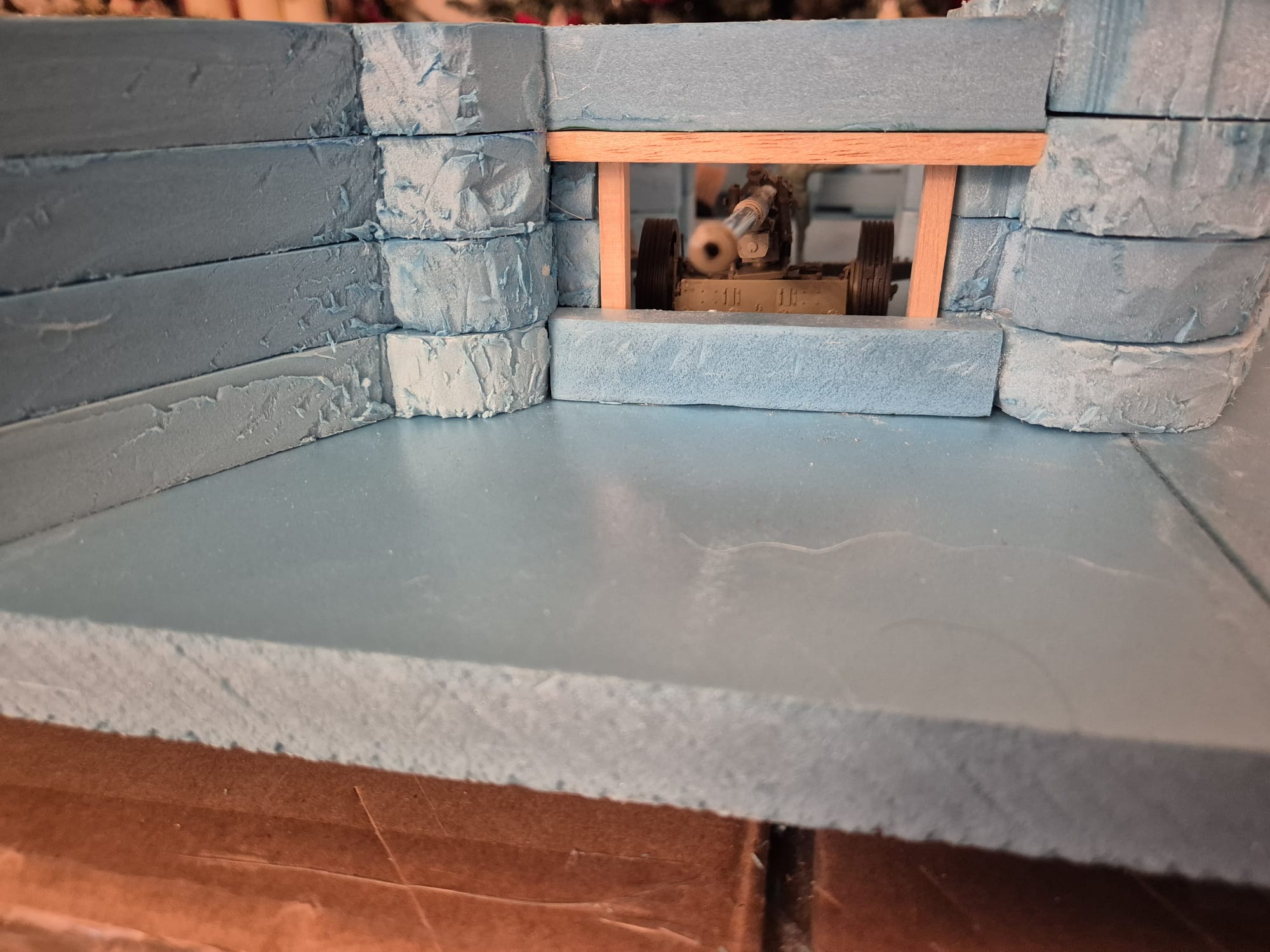
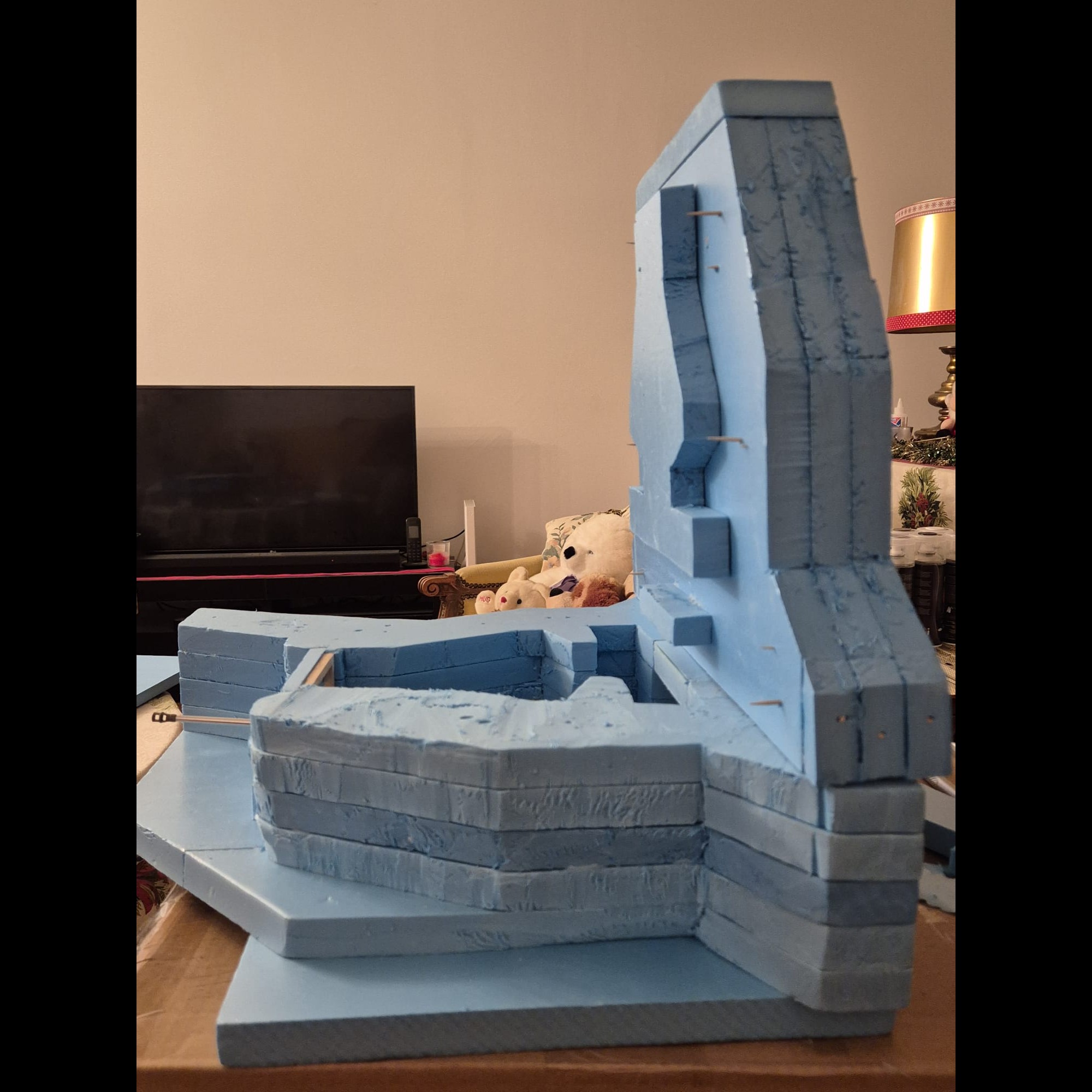
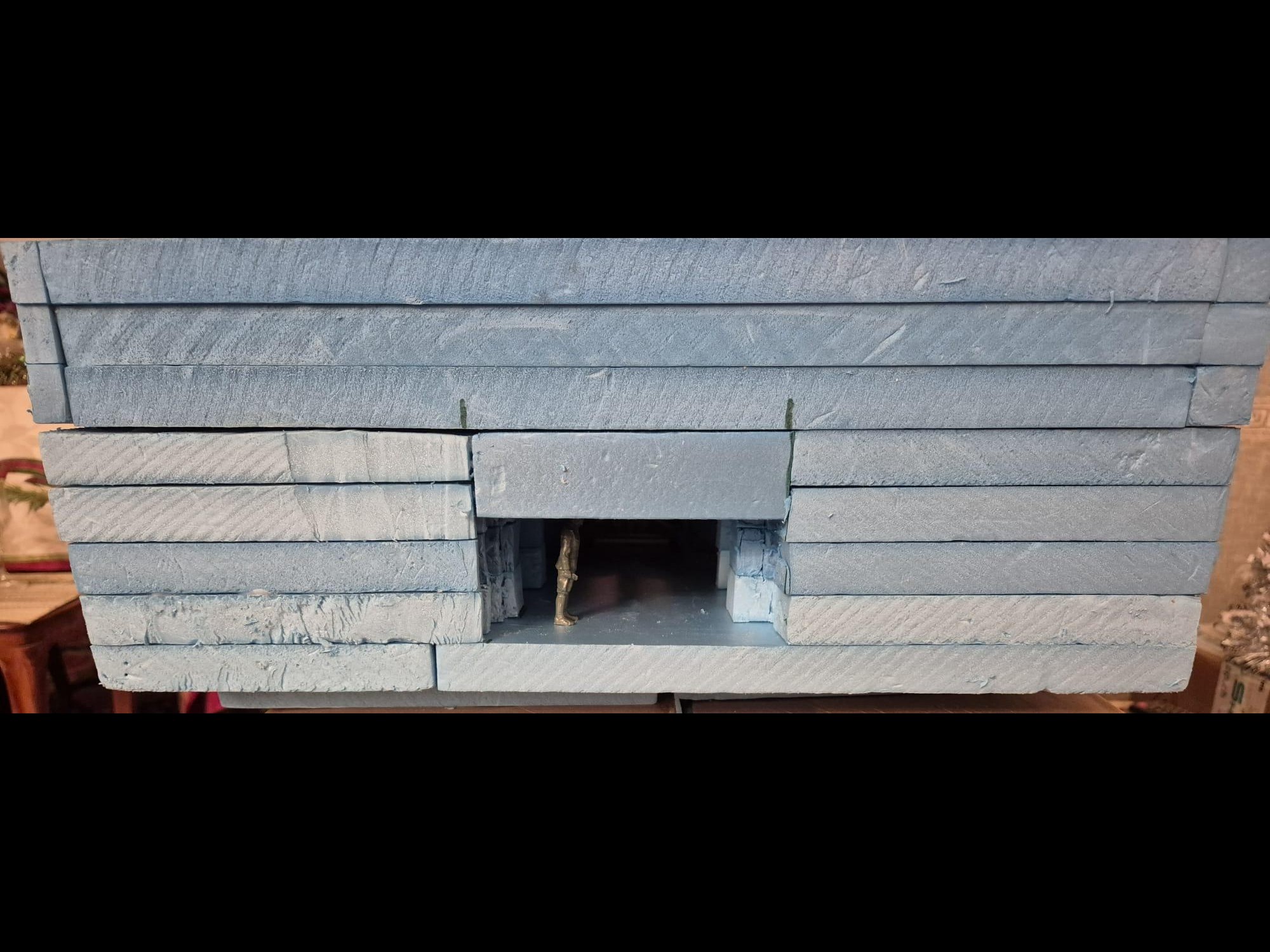
So, I have finished even the right wall and now both are fixed on a platform and I am proceeding with the build of the front and rear sections of the bunker.
I have also fixed the beams holding the future roof.
Remaining to do within the interior is the platform and the holding pedestal for the gun itself which will be done in balsa wood.
Also in balsa wood will be the stepped embrasure, which will then be covered, like the gun platform, with plaster and Concrete compound.
The protection wall will be done only at the last step, as well as the front platform.
The rear iron doors will be built with thick polystyrene plates.
But for now here is what I have achieved this far.
I hope you will forgive the uneven parts which will then completely corrected by filling them with plaster and correcting them with that material.
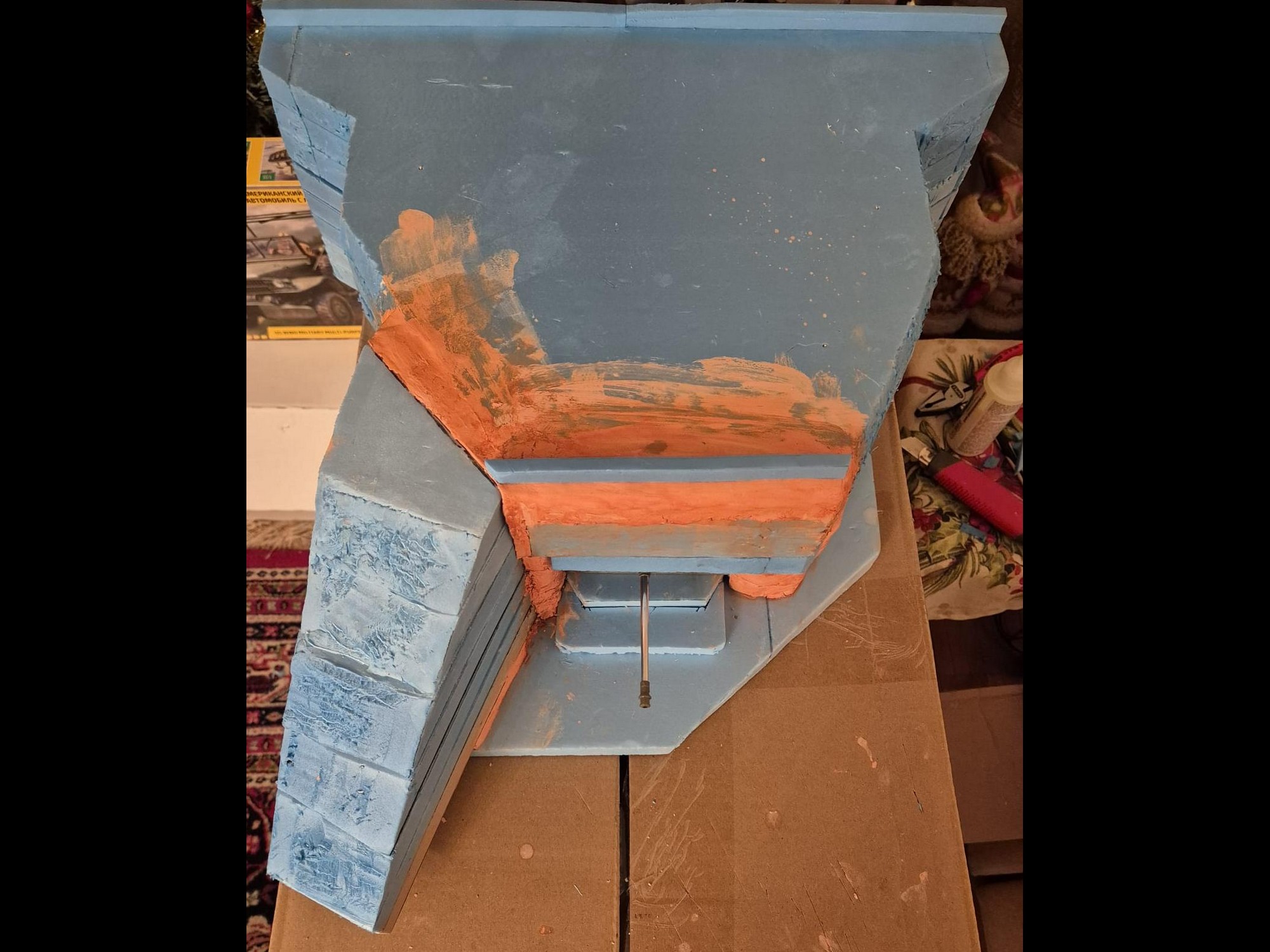
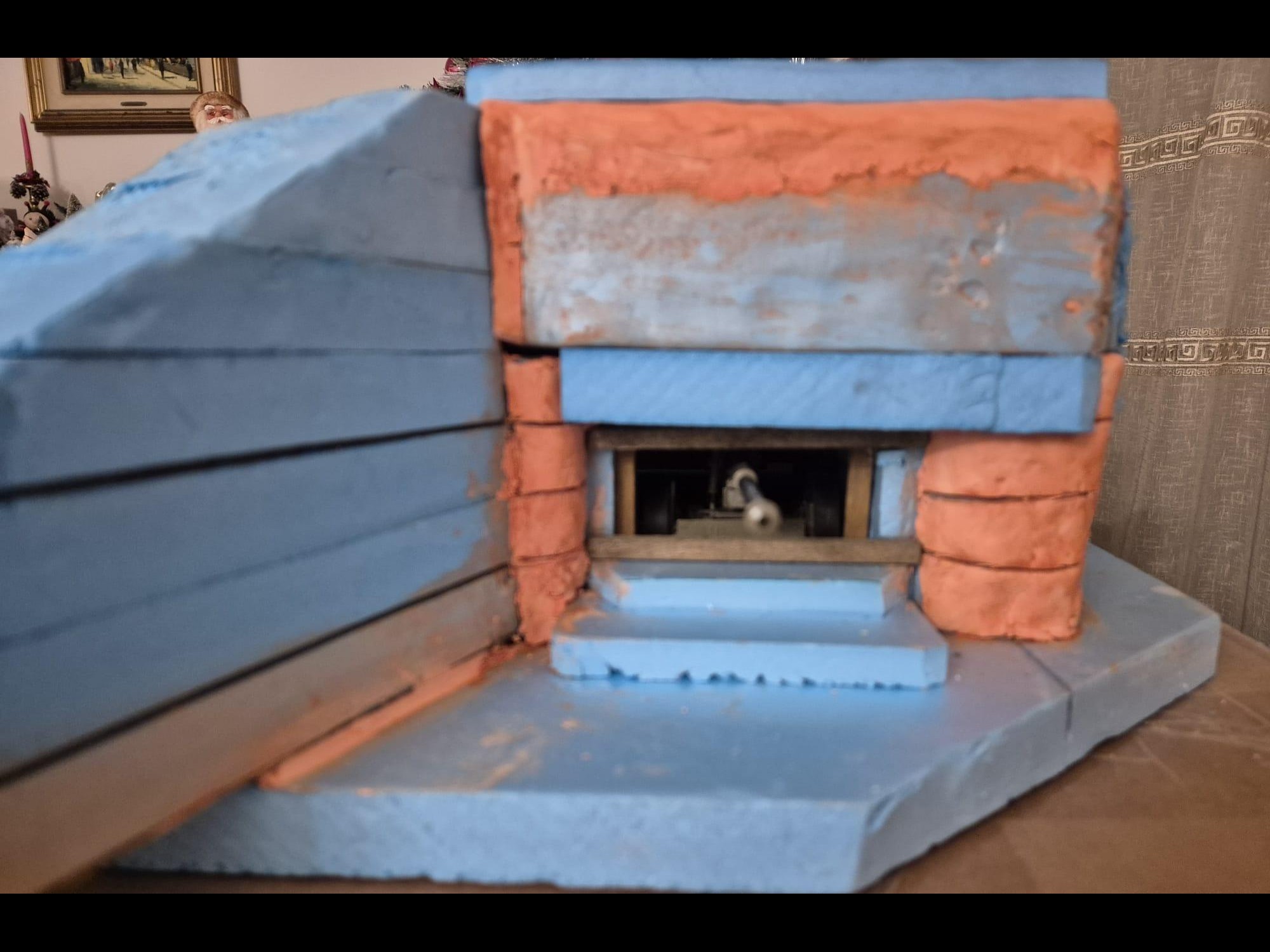
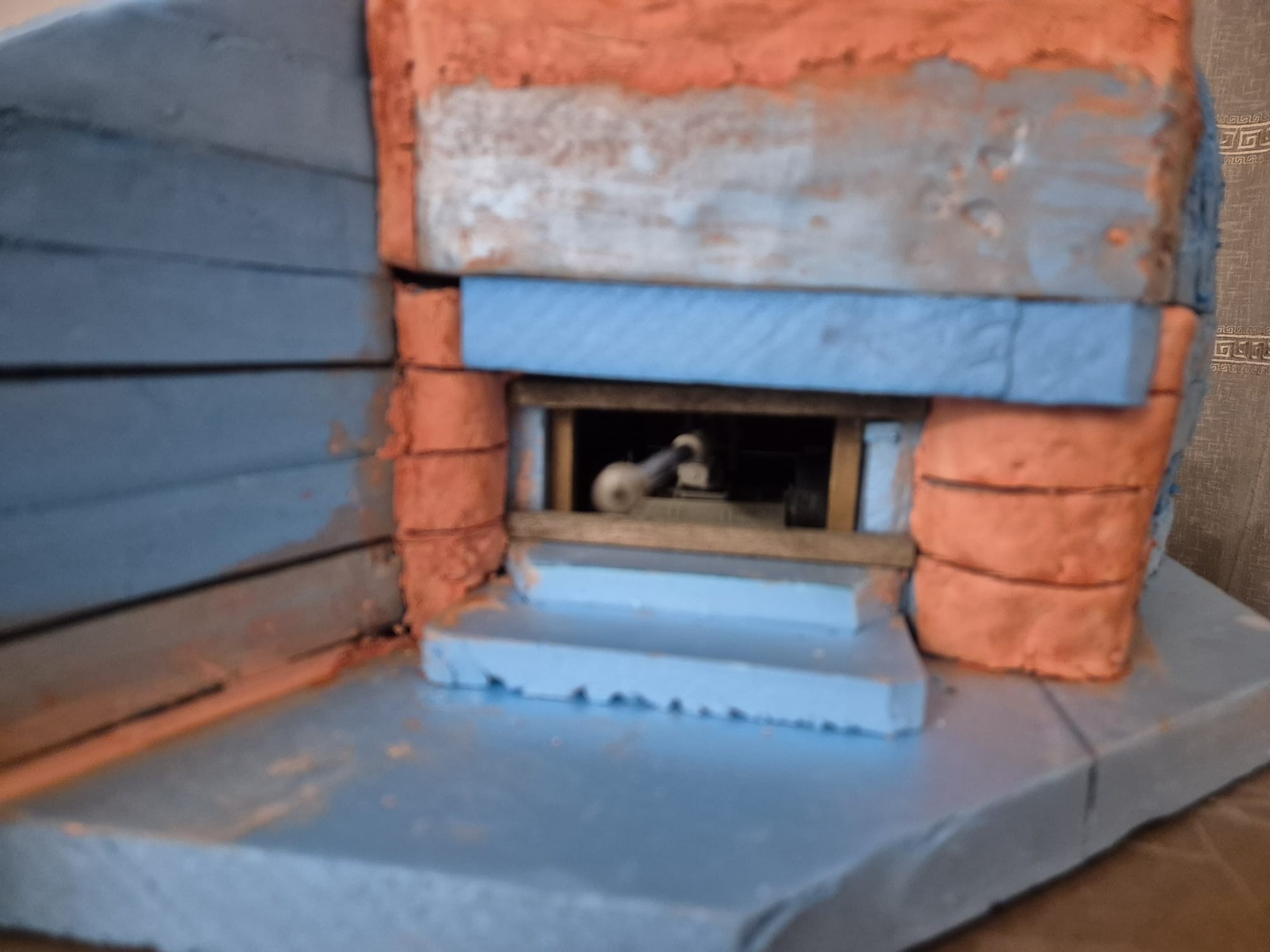
Here are the latest photos of the R677 Bunker…


The size is really huge and it will be even more so once the roof and the protection wall will be added to it, The length you see on the right wall is just for reference in relation to the future roof top. It will be cut off once the actual protection wall will be ready to be mounted against the Bunker.

I hope to see you all very soon with more updates, but for now this is it.

Stay safe, be well and dream of the models you will most certainly assemble.

All the best to you all.

PS: I just got aware that the upper wall division is out of whack by a few millimeters. This is why I like to take pictures of my work, so that I can admire my mistakes and correct them. This has already been done. Meanwhile I placed another frame inside and a log beam on the outside of the upper side of the embrasure. I am now slowly building the gun itself.
Next time I post pictures you will be able to see all this and possibly also the initial build of the roof. So, hold on and keep on looking around here. One never knows what might be popping up… :wink: :laughing:

5 Likes

Another aspect of my build of the R677 Bunker.

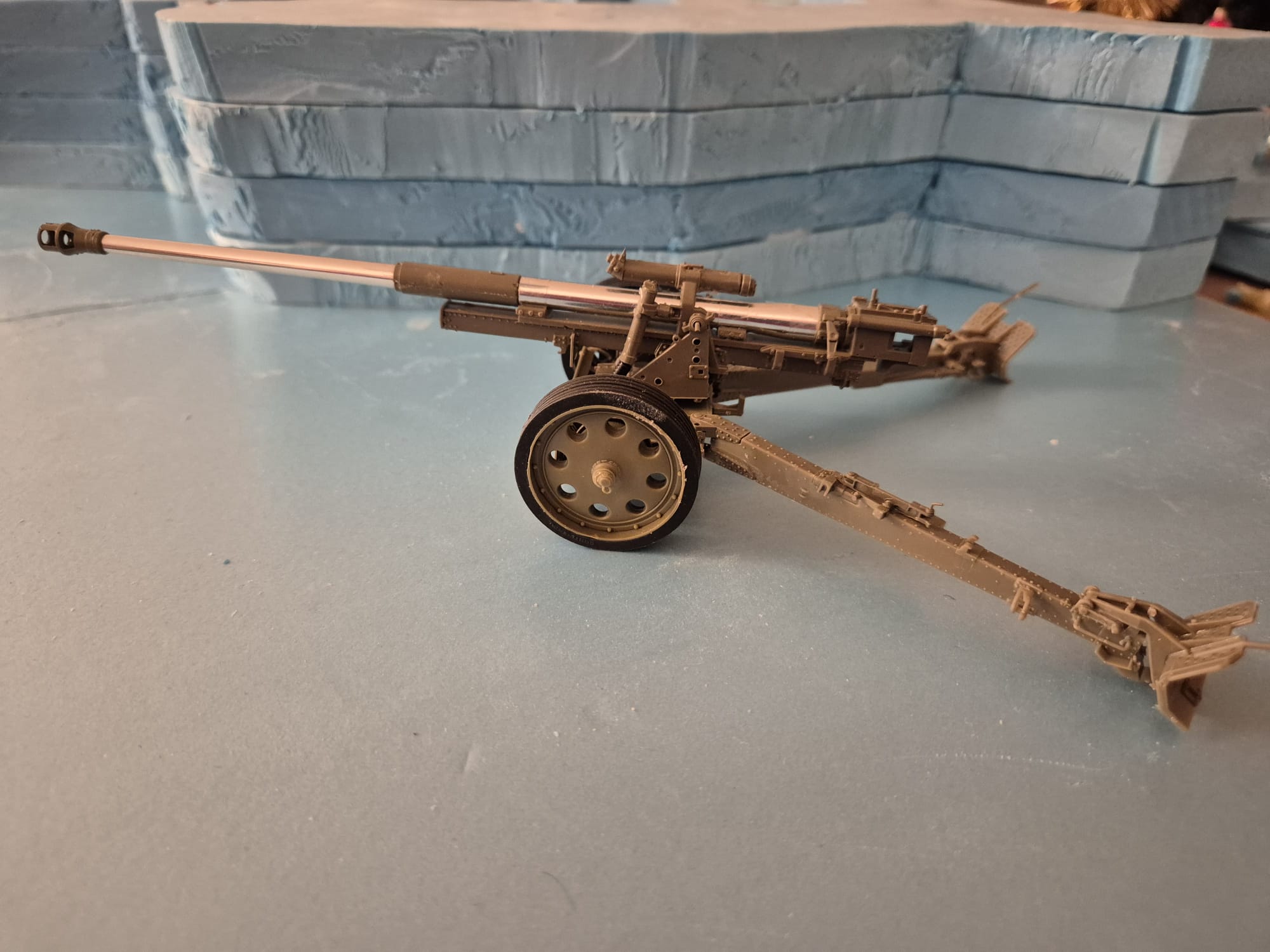
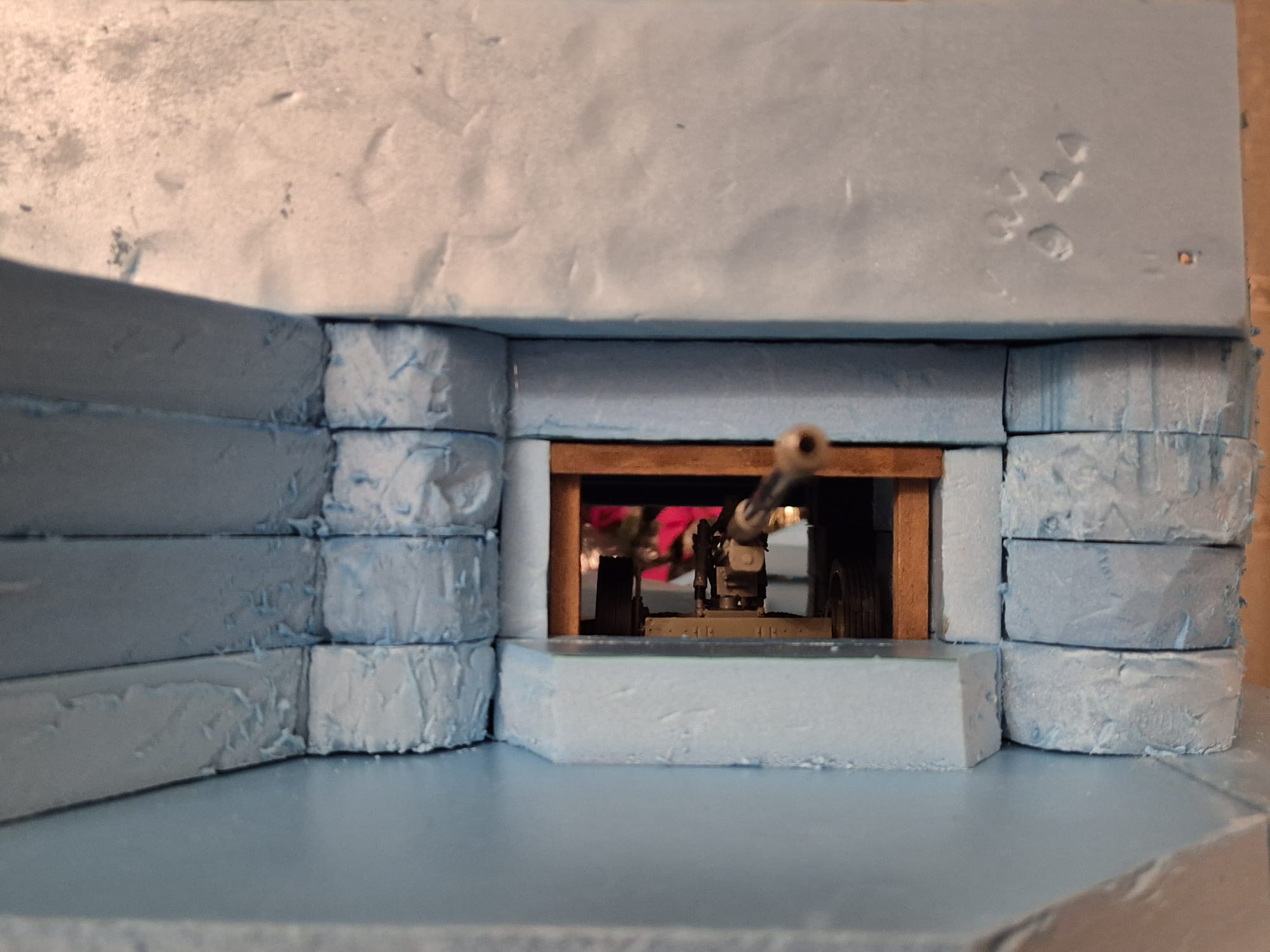
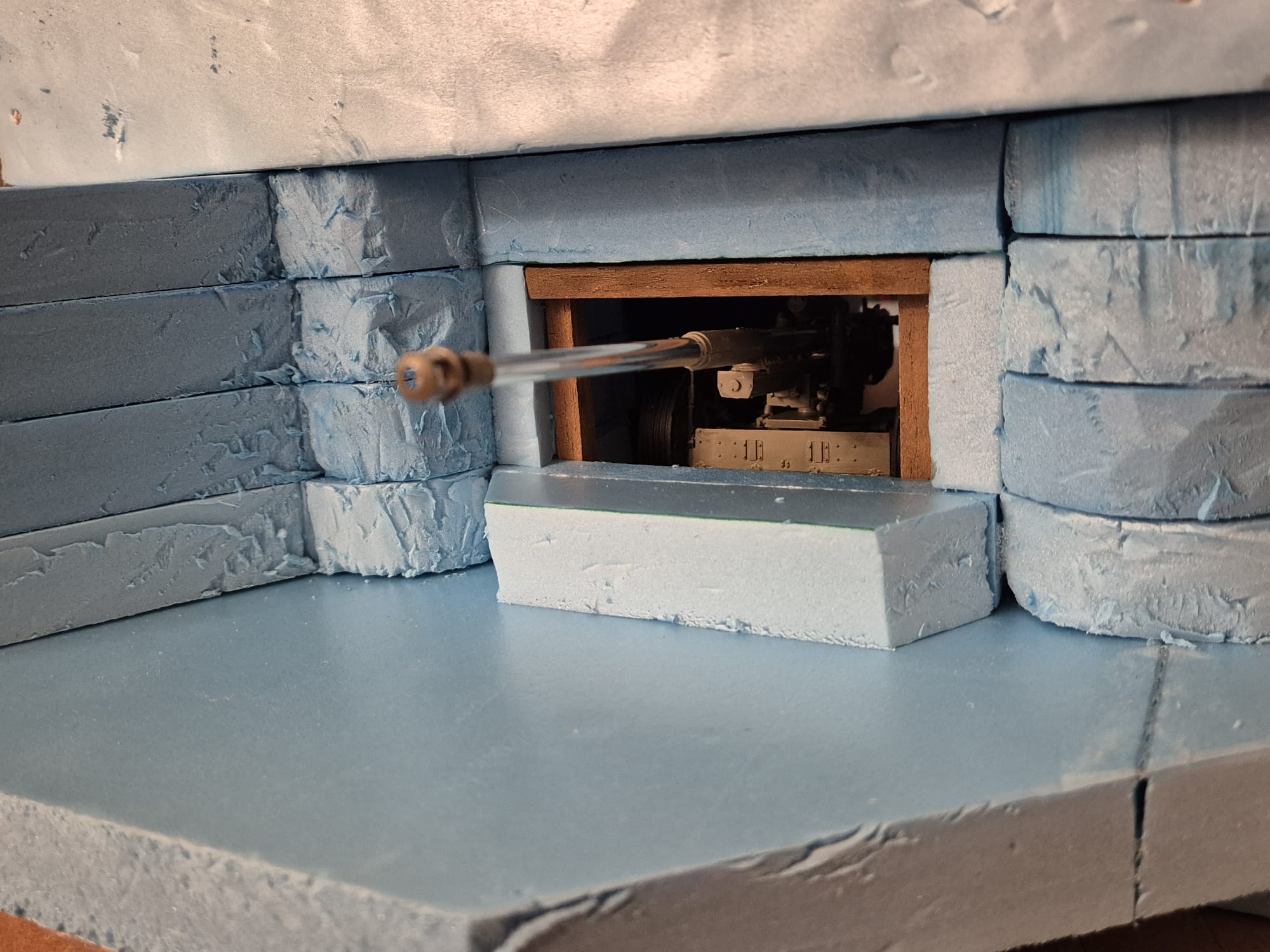
I am still building the huge PAK43/41 88mm anti-tank gun, a gun which was also mounted on some tanks such as the Jagdpanther (Hunting Panther) and the infamous King Tiger (aka Königstiger, or again Panzerkampfwagen VI Tiger Ausf. B (Sd.Kfz. 182)).

The Gun is already mounted on its cradle but is still lacking many details and its double sided shield which is the most difficult part to assemble since all made of thin and highly bendable brass, including the many tiny shield bolts holding them together which require a careful and capillary application of Cyanoacrylate glue to fix them firmly to them, and so, for the time being, I will show it without it.

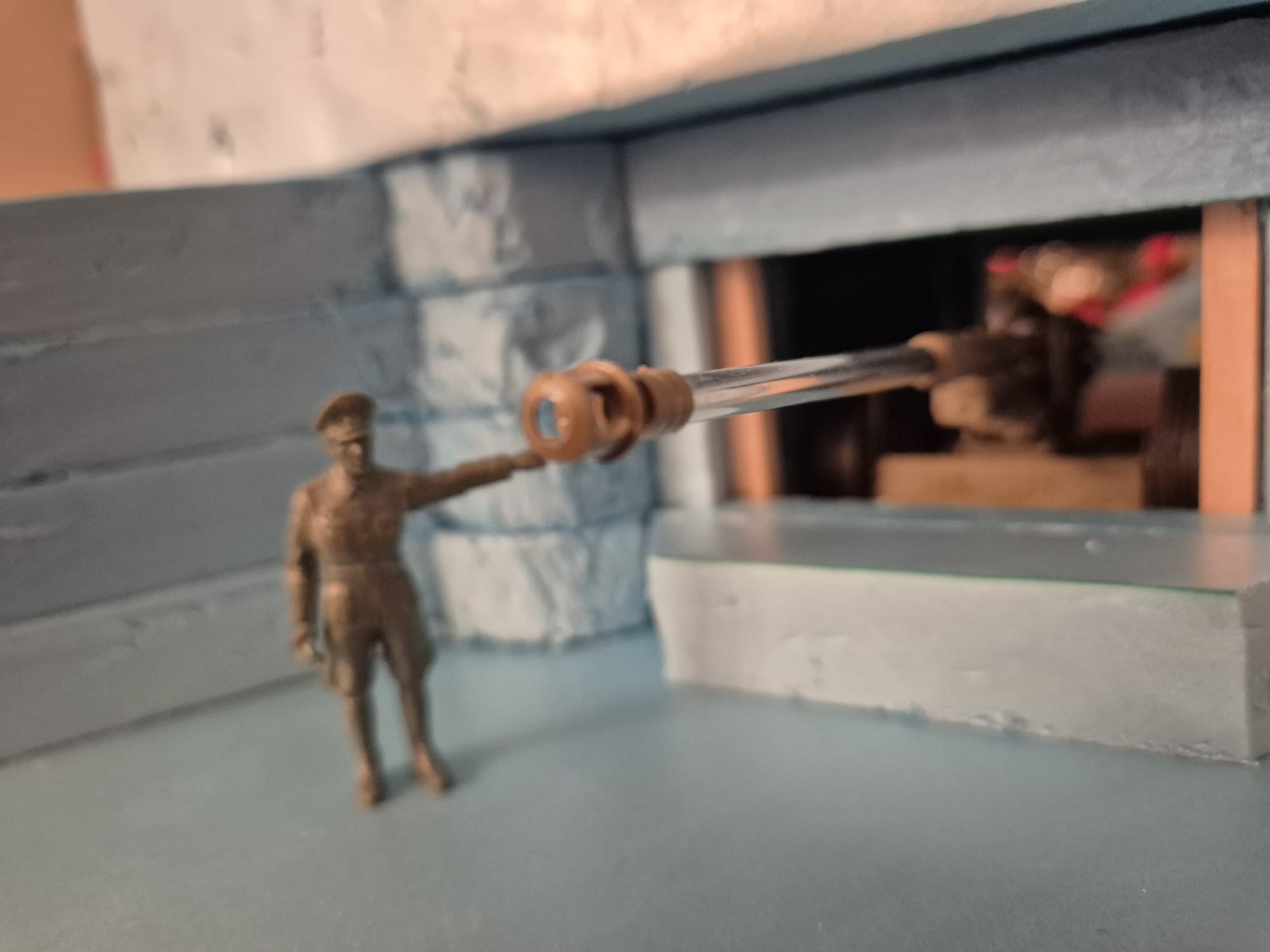
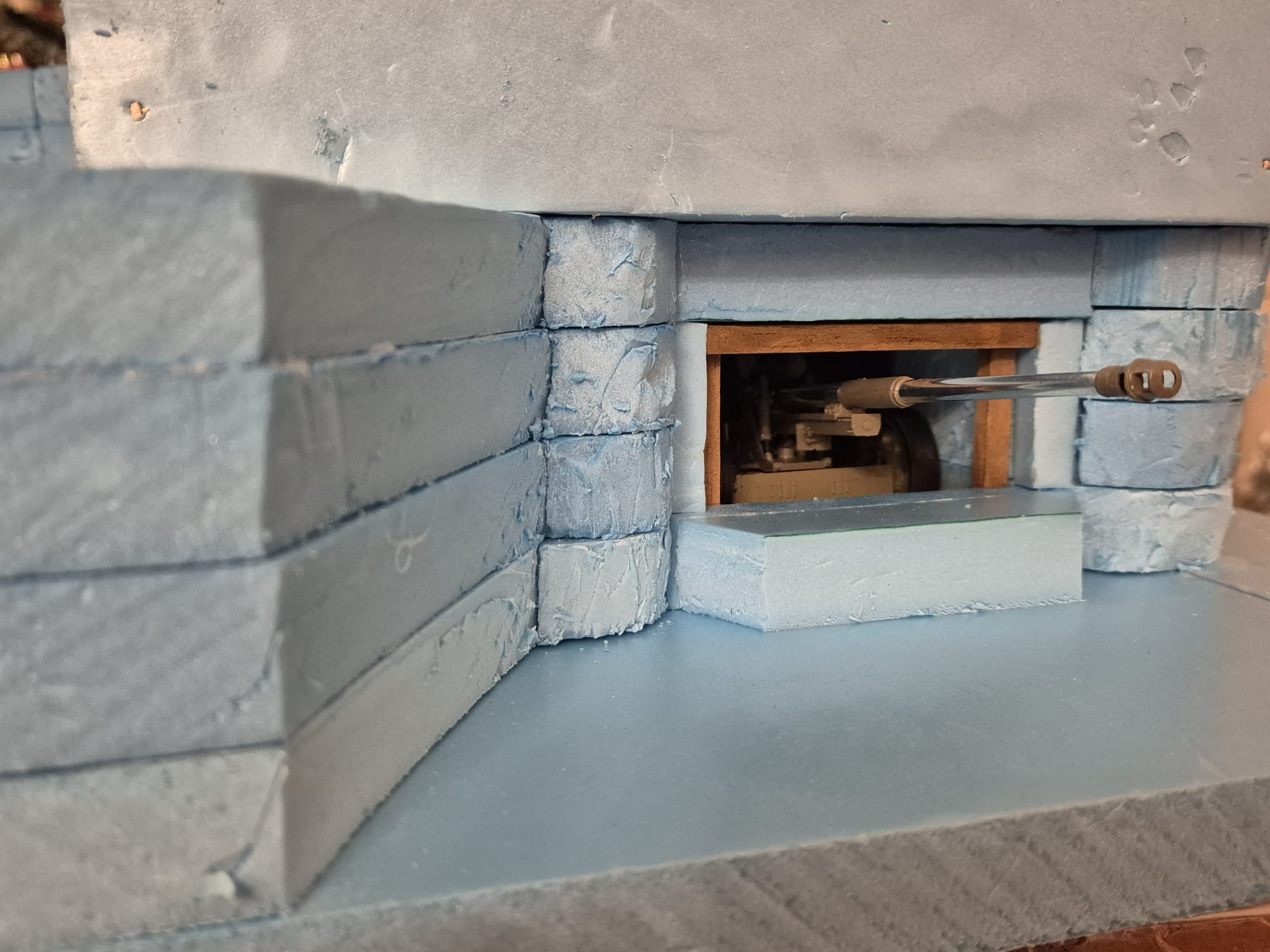
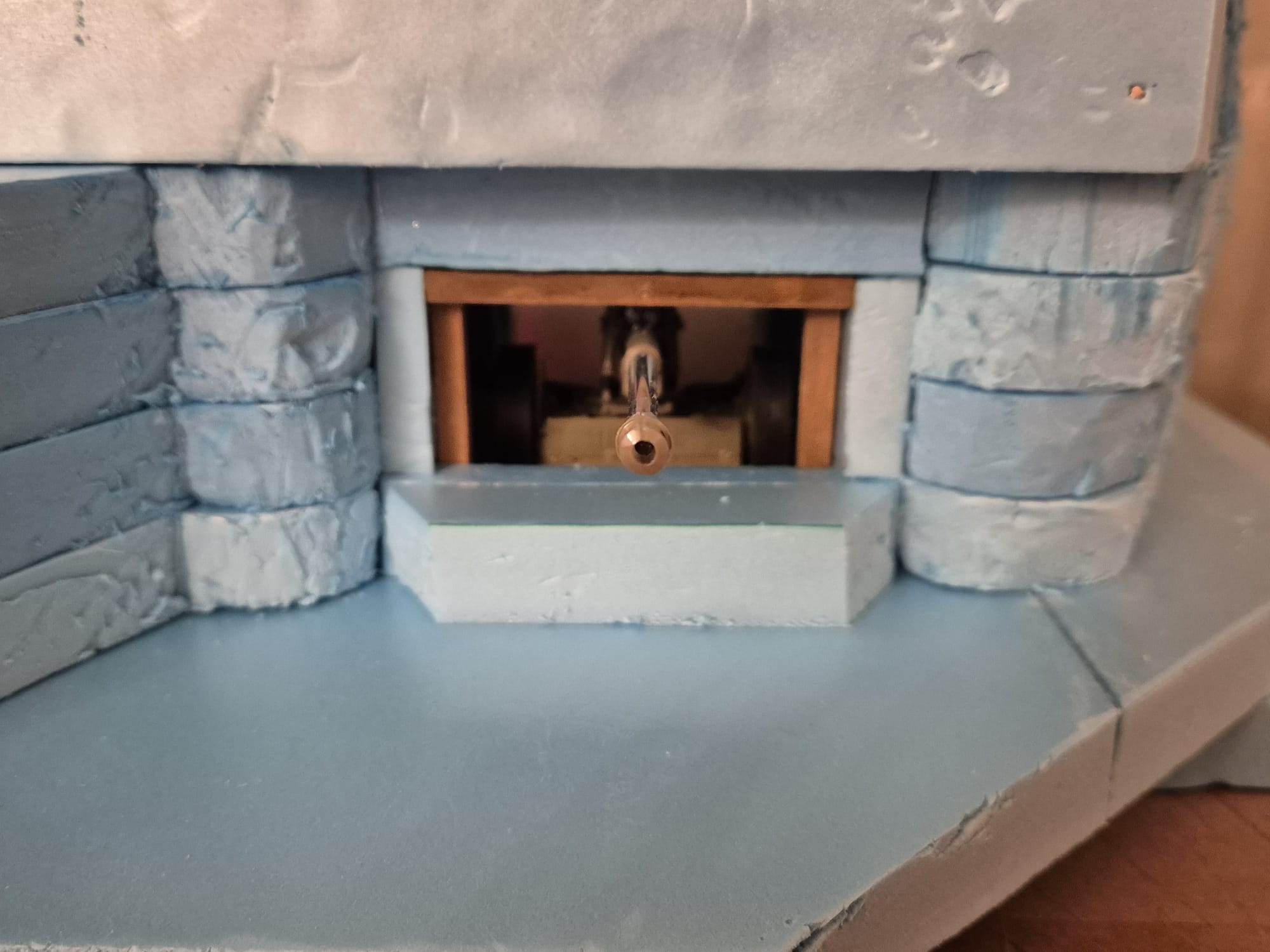
But due to its massive size I want to show you a preview with it placed either inside the Bunker, as well as outside in order to have a clearer view of the assembly.

Moreover, I have also decided to show you the PAK43/41 next to the future display of the Longues-sur-Mer 15cm TbtsK C/36 naval gun (also referred to as 150mm or 152mm gun) just to compare them in size.

Both were indeed lethal and highly feared guns by the Allies, since the velocity and power impact of their ammunition could destroy anything that came in their visors.

Although the two on Omaha Beach, this one in WN61 (Fox Green) and the other one on WN72 (Dog Green) caused mayhem during the initial phases of the landing and cross firing, since one was placed to the Eastern side of Omaha Beach and the other on the Western side, they were the main ones that had to be silenced if ever possible.

The one I am representing which was on the Eastern flank, has been incorrectly described as having been put out of commission by destroying its gun around ten o’clock in the morning, but many pictures taken afterwards testify the contrary and show it proudly standing outside the R677 Bunker with a U.S. Navy officer standing next to it.

Fact is that the gun was never destroyed and the Bunker was put out of is misery by using bazookas, and not as reported, by a DD Tank. Those Bazookas were aimed at the interior of the embrasure spreading mayhem among its crew and killing three of them. At the same time, from behind the Bunker, some U.S. troops threw a couple of grenades inside although not causing any victims but forcing those inside to surrender.

The other lethal gun on WN72 (Dog Green) was also left intact and only the inside crew was hurt or taken prisoner.

One of the amazing things about these two defense positions was that even without the Allied intervention they would have soon had to either surrender or abandon their positions due to the lack of ammunition since they had already spent most of it.

The other factor was that while the attacks on Omaha Beach continued, more inwards of Normandy both the Royal Air Force, as well as the United States Army Air Force fighter-bombers were systematically decimating incoming resupplies, either on trucks or trains, by hitting them with rockets, so that the defenses at Omaha were left on their own, only relying on the available local ammunition.

Once that ammunition was consumed, men had either to retreat to their former positions or give themselves up to the advancing Allied troops.

But make no mistake, some positions had been fully stocked of ammunition to last them quite for a long time. It was only the huge guns, with larger caliber ammo that had this kind of problem. The same also applied to some Heavy Machine Gun positions which were in open emplacements instead of being in Tobruk bunkers which usually had enough spare ammunition boxes available.

And so, finally, allow me to present to you one of the monsters of Omaha Beach, the PAK43/41…


And now seen outside of the Bunker…


And this time set side by side with the 15cm TbtsK C/36 naval gun for comparison in sizes…


Although the Guns served completely different purposes, the Naval one to hold the Allied Navy at bay or even destroy some ships, which it did indeed manage, the PAK43/41 was more designer to destroy not just tanks but anything which moved on wheels or indeed, approaching landing crafts, which it did occasionally also hit causing great damage and loss of life, besides also causing panic and confusion among the survivors.

And this is again one chapter of my future build, but worry not, I haven’t forgotten my current one, but I am waiting for a hot wire cutting machine which will at least allow me to build a correct rooftop to the R677 Bunker and make it easier for me to detail it appropriately. Once the top will be finished and the PAK43/41 fully finished I will once again return to “The Last Warning” starting to build all the vehicles and figures and add more details to the communication Bunker.

Therefore my friends, there will still be a lot of stuff coming your way and I hope you will be generous enough as to comment and perhaps also add your own judgment on what I am doing.

But before I go, please remember that I too can use constructive suggestions by those more experienced than I am. After all I am still learning as I go.
So please, let them come and point out what you might consider better done should I make a mess of my builds.

See you soon and continue to always amaze me with your own works.

3 Likes

The Roof is almost ready, but it’s up!

All that remains to be done is to add some slight slants to the upper sides, two curved parapets in front and to the rear and a slight curve on the frontal plate.

What remains to be done is the side protection wall (not the one you currently see which is just for reference and will be cut off) and the frontal stepped platform.

Following that, the entire structure will be covered in plaster, although just in a very thin layer to cover the imperfections that arose while cutting the foam, and another layer, but this time of the AK Interactive Concrete compound, which not only will give it the roughness and graininess of a true Bunker but also the true color.

Should that not suffice, depending on how it will look once the compound has fully dried, I will then apply various washes along the outer and inner walls to make them look worn out by weather conditions but not by time, since that particular Bunker was a recent construction built in late 1943.

Once that’s done I will finish its gun and rededicate myself to “The Last Warning”.

And here are the pictures of how the R677 looks right now:


and now with the weathered beams put back in place…


And for today I have shown enough… I believe.

As said there is still some to do, but basically this is how the Bunker will look once fully finished. Right now the roof seems a bit too high, but that’s because it is fully square at its angles. Once the top segment will receive its sloped slants it will look just right. This will be achieved with an foam cutting machine which I just received. With the same machine I will cut the parapets and give them their curved shapes, as well as the front face of the roof.

This is for now what I’ve done. See you soon for more.

As usual I wish you all well and hope you will be here witnessing my further progress. :vulcan_salute: :waving_hand: :grinning_face: :four_leaf_clover:

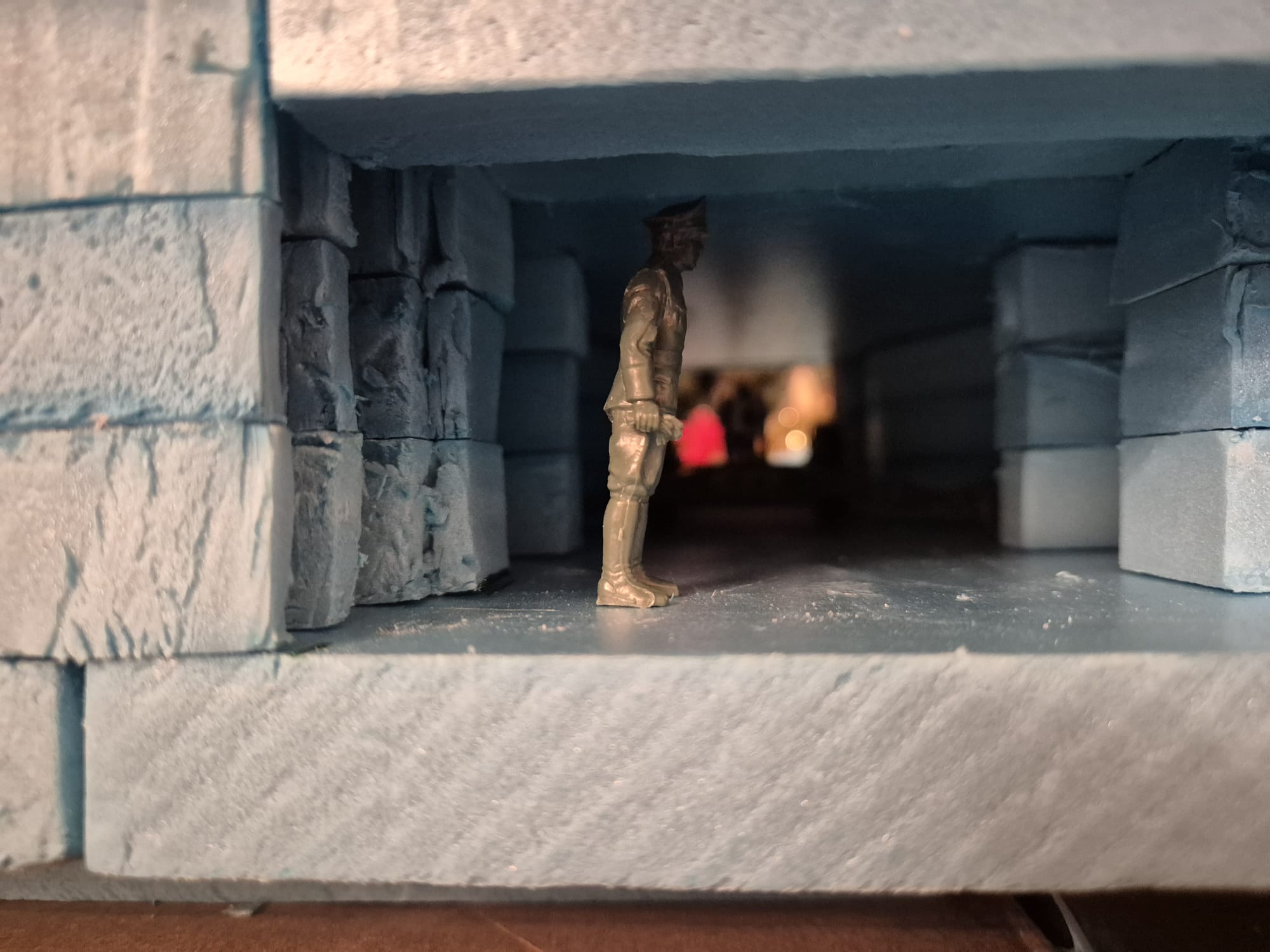
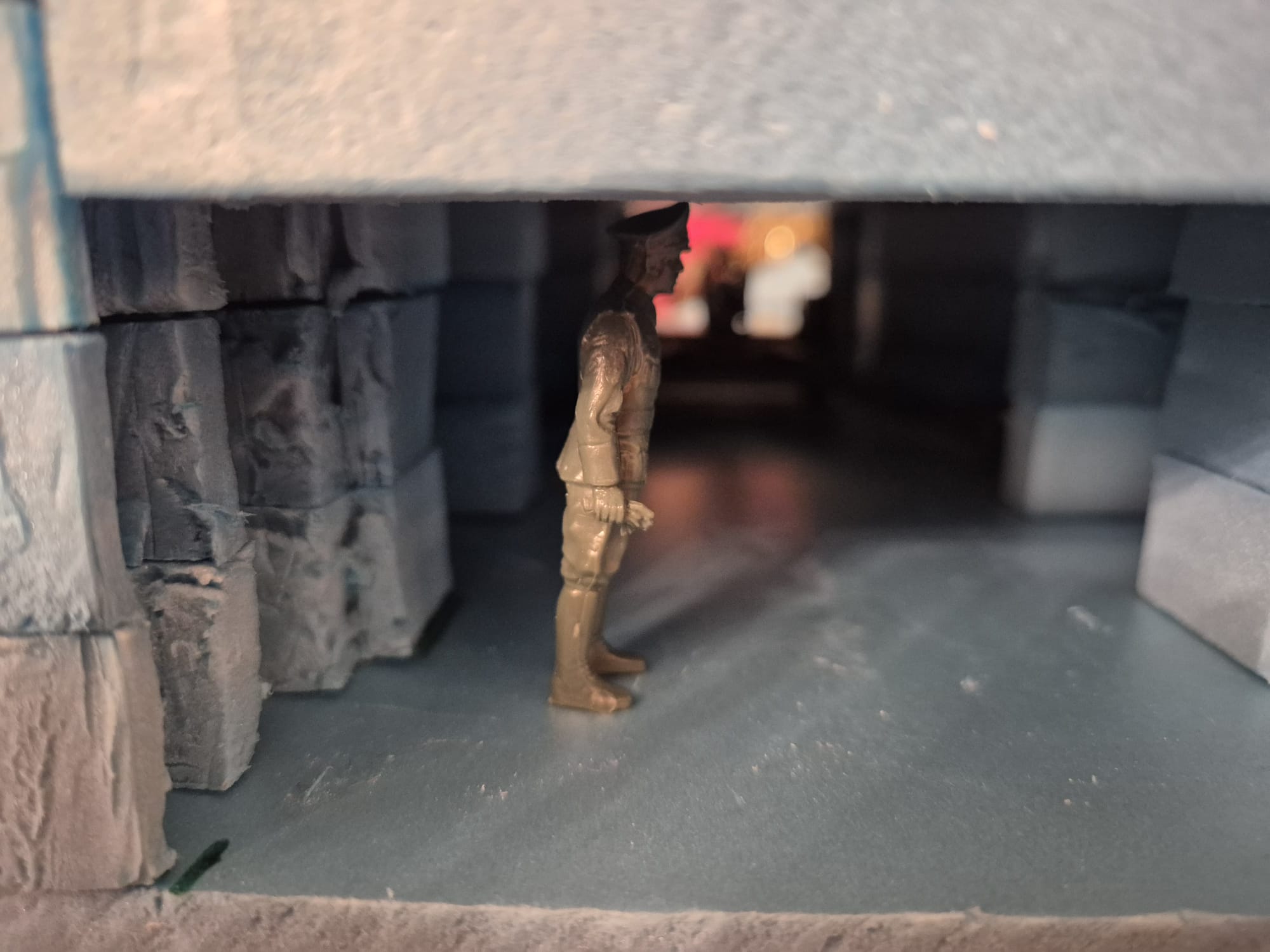
PS: Remember, the lower segment, the one where you see the German mock-up Officer stand will be interred and not seen, which will make the Bunker look less high than it is in these pictures. At the same time and as you have certainly noticed, the Roof can be removed or simply lifted.
It required some studying and measuring of the lower segments which had to conform to the middle section in order to hold the roof in the right position once shown closed. In fact, the interior roof is much deeper than just placed over the sustaining walls.
This is also true in the original one since it gave an additional protection for its occupants, so, in a way I did not invent anything, I just did what the builders had conceived. Nothing more and nothing less.

2 Likes

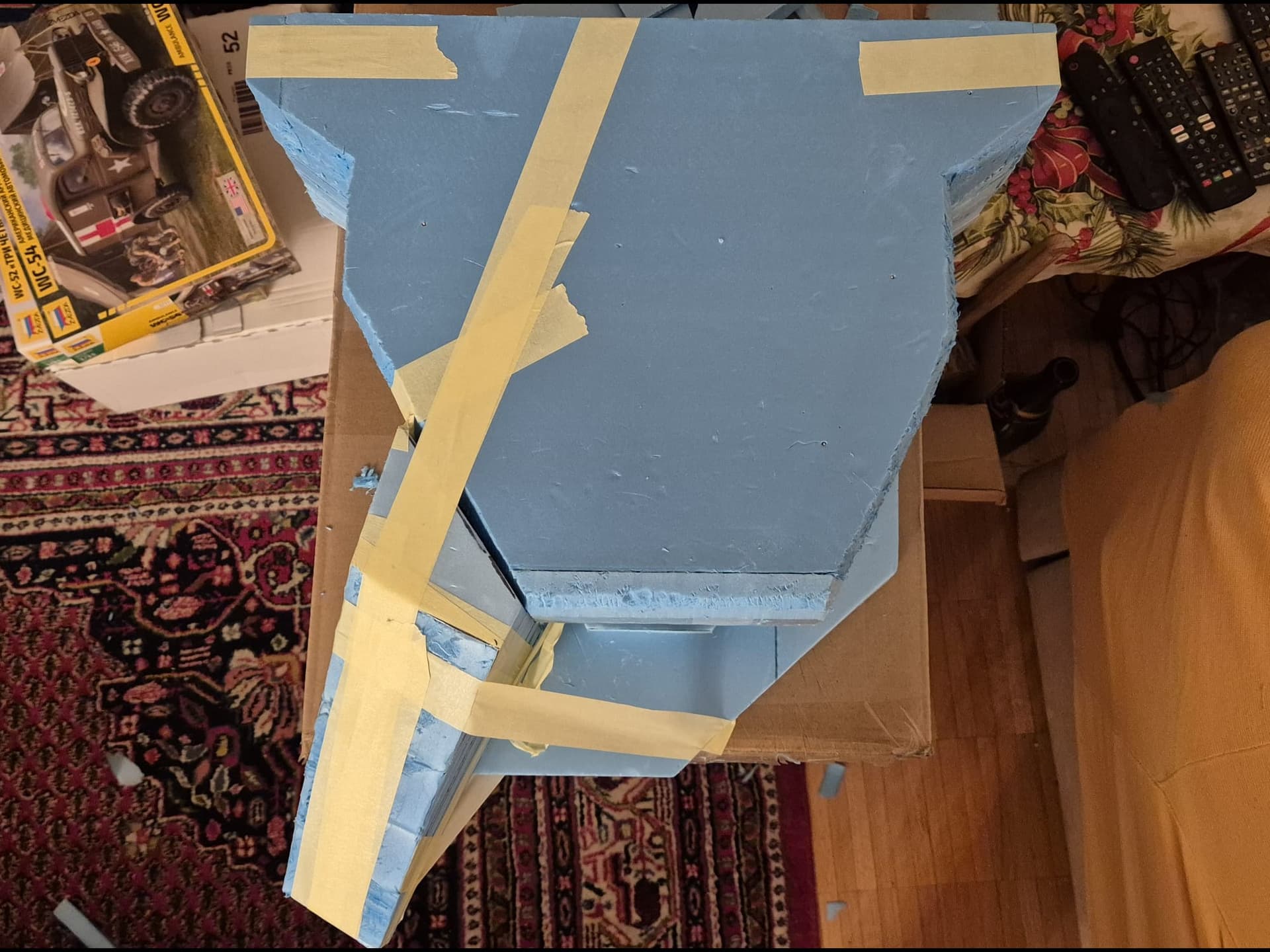
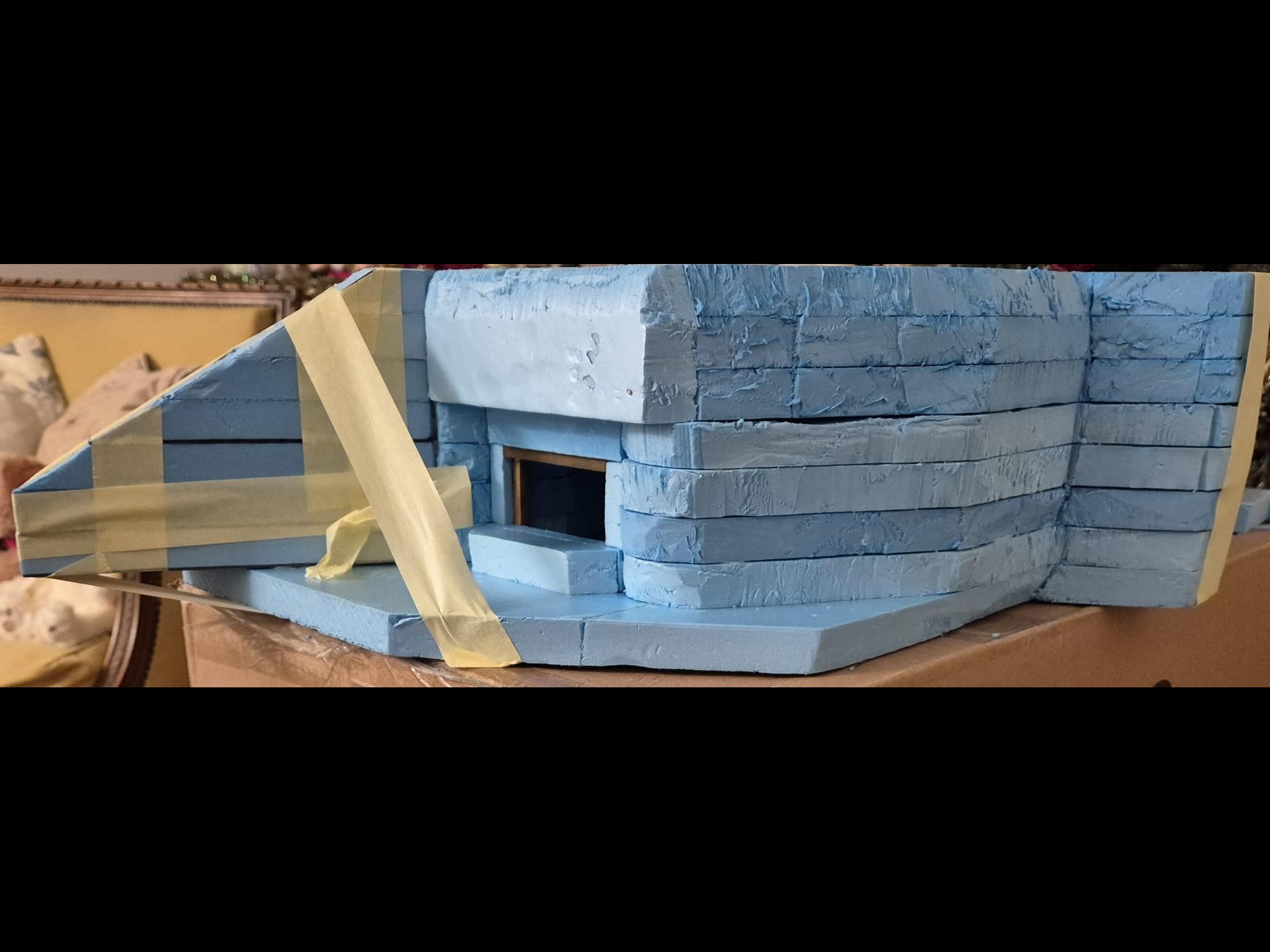
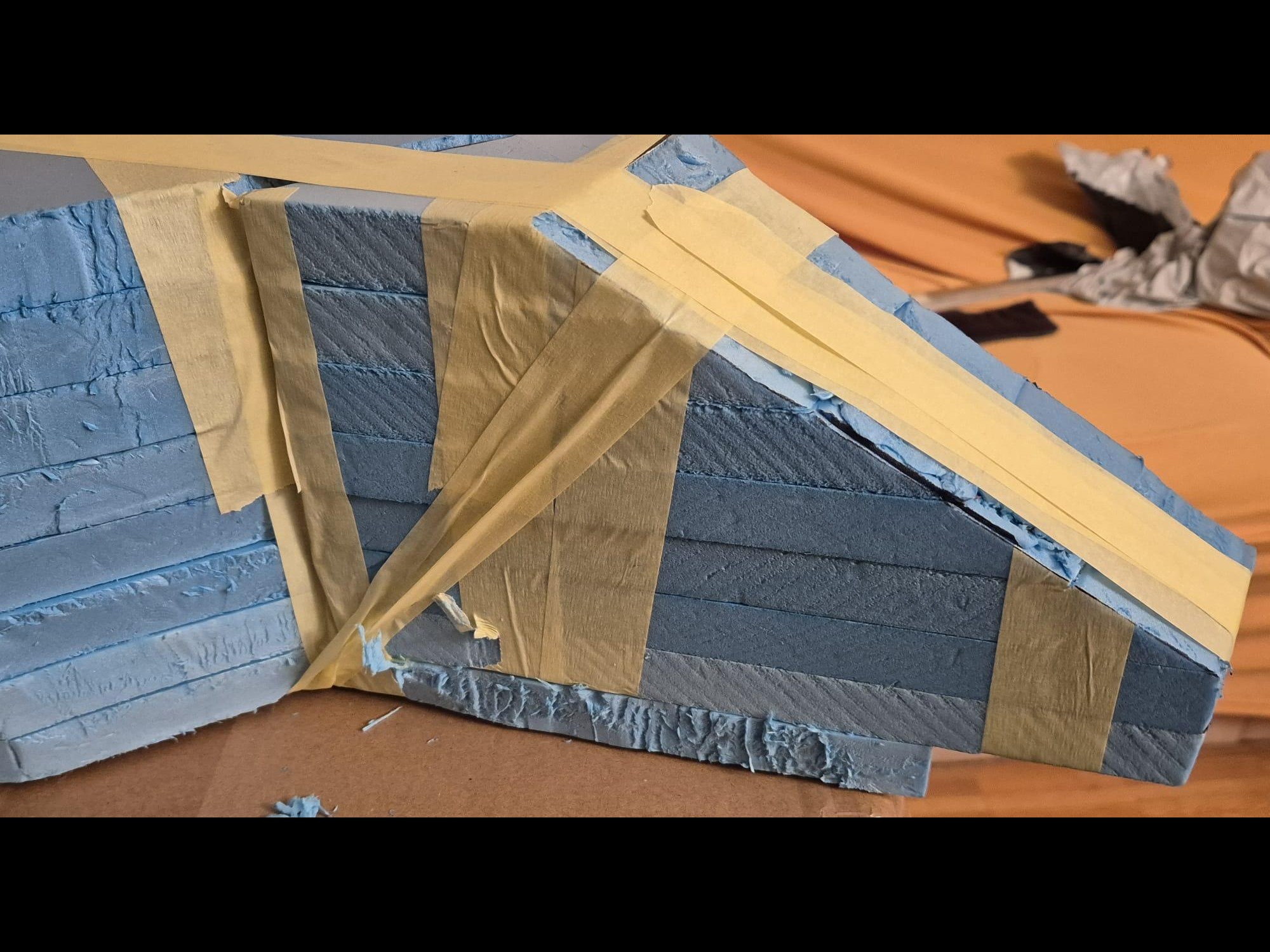
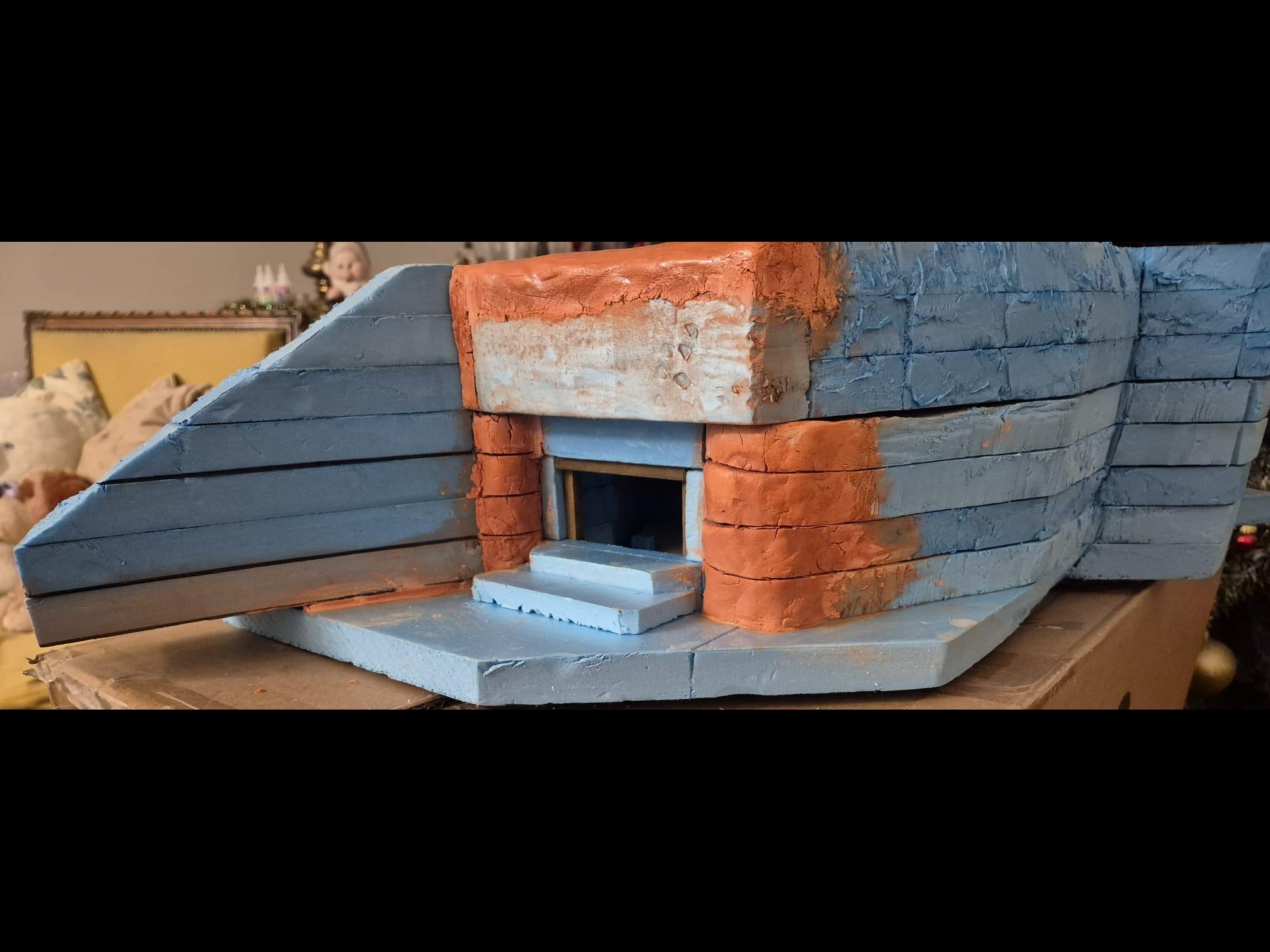
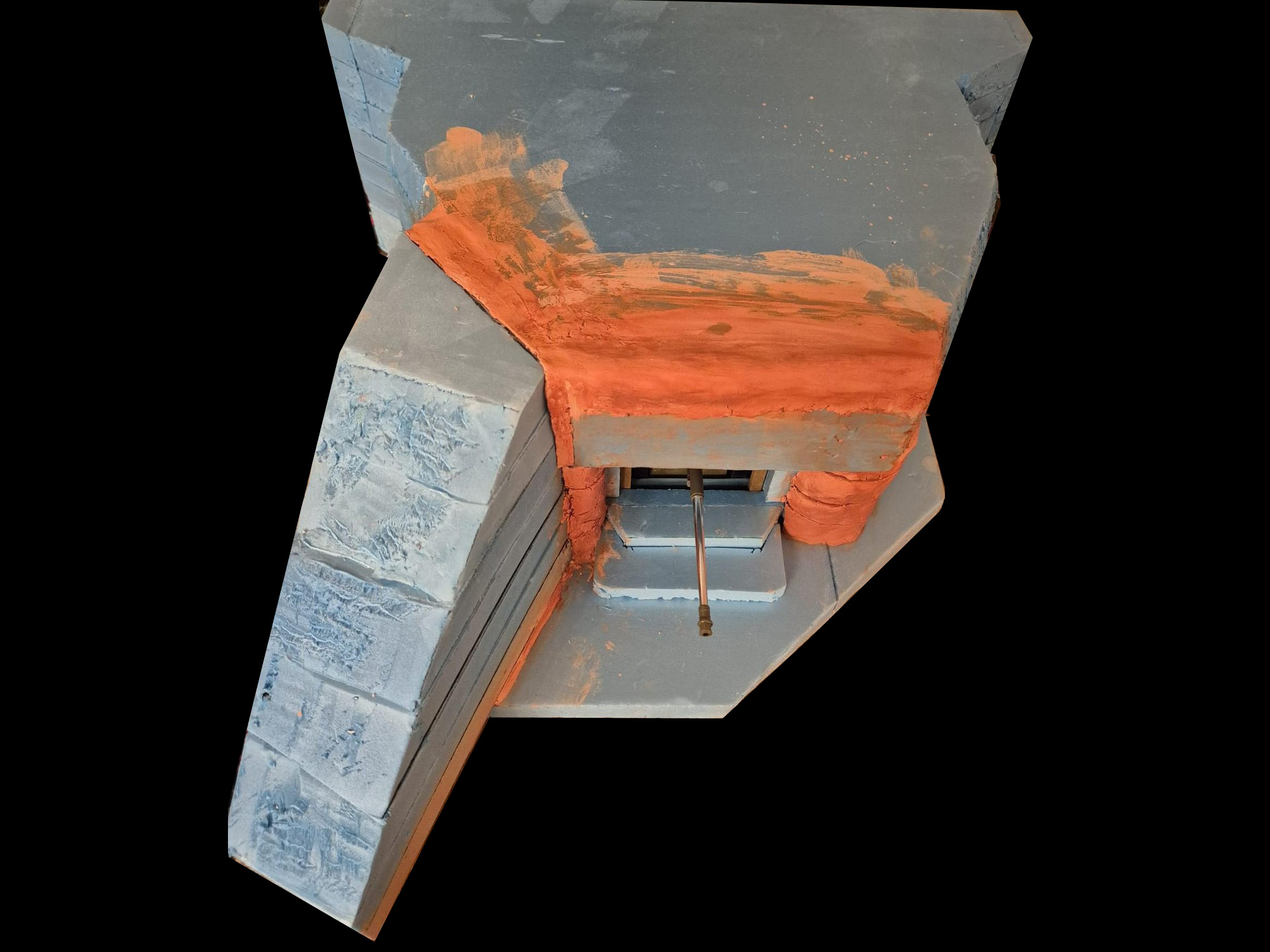
The Protection Wall is up and already attached to the Bunker.

Unfortunately my new Proxxon hot wire cutter doesn’t function despite having assembled it according to instructions. The LED light lights up but there is no heat coming nor any humming noise.

So since I cannot always wait for mechanical or electrical failures to be solved I simply decided to go at it by free hand and a sharp foam knife. The slants in the side walls are not too bad but the front roof plate was by far more difficult because there is no way in hell that with a blade one can achieve a slight clean curve of the rooftop and so I just attempted to hint at it.

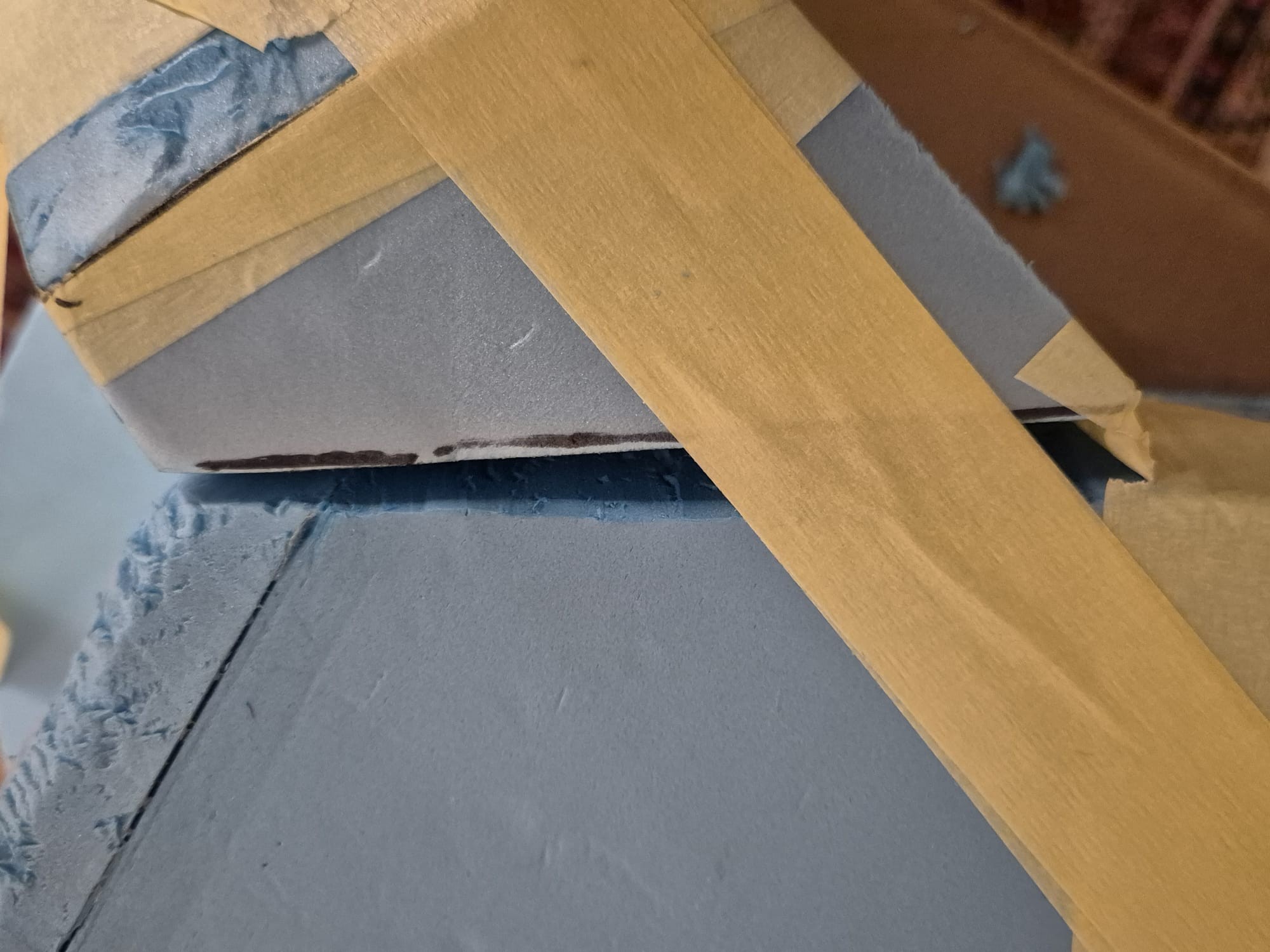
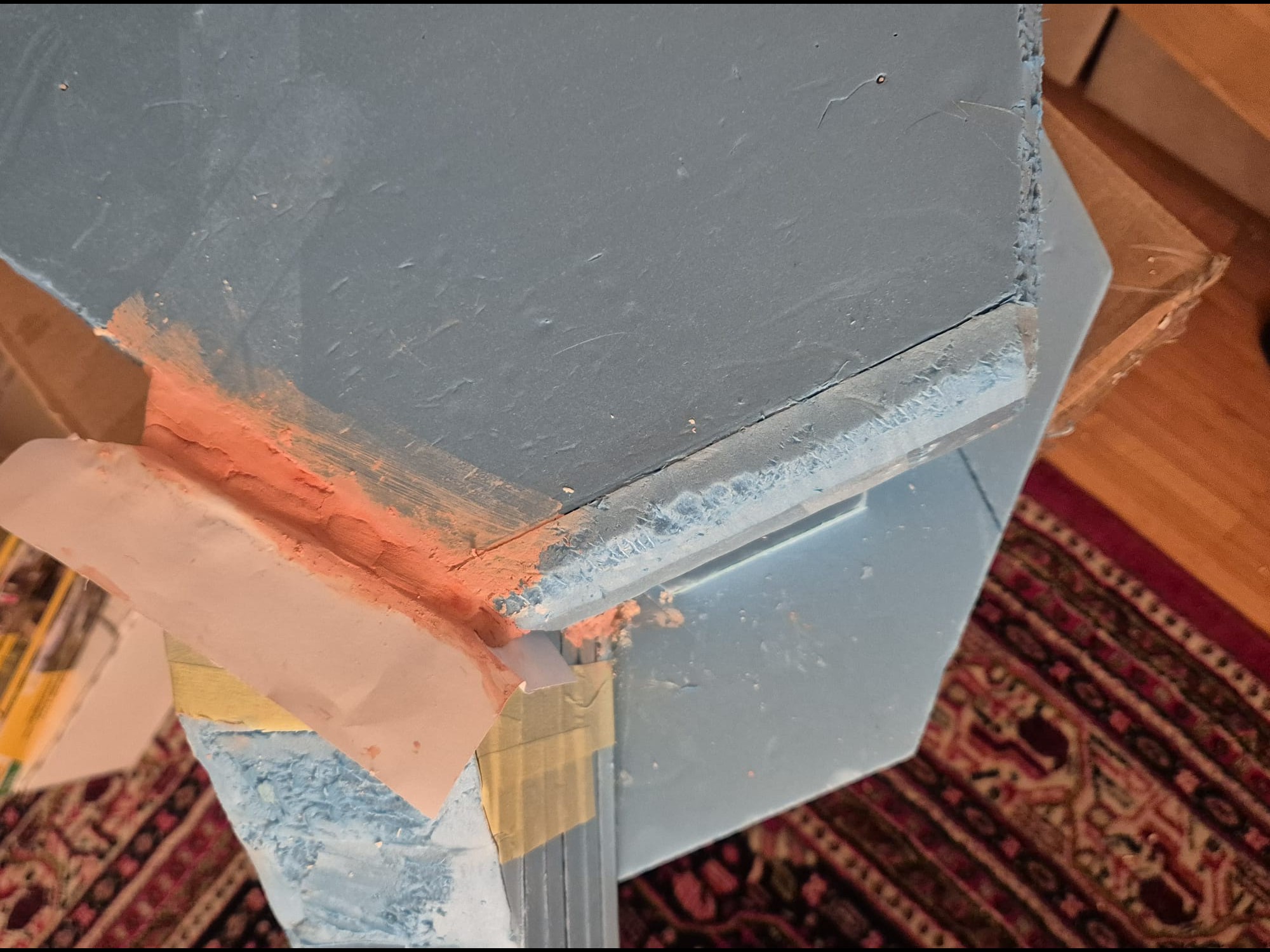
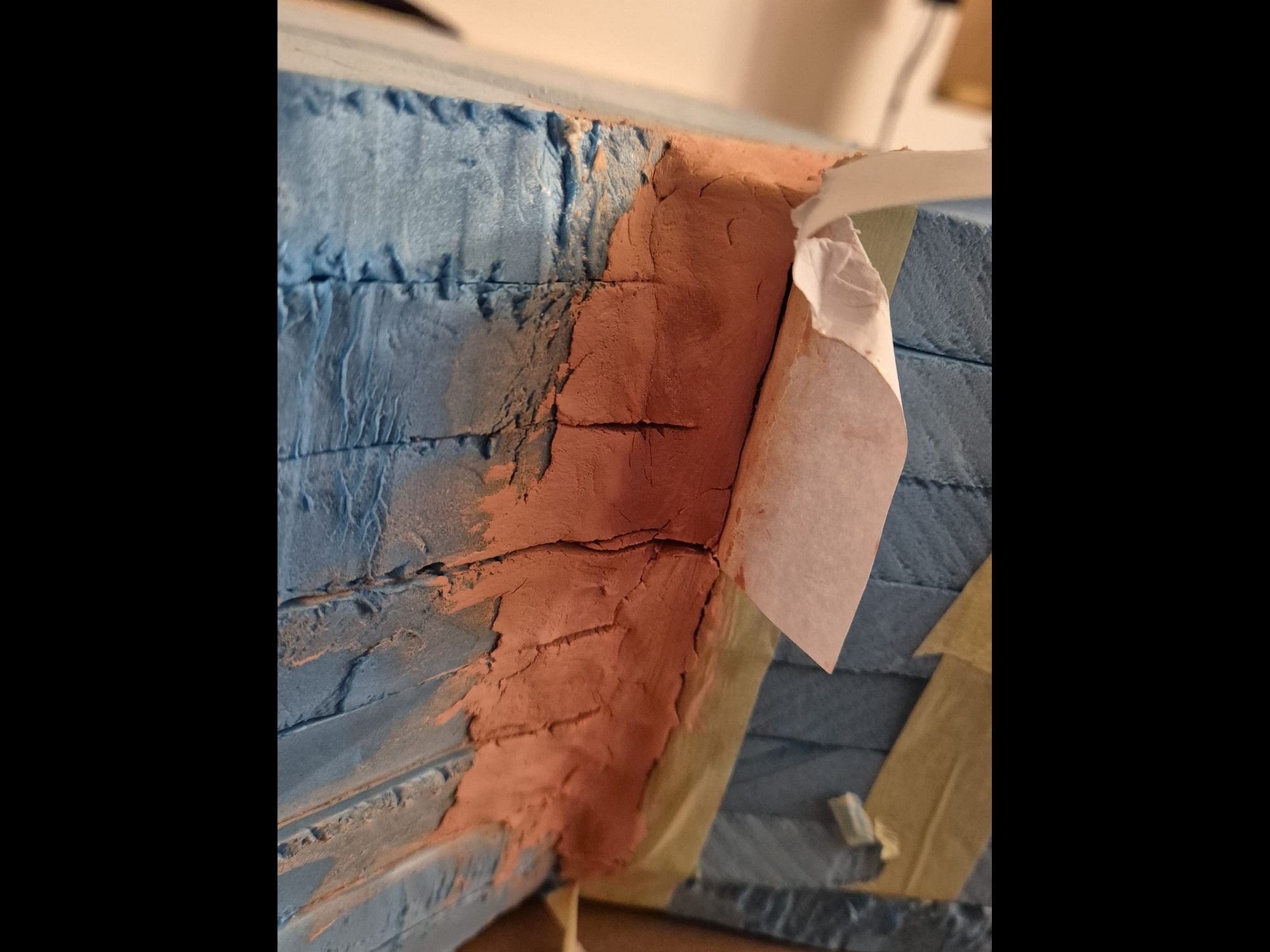
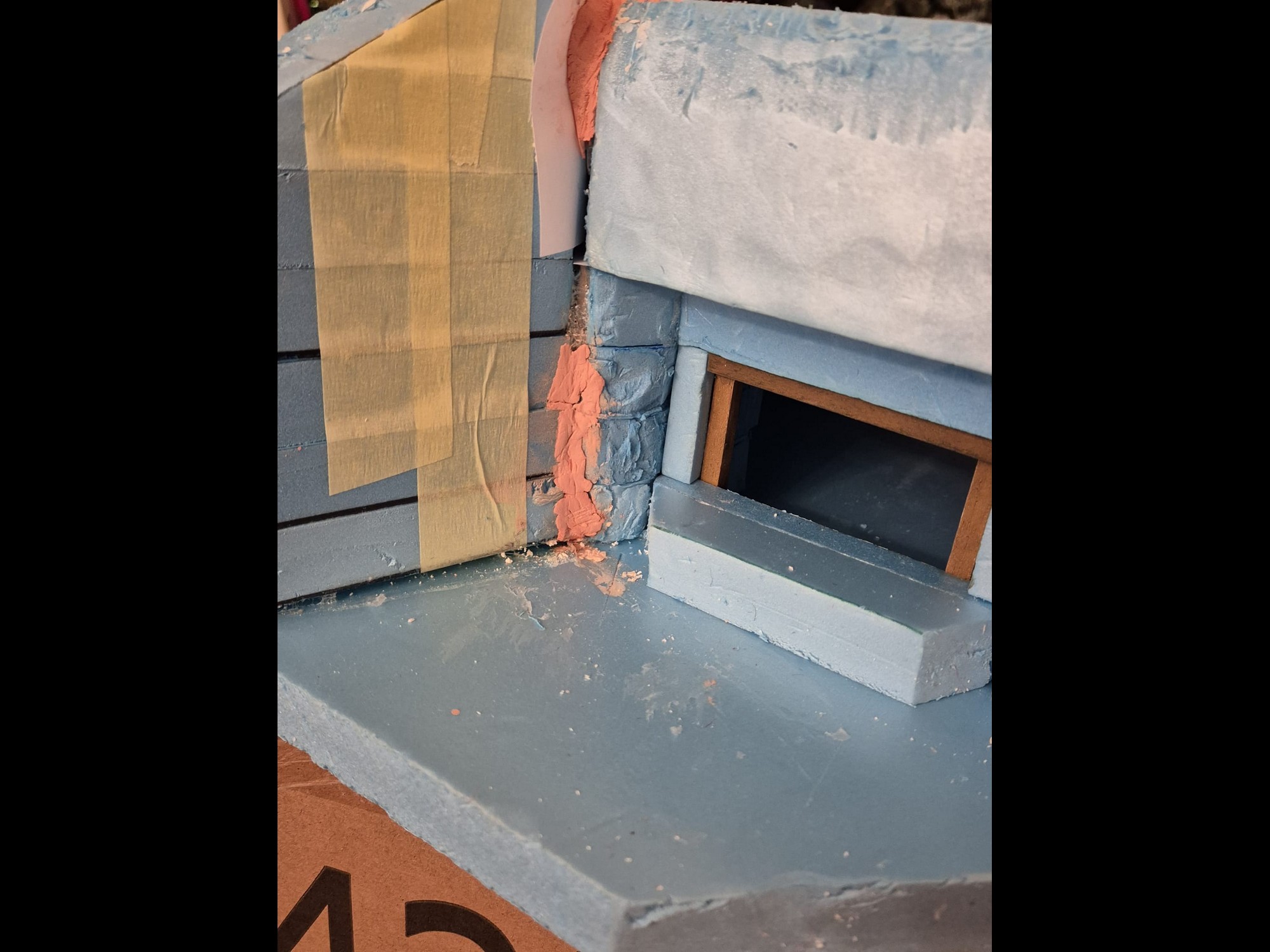
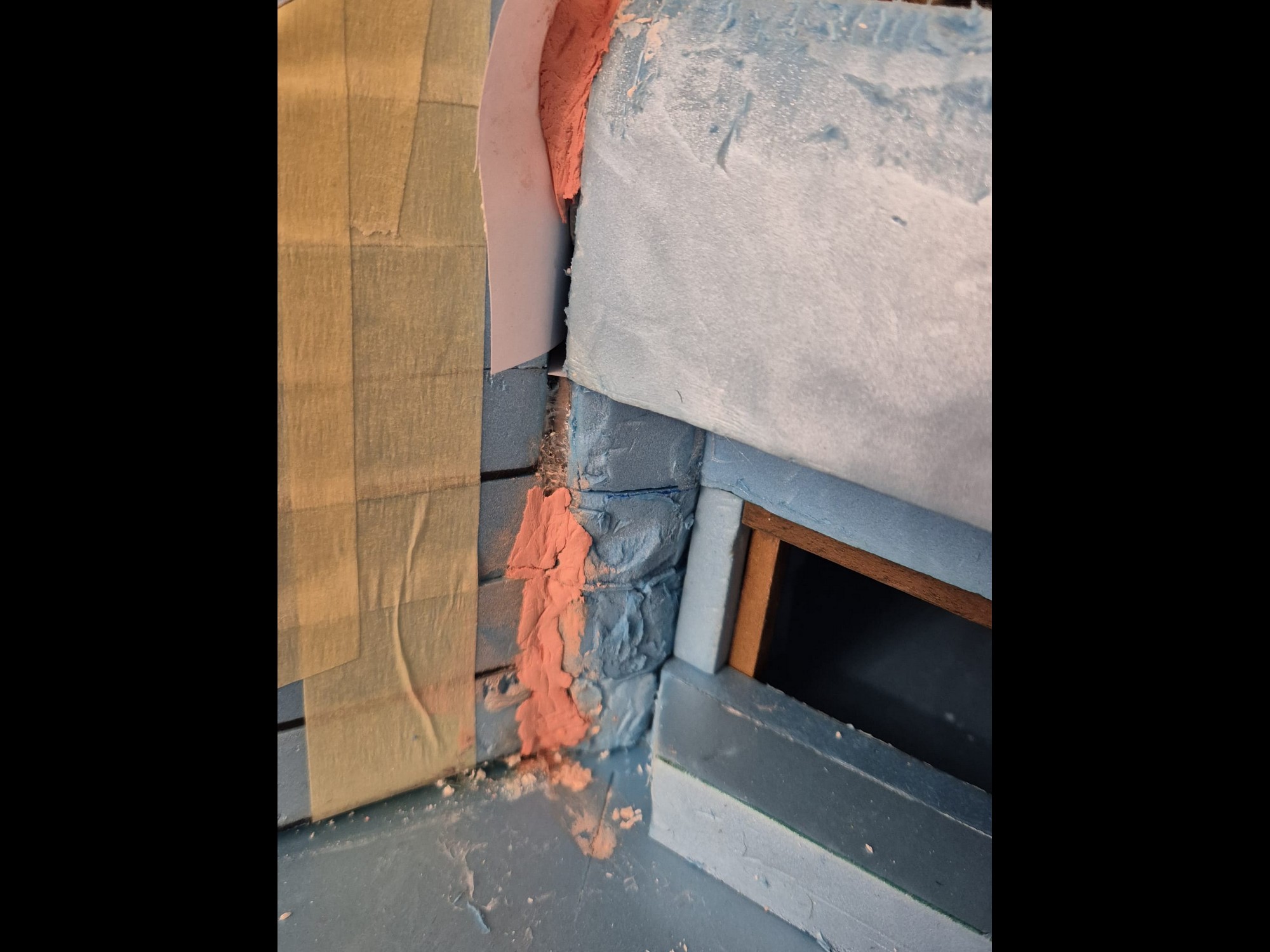
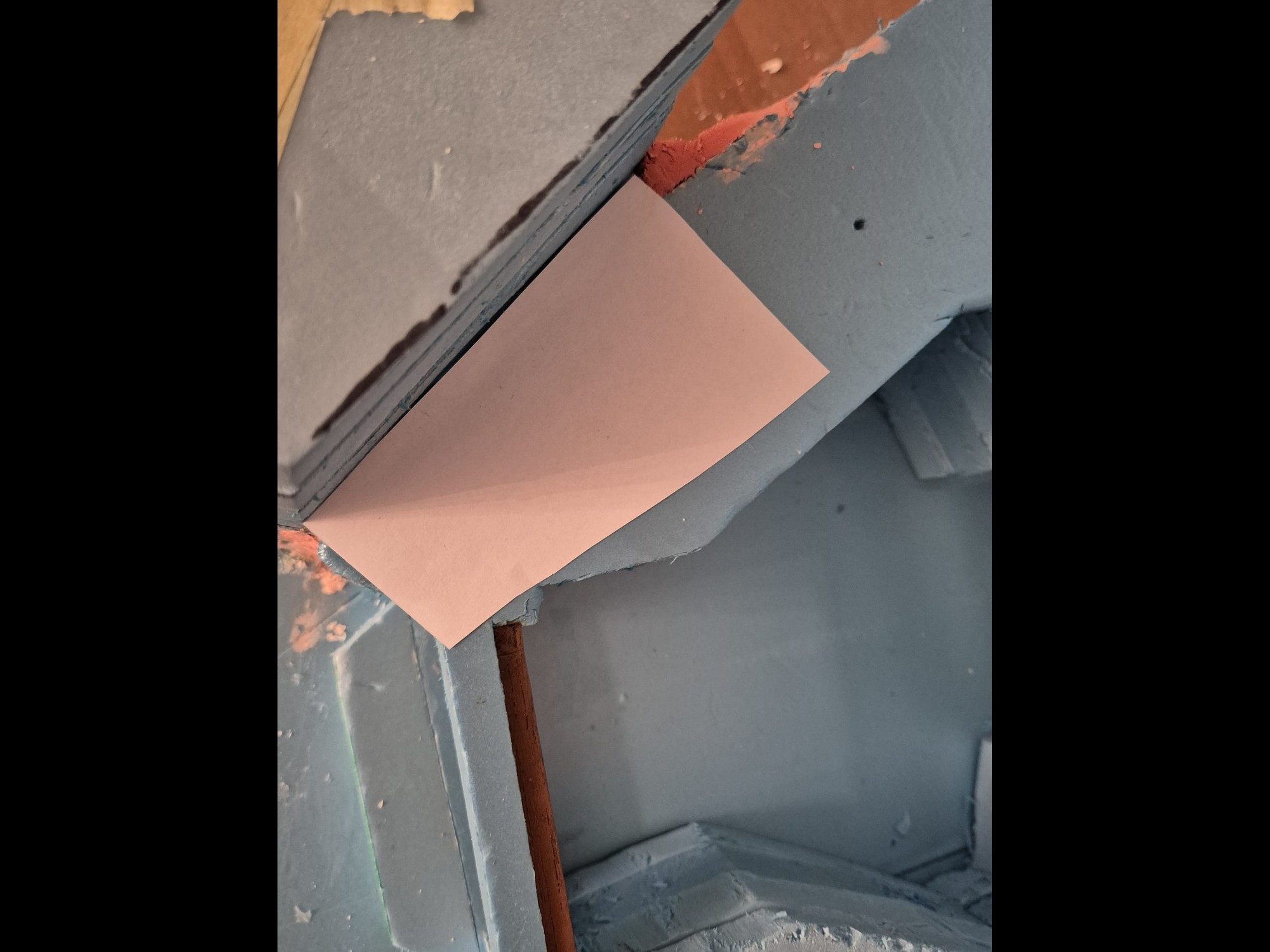
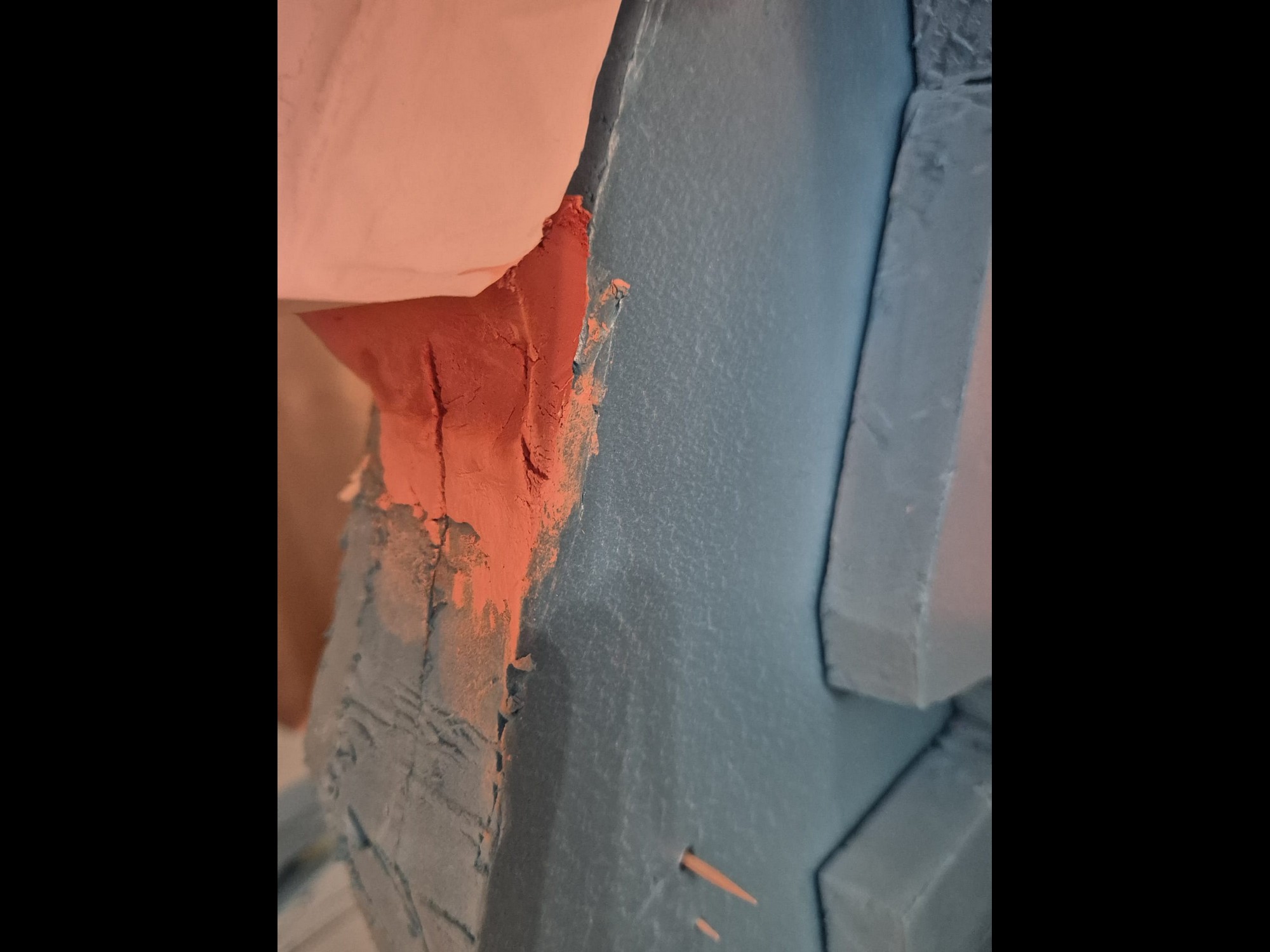
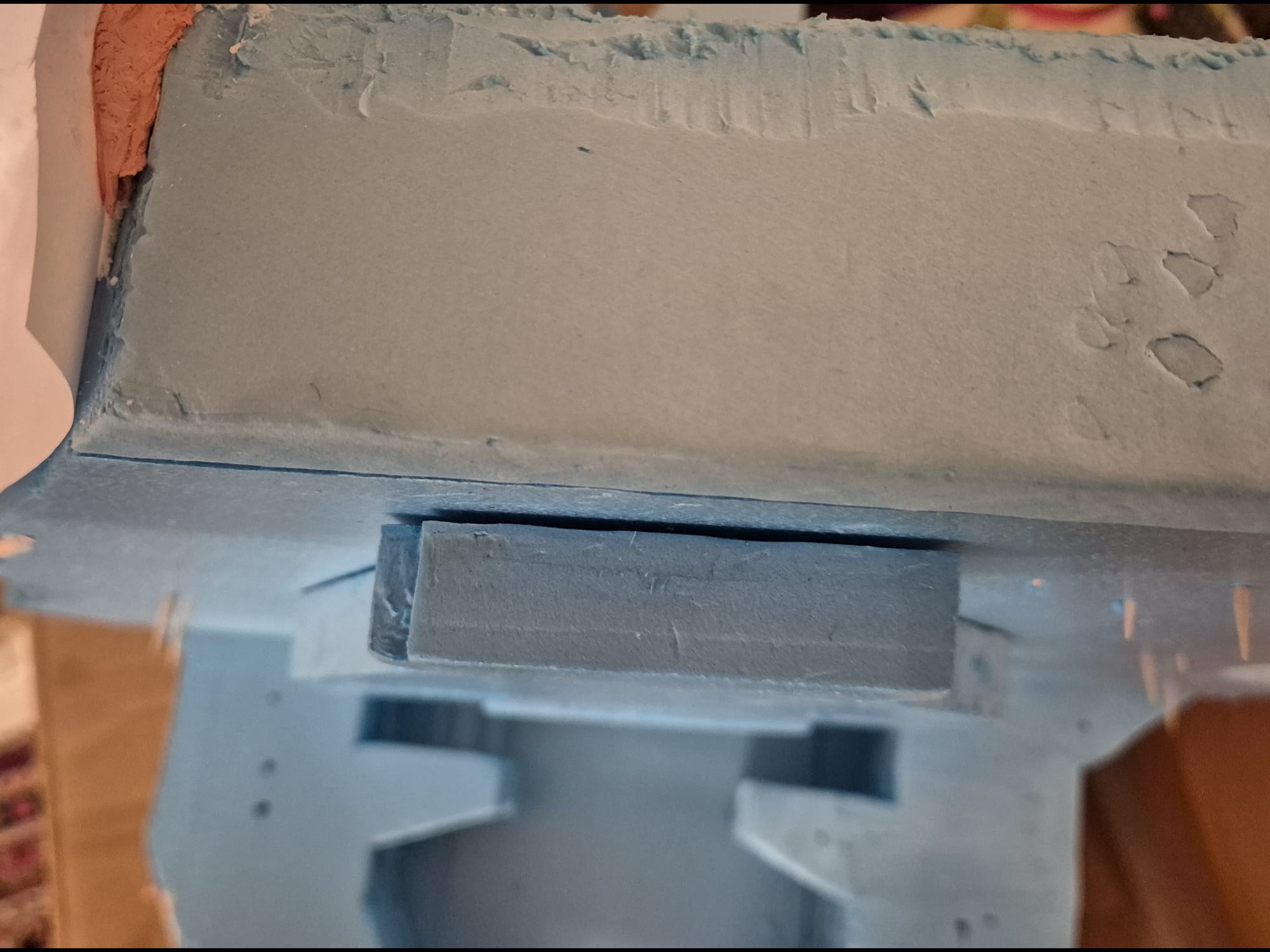
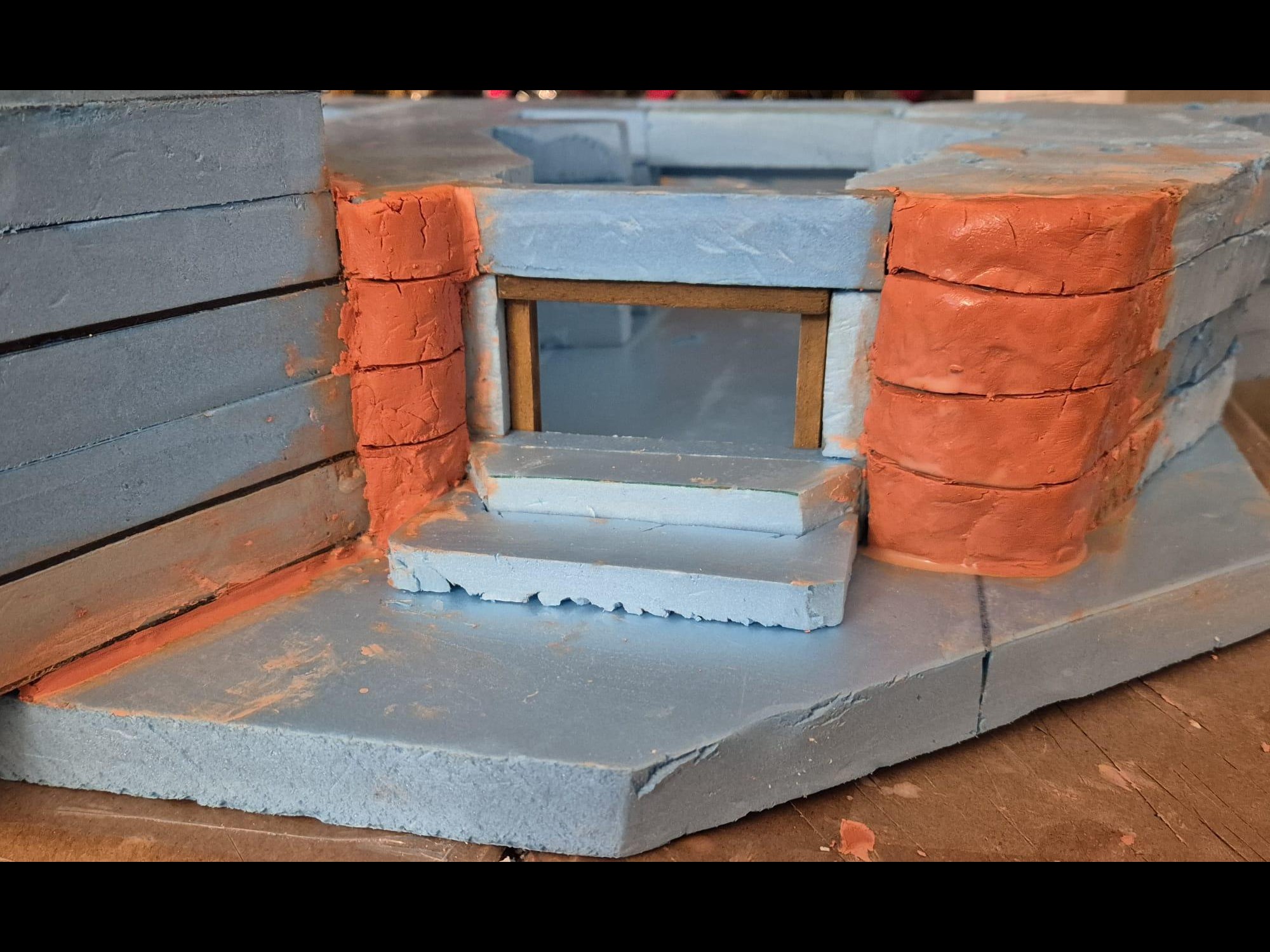
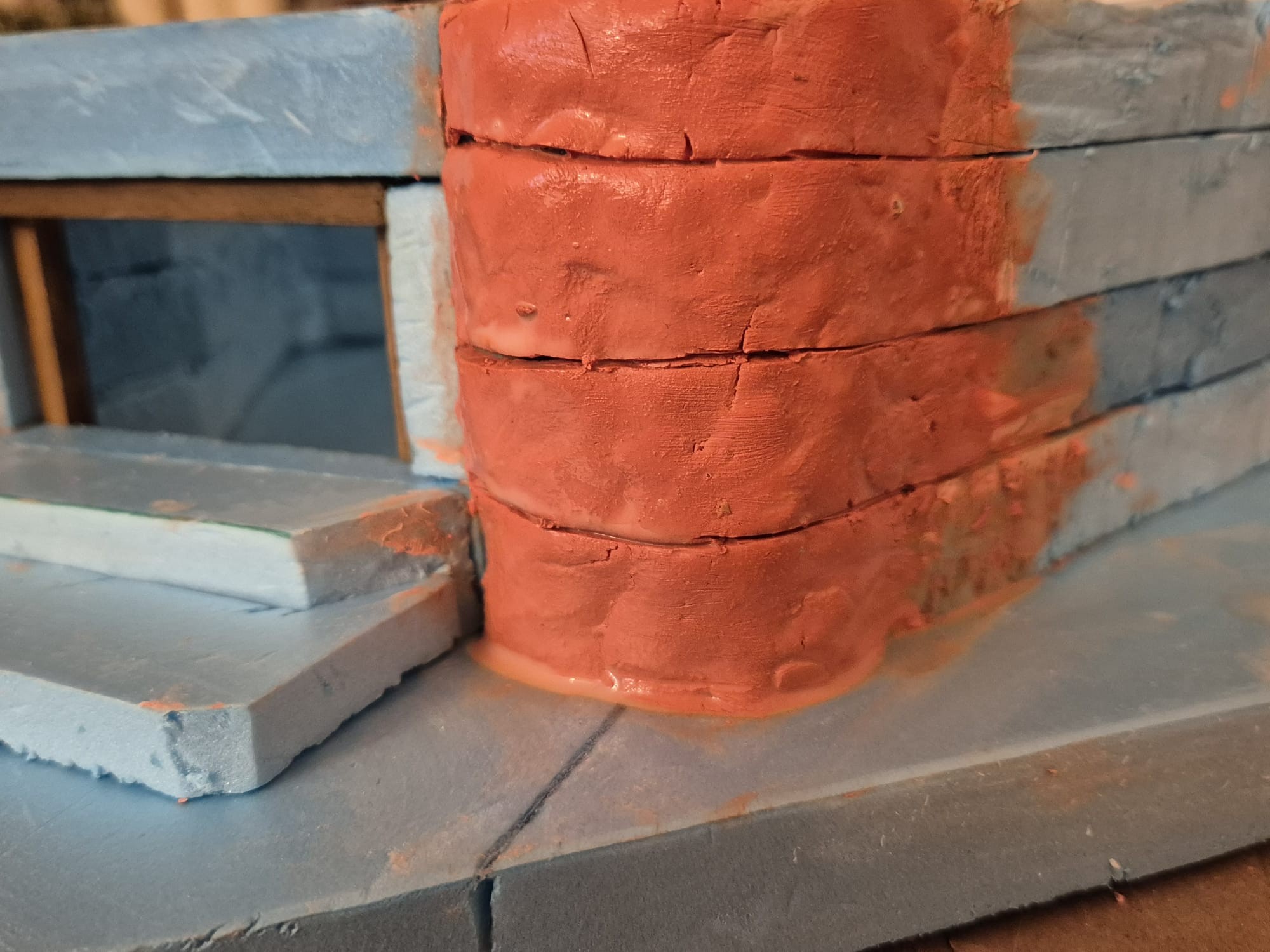
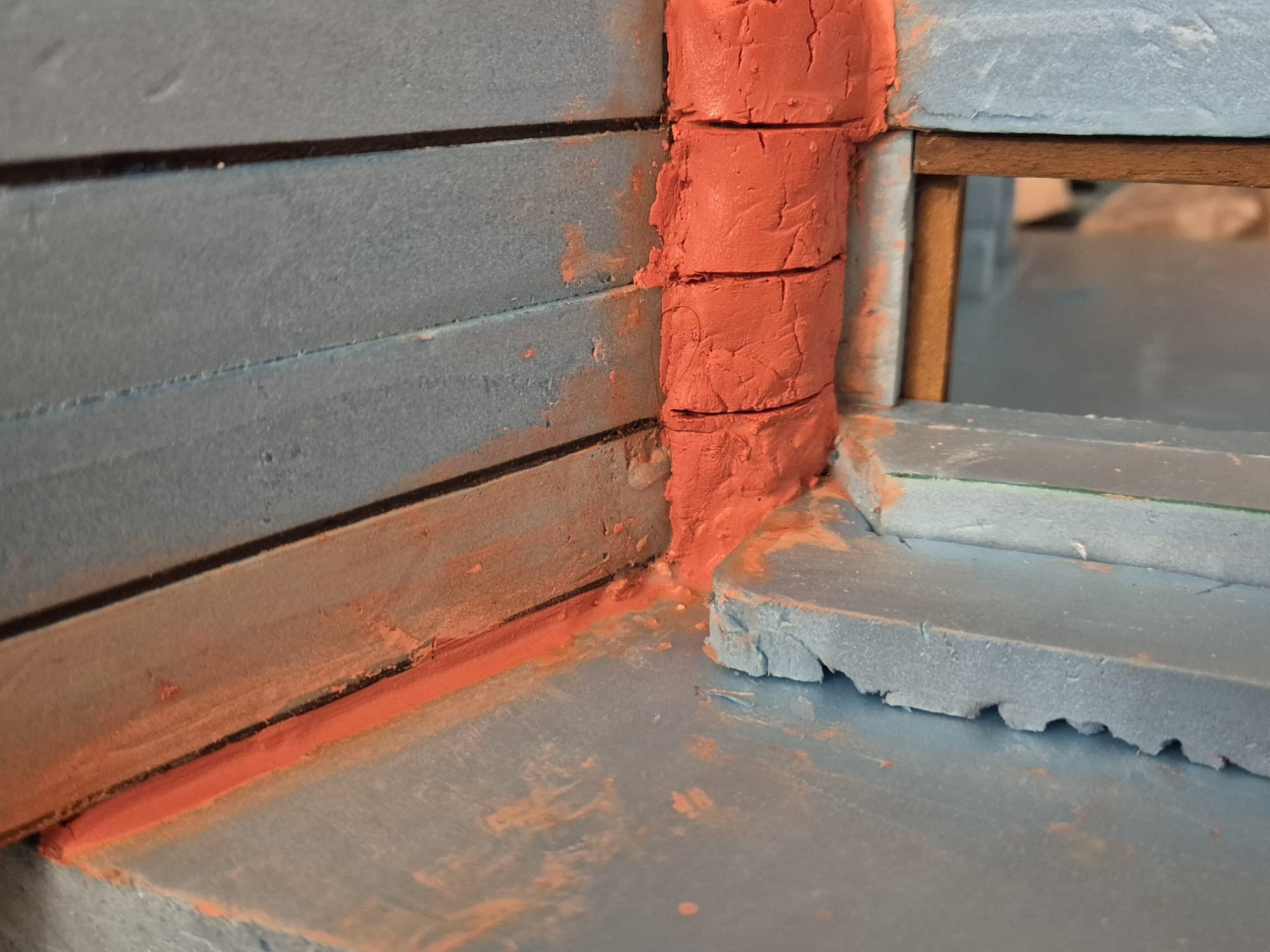
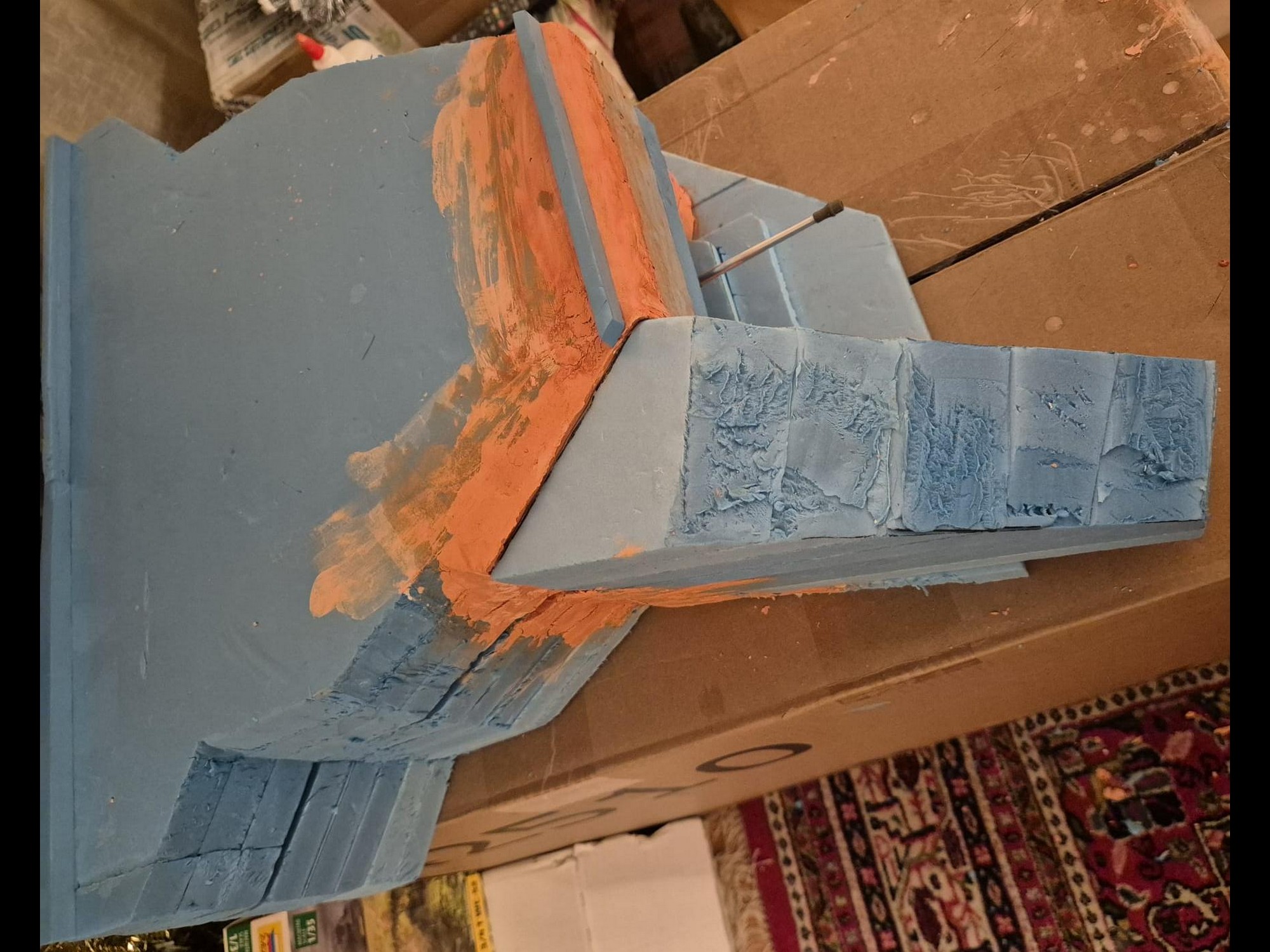
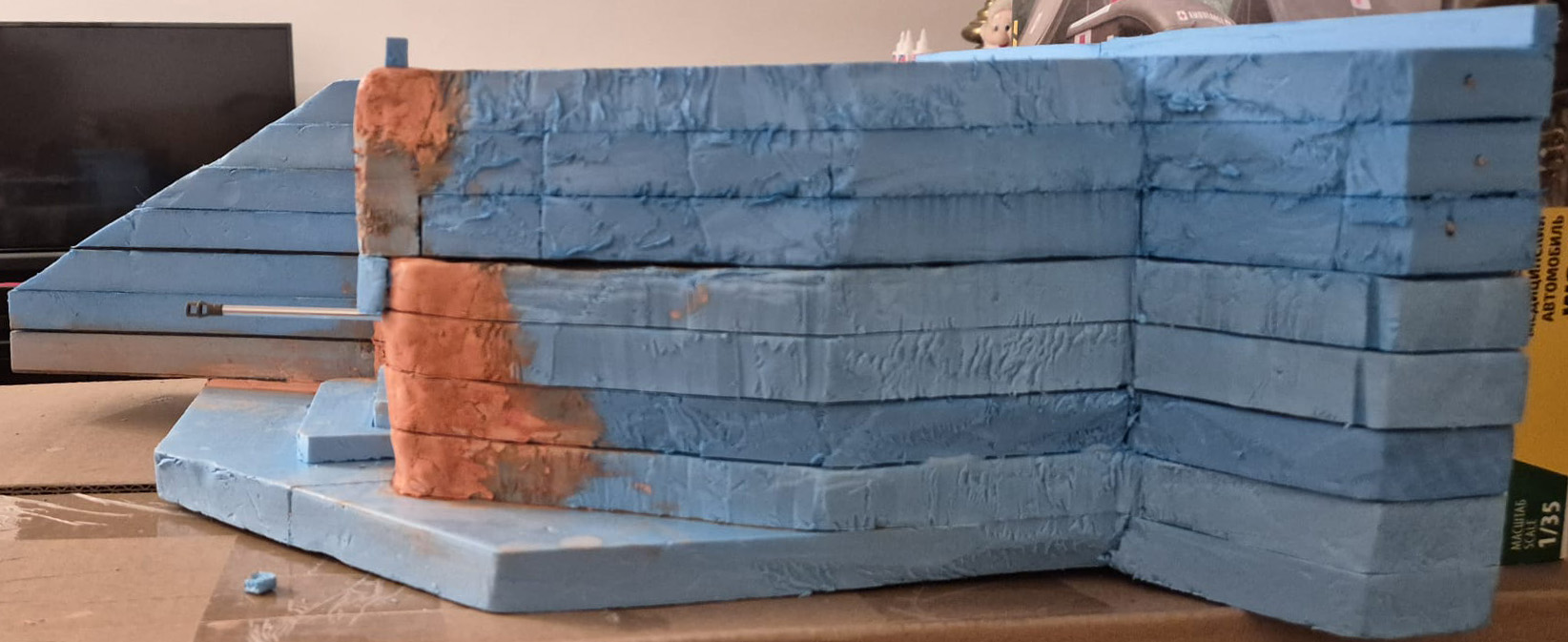
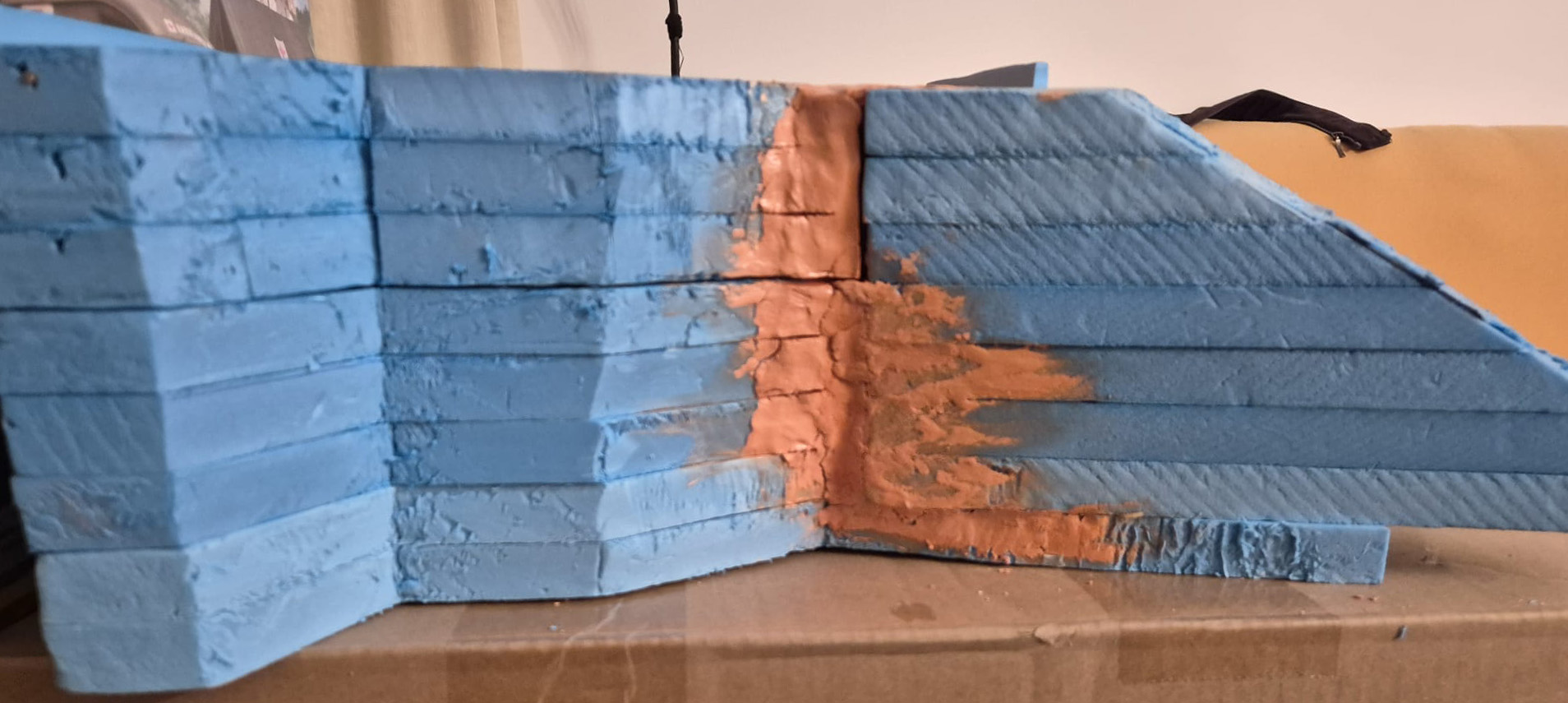
The protective wall has a large gap between itself and the bunker’s side wall due to the slanted top of the roof. This will be adjusted with air drying clay, paying attention not to allow it to stick too much to the protective wall. This is easy to do. One just has to place a paper sheet in between the two so that the rooftop can still be lifted if needed.

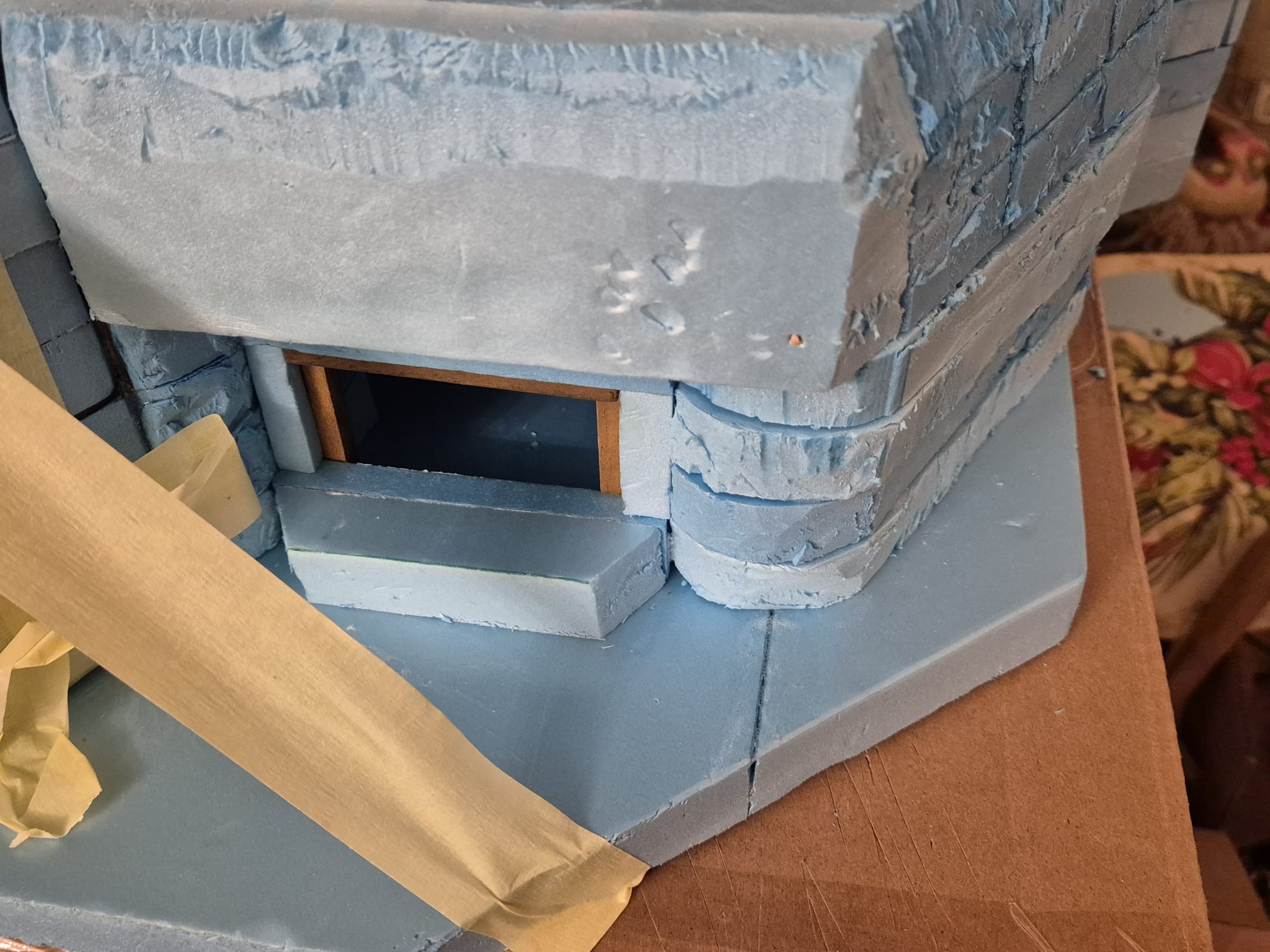
Besides once I will apply the plaster concrete layers all gaps will be filled and walls will be smoother in appearance and not jagged as they are right now. Even the front curved pillars on each side of the embrasure will receive an ample restructuring with those materials as to appear more massive and regular.

Some of the segments I placed the one on top of each other will still be visible as they also appear in some pictures of such types of bunkers since their construction was also applied in layers and each one of them was obtained by fencing the walls into big wooden planks holding the concrete in place.

The protective wall will then have an added rectangular stone relief on its sides being also covered with concrete to hold them tightly together and reinforcing the entire structure even more as to withstand any hostile projectile directed against it.

For the time being, since the glue will take at least 24hrs to fully cure it looks a bit awful since fully held in place with masking tape. Notice also that the black lines appearing in the following pictures are not gaps but the marker’s leftovers which helped me cut them straight.

After filling all the gap on top and on the sides of the protective wall I will also add more roundness to the frontal rooftop with the same air drying clay layered very thinly on it.

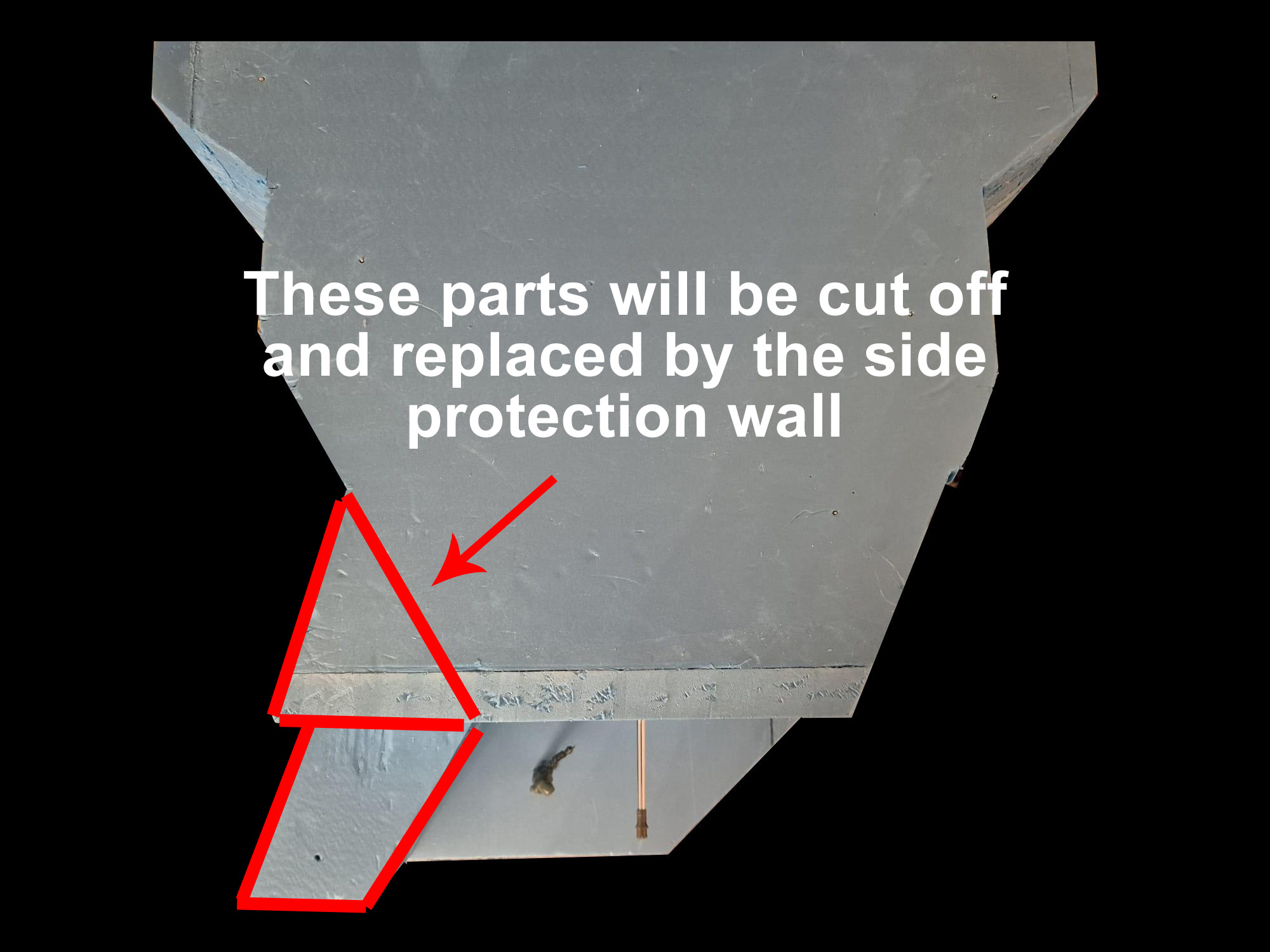
But for now just watch how it looks right now. Also note that the first picture is how I planned to cut off the entire left protruding side to make space for the correct protective wall…


And for today this is what I have done. Perhaps tomorrow, after having contacted Proxxon, I may have my hot wire cutter finally working, but I won’t wait anyway, since I still have to fix the gun platform and wheel restraint of the cradle. I also need to add the curved parapets on the rear and front of the roof and finally build the front platform and the rear iron doors.

If I manage to finish any of them I will show you those builds as well.

The gun will be the last to be worked on, but before I do, I absolutely want to refine the Bunker with said compounds.

And so, I hope to show you something new real soon.

PS: I want to inform you that after this effort I will be absent until the end of May because after years of not having had a real holiday I will offer myself the luxury of one. I will be traveling to Luxembourg, Belgium, the Netherlands and along the coast of Normandy only to reach La Rochelle in the Charente Maritime on the West coast of Brittany.
As you can see, it will be a long journey but I will take all my time to also enjoying doing nothing and if needed also jump an itinerary or two.
Therefore, do not hold it against me if you should not hear from me in all that time, but be assured that in June I will be back with the finishing of “The Last Warning” diorama.

3 Likes

Later last night fixing the side wall gaps.

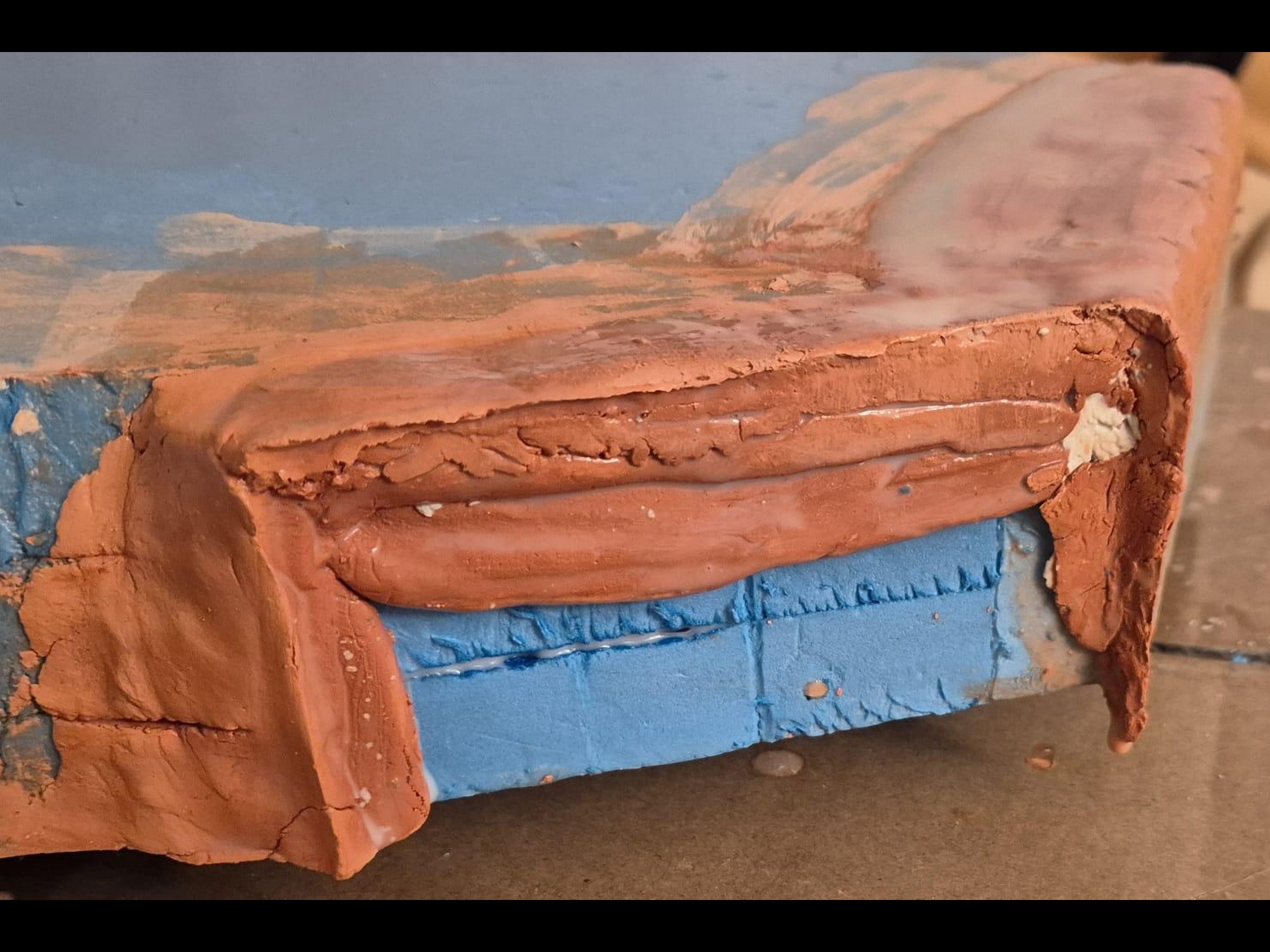
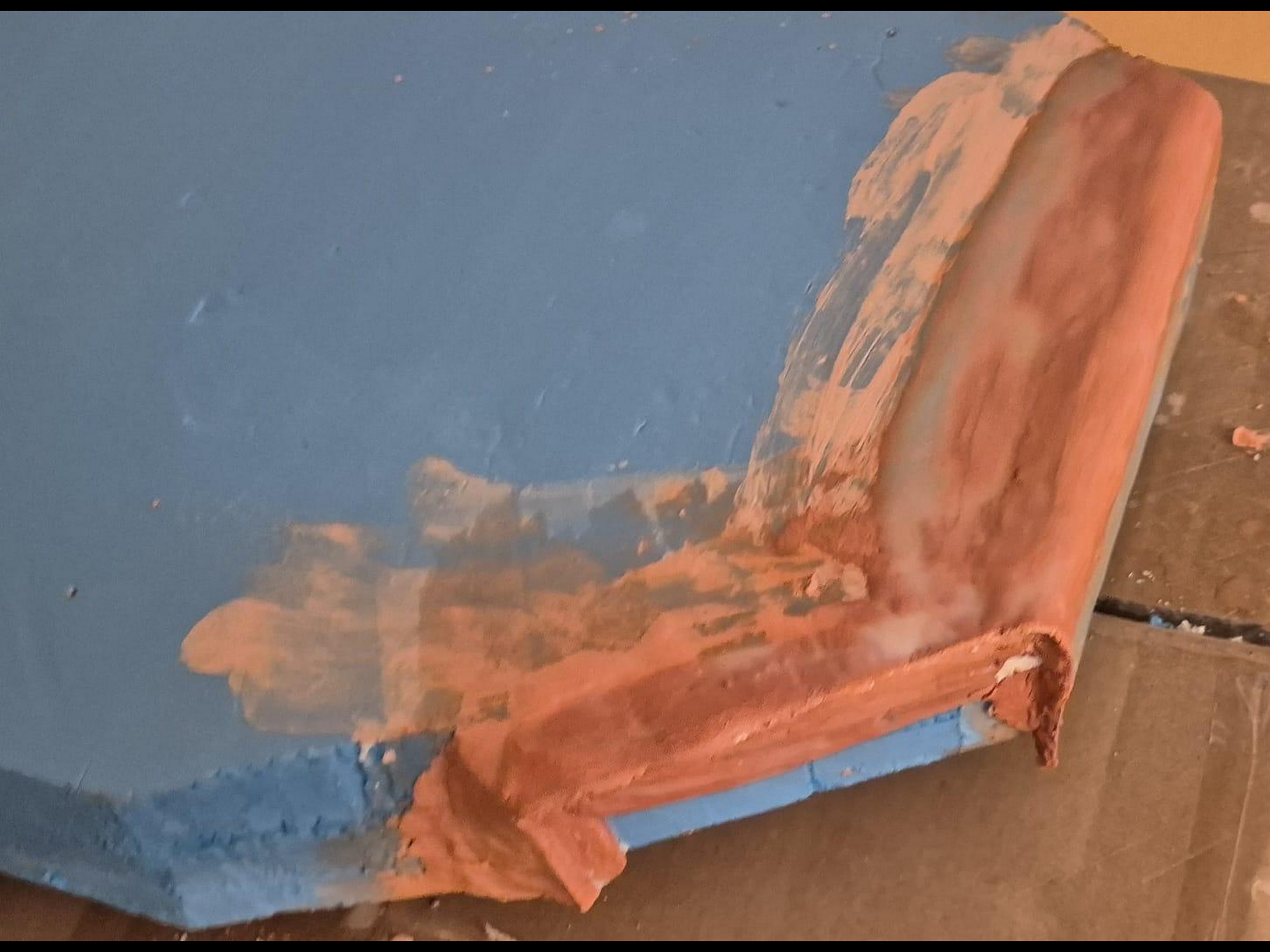
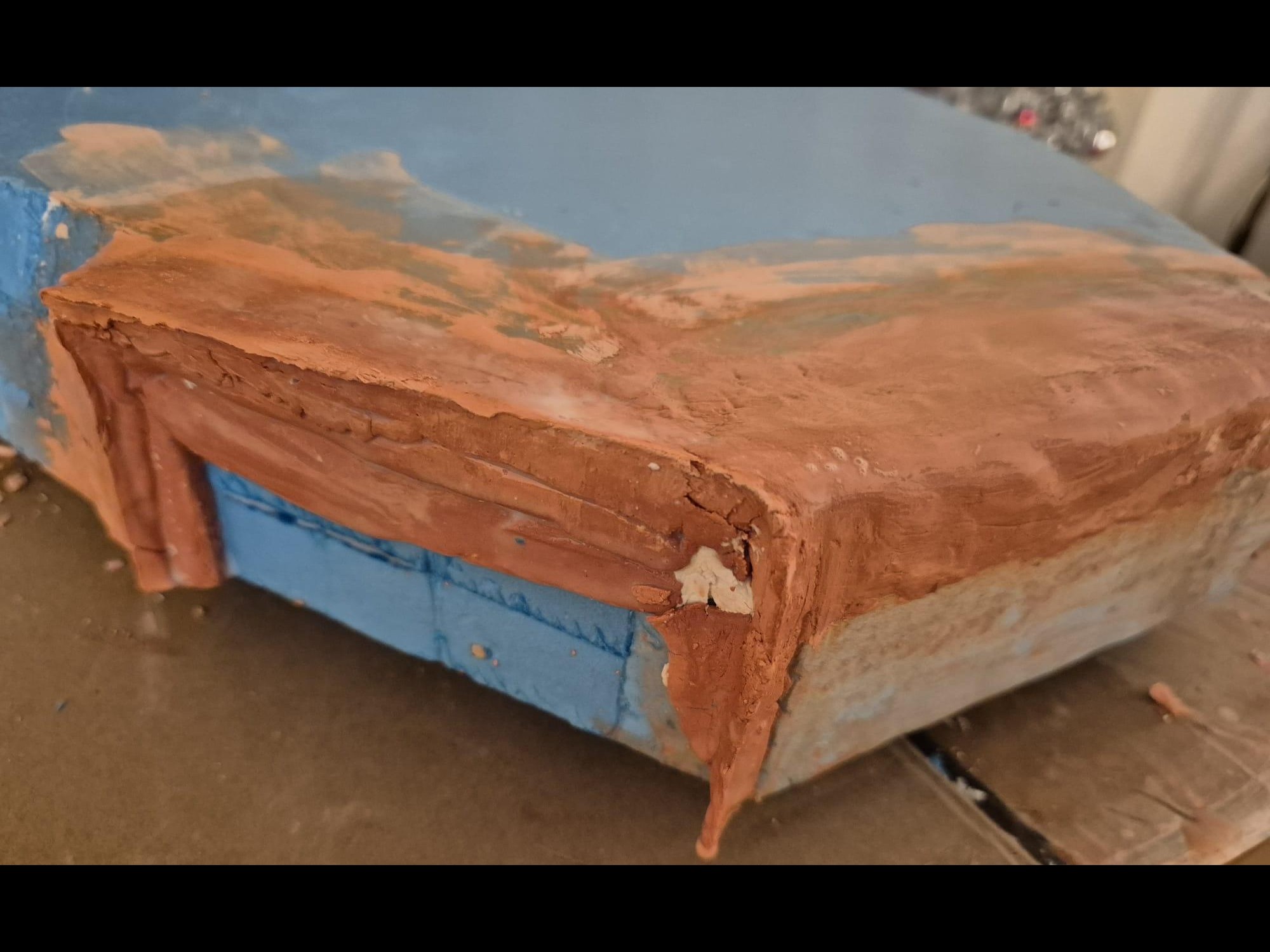
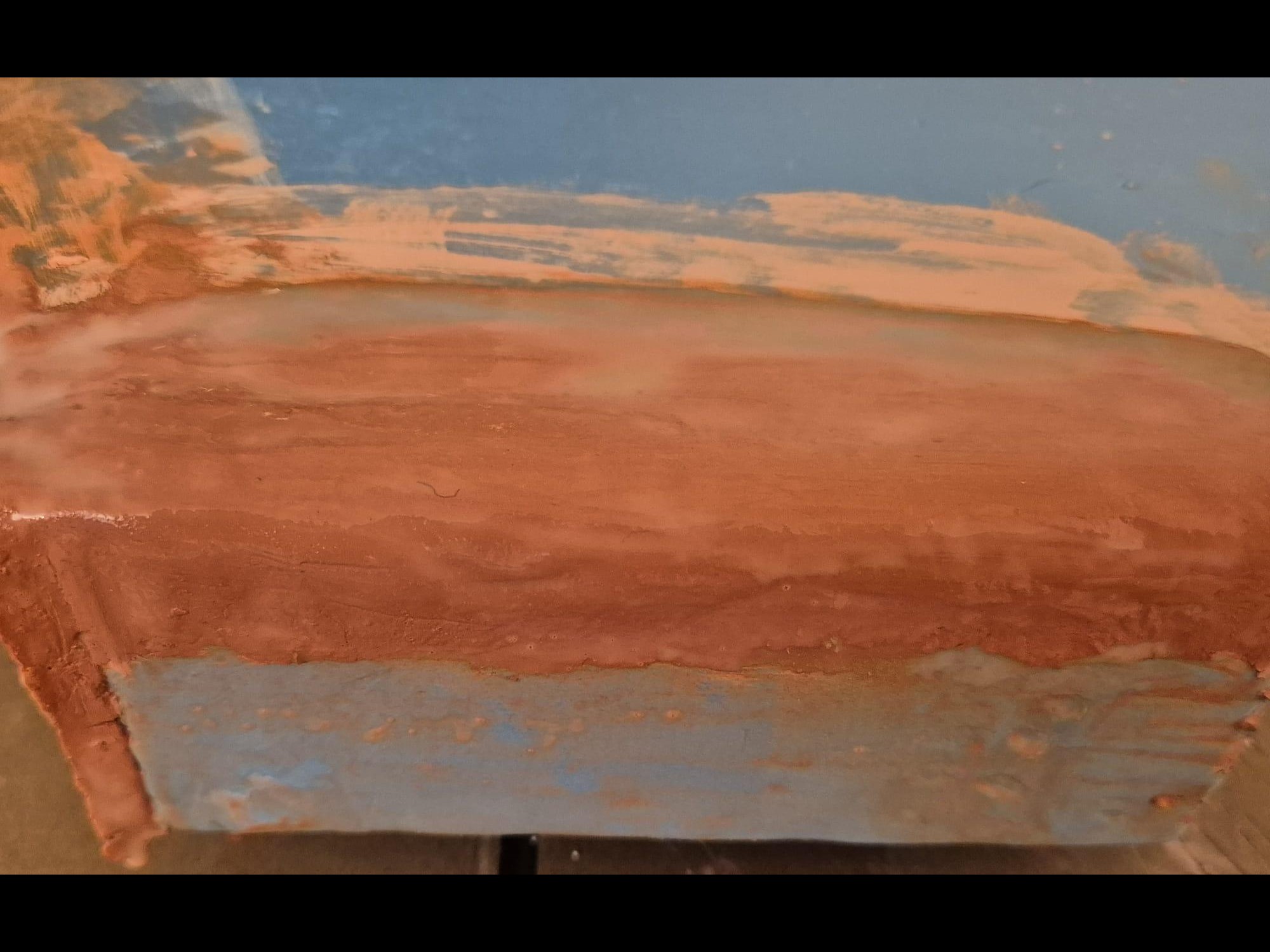
What you will see in the next few pictures is my personal technique on how to fill large gaps in buildings. I tend to make good use of air drying clay, especially colored one, which allows me to more clearly see the area to be fully filled with it.

It is a very practical material since it is soft enough to fill larger areas that require to be filled smoothly - especially if worked with a small amount of lukewarm water applied to it - and also to correct some badly cut parts and give them the correct shape needed.

Even more useful it is when, lacking another more refined technique to form curves and bent edges one can apply it unto an otherwise roughly hinted part such as the top roof segment on this Bunker.

The secret is to work slowly using even movements with either a spatula or a straight edge tool, or even just using your fingers. Remember though to wet you fingers while working with it since it is rather sticky.

One downside of clay is that while drying it might shrink a tiny bit and even form some tiny cracks here and there which can easily then be fit either with some additional clay later on, or with a slight application of putty.

In order to allow the roof to be still removable I did place tiny rectangular pieces of plain paper between the protective wall and the main body of the Bunker. To reinforce the bonding of the clay I used UHU Por, which is more or less the same glue as Deluxe Foam to Foam, but dries
rock hard to any porous material, including clay. Careful though not to get it sticking to your hands since it is rather sticky and difficult to wash away.

If too much of this glue is applied it can easily be removed with a flat tool by lightly scraping the surface where it was applied, but it has to be done so, immediately after application.

Now that I have explained the materials used and how to use them, I will show you my initial work on those gaps you have seen so far, as well as showing you how easily I could still remove the roof part. But to do so, I also had to slightly cut into the clay on the side wall. This has to be done when the clay is still slowly drying and not afterwards, since it tends to seal parts completely once solidified.

And finally, here is my preliminary work on that…


The clay is still drying. Once it is fully cured and solid, should too much shrinking have ensued, I will apply more clay over the the shrinking parts to make them fit evenly with the rest of the model.

Next will be all the rounded parts on the front columns holding the roof which have to be more regular and thick than they already are and the slightly bent roof top which now still sports those ugly signs of badly cut foam.

I will also take care of the tiny gap between the roof top and the protective wall. Following this, I will build both the gun platform and wheel rests and the frontal stepped platform.

I will very probably post some of these pictures later in the day… hopefully.

Until then always look on the bright side of life… :wink: :laughing:
https://www.youtube.com/watch?v=uAzwji5Cfmk

2 Likes

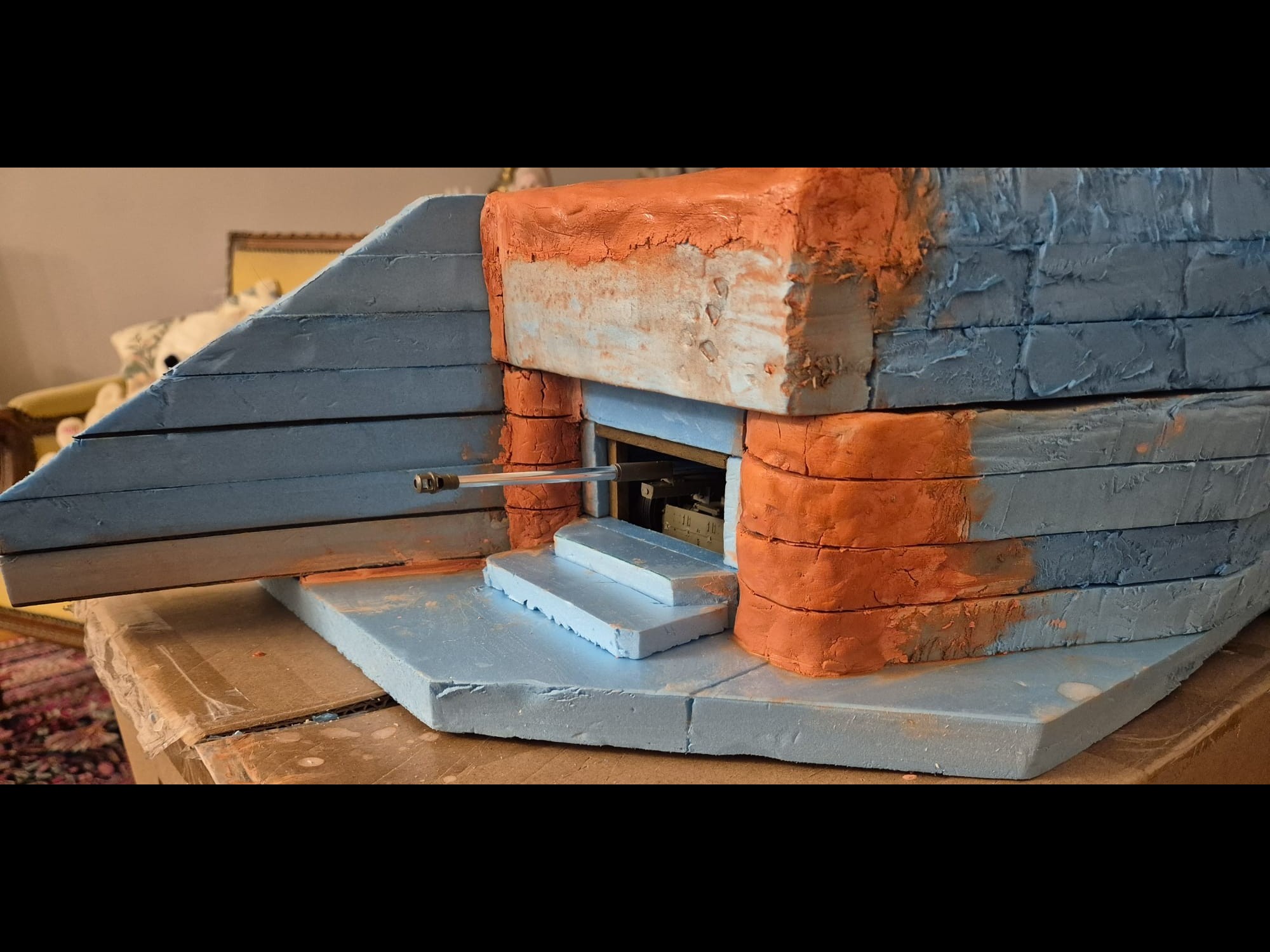
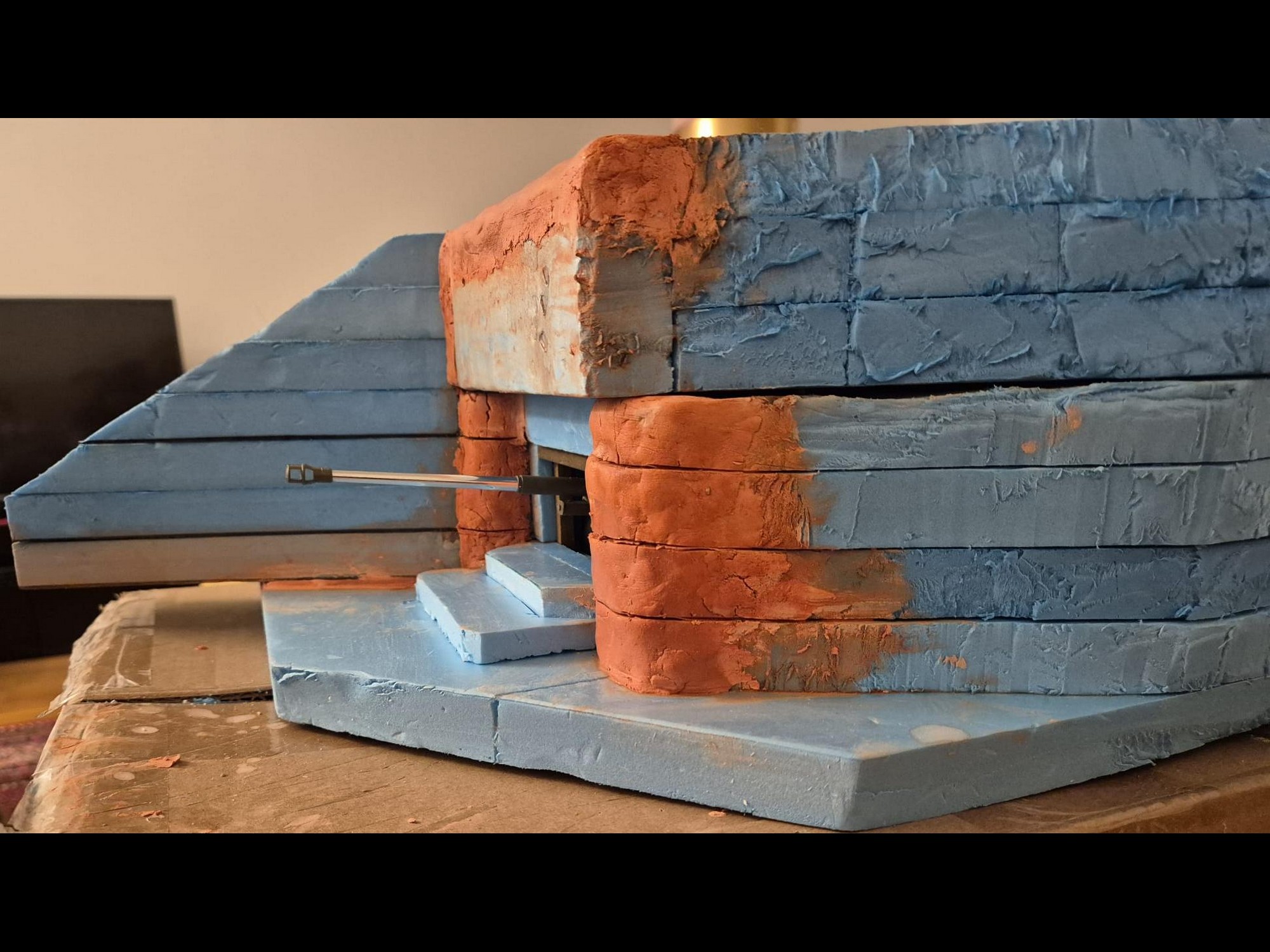
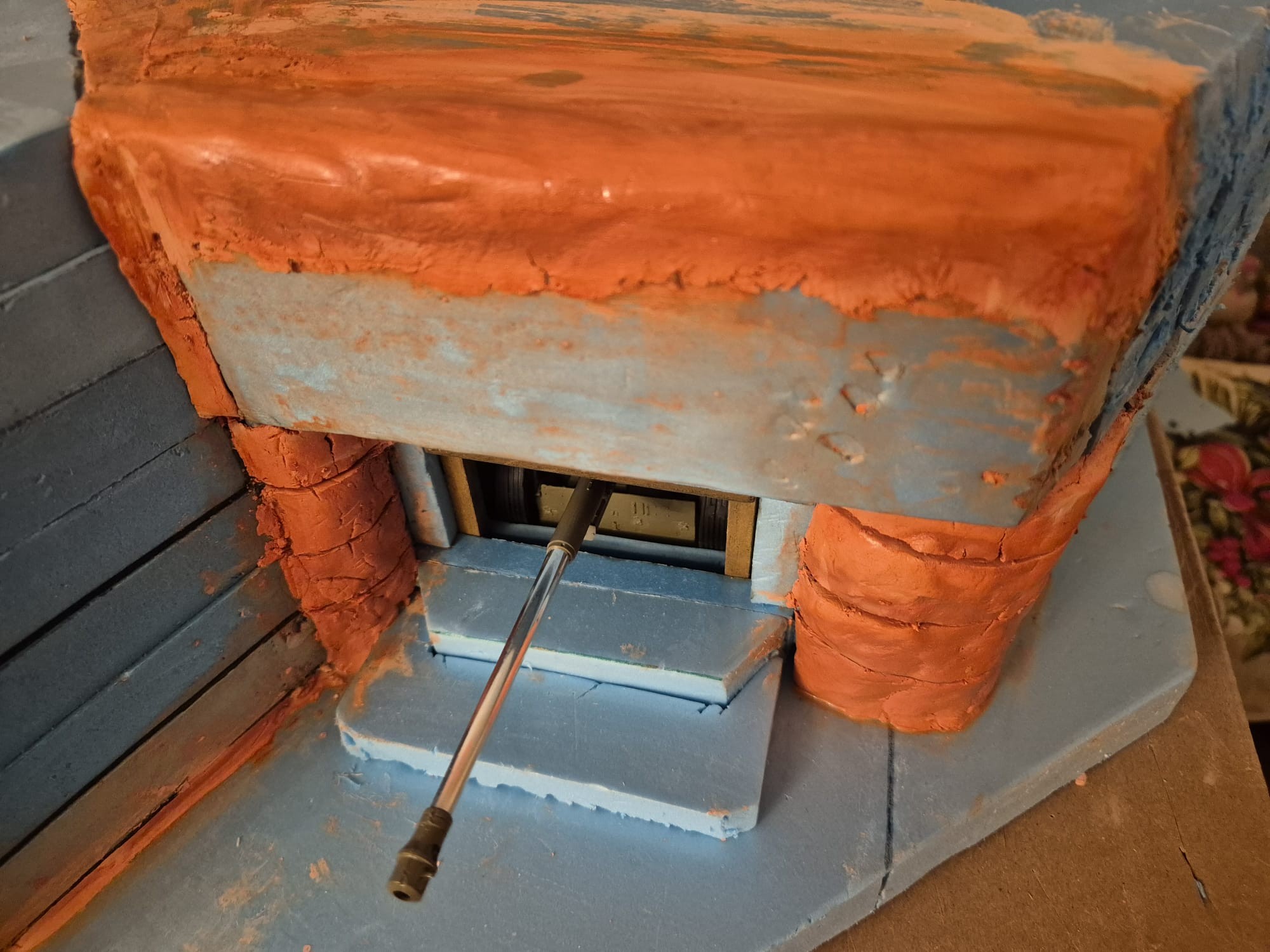
Pillars of Hercules, or how I covered the monsters with clay and more…

Well yes, an excruciating labor to seal gaps and round up pillars and the top roof, but worth it.

I have already sent a message to Proxxon, but so far no reaction from them, so I am left stranded without a decent foam cutter and so back to the previous tricks I also applied to my previous restructuring of the Bunker at Longues-sur-Mer in Normandy.

Clay and more clay, glue and water… and a lot of patience. My hands hurt and my fingers are lame right now and so I took a little break before continuing my build.

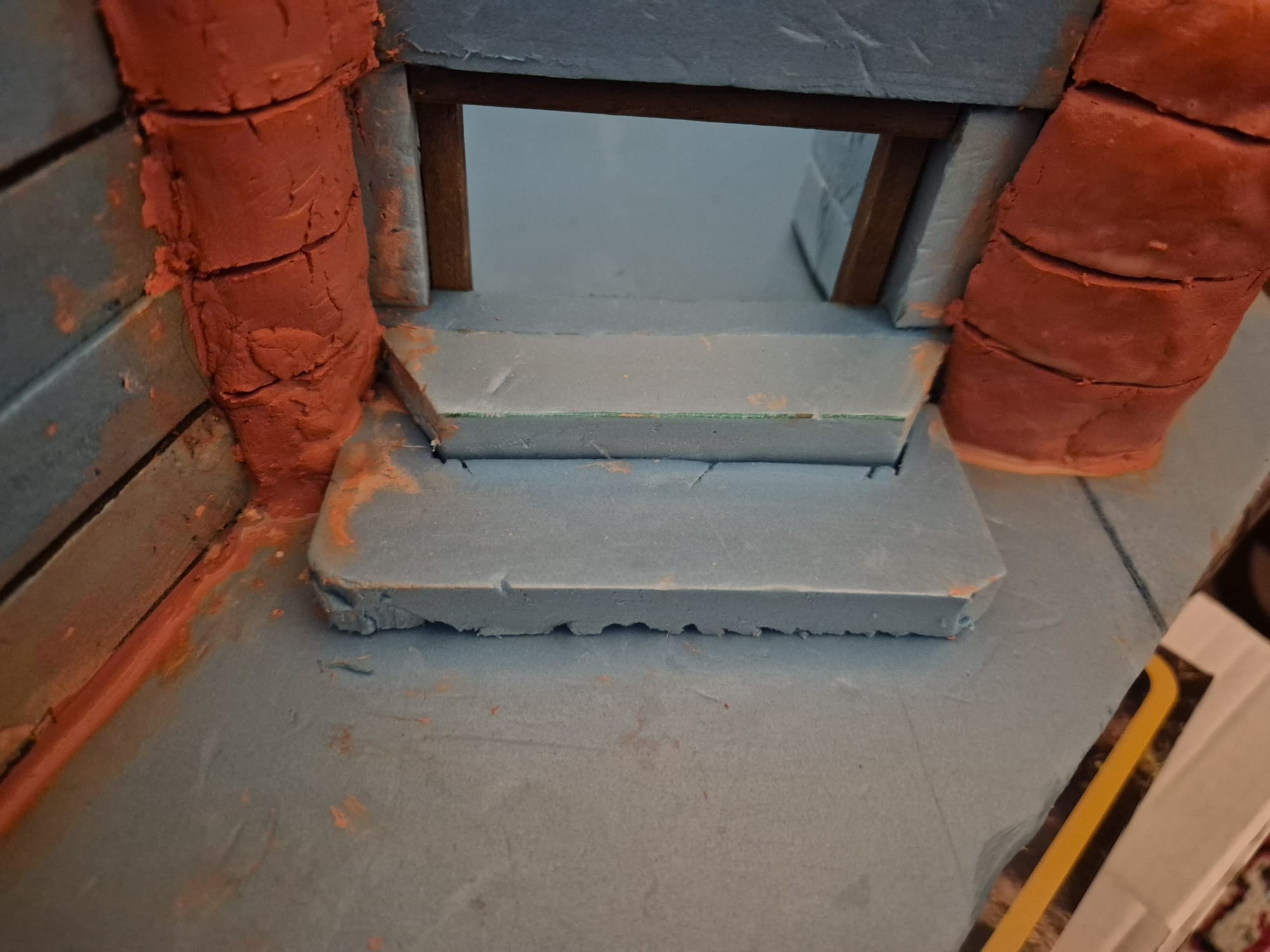
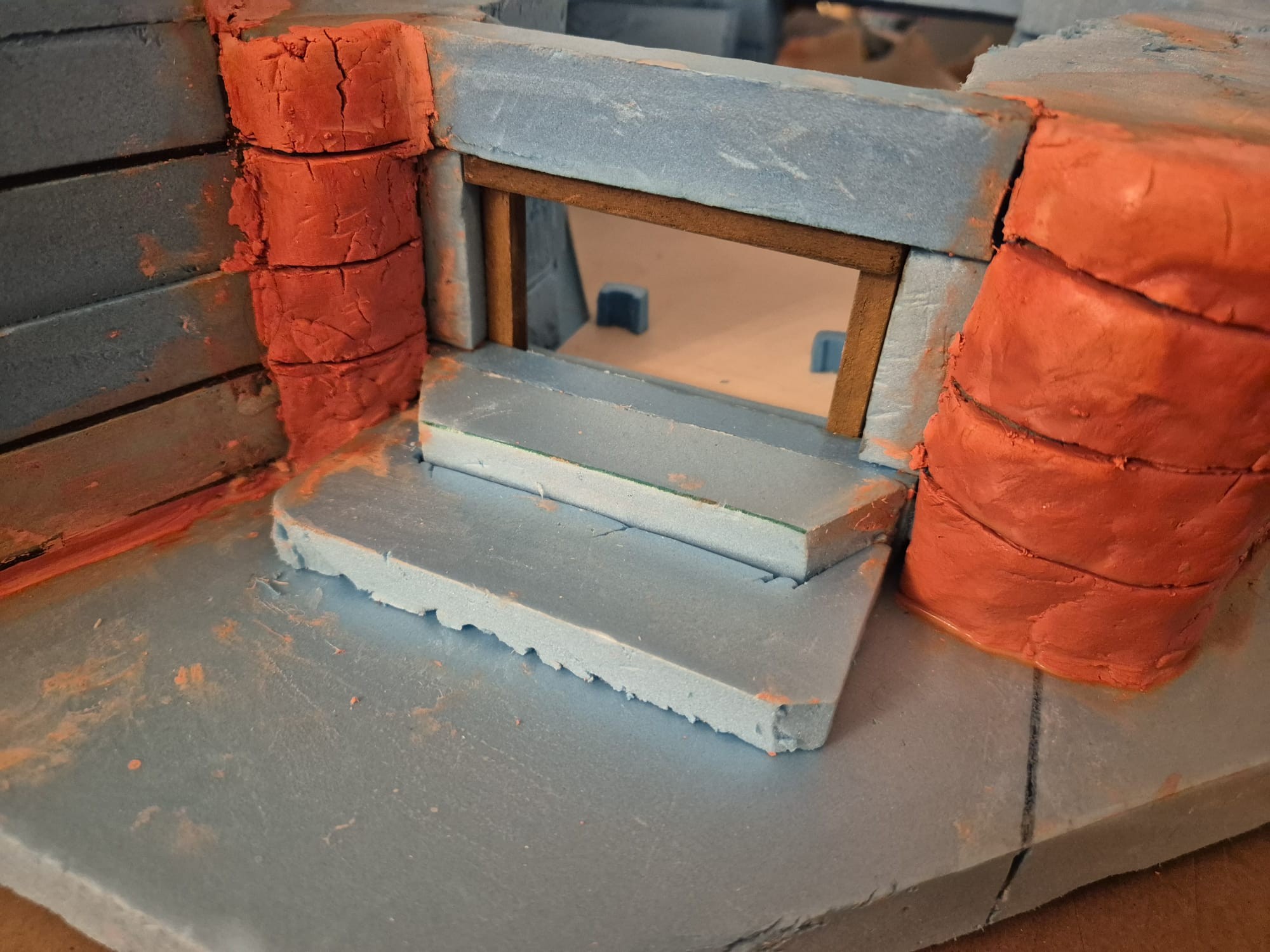
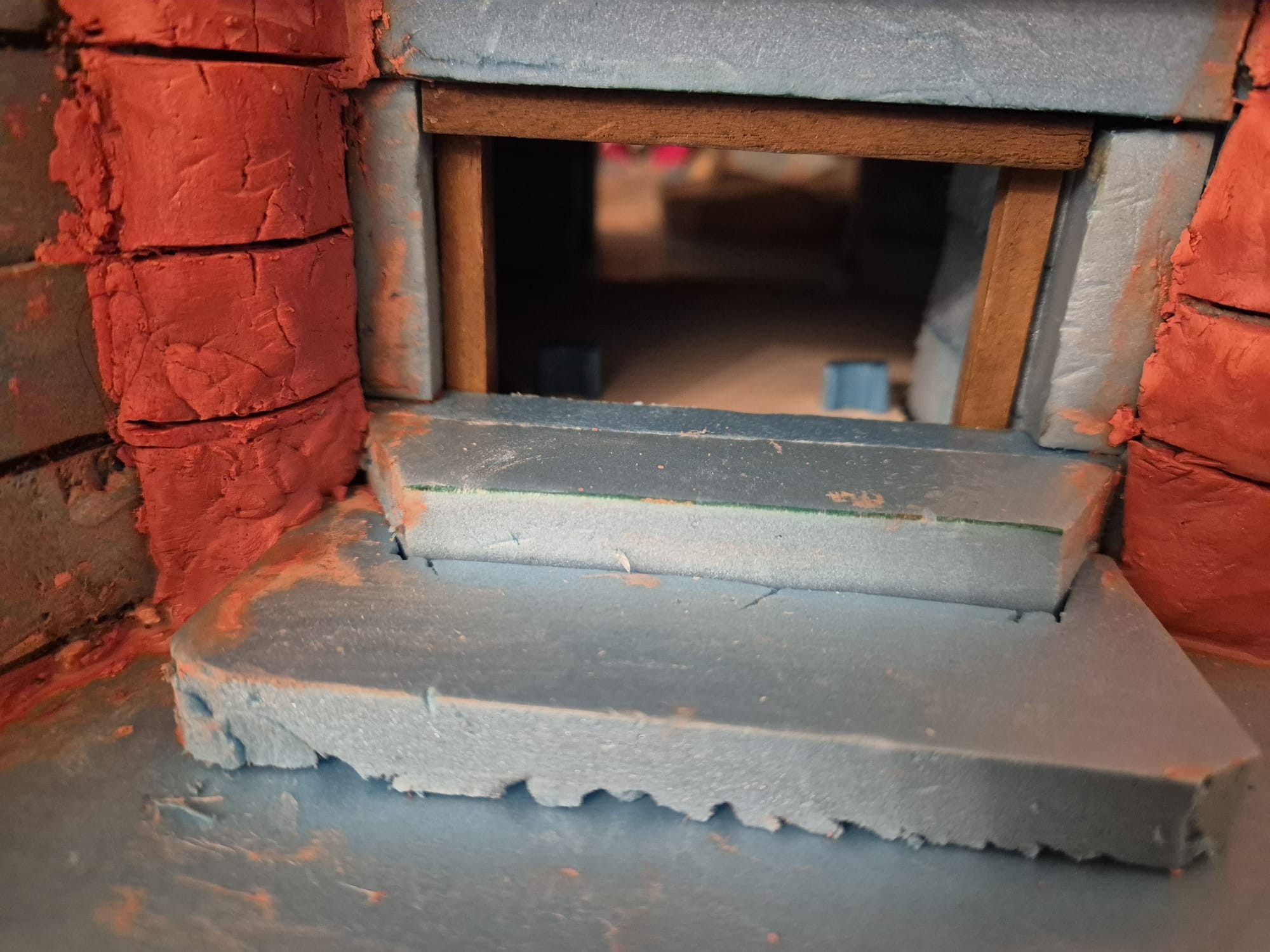
The front platform, although not looking particularly interesting right now, has finally received its further step to it.

Remaining, as I already stated, is the gun platform which I will have to build in balsa wood to have the gun on a stable and thin platform. The cradle wheel stop will be made out of hard foam and the sloping ramp to the platform will be made in the same material.

I believe that for the iron doors I will have to wait until tomorrow, since they will require a lot of pieces attached to them and since they too will be scratch built will require particular attention on my part. Only then will I also continue with the PAK43/41 88mm anti-tank gun.

So, later tonight, probably for you across the big puddle, in the late afternoon, depending where in the U.S. of A. you live (E - M - W), I will show more of this tedious build, but the big reward will come when everything will be built and covered in fake concrete which will sum it all up once and for all,

So, I hope you will stand by for more today since we are nearing the full completion of the basic structure,

For now, a new dose of pictures I have just taken…
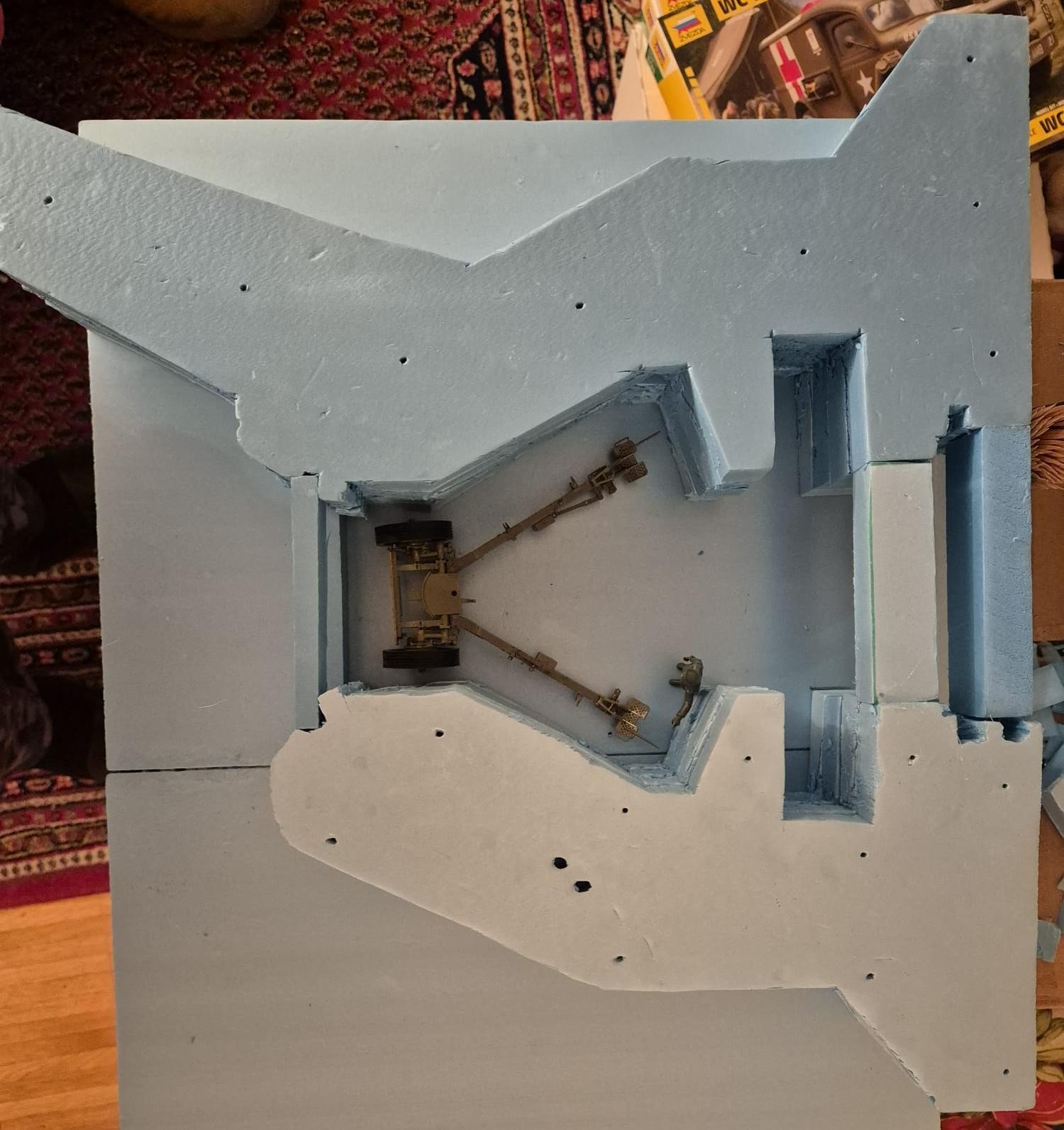


still dripping and wet…


now finally slowly drying…


one last look at the front platform…

And this is yet another finished(?) job.

I forgot to mention the parapets on top of the roof, but by now you already know that I have the intention to build them, but as it stands right now I have to wait until the clay has fully dried and consolidated itself to the foam.
But since I applied water and glue on both sides of the clay I doubt it would still come off and those tiny cracks in it can be left as is because I will cover them with plaster and then with fake concrete.

As you could observe on the pillars, I also recut the segments composing them to make them conform to the rest of the structures. They won’t be as prominent as they are right now, leaving just enough detail to be shown to make the Bunker look more real.

And now, after a small break, I will continue with the platform.

See you soon, and don’t forget… always look on the bright side of life…

2 Likes

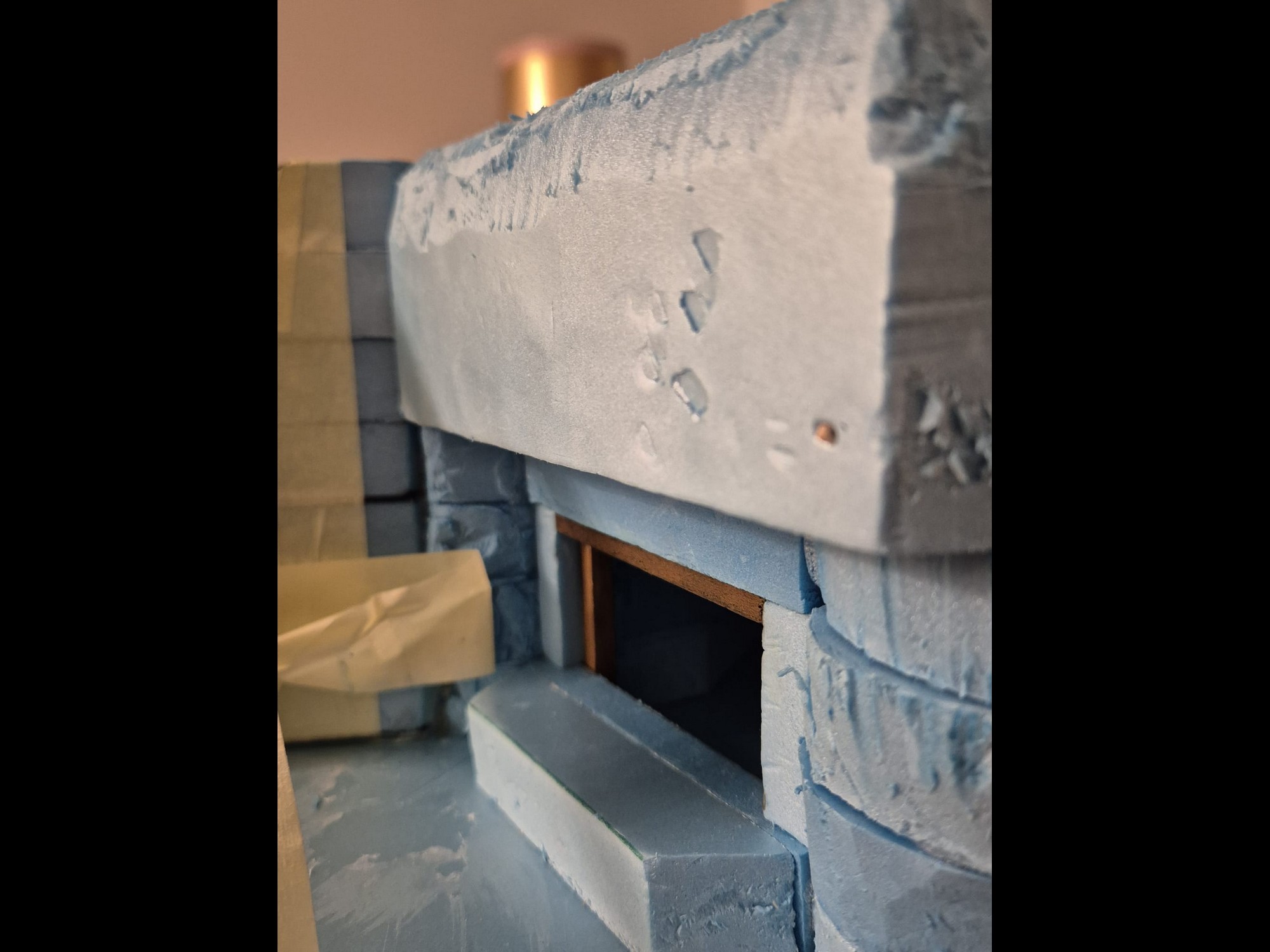
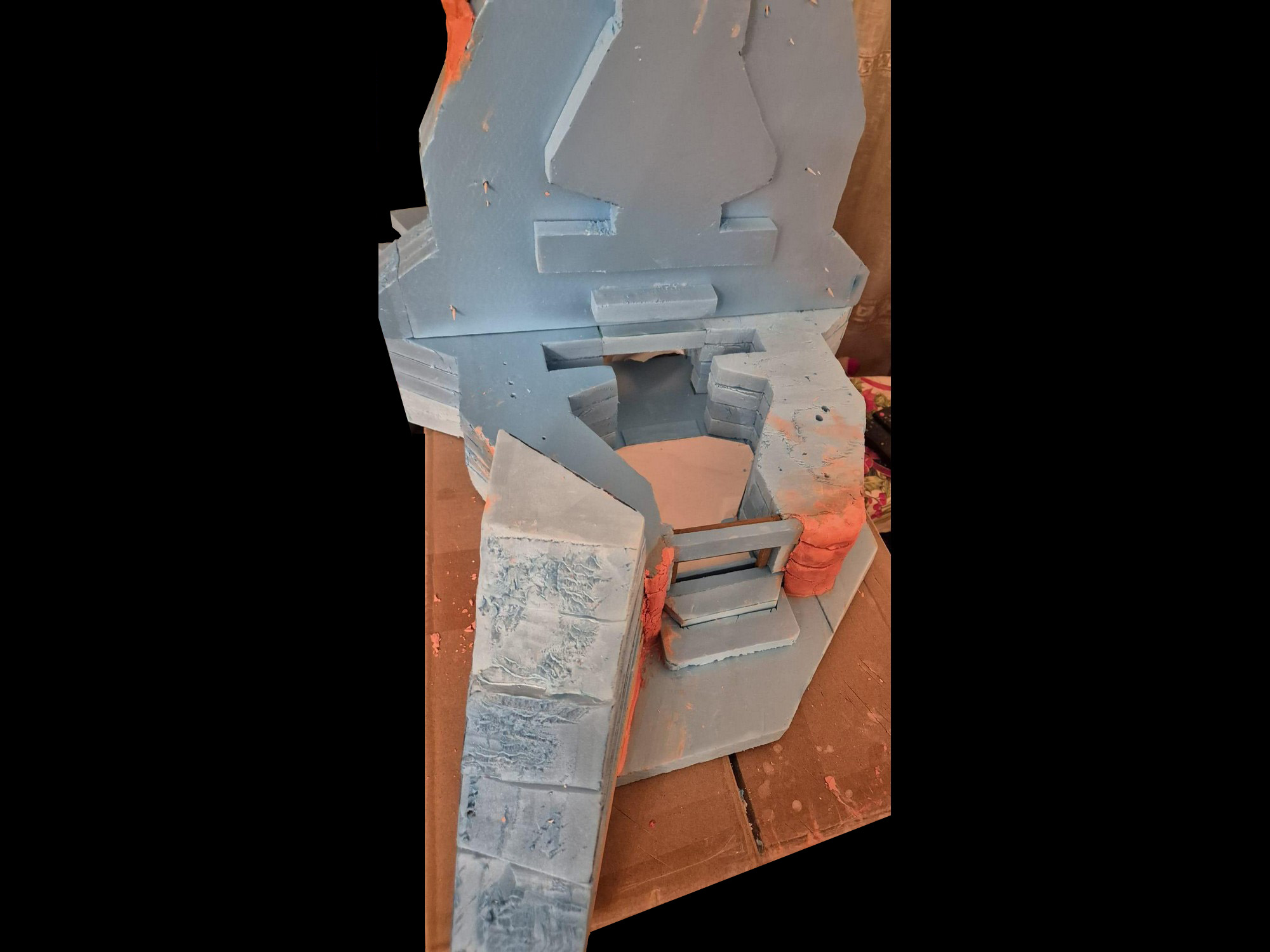
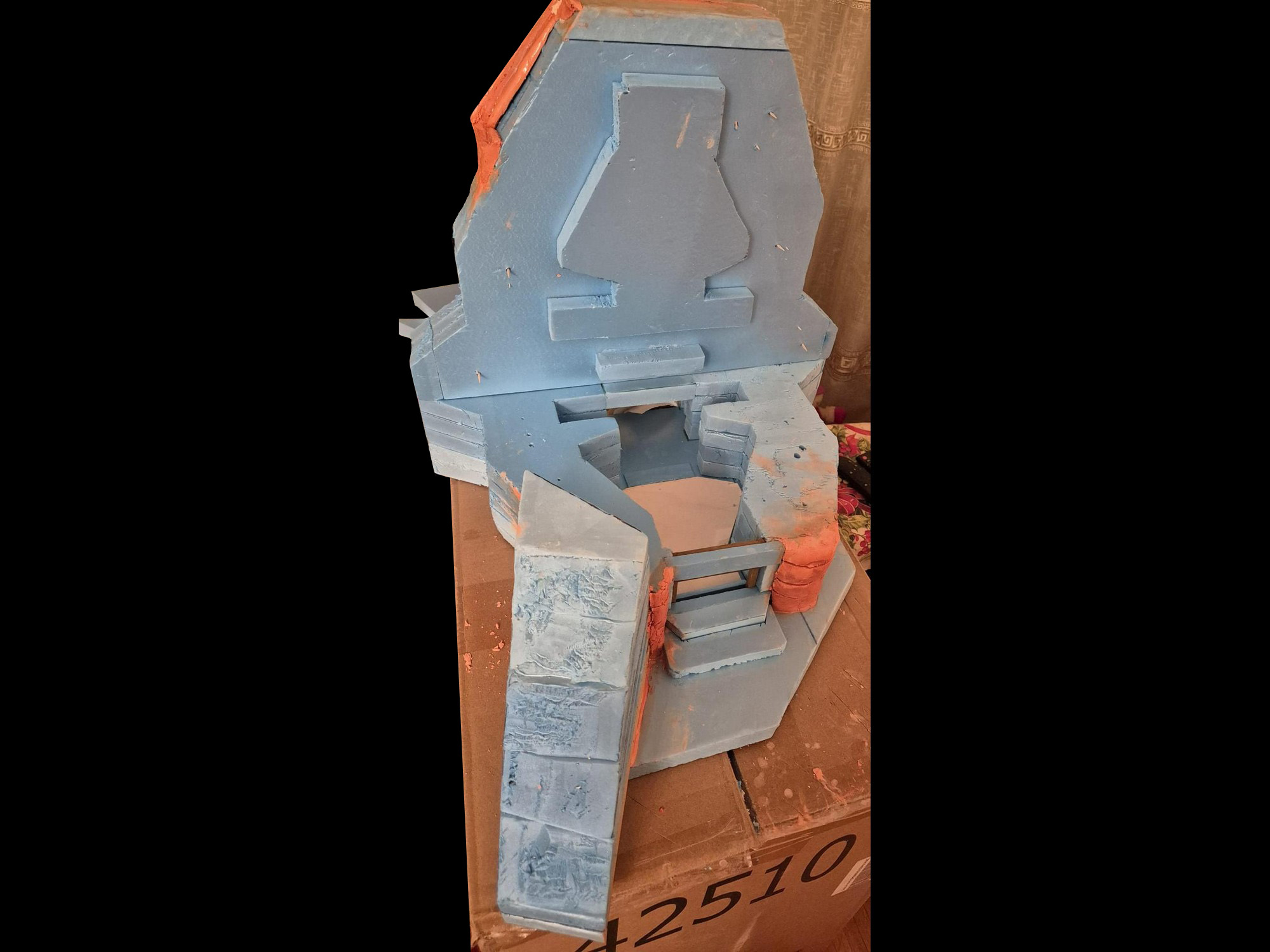
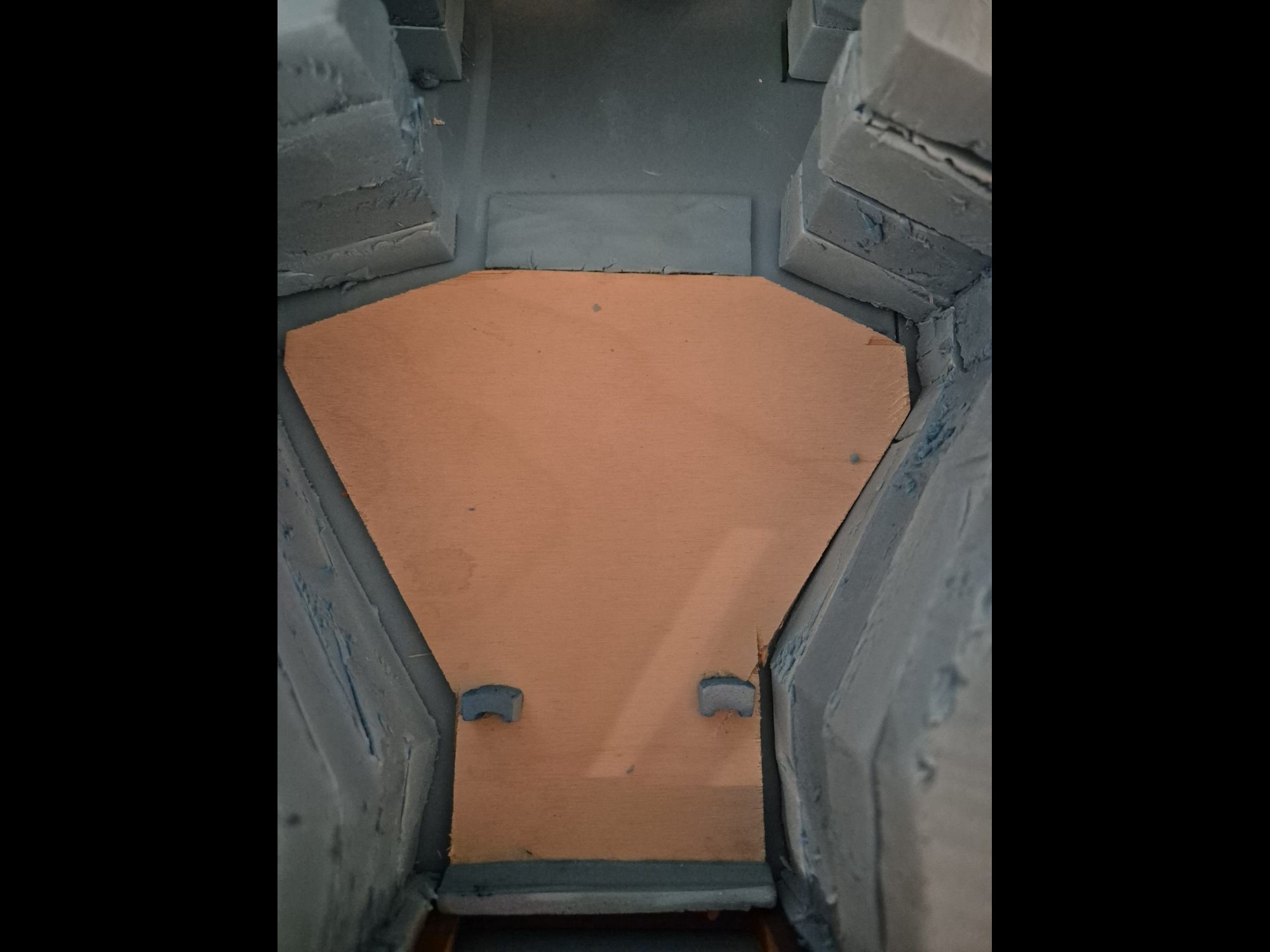
As promised I am back with more. This time with the inner gun platform and cradle wheel stops.

Alas, the platform didn’t come out as I wanted since the wood I used was a more sturdy one than Balsa because I need a really flat one. Balsa tends to warp because lighter and thinner.

I therefore needed a large wood cutting saw and despite having correctly designed the contours of the inner walls, with that very sharp saw I did not achieve the real full space.
This will be corrected when I will pour additional plaster in the empty spaces.

The ramp instead came out quite easily… after 15 tries, with the free cutting hand hot wire.
With all the foam I have cut these days I had many spare parts to doodle with until I finally reached the appropriate one. Not easy at all, nor were the wheel stops I glued to the gun platform, which once again I managed to achieve with that hot cutter, and this time, at the first try. Don’t ask me how. It was a magic hand that allowed me the miracle.

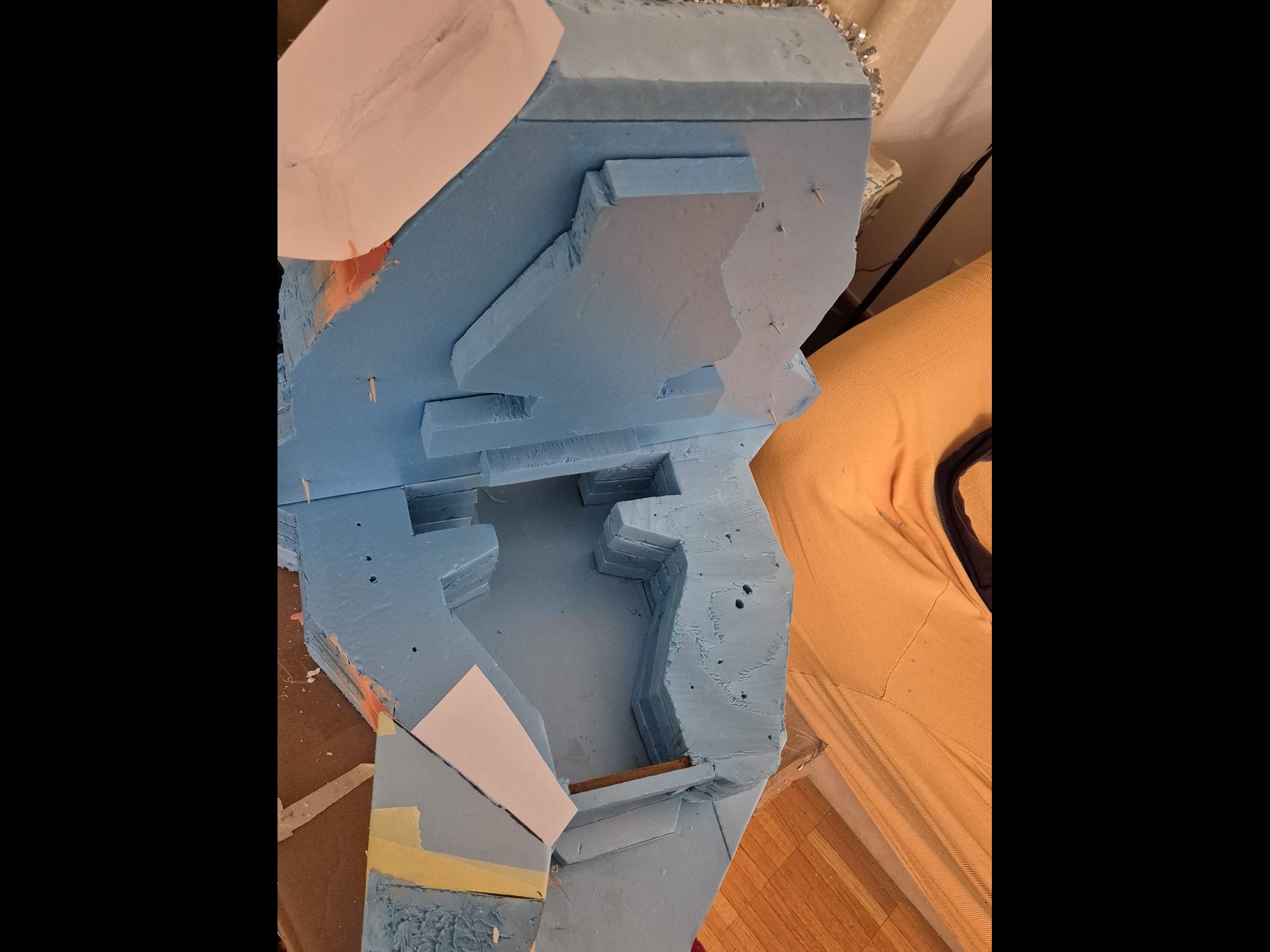
And so now I have finally the Bunker, in its main skeleton format finally completed.

Once again I repeat myself, and no, it is not Alzheimer’s, not yet, it’s just a reminder if you do not want to re-read all the babble of the other posts I have made.

To finish it all I will need to still build the parapets on the top of the roof and the iron doors leading into it, including of course, also the darned gun.

Once they are fully finished, I will completely cover the Bunker with plaster in very thin and very smooth layers achieved by wetting the plaster a little bit more as not having it harden too fast and allowing me to freely cover the entire structure with a large synthetic brush. The plaster will be rather liquid, or better, creamy in consistency.

Once the plaster is fully dry I will apply the final coat which is the AK Interactive terrain compound which simulates concrete in scale and which you already saw in the faux-Bunker I had completed before.

Done that I will finally insert the fully built and painted PAK43/41 and glue it in place.

The ammunition cases and containers, as well as the crew manning it will be done at a much later date, after I will have completed “The Last Warning” diorama by my return from my long holiday in June.

So therefore, this is not yet my last post, because I want to reward you all for your patience with at least a fully completed Bunker and its Gun.

But for now just evaluate the further steps I have added to it…


Don’t worry, this horror will soon end and you shall see a much better looking Bunker and Gun as they appeared on D-Day in just a few days and I hope you will continue to follow my shenanigans in modeling also in the future as I return from my long vacation in June.

But for now I go to have dinner and then have a quiet evening watching a movie.

And remember always look at the bright side of modeling… :wink: :laughing: :four_leaf_clover:

PS: I forgot something, yes I did! The front wall thickness reaches right down to the embrasure where the gun looks out. I was just wondering by looking once again one of the actual pictures of the Bunker, I probably did not forget at the time because I was still studying how to keep the roof removable. And indeed it is just a small adjustment I have to make.
I will only have to glue another segment to the roof underneath where it also meets the two sustaining columns right above the embrasure, paying attention not to glue it also to the main body of the Bunker…

3 Likes

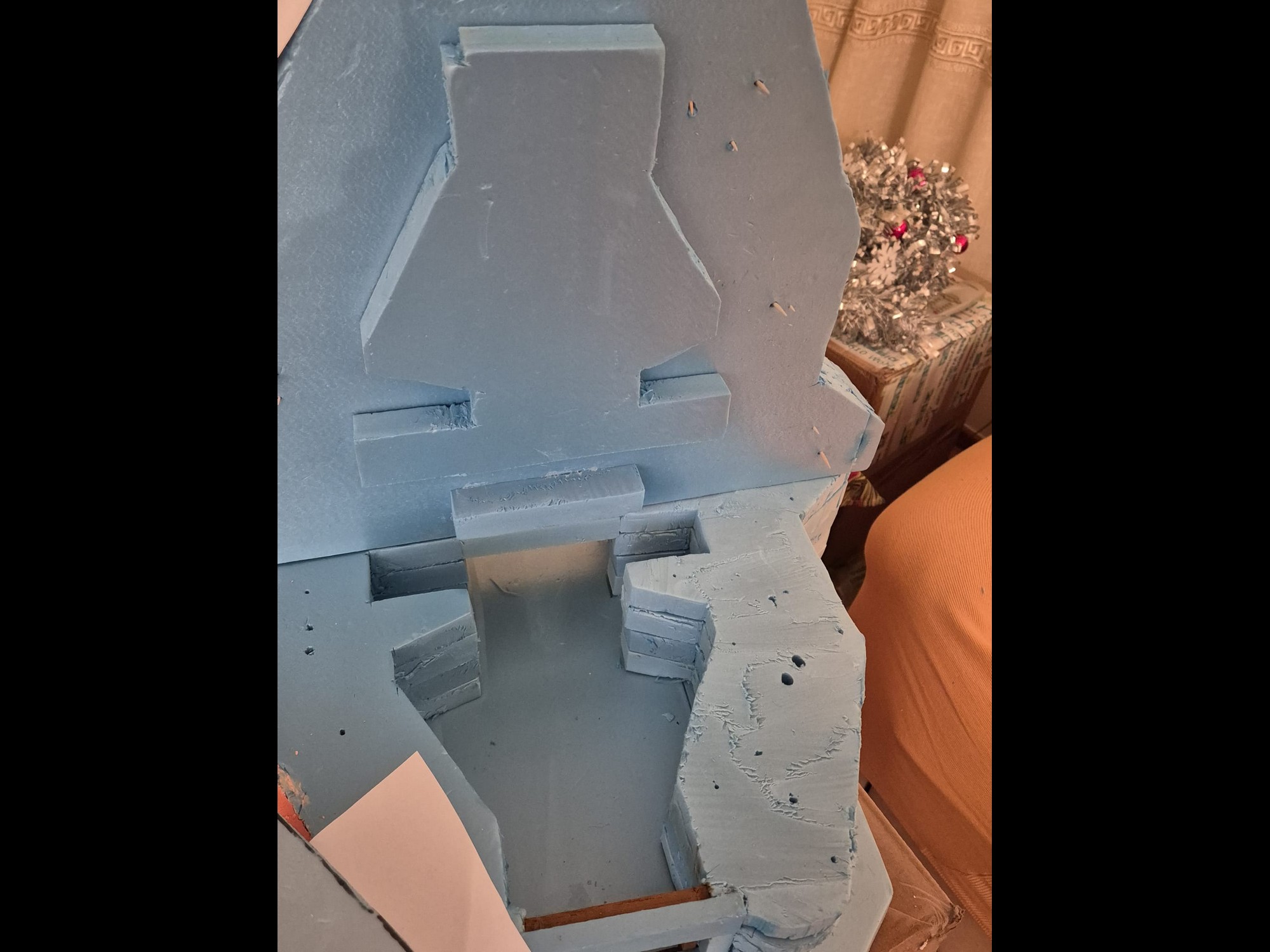
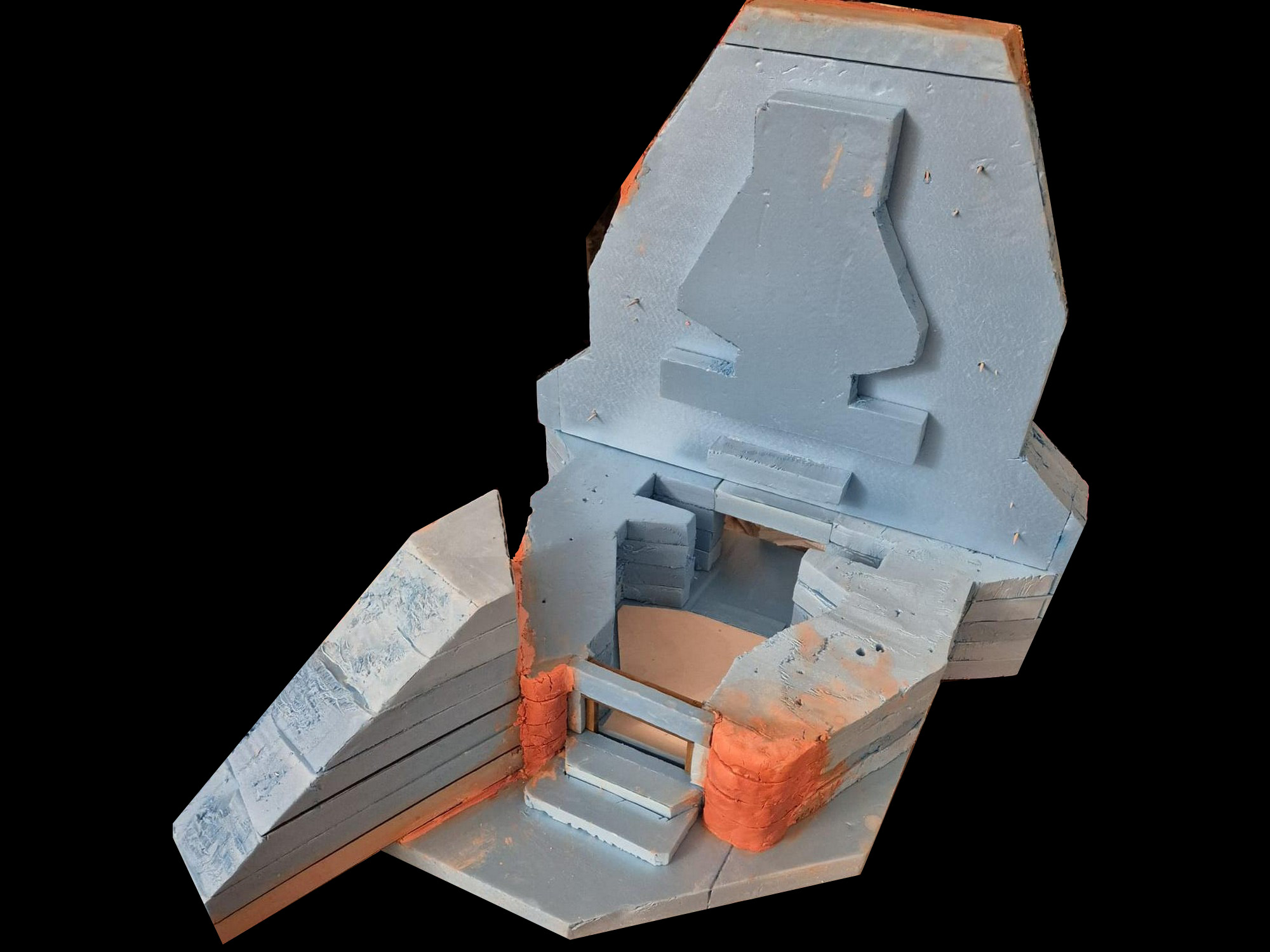
Today I didn’t do much but I forced myself to at least fix the front wall, add the two parapets which will be refined later with their appropriate curves leaning inside the roof and two additional beams in front of the embrasure.

The Bunker doesn’t really look so good like that right now, but as I said, it’s just its skeleton. The plaster cover will refine all the imperfections caused by the rough cutting blade and since I plan to make it a sort of creamy paste, rather than just a building compound, it will also smooth the divisions among the segments of the sustaining walls and protection wall. It will also make the model more solid and sturdy. I only have to watch out to do the roof and the building as two separate entities otherwise goodbye removing the roof in the future.

The same treatment of course will be reserved for the interior Bunker. Once done that I will cover it completely in the concrete simulation provided by AK Interactive and AMMO MiG (for variance).

I left out the building of the rear iron doors since I will only build them once the the concrete coat is applied and this because their sizes may vary if I build them right now.

Even the gun will have to wait, since I want to first completely fill the platform and the floor with both plaster and concrete. Only then will I finish the gun and place it firmly inside, since despite its huge size is indeed a very frail model with many tiny pieces that might break off.

And so for now all you get are my current tiny additions. The rest will follow once the entire Bunker is ready to be shown fully finished. It will probably take me a few days to do so, since I have to wait for the drying of the various layers and their compounds.

And here are the new pictures…


And so for now this is all I have done.

The next steps will be much easier than what I have done so far but will require a bit of patience while plaster and concrete compound will each dry between layers.
I am also using two different Concrete compounds since the one offered by AK Interactive looks a bit different form the one offered by AMMO MiG and this will add an interesting variation in shades once they both dry.

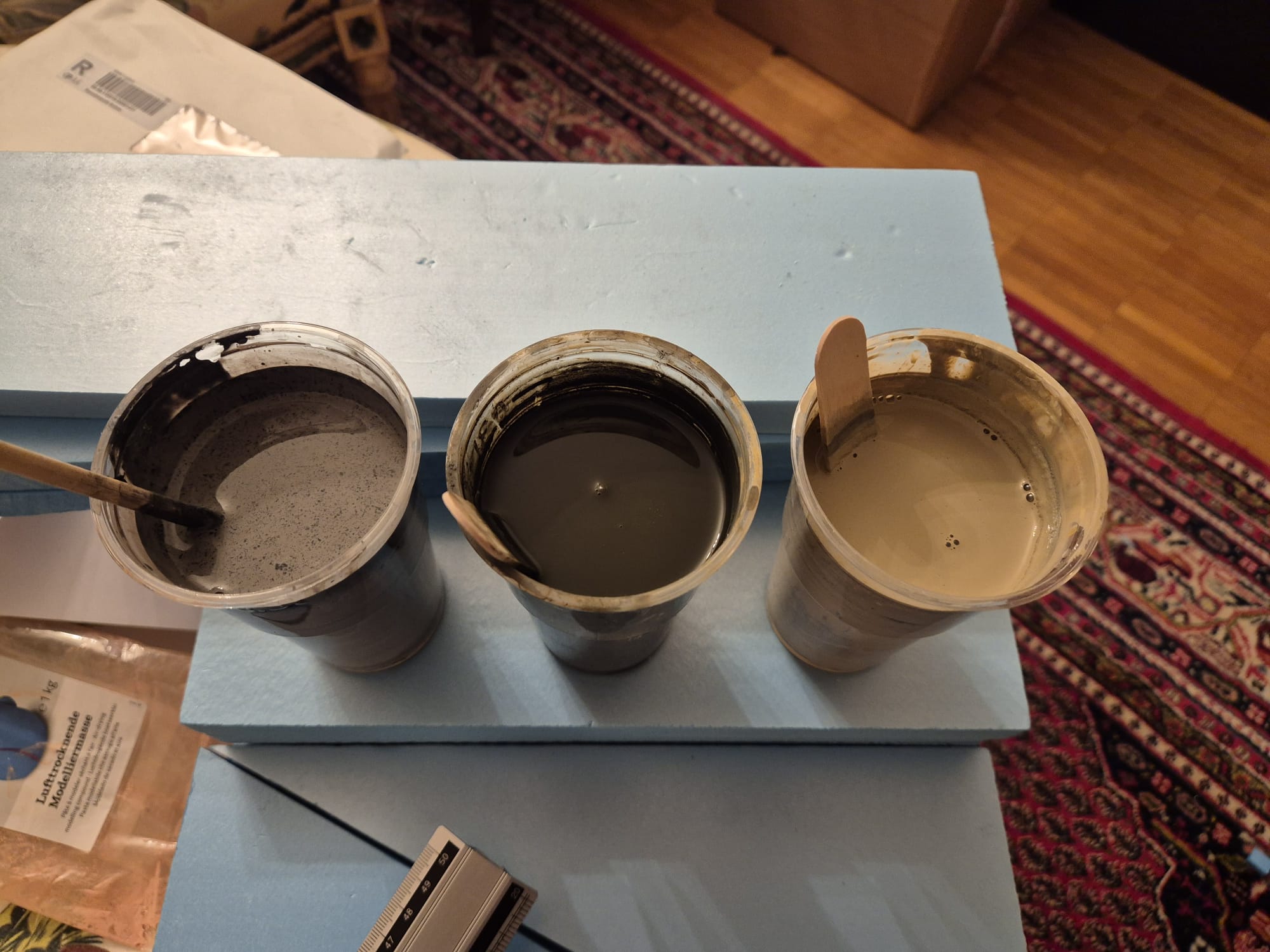
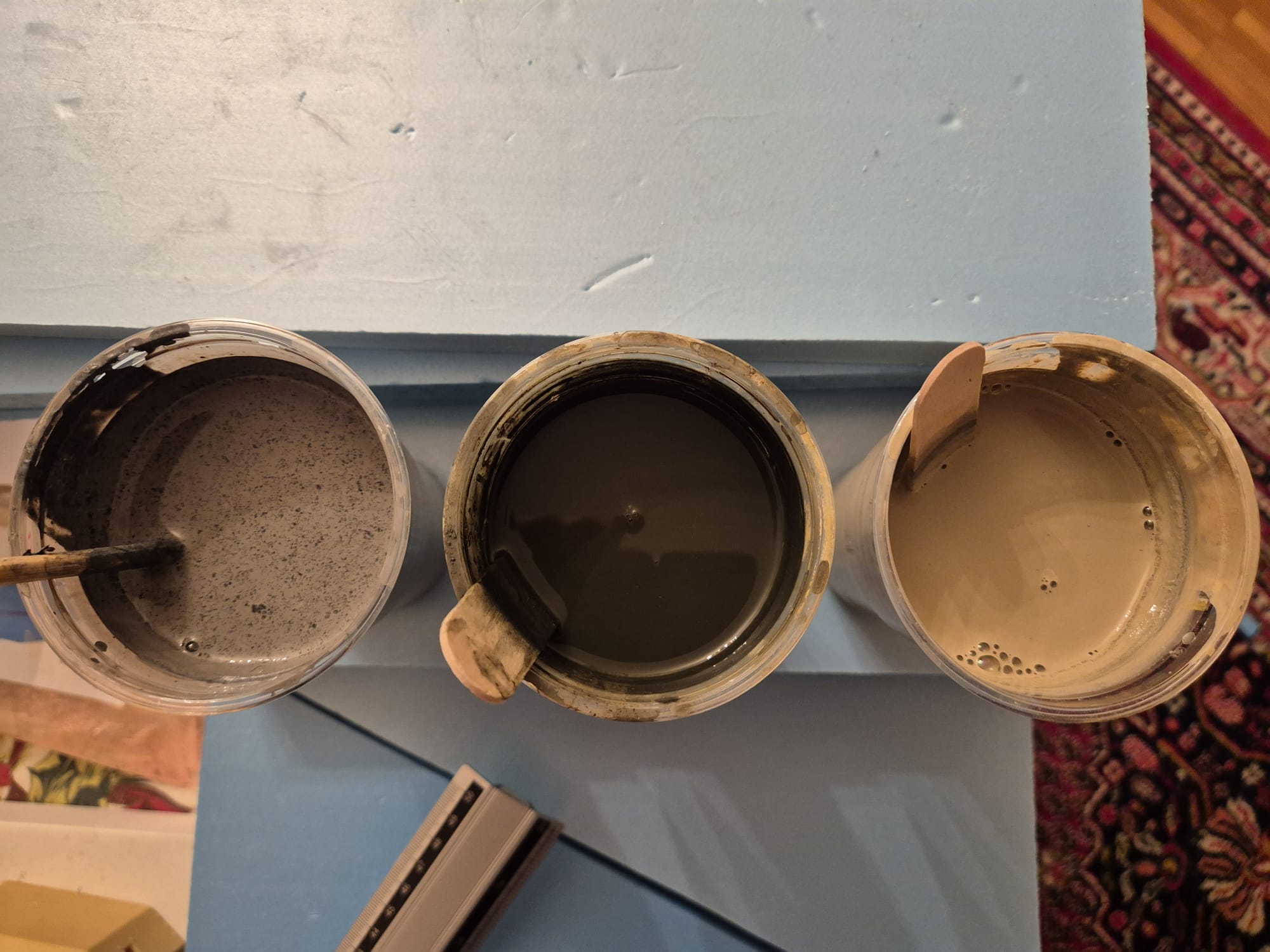
Once all that has been completed I will wash the entire model with various weathering washes which I prepared myself with artistic acrylic paints mixed together and watered down to a very liquid substance…


These three are the washes. From left to right: a medium gray to give it a dust grounding, a greenish black to simulate sooth and dirt and a tannish gray to simulate sand residues and other Earth effects.
Once applied I will tone them all down with absorbing paper and mix them further together.
The Greenish Black has already been applied to the beams I have added to the Bunker’s embrasure and gives a true grimy look to anything it touches.

So, that’s that for today and as I said before I will only return to you once the Bunker is completely finished and weathered hoping it will finally look like the real one.

I wish you all well and hope you will return to this very long post in a couple of days (I cannot really specify how many, it will depend on how fast everything dries.

And remember always look on the bright side of life and of your modeling. :wink: :grinning_face: :four_leaf_clover:

4 Likes

I’m really enjoying following along here Patrick. And feeling inspired for some upcoming diorama/basing projects myself. Thanks for the thorough posts!

2 Likes

Thank you Toimi_Tom for your kind comment. I am trying to be as thorough in my explanations as possible but I also realize that for others this could become tedious since I sometimes appear to repeat myself. I do so only because I realize that not everyone may be following all my posts and so it is a bit like in the Star Trek double episodes in which starting with the second the voice of Majel Barrett says: “Last time on Star Trek…” where I remind people of what I have done, and continues with: “And now for the conclusion.”, except that in my case it is more like: “And now the continuation”. Indeed it seems a long episodic arc to reach the grand finale.
For that I really do apologize and I will try for my return to “The Last Warning” diorama to keep my contributions a tiny bit shorter.
In any case know that I really appreciate any “like” and comment I receive from my fellow modelers and especially yours.
Be well and continue to enjoy our common hobby.

PS: I will look at your progress as soon as I have finished the Bunker since it is rather time consuming. I hope you will understand.
All the best to you.

2 Likes

Just a very quick note…

I have found a little secret on how to cover the entire Bunker with Woodland Scenics Lightweight Hydrocal Plaster.

Usually, at least for landscaping purposes, one must mix 10fl. oz. of plaster to 4fl. oz. of cold water.
That’s nice if you want to cover irregular areas and fill some gaps, but it must happen fast because the product starts to solidify quite early.

Now, because I just need to cover some large areas with it and with a very fine layer, that’s not the way to do it. I know because I tested it and I did fail, having to remove most of my initial application completely because far too thick and because the plaster had already solidified in the bowl I used, despite having added a further 2fl. oz. making it 6fl. oz.

OK, so then what? What is the mysterious secret here?

You may laugh at me, but I can guarantee you that the method I then tested, really works if one wants just thin layers of plaster.
It is a bit messy since one has to work with his fingers and therefore might be covered with plaster all over them.

The solution is to use Woodland Scenics Scenic Cement in a spray bottle, or lacking thereof, just mix some PVC glue with water until the glue is of a liquid consistency, able to spray without clogging the nozzle, and spray the area one wants to cover with plaster.

Then either with a spoon or just pouring the material directly from its bag just enough to cover said area, distribute it evenly with the fingers by passing over it with a soft touch and should tiny clumps form, just smoothening them down flat and then just let it dry.

It might not completely cover the entire face you have planned to do but that’s not a problem. Once the first hand is fully dry, just repeat the operation once again - liquid cement, powdery plaster, fingers and that’s it.

Remember though to always follow the direction of the detail you intend to cover: if it is horizontal, then use your fingers horizontally and if vertical just use them either with an upward or downward movement, but not the two together because it may cause accumulations of plaster you may not want.

Besides being by far more practical the result is indeed better than just using the plaster the usual way and if one makes a mistake it can easily be wiped out in time, because with this method the plaster takes much more time to dry completely.

Moreover, the adding of the Scenic Cement, or its alternative, being liquid adds some consolidating power to the plaster as it dries, avoiding for it to detach itself from the foam.

One little addition to that. It is better to apply this method to roughed up areas of foam, because flat clean surfaces tend not to respond well with the Scenic Cement due to the fact that the Cement needs a true porous area to really bond to it.

As I said, it is a messy operation, both on your hands as well as on the surrounding working area due to the dust that the plaster causes and the wetness of the cement that obviously doesn’t stand still where it’s sprayed.

I do not suggest wearing latex gloves or any other kind because you need to “feel” the consistency of the plaster, a thing quite impossible when wearing gloves. Only regularly wash your hands in lukewarm water and either liquid soap or dishwashing soap. Clean fingers work best.
Another way is to have a tiny latex bowl nearby with water and every now and then wet your fingers in there once the plaster has been applied.

My suggestion? Work in a well ventilated area wearing a dust mask and perhaps goggles and on a surface easy to clean afterwards like a work dedicated table and not a fine desk or any other precious piece of furniture.

Mind you, most of the dust will also cover the floor and therefore try to find an area in your house or apartment without carpets or delicate wooden floors. Choose a room with a tile floor (Bathroom, Kitchen or better, a terrace or garage) because they are much easier to clean and cannot be damaged.

I hope this will help you in case you may have to slightly cover lightweight structures and want to fully consolidate them and make them sturdier and more stable.

I wish you well my dear companions in this adventure we call modeling.

I will see you when my slow work is finished. Tada! and Toodaloo! :grinning_face: :innocent: :laughing: :four_leaf_clover:

2 Likes

Latest from the madhouse… :wink: :laughing:

What you are going to see is yet another horror play, but make no mistake, it is coming as I had planned. Slowly but surely… and don’t call me Shirley!

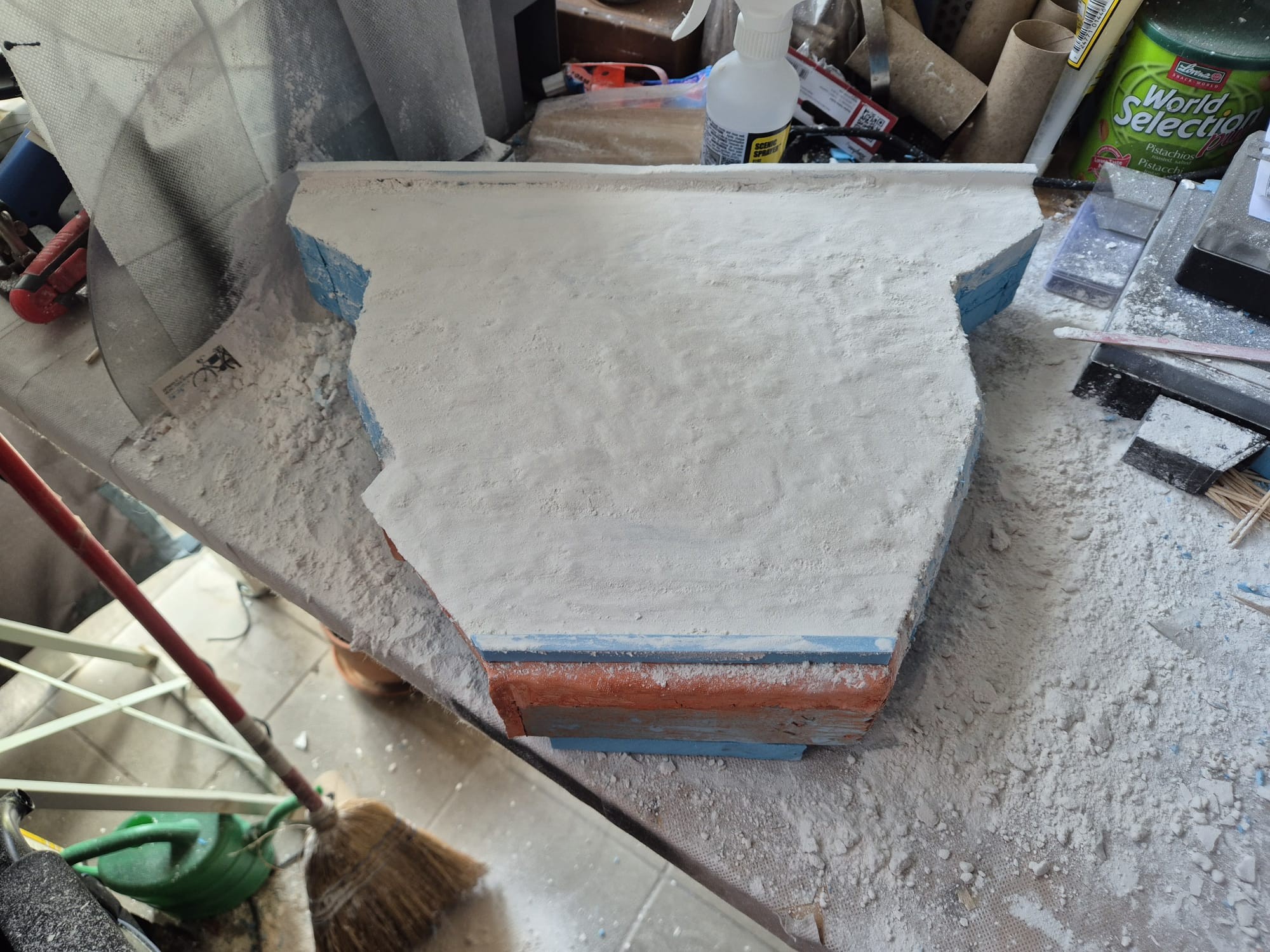
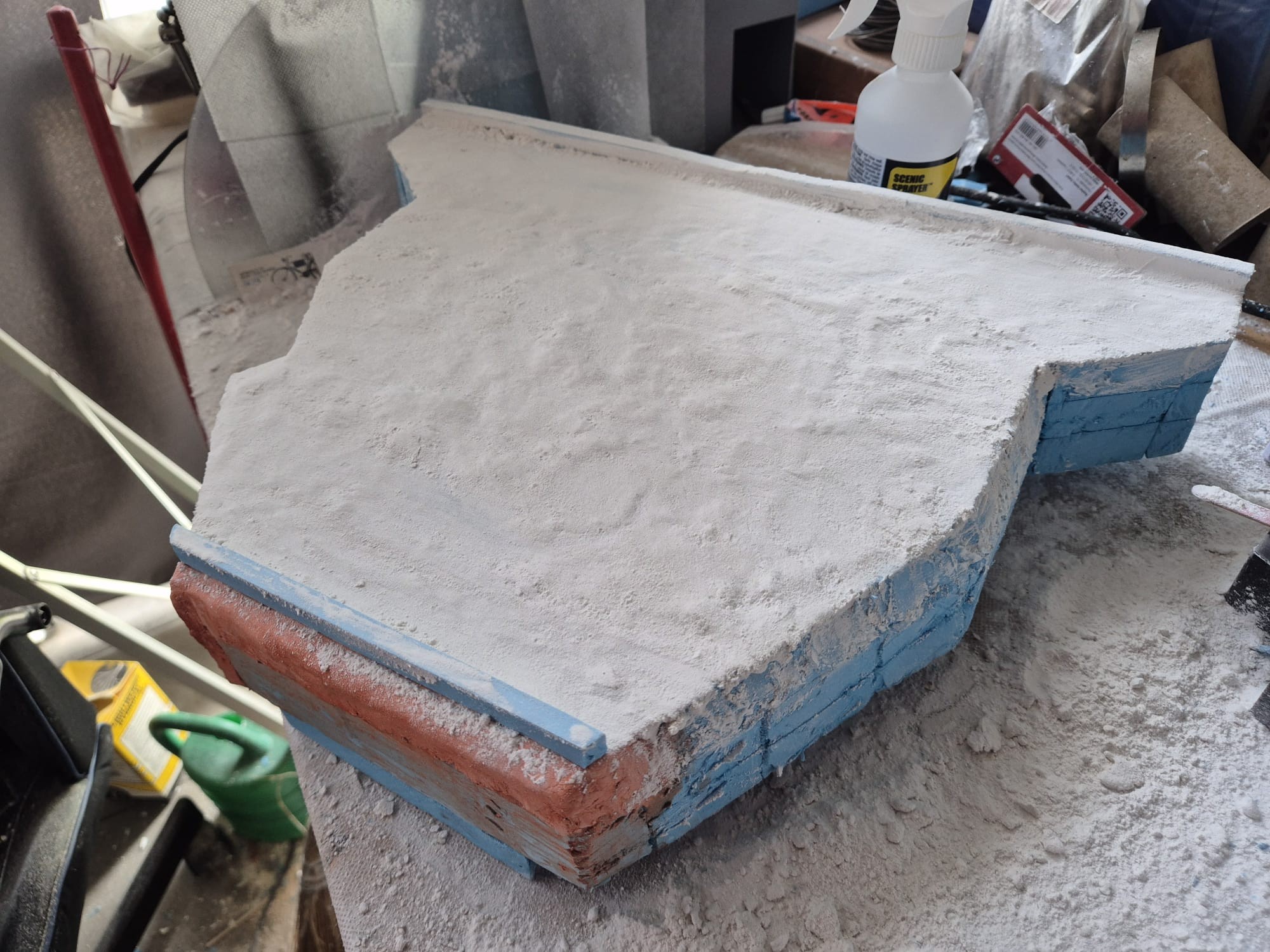
As you will notice there is a load of powdery plaster on my working table and on the floor, which I actually recoup with a handheld vacuum cleaner for later use, and you can clearly see where I had applied too much plaster which I had to remove, but now, both on the side walls and on the protective wall as well as on the rooftop I have managed to achieve the desired cover and effect.

It still needs more passes, especially on top and to the rear of the sidewalls, as well as the rear and front facades. The inner walls to the rear are the most problematic since they are narrow and are highly breakable. There I will proceed with a narrow brush instead of my fingers, but that’s no big problem since they will be somewhat hidden and filled with ammunition and equipment.

As I said before, it is indeed messy, and almost seems snowed on, but once I will apply the Concrete compounds by both AK and AMMO it will seriously look the part and feel rather threatening to the eye. Pity that I will have to cover the side walls with terrain then, but knowing that it will be stable and sturdy is a reward by itself.

I will show you more photos as I go on with it, but be patient since it is a very long procedure, bit here are the first pictures of this…


So long fellas, and as Arnie also said: “I’ll be back!” :laughing: :zany_face:

1 Like

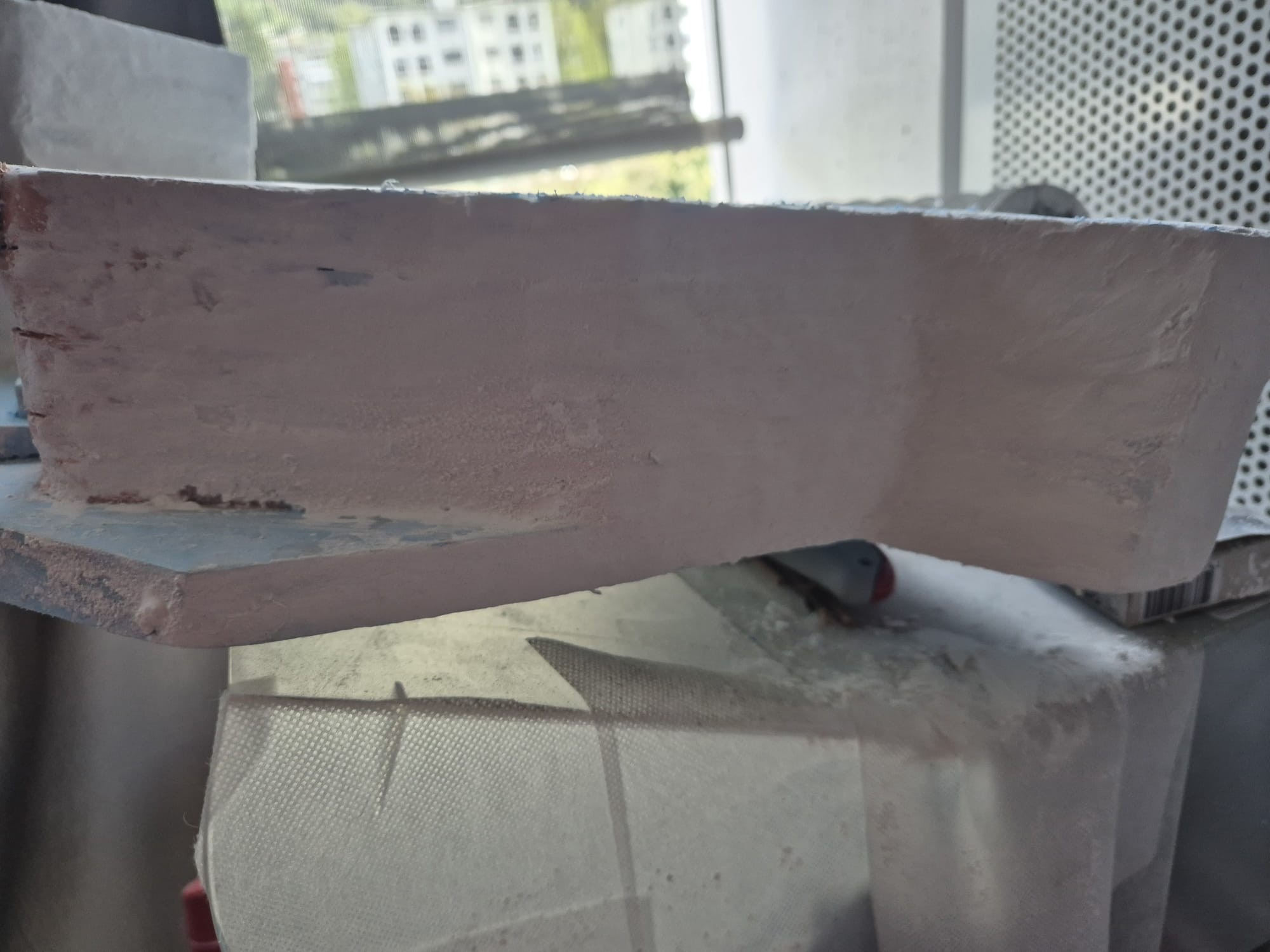
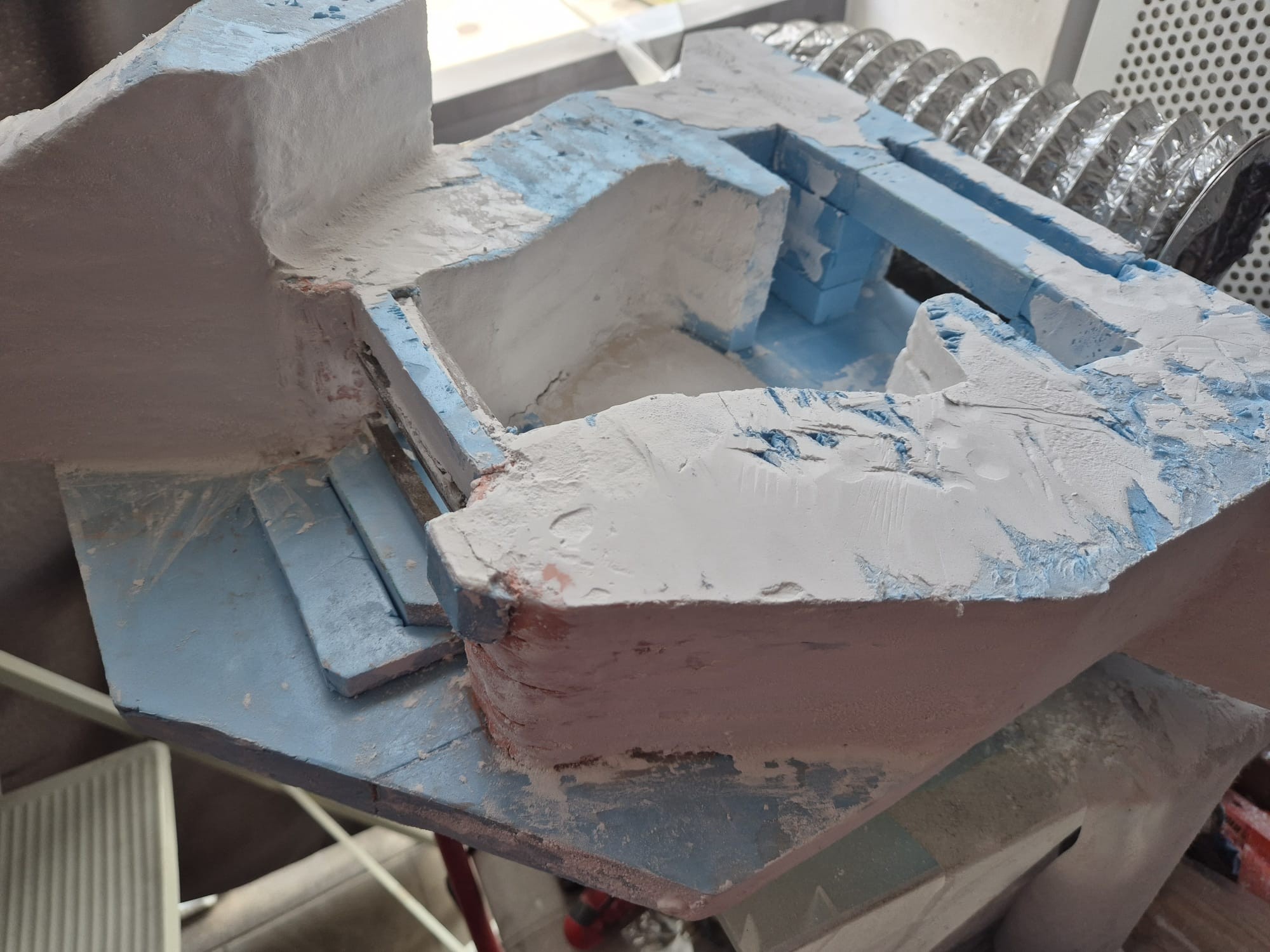
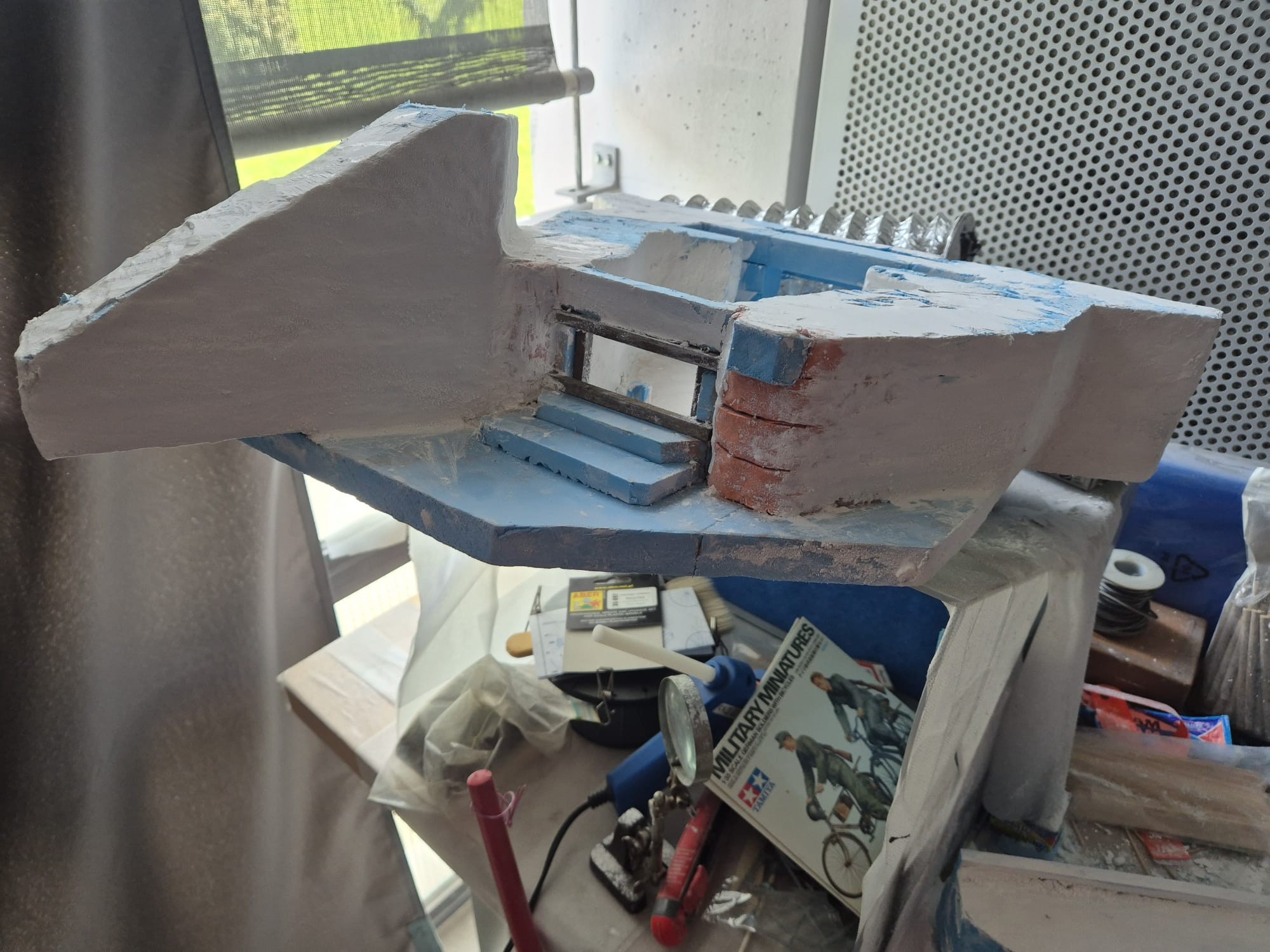
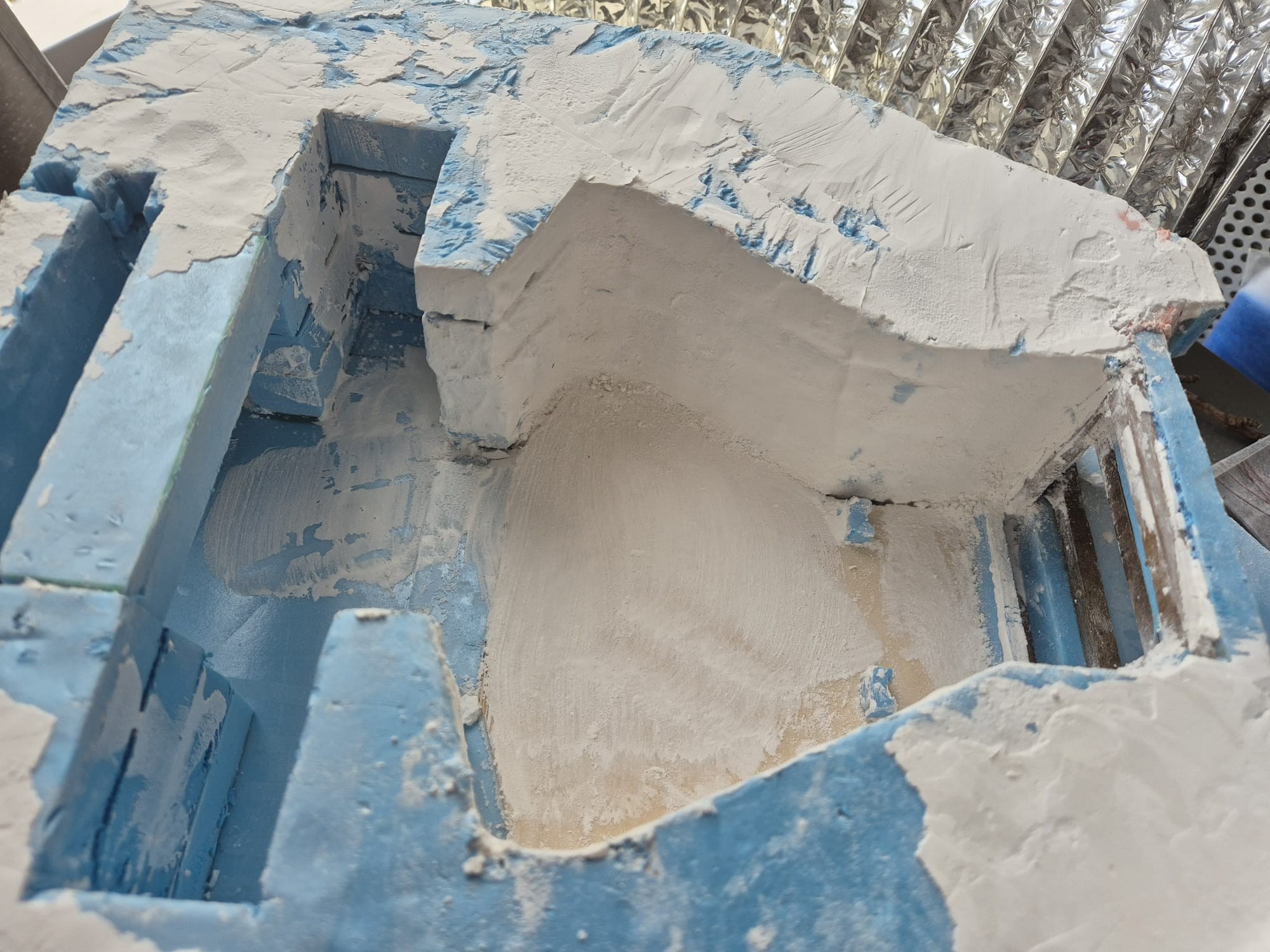
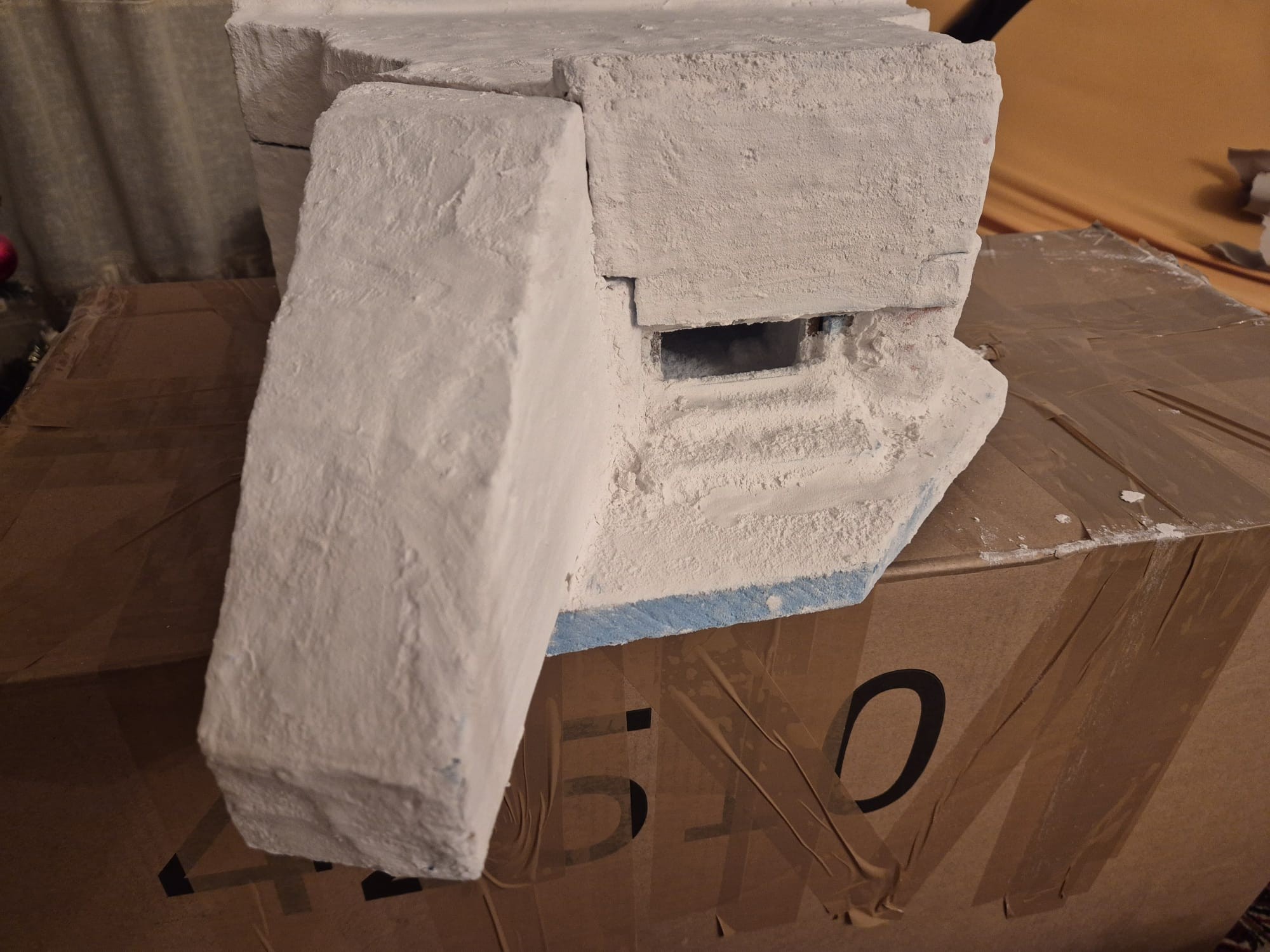
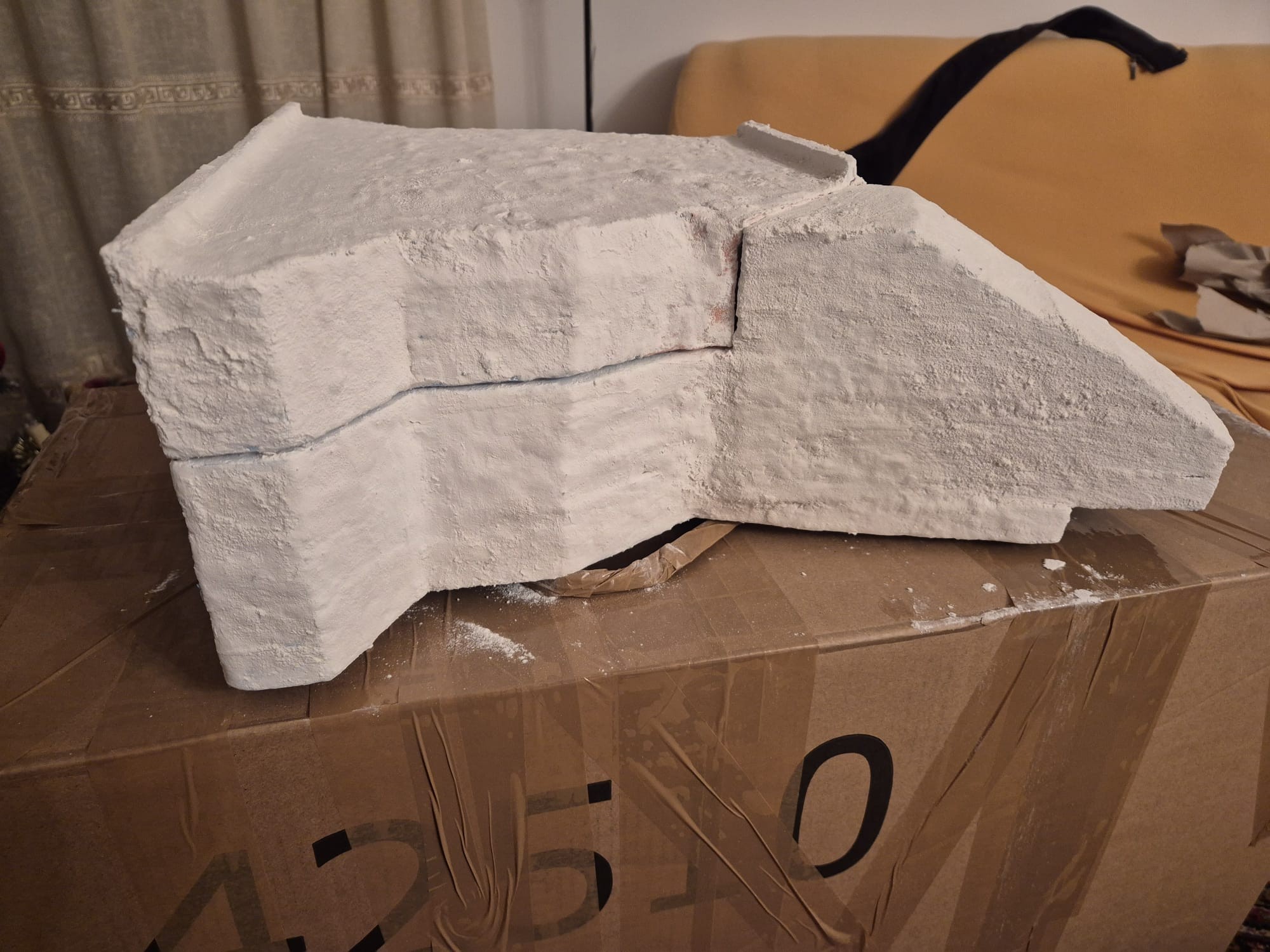
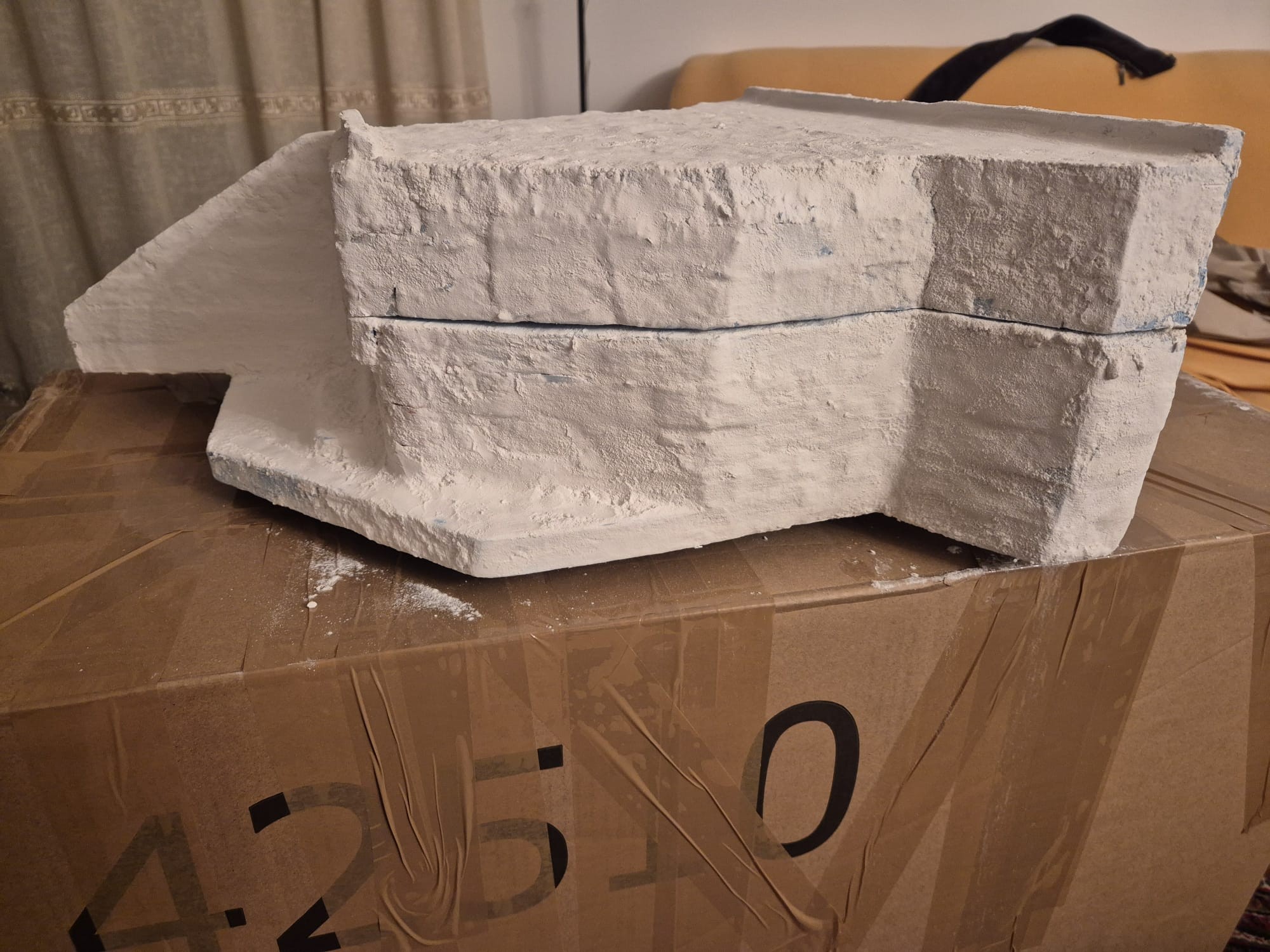
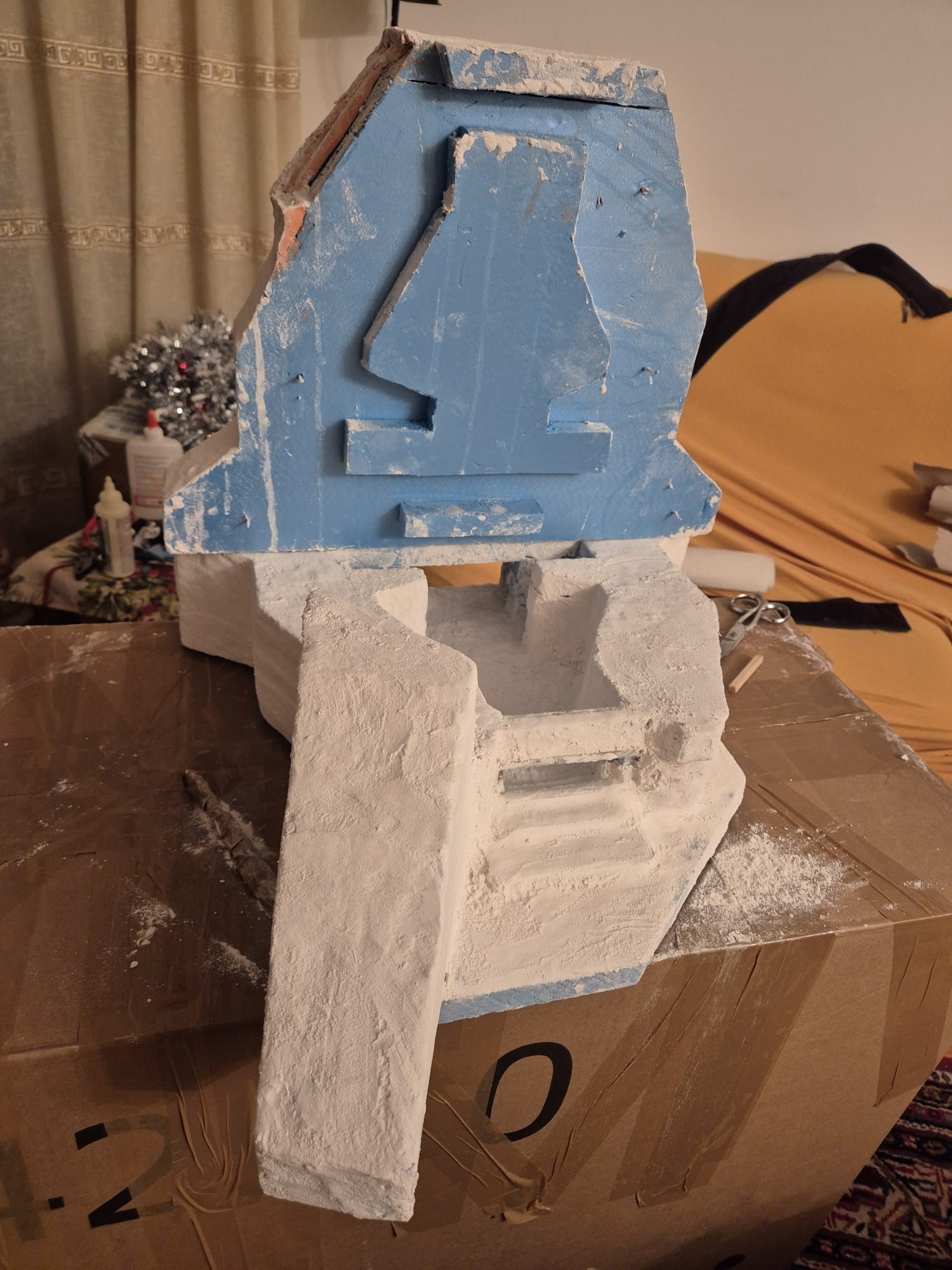
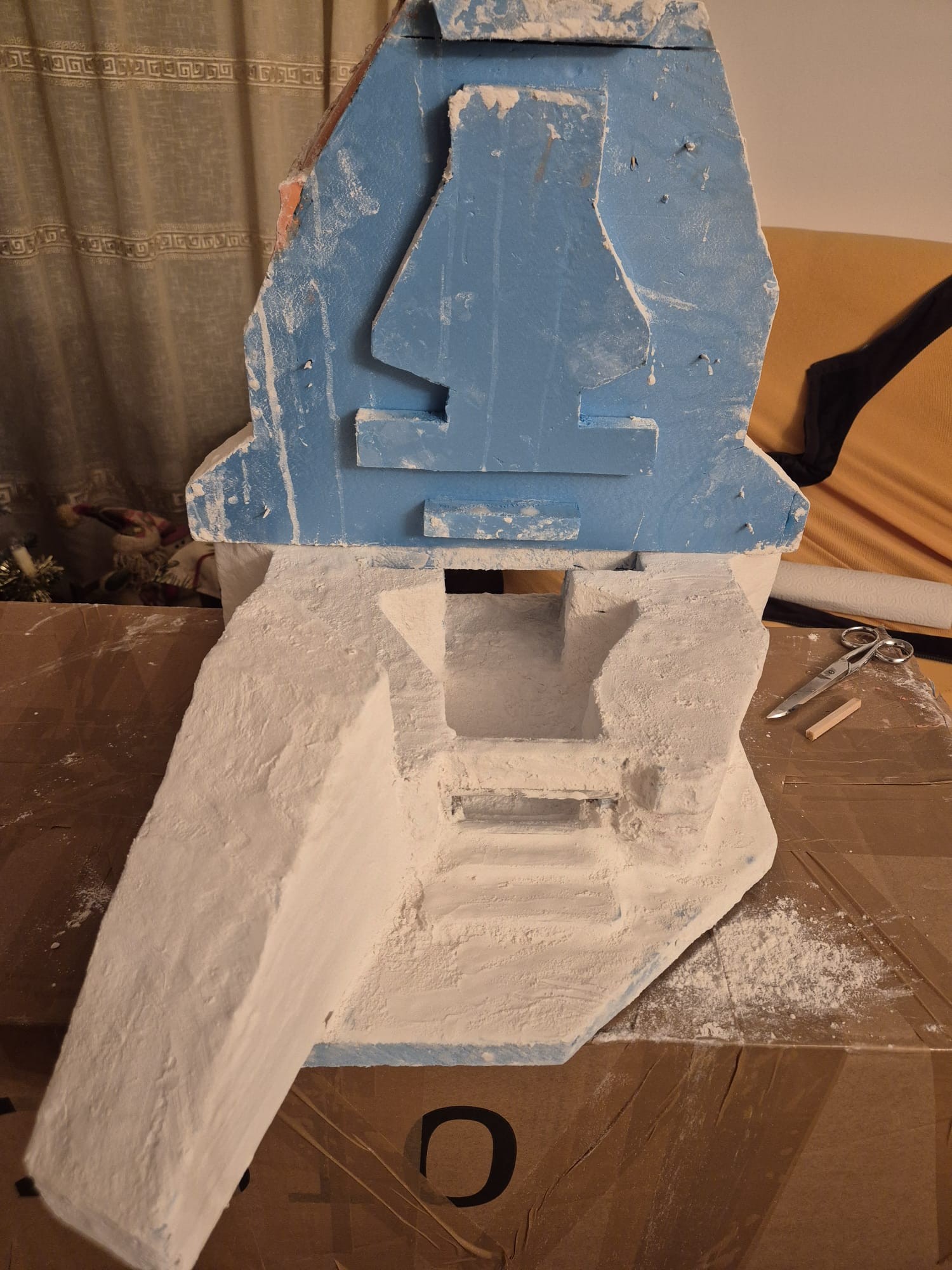
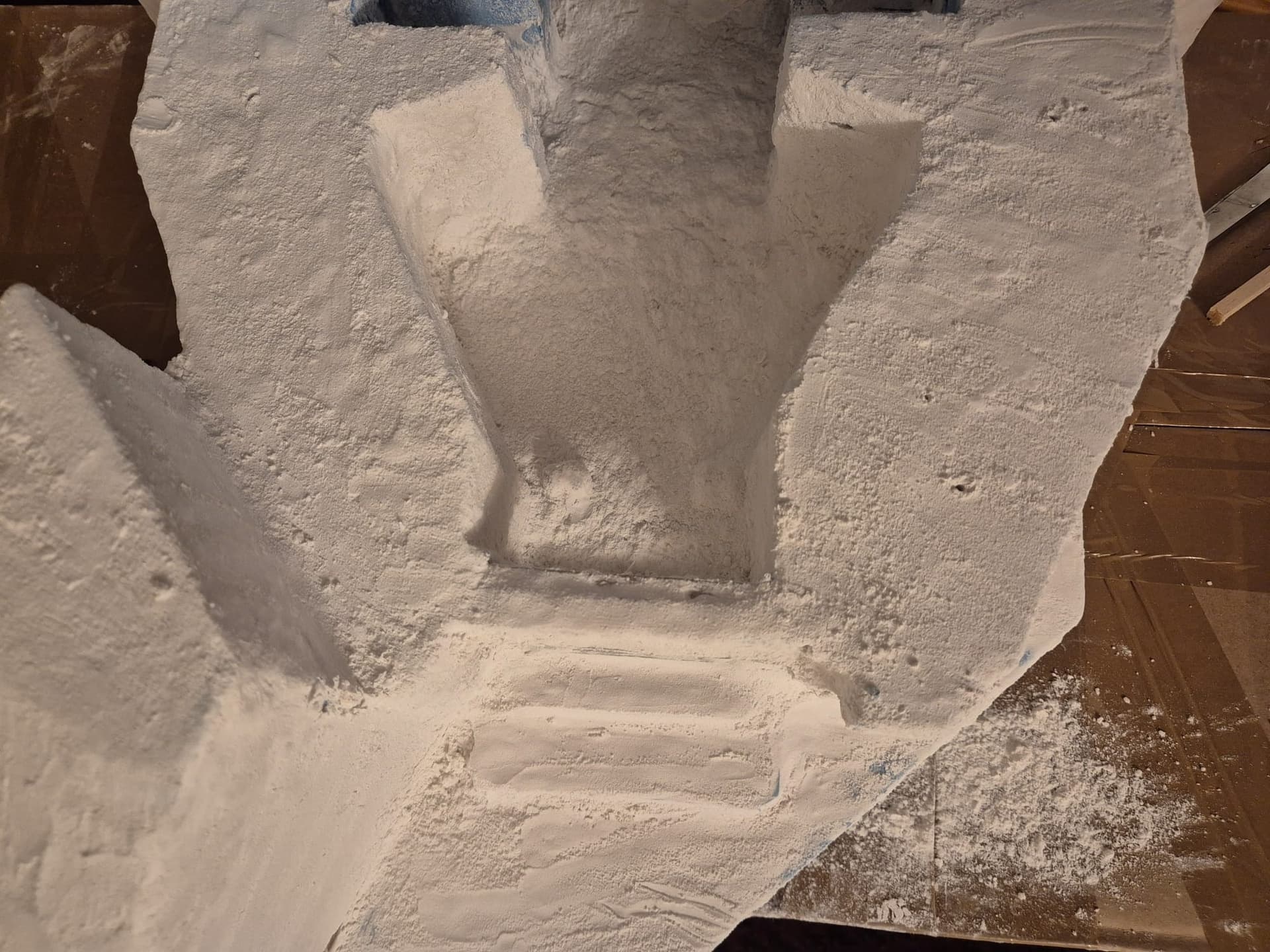
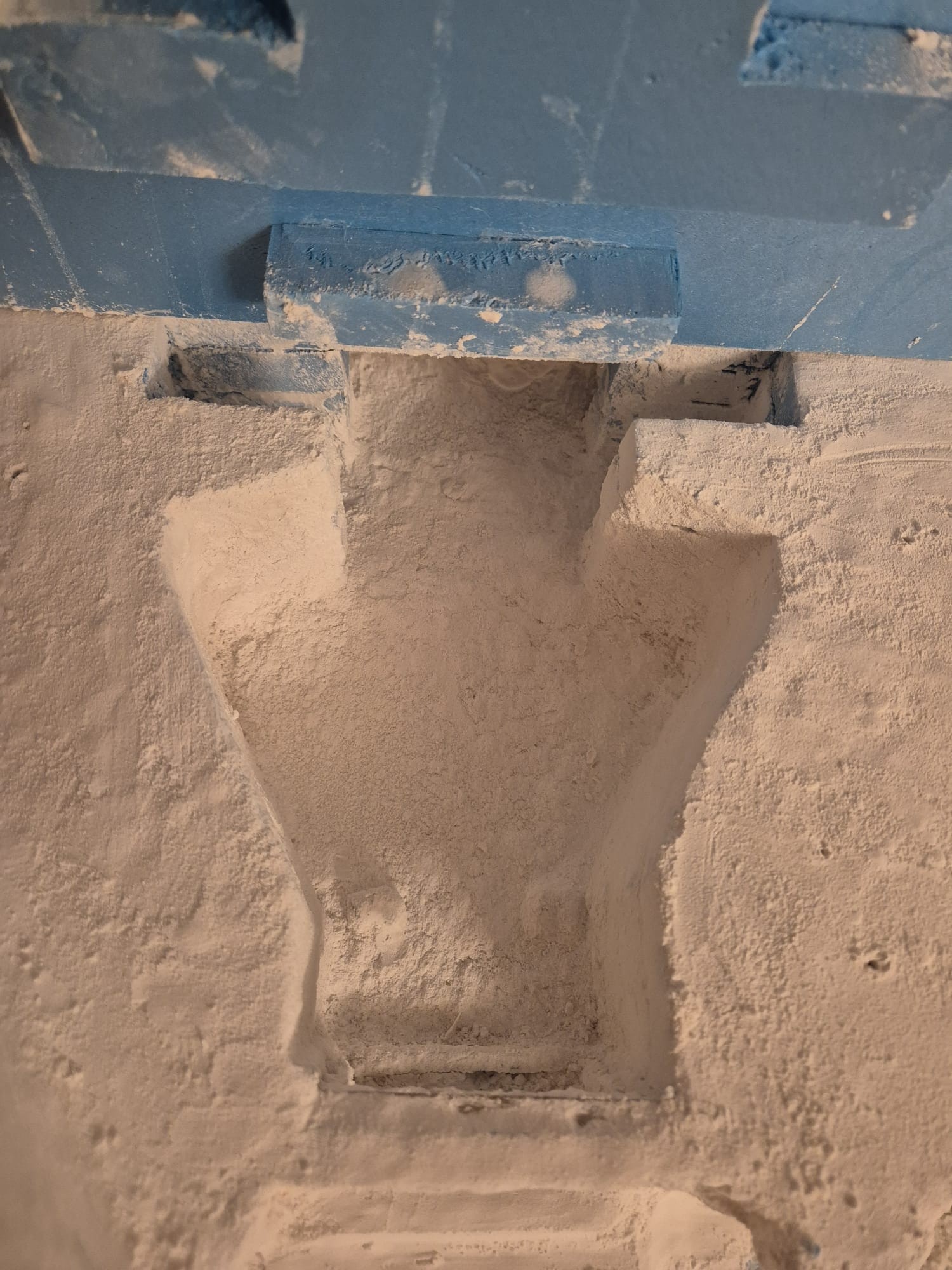
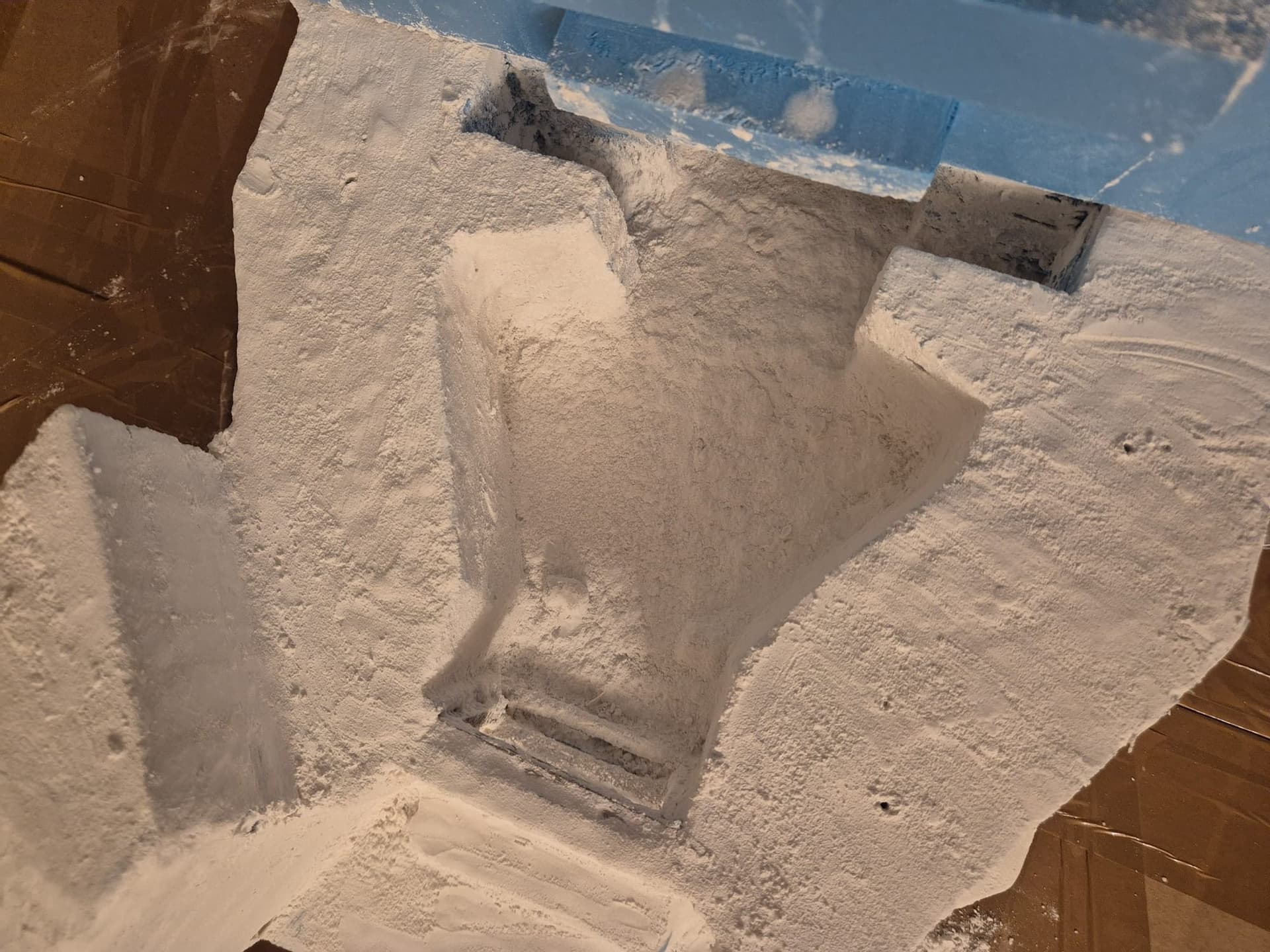
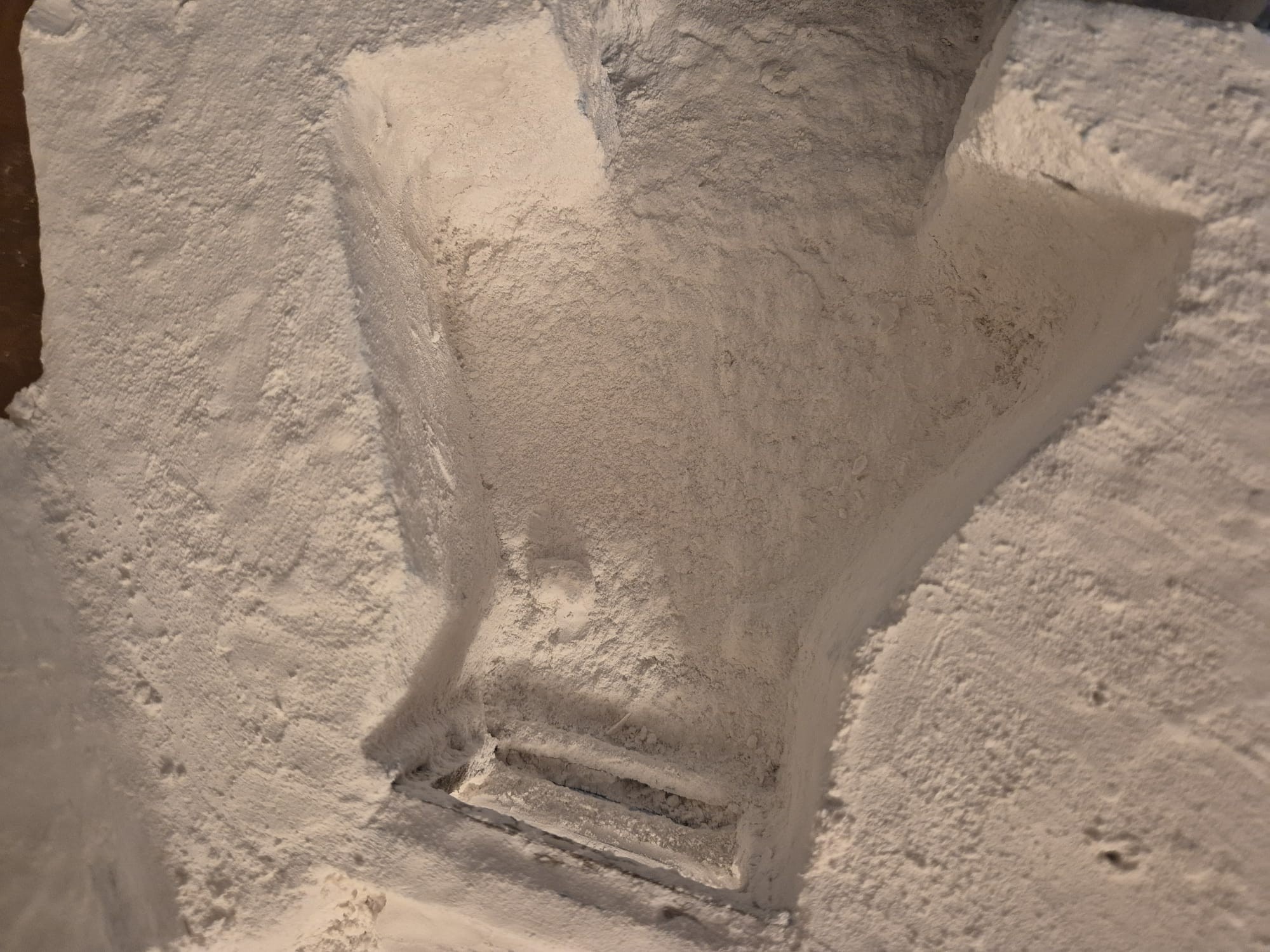
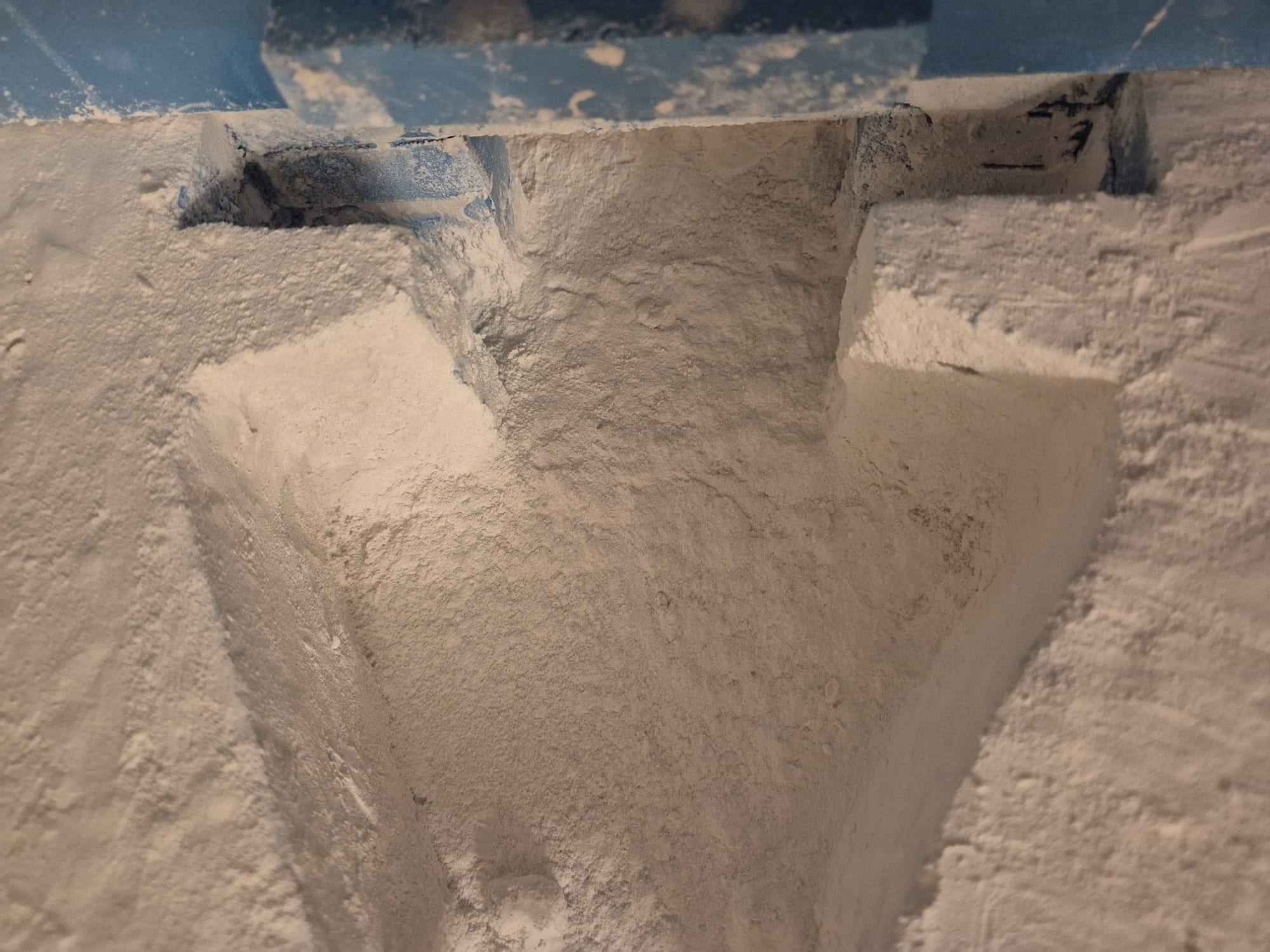
Cake anyone? Well, indeed, right now my bunker more closely resembles a snow cake lacking cherries on top… :laughing: :rofl:

But believe me, it is slowly coming together as I wished it to be and looking more and more like a more serious object than before.

Of course there will also be a lot of cleaning up to be performed, especially on extra material hanging out and then the second and final phase will begin and it is the application of the concrete coat.

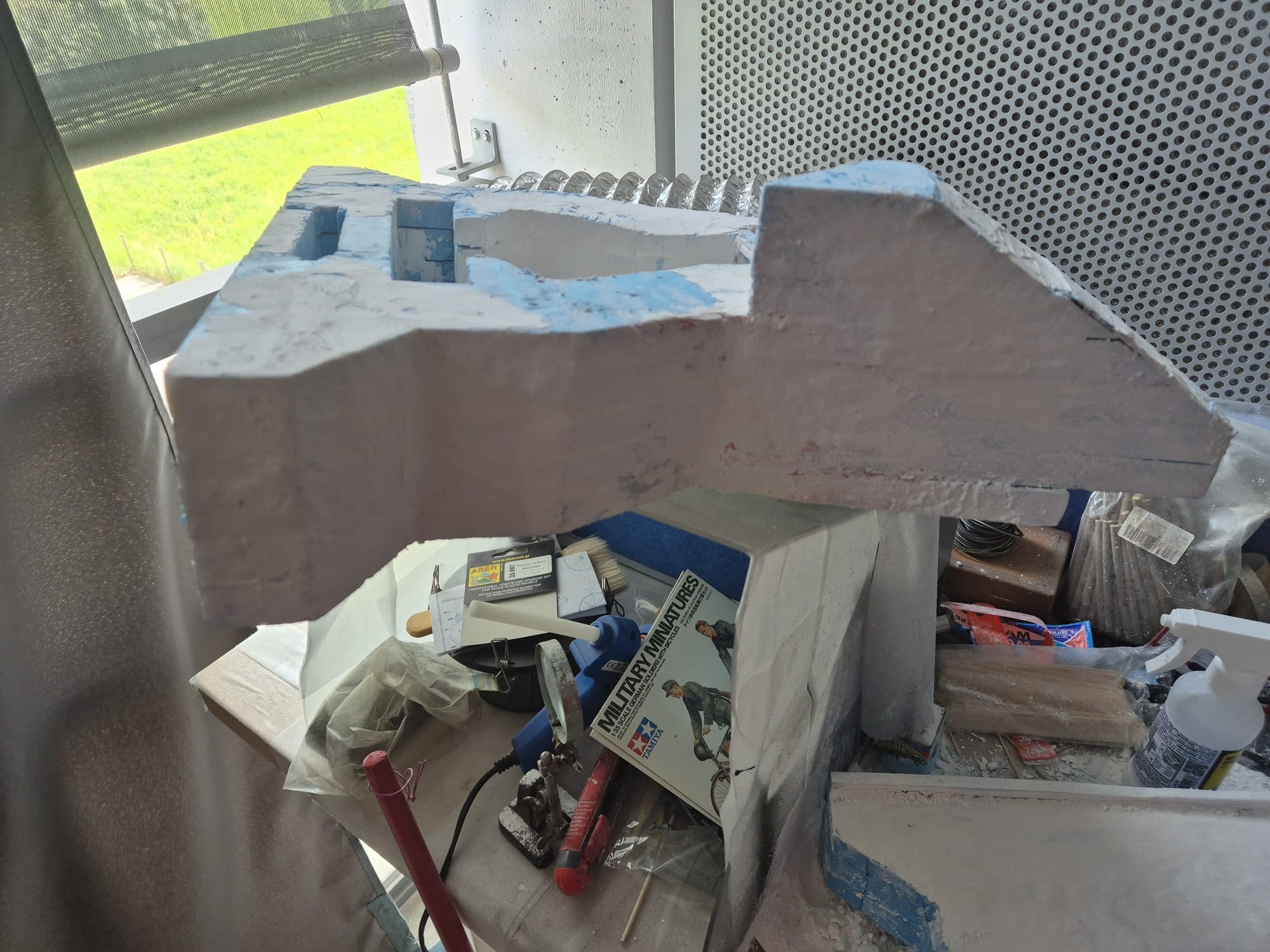
I still have to cover the rear parts and some of the interiors as well as the inner side of the roof, but very soon I will be able to apply the concrete coat, since the plaster has enough gripping power to make it fully adhere to all the surfaces.

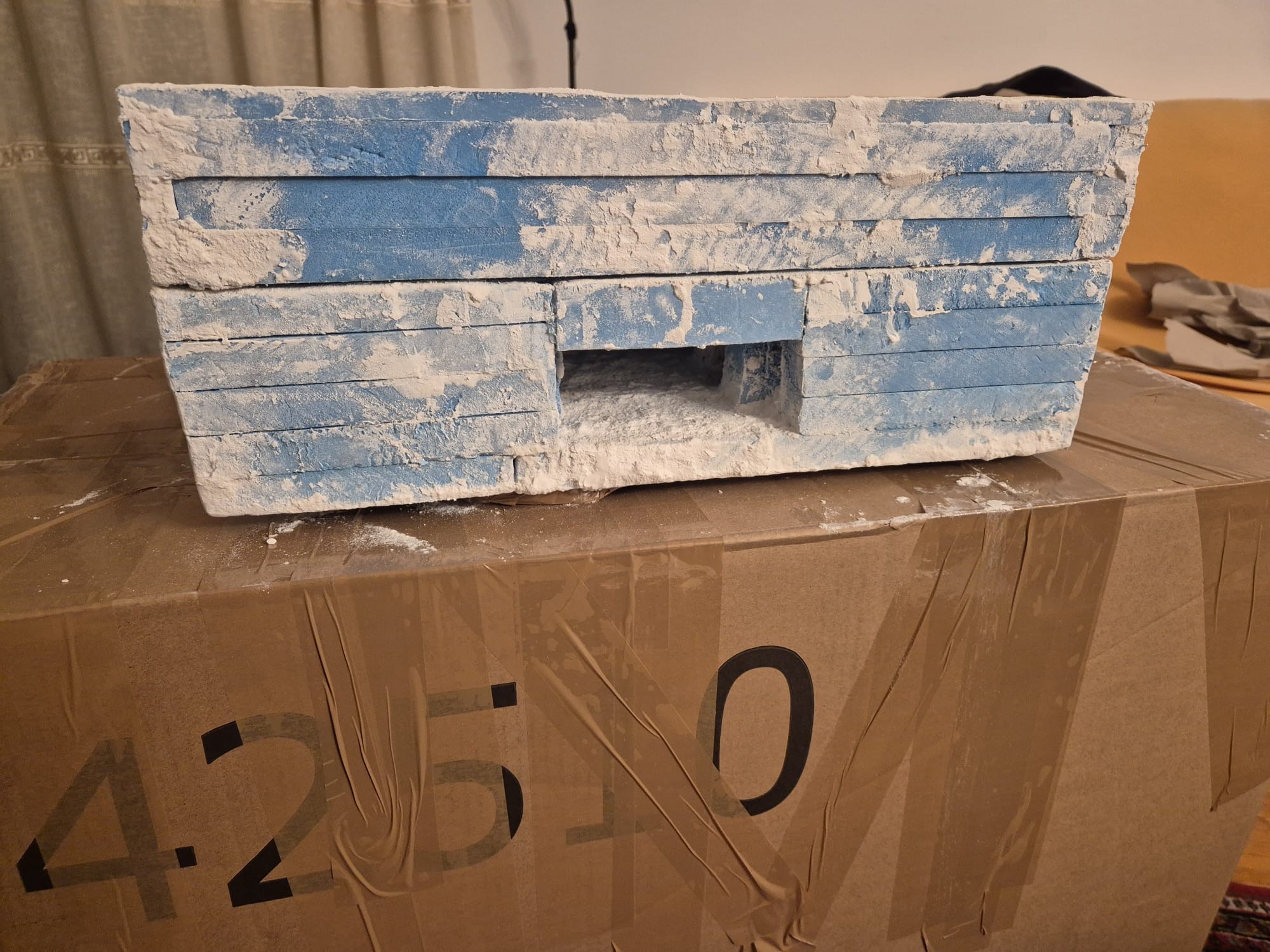
The lower segment, being both the platform on which the bunker stands and the interred pedestal once mounted in the D-Day diorama will only receive a cover to its surface but not fully on the sides or underneath, since it will have to be glued to the surrounding terrain of Omaha Beach.

And so, here is your snow cake partially completed…


As you can see it is not completely finished yet, but it is certainly coming together.

The rooftop has some bumps from accumulations of plaster and I will leave them there because in addition to the concrete compound this will be the part where soil and some vegetation will be added and therefore the concrete will barely be visible, if at all.

The procedure will be the same as I did with the previous incorrect Bunker I had started to treat like that, but this time adding Woodland Scenics Mold-a-Scene plaster sprayed freely with PVA liquified glue and then painted and stained appropriately in Earth colors.

And another day went by. Tomorrow I will probably have finished the plastering of all surfaces, including the rear interiors and on Wednesday I will finally apply the first concrete compounds, but first I will have to remove the excess plaster accumulated on the inner corners of the bunker and clean up the gun ramp and the embrasure, as well as the wheel stops and wheel bumpers.

But that’s for another day. Enjoy the sight of a bunker cake… and remember to always have fun in modeling. :wink: :grinning_face:

1 Like