Best fighter (1940)

I’ve read an article from AEROPLANE magazine comparing 5 WW2 fighter from the same time (1940)

The aircraft’s are:

-British Hawker Hurricane MK I

-German Messerschmitt BF 109 E

-French Curtiss P-36/Hawk 75

-Italy Macchi MG.200 Saetta

-Japan Mitsubishi A6M2 Zero

Whats great about this comparison is that they are not just class by fighter’s success, they are class by these order. Overall Performance, Tactic, Command and Control,Training standards, Pilot morale, Pilot visibly, Radio equipment, Armour, Armament, and Service maintenance. Each can have up to 10 points, then all summed up to 100 points. Which ever aircraft has the most point wins.

According to AEROPLANE magazine, the best single engine fighter on 1940 is…

Messerschmitt BF 109 E

Overall Performance:10/10

Tactic:10/10

Command and Control: 10/10

Training standards:10/10

Pilot morale:10/10

Pilot visibly:3/10

Radio equipment:10/10

Armour:1/10

Armament:7/10

Service maintenance:7/10

Total points: 78

2nd place(not far behind) is…

Hawker Hurricane MK I

Overall Performance:8/10

Tactic:6/10

Command and Control: 9/10

Training standards:8/10

Pilot morale:10/10

Pilot visibly:7/10

Radio equipment:6/10

Armour:8/10

Armament:7/10

Service maintenance:8/10

Total points: 77

And 3rd place goes

MitsubishiA6M2 Zero

Overall Performance:10/10

Tactic:7/10

Command and Control: 5/10

Training standards:10/10

Pilot morale:10/10

Pilot visibly:9/10

Radio equipment:1/10

Armour:1/10

Armament:7/10

Service maintenance:7/10

Total points: 67

After that its the Curtiss P-36/Hawk 75 with 56 points and at last place its the Macchi MG.200 Saetta at 43 points.

Not too surprise that the Me109 won, but I pretty sure the Hurricane was better. Now I don’t know why they didn’t compare other aircraft at the time (like the spitfire or the P-40) but it does seem that this comparison is fair for statistic, but not for combat, because at the end, luck determent’s the real winner.

In your opinion, what single engine aircraft do you think is the best fighter of 1940?
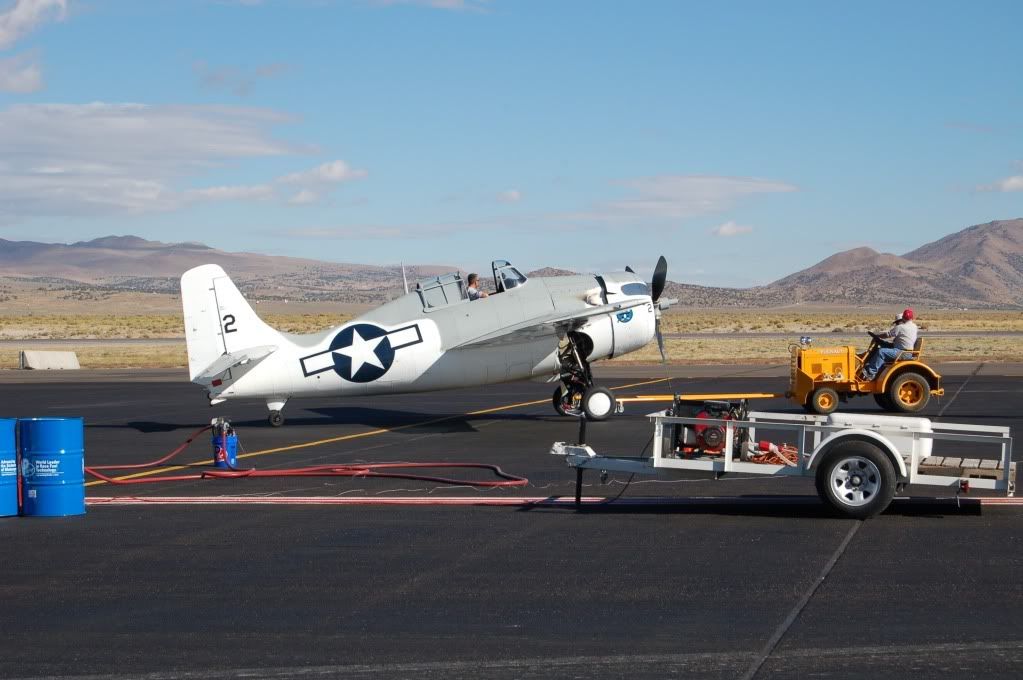
from the choices listed, I like the 109. the E model just looks lethal even sitting still.

I see range, which equals time over target, was not a factor. If it had been the Zero would be on top. This critical factor affected every other contemporary fighter. I also find it hard to believe that the Zero comes in behind the Hurricane and that the Spitfire is not even listed.

What stik pusher said. There are to many well documented planes that did far better than a good portion of that list that arent even included. I think the comparison is worthless, personally.

Perhaps, but this comparison is just to show how advance were basic fighters at the time, for me it was very useful. For example, I just learn that Italian planes sucks!

And Stik pusher, yes you are right, the Zero indeed had the best range of all (in fact a chart in the article show that most of the planes had a range of 350-410 miles, only the p-36 (600 miles) and the zero (1100 miles) had the best range). But the scoreboard counted the zero range in the overall performance, which is why the zero has 10, but because the zero was design as a pacific fighter, is had to have the best range, the other fight on the other hand were European fighter, they didn’t needed to go far, so the score was still in favor of the ME109 and the hurricane. Simply because they had better Armour and better armaments.

I don’t agree on the range argument. In Europe range was just as critical. Once the air war was over the Channel range played a big part for whichever side was on the offensive. Use of bombers and their survivability was learned to be tied to fighter escort range. Fighter vs fighter combat alone,while dramatic does not win battles. Their ability to get their bombers thru or shoot down intruding escorted or unescorted bombers does. I think the author was not overly objective here. No mention is made of Dewoitine D520. This aircraft had similar performance to the cutting edge fighters in Europe of 1940, the 109 and Spitfire. Certainly better than the Italian fighter listed.

These have no business being included in a comparison of aircraft - Tactic, Command and Control,Training standards, Pilot morale.

If you sold the plane to Bolivia or Hungary these factors would have no bearing on the quality of the aircraft and seem to be put out there to ensure the success of the Me109, in fact if you remove those categories the Hurricane comes out on top with the Me109 and Zero fighting for second place (1 point apart) I don’t know where the last two rank since you didn’t provide their full scores.

The Hawk 75 / P-36 was widely exported which AF did they base these subjective values on? the US, France, Finland? I doubt the P-36 would come out on top, but when the RAF tested it against the Spitfire it did quite well, even beating the Spitfire in some areas. Ultimately they decided the Spitfire’s higher speed and better climb made up for the areas the P-36 was superior as those features allowed the Spitfire to initate or break off combat.

The Spitfire seems like an obvious ommission, one that again seems to indicate a predisposition to favoring the Me 109.

The I-16, Morane-Saulnier 406, and Brewster Buffalo also seem like they should be considered since they were in service with fairly significant nations at the time (USSR, USA and France + export use).

Depending on the scope of the article the He 100, FW-190, Mig 1, LaGG-1, P-40, F4F Wildcat and Dewoitine D.520 seem like good possibilities since they would have been the new fighters coming online at that time (not sure if the He 100 had already been completely abandoned in favor of the Me109 in 1940).

Also it is not clear in your post, was this ranking done in a magazine from 1940, or is this a modern comparison picking the “best” fighter of 1940? If it is a recent article it fails badly since it rates the firepower of the Me109, Hurricane and Zero equally with 7/10. The Hurricane’s all .303 armament was proven to be inferior to large caliber machinegun / cannon armament. Both the Zero and Me109 had cannon armament so should have rated higher.

In 1940 lots of small machineguns was a reasonable alternative to a few large caliber guns. I don’t believe there remains any debate on the inadequacy of .30 machinegun armament today, in fact I think that debate had ended by 1943 (being replaced with 12-13mm vs 20mm).

I don’t feel the BF-109E should be on top. Didn’t it kill a lot of pilots in accidents due to the narrowness of it’s landing gear and ground looping? In the air, against fighters of that time,it had many of them out-gunned with it’s two 20mm canons, but also had terrible visibility from the cockpit. Add this too the limited range and I think others should come out ahead of it.

From those listed, I’d probably go with the Zero as number one - Bubbble canopy = great visibility, wide landing gear, great range and maneuverability, high training standards for the early IJN pilots, also had two 20 mm cannon - what’s not to like?

Oh yes, this is a modern ranking, the magazine is from September 2010.

It says that it is doing comparison with these aircraft (not other) simple because the hurricane, The Saetta, the ME109 and the zero are their country Main fighter, in fact the only reason the hurricane was chosen instead the spitfire was because in fought along side the P-36 in the battle of France and the evacuation of Dunkirk, and at the time of the battle of Britain 60 % of their fighters were hurricane. As for P-36, they wanted to compare a US made aircraft that was in the battle of France in French markings. That way, they could compare both the Curtiss effective design and the French air force training and combat. In fact I’m sure if they did compare a American marking P-36, its score would be higher, but the US wasn’t in the war yet.

Ok, I can understand that but using that criteria the Zero should be ou as well. It only entered service in mid 1940, 2 years later than the Spitfire. The A5M, Ki-27 or Ki-43 would be more realistic comparisons for the Japanese being their real front line aircraft for most of 1940.

I wouldn’t be too quick to assume the USAAF P-36 would do better than the French H-75s. Initially the French versions were better armed with 4-6 7.5mm machineguns. Eventually the P-36 got a more realistic armament of 2x .50 and 4x .30 but the P-36A initially came with just 2 guns (twin .30s or a .30/.50 combo). I would also guess France would have scored better in the non-aircraft specific nationality related areas I objected to, since in 1940 they had technically been at war for 9 months. In 1940 the US was scrambling to get ready for a coming war and facing many organizational / equipment issues.

The lack of a Soviet fighter shows the usual dismissal of the USSR. Sure in 1940 they were on the side of the Axis, and primarily involved in a war with Finland, but still a significant part of the war. While it looks dated and the #1 spot is unlikely, the I-16, could compete against any fighter in 1940 on fairly even terms.

I believe that to rate a fighter, one shouldn’t take human factors into account, such as pilots, etc. Also, one must consider the aircraft have diffferent theators, and thus were designed for dif. uses. Also, people’s opinions differ, so it is nearly impossible to determine a winner from aircraft so close in performance.

Oh ridiculous not to include the F4F.

I know we’re talking about 1940, but the Vichy French P-36 actually did some real damage to F4F squadrons in the opening phase of Operation Torch and the Wildcat pilots there were respectfull of a well-flown Hawk. Several Wildcats were lost to Hawks. The Dewoitine 520s were respected as well.

Against the Zeke, the Spitfire and Hurricane both faired rather badly initially as the RAF pilots flying them thought they could fight the Zeke the same way they fought the Me 109, ie; turn-fighting and other “traditional” ACM (read: Dogfighting)…

HaloMaster, I gotta tell ya that, when taking “Human factors” into account, it matters a LOT… A rookie pilot in the “better” aircraft will get his azz handed to him by the veteran or Experten in the “lesser” fighter… Pilot experience is a huge factor in a fight. For instance, Hartmann was asked if the Bf 109 was a better aircraft than the FW 190 and he answered, “No. But I could fly it (the Bf 109) better.”…

Chuck Yeager proved it as well, in a MiG-15 vs F-86… An RAF Major was flying the MiG for evaluation and he and Yeager, in an F-86, flying chase, did a quick dogfight, and Yeager was on the MiG’s tail in a couple minutes… Disgusted, the RAF pilot suggested another fight, after trading aircraft. Yeager went for it, and in no time was on the F-86’s tail…

“Major, the pilot with the most experience will wax your azz, every time.”, was what Yeager told him after they landed…

Getting experience was tantamount to success & survivability. The US Navy, by the beginning of 1943, actually considered it murder to send a fighter pilot into combat with less than 200 hours in a fighter.

Yeah, but we got the memo…Bubi wasn’t a great pilot.

I vote for the Fiat CR.42 Falco. There’s been some comments around here lately about Italian pilots in the Regia being subpar, but that’s flatulence.

And HvH knows, because he knows a lot, that the fighter with the highest kill ratio in WW2 was the FM-2 Wildcat. Why? Time at which it served, campaigns in which it served, opposition quality, and the positive values of the airframe.

I also stick up for the little Grumman in any bar fight, because it begat a whole line of really excellent aircraft that fought well all the way up into the 1970’s.

Hans, I think Halo was getting at the same point I was, evaluating the service using the fighter and the fighter is not an apples to apples comparison. If it was which service was best in 1940 it would make sense, but it makes no sense to claim a specific fighter was best when including a bunch of numbers based around the pilots / service. I notice the article gave the Me-109 10/10 in all of those non-aircraft specific areas. Any plane flown by the Luftwaffe would have ranked #1 using their poll. 50% of the score is based on things not having to do with the aircraft being evaluated.

I think you would agree a very good pilot in a Gloster Gladiator or CR42 would come out on top of a poor to average pilot in an Me109 or Hurricane, but you wouldn’t say the biplanes were the better aircraft.

While it wasn’t shown, I would guess the magazine rated the French and Italians poorly which wasn’t really shown to be the case in action. They were let down more by the available aircraft than pilot skill, training, morale. The Curtiss Hawk and MC200 were not dramtically inferior to the Hurricane, Me109, or Zero (well maybe the Zero but it was really of a later class of aircraft), but those aircraft did not make up the bulk of their respective services.

Of the five listed aircraft, I would have to say the conclusions are correct.

What about the P-40? That would be the early variants in 1940, and it never could best the planes it was pitted against. There was never anything really wrong with it… but even with years of development, it was outclassed by its competition.

The Spitfire? It, too, was relatively new at the time and not on full strength. It’s geatest legacy, or so its been said, was in its immense “stretch” as a design, anyway. It would be a few years before it was to become the sleek and deadly bird we think of.

In1940, Hurricanes made up the greater strength within Fighter Command and had the job of tackling bombers… while the fewer Spits tried to keep the Messies off. The early mark Spitfire was also hampered by it’s downdraft carburetor, while the Bf-109’s were fuel injected. Every Jagdwaffe pilot knew to watch for the Spitfire to go vertical…

What about P-38’s and P-39’s? Both were around in 1940, but remember we had not entered the war in 1940. These, too, were new aircraft that hadn’t reached their stride. Their time was yet to come. Indeed, the Airacobra was used by the RAF very early on, but they soon learned that it wasn’t much of a fighter above 15,000 ft. and so relegated it to moving mud.

There was the F4F, which could absorb alot of punishment. But you gotta be able to dish it out, too, and the Wildcat wasn’t close to the early Zero in maneuverability. The Zero 11’s and 21’s also had range; however, they were under gunned, lightly built, lacked sealing fuel tanks… one good hit and they crumpled. F4F pilots got in high, came in hot and flew off fast. They didn’t mix it up with Zero’s. But these are moot points - the war in 1940 was still a European war. The 109 could fly and fight faster, and punch just as hard, as both of these. Personally, I would leave the Zero out of the running altogether for that year.

How about the Russians? Nope, they had nothing in 1940 to compare to these five. I-16’s and I-15’s were a decade old, and the excellent MiG’s, Yaks and Lavochkins of later years were still a dream. Ditto the P-51 and P-47… both still on the drawing boards.

In 1940, the five entrants here bore the brunt of the fighting - a new kind of air battle, in fact. Our own USAAC really didn’t understand it, and was trying to catch up. What they saw in these aircraft was heavy weight of fire__*__, self sealing tanks, fast roll and turn rates, high power, speed and high G’s from liquid cooled “V” engines, armor protection, totally different tactics… these were taking shape in 1940. The aircraft that had these things could emerge the winner. Anything less would spell disaster.

__*__The Hurricane was actually very close to the Bf-109E, with one exception - it lacked punch. It still used rimmed, rifle caliber ammunition… the same thing issued to the ground troops for their bolt action SMLE’s. Yeah it had 8 guns to make up for this, but the 109 fired high speed machine guns and explosive 20mm cannon projectiles.

One or two hits from those and your aircraft was done… and you were lucky to escape alive.

There were “contenders,” too, for sure. The other two, Hawk and Saetta, get a mention. And there were craft like the Buffalo and the D.520, but they were all hampered in some way. The French, for example insisted on ground controllers directing the air battles over their heads! But most possible “contenders” were simply available in too small numbers to make much difference. Remember, this isn’t a “what if” but a comparison among what really WAS.

I reckon they got it right: Bf-109, Hurricane and Zero, in that order.