1:525 Lindberg Kennebec Class Fleet Oiler (as USS Marias AO-57)

In my collecting of model to build, I was thinking of doing a kit of one of the two US Navy ships that my father-in-law served on during the 1960’s.

USNS Neptune (ARC-2) Cable Repair Ship (Lead ship of the class)

USS Marias (AO-57) Cimarron Class Oiler

I knew I would have to look at older out of production models and I’ve come across several of the type but unfortunately none in the class ship I’m looking for. Figured I would check with those who know more than me if kits for those class ships were ever made to see if its a futile effort. Building one from scratch is way above my pay grade (aka skill level) at this point.[:)]

“A” ships notoriously don’t get much love in modeling.

You no doubt know that your best bet for Marias would be a model of Neosho, which is quite famous.

Thanks.

I will look into that.

just watch what Neosho you get as there are 3 of them.

USS Neosho (AO-23) was a Cimarron-class fleet oiler https://en.wikipedia.org/wiki/USS_Neosho_(AO-23)

USS Neosho (AO–48) was a Kennebec-class type T2 fleet oiler https://en.wikipedia.org/wiki/USS_Neosho_(AO-48)

USS Neosho (AO-143) was the lead ship of her class of fleet oilers https://en.wikipedia.org/wiki/USS_Neosho_(AO-143)

So, a year later….

… I’m getting ready to build this model for my Father-in-Law as a Christmas present. I still haven’t built anything in the year I’ve been buying box kits so I’m starting off with something light and easier.

Lindberg Kennebec

I will be following these two builds (FSM Mattaponi forum thread: http://cs.finescale.com/fsm/modeling_subjects/f/7/t/171901.aspx ) and (YouTube video: https://www.youtube.com/watch?v=hy26AdsQ2C8 ) as guidance, and tackle this beginner kit over the next 10 days.

After reviewing the various options, I chose the Kennebec Class tankers as they were the kits produced that most closely resembled the Cimarron Class in which my Father-in-Law served on (USS Marias AO-57) as mentioned above.

Question on colors - Having hard time finding the colors that I need – specifically Neutral Gray, Deck Blue, and Antifouling Red - at Hobby Lobby and Michael’s so I’m going to make do with the closest that I can find. I did see some Gunship Gray and Gun Metal. Not enough time to order online and wait for shipment so I have to go brick and mortar. I’m going to check a local hobby store tomorrow (they are few and far between here) to see if I can find the paint colors I want. Hobby Lobby had a Flat Enamel Finishing Set with 12 colors, only 1 of which I would need (Flat Black) but I would buy it more for the accessories like brushes, sand paper, etc. I also need to decide as to whether to go with Enamel or Acrylic (help, anyone? Which is best for model ships? As this is a redo of a 1960s model, are the instructions just as ancient and those color names/types been replaced by different ones that I should be looking for?

^^^

It’s been a while since I included an image in a post, and apparently I’ve forgot how, because none of my several attempts have resulted in an image being displayed in my post above. [N]

Cimarron Class was 553’ long with 2 props & the Kennebec Class was 501’5" with 1 prop.

http://www.navsource.org/archives/09/19/19057.htm

http://www.navsource.org/archives/09/19/19036.htm

Yup, you are correct and I came across that while doing the research, and I wasn’t going to be able to obtain an exact model. As I mentioned though, the Lindberg Kennebec kit was the existing and available model that most closely resembled the Cimarron Class so that’s what I went with.

I thought HL carried Vallejo? I don’t go there.

Okay,

I was able to find the paints (except the Antifouling Red) at the local train store that had a hobby paint section.

Not having the Antofouling Red reminds me of this question I meant to ask yesterday but forgot. One several internet images of the Marias in the 1960’s it looks like there was no AF red on the lower sides of the hull and that the entire boot was painted black. Maybe the actual horizontal bottom of the ship was AF Red but not the sides.

This image from 1957-60 shows a very large black band of black paint with what seems to be another color at the water level. That color is lighter than the gray on the hull so it can’t be AF red, can it?

https://en.wikipedia.org/wiki/USS_Marias_(AO-57)#/media/File:USS_Marias_AO-57_1950s.jpg

USS Marias (1957-60)

This color image from January 29, 1971 in St. Croix shows the same significantly sized black boot

https://www.flickr.com/photos/35033278@N00/4291556302/in/photostream/

USS Marias (Jan 1971)

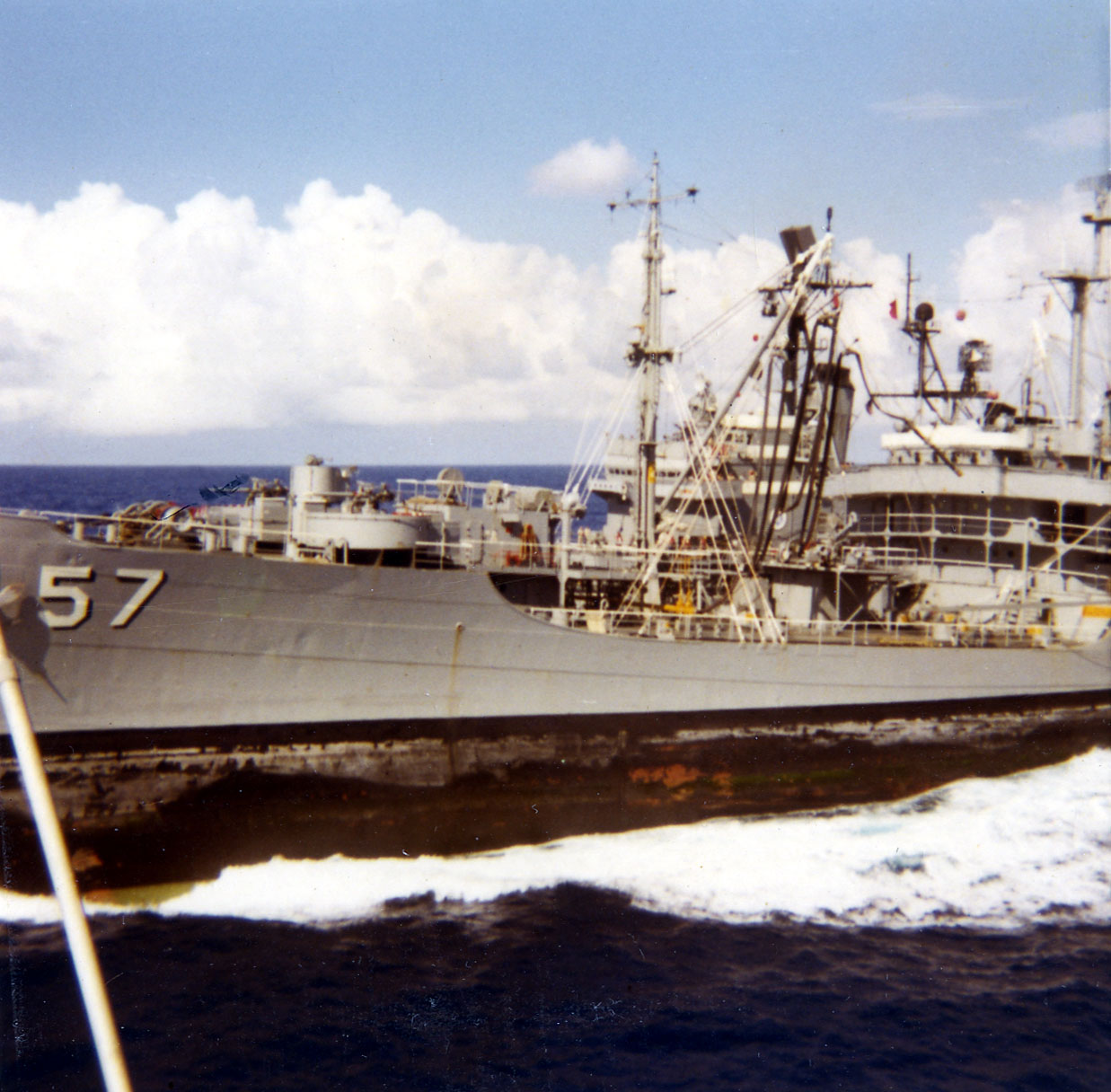
And finally, the color image of the Marias taken from the USS Franklin D. Roosevelt prior to refueling in February 1971.

https://ussfranklindroosevelt.com/wp-content/gallery/bob-miller-71/02-uss-marias-ao-57-w.jpg

USS Marias (Feb 1971)

This last one shows several discolorations underneath the very narrow solid black line on the top but well above the wake in the ocean. Color seems to be red.

So I’m wondering if I should just paint the entire boot black or do two narrow strips of black and AF red.

The boot stripe is the transition from bottom paint to side paint. Oilers have significant draft changes from laden to empty. That NavSource photo shows the draft marks at the bow very clearly. Each marking is half a foot (6") tall; and ten show, so the boot stripe is ten feet wide.

Now, “bottom red” runs from under the boot strip under the hul around to the other boot strip on the other side. There are endless debates on what color “red” it ought to be.

The Tamiya “Hull Red” is not bad, if more of a match for IJN hull paint. Some USN bottom paint scans more red in color photos, but we can argue if that is an artifact of Ektachrome color prints (which are heavily blue biased) or a Kodachrome issue (which can make reds “redder”).

There is a good argument , in modeling, to just use Rustoleum’s rattle can “rust proof red”. Which only really has an issue with celan-up and wanting a very solid primer under it.

Really, the best answer is find a red you like, that covers well, and does not cost an arm and a leg.

Emanels will–generally–cover better, but acrylics have easier clean-up, and–again, sometimes–faster dry time. Not having to stock all the possible thinners and cleaners/solvents, is typically the reason to choose one over another.

A very limited selection of Vallejo, not the whole line. HL carries maybe two dozen Vallejo colors at most.

Another complication is that almost all steel ship models show the ship in a condition minutes before the dry dock is flooded. Then marine growth, dockside rubbing, friction while underway and general scumminess take over. If you are ever around a ship or boat newly made dry; they stink. Not an attractive thing to model.

The Cap’n will correct me if I’m wrong, but during the War period a boot stripe, or boot topping, was confined to Navy ships. The vast majority of auxiliaries, those that sailed under the Maritime Commission and were not “USS”, didn’t have them.

I’ll opine that 10 markings at 6" each equals 60 inches, or five feet. That’s a pretty common dimension.

One small thing, I’ve never heard any suggestion that on Navy ships in WW2 they were any color other than black.

I’ve always assumed that the bigger the ship, the taller the stripe, although not in a linear fashion. Some smaller ships, as the Cap’n notes like a T2 tanker, grossly change their displacement when laden or unladen. I’ve seen photos of T2’s, which had the engines way astern, sticking the bow completely out of the water when empty.

Other ships like aircraft carriers probably don’t change much.

Another thing. Be aware that a boot stripe does not have a constant width. In other words, in almost all cases an continuous width of tape all the way around as a mask will produce poor results.

Rather, while sitting on an even keel a boot topping will encompass the vertical dimension between the least and highest displacement, plus some. Pretty much the only way to get this right is to scribe a pair of lines representing those extremes (plus) on the hull while it is rigidly mounted on (or under) an even keel.

As for what color red to paint the bottom. I don’t know the answer, no doubt others do. I find the smaller the model, the more true red I go. But that’s just me. Tamiya Hull Red is brown, Tamiya Dull Red is redder.

Rustoleum primer is brown however quality issues with the paint itself have lately made me avoid it.

Ace makes a knock off version, is grossly red but I think looks swell for the red primer that used to be ubiquitous on merchant vessel decks. Here’s a model with both.

If you have access to any railroad colors, boxcar or caboose oxide reds are a reasonable substitute for hull red.

The Tamiya ‘Hull Red’ is really intended for Imperial Japanese Navy ships, where the fact that it is more brown than red is appropriate. For other navies, much less so.

Thanks for all of your input.

More frustrations with being able to post images instead of links, so maybe it doesn’t like Google Photos. So I’m going to try the Fotki that I saw GMorrison do.

No luck again…

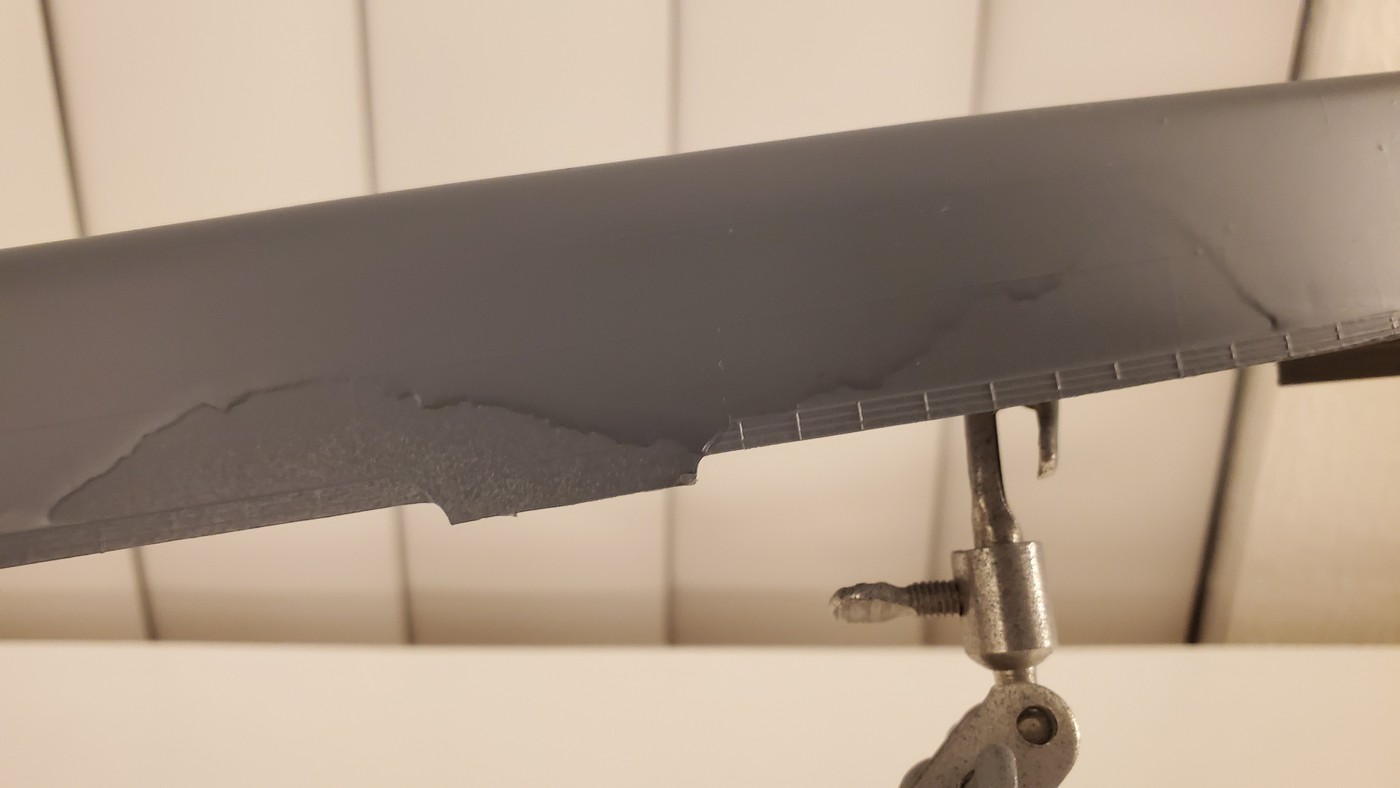
Hull Paint 01

https://public.fotki.com/KCW80010/fine-scale-modeler/20191216-212338.html

Hull Paint 02

https://public.fotki.com/KCW80010/fine-scale-modeler/20191216-212433.html#media

Hull Paint 03

https://public.fotki.com/KCW80010/fine-scale-modeler/20191216-212407.html#media

Hull Paint 04

https://public.fotki.com/KCW80010/fine-scale-modeler/20191216-212358.html#media

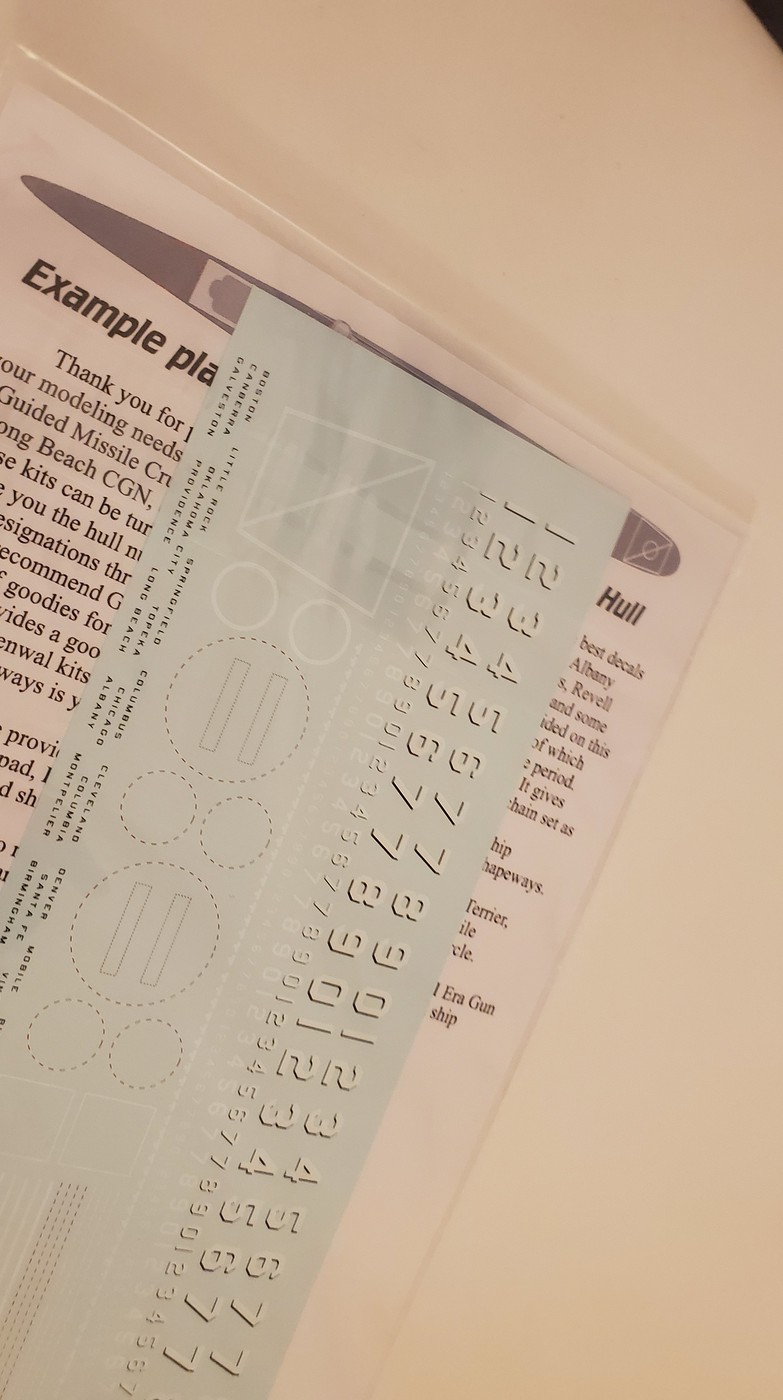
Decal Set

https://public.fotki.com/KCW80010/fine-scale-modeler/20191216-212531.html#media

NOOB time:

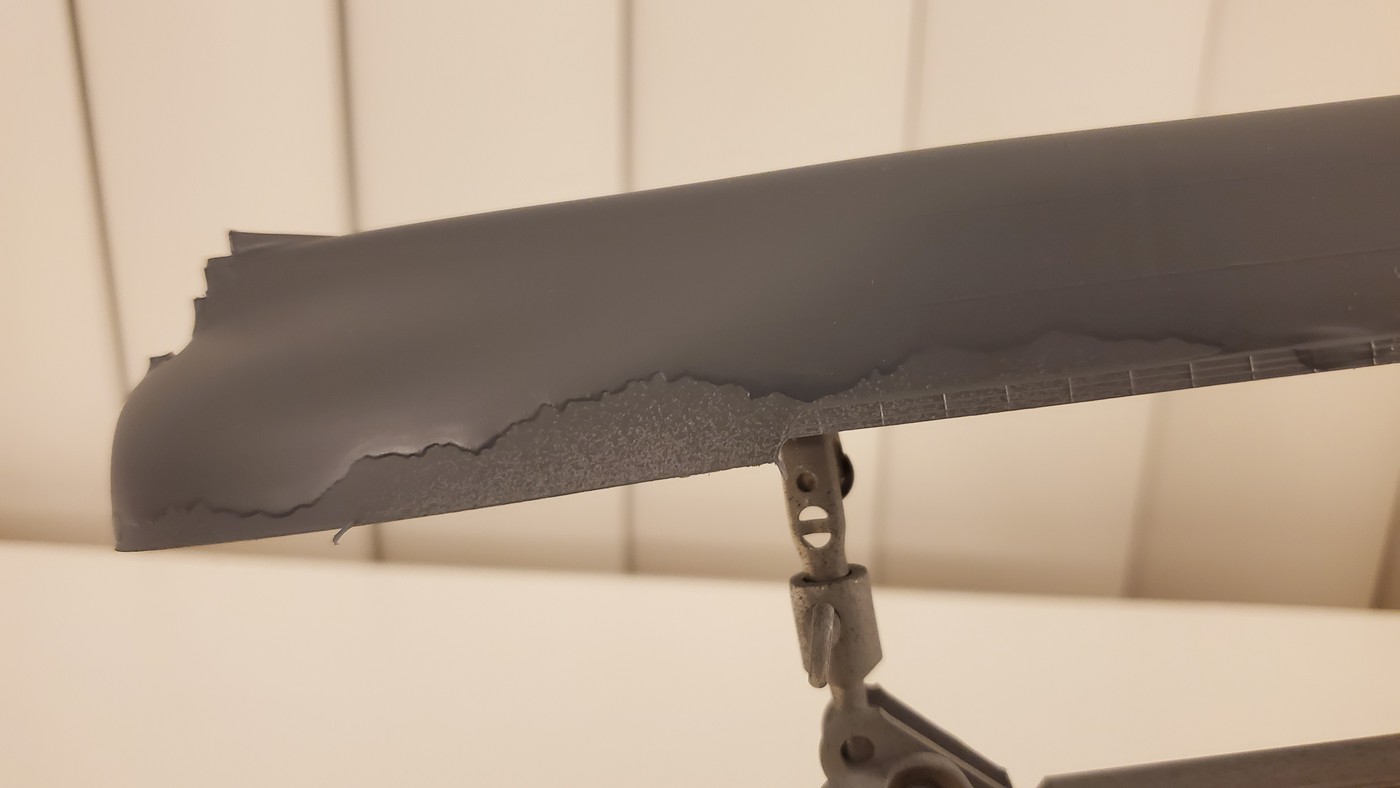
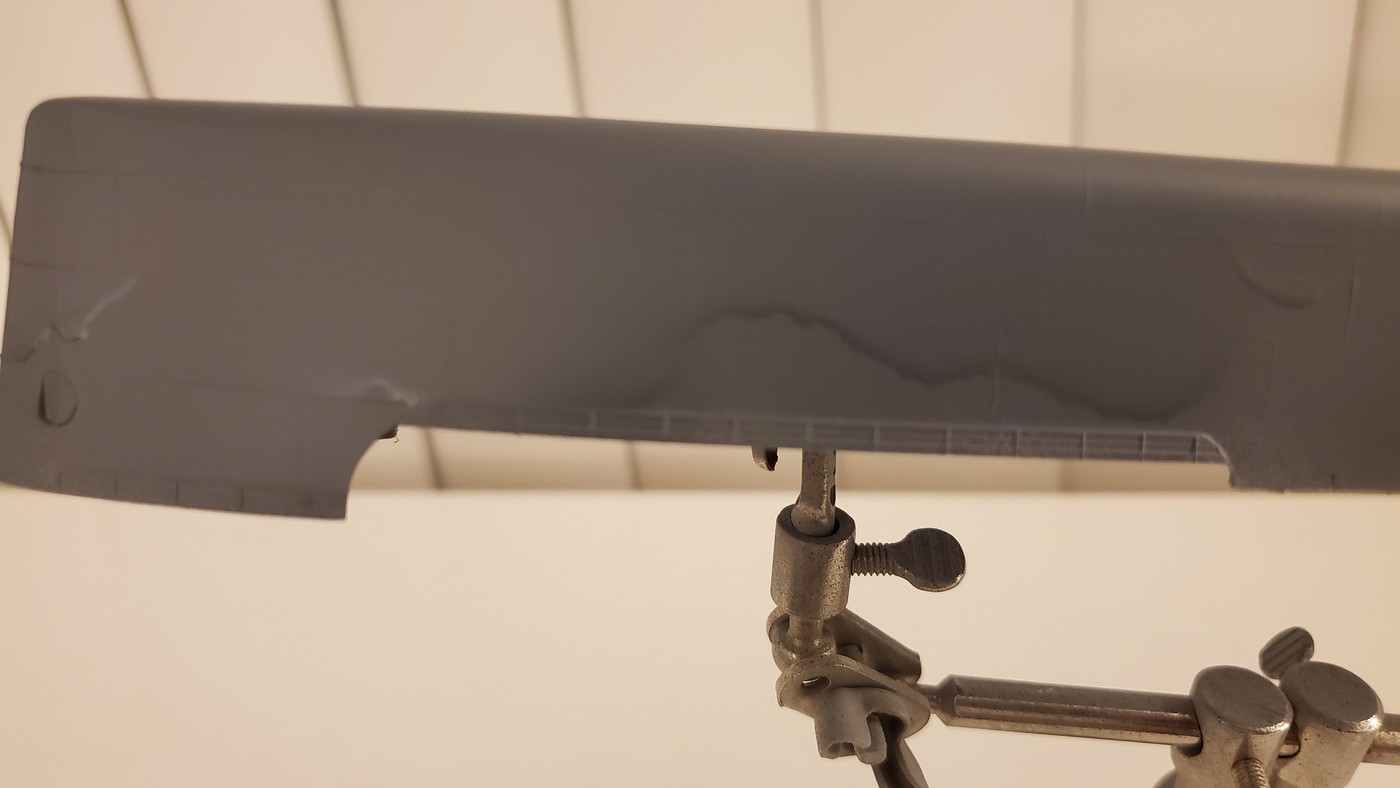
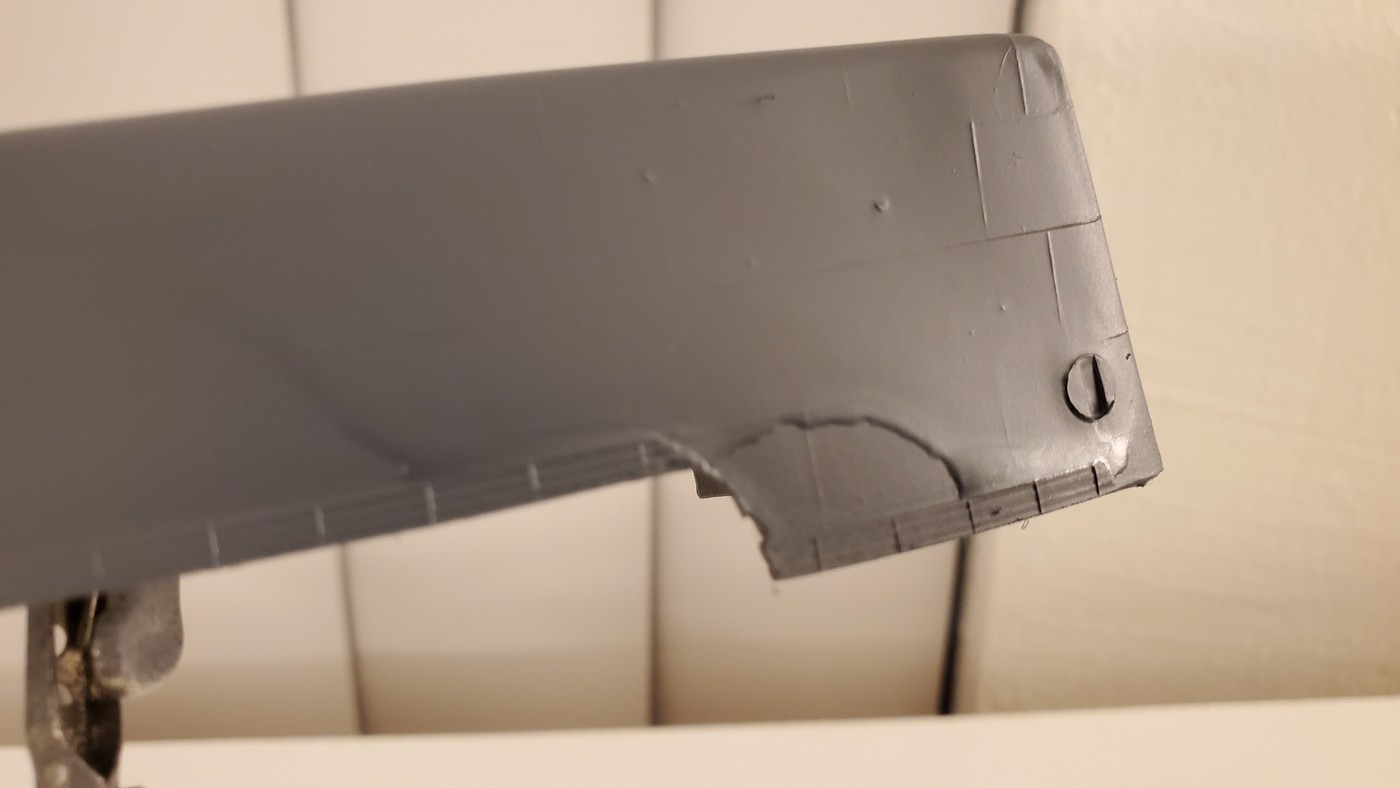
So the links to each of the photos show the painting dilemma that I have. Did some painting in poor and fading light outside and was having some issues with the airbrush spray. So when everything was said and done and looking at the dried paint job inside with illumination so can see what resembles a Sherwin Williams logo with paint drops. This only occured on the ship hull and and none of the other parts that I painted. How do I rectify this? Painting it over will still leave the lumps and ridges. I gues this is where the sanding comes in and repaint it again?

Good news is that I received my 1:500 scale decals in the mail from Mark’s Models.

Now;Air,LandSea7.

Last time I posted about a specific ship condition this is what I had in mind. Although the hull is cleaner than I envisioned, look at that gross cruddy hull below the Boot stripe.

Now Black Boot stripes are a Navy thing. The Victory I sailed out of Seattle for Olympic Steamship didn’t have one. It was Grey then Red.

You’re attempting to image link a .html (web page) as opposed to an image file. Select a .jpg, .gif, or .tiff image type file for use.

Hull Paint 01:

Hull Paint 02:

Hull Paint 03:

Hull Paint 04:

Decal Set:

There’s significant debate over just who typically used boot topping. Naval use goes back to about 1905 or so, depending on which Navy you are referring to.

There is a general truism that merchant vessels are boot top less. Now, some US Flagged Maritime ships followed wartime painting rules. The problem being that all the rules seem to have exceptions. Sigh.

Draft markings, by long tradition are 6" spaced 6" apart. So, top of one numeral to top of next is 12" (I should go check, as 50cm would be a more senisble dimension than 30.48cm).

The top and bottom for boot topping is almost always set while the ship is in dry dock, so they can be measured from the keel datum point. They are typically marked with a line of weld on the hull plates. Which the painting crew can then connect with a batten to soapstone the masking line between.

G’s point about how those horizontal lines from the side might be a very wide when viewed from below (for instance) depending upon the hull geometry.

There had been a rule in wartime that boot topping width would expand as it was expected that ships in wartime would need faster turn-around time than would allow for maintaing all of the hull paint. It was also expected that wartime harbors might not be as pristine as they might be in peacetime.