1/48 Revell "The Spirit of St. Louis"

When you have several builds going and maybe facing a stall. Or you have just ended a long project, you may come to decide that a bit of something different is just the ticket. Here is a bit of fun for Daywalker.

I was asked to head up a Group Build on another site and it was slightly out of my main era of study. Google is a grand place to start but a bit of a caveat for the neophyte here. Don’t believe everything thats out there. I chose the Revell of Germany variation of their recently issued Ryan NYP as flown by Charles Lindbergh.
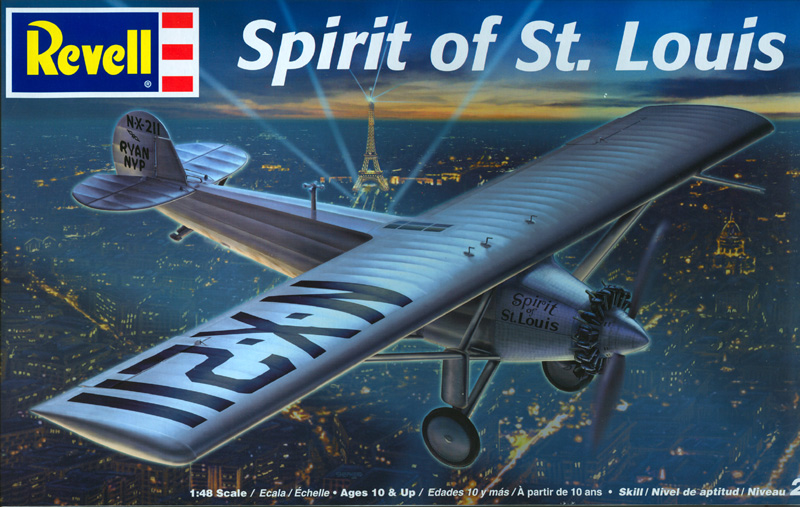
In reference to Revell GmbH & Co kit # 04524 manufactured in late 2005 and sold beginning in Feb 2006 we find a typical good to fair quality kit.

The history of the The Ryan NYP text is ok but the misspelled a they name of the business man that put up the prize money. There is one very indepth study of this kit on Internet Modeler that has some of the best information in one place.

Concerning the real machine another good source wrote;
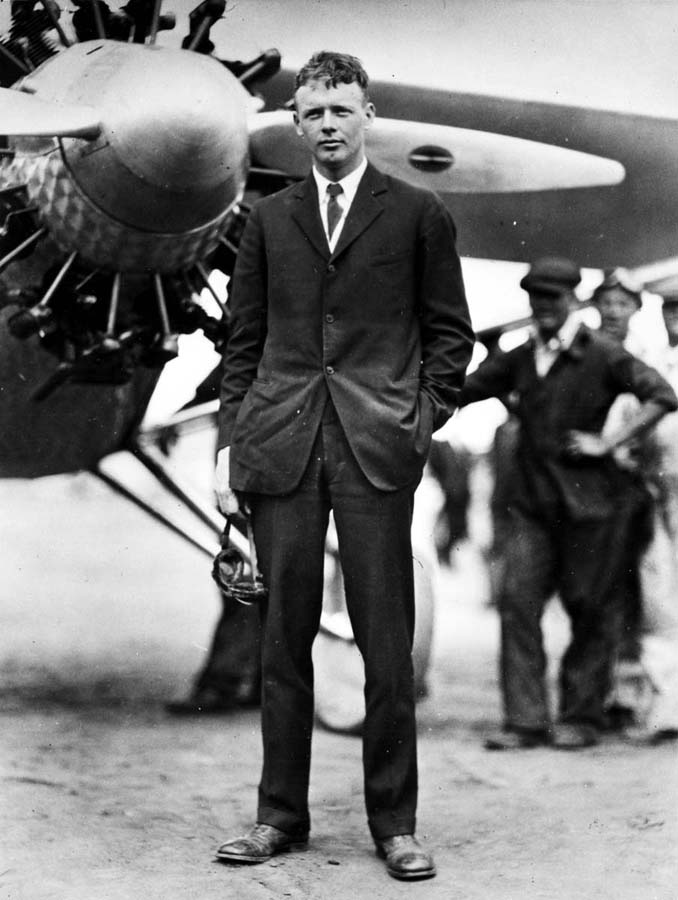
". . . It was in the fall of 1926, during the lonely hours flying the mail at night, that a young airmail pilot for Robertson Aircraft Corporation, had his first thoughts about flying across the cold Atlantic waters in an attempt to capture the elusive Orteig Prize. His name was Charles A. Lindbergh.

The $25,000 Orteig Prize, which had been offered since 1919 by a prominent New York hotel businessman, Raymond Orteig, for the first non-stop flight from New York to Paris, was not what interested Lindbergh. Instead, he was intrigued by the idea of demonstrating publicly that airplanes could safely link the United States and Europe, and at the same time, giving greater credibility to civilian pilots and commercial aviation. As for the danger of such an incredible flight, Lindbergh believed that neither the weather nor the dangers of a transatlantic crossing could be any worse than what he had already experienced pioneering the air-mail routes from St. Louis. Rain, snow, ice, and fog, could be compensated for with experience and through logical thinking. . ."

". . .Because of the support from the St. Louis backers, Lindbergh was given the freedom to pursue his dream of crossing the Atlantic in a single-engine monoplane with a single pilot, which he knew was safer and more likely of success. Mr. Bixby would later name the plane, the the Spirit of St. Louis. Having been turned down by all the major aircraft manufactures, including his attempt to purchase a Bellanca (the only pre-built plane available for such a flight), Lindbergh traveled by train to San Diego and Ryan Airlines, Inc. at the insistence of his St. Louis backers. He had queried the small company before being turned down by Bellanca.

If Ryan Airlines of San Diego could complete a specially modified aircraft, it would need to be ready in two months. Though a possible task, as far as Lindbergh was concerned his chances for success were waning.

Arriving on February 23, Lindbergh soon realized that the decision whether to place an order with Ryan, and their ability to build such a plane in 60-days, rested in his estimation on one man, Donald Hall, the new Chief Engineer. The two men, scholars of current aviation technology in there own right, and experts in their fields, had much in common. Both had attended flight school in Austin, Texas at Brooks field a year apart. Hall was 28 and Lindbergh 25. Fueled by a common interest, there was a spark between the two men, and on February 25, Lindbergh placed his order for the Spirit of St. Louis. . ."
For more on the real story click here.

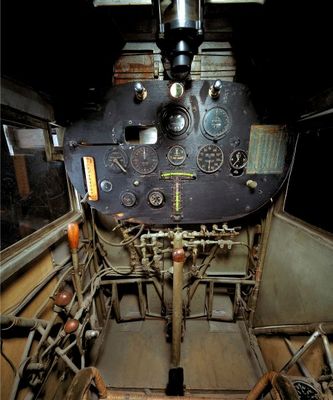
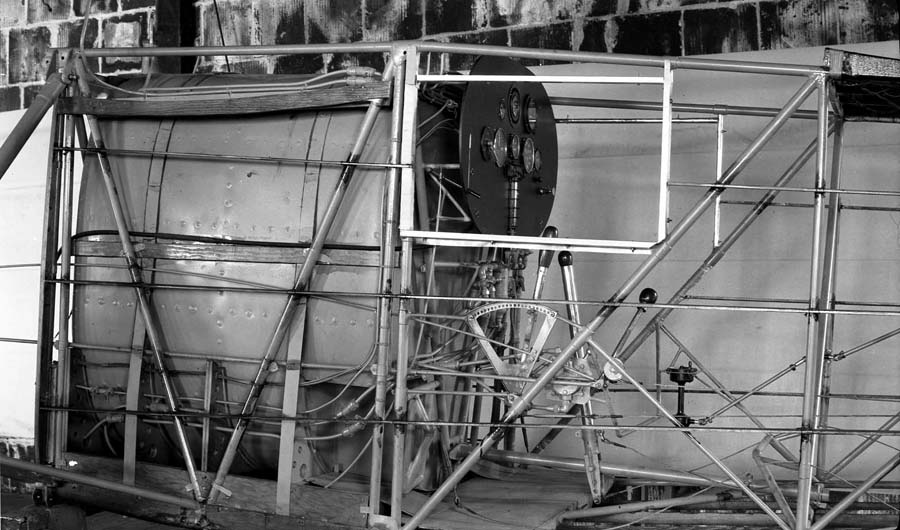
Below is the cockpit of the real deal under const. The nose is at left. Note the fuel cell and black oval instrument panel.

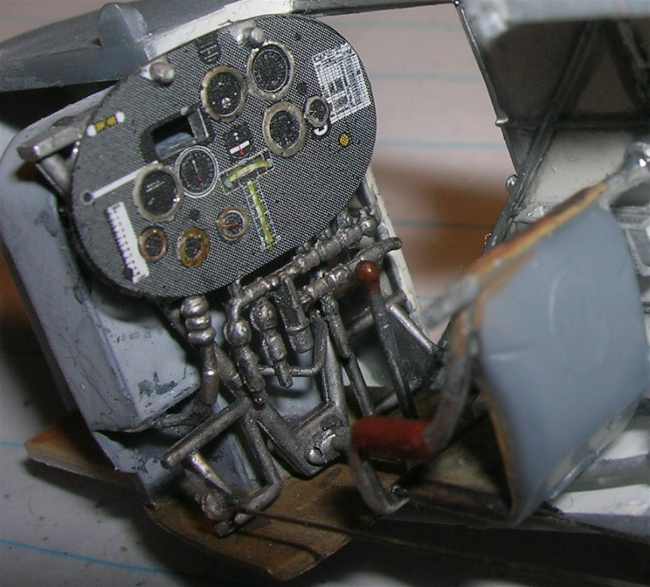
This was my first ever digital image that I took. (I am old fashioned and uptil today only ever used celluloid and a NikonF with a Macro lens). My first images of the build. This is the second fuselage. (The first was chewed on by or Silky and Laso.) I added bezels and rudder cables.

I don’t care much for the kit push rods but I’ll go with them for this build.

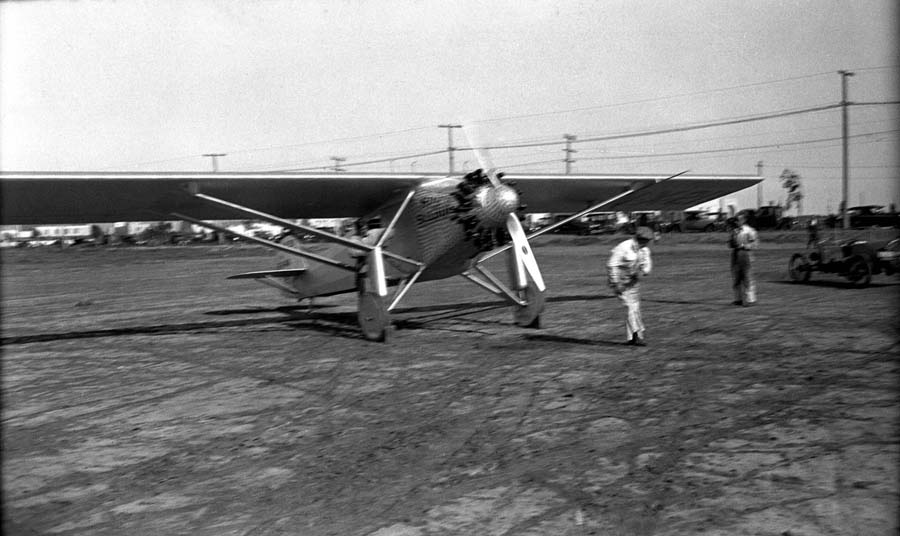
Here is a shot of the roll out note the blunt spinner.

". . .On April 28, 1927, Lindbergh wired Harry Knight in St. Louis to inform him that the plane was ready for its first flight. That first day, as captured by the photographs and memories of Donald Hall, was extraordinary. With all their hard work and diligence, Ryan Airlines had met their 60-day goal and as the Spirit of St. Louis lifted off a cheer erupted from the assembled factory crew. Their dreams and hopes were embodied in that silver plane and young aviator Charles Lindbergh. . . "

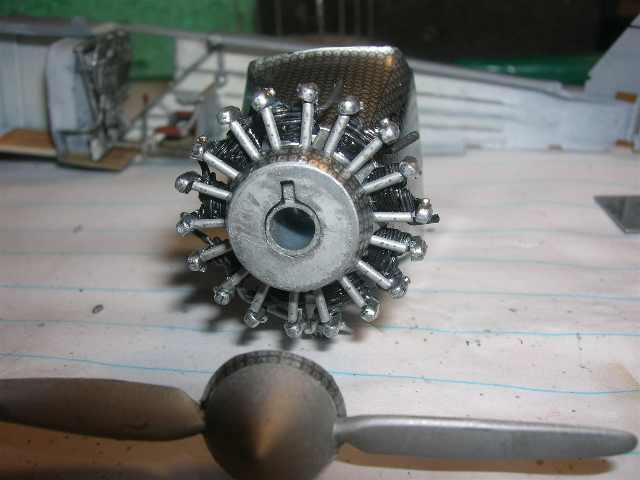
Note, the spinner after its first flight cracked and had to be replaced. It wound up being more pointed and was not engine-turned (damascene) as was the rest of the metal cowling.

Greetings all;
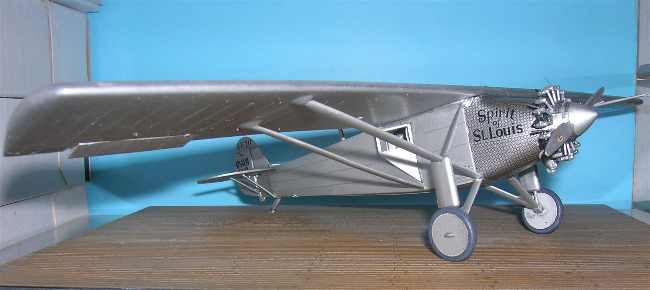
Here a bit of fun. Though still not quite completed. Several bits ands pieces to be added.

Wow, very sharp build! That IP is truly spectacular, well done! Great info on the history as well. [tup]

Thanks for the pics and info.

The SoSL has been in my stash for years now waiting its turn.

Great job on the build.

Mike

Looks good Stephen. It’s a very nice kit.

Regards, Rick

Fortunately we have one handy for inspiration.

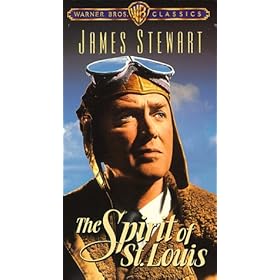
When I happen to be at a LHS or craft store and their are adults looking for a model for a new modeler to build, I recommend this kit. I also advise they make a stop at the video store to pick up the James Stewart movie classic:

Or pick up one of the many good books about Lindberg.

The model kit is just the right size and number of pieces for a kid to build with parental supervision. They learn history in an exciting way.

I picked this one up from Wal-Mart right before they stopped selling models, and I’m really looking forward to building it.

Nice build! This is a fun kit with great box art as a bonus. Can you imagine living back then when this historical flight took place? What a thriller that must have been…

Very nice work on the “Spirit”, especially the instrument panel.

Darwin, O.F. [alien]

great work. The IP is outstanding.

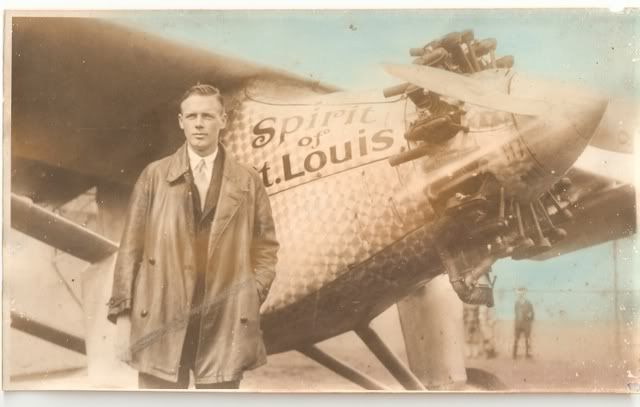
Here’s a photo that my father gave me a long time ago.

The color artist missed a few spots of sky around the wing and landing gear.

Thank you for your kind remarks. After adding the scratchbuilt periscope and the other minor bits it is my intention to put her in a diorama or vignette. Imagine if you will a dark hangar at Le Bourget field with only a few lights burning in its interior. It is late and the new gal from the USA is sitting in one quiet corner. A small tear in the fabric is apparant, the result of an over enthusiastic crowd on her arrival. The pilot sits quietly on one wheel staring out at a star filled night sky through a nearby window. I would call it “Starry starry night. . .”

It has been noted that Charles Lindbergh was a large fan of the works of Vincent Van Gogh.

The Instrument panel is a very sweet part of the build. Here is another shot of the real deal.

Under the skin ribs are lacking on the spine and belly of the fuselage. The standing figue provided in the kit looks more like Gort from "The day the Earth Stood Still" but then again injected mold figures have never been Revell’s strong suit**.**

Thanks for the time and effort in displaying your very well executed “Spirit of St.Louis” build.The historical narrative was great to read and really makes the model " come to life". Great job on the presentation. The box art is a bit off in time. The scene illustrated is one of modern day Paris. I suppose all the lights do make for a more interesting back-drop. This could be an episode of “The Twilight Zone” if they ever remake the series.

rg

Stephen, that is just outstanding! A very inspirational build! [tup]

I think that was one of my first aircraft kits in the early 70’s, I’m pretty sure I did the Hawk 1/72 scale kit but the box art is similar enough that I had a little rush remembering that kit, Thanks.

Your kit came out great, I think I’ll have to add this to my growing aviation milestones to do pile, maybe someday it will actually sit by my X-1 (like most my to get to pile is way bigger than my finished shelf).

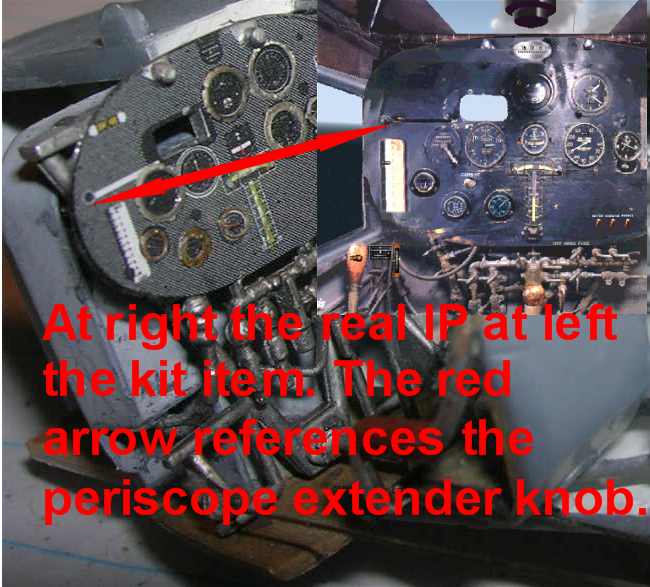
I was asked what the knob / lever was on the left side of the kit panel. Because the fuel cell was infront of the cockpit Mr. Hall decided to add a periscope that could be extended out or retracted behind the instrument Panel (IP.)

I vaguely remember getting a very small plastic kit of the Spirit in a box of cereal, probably in the mid-50’s. I’m sure that was the start of my horrible plastic fixation. Does anyone else remember this? I suppose I could’ve dreamed it. This Revell 1/48 kit is quite nice and builds up easily. A good builder’s block unblocker!

Looking really sweet. How did you get the burnished steel effect on the cowling? Looks really neat.

…Guy