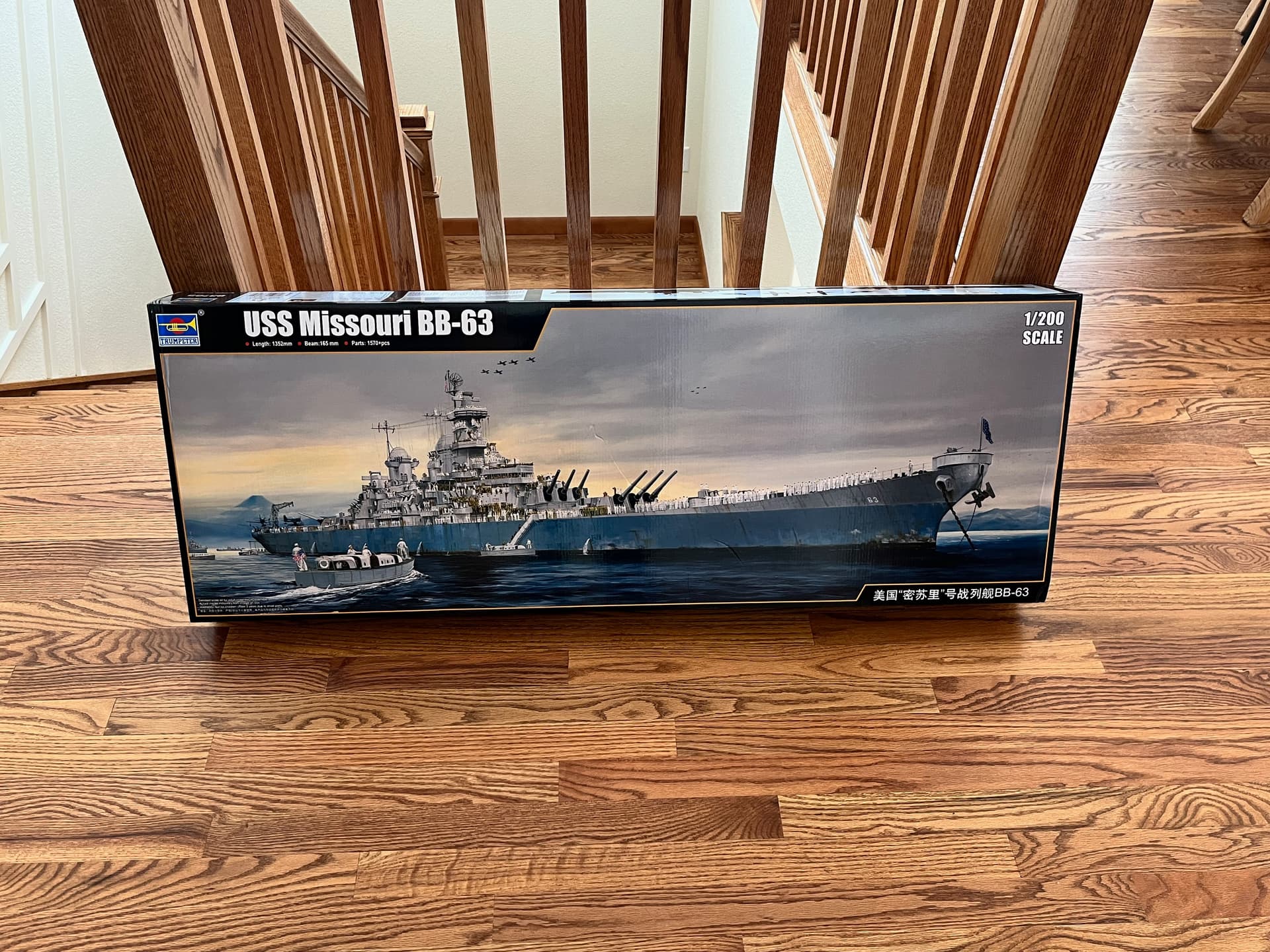
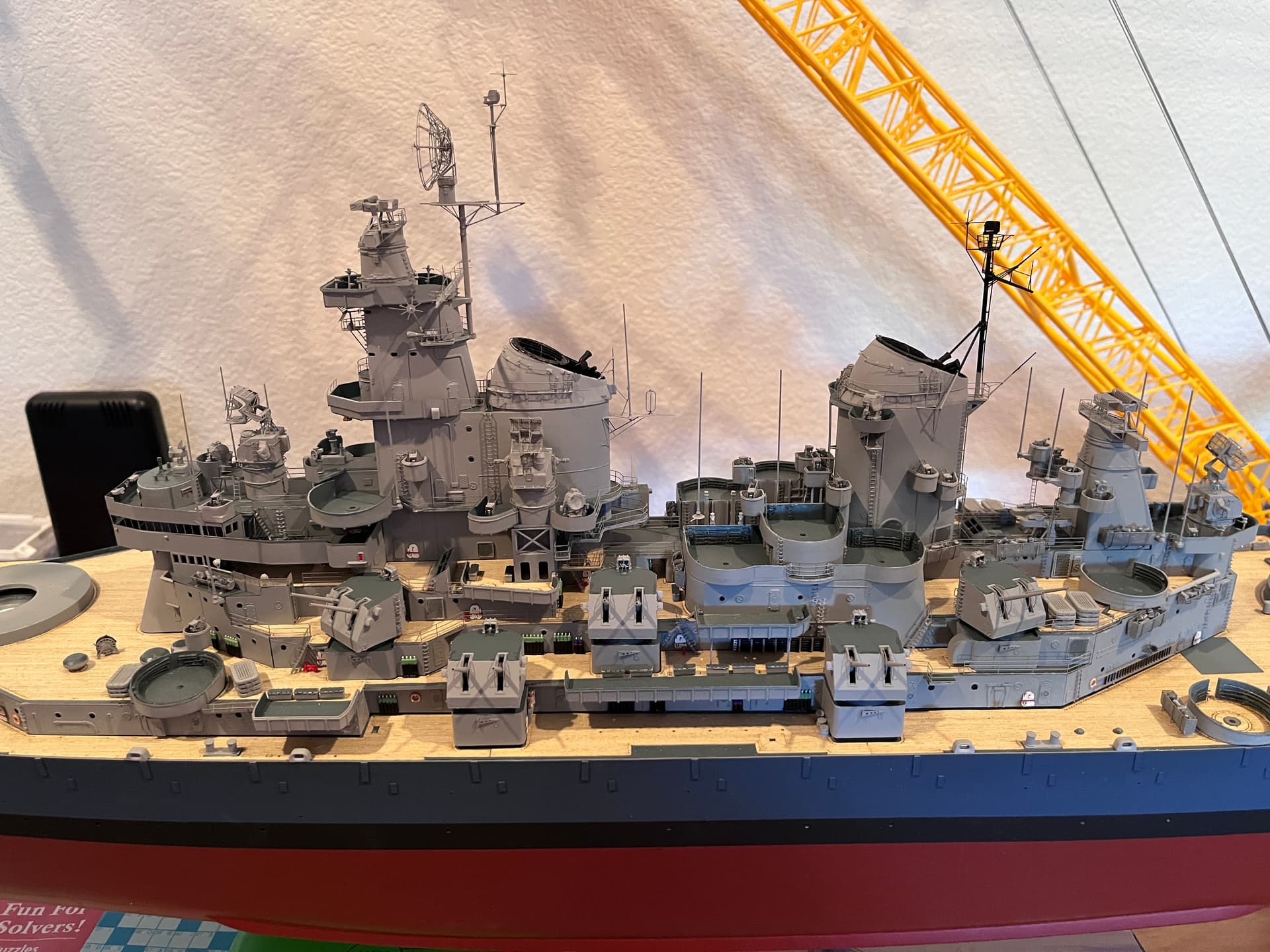
This is the Trumpeter model, the WWII version of the ship with all the PE details. This model is HUGE, over 4 feet long. I was documenting the build on another site but that site seems to have lost my info and I am consolidating everything onto this site. So I will only cover the highlights to date since there are many good builds and videos out there for this model. I have added some missing parts and have published those parts for free if you want to print them yourself.
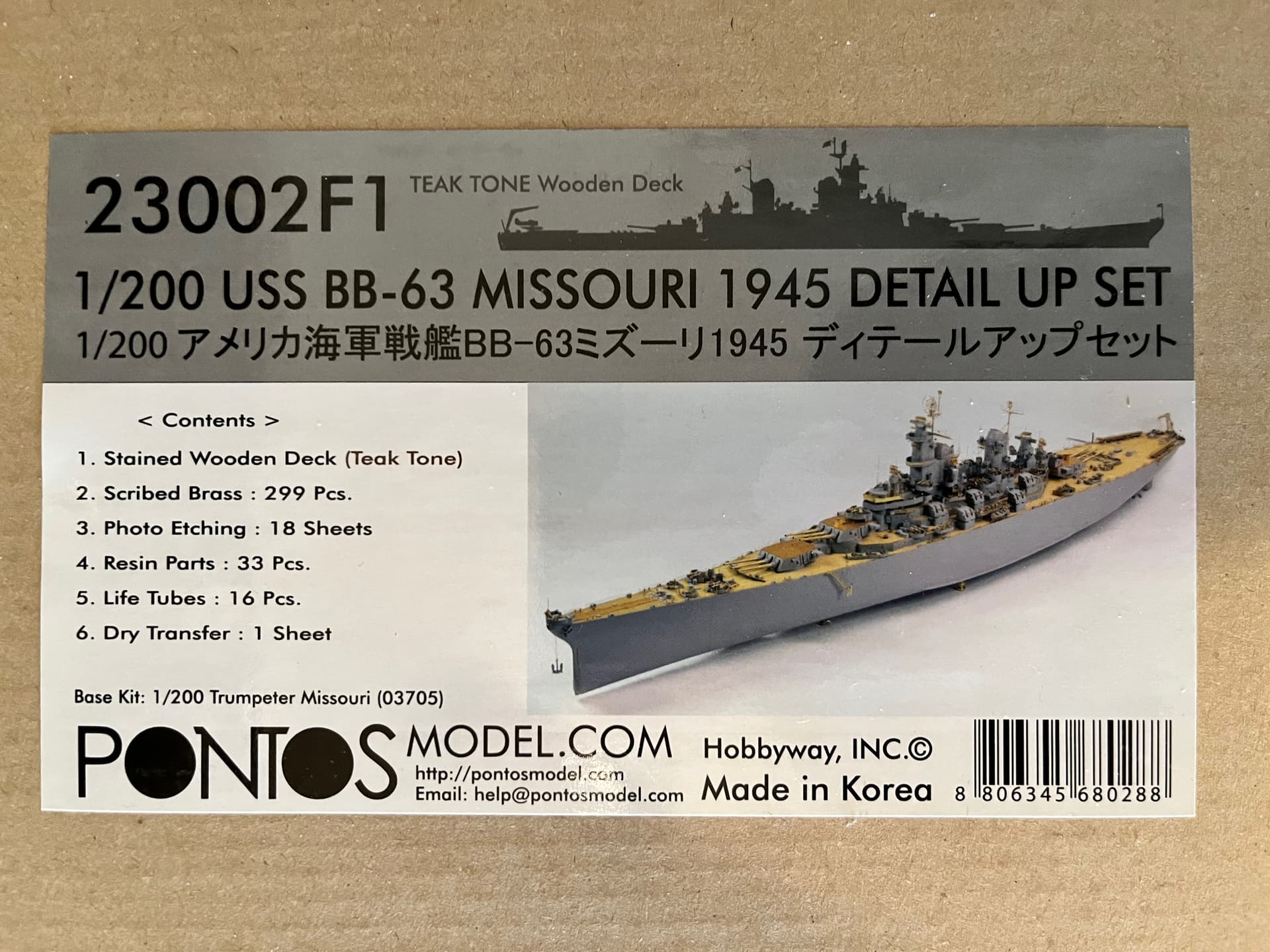
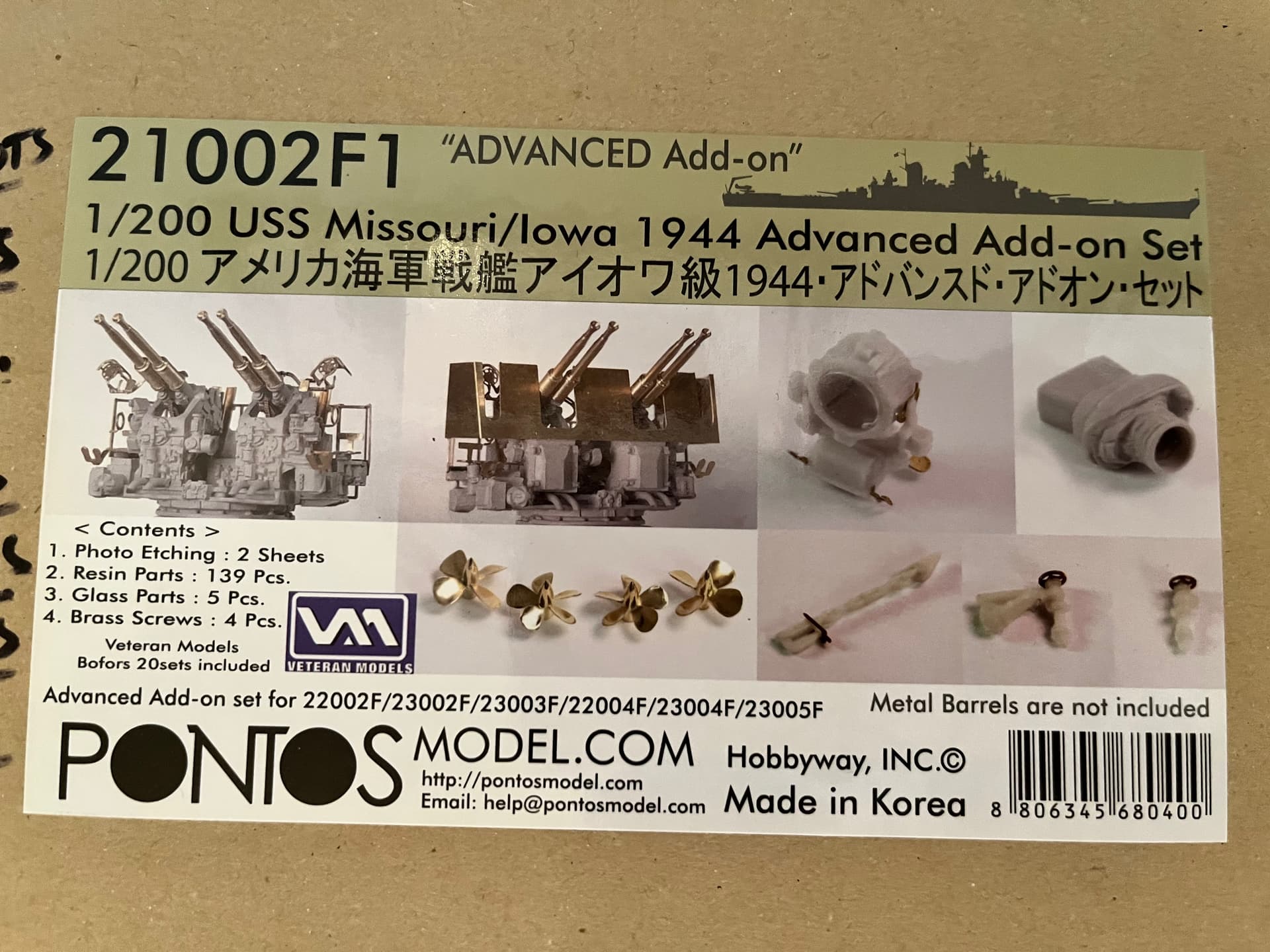
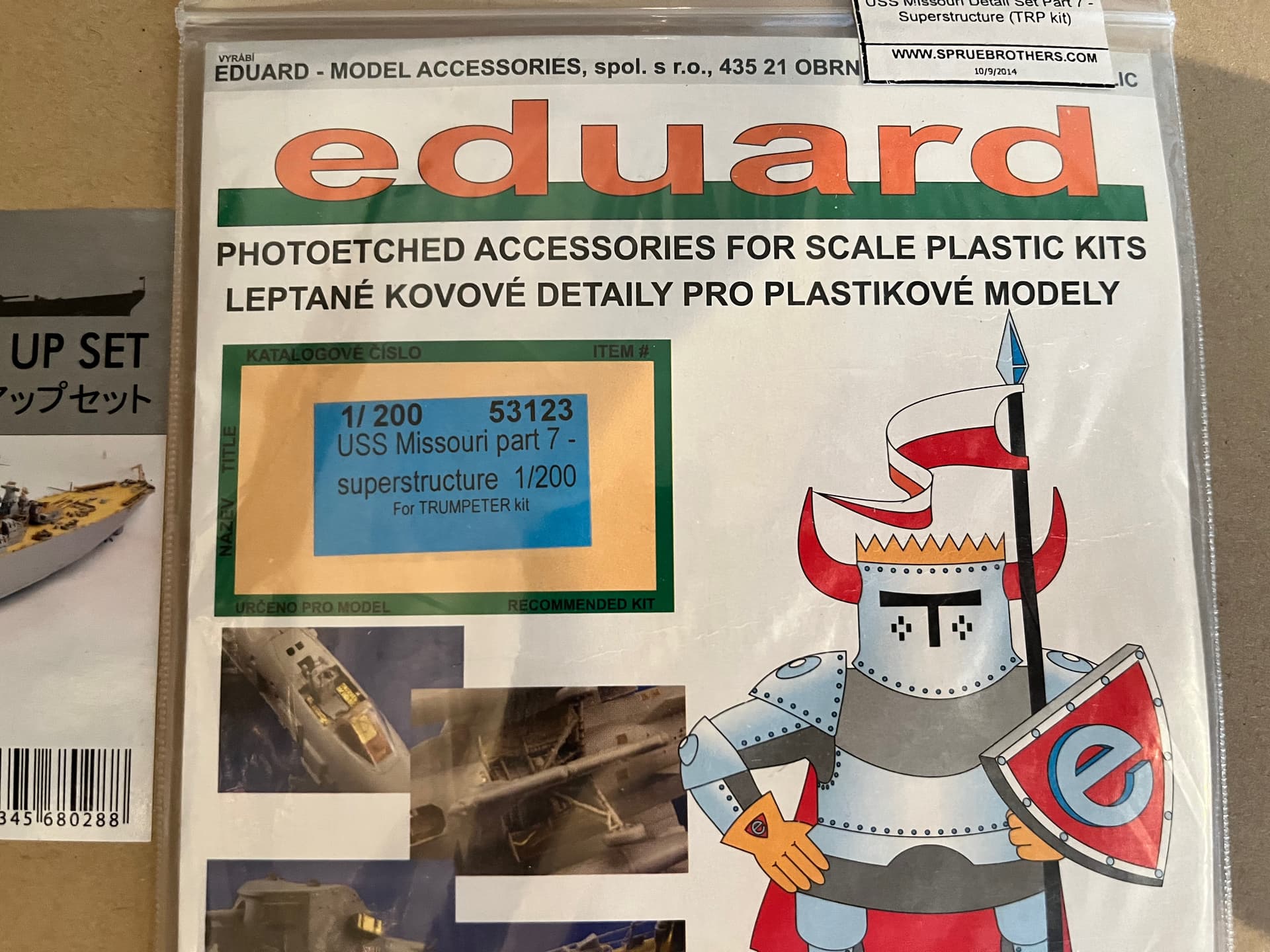
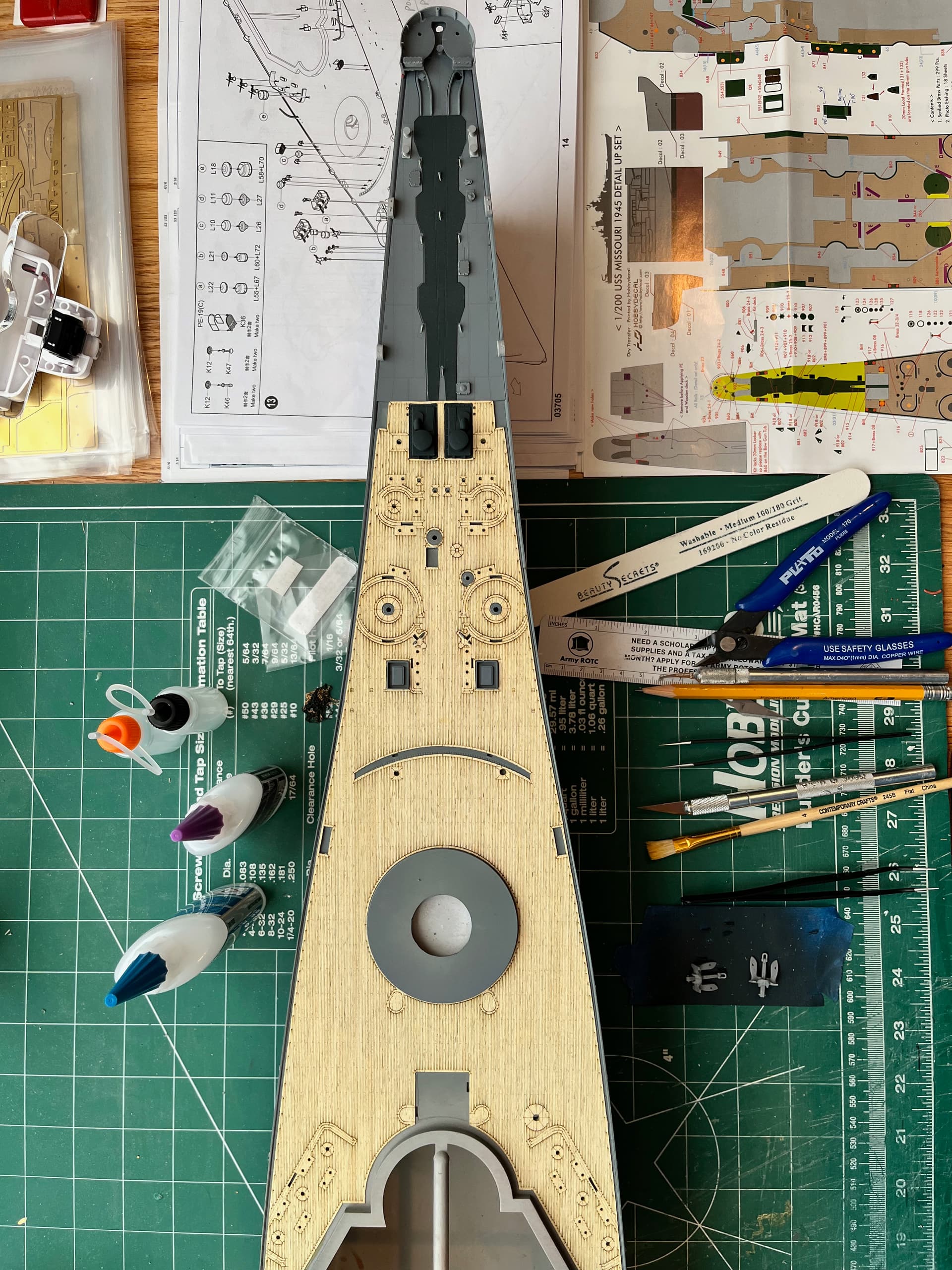
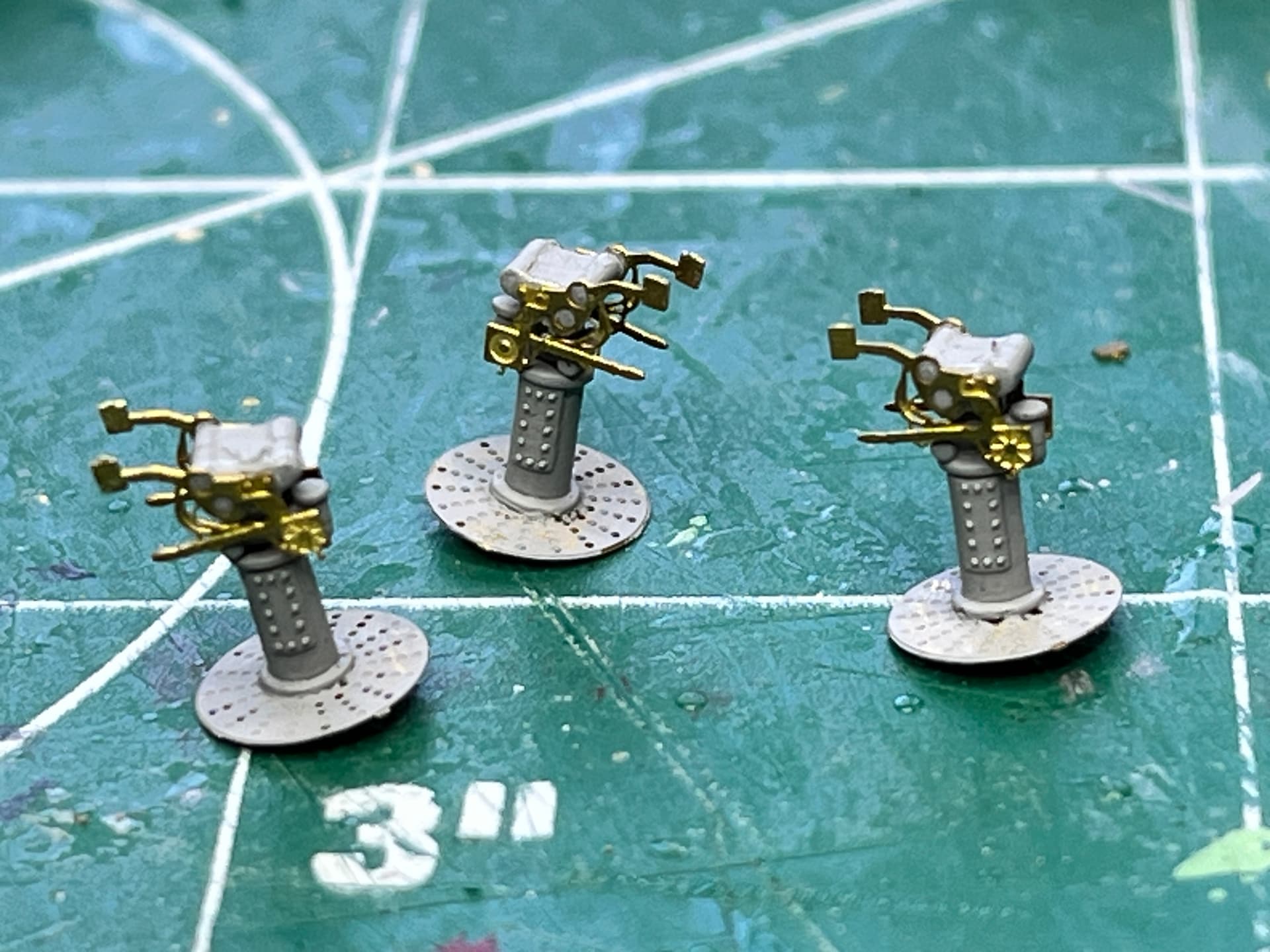
In addition to the basic kit I bought two Pontos kits; the 23002F1 which has an amazing amount of PE and wooden decks along with the 21002F1 which has very detailed bofors. In addition I bought the Eduards Part 7 pack of PE, primarily for the intake grates. And also more accurate gas bottles from Model Monkey. Here are pictures of those packs.
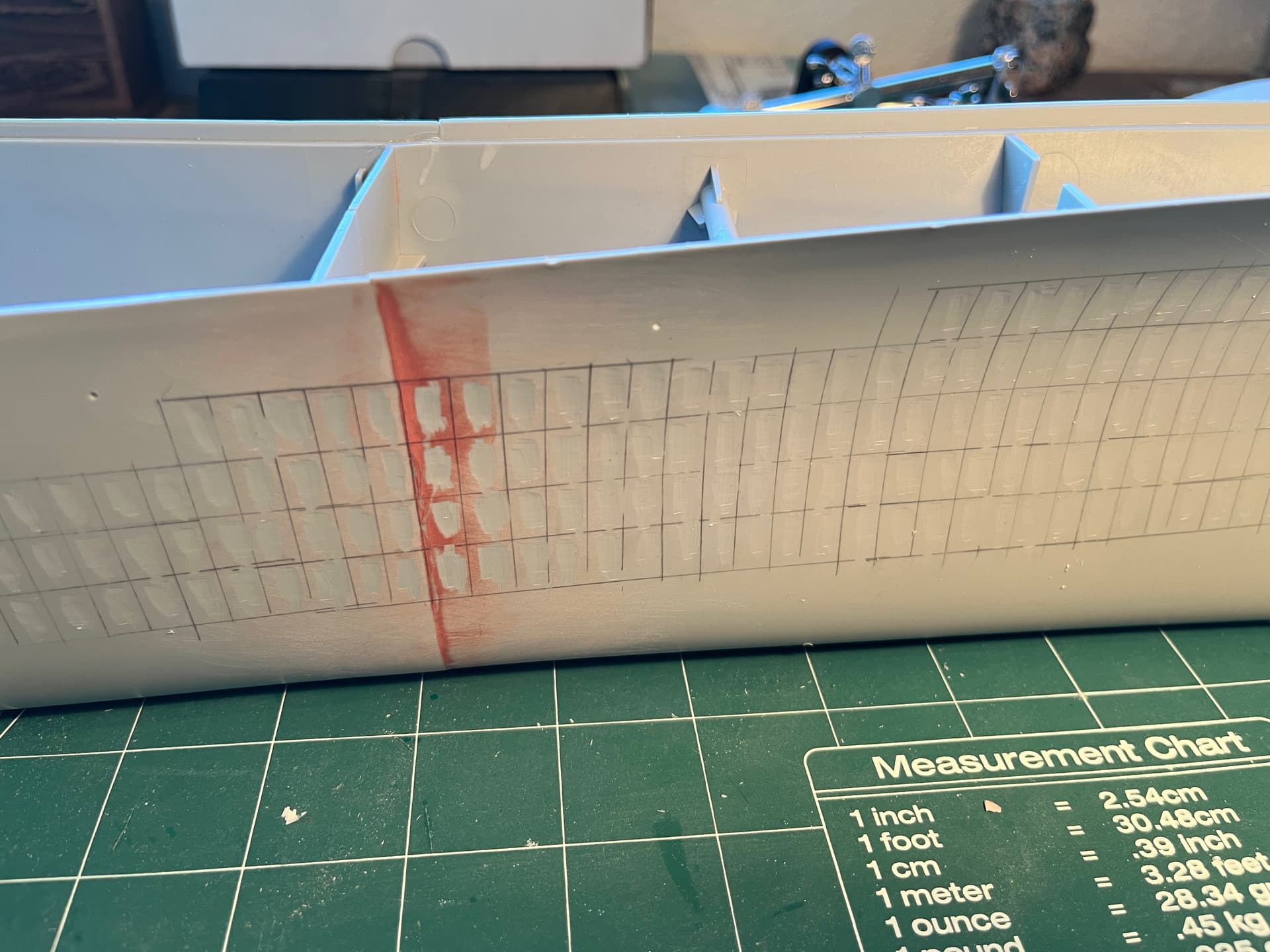
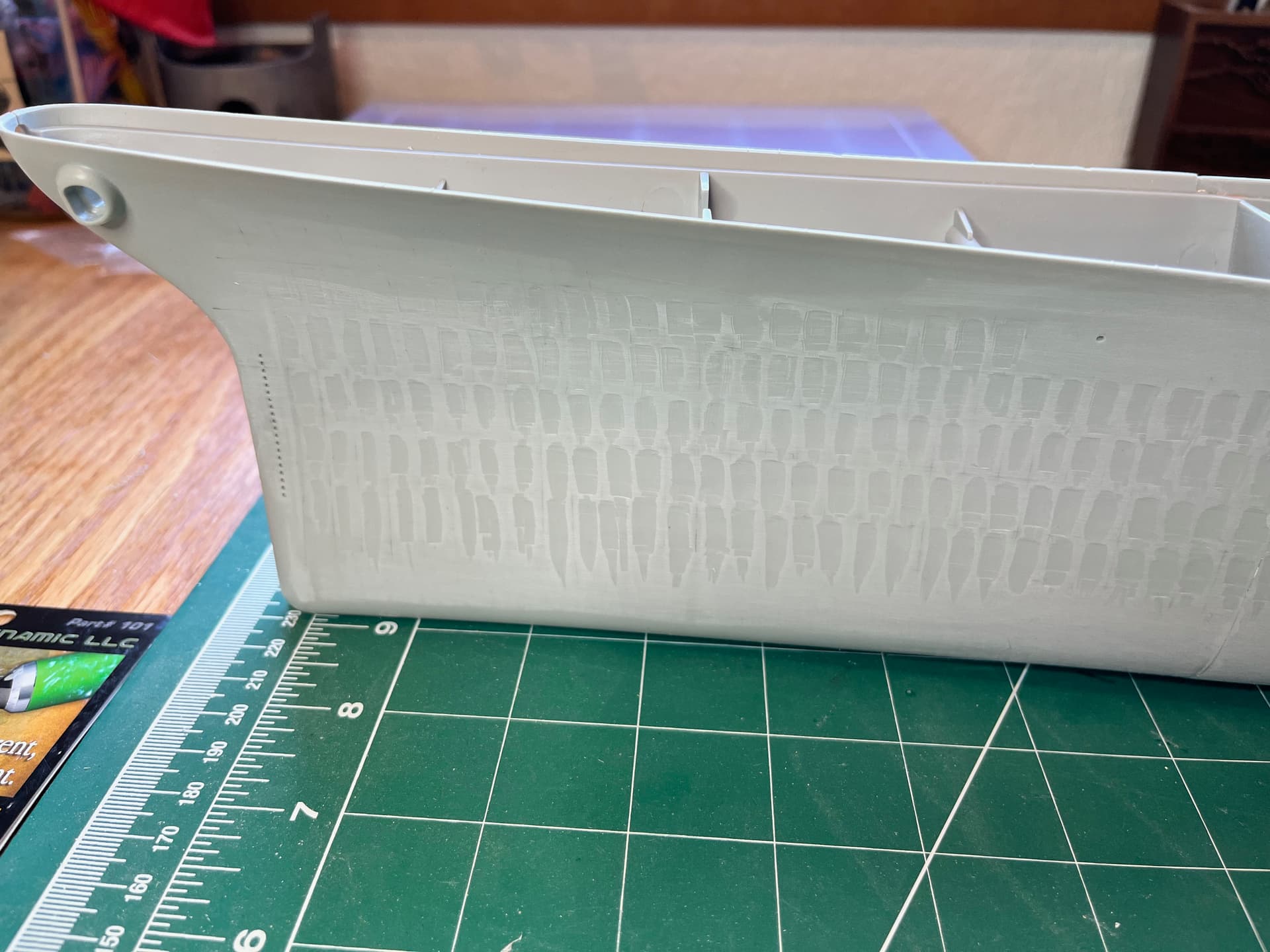
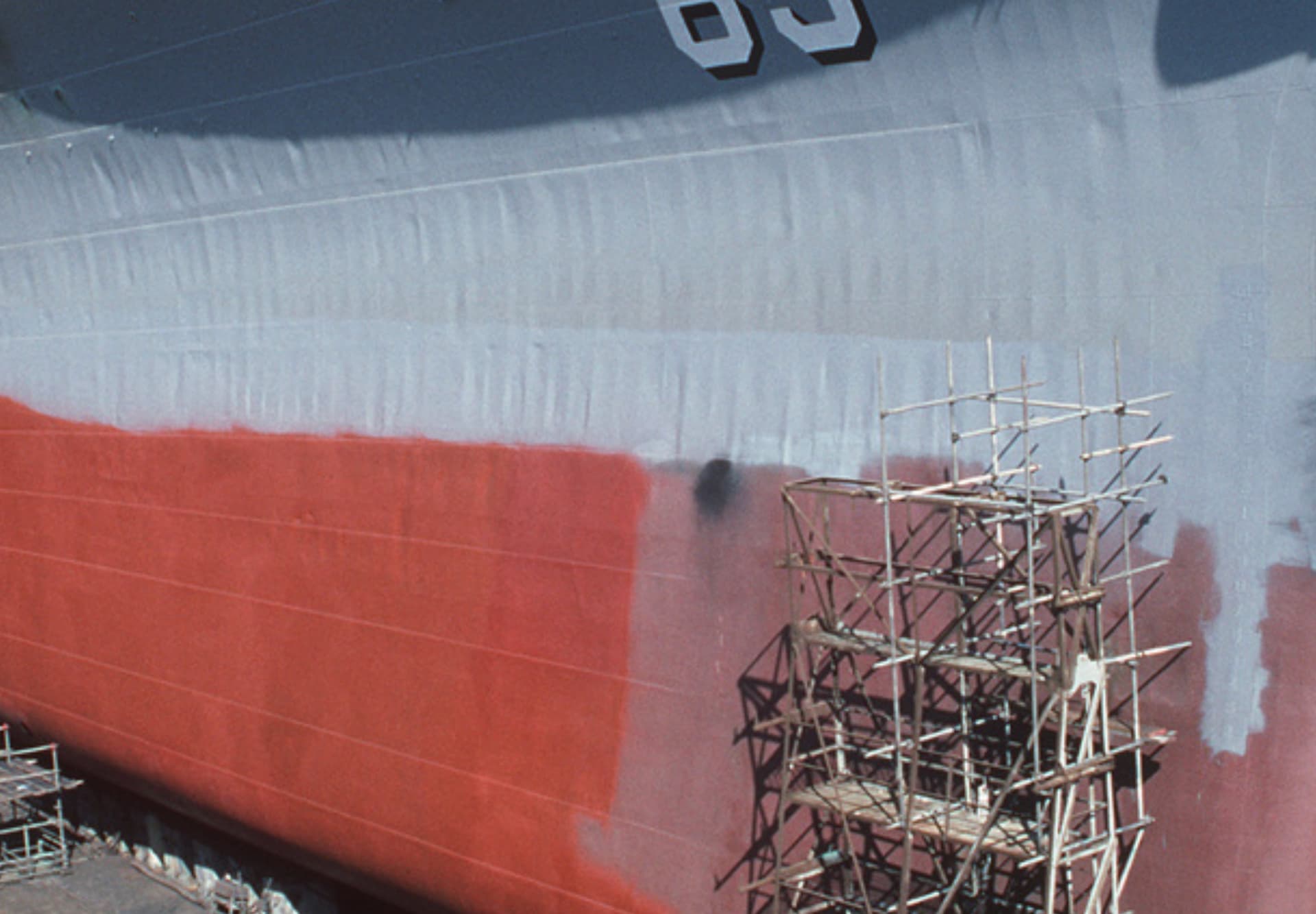
It all starts with the hull. All the various pictures out there show oil canning of the hull, mainly in the bow and stern. To accomplish this I drew a grid and then used a curved blade to use like a cabinet scrapper to make the indents. Here is the grid and then after sanding.
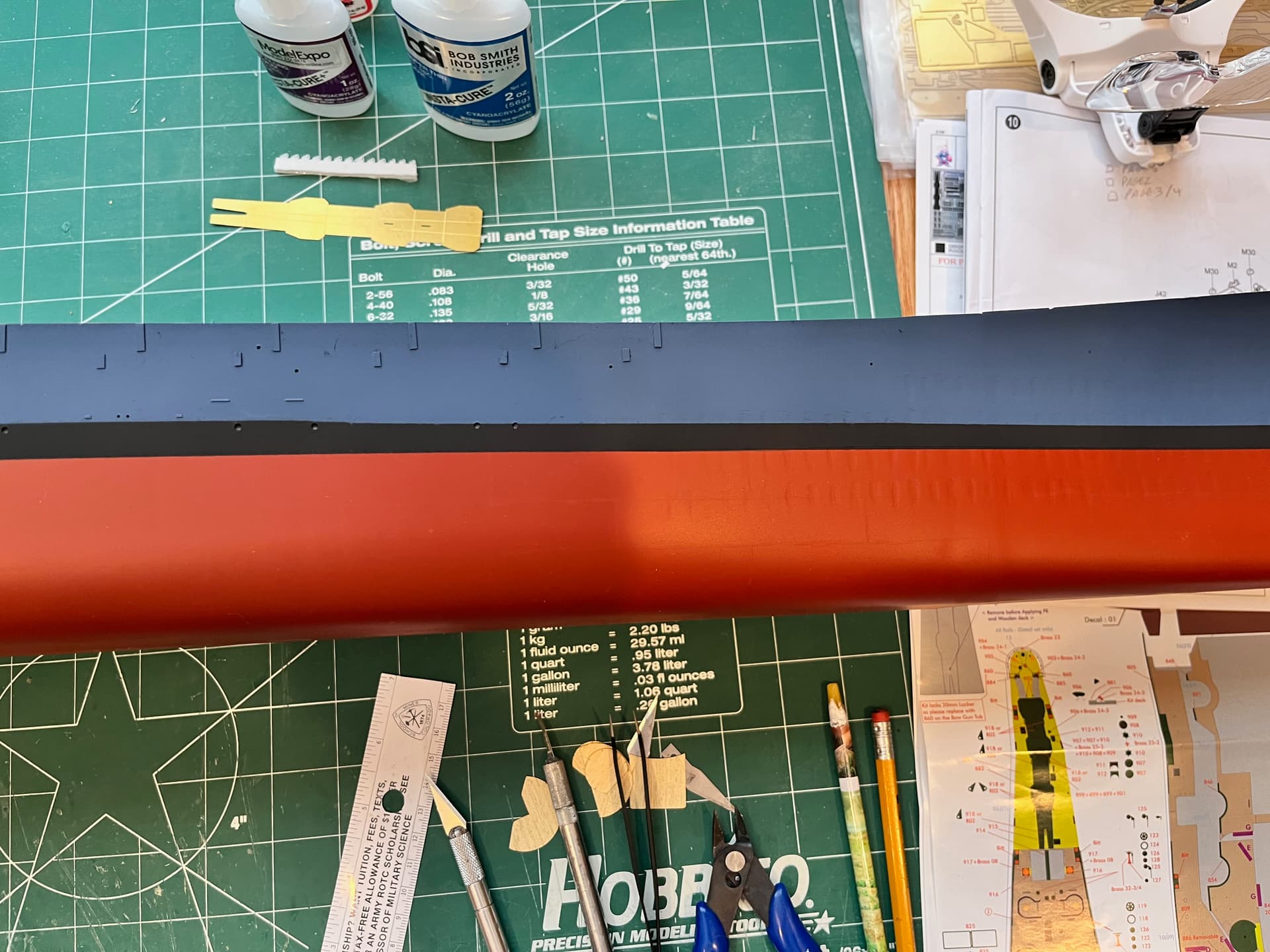
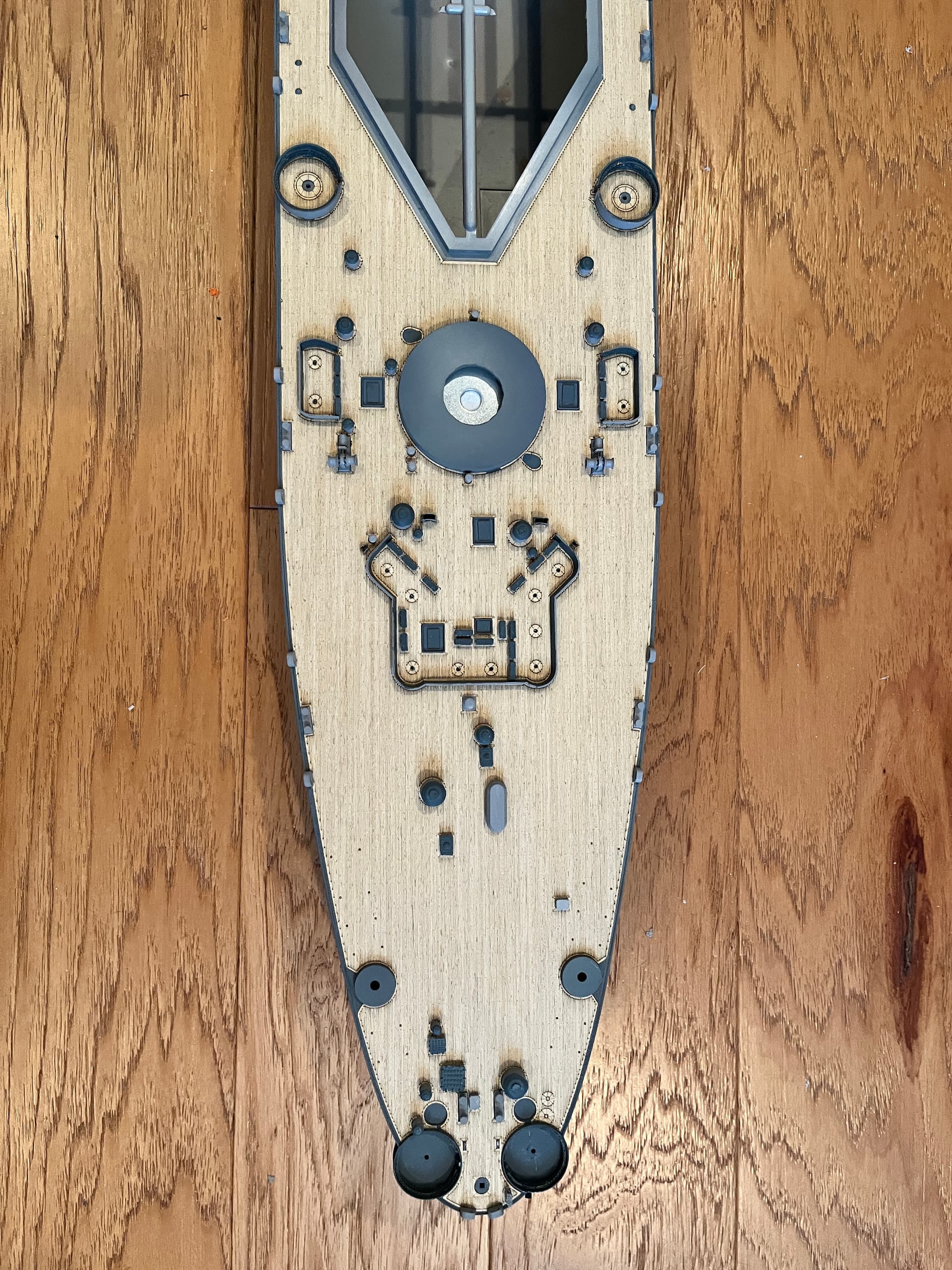
Next the main deck went on. The wood is sticky backed but others suggested the sticky back would fail so I added additional glue. I also purchased the Floating Dry Dock’s book of plans for the ship in 1945. This is a great resource. Using this I realized a few of the deck vents were missing so I made them using the book’s picture/plans. This is my version of the missing vents. If you want to print them you should definitely use a resin printer as they have a resolution of something like 50 microns. You can find these parts at https://www.printables.com/@bglasford1.
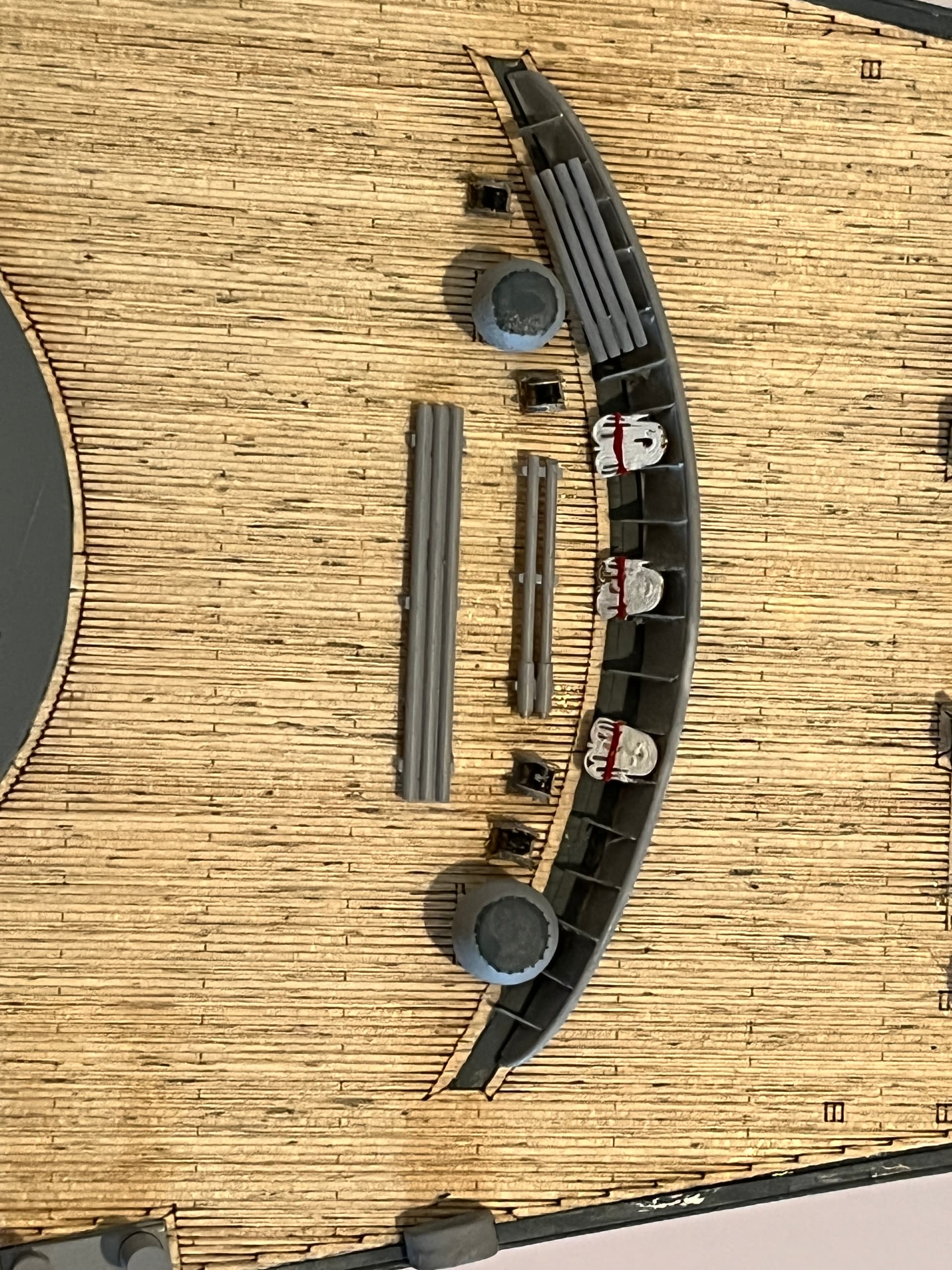
There are also missing paravane poles that mount just behind the breakwater. Here is a picture of them installed along with other various Pontos parts.
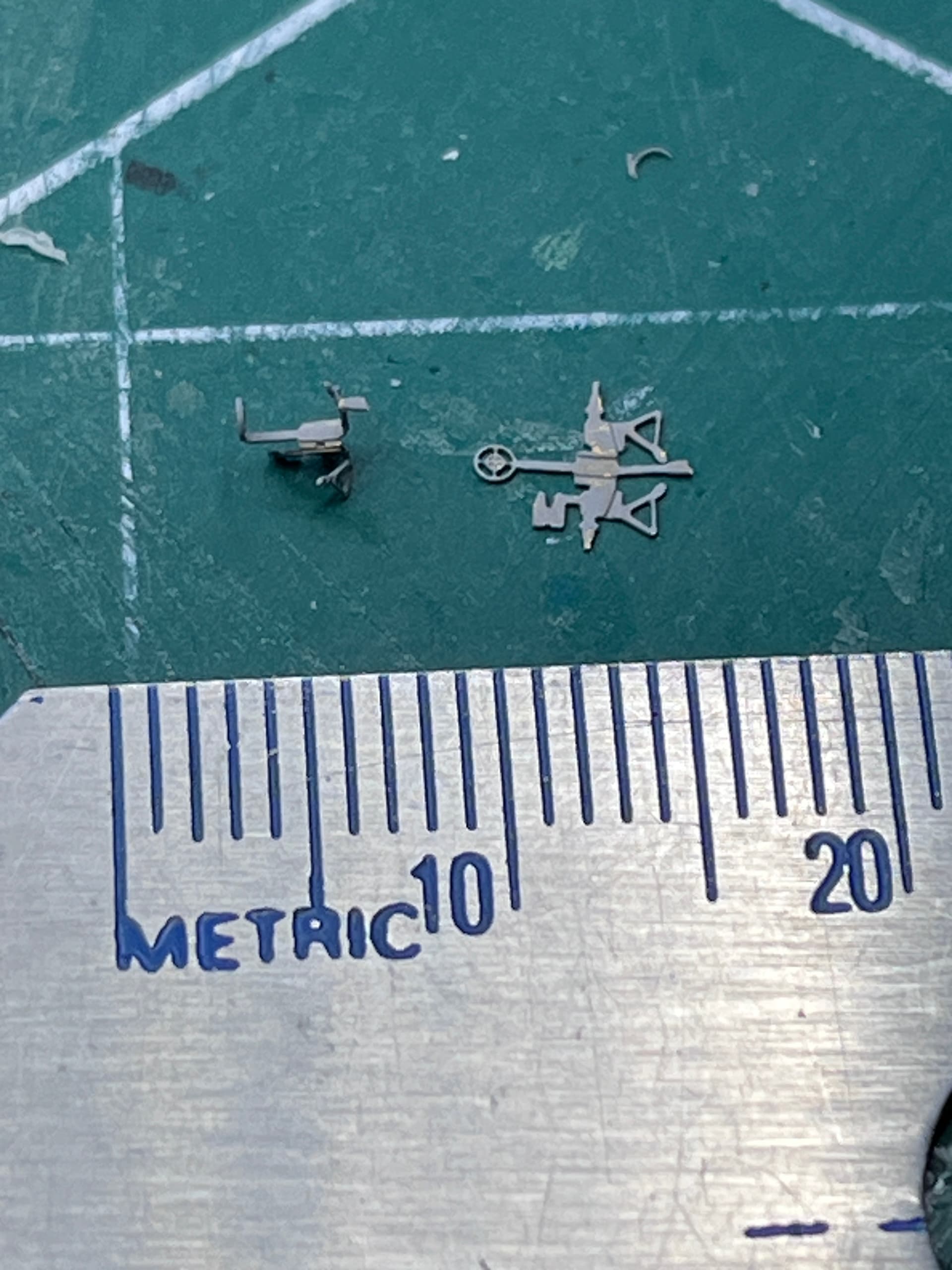
I would highly recommend the Pontos kits. There is some insanely detailed parts. Here is a gun sight that goes on top of the 5" guns. You need to sharpen your tweezers for some of these parts.
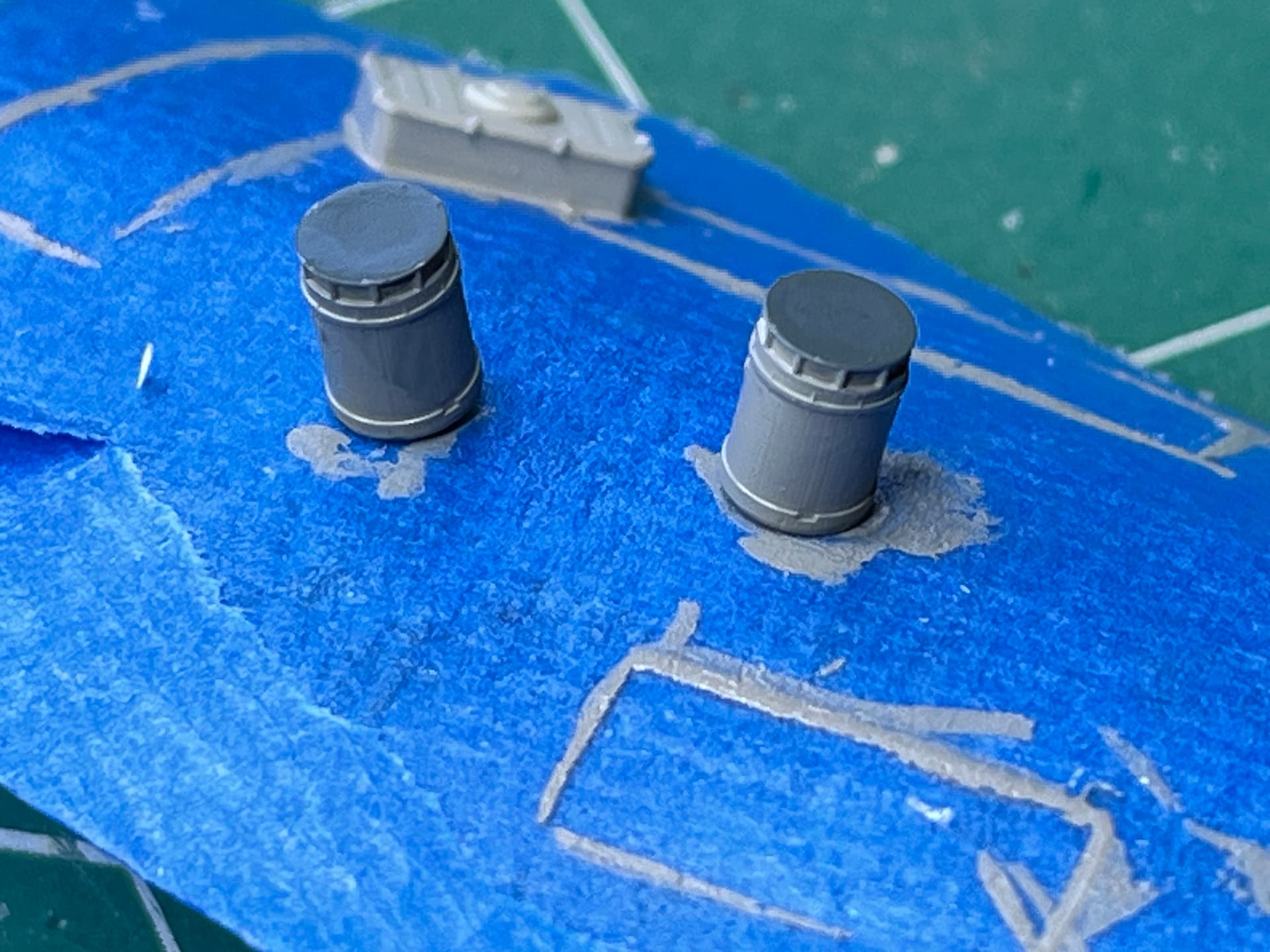
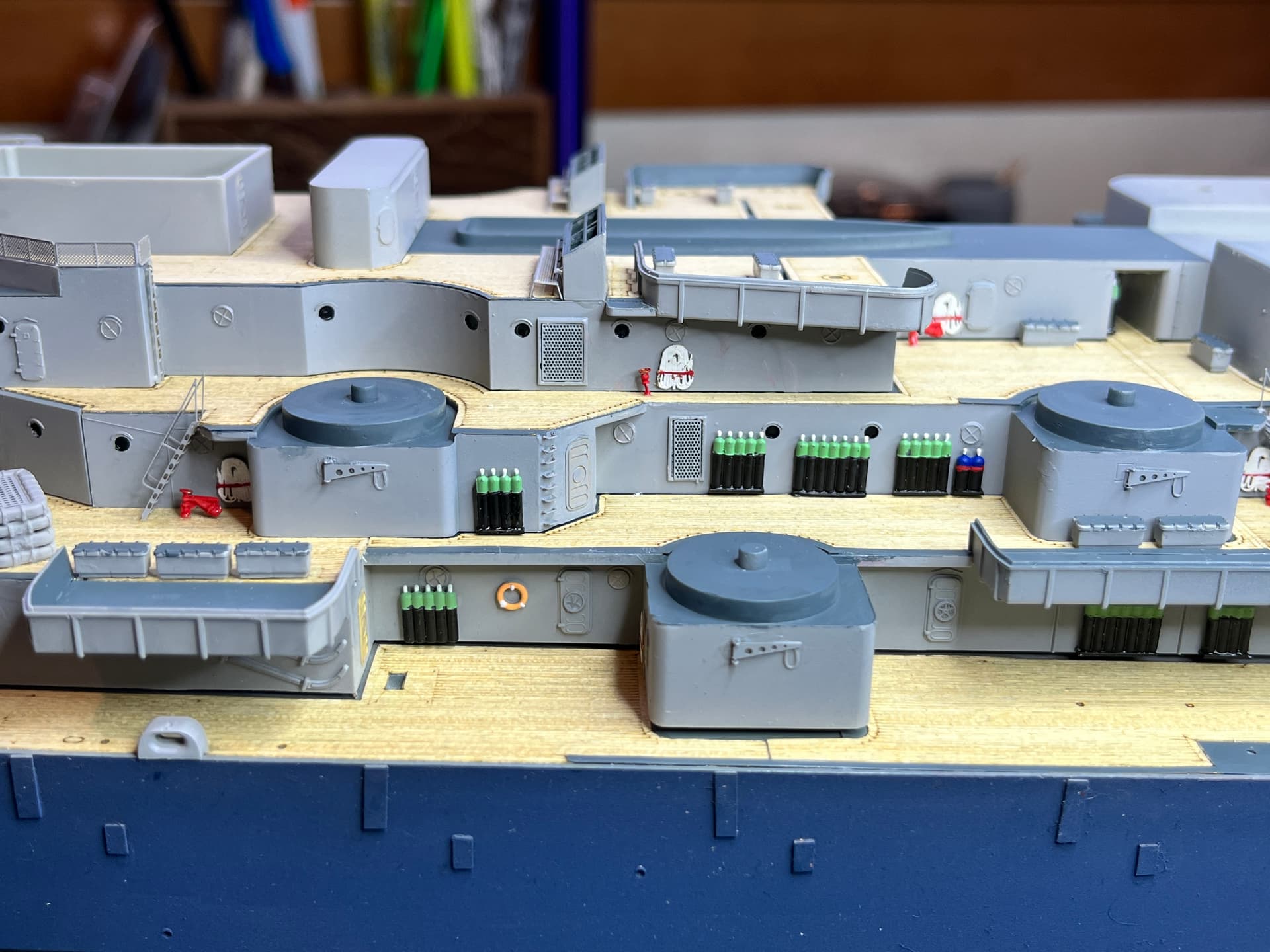
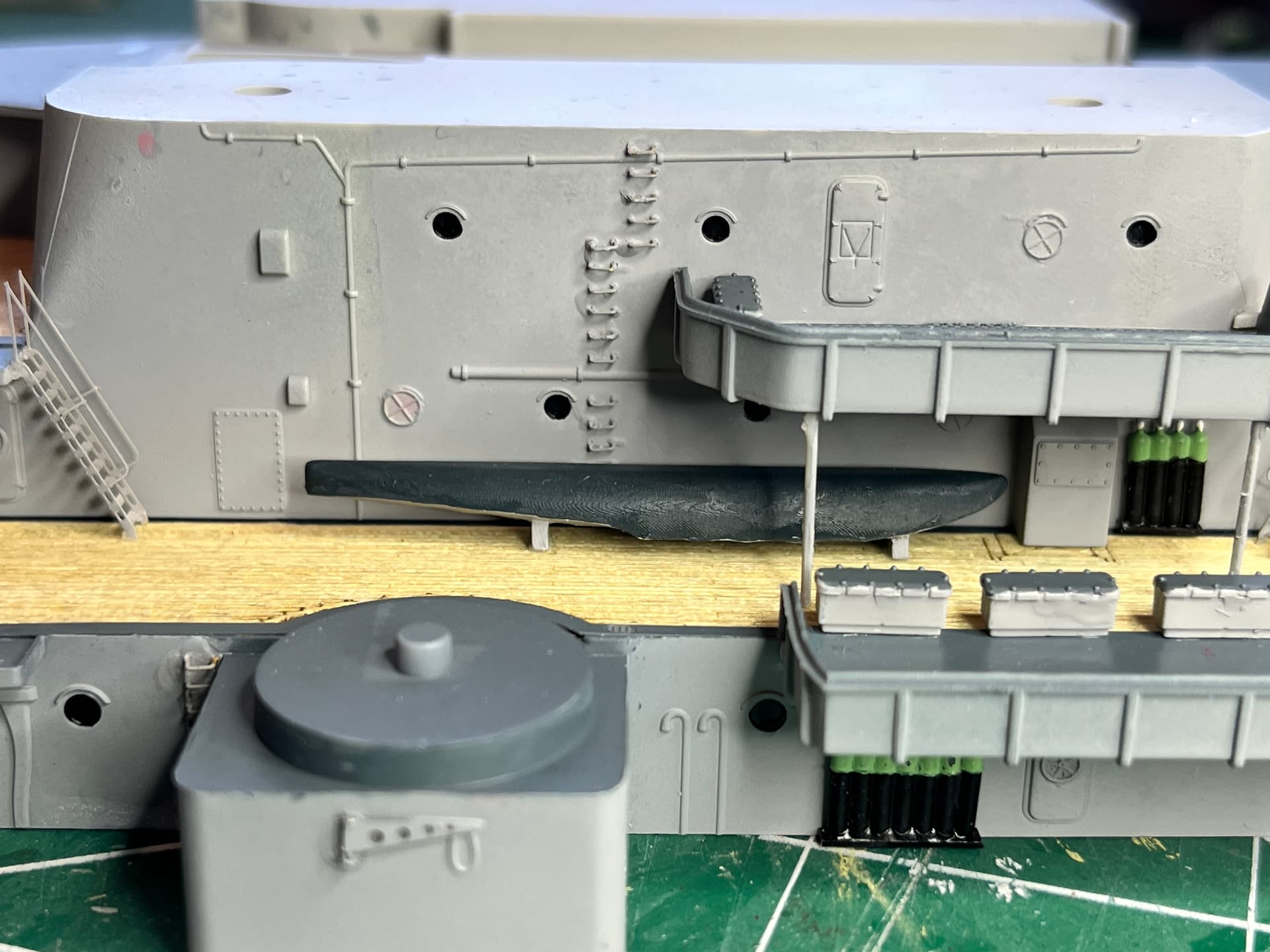
These are the Model Monkey gas bottles. Yes, I could have made my own but I went ahead and purchased a pack of them. They were painted up before being separated using the appropriate color scheme found on-line. The original kit plans did not match the location and types of various bottles so I used the Floating Drydock plans for the placement.
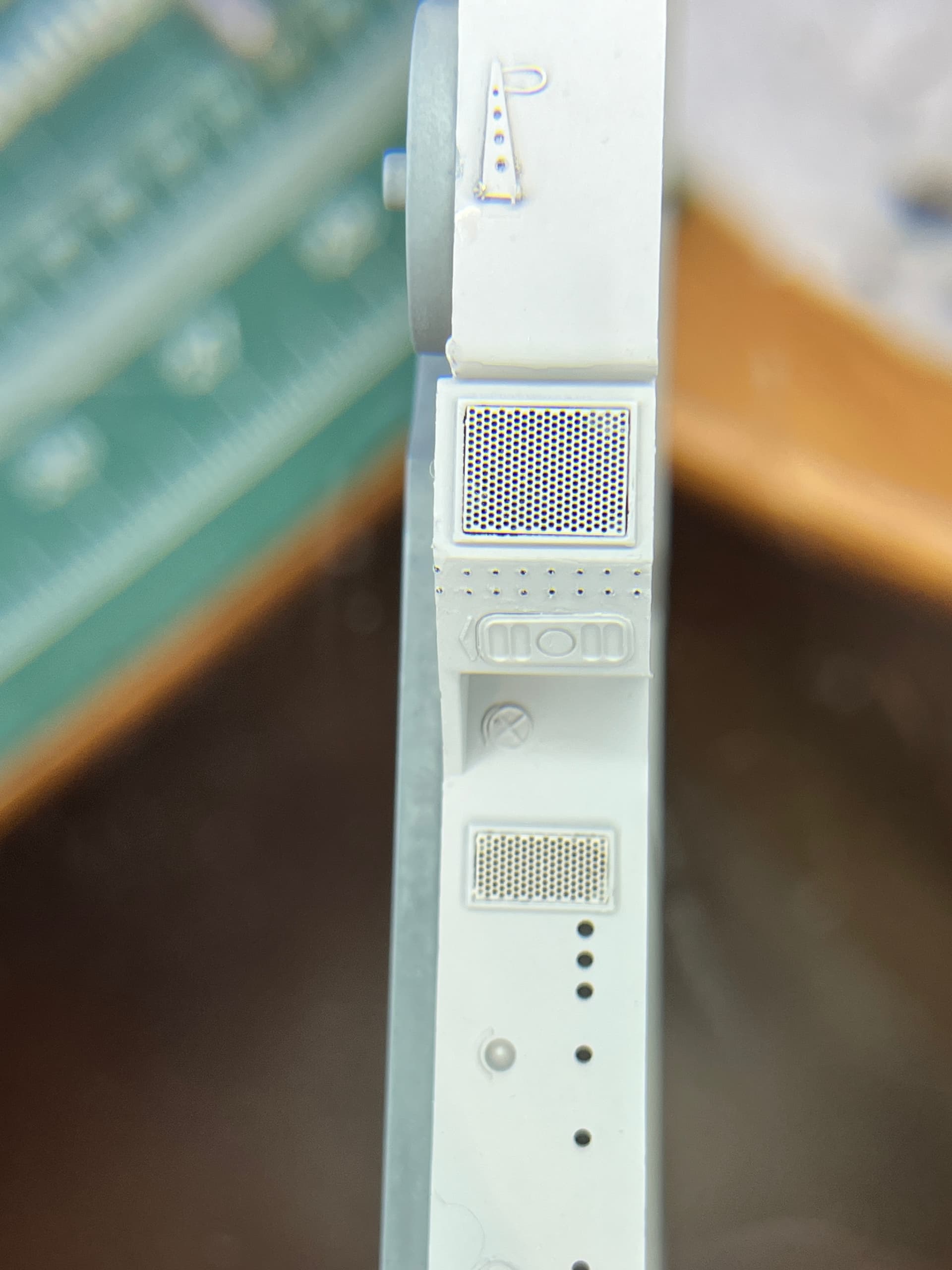
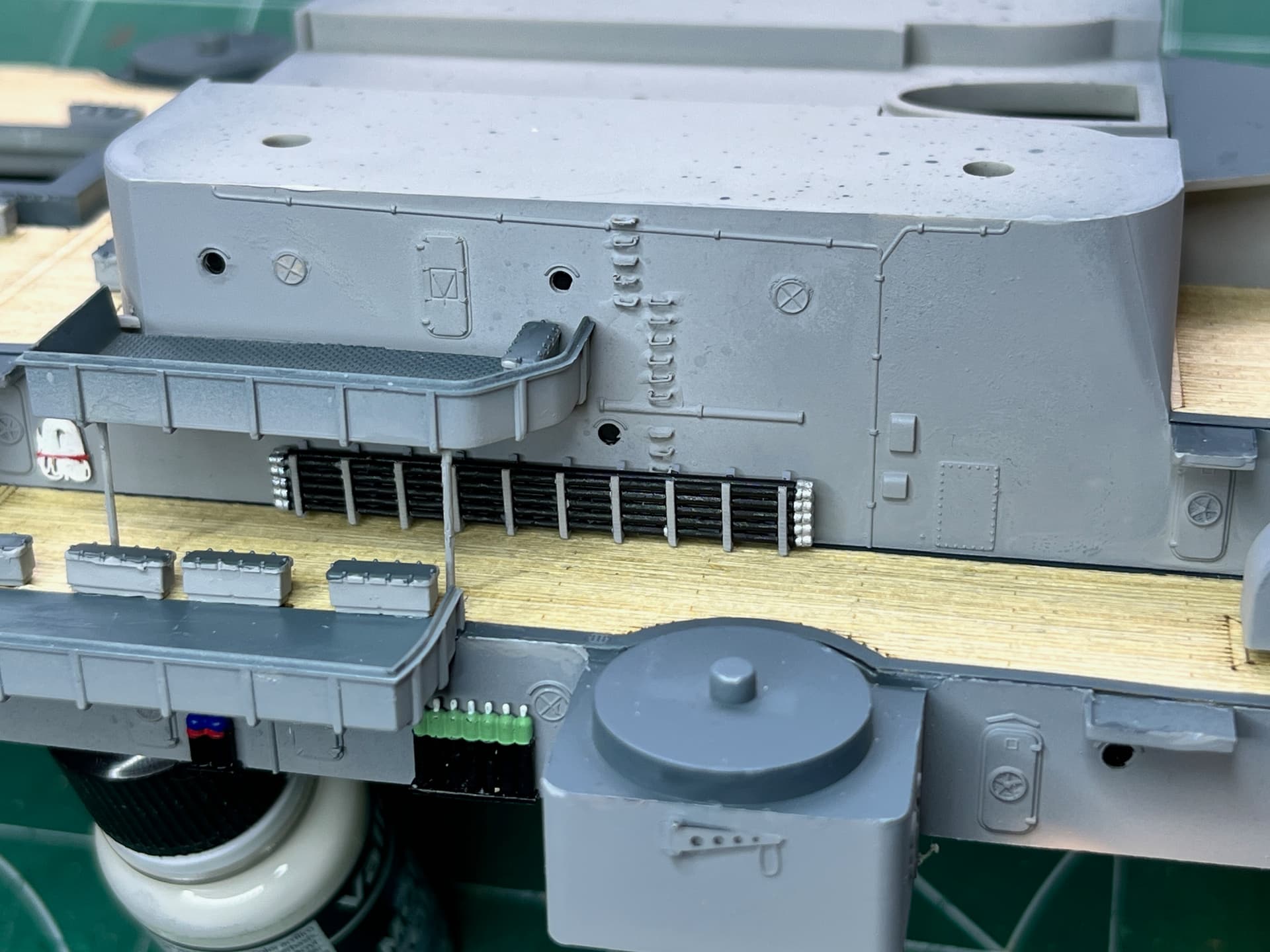
The other thing you may notice in the picture is the Eduard intake grills. If you paint up the basic kit these grills fade into the background. With the Eduard parts you paint the inside of the base model black, then paint the grills grey and glue them on. They end up looking really nice.
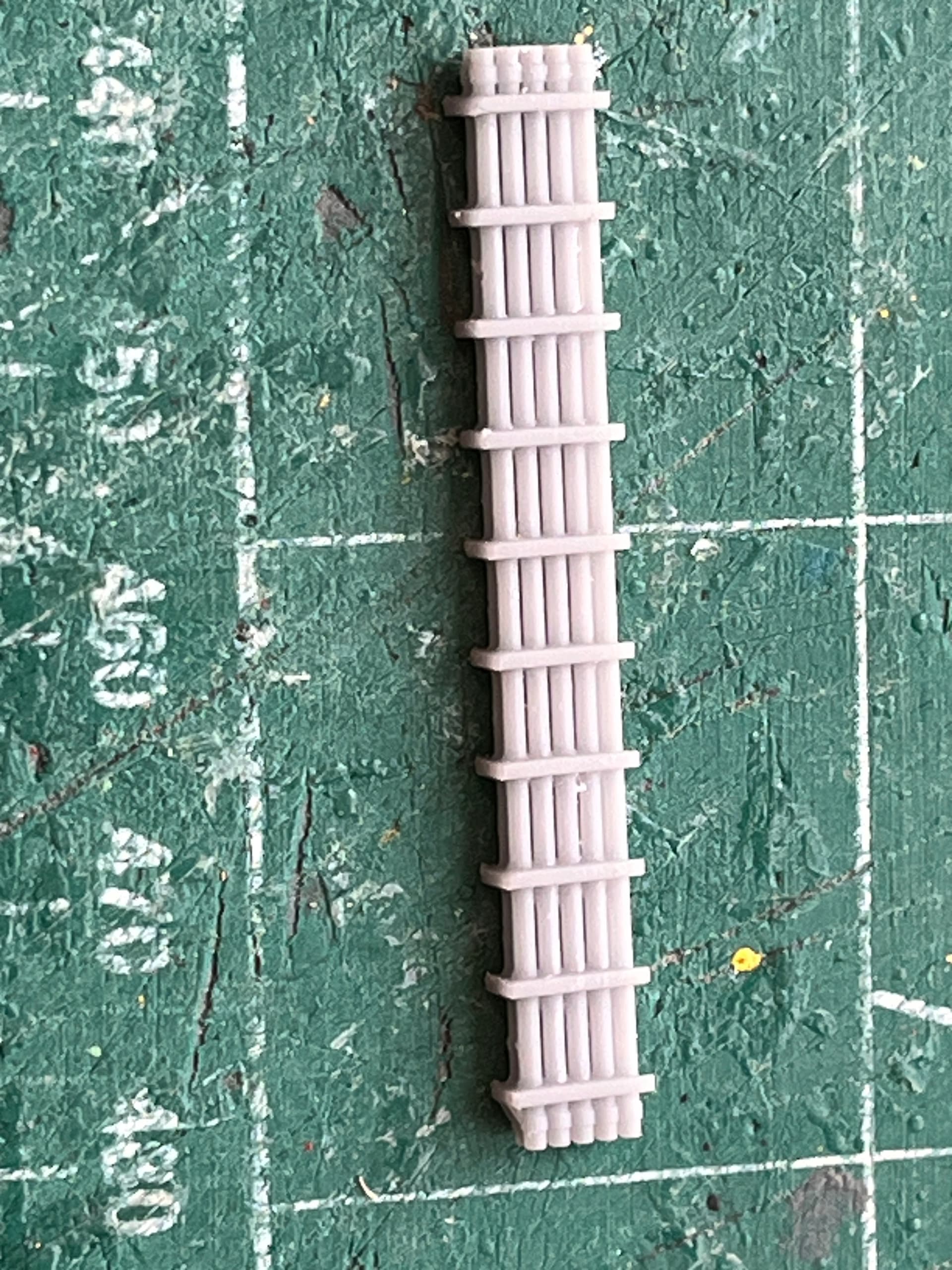
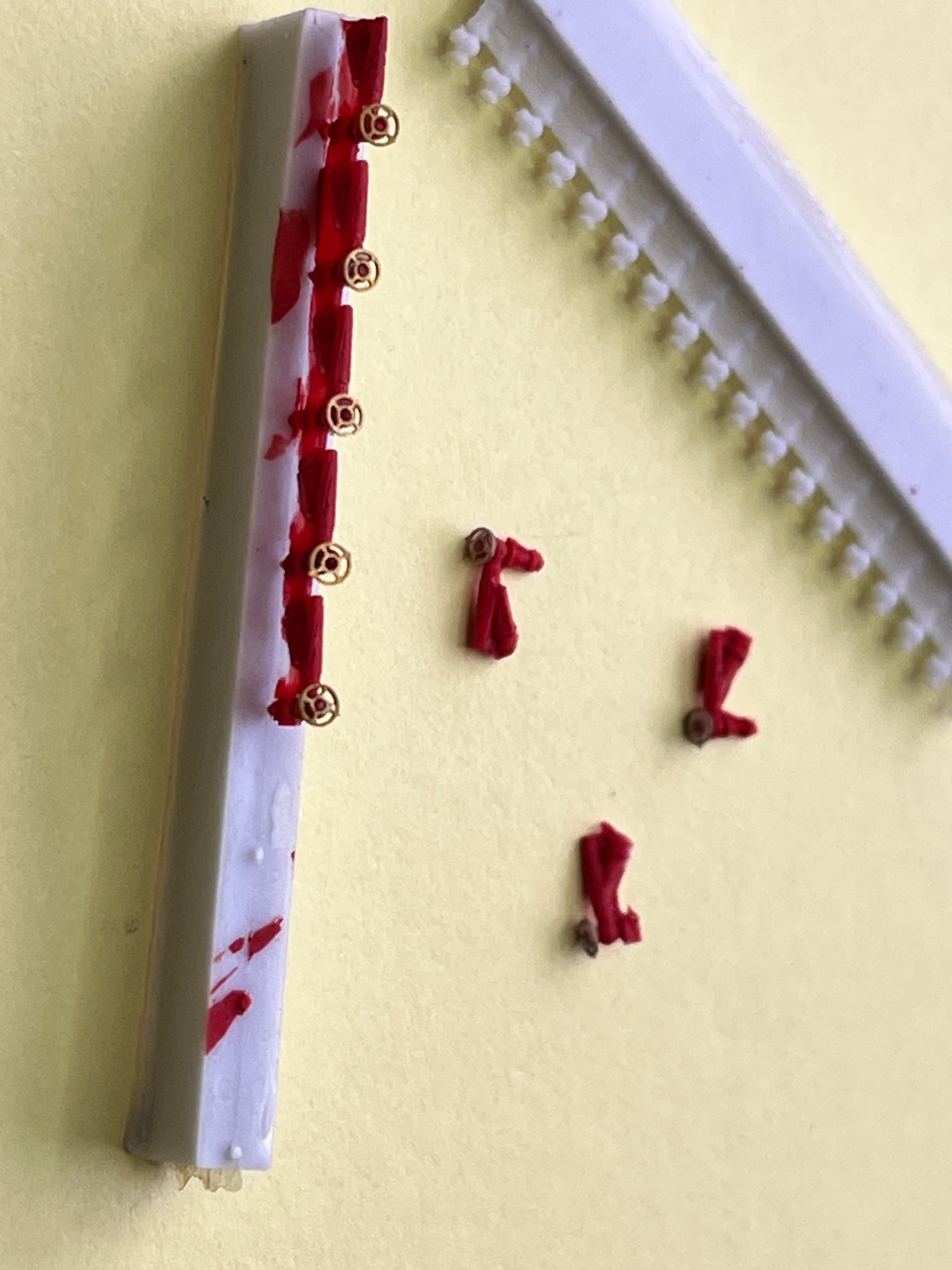
As for the missing parts on the superstructure? There are two rather large obvious missing components; a spare float plane float and the refueling hoses. For these I drew up CAD parts and printed them out. The refueling hoses print up as one part in a rack. They are a good addition in an otherwise blank wall.
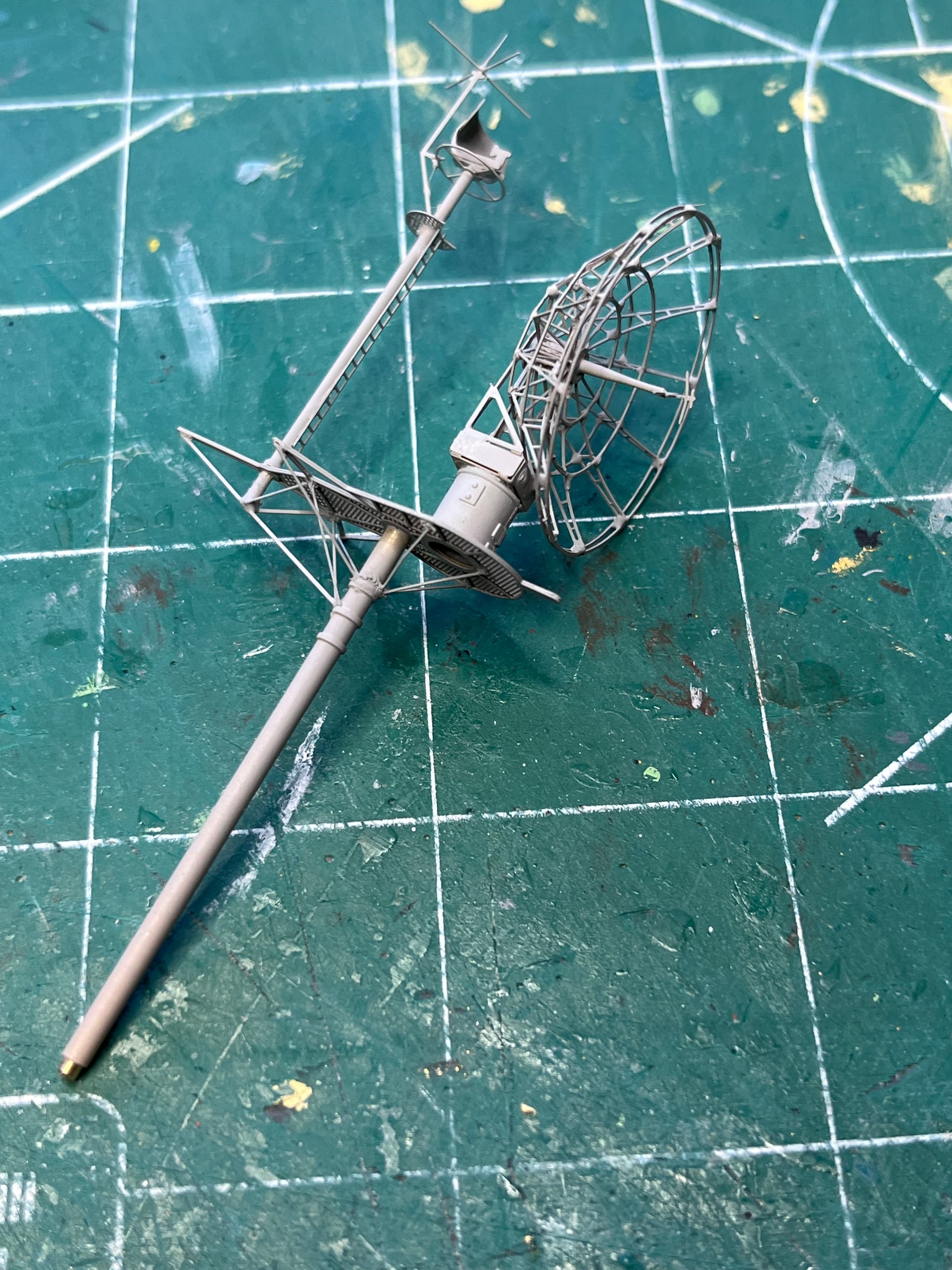
The higher up the ship you go, the fewer kit parts are used and more Pontos PE is used. Here is the very top of the ship, the fore mast. This is all Pontos except for one plastic part the radar dish is sitting on. The detail is really good.
People who can work with PE amaze me - I run from it. The oil canning is awesome and looks really good after paint.
Sam oil canning is warping from stress on the metal between supports - happens on aircraft as well.
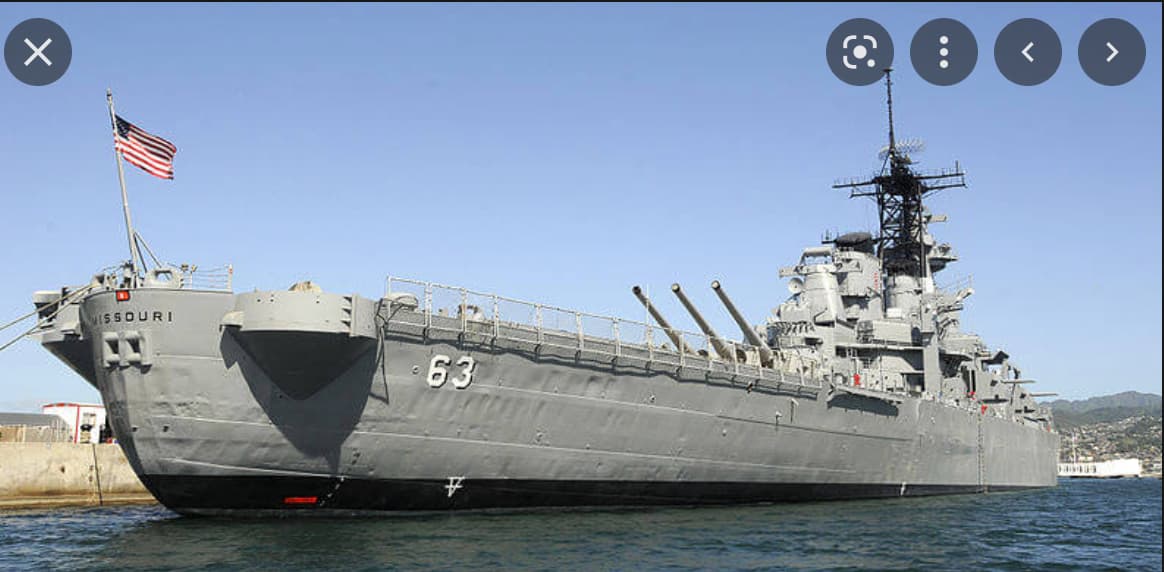
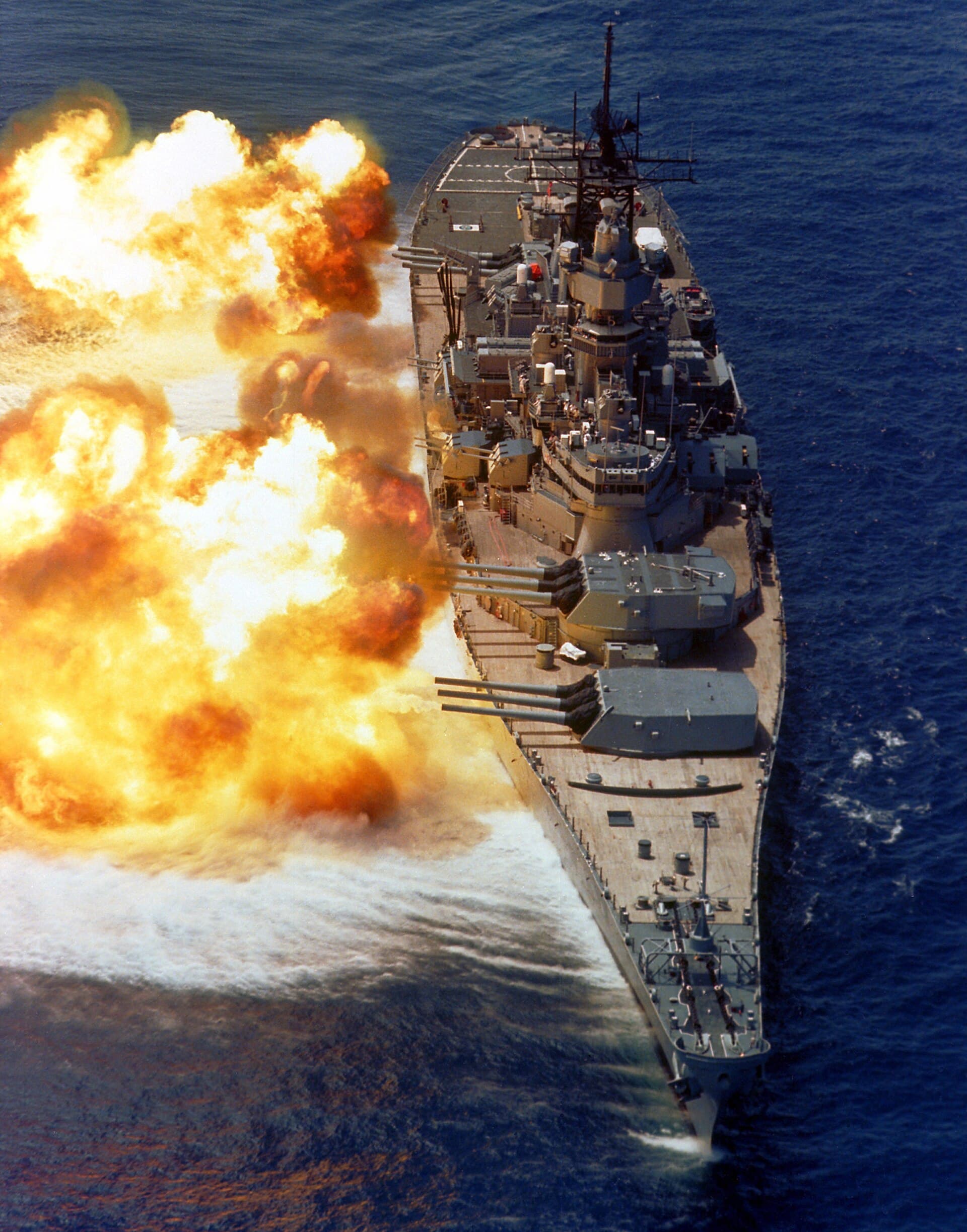
The Missouri was the last US battleship. When these Iowa class ships were built during WWII there was a major change occurring in how ship battles were fought. There was a switch from big brutes like this slugging it out with 16" guns to aircraft carriers. The older battleships were not fast enough to keep up with the aircraft carriers. The Iowa class battleships would provide air defense for the carriers and given how much fuel they could carry would refuel other ships in the convoy. They used the big guns to pound land targets. After the last retrofit she saw her last action in the Gulf War during the shock and awe campaign. This ship could deliver serious shock and awe. It is worth going to Hawaii to take a tour, walk the decks.