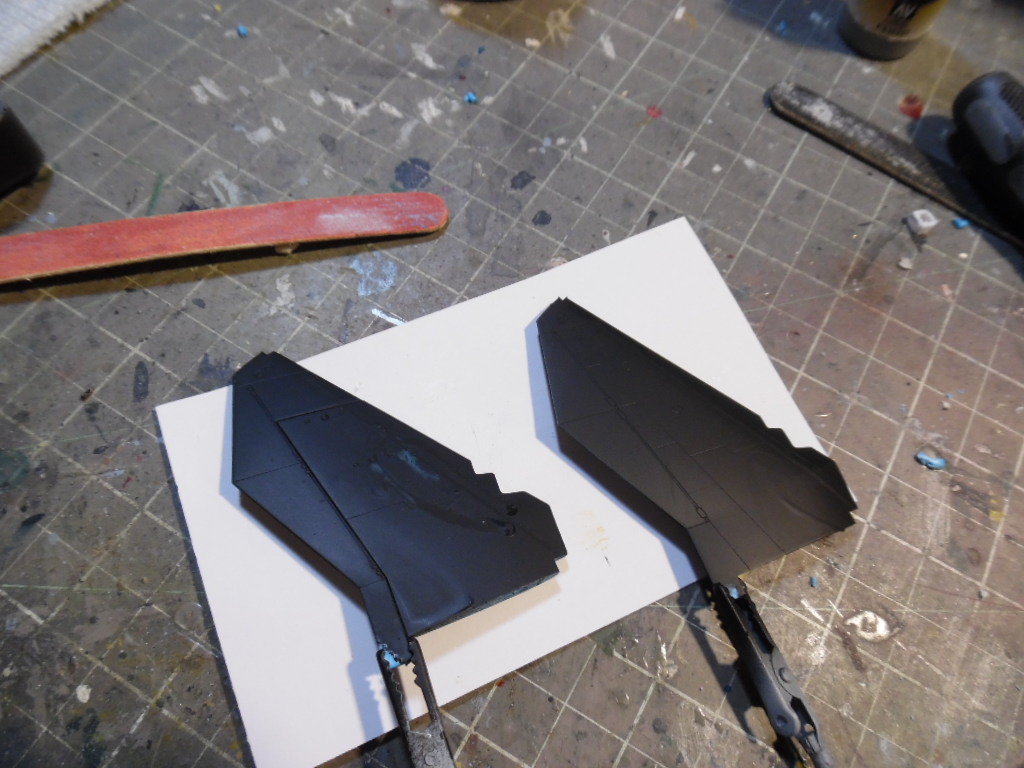
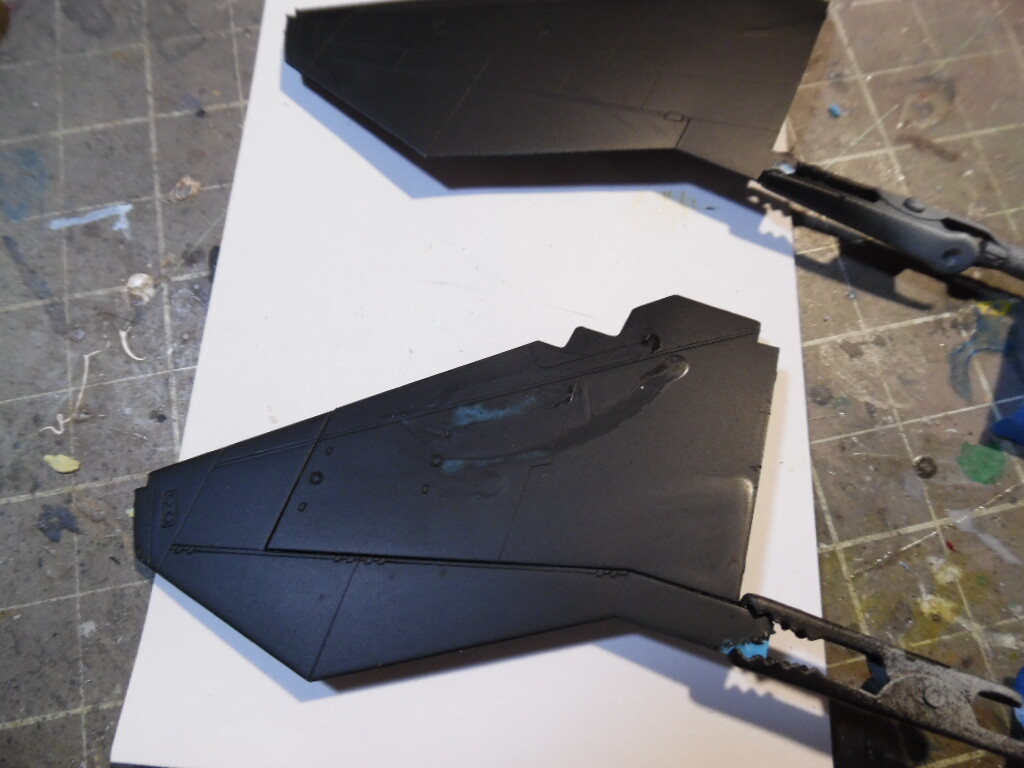
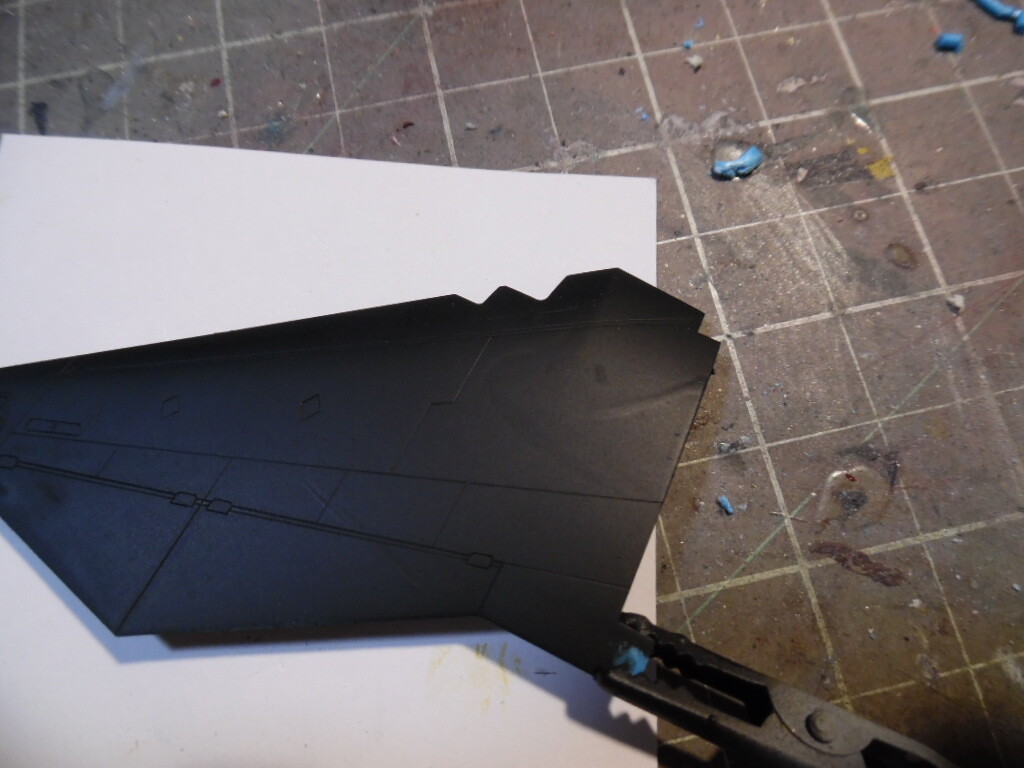
So, ran into an issue when applying primer to my current build. The wings touched and smudged the primer. It somewhat levels out while drying but I am looking for suggestions on how to fix this.
Normally I would strip the whole thing, but I do not want to mess up what is okay. yet, I will keep that as a back up if sanding doesn’t work. Consider it a lesson learned scenario.
I’ve repaired this kind of thing by sanding and feathering the damaged area and then respraying it, and it can work. One thing to be aware of, though, is that you may still end up with a very slight edge where the original primer meets the area you’ve sanded away. No matter how carefully you feather it, sometimes that transition remains just barely visible under the final paint.
I’ve had that happen on a couple of aircraft. It’s very subtle and usually only visible when the light hits it at just the right angle. I was willing to live with it because the models were already mostly completed and stripping everything and starting over would have created a much bigger problem.
In your case, as others have recommended, I’d probably strip the wings and start over unless you’re willing to live with a slight defect that may still be visible in the final paint.
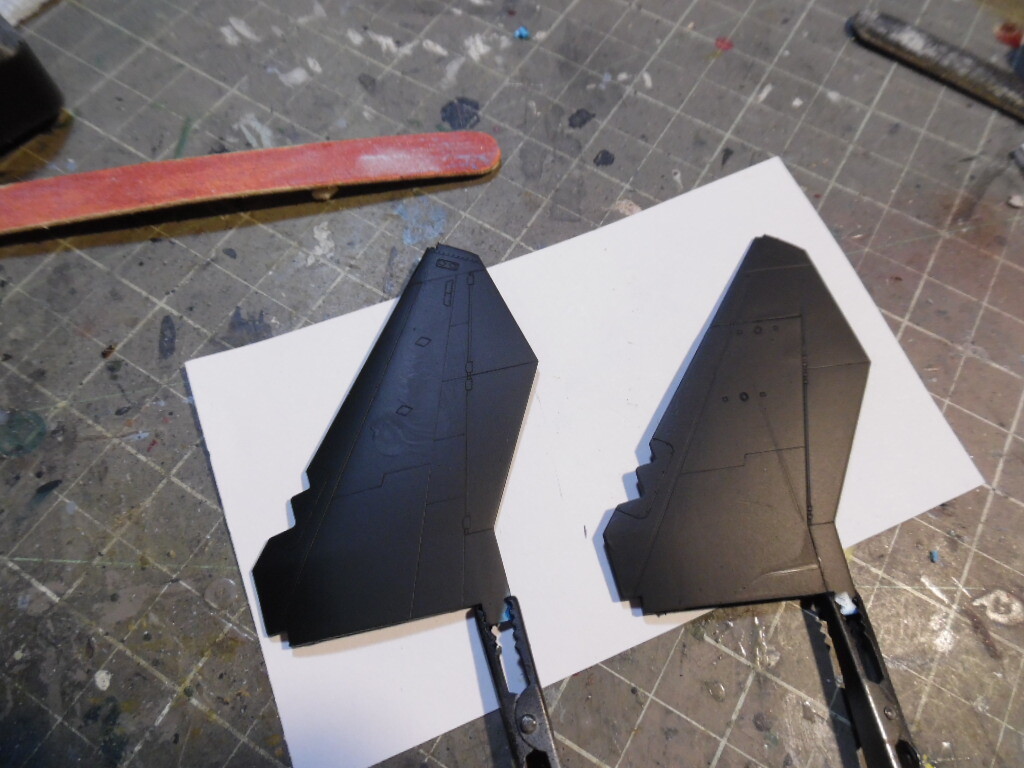
So, being the stubborn person that I am I attempted to sand it first. If it doesn’t work then I was going to strip the entire wings and respray, considering that it is Vallejo primer I can experiment and learn from the mistake. I started by wet sanding very lightly with 600 grit sand paper and progressed to about 4000/6000 grit. The initial spray looks like it has blended in well, I will take pictures later. If it doesn’t work, then I will strip the entire thing and re spray as needed.
Thanks again everyoen for the help and suggestions.
I’m interested to see how this goes. In my experience acrylic paints do not feather well at all, always leaving a ridge. Primer may be a whole different animal though.
My experience matches @ggatt_2 . I have never successfully gotten Vallego primer to blend invisibly, so if you managed to pull it off, I will need a lesson!
Here are the results. Other than one spot along the wing root (which I have attempted to sand again), it doesn’t look that bad. As with all things, if you know where to look you can see the issue. How does it look to everyone else? Would prefer another set of eyes to have a look.
So it looks likes Vallejo changed the formula for their primers. My old bottle I had issues with blending in spots where paint pulled. The new formula seems to blend better.
So now on to the next step, I will see how the silver looks with everything.
I think you’re in pretty good shape. Looking at the photos, if you hadn’t told me where the problem areas were, I don’t think I would have noticed them, it’s very subtle.
Other than what you’ve already identified and have worked on, I’d be inclined to leave it alone. At some point there’s more risk of creating a new problem by continuing to work on it than there is benefit from trying to make it absolutely perfect.
A lot of it also depends on your audience and what you’re trying to accomplish. Your friends and family will never see it. If you’re planning to enter it at the IPMS Nationals, a judge might. It really comes down to how much you care about that level of perfection and whether fixing it is worth the additional effort and risk.
Once you’ve got the final paint on it, I suspect most of what you’re seeing now is going to disappear anyway.