In WW2 most US carriers seemed to be named after Revolutionary War battles: Lexington, Saratoga, Bunker Hill, Yorktown, Essex (I think), etc…where did names such as Hornet, Wasp and Enterprise derive their names from???
Those were ships from the early years of the US Navy. Hornet and Wasp were built in about 1806 (Hornet was a brig and Wasp was a sloop of war) and Enterprise was a naval schooner built in 1799. They may have used those names during the Revolution as well, but I would need to check that to say for sure.
Russ
There was a time, not so very long ago, when the U.S. Navy named its ships according to a simple, consistent system. Battleships were named after states; cruisers after cities; destroyers after people; submarines after fish; and so on. (My favorite: ammunitions ships were named after volcanoes.) Prior to and during WWII, aircraft carriers were named after battles and/or earlier Navy warships. (The Lexington, Saratoga, and Yorktown could claim both.) The first major deviation came when Franklin D. Roosevelt died in 1945 and, presumably because it was felt that a ship needed to be named after him and a destroyer wouldn’t do him justice, it was decided to name one of the new, enormous carriers of the Midway class after him.
Since then, the system has just about fallen apart. Destroyers, frigates, submarines, and aircraft carriers have all been named after individuals. (In my lifetime there have been two ships named U.S.S*. George Washington* - one a submarine and one a carrier. The same goes for the U.S.S. Abraham Lincoln and, I imagine, several others.)
So is the “Essex” a battle??? And “Constellation”?
The Lexington and Saratoga were originally laid down as battlecruisers. Under the Washington Naval Treaty they were redesigned and rebuilt as aircraft carriers. The battle names, entirely appropriate for the cruisers were carried over to the aircraft carriers (its bad luck to rename a ship).
The aircraft carrier Essex was named in honor of one of the several ships which bore the name. The original Essex was a frigate launched in 1799 and was named in honor of Essex county, Massachusetts.
The Constellation is another historic ship name.
Unfortunately, the practice of naming aircraft carriers has fallen victim to the golden rule - he who has the gold makes the rules. Aircraft carrier names are handed out in Washington as political payment.
Ed beat me to it. It is a shame that Capital Ship names are all too often these days named after political figures. Although I do take a perverse sort of glee that Gerald R. Ford of all people was picked for the next CVN. Keep dreaming, Bill. After the way you dismantled the military and acted as if all those extra billions of dollars available for the budget were somehow due of your “brilliant” economic abilities. Doing more with less looks great on paper and makes a great soundbite.
In other words, don’t hold your breath waiting for the USS William Jefferson Clinton to roll out of the yards any time soon. /rant off
Regards,
Jeff
Both ‘Essex’ and ‘Constellation’ were named after famous US frigates by the same name that were in service during the war of 1812. The frigate ‘Essex’ was so named because that was where she was built (Essex, Massachusetts), and the name ‘Constellation’ refers to the American flag, with its ‘new constellation’ of stars in the blue field.
Cool, thanks for the info…now, about the “Enterprise”?
Manstein:
See my earlier post. Enterprise was a US Navy schooner built in Baltimore in 1799. It served during the Tripolitan War in 1805.
Russ
I did see your post but I was looking for the origins of the word. Is it named for the concept of “free enterprise” in our country…or is “Enterprise” a county or town? I do know of an Enterprise, Alabama…
I see. It might have been a town or county, but it could have been taken from “free enterprise”. I never really thought about it, though. The schooner was built in Baltimore by a man who built a lot of merchant ships, so the free enterprise connotation sounds plausible.
In any event, the ships named Enterprise in the 19th and 20th centuries got their name from that schooner built in 1799.
Russ
“enterprise”, as a word, means to plan and/or perform a difficult, ambitious and bold action. A pretty good name for a naval vessel I think. The first Enterprise was a captured British sloop originally named George. Benedict Arnold used her on Lake Champlain in 1775.
Come to think of it - my earlier assertion that the FDR was the first American aircraft carrier to be named after an individual was utterly, unarguably, and stupidly wrong. I’m surprised nobody caught it before I did. The very first American ship to carry the designation “aircraft carrier” (CV-1) was the U.S.S. Langley, named after the aviation pioneer Samuel Pierpont Langley.
Ed’s comment about the Lexington and Saratoga led to an interesting, insomnia-curing train of thought. The class of battlecruisers designed and, in those two cases, laid down in the early 1920s was originally supposed to consist of six ships: Lexington, Saratoga, Ranger, Constellation, Constitution, and United States. The Washington Conference led (thank goodness) to the conversion of the first two to aircraft carriers and the scrapping of the others before they were ready for launching. (That, and the following, information is from NAVSOURCE [ www.navsource.org .]) All those names are those of former warships. (The name Ranger - commemorating the sloop-of-war commanded by John Paul Jones - eventually went to the first American aircraft carrier built as such from the keel up, CV-4.)
The practice of naming warships after battles goes back to the Revolutionary War, and quite a few eighteenth- and nineteenth-century ships were named after battles. With NAVSOURCE’s numerical list of carrier names in front of me, I got curious and started trying to figure out which was the first to be named after a battle that hadn’t had a ship named after it earlier. (I hope that sentence makes sense.) Somewhat to my surprise, it was (I think) the light carrier U.S.S*. Belleau Wood* (CVL-24), launched in 1942 and, of course, named after a battle of World War I. The first twenty-three carriers all had names that the Navy had used at least once before.
Trivial stuff, but rather interesting. The good news is that if Alex Trebek ever invites any of us to be on “Jeopardy” and this subject comes up, we should be in good shape.
I’ll take ship names for a hundred, Alex
USS Boxer (CV21)
What ship was named for HMS Boxer, was captured off of Maine in 1812 by the Enterprise, and not subsequently taken into the US Navy.
So the Boxer is first US ship given that name. And I thought she was named for the Boxer Rebellion.
Then there is the Franklin. Was she named in honor of Ben Franklin or the ACW Battle of Franklin, TN? (I know what DANFS says)
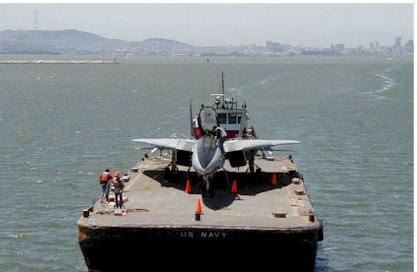
Here ya go, the aircraft carrier USS William Jefferson Clinton:
Ed:
The 14 gun brig Boxer was built for the US Navy in 1815. It was one of a group of three brigs built to the same design. It was wrecked in 1817. In 1831 a schooner named Boxer was built as part of a group of three schooners, the others being Enterprise and Experiment. I would guess that carrier was named with these previous Boxers in mind.
As for the Franklin, there was a small schooner from the Revolution named Franklin, then there was a brig that was bought for the US Navy during the Tripolitan War in 1805. Then there was a 74 gun ship of the line by that name several years later. All of those were most likely named after Ben Franklin so it is also likely that the carrier was named for him as well.
Russ
Well, Ed’s kicked off several more trains of thought. (Shame on you, Ed.)
Paul Silverstone’s The Sailing Navy, 1775-1854 does list two ninetenth-century USN vessels named Boxer: a brig launched in 1815 (and presumably named after the *Enterprise’*s victim) and a schooner launched in 1831. The name was also used, briefly, for a blockade runner that was captured and taken into the navy during the Civil War. Maybe the most famous earlier U.S.S. Boxer was the steel-hulled (I think) brigantine that was purpose-built in 1905 as a training vessel for the midshipmen at Annapolis. At any rate, the DANFS describes the carrier Boxer as the fifth warship of the name.
Off the top of my head I can think of three other U.S.N ships named after other warships that didn’t serve under the American flag: the frigates Guerriere and Java (both named in honor of British frigates sunk by the Constitution during the War of 1812) and the sloop of war Peacock (named after a British sloop sunk by the Wasp). In those days, of course, the use of the names of vanquished enemy ships was a common practice among several nations.
There were in fact two sloops named U.S.S. Peacock. The first was built during the War of 1812 and broken up in 1828. The second was launched the same year (having been funded in part with money appropriated for “rebuilding” the old one - a common, and perfectly legal practice), and gained some fame as a participant in the “Wilkes Exploring Expedition” of 1838. She was wrecked off the Columbia River in 1841, with no loss of life. I’m not sure whether the Navy ever used the name again; I rather suspect it wouldn’t be considered a good idea today.
The name Franklin is an old one for American warships. Several of the schooners informally “commissioned” by George Washington during the 1775-1776 siege of Boston were named after prominent people in the independence movement*: Hancock, Franklin, Warren, Lee*, and Washington. The name Franklin was also used for a captured Tripolitan merchantman used as a Navy supply ship during the Barbary Wars, a ship-of-the-line commissioned in 1815, and a big steam frigate commissioned in 1864. (I’m getting all this stuff out of Mr. Silverstone’s book, with a little help from the online version of the DANFS.) So the carrier Franklin was, officially, the fifth USN ship to bear the name.
The question of naming warships after Civil War battles is interesting. Apparently at least a couple of Union vessels were given the names of recent battles (Gettysburg and Antietam) while the war was still going on. After 1865 the practice seems to have ceased - presumably for reasons of Southern sensibility. This is the sort of thing that’s hard to look up systematically, but on the basis of a quick search through conveniently-available websites the first post-Civil War ship I could find that was named for a Civil War battle was the Essex-class carrier U.S.S. Antietam (CV-36), launched in 1944. Since then, six of the big new Aegis-type cruisers have been named for Civil War battles*: Mobile Bay, Antietam, Gettysburg, Shiloh, Vicksburg*, and Chancellorsville. (One could, I suppose, argue that several of those are named after cities. If one wanted to be really perverse, for that matter, one could argue that the various ships named Yorktown were named after a city - or after a Civil War battle, since there was some fighting near Yorktown during McClellan’s Peninsula campaign. But one can carry this sort of thing too far.)
If Mr. Trebek and his consultants ever do get enmeshed in this topic, they’re in for trouble.
Later edit: Russ and I apparently were typing at the same time, and coming up with some of the same stuff. We really ought to have better things to do on a Sunday morning. Russ - I do hope you aren’t in the path of Hurricane Gustav, which looks mighty ominous.
Come on guys, keep the political stuff off of the forums, lest you open up a can of worms.
Yeah, I mean, enough with the cheap political shots, I just had last month ANOTHER funeral from someone from my reserve center who died in this 'war". Do you want me to post a pic of a barge with coffins and call it “USS George W Bush”?
And to drag this back on topic…what about the USS Princeton, named for the University? (CVL-23 lost in Leyte Gulf, also the name of a modern cruiser). Cant recall how that happened, I know at the Princeton chappel they have one of the flags from the ship, but cant remember much, been almost 25 years!
Just make sure it’s not the George H W Bush, that name is taken.
(yes I served)