I’ve recently gotten into the scale model hobby, specifically doing monsters and horror focused figures. I got an airbrush to use and some Tamiya paints but there’s inevitably going to be parts that are simply to small or fine for it and are going to need a brush to do, as well as washes and dry brushing. I searched online and found a lot of people say you can’t brush Tamiya paints but I’m wondering if that means for large sections, which I would be airbrushing anyway, or is it something I simply can’t use for brushing at all and I’ll need to look at getting something like Vallejo paints for the finer details of the model as well as dry brushing and creating washes?
I have painted small parts and details with Tamiya.
I too paint small pieces with Tamiya. As an aircraft modeler that’s navigation lights, dials and switches, seatbelt components, and other cockpit details. Larger pieces i typically use Vallejo. If you want to use your Tamiya paints for hand brushing larger parts get their paint retarder. You can have success using the retarder.
Tamiya makes enamels and lacquers as well as the common “acrylics,” although they are hard to find. These might be better for brushing, but I have brushed Tamiya “acrylics” in the past with no problem.
I only use Tamiya for small details when one of their colors is the closest match for what I’m painting, and that’s for the reasons you read about on-line. You can do it, but it can be a bit of a PITA sometimes. Recently though, since I started airbrushing with MRP lacquers a couple of years ago, I have found that I love painting small details with the good old Testors square bottle enamels and my leftover ModelMaster enamels. The thing that makes them so great, aside from the fact that they brush like a dream, is that the mineral spirits base to those paints does absolutely no damage to the MRP lacquers. So, I can paint small details with those Testors enamels, and if I slip and put paint somewhere I didn’t want it, I can easily remove the mistake with paint thinner and it doesn’t have any adverse effect on the MRP paint underneath.
Tamiya acrylics can be brushed as long as they’re kept ‘wet’ – with thinner, retarder, or a combination of the two.
That said…though I do use Tamiya acrylics exclusively for airbrushing and finish-painting, I do most small detail with good old-fashioned ‘square bottle’ Testors enamels. It’s just easier, in most cases.
Cheers
95% of my painting be it brush or irbrush is Tamiya acrylics. There is nothing at all wrong with them for any use.
If you investigate the Tamiya website you will find they prefer retarder to cut the Acrylic paints with for brush painting. To me that’s all there is to it. And don’t over lap brush strokes but rather butt them together side by side. You can pre mix a small amount with retarder or you can wet your brush with retarder then take a dip of paint. As time goes on you will get a handle on what works best for you. I personally use retarder for brushing these paints after failing with various thinners and it’s gone very well. I don’t even use Tamiya retarder but Liquitex since that is what is stocked in the house for the last ten years or so.
As I said above,I do use Tamiya for hand brushing small details,but Vallejo Model Color and Panzer Aces and Mission Models paint are also very good for hand brushing.
Yeah, people are wrong [;)]
I paint toy soldiers, and among other brands, I use Tamiya acrylics. I learned that to hand-brush Tamiya acrylic paints, it’s necessary to thin them. Once I figured that out, I got as good results as I get with water-based acrylics, like Andrea, or Vallejo Model Color, or craft-store acrylics.
In my own experience, I found that Tamiya’s acrylics brush best when I use Tamiya’s proprietary acrylic thinner. Same as I would to airbrush them. I tried other thinners-water, and isopropyl-but still had the issues I had before I tried thinning the paint. Some colors would clump, some would lift a previous coat off. But thinned, I have no problems. And I can lay down coats as thin as if they were airbrushed.
I use two techniques to thin them. I will either put a bit of a color in a well on my ceramic palette, and then add a couple of drops of the thinner. Or I will pick up the paint on my brush (eg, a 0 round), then dip it into a jar of the thinner, and then apply it to the piece.
Otherwise, I use water-based acrylics and a wet palette, for hand-painting.
Hope that helps!
Here’s an example of a model with relatively large areas, with a color coat laid down by hand (over Mr Surfacer, stippled for a cast metal texture). Tamiya’s Dark Yellow on a Wave Maschinen Krieger Melusine:
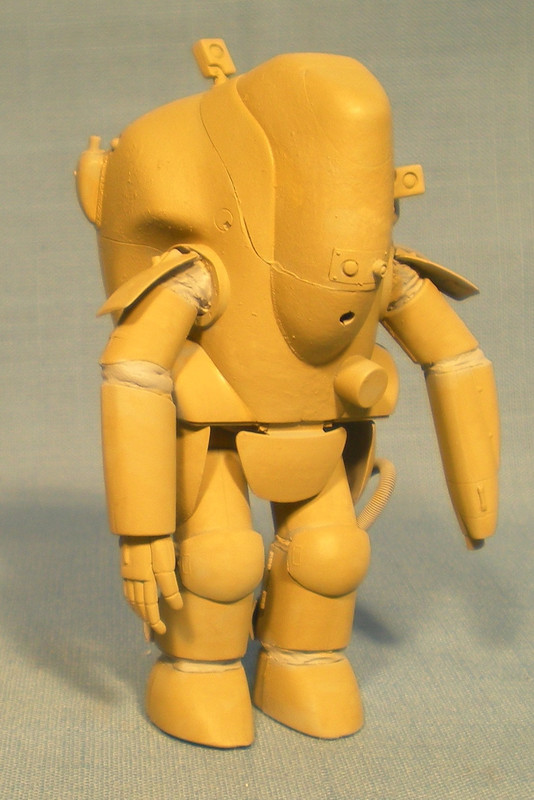
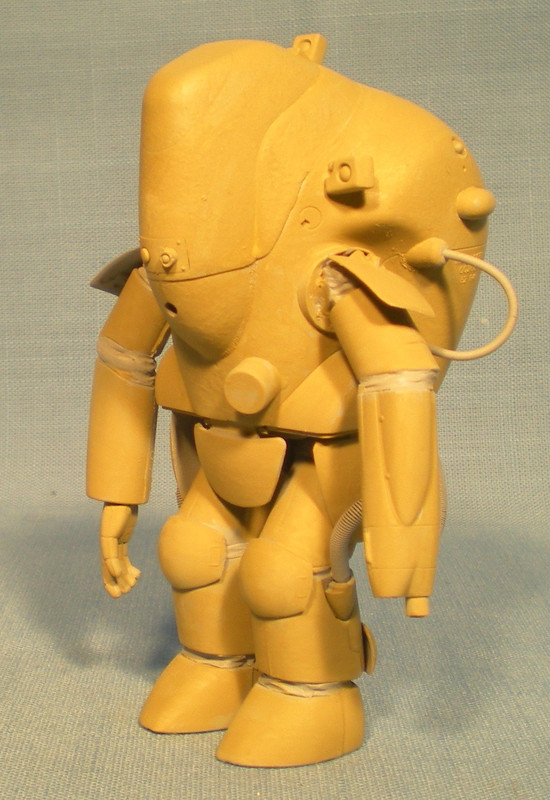
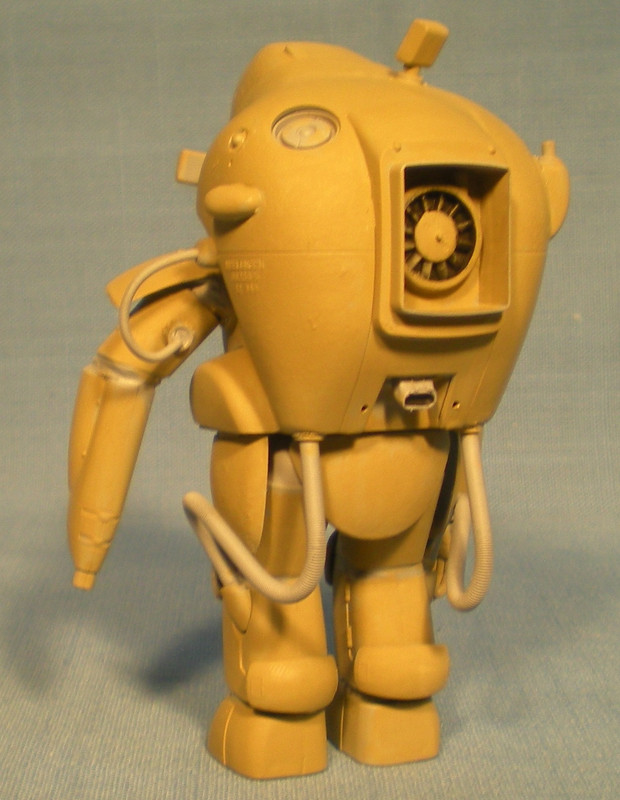
That was the base for a camo pattern with other Tamiya acrylics, applied free-hand:
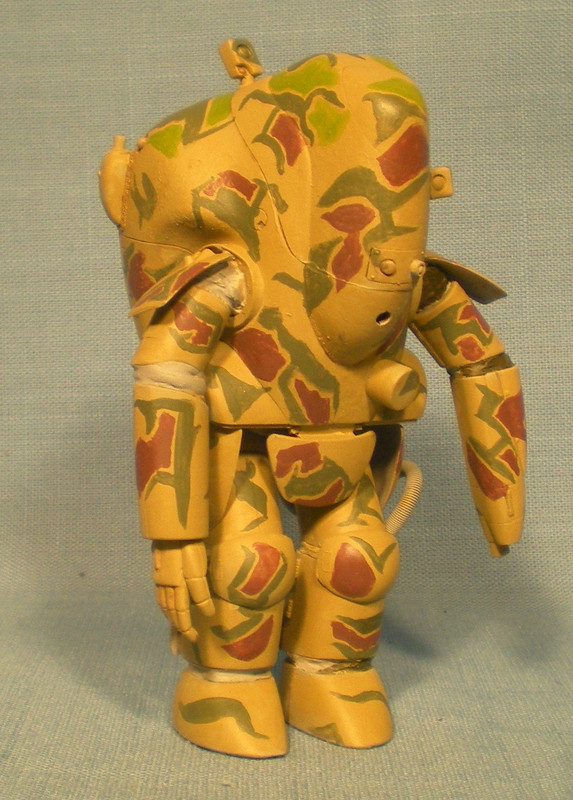
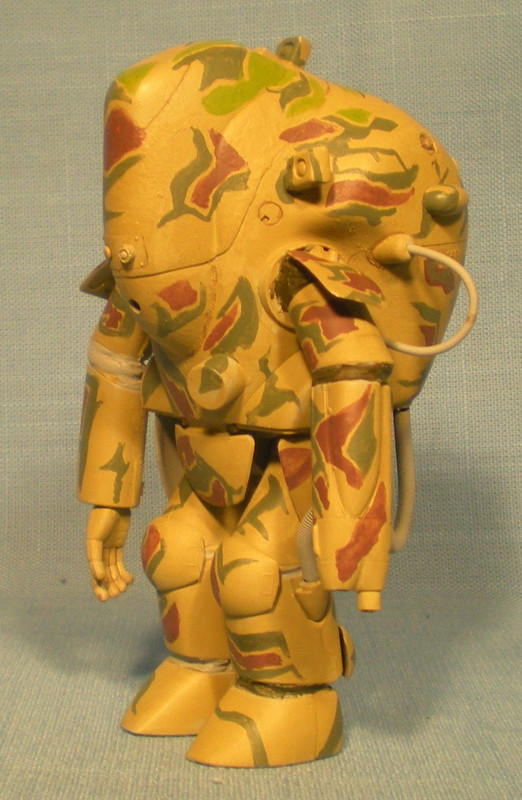
This is still in progress. I need to fade colors and add some weathering next. But so far, all Tamiya acrylics, thinned with Tamiya’s acrylic thinner, and brushed on my hand.