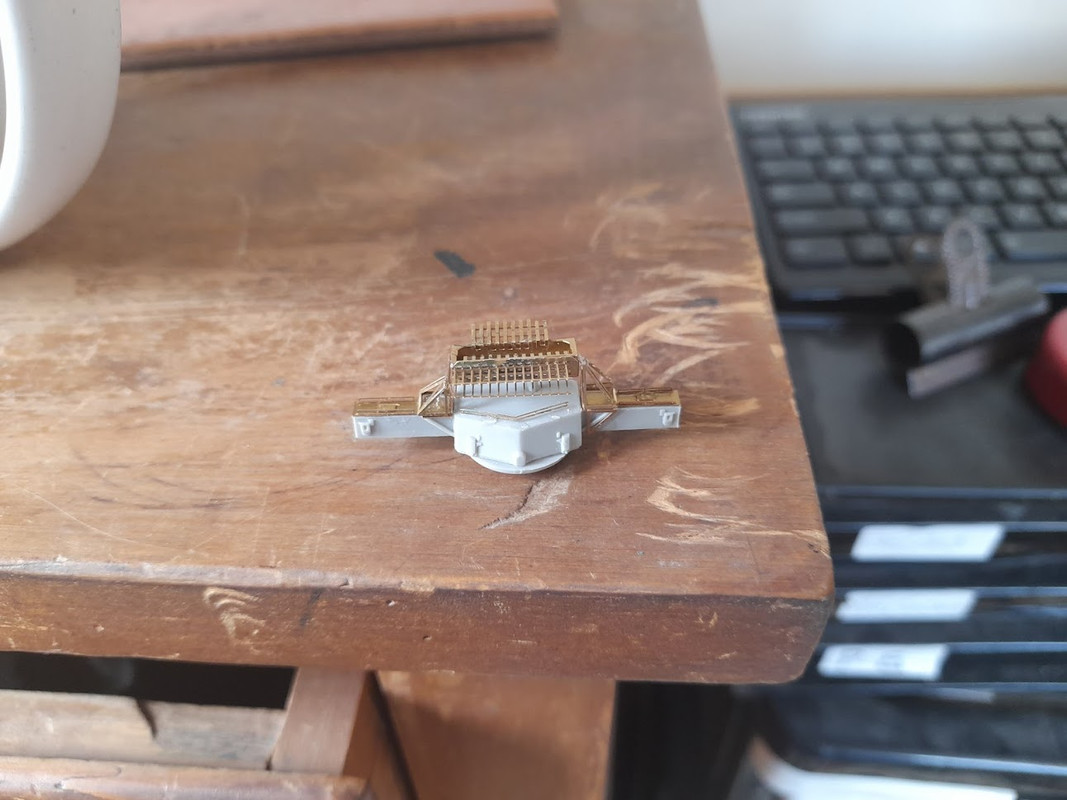
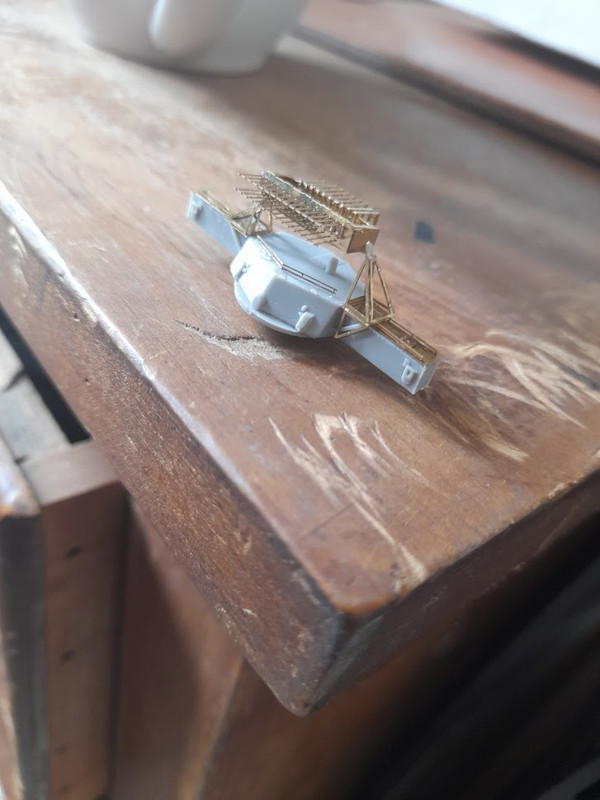
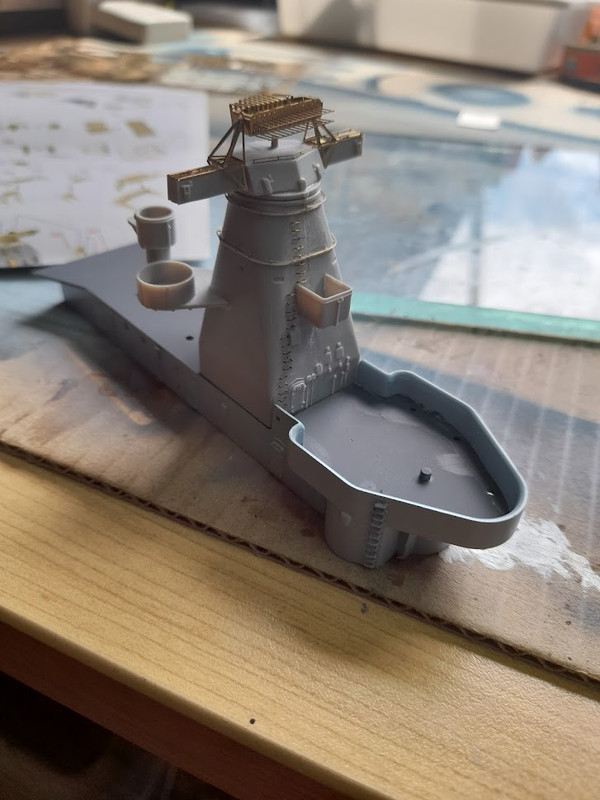
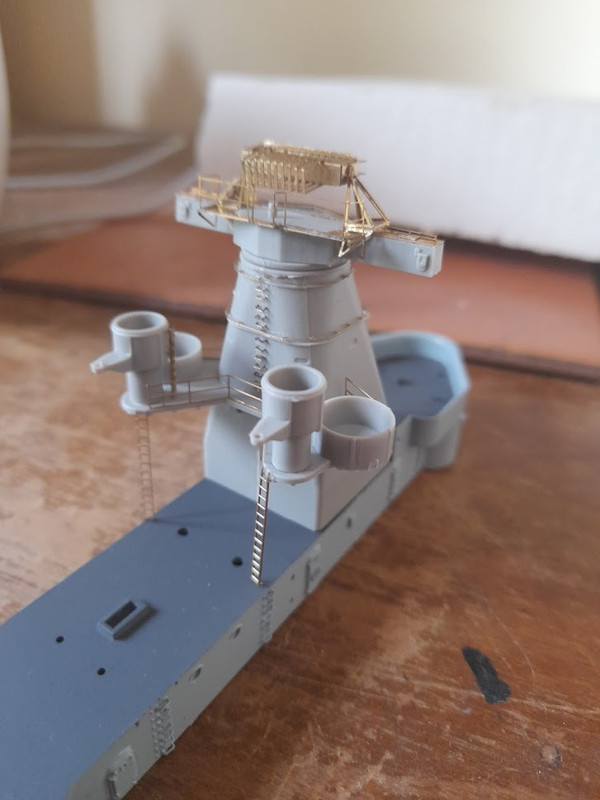
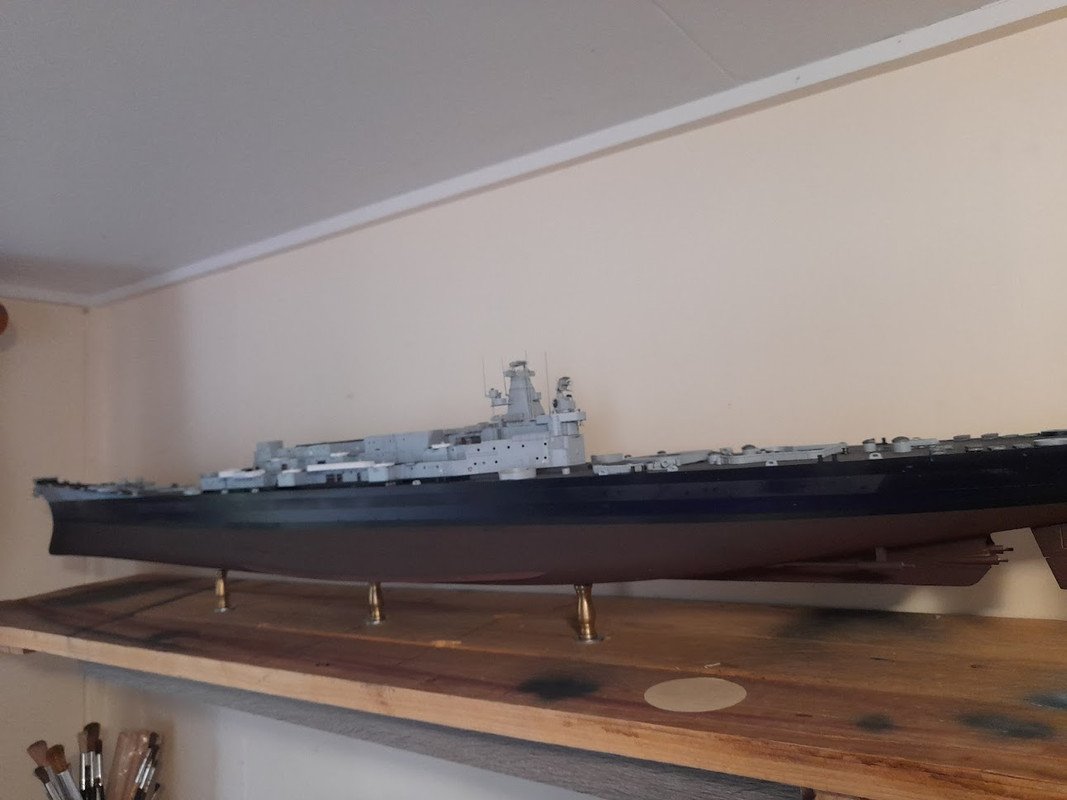
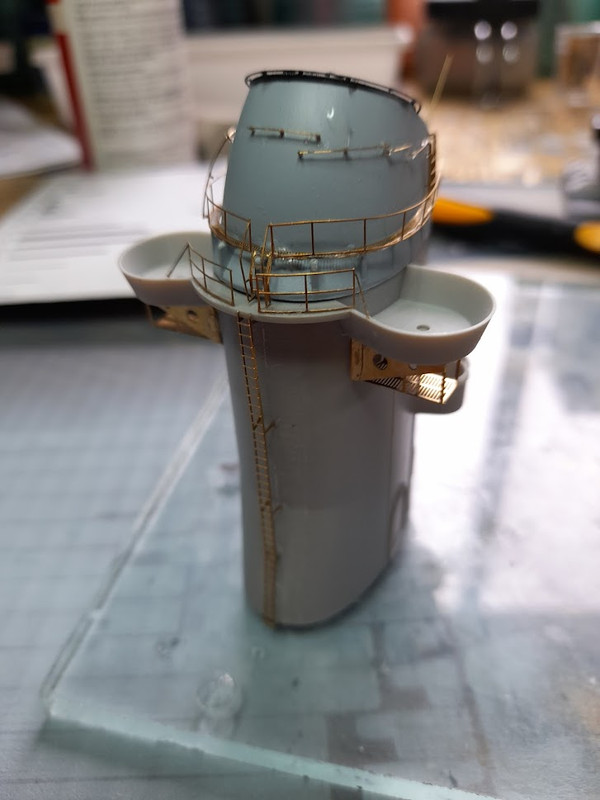
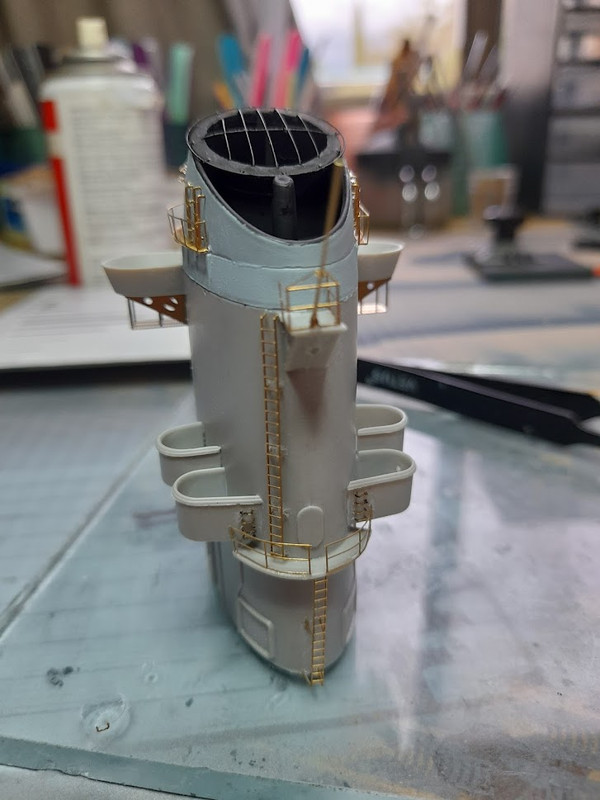
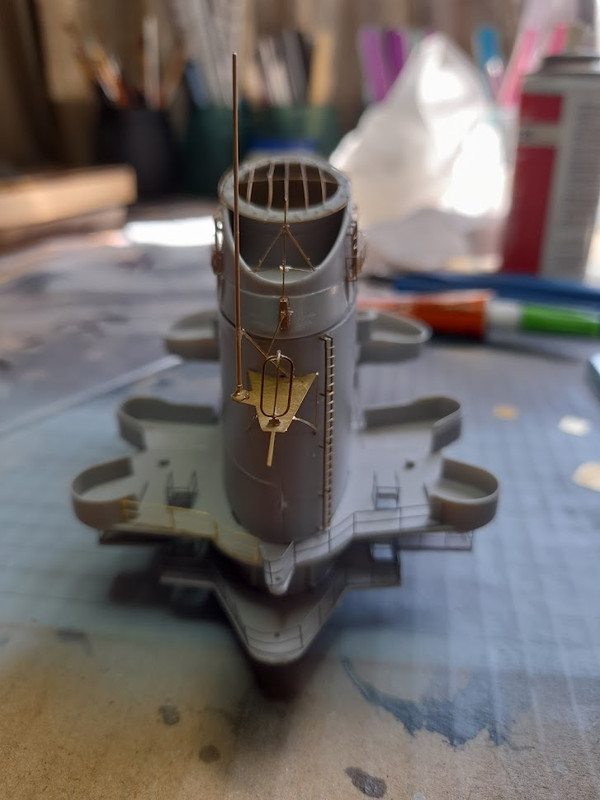
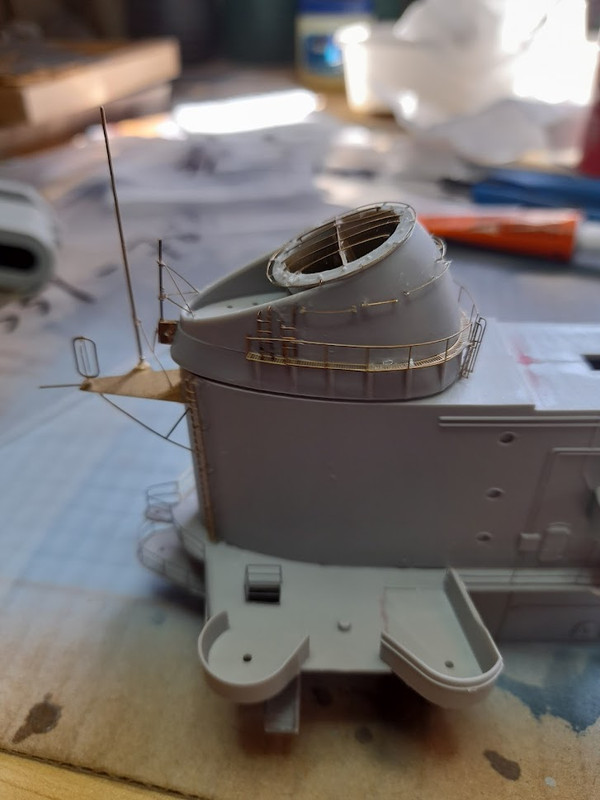
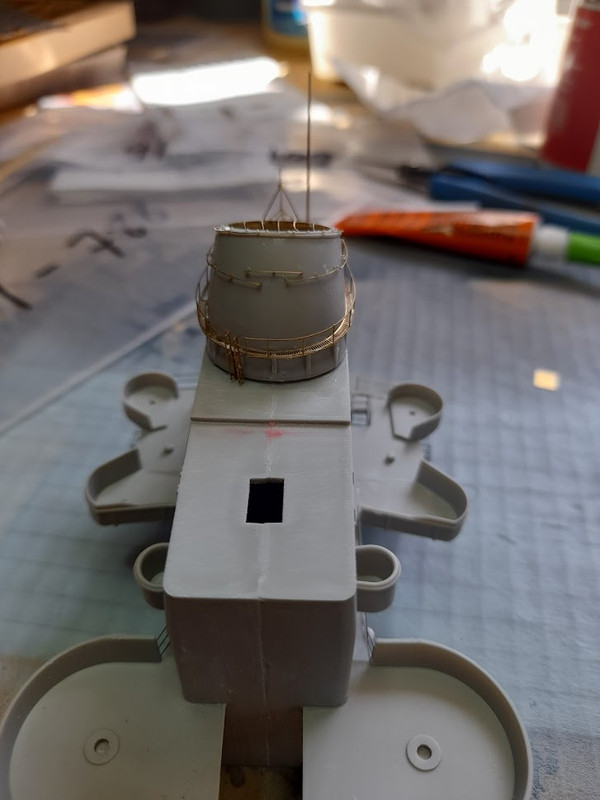
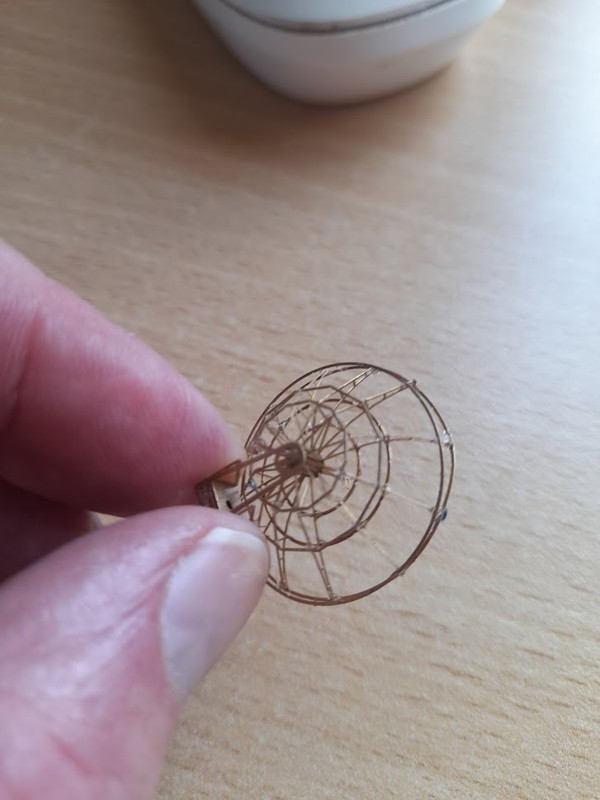
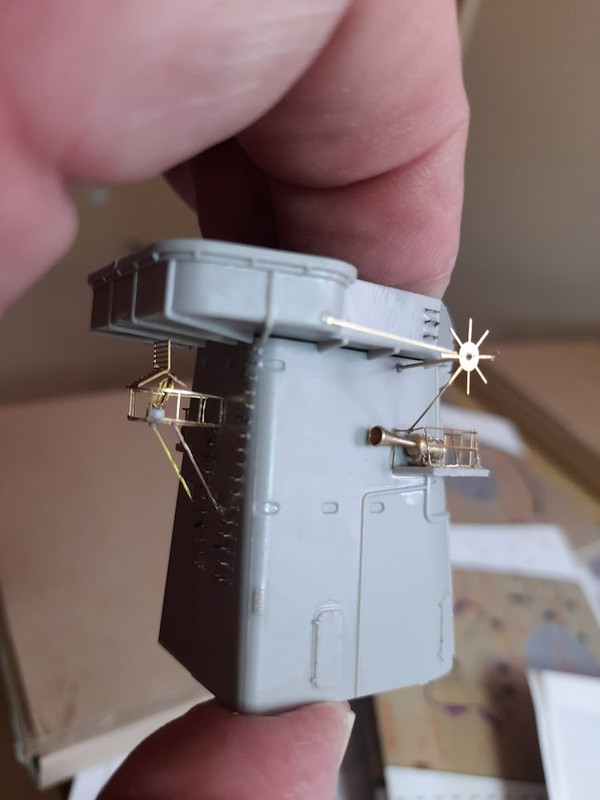
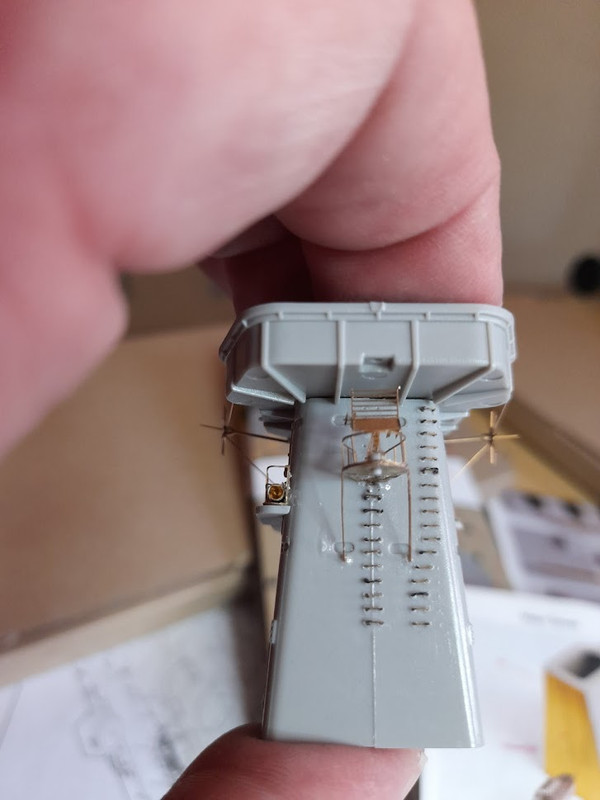
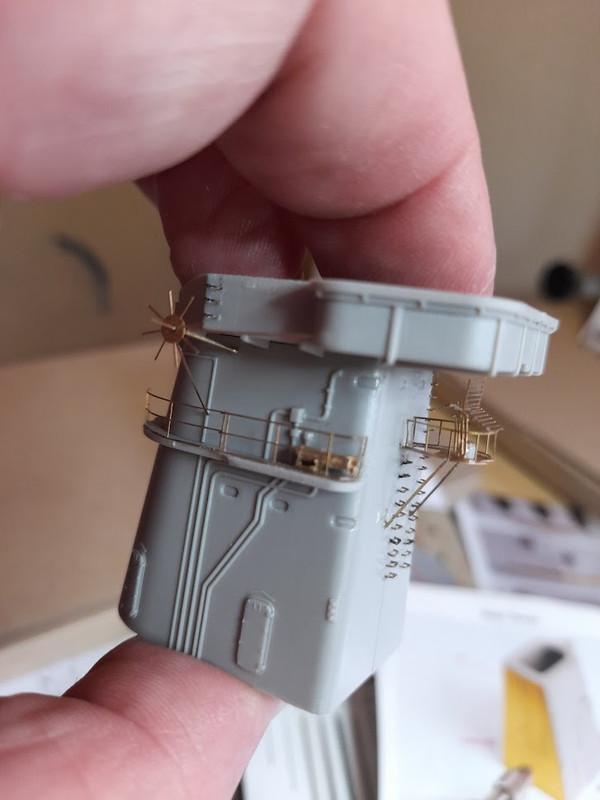
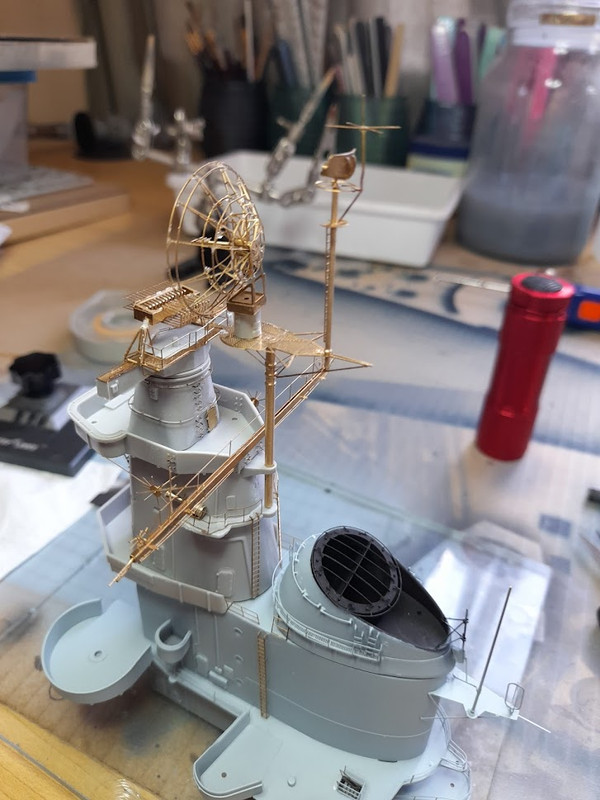
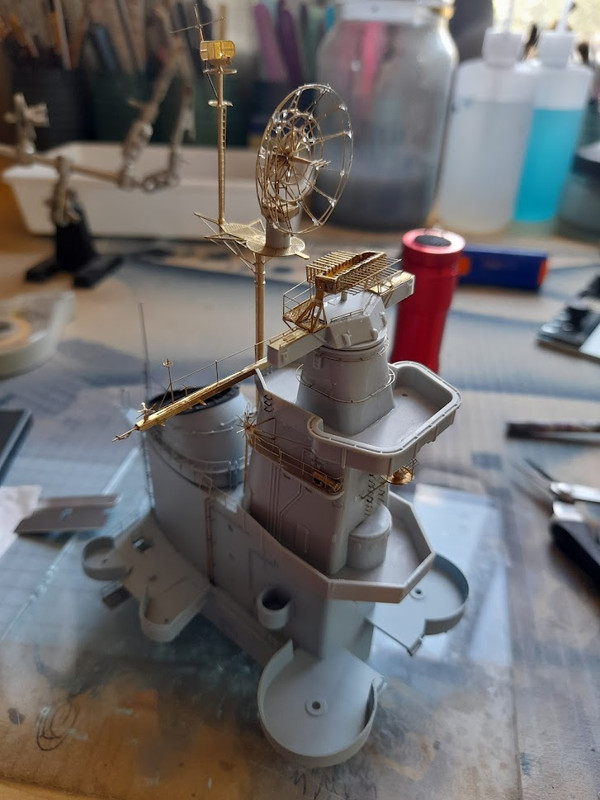
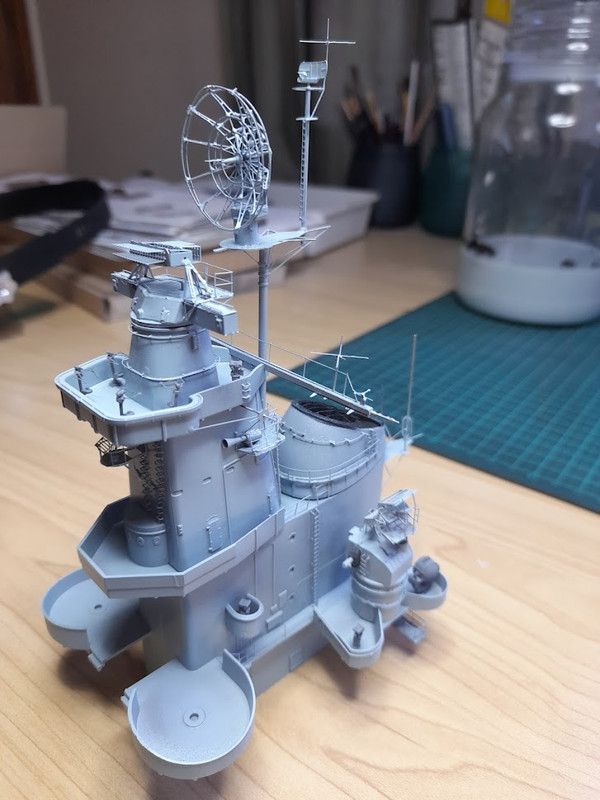
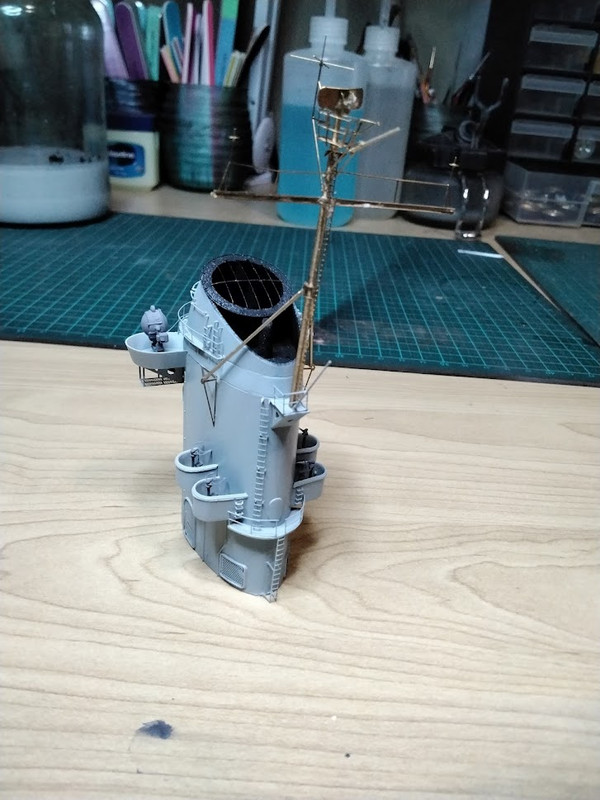
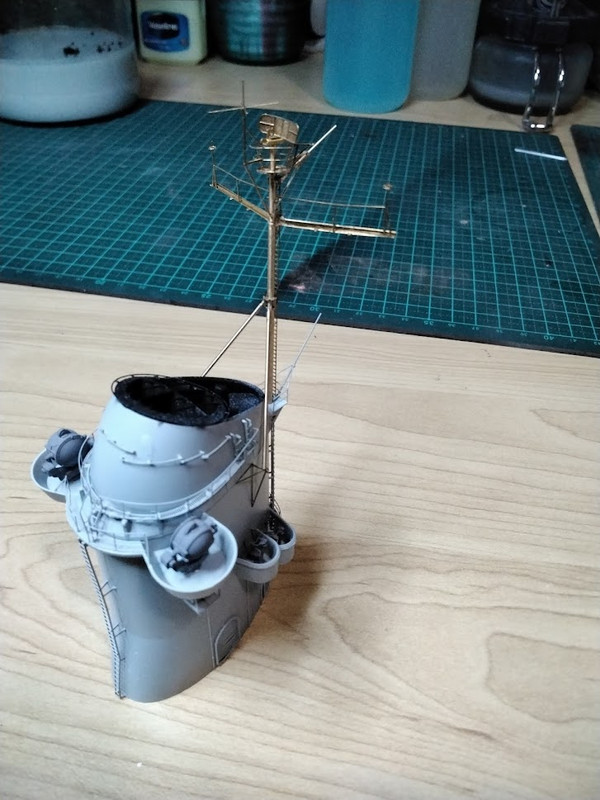
Black appears to be middling common on capitol ships where they stayed dry near 100% of the time.
It’s kind of like the liferafts. I real life they were rather sloppily painted in place. Which would look like sloppy modeling if recreated. Now, life raft would get unstacked and the supplies audited and inspected, and would not necessarily go back where they started.
So, base painting them Panzer Gray can work, then pick out ones in the stacks to be other superstructure colors for variety can give a good look.
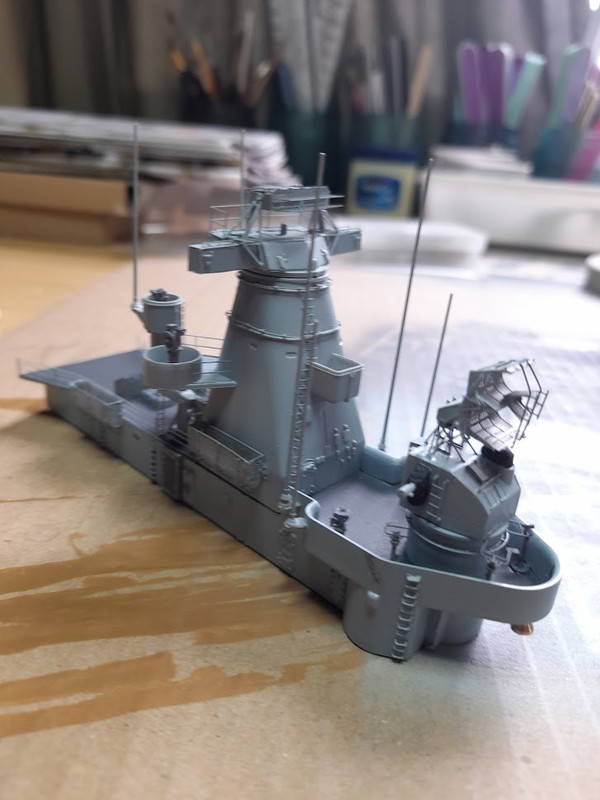
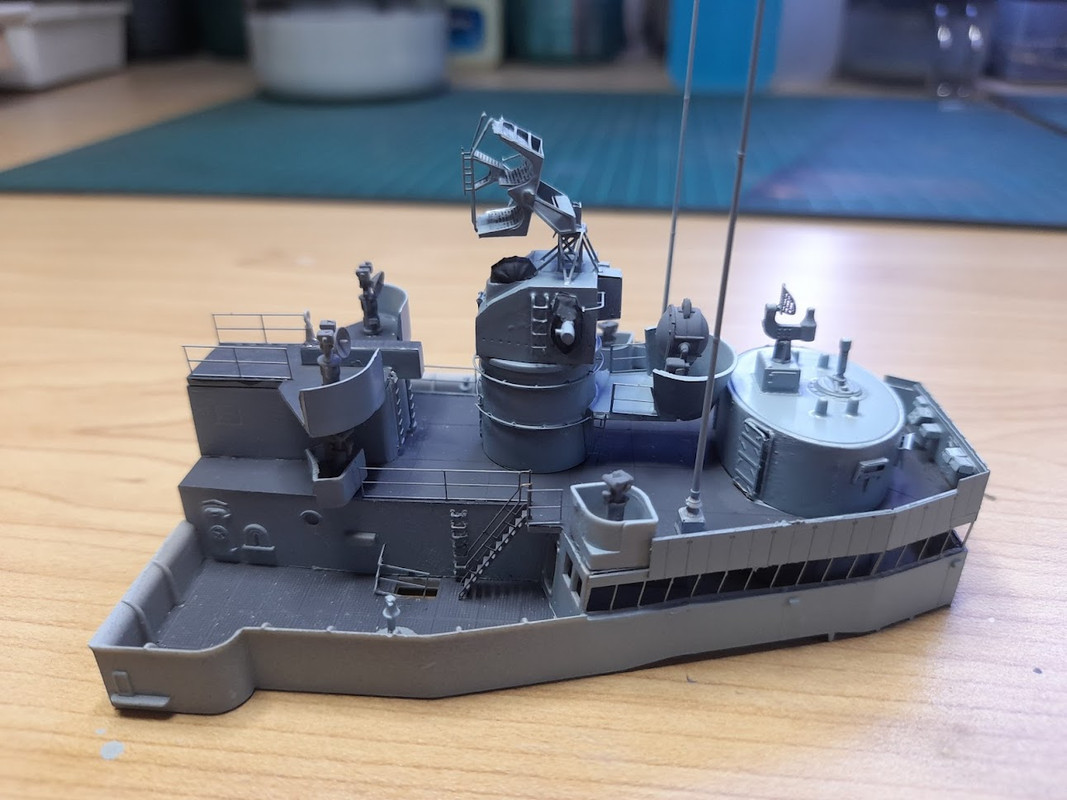
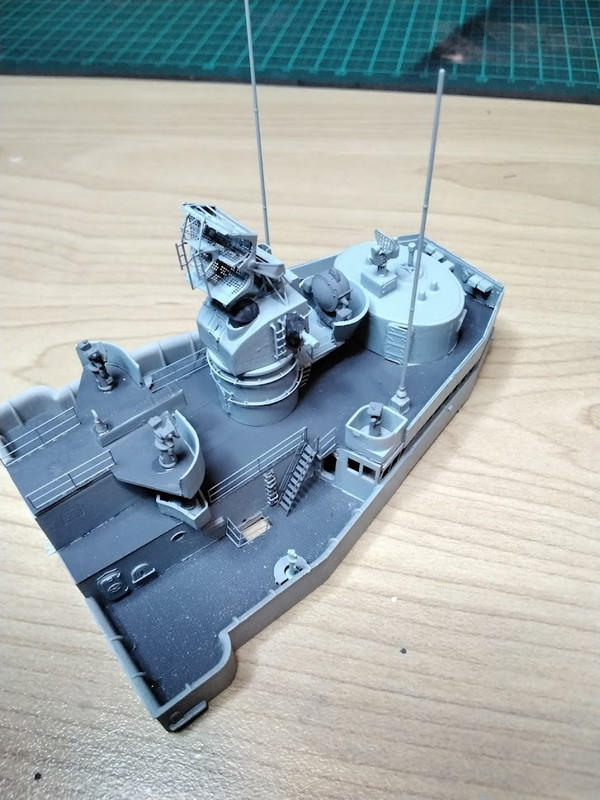
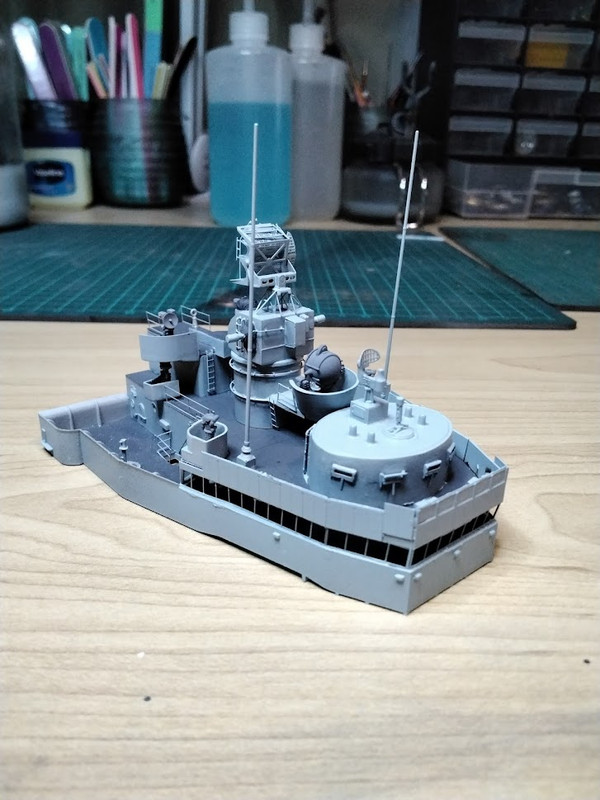
Ah, no, those are for the 5" guns. They all trunk down to the 200 or 300 deck and are linked to four–one each–fire control computers. Each of whch had a swichboard so that they could cross-connect to any of the other three Mk 37s, and to any combination of the ten 5"/38 mounts.
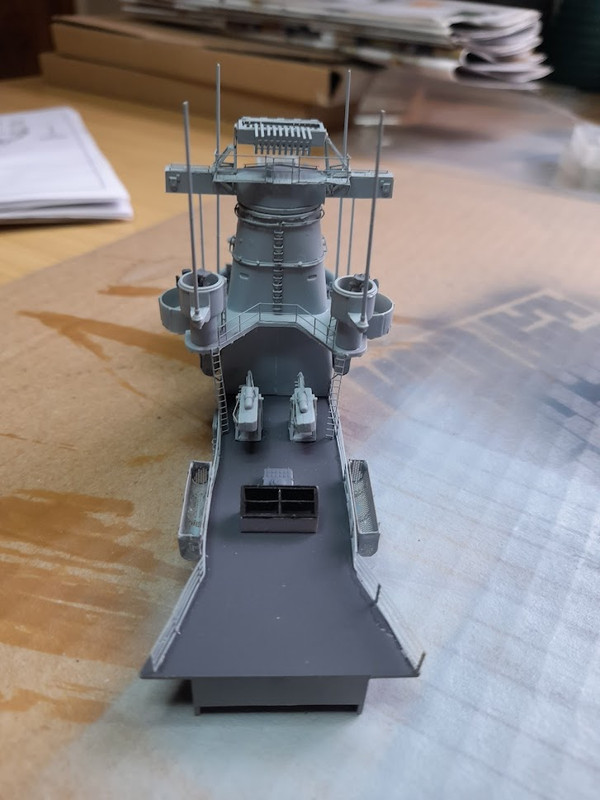
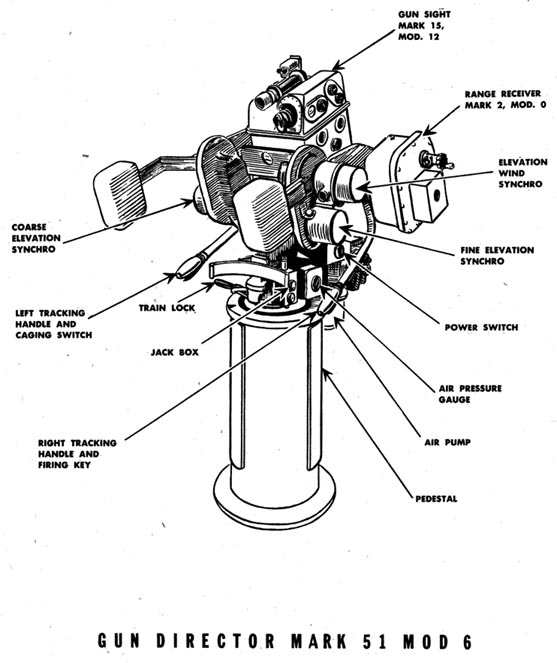
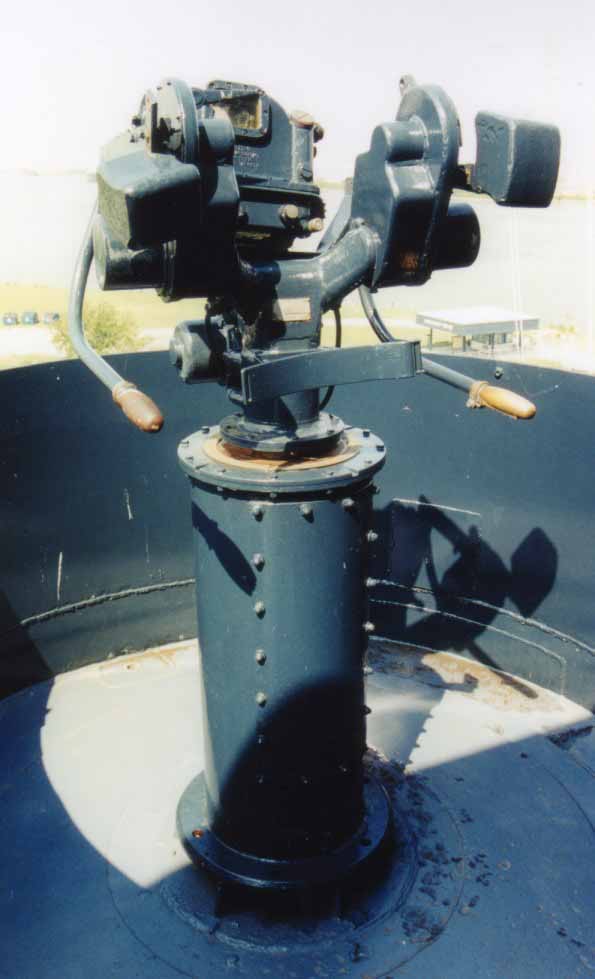
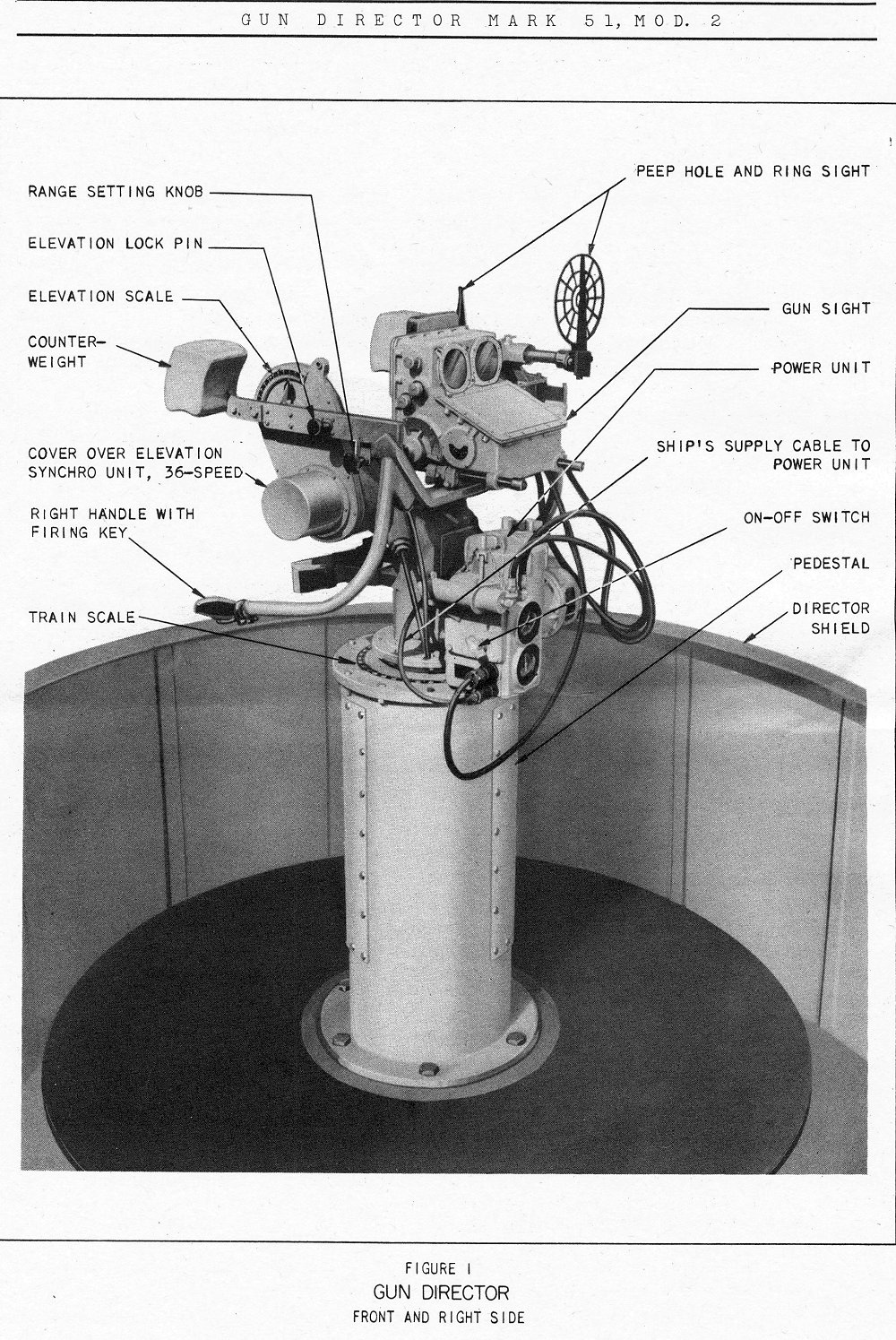
The Bofors used the Mk 51 Director. Which was a pedastle mounted sight wth shoulder harness for the operator. The Mk 51 could be linked to from 1 to 5 40mm mounts. Those go in a round tub typically very close to a 40mm mount. Each Mk 51 had a Fire Controlman operator, and a talker in the tub.
The only guns w/o mechanical directors are the 20mm mounts; but, they generally had a alker and a “position” or “gallery” commander, to spot targets for the group of 20mm mounts whch were often manned by clerks, messmen, and the like.
Hasn’t limited your ability to render an exquisite model, though.
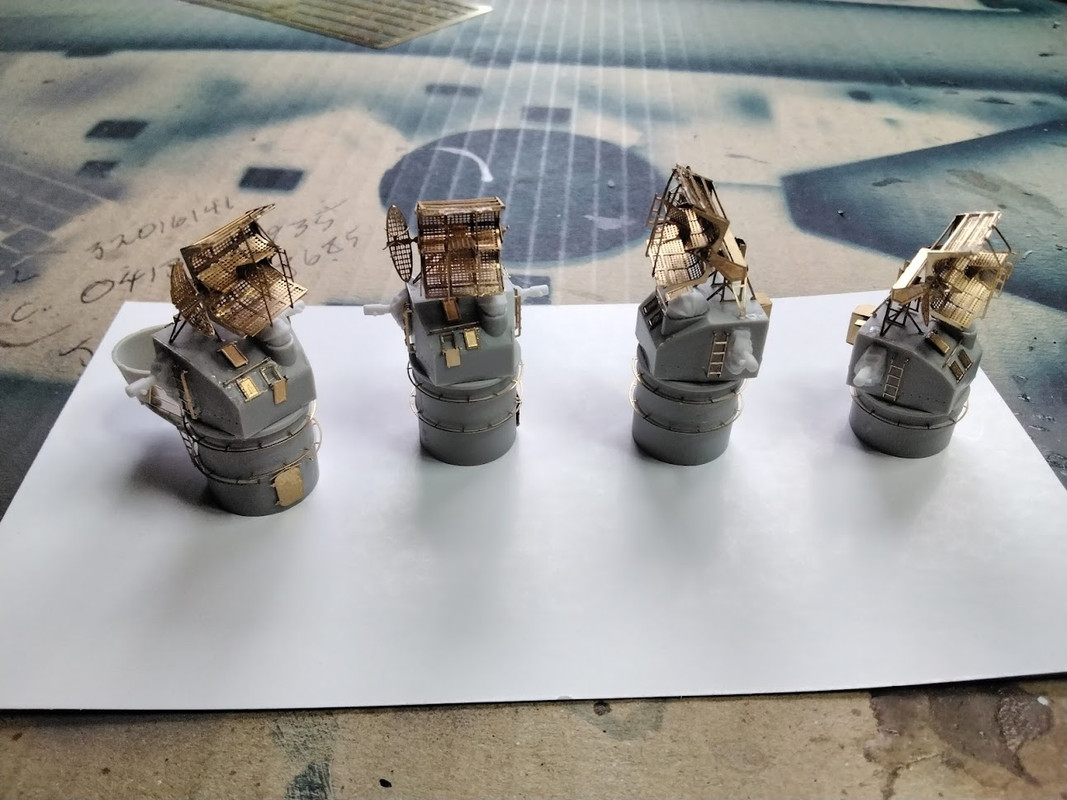
For esoterica, radar antennae generate a “field shape” 90º to the antenna geometry. So a horzontal rectangle ‘makes’ a vertical rectangle “beam.”
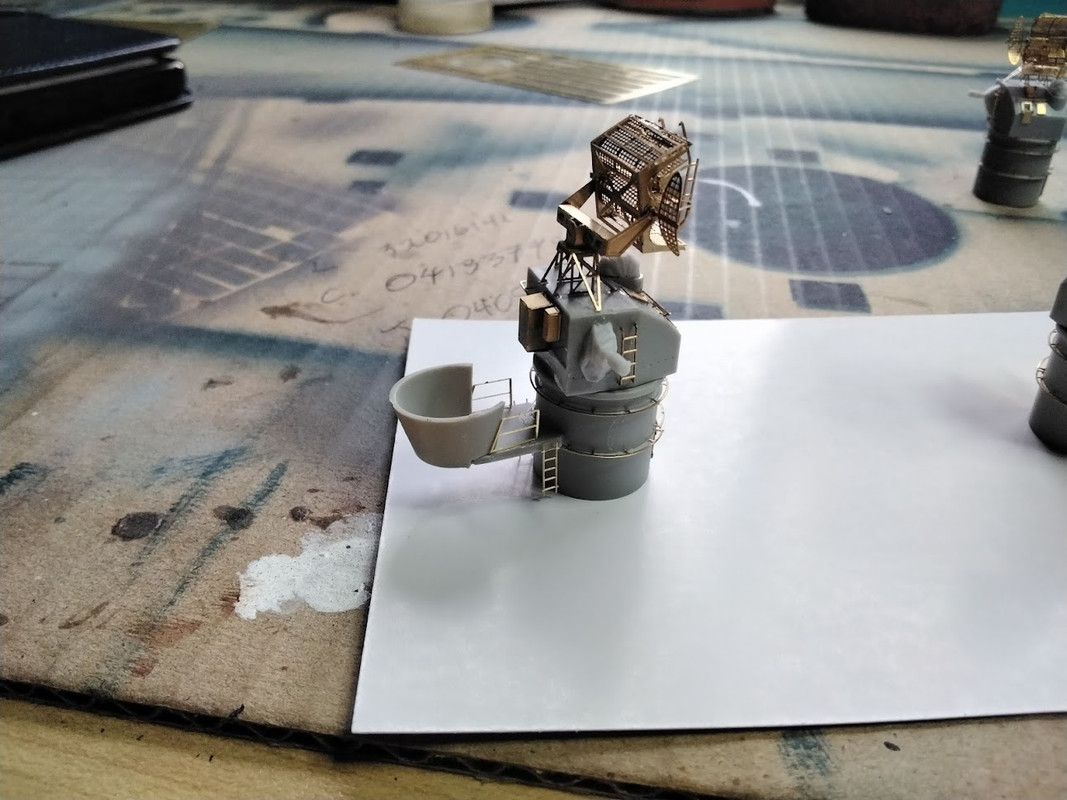
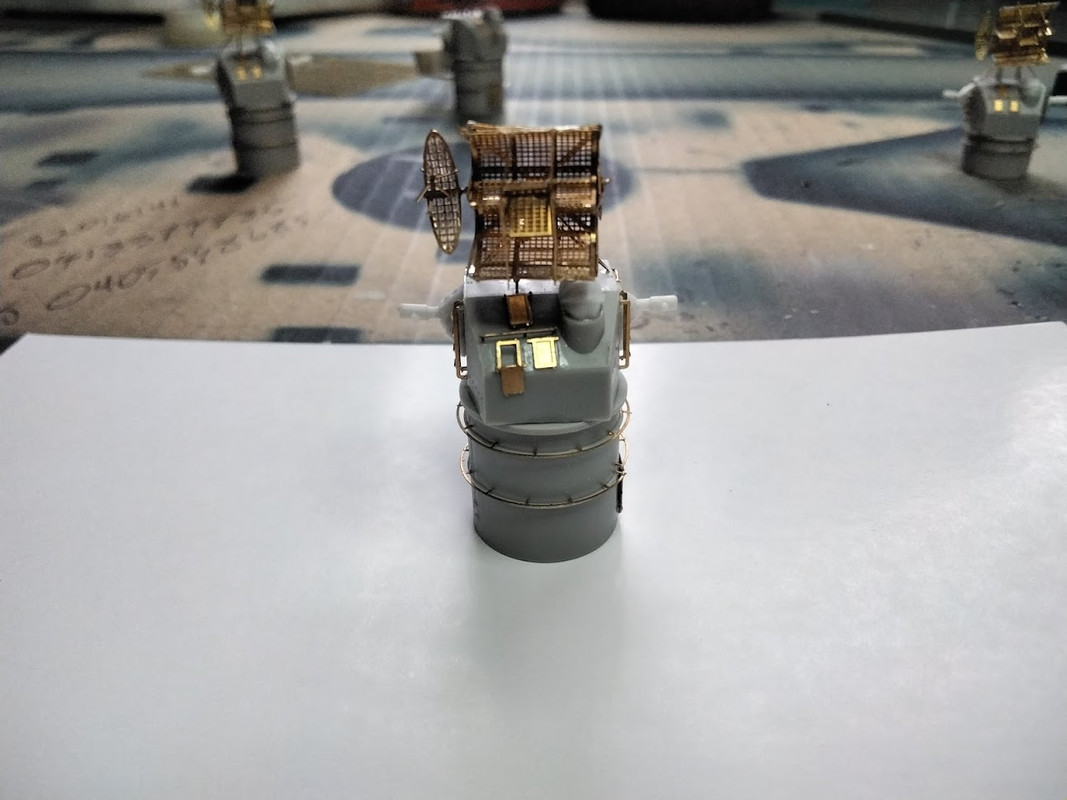
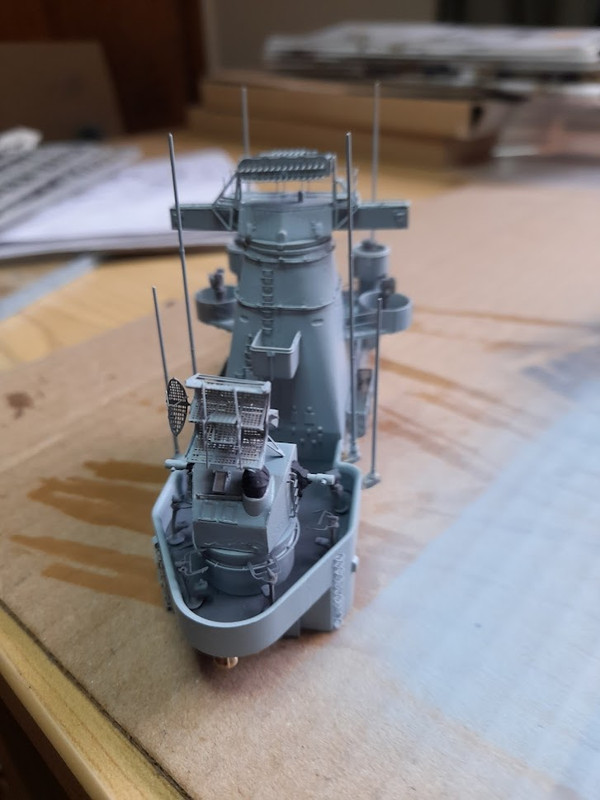
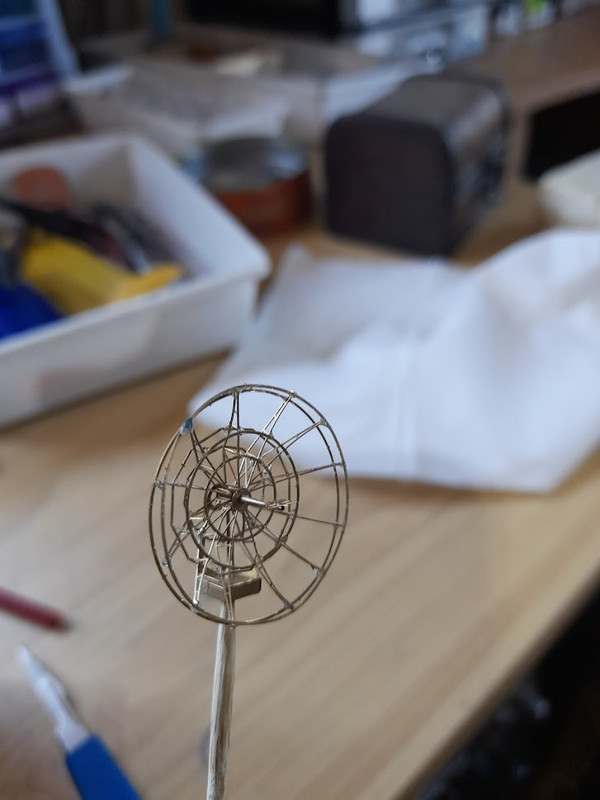
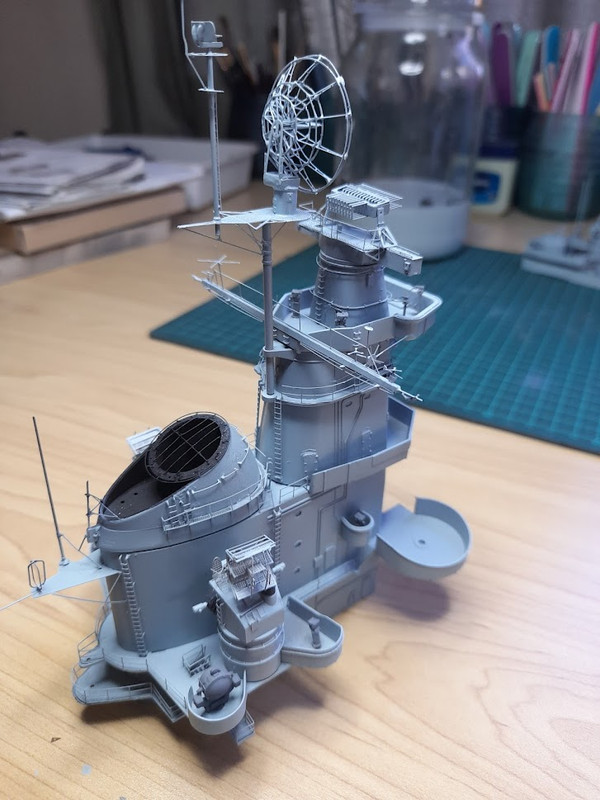
This is neatly captured in the Mk 37 director radar. The double-lobed antenna is double-lobed to reduce length over all, and gives a sweep beam in plan orientation. The “banana” antenna to the side makes a horizontal beam lobe, which allows identifying things in vertical height.
After the war, when they went to the circular antenna, the whole dish was used for both plan and height scanning, by pivoting the antenna vertically.
Additionally number of targeting (as apposed to search) radar antenna are spun to give a “reflection” pause. That allows time for the signal to go out to the target and return back, without havng to switch high voltages on and off rapidly. A serious issue in the days of vacuum tubes.
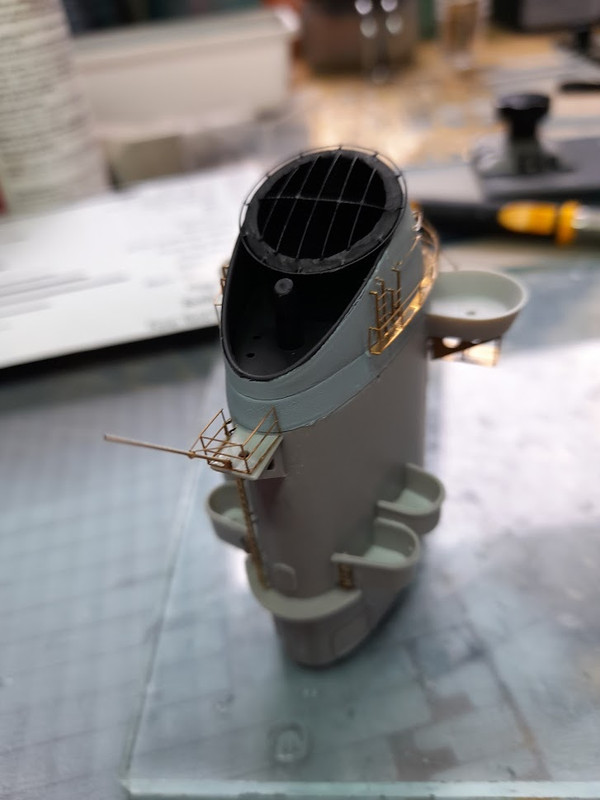
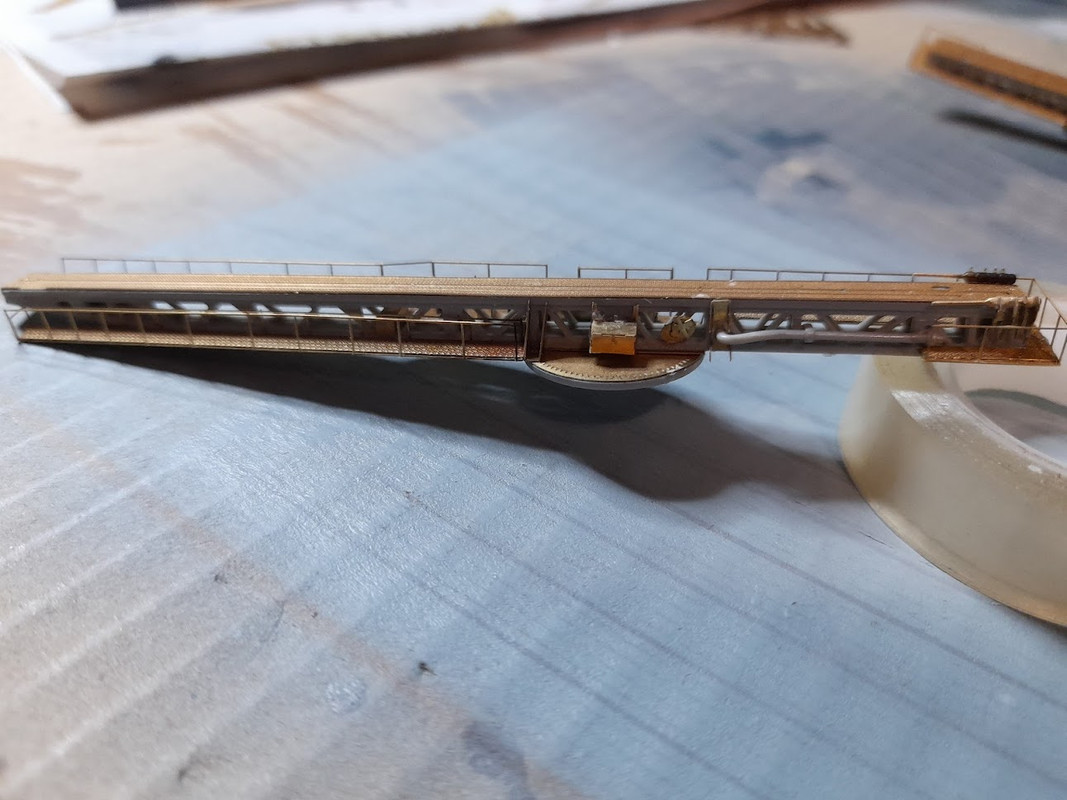
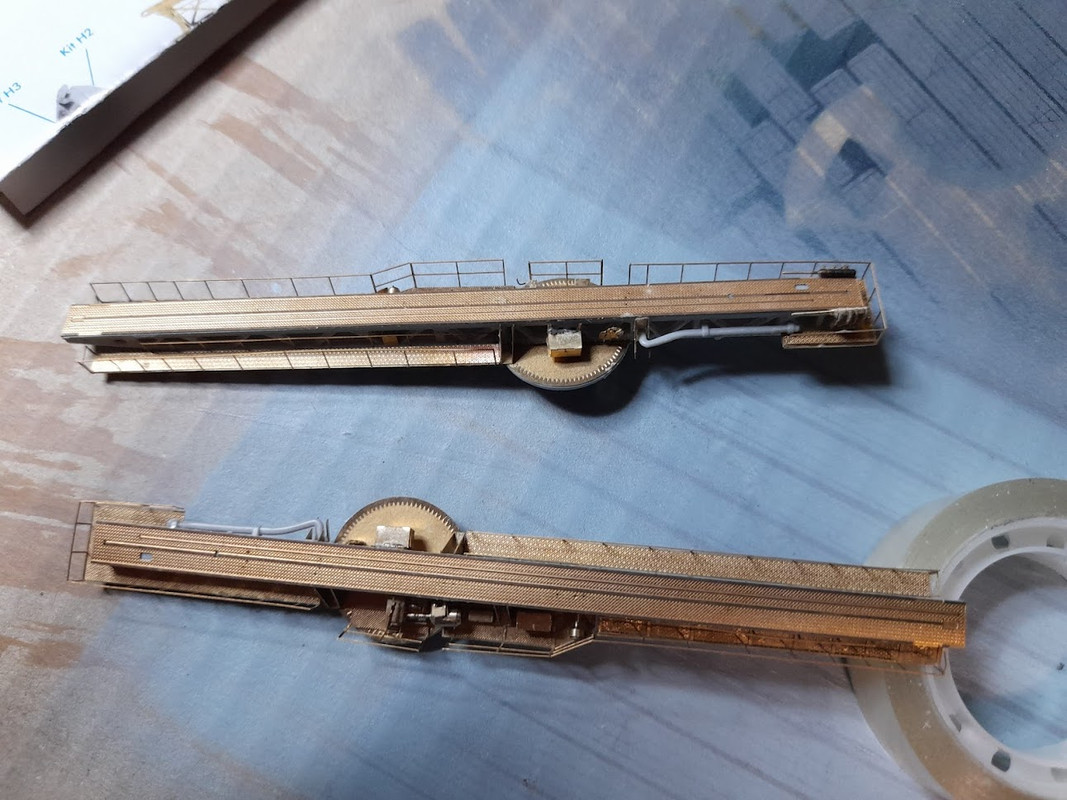
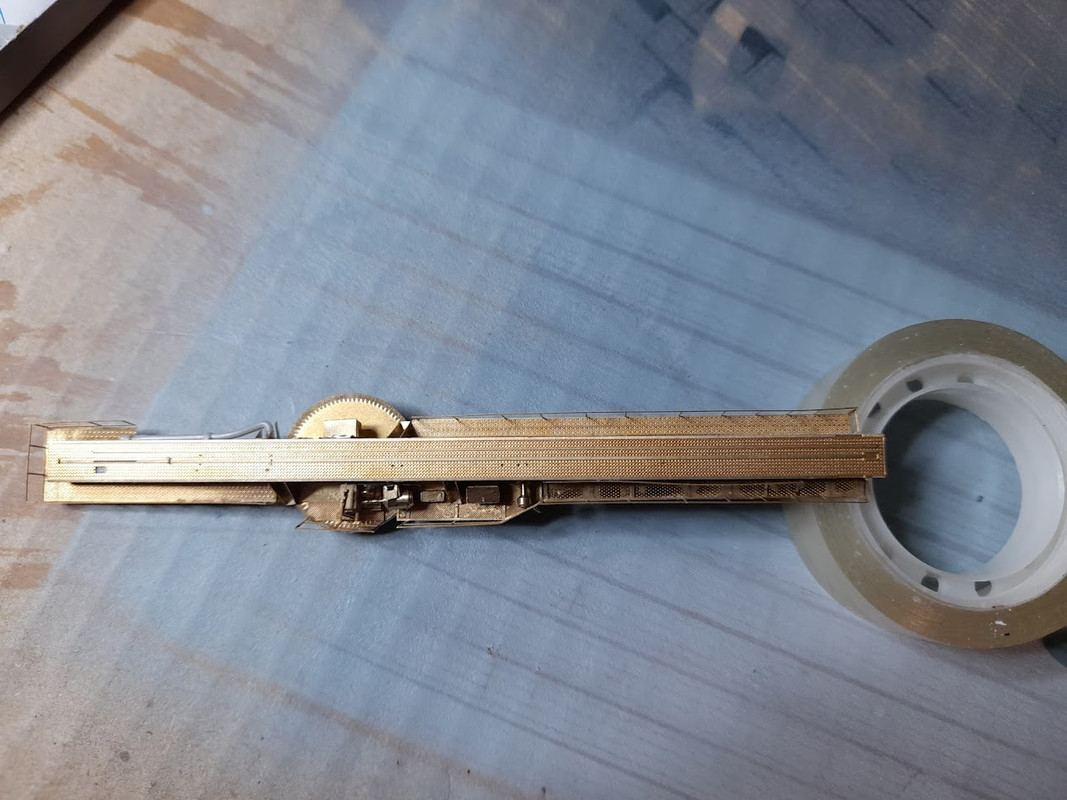
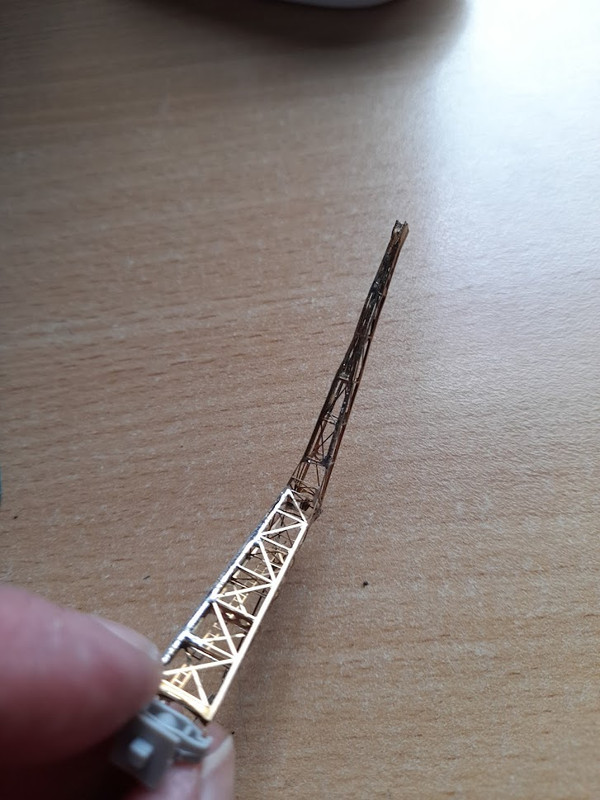
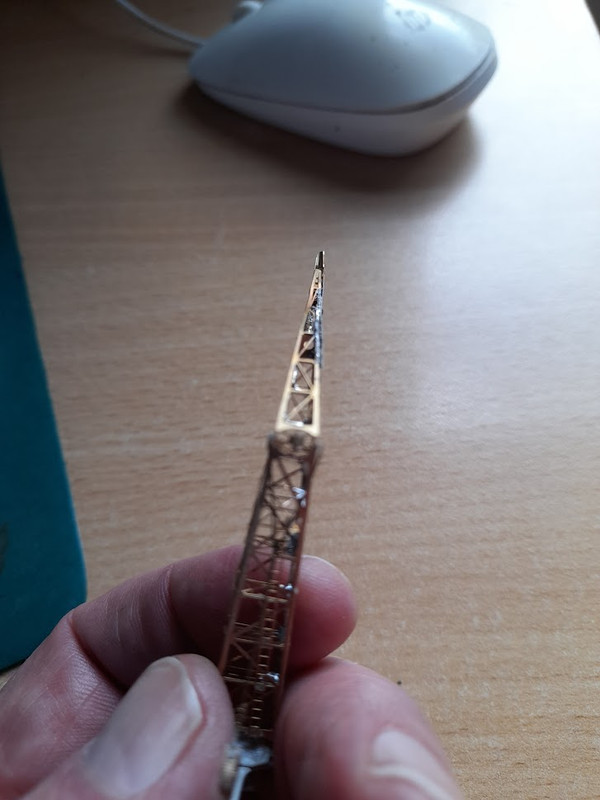
wasn’t so fortunate with the crane , on the last fold and glue , I somehow managed to squash the tip end , I straightened it out as best as I could , will have to see how it comes up after paint and in position , might have to use the kit supplied one .