The Battle of Midway Group Build, 2027

It’s really amazing to me how much detailed information is still available about events that happened more than 80 years ago. Especially considering all of this was documented long before the internet existed!

Who would have thought we’d still be able to dig up details about which aircraft carried which rear gun configurations at Midway? And yet here we are, putting all those little pieces of history together.

Fascinating stuff, Freddie! Thanks for doing the detective work and sharing it with us.

1 Like

Hi everyone,
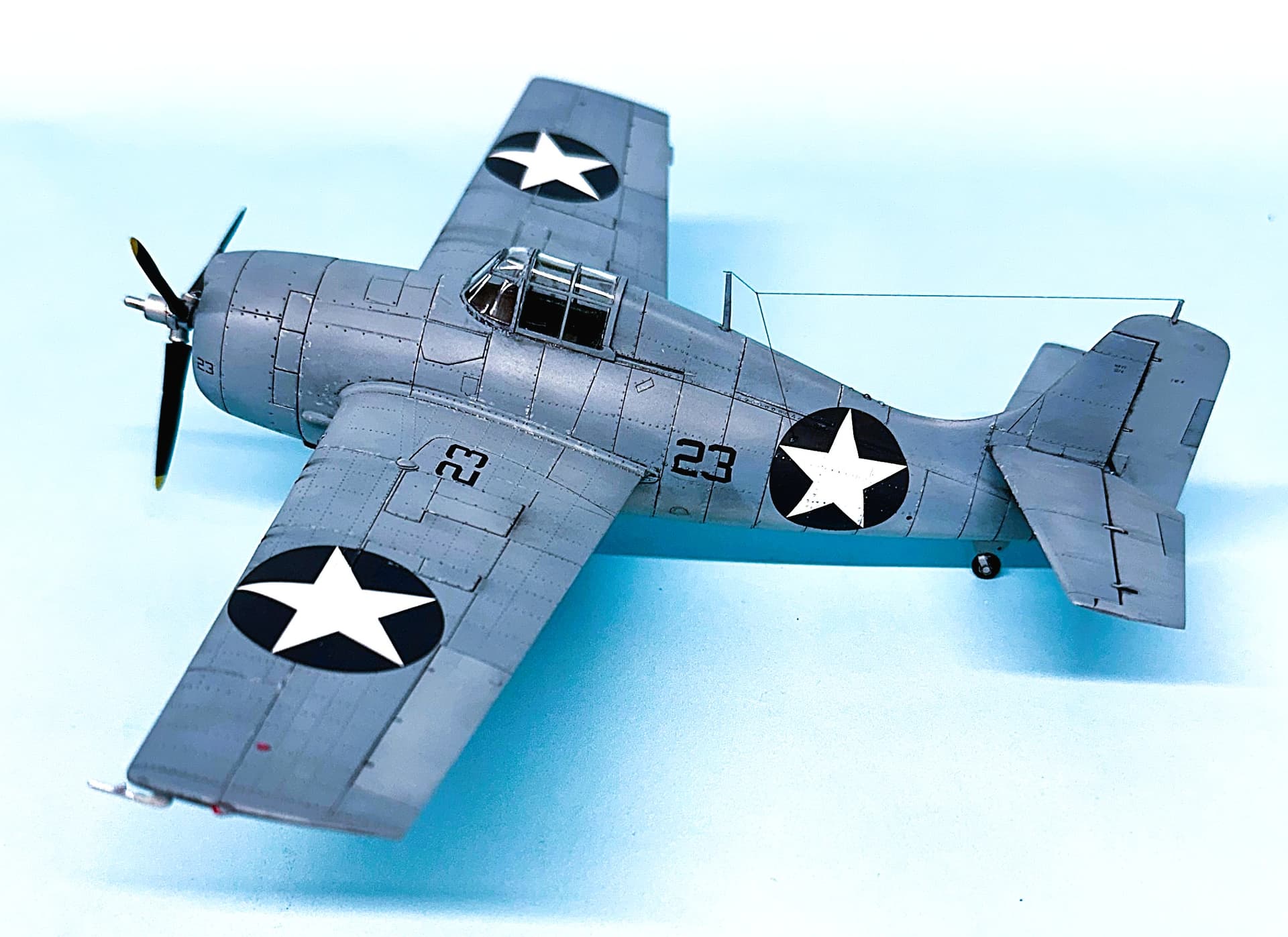
Does anyone know if the F4F-4 Wildcats on the USS Enterprise during the Battle of Midway had white numbers on their engine cowlings, similar to the TBDs and SBDs? Or were they black? I’m having a hard time making it out from the video footage taken in May 1942.
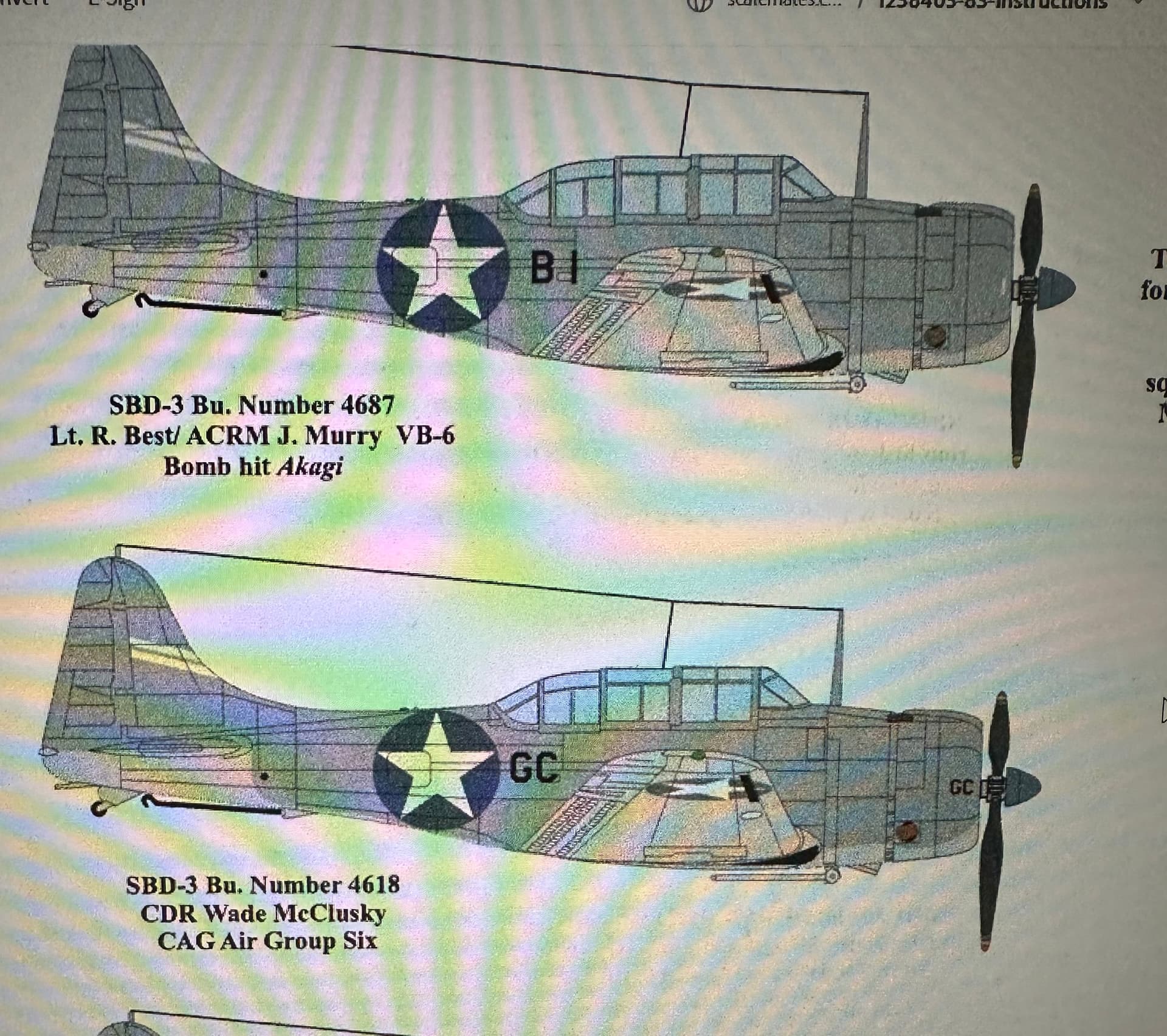
Also, regarding Wade McClusky’s aircraft: were both the fuselage and cowling ‘GC’ codes black, or was the ‘GC’ on the cowling white?
Thanks in advance for any help!"

2 Likes

Hey Laf,

Great question, and it might be a little confusing to answer this correctly.

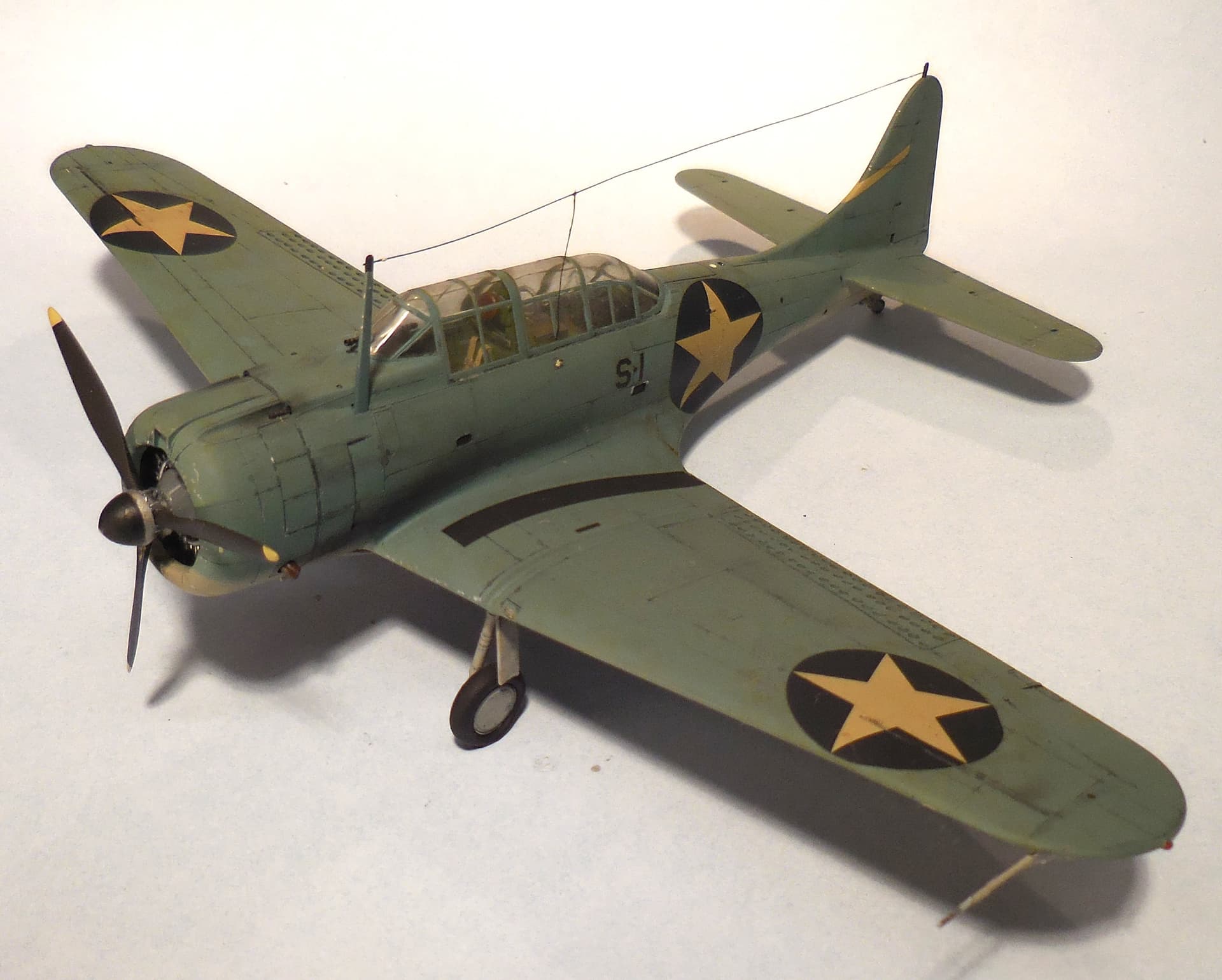
The “Wildcat” pictured, is from ‘Fighting Six’, (VF-6) off USS Enterprise, while the SBD-3, was from Scouting Six, (VS-6).

Fighting Six, (VF-6) used black on all their aircraft numbers, both on the cowl and on the fuselage sides. They also did not use the mission code, (F for ‘Fighter’) just the plane in squadron number.

Scouting Six, (VS-6) used both. Black for the side numbers and white on the cowl. It is also possible that some of the SBD’s in VS-6 had black numbers on the cowl as well. The white cowl number might have been used to tell what aircraft belonged to which squadron

As far as Bombing Six, (VB-6), I would think that they would similar in appearance to the VS-6, and profiles I have seen have those numbers in black, including the cowl. They also used the mission code, ‘B’ followed by the number ‘6’, which would mean the number six aircraft of Bombing Six. They did NOT use a dash between them and it was painted in FRONT OF the national insignia. (USS Hornet’s Bombing Eight, DID use the dash and they placed their numbering BEHIND the national insignia). As you can see there was a wide variation on the application of how the numbers were applied, WHERE they were applied and what color they were applied with. I am leaning that if you used black, you should be OK, because I remember seeing a picture or two of VB-6 aircraft and the cowl numbers were black. I would think the GC would also be black as well. Start Fighter decals makes a sheet of BoM aircraft that are pretty good and well researched, if that helps?


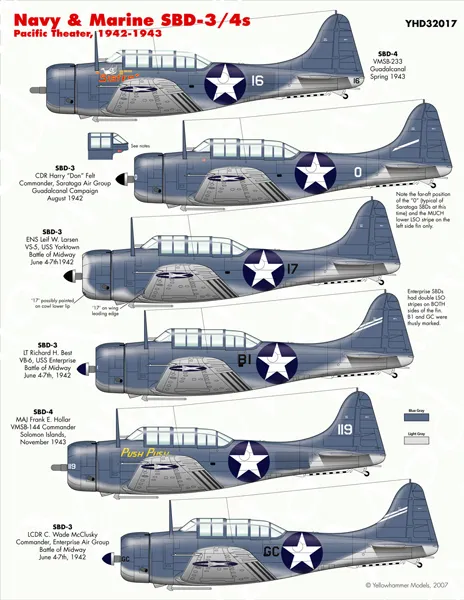
This profile is from the Star Fighter Decals sheet and I think it should answer your questions.

.

3 Likes

Thank you so much for the detailed explanation! I just have two follow-up questions/observations:
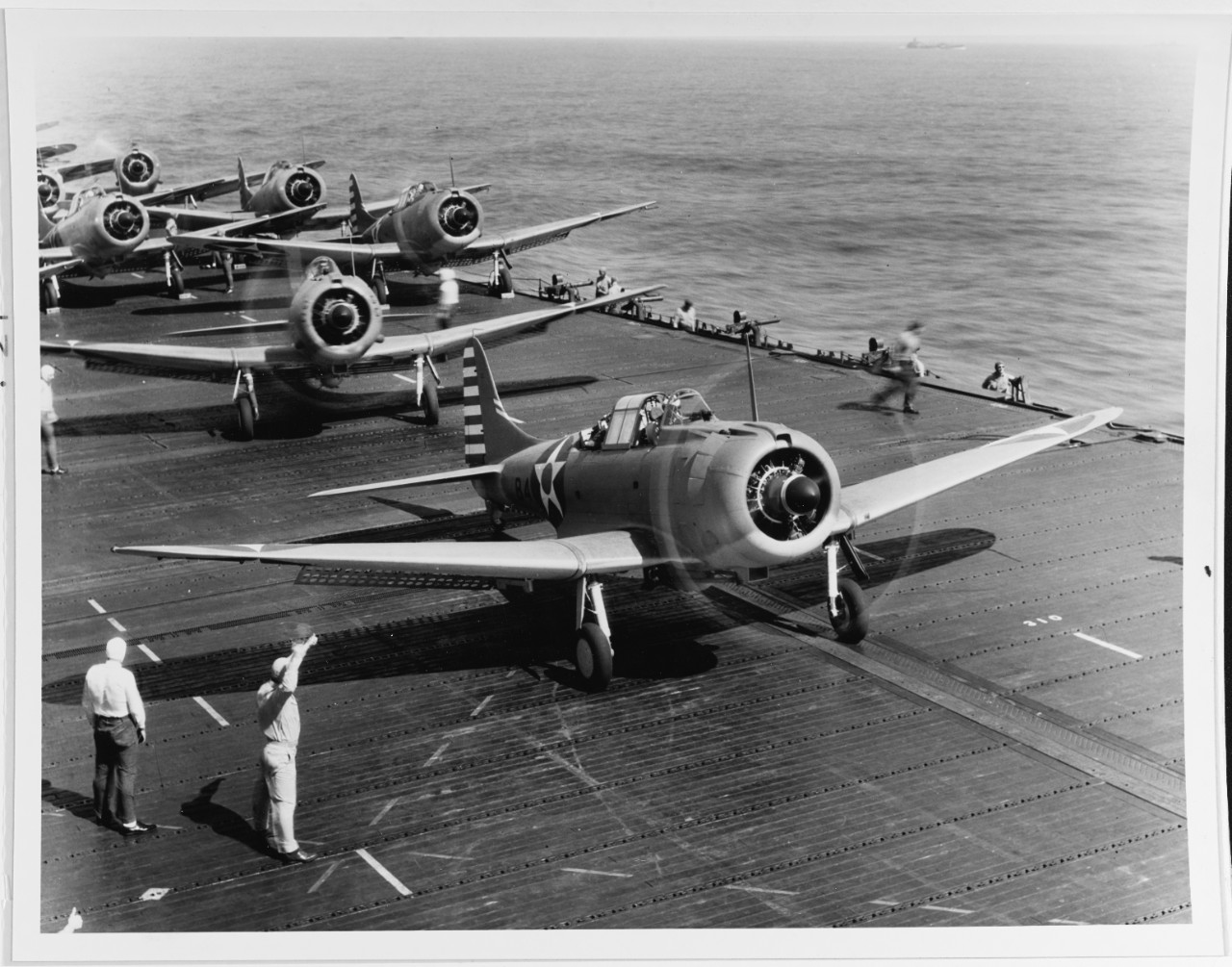
​1.Regarding photo 80-G-14115 (taken on May 11, 1942), it looks like the SBDs were already in their new paint scheme. The aircraft on the right clearly has a white cowl number (and the two white stripes on the tail confirm it belongs to VB-6). This matches the first profile artwork you shared, but you mentioned earlier in your text that the VB-6 cowl numbers you saw were black. This seems to be a bit contradictory.


2.​In photo 80-G-66037 (taken on Feb 24, 1942), the second aircraft has a black ‘GC’ on the cowl, but the letters are painted vertically, whereas the profile you provided shows them horizontally. That photo is the only one I could find of an SBD with the ‘GC’ code, but it was taken 3 months prior to Midway. Do you happen to have any other specific references or photos to corroborate the horizontal ‘GC’ for the Midway timeframe?

​Thanks again for your time and help!

3 Likes

As I am looking myself for more information on the Grumman F4F-4 WILDCATS involved in the Battle of Midway, I didn’t mind doing a bit of ‘rabbit hole’ effort.

I’m apparently still not asking my questions in the manner that gets me exactly what I’m looking for, however, I DID discover at least one fact that might assist you in your search:

Primarily: Hornet and Enterprise both used BLACK numbers/letters for designation markings (squadron, plane position), while the Yorktown was using WHITE for the same.

Beyond that, it seems that there were some transitional activities going on right up until the Battle of Midway, where many planes were ordered to have their CAG identifier (6 for Enterprise in the 6-F-1) removed so as to avoid that designation reveal which carriers would be involved. This was done to prevent the IJN from learning exactly how many carriers were involved and which carriers they were from identifying the markings on the planes.

Additionally, from what I can glean, the primary elimination of the red dot at the center of the Blue Field, White Star, Red Dot took place POST Midway in recognition of the confusion it caused during the battle. That said, it also seems from other things that the Red Dot was in the process of already being removed prior to Midway, so it’s a fair bet some planes had the red dot and others did not.

It would be nice to find a locale on the internet that had some very pertinent and concise marking information – and there might be. I just have yet to discover such a place as of yet.

There might be some confusion: Wade McClusky was GC (CAG) of the SBD Dauntless squadron VS-6. While Elbert “Mac” McCuskey flew an F4F-4 of VF-3 from the Yorktown. To be clear, McClusky’s SBD-3 had BLACK markings and McCuskey’s F4F-4 had WHITE.

From all other things I could find: McCluskey’s SBD-3 had “GC” on the fuselage just behind the Rear Gunner’s Canopy, the Red Roundels were painted out (removed) on the Insignia.

Additionally, from what I can tell so far, it seems the Yorktown employed black numbers at least on the SBD-3 aircraft, though many of the F4F-4 I have seen show white. Not sure if this was purposeful or if it is an accident of description by others over the internet (eg: you can’t always trust all your sources to be accurate).

Another difference noted was that during the Battle of the Coral Sea (May) SBD tail markings still had the red and white stripes on the rudder fin and an “S” on the dorsal portion of the tail and by Midway (June) the “S” was gone as were the stripes.

As to other places for the “CG” marking it appears that the ONLY place it was located was on the fuselage just aft of the Gunner’s Canopy window.

Hope that helps. After all this, I am more informed and still just as clueless as before I started.
4 Likes

This is a very pretty accurate response to Laf’s question, except for one point. Immediately after Coral Sea, the orders were issued to remove the color red from all aircraft in theater, not Midway. By Midway, aircraft were remarked with oversize stars, painted out tail stripes and red centers on the national insignia. HOWEVER…there always exceptions. For example, there is footage of a TBD aboard USS Hornet that is taxiing forward while folding it’s wings. as the wings come up, it is crystal clear that the lower wing insignia HAS THE RED DOT still in place, while the rest of the aircraft has a repainted and enlarged rudder and fuselage star. This was taken from the John Ford film about VT-8, which was shot roughly over a week before Midway in late May 1942, while she was enroute. Maybe they were moving the aircraft in order to over paint the red, I have no idea but it is clearly there.

As far as the orders to remove the red are concerned, some units complied with it them to the letter and and got it done as fast as possible while others were not and Midway was fought during this transition of markings period.

2 Likes

I find the first picture closer to how aircraft that fought the battle of Midway actually looked.

Looking at the SBD’s; Number 7 and the aircraft immediately behind her, carry the single white LSO stripe, while other SBD’s on deck clearly have the double stripes. Side numbers seem to be black. Some don’t even appear to have cowl numbers while others do not. This is definently a picture taken during that transition period, when orders were issued to remove the red.

Notice the “Wildcat”? She obviously has not visited the paint shop below!

Following Coral Sea, in early May, 1942, Enterprise and Hornet received direct orders for them to sail near Japanese occupied territories to be spotted intentionally by the Japanese. This was a ruse to get the Japanese thinking our carriers were in the south Pacific, and nowhere near to interfere with their planned attacks on Midway itself. The Japanese also believed that Yorktown had been sunk along with Lexington at Coral Sea.

With picture number two, I’m not so sure that this SBD was from Enterprise, the small short LSO stripes were more along the lines of Lexington, and other early war carrier groups. But it is a prime example of what the SBD’s looked like up to, and after Coral Sea, and before the new marking regulations went into effect.

1 Like

Like I mentioned to Owl, US Navy markings were in a major state of change and there are all types and kinds of combinations that can be seen. Midway was at the tail end of this period, but I am sure you will find aircraft that did not comply fully with the new regulations.

1 Like

Iasked the question differently (I’m like that):
Official Naval Paint and Designation Numbers on F4F-4 Wildcats June 1942

And got this initial response:
Designation Numbers & Markings

The marking system on June 1942 Wildcats was dramatically altered just days prior to the Battle of Midway due to an official order issued on May 28, 1942. This directive changed how aircraft were identified to prevent “friendly fire”:

  1. National Insignia (The Roundel)
  • The Configuration: A white star inside a blue circle was painted in six standard positions (both sides of the fuselage, top of the left wing, and bottom of the right wing). [Note: it says 6 positions, then lists only 4, presume the other 2 locations were the opposing sides of the wing positions specifically named. Top and Bottom of each wing.]

  • The June 1942 Change: The red center circle (“meatball”) was completely painted over with white. This was done because the red center closely resembled the Japanese Hinomaru (red sun) from a distance. [Note: these orders were issued May 28th, 10 days prior to Midway, so these orders were being implemented along with all the other readiness activity already underway on the three carriers en route.]

  1. Tail/Rudder Markings
  • Prior to May 28, U.S. Navy planes featured alternating red and white horizontal stripes on the rudder.

  • For the Battle of Midway in June 1942, all red and white rudder stripes were completely removed or painted over with the base Blue-Gray color to prevent identification errors.

  1. Tactical Identification & Numbers

Wildcats at Midway abandoned the elaborate pre-war system of color-coded bands and large squadron letters. Instead, they used a simplified, low-visibility tactical marking system painted in either black or white (depending on the carrier group) on the fuselage and sometimes the cowl:

  • Format: Aircraft typically displayed a designation string indicating the squadron type and the individual aircraft number (e.g., 3-F-1 or simply F-1 or a single/double-digit number like 13 or 22).
    • Example: “3-F-1” broke down as: 3 (USS Saratoga / VF-3 group), F (Fighter squadron), and 1 (First aircraft/Squadron Commander).
  • The “Pool” Reality: Because carriers like the USS Yorktown (CV-5) rushed to sea after hasty repairs, many squadrons operated aircraft inherited from other groups. For example, Lt. Cdr. John Thach led VF-3 at Midway, but some of his pilots flew Wildcats still bearing the markings of other groups or simplified single-digit tactical numbers.
  1. Bureau Numbers (BuNo)
  • The official Navy serial number (BuNo) was painted in small, 1-inch to 2-inch black text on the lower rear fuselage near the tail wheel, usually accompanied by the aircraft model designation (e.g., F4F-4).

I noted your correction, however, again, I have to indicate that the overall level of slightly out of date and/or level of general ignorance (as in, “I didn’t know that” level) of some of the folks posting ‘information’ on specific aspects of this type of data made things a bit on the confusing side. Not an excuse, mind you. It’s just hard to sort all this stuff out sensibly at times.

The important thing is to keep asking questions and sometimes to ask the SAME question in a different way. I started off by asking for unit designations for specific squadrons during Midway. I then asked for how F4F-4’s at Midway were marked/designated. Then I added specific carriers. Each of these gave me VERY similar, though not the same, results.

The last question, which is what started this post, gave me the best overall information on unit markings and color schemes so far.

2 Likes

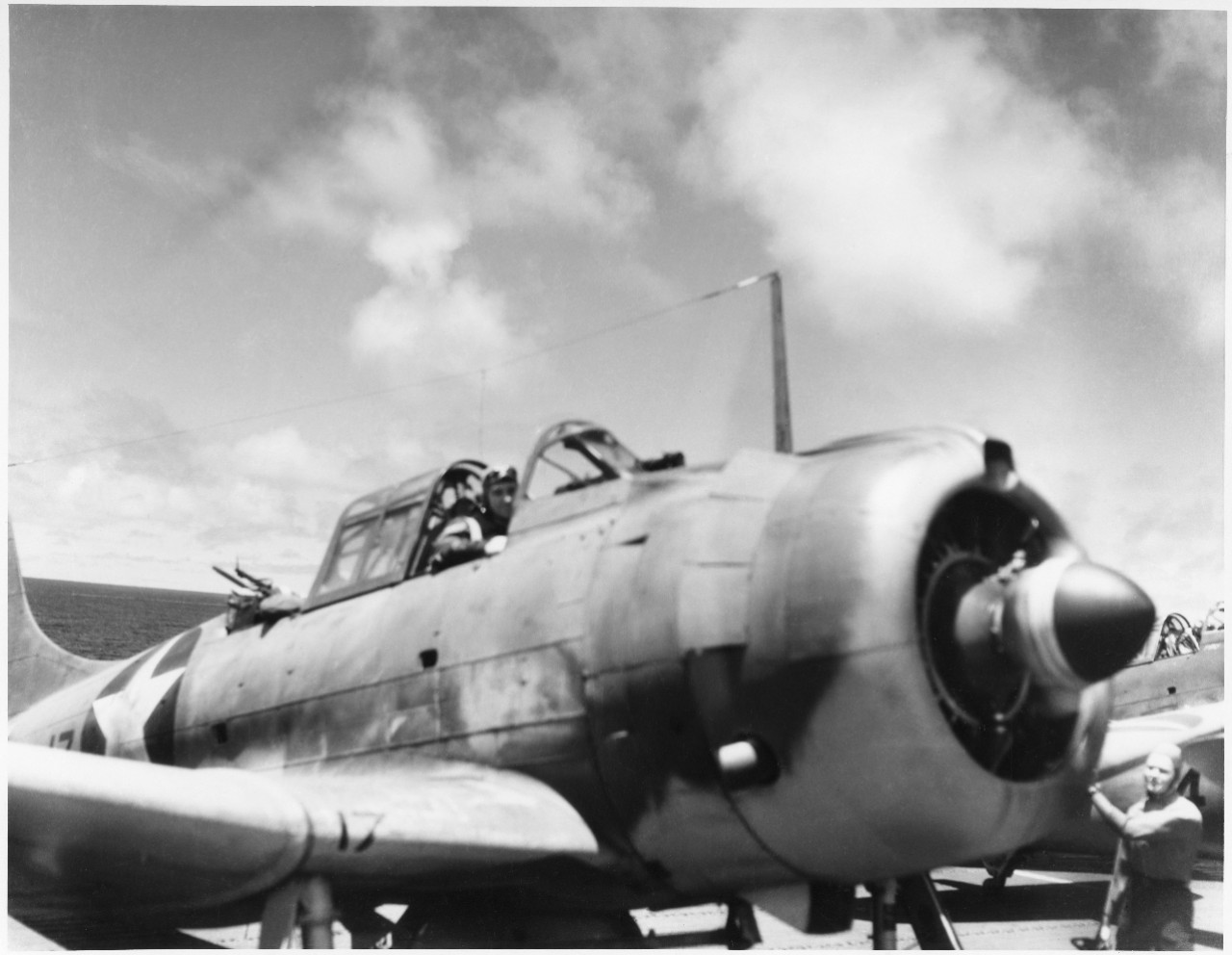
I’ve decided which SBD-3 I’m going to build. I’m going to be building Black 17 from USS Yorktown, assigned to VS-5 and flown by Ensign Leif Larsen.

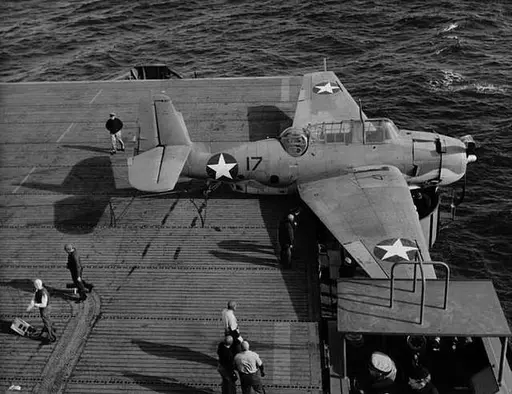
I like the idea of representing one of the lesser-known pilots and crews from the battle, and the fact that we have an actual photograph of this aircraft taken aboard Yorktown on June 4, 1942, makes it even more appealing.

Since I’ll be making my own markings, having a photograph of the actual aircraft seems like a pretty good starting point. I still have some research to do, but I think this is the one!

If anyone has additional photographs or information about Black 17, I’d certainly appreciate seeing them!

Here is an image from a decal place (model masters, I think), which shows Black 17 from a side view, it’s the3rd from top.

And while I’m not 100% certain, this MIGHT be another image of Black 17

Hope those help.

Oops, now that I take a closer look, that 2nd image is a TBD.

2 Likes

Thanks for sharing these! That decal sheet will definitely come in handy as I work out the markings for Black 17.

Even though the second photo is a TBD, it’s still a useful weathering reference. And look how precariously those aircraft are parked along the edge of the carrier! Makes me nervous just looking at it! :grin:

Since this will be my first venture into WWII aircraft building, being primarily a jet guy, I knew very little about the differences between these aircraft. In fact, when I first saw @dunniteowl’s photo, before he identified it as a TBD, I assumed it was an SBD! So I got curious and looked it up.

Turns out they were both built by Douglas, although the SBD actually originated as a Northrop design. The TBD Devastator was a torpedo bomber with folding wings, while the SBD Dauntless was a dive bomber with fixed wings and those distinctive perforated dive brakes.

What I found particularly interesting is that both aircraft participated in the Battle of Midway, but with dramatically different outcomes. The TBD torpedo squadrons suffered devastating losses, while the SBD dive bombers delivered the attacks that crippled four Japanese carriers.

Two aircraft from the same manufacturer, with a striking family resemblance, but very different roles and combat histories. I thought that was pretty interesting!

The picture @dunniteowl posted is of a TBM Avenger, not a TBD. Perhaps the image changed, or @dunniteowl posted the wrong one. Thought I would clarify that, as it’s really confusing.

Gary

1 Like

See? That’s exactly the kind of help I love! I know very little about these WWII aircraft, and I’m learning a lot from you guys!

I can generally distinguish the SBD and TBD from the TBF Avenger by its distinctive enclosed rear gun turret, but looking at thumbnails on my phone, all three sure look similar!

What’s really interesting to me is that the SBD, TBD, and TBF originated from three different designs—Northrop, Douglas, and Grumman. All from roughly the same era, all with a family resemblance, yet three very different aircraft.

That’s one of the things I’m enjoying about this group build. I’m learning as much about the history as I am about the models! :grin:

1 Like

It depends on if it is a TBF - or a TBM! The letter F indicates the manufacturer, in this case Grumman. From 1943 onwards Grumman wanted to concentrate on producing the F6F and was no longer capable to produce the TBF in requested numbers. Grumman gave the Avenger production to Eastern Aircraft Division, hence the type code changed to TBM - M = General Motors. Confusing, I know :joy:

1 Like

No, you have it right. I’ve been ‘spaceman’ level fuzzy brained the last few days. Even after I posted that I started thinking, "Was that a TBF? TBM? Oh, who cares, someone will correct me.

2 Likes

since these a/c were relitively new when the battle of Midway took place weathering on the sbd-3’s should be held to a minimum. These -3’s as I understand it were very fresh birds…of course I may be wrong. I was going to do a little pannel line shading w/ a smidge of top fade but most attention should focus on exhaust staining and oil staining…

just my thoughts only and I’m just sharing them,please be easy on corrections.

I have been studying all week end as I have a test either Monday or Tuesday. I got in a little trigger time for about an hour this afternoon before dark for a short (relaxation) mental break. the day of the test went I get home I will mentally unload by getting in some plastic time. Last time I was in there I go a sndge of interior painting and cut some styrene for my new dive flaps…I’m ready to get back in there to finish the cockpit to get the fuselage closed in so I can focus on attempting flap replacement.

James A&P

2 Likes

I am going to jump in with a very simple vintage Hasegawa 1/48 SBD-3 kit that I just procured on Ebay.

1 Like

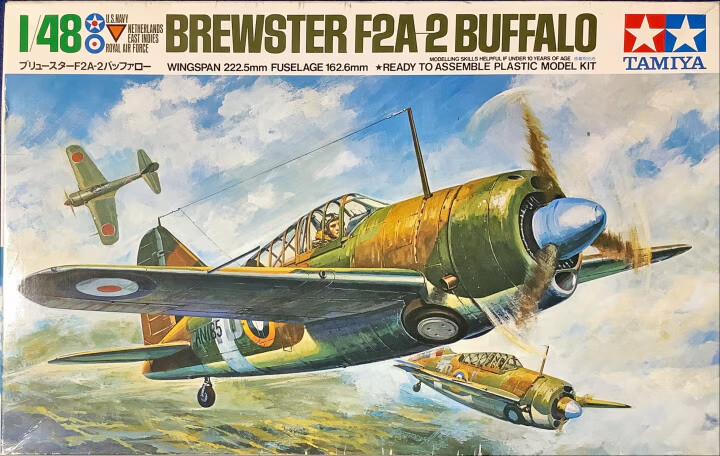
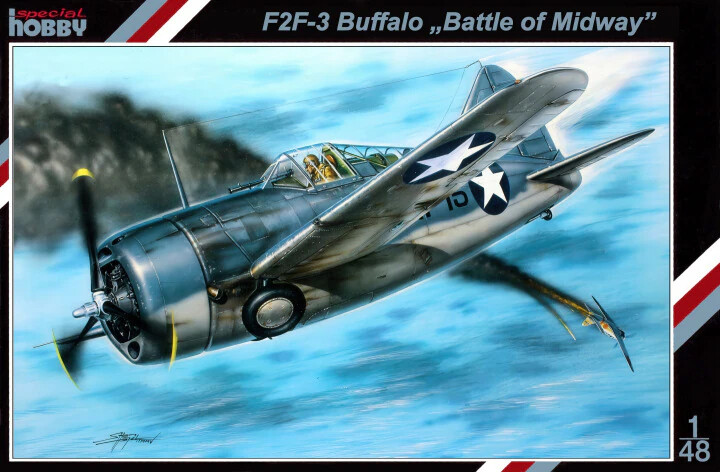
I have these two kits in my stash. My guess the Special Hobby kit is the more accurate kit for this group build, so count me in.


3 Likes