Tamiya F4U-1A 1:32 three color scheme painting

Hi.. I am building the Tamiya 1:32 Corsair and I am a little bit puzzled by the results of the painting. I have used AK Interactive Real Colors, namely Insigna White, Intermediate Blue and Sea Blue which after some research appeared to be the equivalent of the relevant Tamiya codes. The problem is the Sea Blue is definitely too greyish, almost like a charcoal grey and very far from the typical rich blue of the Corsair upper surfaces as seen in various pictures and models.
Anyone using AK colors on this model ? Which codes have you used ?
I have used the following:
RC891 Insignia White
RC908 Intermediate Blue
RC 924 Sea Blue
Thanks

2 Likes

Hello! Can’t say that I’ve used AK paints for this kit but I feel your pain. I did an Eduard F4F in tricolor and had to repaint it twice before I got an acceptable look.

If you have an android phone, I recommend installing the hobby color converter app. You can look up the AK equivalent of the actual FS number. Hopefully that will get you closer to the correct shade of blue.

I tend to use Vallejo, Tamiya and Mission Model paints. When doing my paint research, I look for the source paint codes as much as possible and find my equivalent in one of those brands.

1 Like
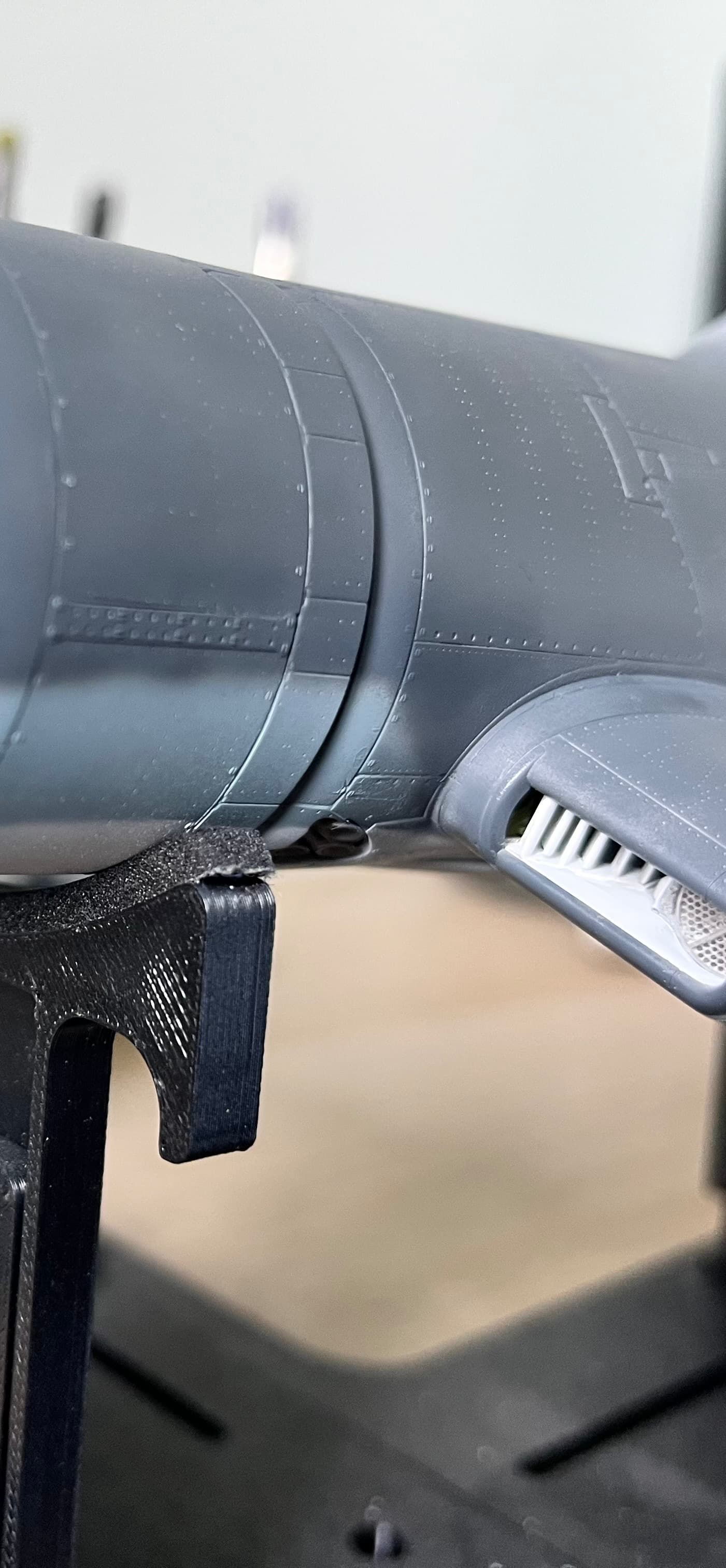
That is what mine looks like

2 Likes

That actually looks pretty accurate unless you’re going for a factory fresh paint look. The dark navy blue faded pretty quickly in the hot Pacific sun and salty air. Do you have pictures of the exact plane you’re trying to replicate or are you using the box images provided by Tamiya?

1 Like

I think you are right… I am probably being misled by reference pictures of models and/or post war real world aircraft made for airshows and not the real operational ones.

2 Likes

Museum aircraft, and warbirds on the air show circuit are the last ones that should be used as reference aside from general size and shape. Those owners spend lots of money to keep them looking pretty… unlike the mechanics in the theaters of war who mainly had to keep them flying. If it was too far gone, a replacement was on the way
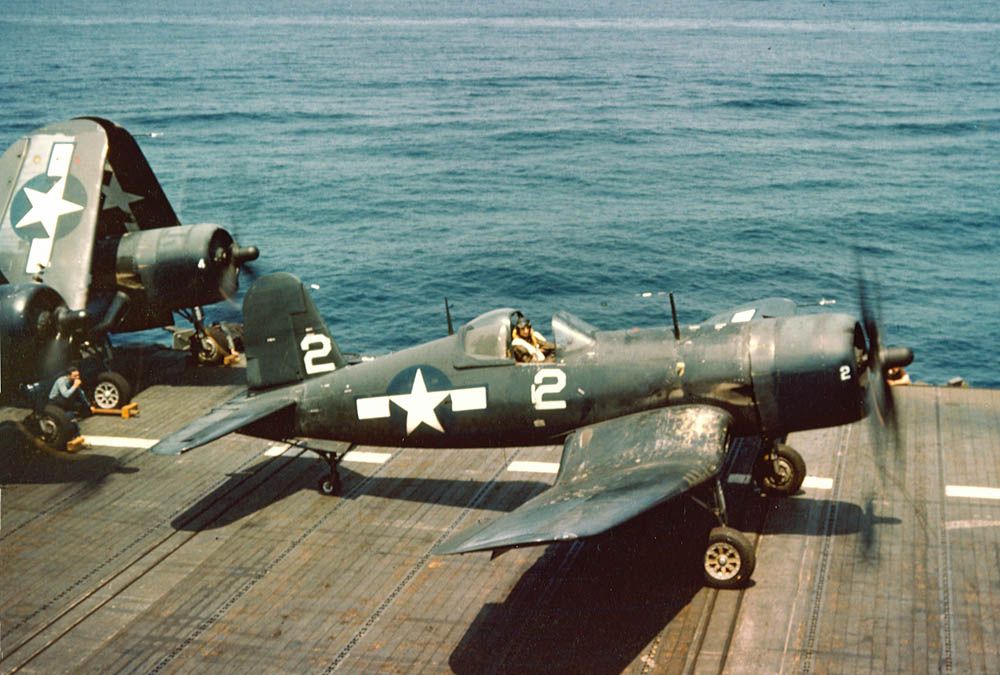
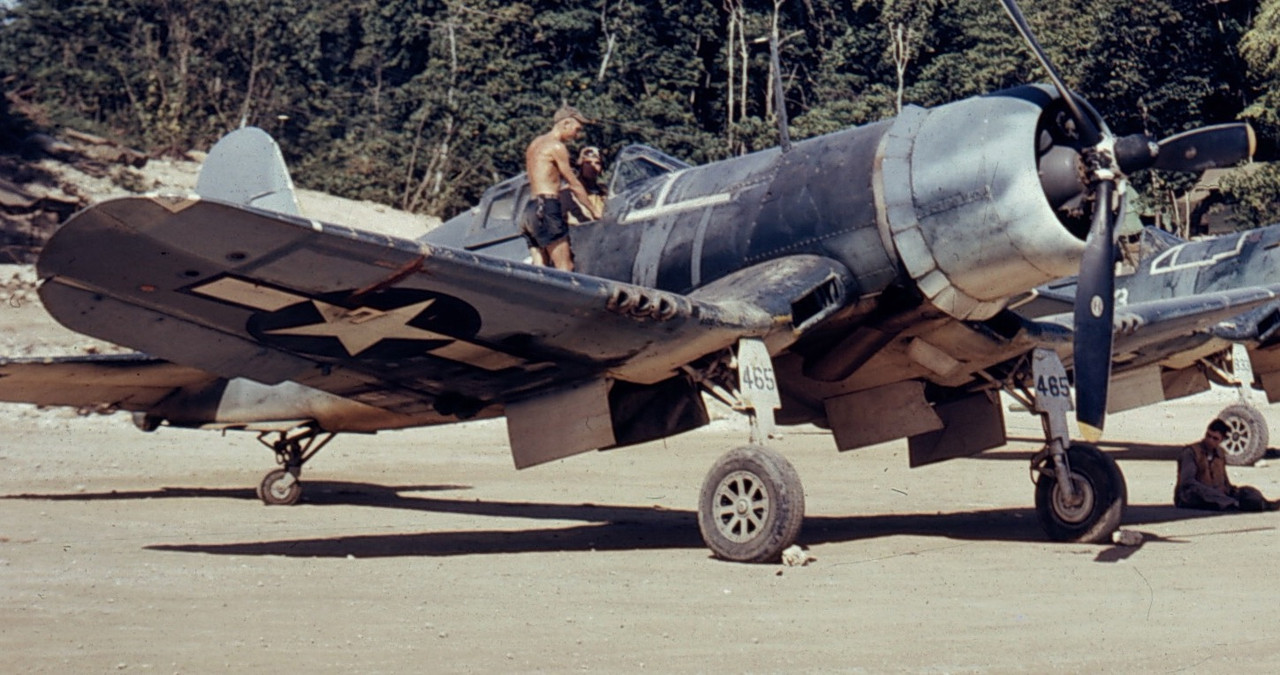
4 Likes

I’m about to embark on my first corsair and that last image you posted is crazy how much it has weathered. I suspect it is a colorized B&W which make it useless as a color reference, but all the wear and tear looks very cool and would be fun to replicate.

2 Likes

I believe that some pictures reflect a rich blue especially if photographed in bright sunlight, but indeed, once they were parked on the ground they actually appeared quite dark in nature. Try putting your model under a spot light and see if its color doesn’t brighten.
I used to build some in my day but I simply used Midnight Blue, which when exposed to bright daylight does indeed brighten up considerably, but never to a sort of French Blue or Royal Blue.

1 Like

@stikpusher I love that last picture. I have a Revel F4U-4 in my stash that I now know how I am going to paint. Thanks for sharing. Can you tell us where you got the photo?

1 Like

I found the photo when I was just doing some internet surfing looking for WWII color photos. If your planning on building a -4 Corsair, it should be in overall Gloss Sea Blue. F4U-4 production began after the change over from the tri color scheme to the overall Gloss Sea Blue, and they left the assembly lines in that scheme.

1 Like

Yes, that picture is great. Actually when my current Corsair build is overv I am planning to build another one, probably a -1D and I will use that paint scheme…

1 Like

That would work. The -1D started production when the tri color scheme was in use and was still in production when the changeover to overall Sea Blue was put into effect.

I actually think it is an original color photograph because taken in the Pacific Theater of Operations. It was much rarer in the ETO, although towards the end of the war the Allied Forces seem to have had color film there as well.

Why am I saying that? Because I had a father-in-law who was stationed on one of the islands and was a military reconnaissance officer flying on a B-25 Mitchell and his missions were to photograph a bombed area to see the results.

Of course in those missions photographers only used B/W film, but some of them also had a stock of color film, which at the time was a kind of a luxury since they did cost a bundle.

Starting by the end of 1944 and throughout 1945 color film became more commonly available and was delivered by Kodak, both for filming and taking still pictures.

When freshly painted out of the factory, the F4U Corsairs were usually painted in a very dark blue (which I found mostly resembles a “Midnight Blue”) and the lower surfaces in a kind of “Sea Gray” which closely resembles to the so called “Dark Gull Gray”.
The cowlings and tails usually were sporting various ID colors. The most commonly seen were in White.

But make no mistake, in time and constantly exposed to salinity and weather conditions, especially during the monsoon season or even during very bright and dry summers, these colors slowly vaned into much lighter ones. Of course not to the point of being a Royal French Blue. More likely the one I call “Midnight Blue” became a sort of a “Medium Blue Gray” which was rather flat and lower surfaces turned into a mix between “Light Gull Gray” and a simple “Light Gray”.

I also think that the color of this photograph is just faded as many such examples have shown over time. Had it been “colorized” the color would be much more vibrant and some details would actually remain in B/W if not appropriately recognized by an app dedicated to this procedure.
Also, if you observe the shadows underneath the F4U you could distinctly recognize natural colors, something that not even AI is able to duplicate to perfection.

To prove to you that this is the case I have attempted to enhance the picture by augmenting the saturation, lightness and contrast.
Underneath this one I have pointed out the areas to observe such as the tiny scorch of sky, the differences of coloring of the trees’ leaves and the propeller tips, as well as the man sitting in the shadow underneath the aircraft. All these differences confirm that this is an original image.
Don’t forget, in those days pictures were analogue and not digital and therefore their colors many times also depended on the developer of such photos.

I hope I did help you in some way to recognize this as being an original color still.

Be well and trust the colors depicted there. It is indeed an original.


1 Like

I also enhanced the first photo for you. Its hue was by far tending to be too Green, I just tried adjusting it by measuring the Blue of the ocean.
This time the paint color of the Corsair is a kind of Dark Blue turned into a sort of a Dark Blue Gray, tending more towards the Gray than to the usual Blue, but remember what both the Sea and the Sun can do to a camouflage color after a constant exposure to them.

Have fun and let me know what you think.

Thanks for these pictures and the story behind them. I recognize that my AK Sea Blue may under some lighting conditions appear “less grey” and “more blueish” and also that even the out of the factory deep blue used to fade quickly under the harsh Pacific conditions… I am also expecting that after painting the national insignia, applying oil wash and weathering, the whole look will be completely different…

2 Likes

Glad to hear it and looking forward to see your interesting model once it is finished.
Be well and continue with your project with the happiness to know that it will come out splendidly.

1 Like

Patrick, those are some great pictures! Thanks again for sharing!

1 Like

Thank you for the compliment which I really do not deserve because the originals were posted by “stikpusher”. All I have done was enhance them and restore what I think were the original colors as they were presumably observed by whomever took them.
The fact that there are considerable hue differences in them, such as the background trees and even the shadows seem to have a kind of color to them has convinced me that those are not colorized pictures.
The same applies to the first photo taken aboard of an aircraft carrier.
The deck was by far too grayish to be the color of wood, the aircraft and the other foreground details tended to be by far too green hued. Sometimes the result of certain kinds of film used in cameras, especially if the stock used came at first from Asian Countries such as Japan tended to return greenish results. Probably due to a kind of chemical distortion during the negative/positive transfer. Although I doubt that the film used at that time would have come from Japan. It probably came from another source, but not from Kodak industries.
Anyway, all these problems can easily be solved these days thanks to digital devices and applications which can correct such mistakes.

Be well and have a great creative day.