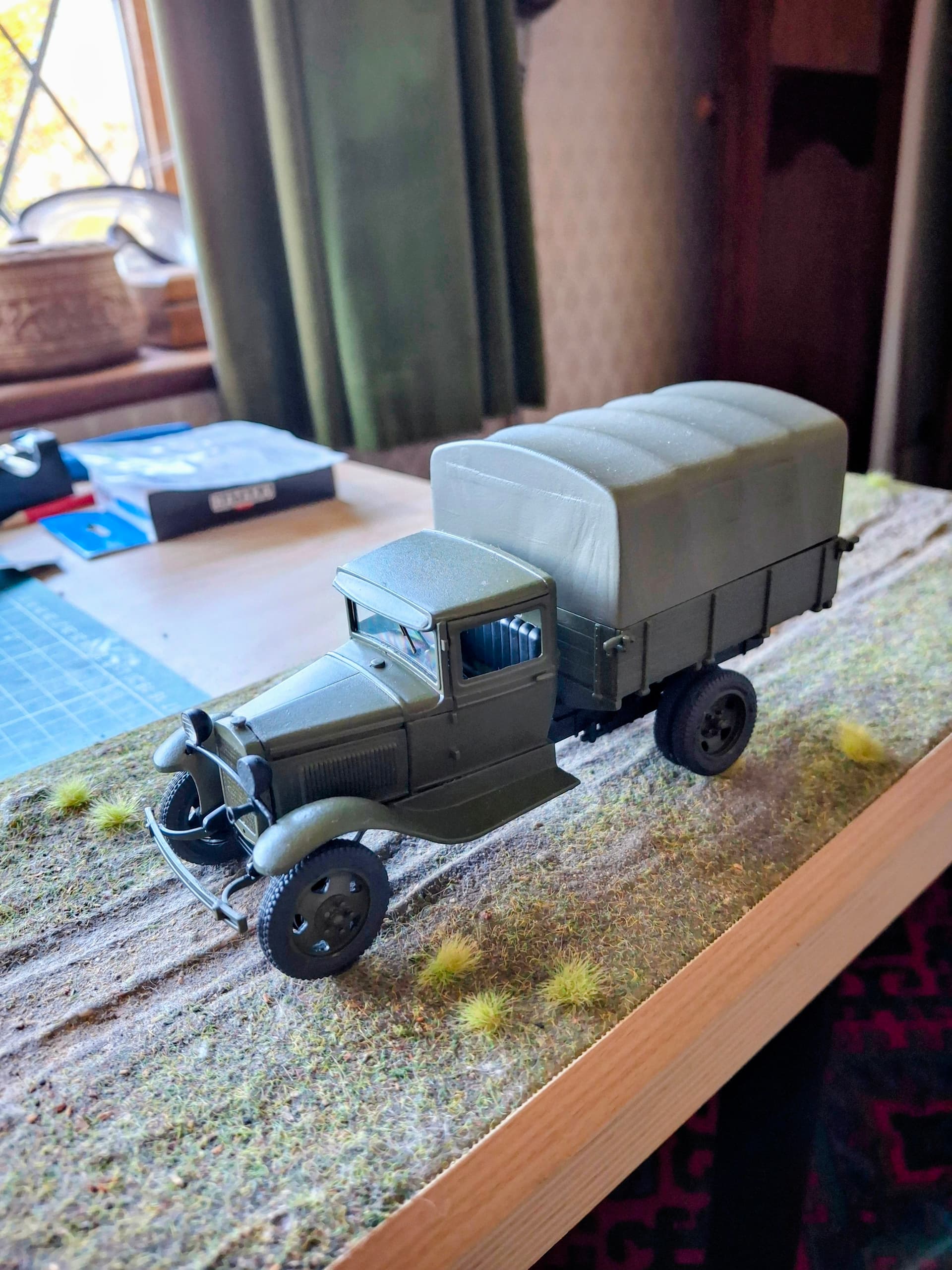
I have built a GAZ-AA and thought I would build a Soviet AT Gun to go behind it. I have an ICM 45 mm AT Gun and a Tamiya 37 mm in my stash and to start with the ICM kit is not very accurate, so I thought I would create an earlier 37 MM AT Gun that the Soviets built under licence as the 37 mm Model 30, which is very similar to the German gun but has the breach block that looks to open vertically. The only question is over the wheels. Did the Model 30 ever get GAZ-AA type wheels< I could use the ICM spoked wheels but they need thinning?
2 Likes
Hey mate, welcome to the forums!
Although the 37mm guns were pretty much identical (to the point that the ammunition was interchangeable!), their carriages were very different. The Soviet 37-mm anti-tank gun M1930 (1-K) used unsprung wooden wheels, unsuitable for high-speed vehicle towing, and were instead towed by horses or slower vehicles like this T-27:
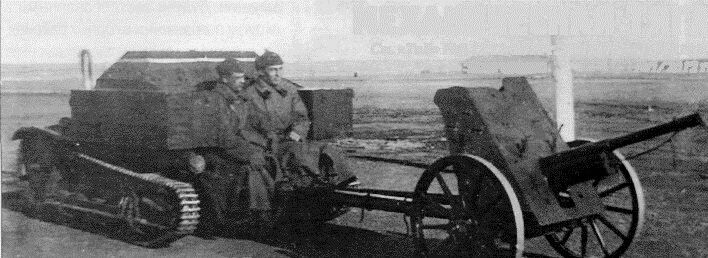
Model accuracy issues aside, I feel like your ICM 45mm will look more at home behind a GAZ-AA unless some well-meaning Commissar is behind the wheel and demonstrating to his privates that the wooden carriage will hold together by Stalin’s Will and its loyalty to the Party…
2 Likes
Welcome to the forum LarryH57! I can’t wait to see you completed project.
Here is the GAZ-AA waiting for an AT Gun to tow. My reference books at least show several Soviet 37 mm AT Guns with wire wheels and I have an idea that some got GAZ-AA type wheels later.
Regards
Larry
1 Like
Out of interest Larry, how are you telling the difference between the guns?
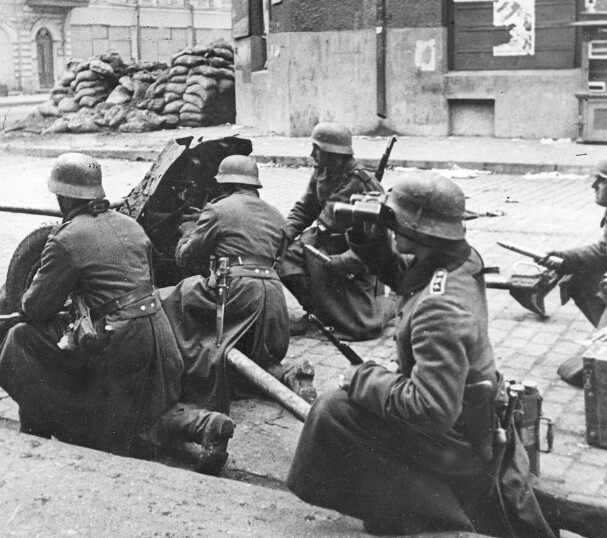
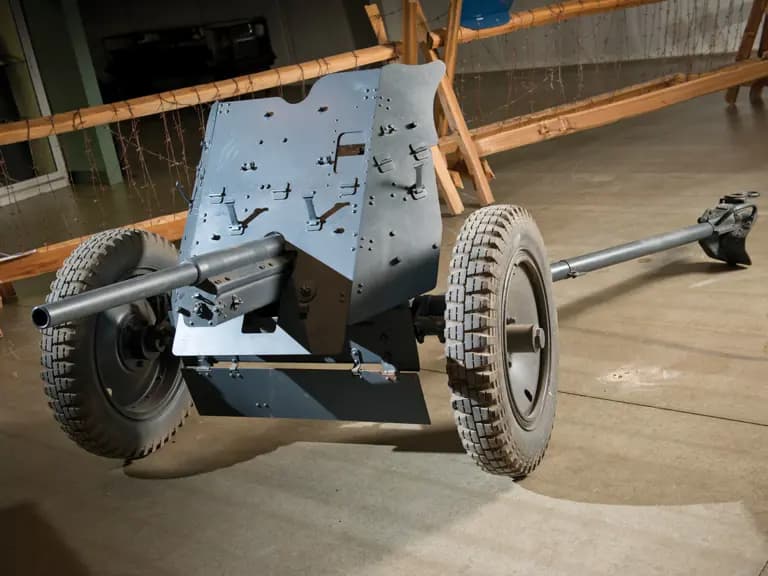
I’m not sure if it’s a case of misidentification or a design change between production runs, but I’m seeing two different barrels in use by PaK 3.7cm - One type which has a smooth taper around the midlength of the barrel, and the other which has a bevel
Smooth Taper
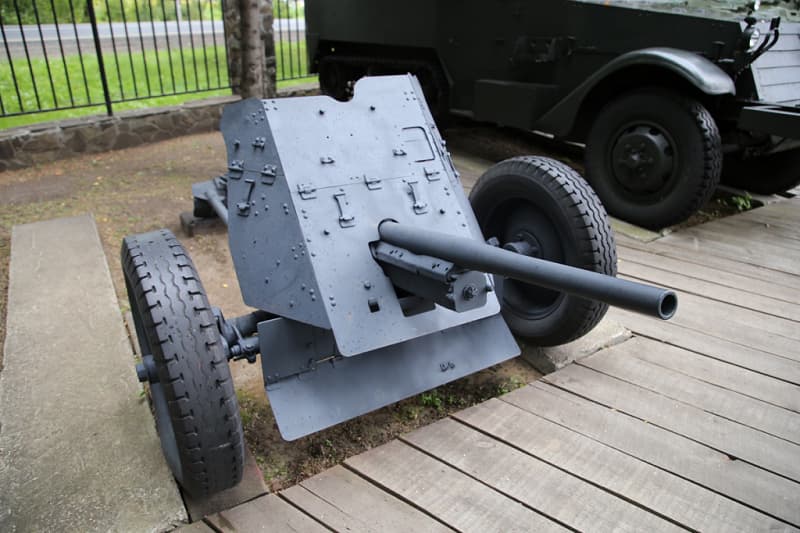
Chamfered
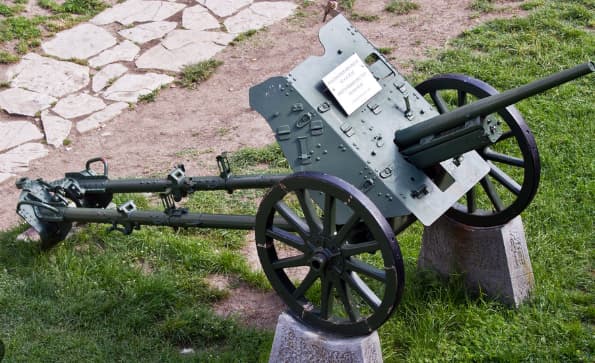
Incidentally I came across this gun in my search which has the GAZ wheels, but it might be a 45mm M1932 19-K since I’m not familiar with the 37mm guns having that slight thickening at the muzzle

1 Like
Thanks for these photos. Just to add to the confusing subject the first photo of yours that you posted has a smooth barrel but a less curved top to the gun shield and thicker tires, so is that some other nations copy of the German Pak or a later German version? I have seen historic WW2 photos showing both styles of barrel in Geman Pak but it seemed the Soviets stuck with the oriinal design even when the gun was uprated to 47 mm
1 Like
Revisiting the whole barrel thing - Production of 3,7cm Pak 36 ran from 1933 all the way to 1943, primarily by Rheinmetall apart from whatever the Russians and Japanese produced under license. So with this manufacturing period in mind, I suspect for Germany the “stepped” barrel was a wartime expediency since it would be much simpler and faster to machine the outer radius of the barrels to suit two primary measurements than gently tapering. There doesn’t seem to have been any effort made to designate the change (e.g. “Type A” / “Type B” Barrel) since it was probably immaterial to the performance of the gun or its interchangability with other parts. All of the photos of Soviet M1930 (1-K)'s I see have the stepped outer radius, so they probably just jumped directly to simplicity when they manufactured under license.
There are a couple of photos of Hungarian 40.M’s with tapered barrels that were misidentified as M1930 (1-K), possibly due to the spoked wheels on the limber. Hungary most likely acquired earlier German guns, but then rebored the early Pak 36’s to 40mm calibre so it could accept Bofors 40mm ammunition.
Looking at archival photos of examples just in German service, you can see all sorts of tread patterns going on with the tyres so I wouldn’t look into that too much. Tyres were also a consumable, so it wouldn’t be unusual for a later war tread pattern to appear on an older gun.
I have to assume there was some intention behind the assymetrical shape of the gun shield, whether to optimise weight, coverage for operator positions or simply to break up the outline. But the assymtery is consistent with all of the photos above. Here’s a photo from the First Battle of Kharkov in October 1941 where you can see both edges.