Hello anyone, I’ve been working on a 1/32 scale Blackhawk and I’ve finished painting the body… I would like to do a sludge wash on it to add realism but I heard before that the model has to have a gloss coat in order for it to work… I used an acrylic helo drab in a flat finish… Can I still do the wash or should I put a coat of clear on it first? Also, any suggestions on a color to use in the wash? I was going to go with a flat black… Thanks in advance
Bump for a first-time poster.
First off, welcome to the forums! I hope you enjoy your time here, and jump in and get involved in the fun.
As to your question, if you’re doing an acrylic-based wash (which is pretty much the only kind I ever use) over acrylic paint, then, yes, a clear coat in between is a really good idea. It’ll make the wash much easier to remove from the “high” areas without affecting the paint beneath in unwanted and possibly unfixable ways.
Also, flat black would be the color of choice, for starters. I’ve seen (and experimented with) light-colored washes against dark basecoats, and it can make some useful effects, but a good “shadow” effect in the recessed areas with the black would be the way to kick it off.
Good luck. And, if you care to, share some pictures of your work. It’s always fun to see what other modelers are up to.
What sludge wash are you planning to use?
I’m a big fan of Flory washes - they’re clay-based and can be “re-activated” after they’ve dried by applying some moisture, so you can keep tinkering with it up until you apply a sealing clear coat.
You don’t need a gloss coat for Flory, and in fact I find I prefer semi-gloss/satin finishes since they pick up just a hint of the wash and produce a pretty nice, subtle worn effect.
What color is the helo? That’ll determine the color of the wash. My standard go-to is Flory’s “Dark Dirt”, which is a dark brown-grey. It’s amazing on natural metal finishes, grays, desert schemes and the like. There are only two cases where Dark Dirt doesn’t quite work. Over olive drabs and dark greens, it tends to get lost, and over dark blues and blacks, it leaps out as very obviously brown, so for those I prefer to use black.
Here are some before/afters:

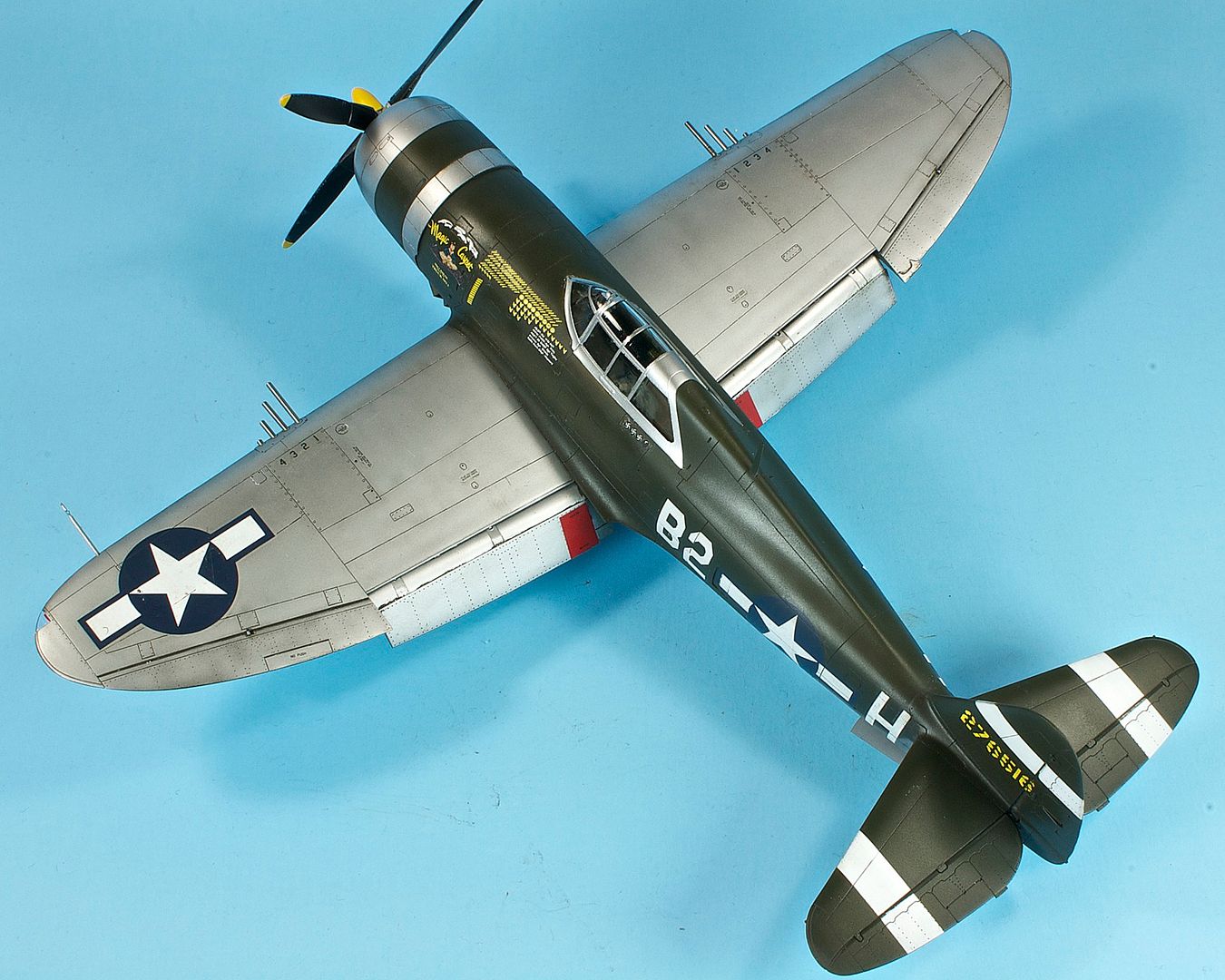
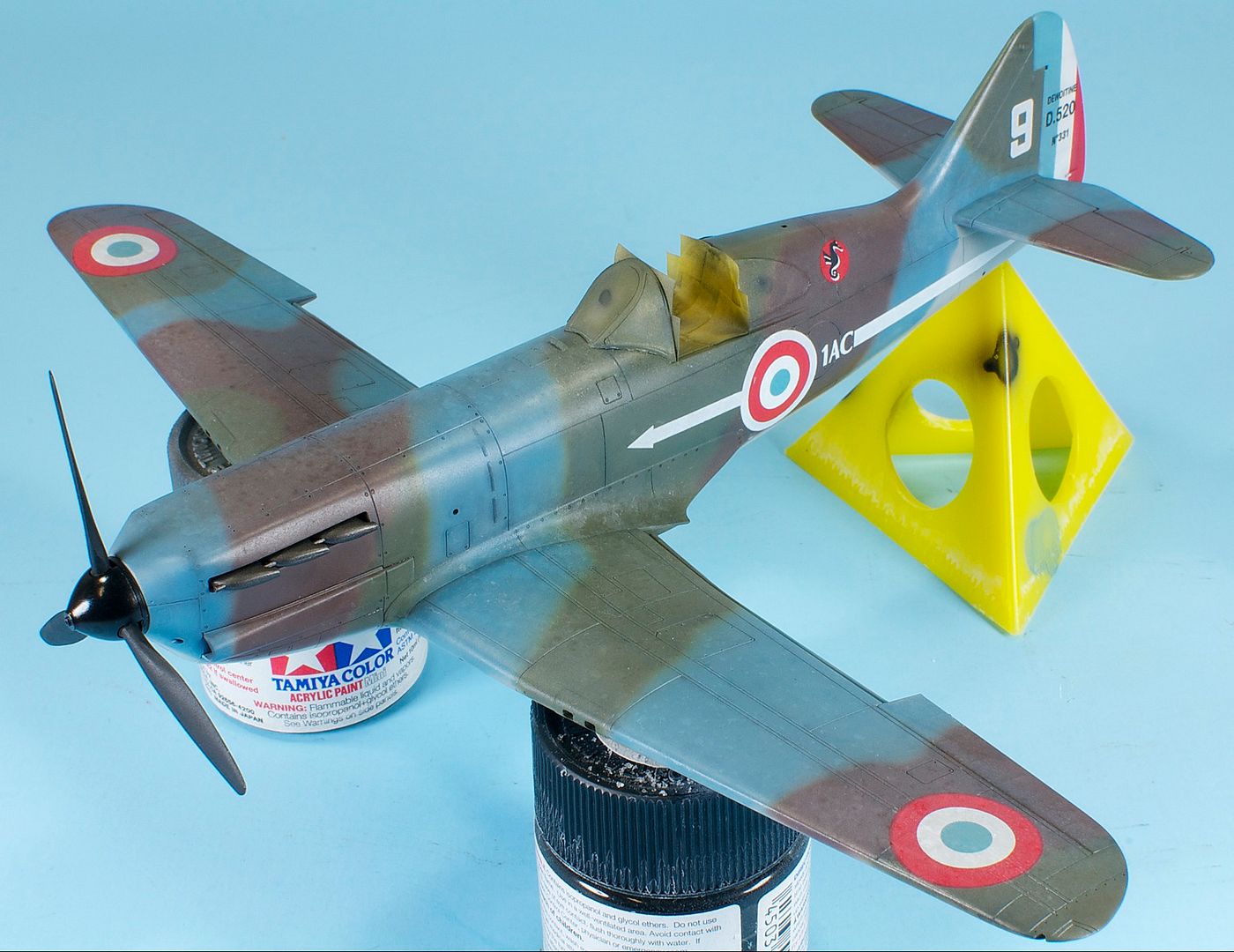
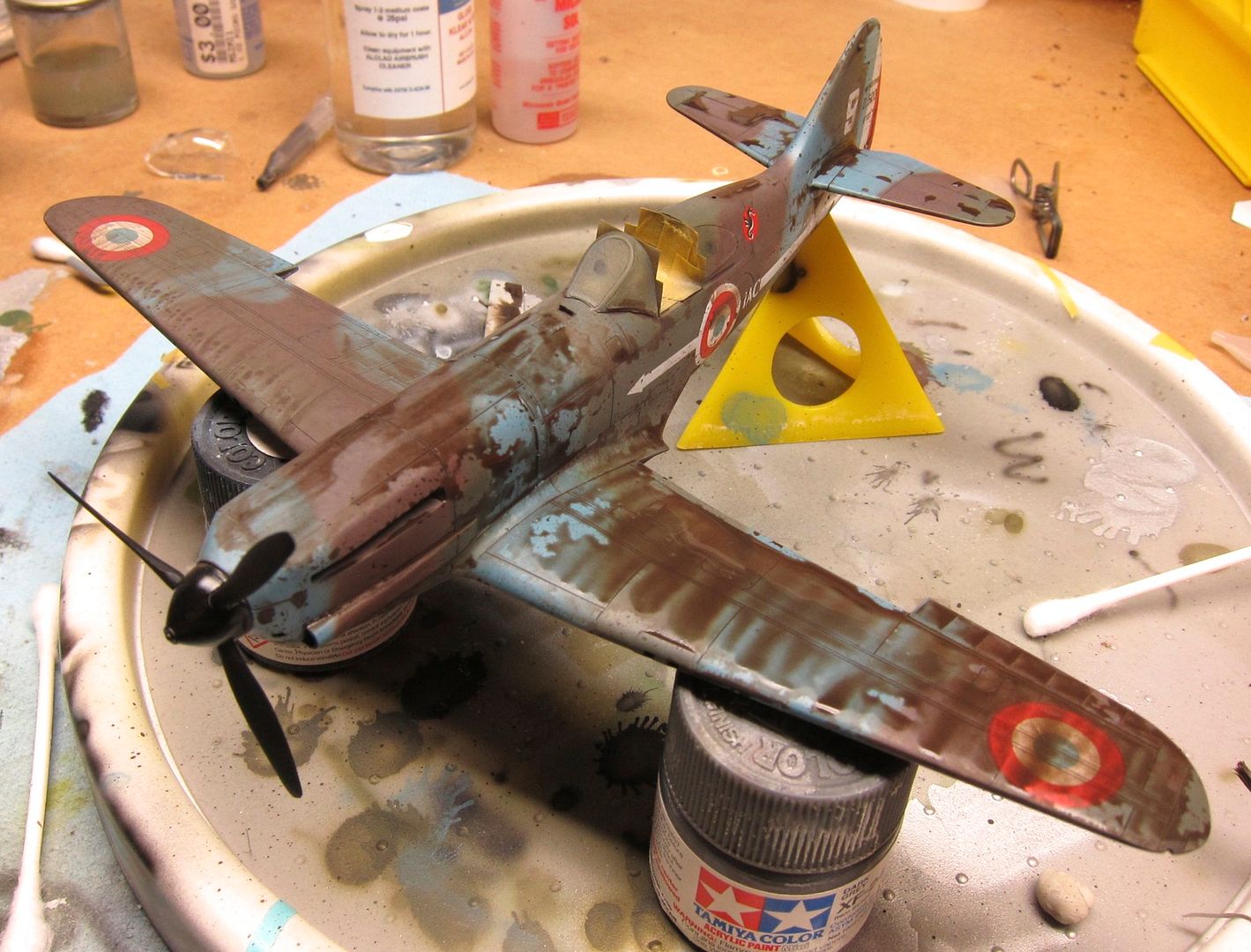

A little Burt Sienna works good over olive drab. Might not always be darker, but it simulates dirt and grime real well on olive drab models. This color comes in tube acrylic or oil paints.
Wow… Thank you everyone! I can’t believe it took me so long to get into this forum! It’s awsome to have so much collective knowledge at the finger tips, all the info is greatly appreciated and helped a lot! Thanks again everyone!
I’d very strongly suggest, if you insist on using a sludge wash (latin for the best way to destroy a model’s paint finish), you paint a scrap model as you did you Blackhawk. Too often I’ve read of people using this technique and ruining a potentially good model. You have no guarantee that you will be able to remove the right amount of wash without either excessively staining the parts you want clean or removing the wash from where you want it to accent. Further, this should be done after decals are applied to belnd them in so a failiure will als odestroy your decals.
I personally use a version of Swanny’s home brew found here. I use water based India ink found at Hobby Lobby and a touch of brown acrylic paint from a tube in the craft section diluted with water and about 2 drops of dish soap in a 2-3 oz container. Always applied after decals have dried and topped with a clear coat. I use MM lacquer rattle can since my wash is water based.
I was terrified of messing up a finished model before trying this but I went ahead and haven’t looked back since. Its pretty easy to remove with a slightly dampenend q-tip after its dry.
I second DoogsATX’s recommendation for Flory’s wash; I may have even gotten the idea from his blog. They’re excellent, and fairly easy to use. Plus, their site has pretty good videos showing their use.
Couldn’t agree more. I had a nice yellow Bearcat “Beetlebomb” on which I decided to add a wash to break up the monotoned yellow. I used a water-based wash oven the Model Master yellow enamel. I don’t know what happeend but the “wash” did not wash off!!! Ended up ruining the finish. Now I remember why almost never use a wash to begin with (outside of cockpits anyway).
Eric
I tend to agree. Might be better to try a pin wash, more precisely applied than “sludge.” Still, I’ve found that you can’t leave any wash on the model for too long, otherwise they adhere tenaciously–no more than 10 minutes before wiping it down.
Sometimes window spray can remove what plain water can’t, but even that fails some of the time.
Good luck.
That’s why the Flory stuff is so great. Being clay-based you can re-wet it days after the fact and remove it all if you’re so inclined. Unless you’re working with a really porous surface staining isn’t an issue at all. But it’s the only sludge wash I trust. Everything else is either pin wash or applied VERY thin as a filter.
Exceptions to that statement are the Flory washes. They are clay-based and water soluble. They can be left for days, or even weeks. Applying a bit of water will reactivate them. I like them a lot so far. There are several informative tutorial videos on their website.
Sorry, should have specified. I haven’t tried any Flory washes. The kinds I meant were the homemade brews made with water and whatever. After all the recommendations, I might have to give these Flory washes a try.
“water-based” doesn’t say much. Acrylics can become near-impervious once they dry. For washes of any kind I’ve found it better to stick with stuff that doesn’t cure for a LONG time - Flory washes never really cure and all you can do is “set” them with a clear coat. And oils can still be messed with days and weeks after application.
The key is having a paint or a clear coat in place beneath them that’s impervious. Otherwise you can get some staining (not always a bad thing if done intentionally).
Sounds like the people who have posted about wash troubles maybe didn’t have a glosscoat on the model, or like Doogs and others have said, used a wash that drys real quickly. I use the Flory’s was or use oils and after a few models I’ve gotten to where the wash is the most easiest/predictable/ funnest part of my builds. Hope you have some good luck from now on.
Jester, the problem I had with Swanny’s mix is I found the tube acrylics dried fast on the model, and with all the ingridients-soap/ink/water/etc…the Flory’s wash seemed the better route. But I really didn’t experiment with his mix for real long either…
I guess I could see that. Like I said, in my mix I use very very little tube acrlyics, just enough to knock off some of the starkness of the pure black ink. I can let it dry completely on the model and it removes easily when a moist q-tip or folded napkin is applied. The mix I have works extremely well IMO and just don’t see the need to “buy” a wash mix when I have one that works so easily and is so easily made. I think total cost is about 5 dollars to make enough wash to last me a life time. I really do believe the key is a good gloss coat of an opposite medium as your wash if you want absolutely no residual staining. Personally, I like for my wash to hang just a little bit in the finish as to give it an actual used look.