I thinks building her as a wreck will be much more challenging than building her as built. Good luck with the build and hope the challenges are few. I subcribed to your blog so I don’t miss a post and maybe some good lessons on weathering.
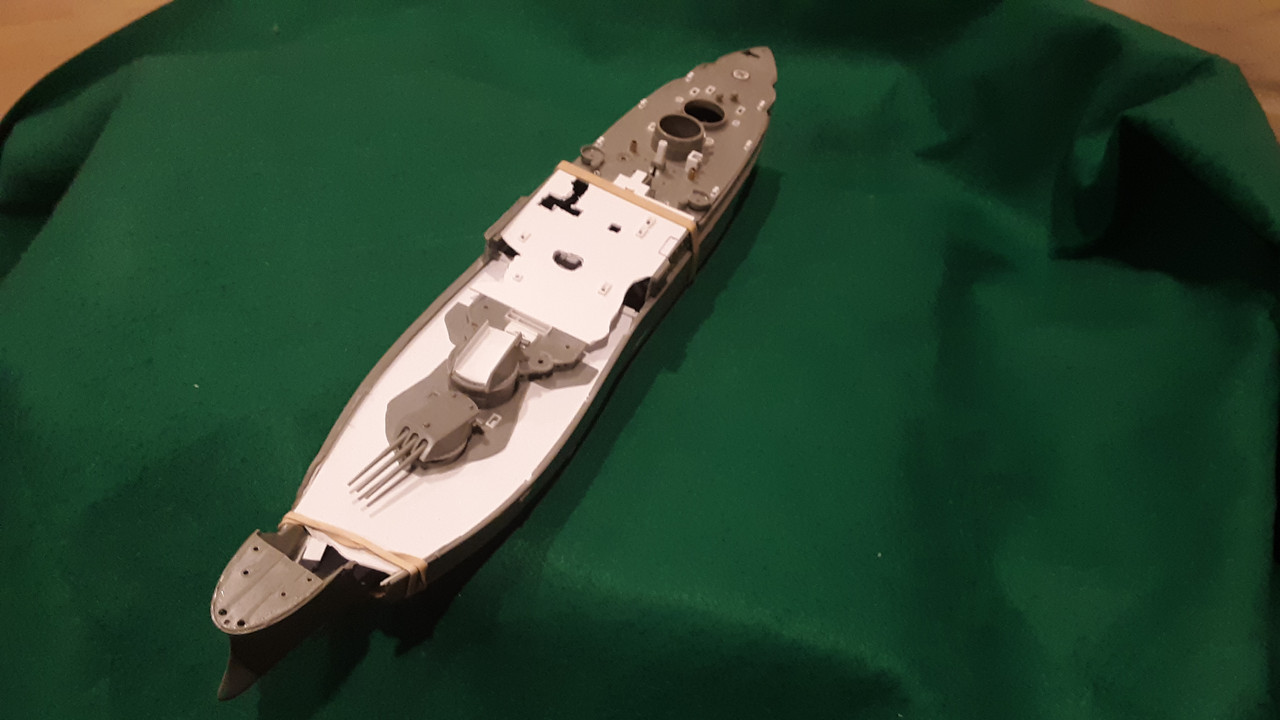
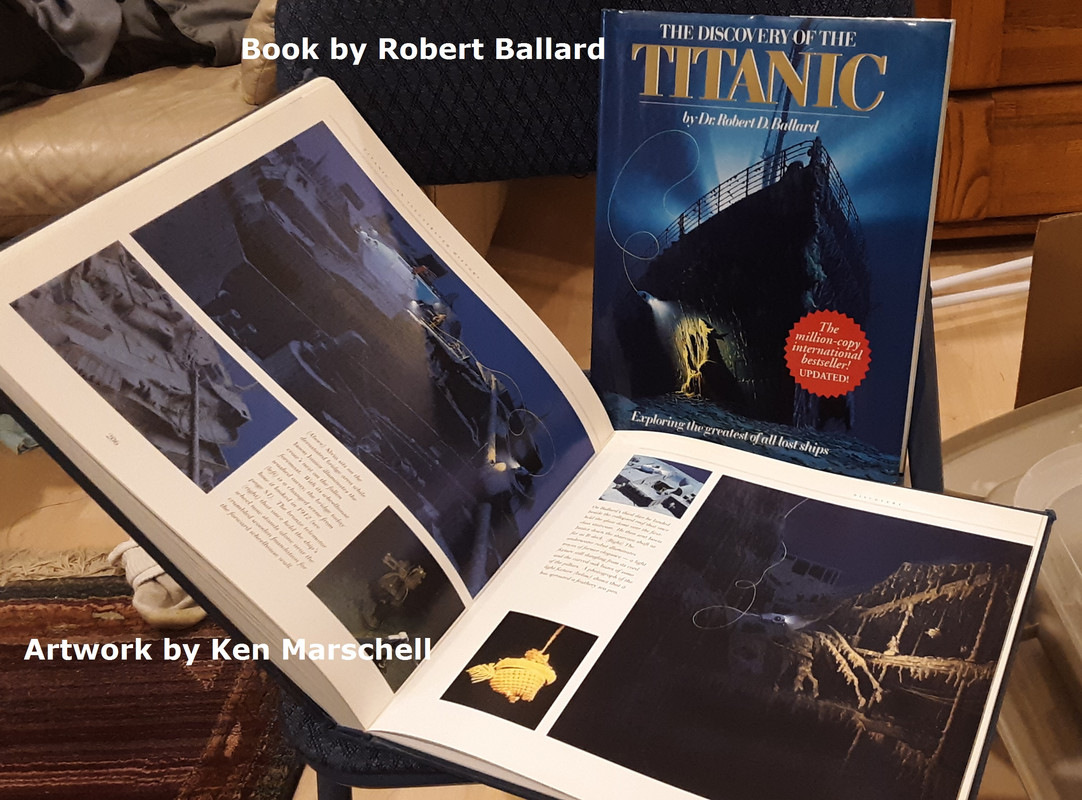
I started doing this kind of stuff a number of years back, starting with ARIZONA. I too was basing my builds on the Ballard books and Marschall art. It is most definately a visual trick, especially on how to fill spaces not visible in the art or photographs.
G’Day Brian. I recognise that this is not your build, but I reckon you should post a pic of your Arizona here, as it’s in line with the theme. I’m sure others would find it inspirational, I know I did.
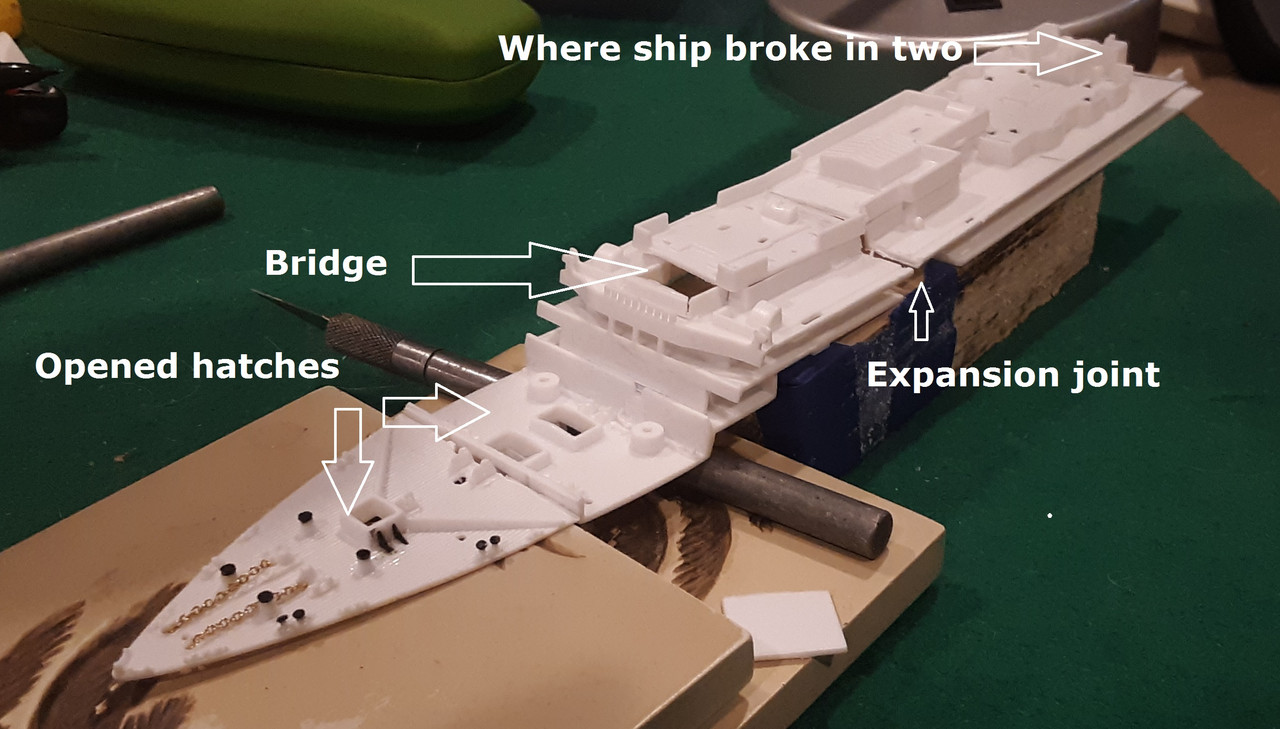
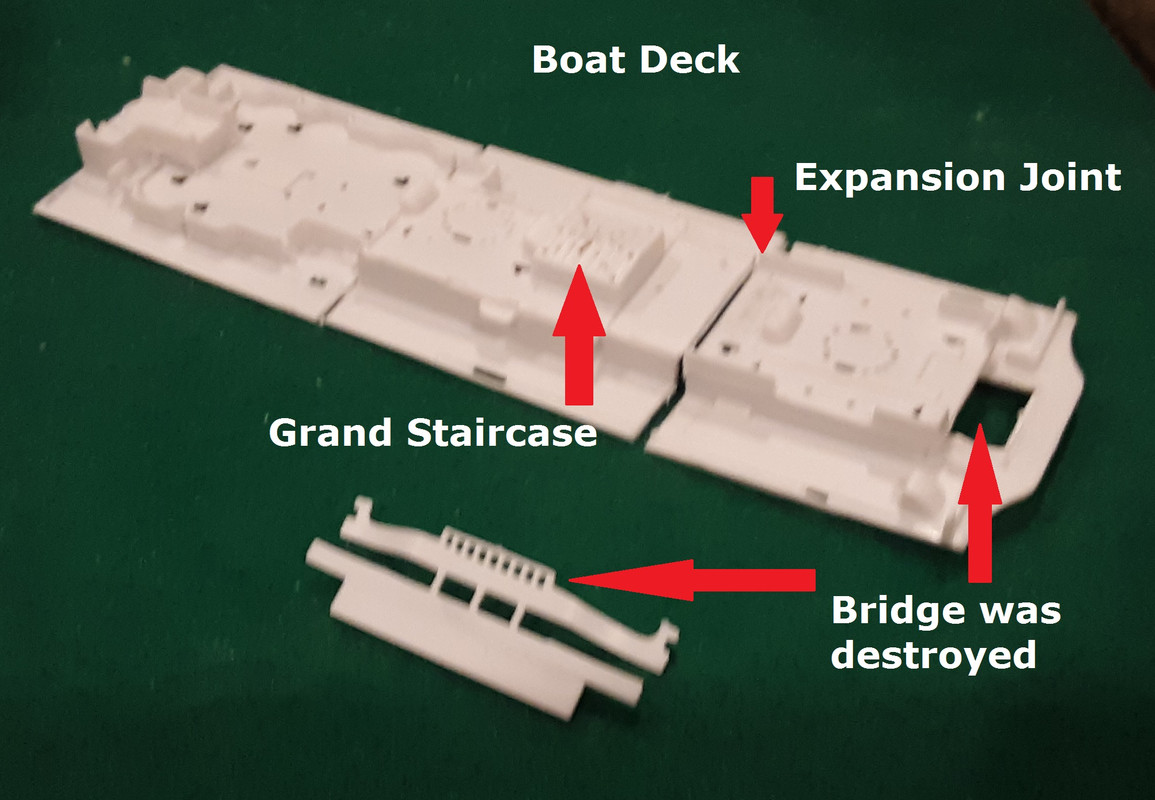
Don’t bite off more than you can chew! Oh! by the way,The Titanic’s bridge area was identifiable way more than it is now. The Forward Mast and Crow’s nest was lying stiffly on the bridge wing, next to the remains of the Wheel-House. Now its’ fallen and collapsed in the center dropping down to the Foredeck. The Crow’s nest is now gone.
I was very incemsed when I saw artifacts being auctioned off. Talk about Tomb or Grave robbing at and on a commercial scale. I don’t care that it was in the debris field either. It was part of what remained of a tomb if you will. We should NOT profit from her remains. Would we dig up veterans buried in our cemeteries to sell their medals?
This was intended to put her to rest. Now she’s been plundered. Your model will show how the Lady Rests. Let it be a complement to your skills and know I await more on your build.
That Arizona looks interesting. Don’t forget that the space between the very bow and the rest of the ship in that one area flares and collapses outward from the main deck missing area!
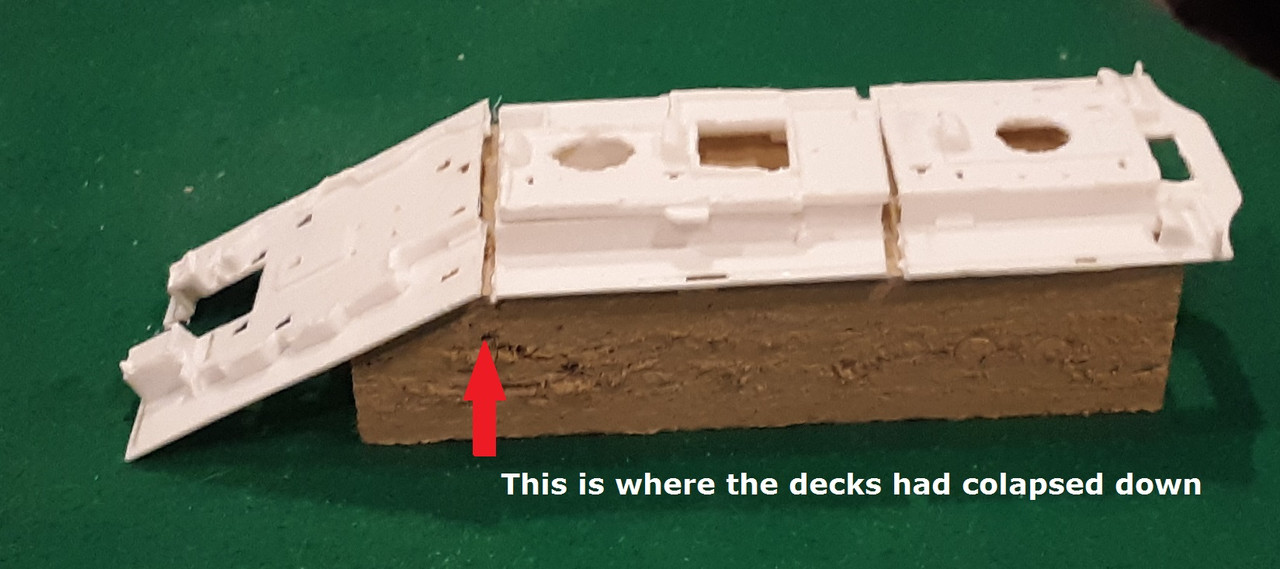
In the post You mentioned filling in spaces where the books are rather vague. The decks especially at the break sites. The decks should look like floors that collapsed downward while being pulled on. In other words bent downwards and twisted with some of the decks looking identical on the other side with the edge on one part being the direct reflection of the other only perhaps more jagged and broken in spots more inward than in the stern section.
In my engineering career I have had to look at Buildings, Bridges, Also something like the Costa -Concordia ,( Not Her and no lives lost) In Greece. When we found her the Great Lady told us a lot that wasn’t verified by anyone then. Or even understood until then!
With corrosion and collapse a constant in shipwrecks, the builder of shipwreck models must select a ‘circa’, a timeframe for the build. I did my ARIZONA back in the late 1980’s, but selected a circa of the late 1960’s as I wanted to have the vent stacks still there.
In another twenty years, who know what will be left of these wrecks, and unfortunately, the more we go down and look at them, the faster they seem to deteriorate.
Yes, so true. Tha Titanic looked a whole hell of a lot different back then than she does now. The ocean water being disturbed by all those Retreival subs disturbing the waters around the ship. Even up to a mile away this affects her. Currents we don’t see from the drives on these things are ripping the wreck apart!
Remember, when she was first found everywheer on the ship the “Rusticles” were vertically hanging down and it seemed time had stopped. Now with those small but powerfull little currents the fragile structures are falling apart and a lot of the "Rusticiles " are gone. This has enhanced the deterioration
It’s also a matter of aerobic verses anaerobic waters. Waters at depth contain less free oxygen, therefore contribute less to the oxidation of materials. But yes TB, as you said, when the waters are stirred up, say by ships, boats, and submersibles, it greatly affects the oxygen content in the water, or rather the free oxygen as pressure changes can cause the gasses in or out of solution.
There is your science lesson for today. For homework, review chapters 33 and 34, and remember there is a test on Friday. Class dismissed.
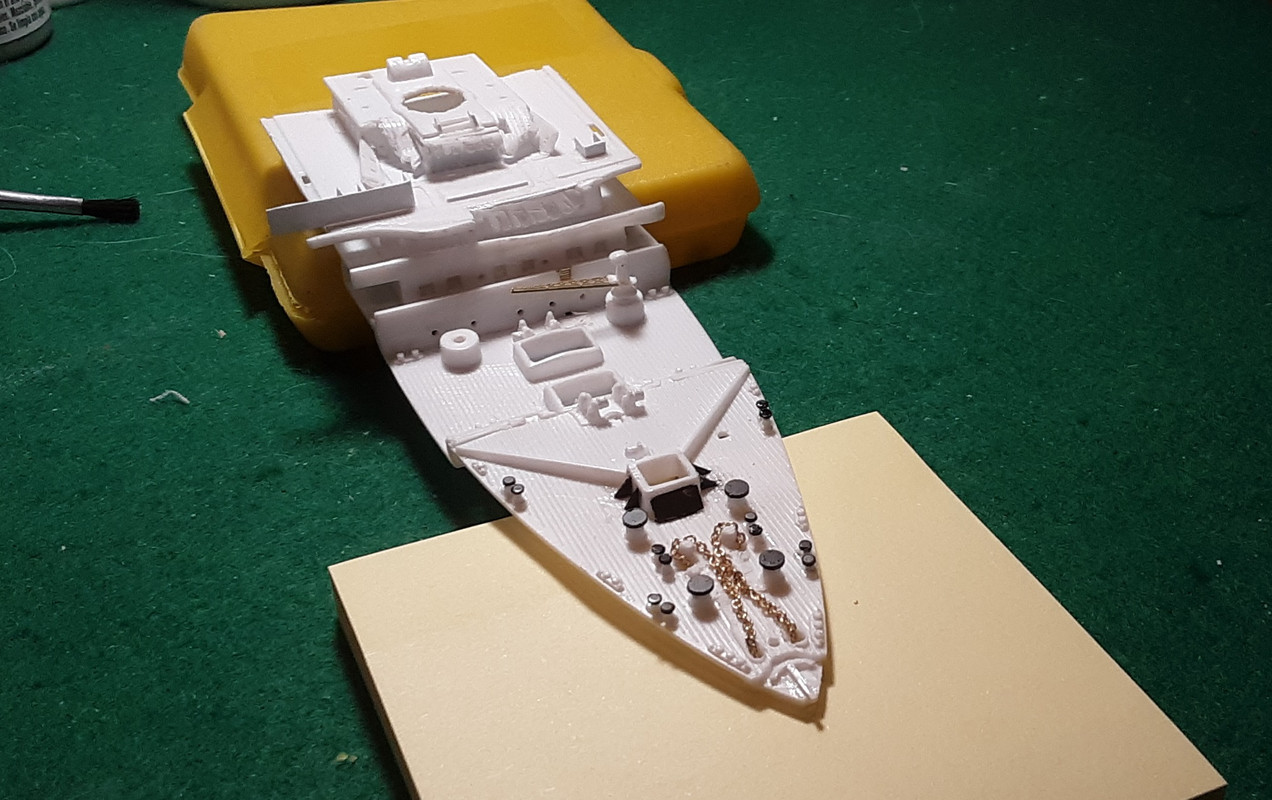
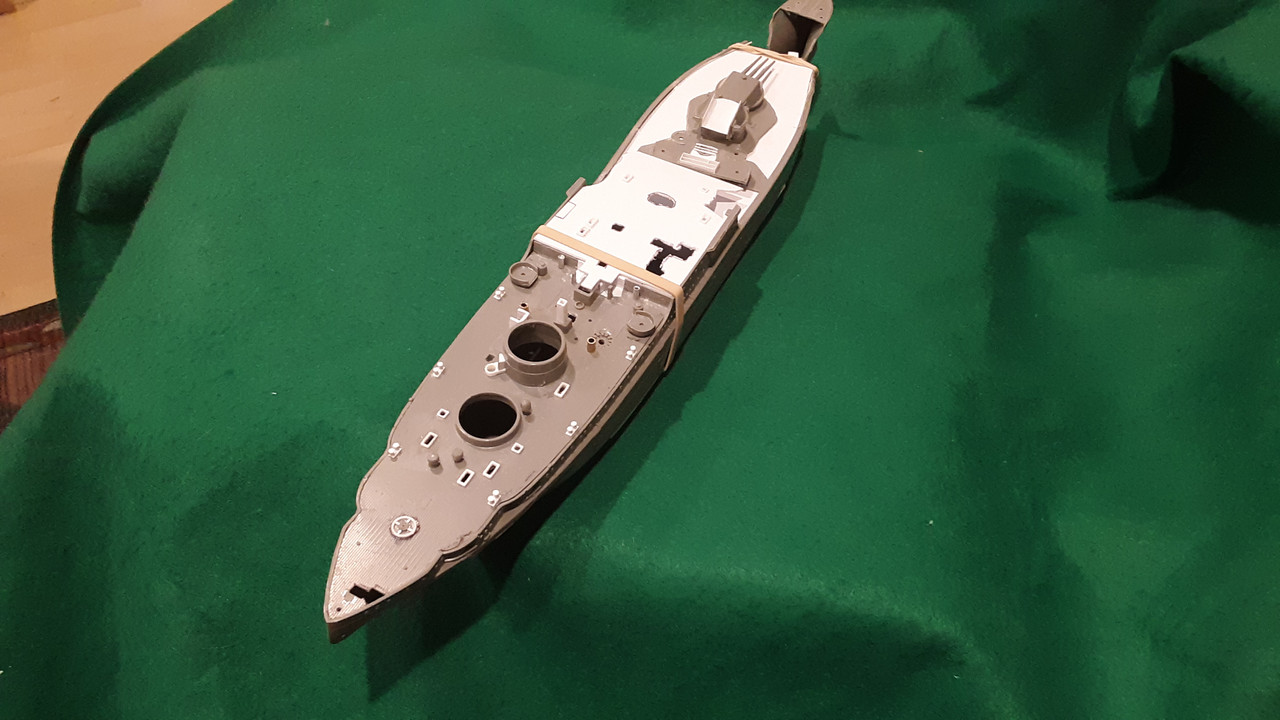
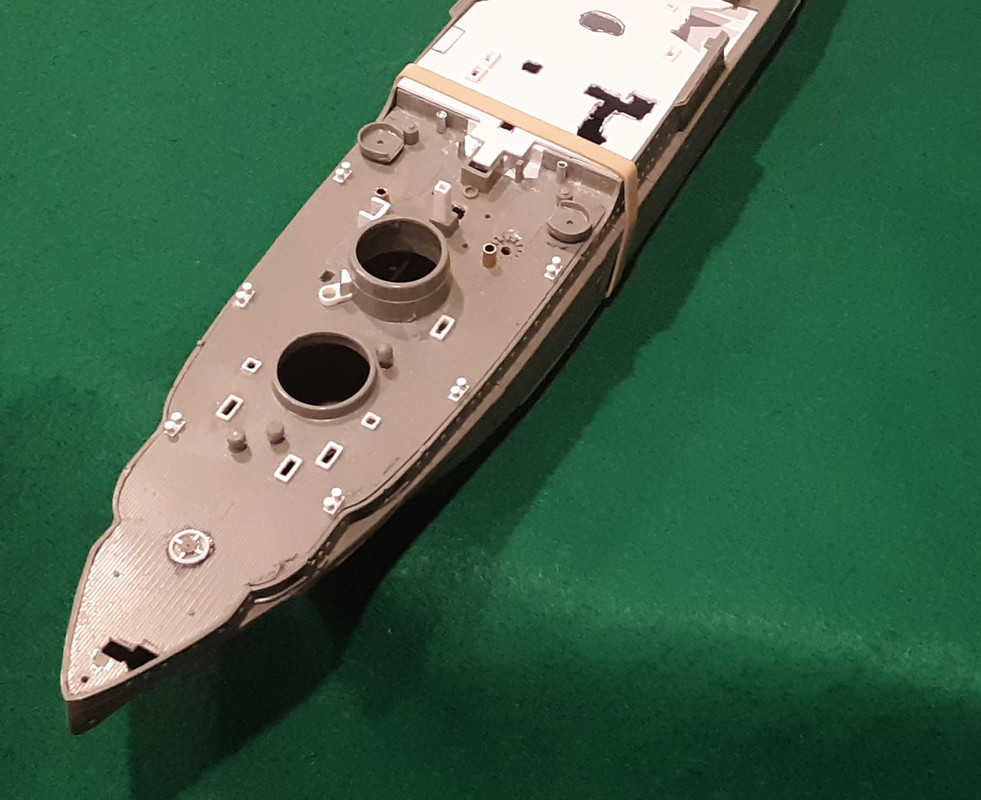 Ih
Ih