Reconstructing the Swedish army in WW2

I thought I would present a little project of mine that I have been planning for some years now, but just have started.

The thing is this. Since Sweden, where I’m from, didn’t partcipate in WW2 (except for a bunch of volunters that fought among the Finnish, German and allied ranks), there aren’t any plastic kits of Swedish tanks, vehicles, weapons or figures on the market.

Yet, Sweden had a quite big military industry (for being a small country, with only 5 million inhabitants), and produced an number of original weapons. My idea is to build a couple of these, either through conversions or from scratch. The goal is to built two or three dioramas, representing the Swedish army on it’s neutrality watch during the period 1939-45.

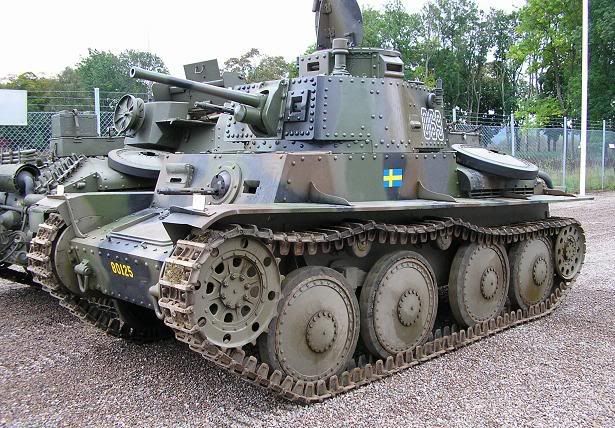
Among the weapons that I’m planning to build is the Czech LT-38 (in German service Panzer 38(t)), that was imported and made into the Swedish m/41 S-tank (Stridsvagn Strv m/41 SI-SII):
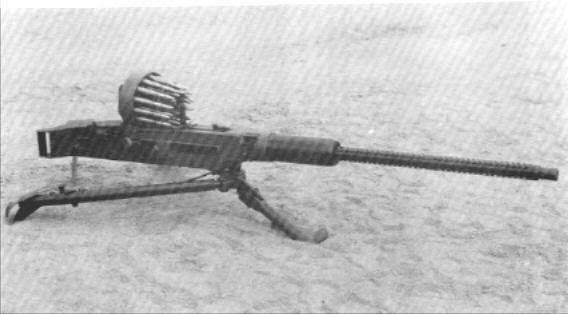
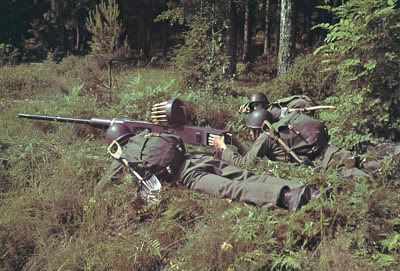
Another piece is the Bofors 20 mm automatic anti-tank gun (Pansarvärnsautomatkanon, Pvakan m/40), which was mounted on a tripod and earned the nickname “The grasshopper”, since it was hard to handle while on automatic fire:
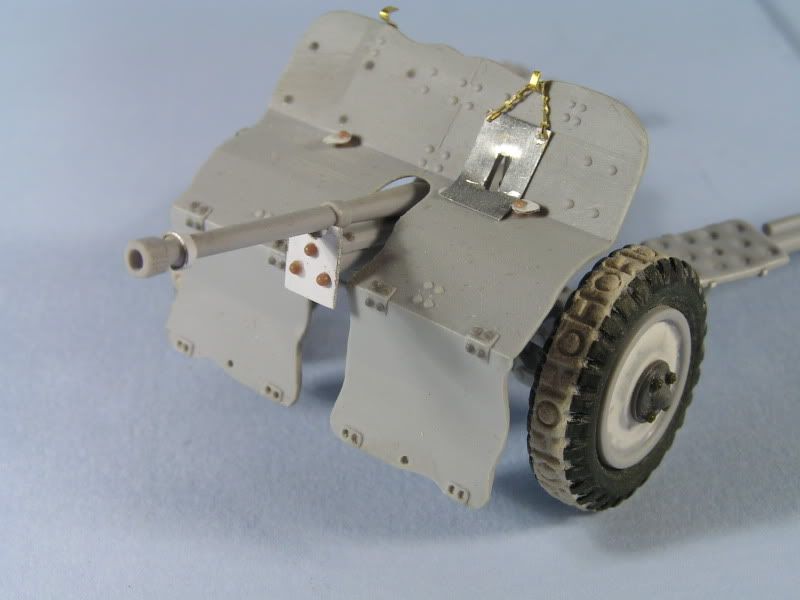
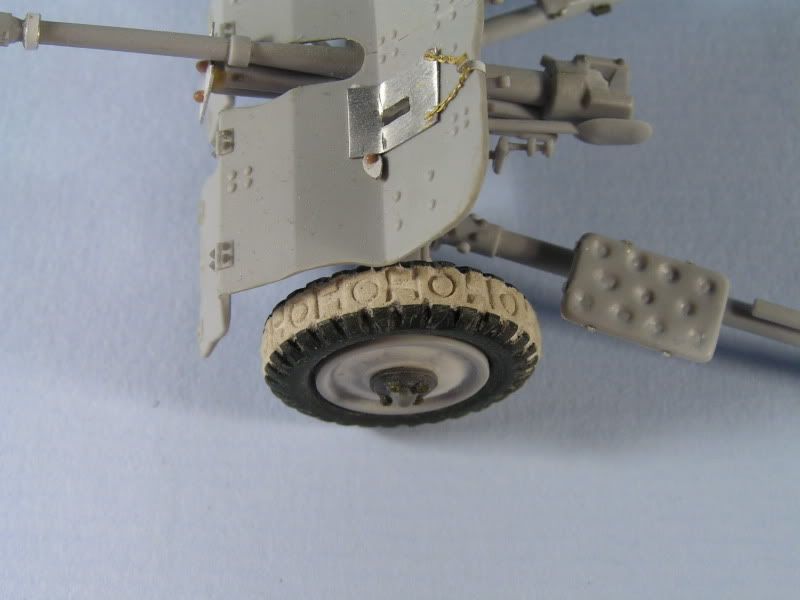
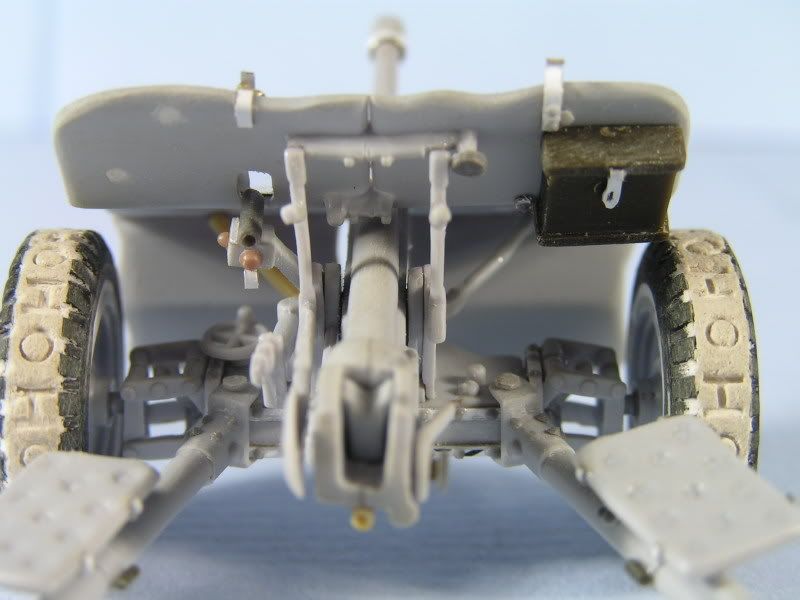
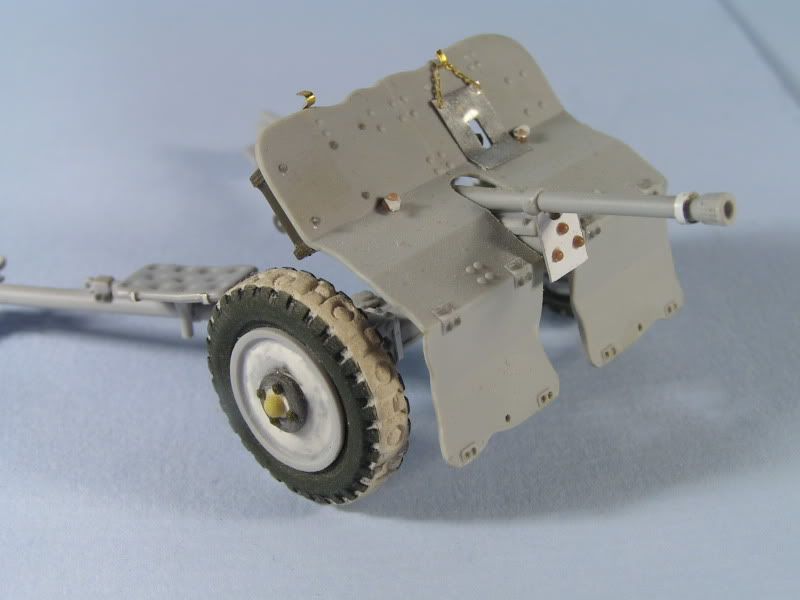
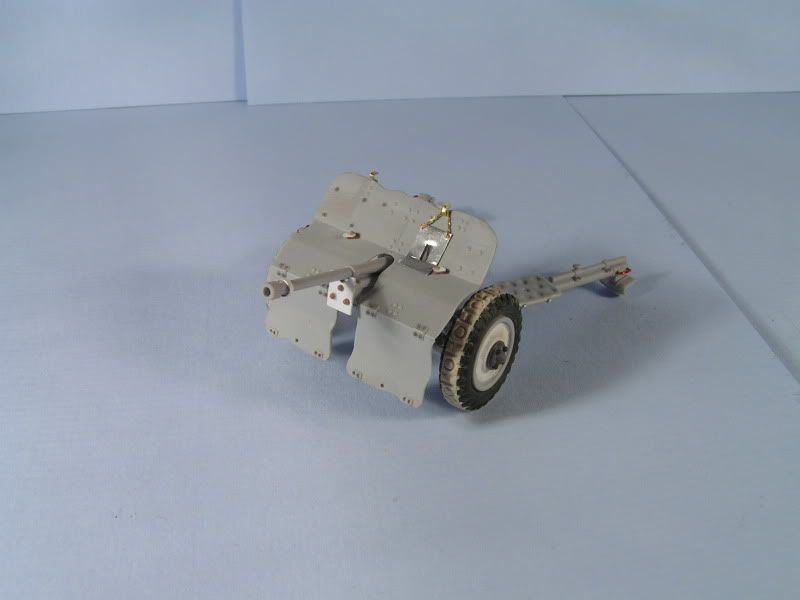
For the time being I have just finished the Bofors 37 mm anti-tankgun (Pansarvärnskanon: Pvkan m/38), that was the standard Swedish anti-tank weapon up until 1943. Some 500 pieces was sold to Poland before the outbreak of the war and the Polish gun was named “wz.36”.

Because of this the Polish manufacturer TOM released a kit of the Polish version. The problem was to do a conversion back to the original Bofors gun that was used by the Swedish army. The worst part was to rebuilt the tires. The Polish verions hade tires with a so called razorback pattern, while the Swedish one had a strange pattern that looks like HO-HO-HO-HO.

Well here’s the result:
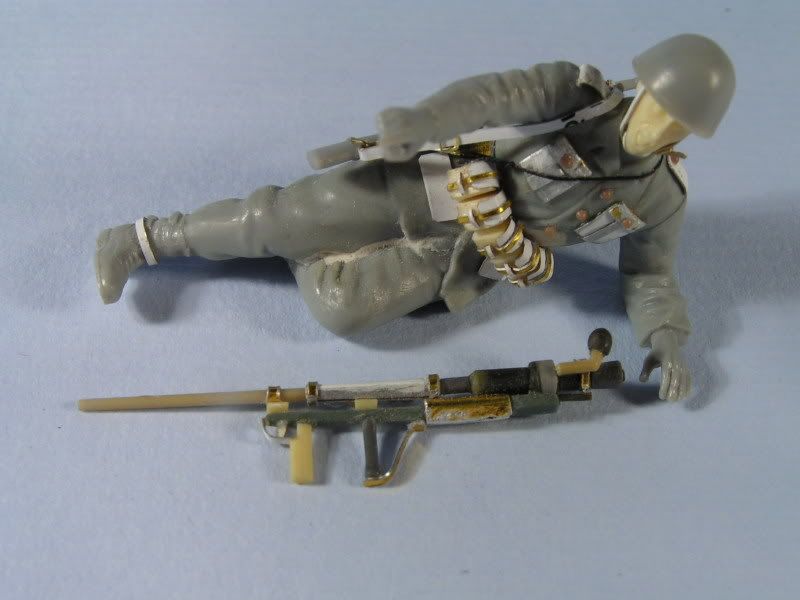
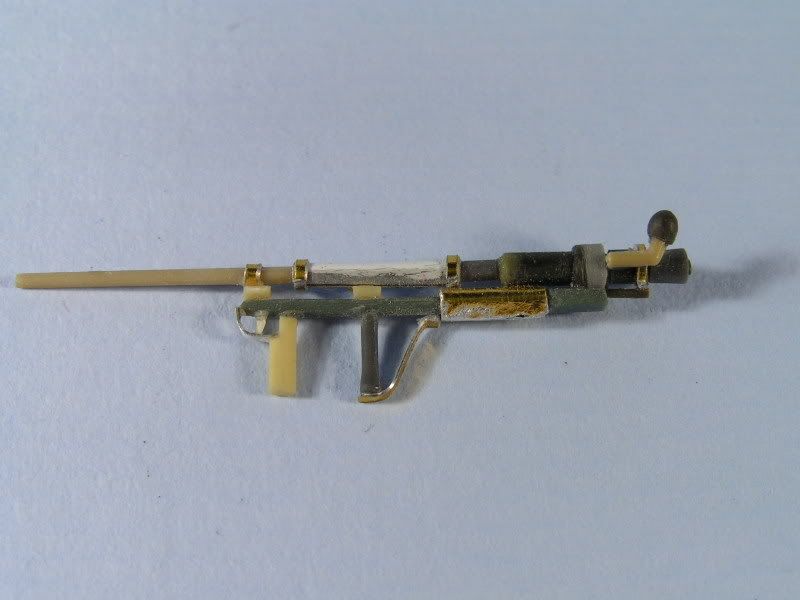
Besides the Bofors gun, I have scratchbuilt the Swedish 20 mm anti-tank rifle (Pansarvärnsgevär, Pvg m/42). This wepaon was one of the first recoilless antitank wepaons, even though it’s small caliber soon made it outdated.
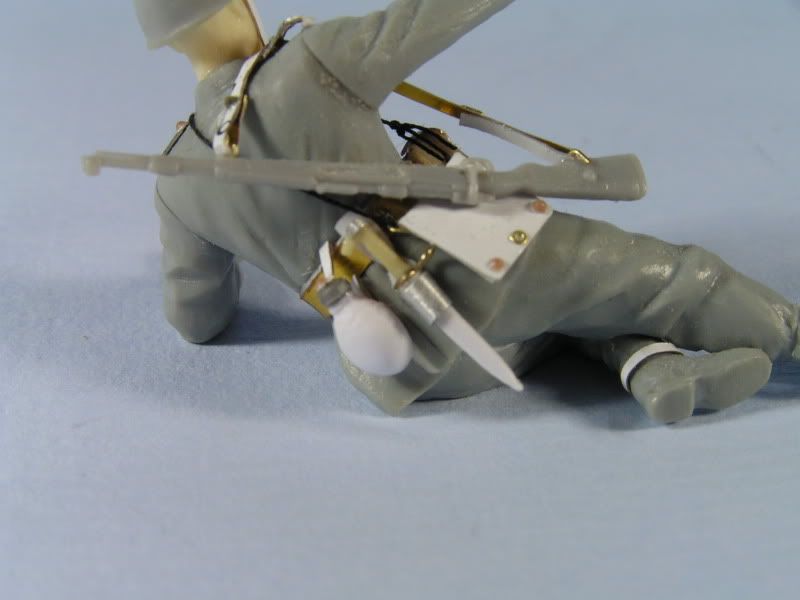
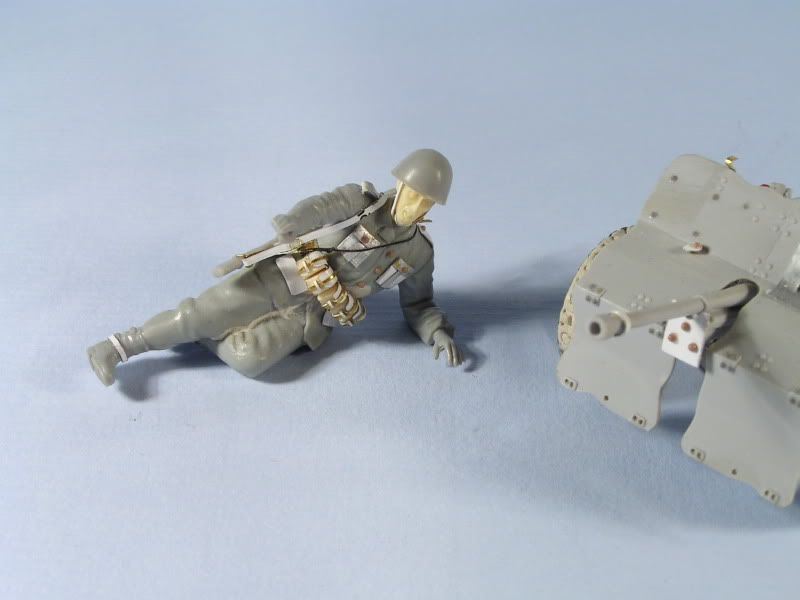
Lastly, I have just finished the first figure conversion, turning a German soldier into a Swedish one. Happily this is quite easy when it comes to the uniform, since the Swedish M/39 uniform resembles the German M36. The ammunition girdle with five big pouches and some of the other Swedish equipment was time-consuming to build though. This figure is one of the three-man crew for the Bofors 37 mm gun.
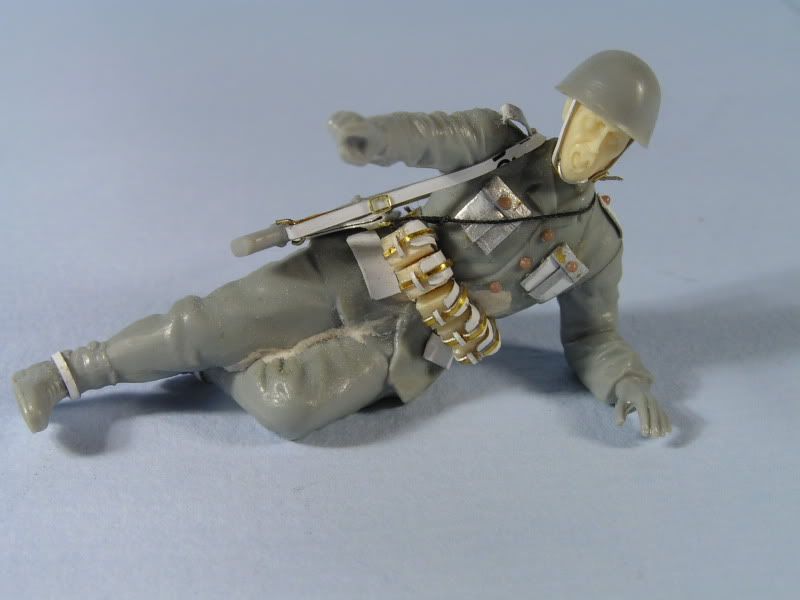
I will try to present this project in detail as it goes along during the fall.

/Tony aka bultenibo

Realy cool project idea I’ve alweas wondered what the swedish army was up to in the war I’ll wach this project all the way through.

[:)]

Very cool. so far so good very refreshing to see a different country. good luck and i cant wait to see it as it progresses.

I really like your idea; it has a lot of promise. I can not wait to see what else you are going to do.

WOW! Nice work on that figure! I’m assuming that this was a “Gen 3” kit or whatever DML has been calling them?

My first thought when I saw this post title was “Sweden had an army in WWII?!” LOL!

Doog: That’s the usual question I get when I talk to foreigners about Sweden in WW2 LOL!

Actually, the Swedish armed forces wasn’t that small. During the 1920s it had been heavily reduced, since Sweden was a warm supporter of the League of Nations and the principle of collective security. But in the light of the development on the continent a decision was made in 1936 to rearm the forces, at least so Sweden could uphold the neutrality with arms.

In 1941 the Swedish army consisted of 10 infantry divisions, 5 independent infantry regiments and independent 11 brigades (3 motorized, 3 armoured brigades,4 jaeger and 3 on bicycle).

The Swedish divisions were quite large though, since it consisted of 3 infantery regiments and 1 artillery regiment, some 22.000 man in all (compared to Germany: 17.000 or Finland: 14.000).

To this one should add an armed militia of 150.000 men.

The total number of the armed forces was some 400.000 men in the beginning of the war and some 600.000 in 1944.

The Swedish navy was also in pretty good shape. It was the third largest in the Baltic and bigger than all the other Nordic countries put together.

The weak point in the armed forces was - as in most smaller countries in thoses days - the lack of anti-tank and anti-aircraft weapons, not to mention the lack of tanks that could match the German and allied standard.

If you are interested in the topic there is a good page here:

www-solar.mcs.st-and.ac.uk/~aaron/sweeds.html

(Otherwise, you can wait unitil I have resurrected the army in 1/35 scale) [;)]

/Tony

I have always been curious why sweeden was allowed to be left out of the war. I mean hitler had them surrounded, had norway, had allies in finland, was in poland and germany and denmark, would have been rather easy to invade and take over. I use the term easy loosley though.

Bultenibo,

Just a super project…please keep us posted! Nice work as well. Great to see someone doing the research both on the equipment and the history. Very educational. I’ll be watching!

Buck

Smeagol: That’s a good question, that a lot of historians have asked. Most of them point to the fact that there was not much to gain for Germany to invade Sweden. Hitler of cause had the best possibility to invade Sweden at the same time as Norway and Denmark were attcked, in april 1940. Had he done so, Sweden maybe could have put up a fight for a month or two, but would inevitably succumbed. The next best chance was of course between the fall of France and operation Barbarossa. But at that time, Hitler had gained all he the advatages he sought from Sweden.

During the fighting in northern Norway in april-may 1940, Hitler for exampel demanded that Sweden would allow German troops and equipment to be transited be rail to Narvik, to relieve the surronded German force under General Dietl. When the Swedish goverment replied, through a delegation consisting of the Swedish commander-in-chief, that it would not participate in actions that harmed the neighbouring Norway, Hitler got furious. When he heard that Sweden also would defend its neutrality against a German attack, he asked if Sweden were ready to do the same against an allied attack, especially against the iron ore mines in northern Sweden. The answer was yes, and this was later confirmed in a letter from the Swedish king to Hitler. This seems to have persuaded Hitler that Sweden was not going to allow itself to be invaded by the allies, and that the important Swedish export of iron ore to Germany would go on undisturbed.

The next crises (the “midsummer crises”) in the Swedish-German relations came on the eve of operation Barbarossa when Germany demanded that a full infantry division, the 163rd, be trasported by rail through Sweden to the arctic front in Finland. This would be a flagrant breach of Swedish neutrality and the goverment was split in two. The demand was vey harshly formulated, and many politicians thought that a negative answer would result in an German invasion. The Swedish goverment folded and the division was transported through Sweden during the last week of june in 1941.

The same summer Sweden also accepted that German soldiers - wounded and soldiers on R and R - could use the Swedish railroad net. This deal was in effect up until the summer of 1944.

Both the “midsummer crises” and the other concessions made to the Germans has been lively debated, since the first was a breach of neutrality and the consessions was morally dubious.

So, from the summer 1941 and onwards, Germany had good reasons NOT to invade Sweden:

  1. The pledge that Sweden would - and also could - defend itself from an allied attack.

  2. The transport of German soldiers to and from the front in northern Finland continued.

3.The export of Swedish iron ore to Germany continued undisturbed during the war. In the beginning of the war Sweden supplied Germany with 6 million tons of the highest grade iron ore every year, while the total production in Germany and the occupied countries was 22 million tons.

  1. The export of other goods important to the German war effort - especially ball bearings - also continued undisturbed.

In contrast, an German invasion would probably result in blown up mines, destryed railways and industries. Besides this a number of German units, aircraft and ships would have to be diverted from other fronts where they were badly needed. Lastly, an invasion of Sweden probably would have effected the German relations with its allied Finland. Finland and Sweden were one country for 500 years, up until 1809, and had very close cultural connections. Even though Sweden didn’t intervene in the Winter war 1939-40, the indirect swedish support was quite big, with volonters, weapons and economic support. For exampel, a quarter of the all Swedish aircrafts were transfered to Finland, and the a lot of artillery, anti-tank and anti-aircraft guns were taken from the swedish army supply.

In the beginning of 1942 though (when Hitler was obsessed by the idea that the allied would land in northern Norway, attack Sweden and cut the supply of iron ore) preparations was made for an invasion of Sweden and a German force was put together in Norway. The Swedish response was to hold an huge military excersise with 300.000 conscripts on the Swedish border to Norway. The invasion didn’t came, and the German forces was diverted to other fronts.

That’s pretty much the history of the invasion that never took place.

Hope I haven’t bored you to death.[;)]

/Tony

No, not boring at all. Thanks for telling me, thats amazingly interesting. I dont blame hitler for thinking the allies would have landed in norway, I know I would have. (landed troops there, I mean)

Your modifacations to the figure are amazing, and the history is very interesting, i’ve learned a lot from your posts already, I’m looking forward to more pics of your work as well as history lessons.

Thank you, bultenibo, for filling me in on an obscure (for me, that is) aspect of WW II. I have wondered about how Sweden stayed out of the war (and Switzerland, also) but, frankly, too lazy to do any research on the subject. Now I am going to do a little reading up on it. Thanks again.

as far as the swiss, I always figured that germany ignored them because they were small and the terrain would be hell to fight in for no real resources.

The terrain and the fact that almost the entire male population had military training. But, it wouldn’t have been impossible and it would have been a nice little nugget of territory. Maybe take it after Hitler had the rest of Europe?

Seems that unless hitler had a hankering for some good chololate, switzerland would have been left alone