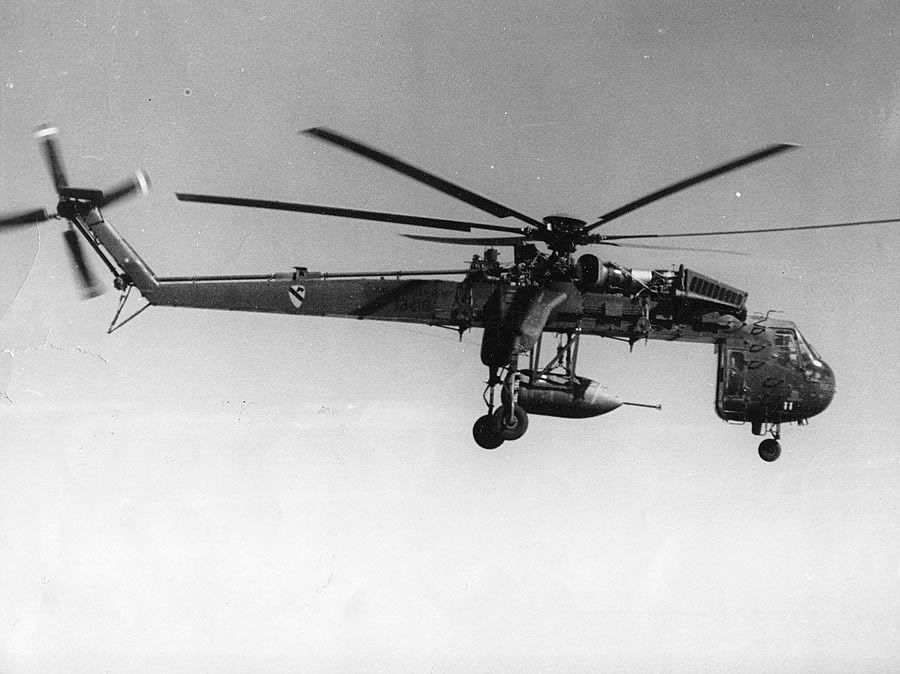
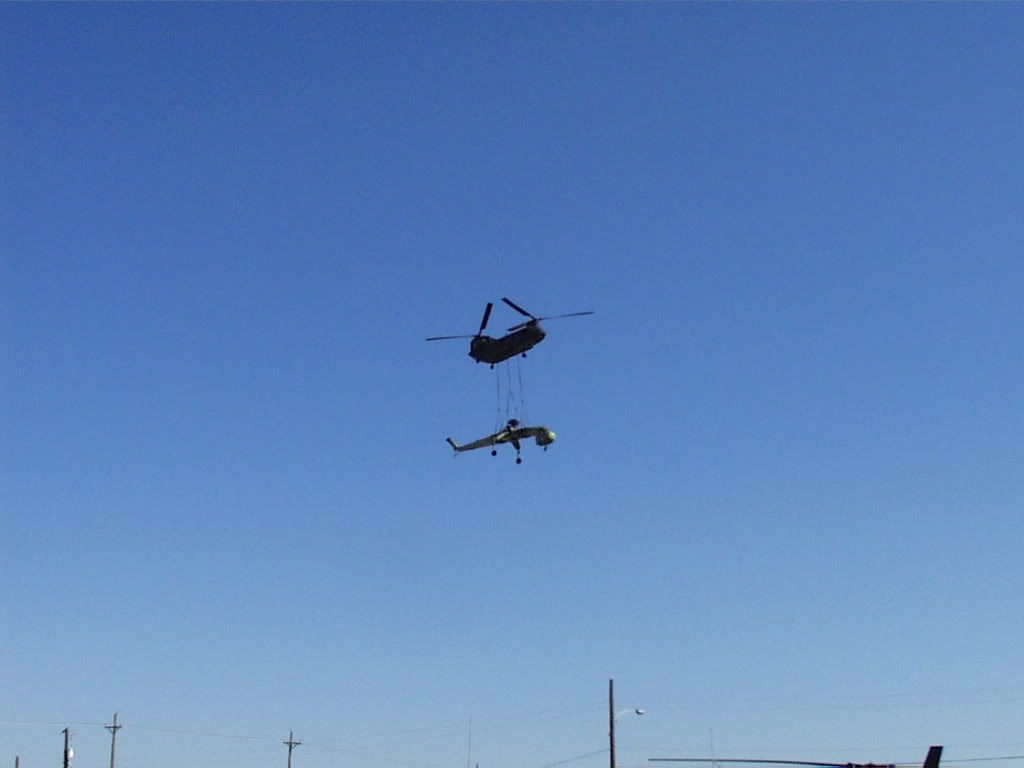
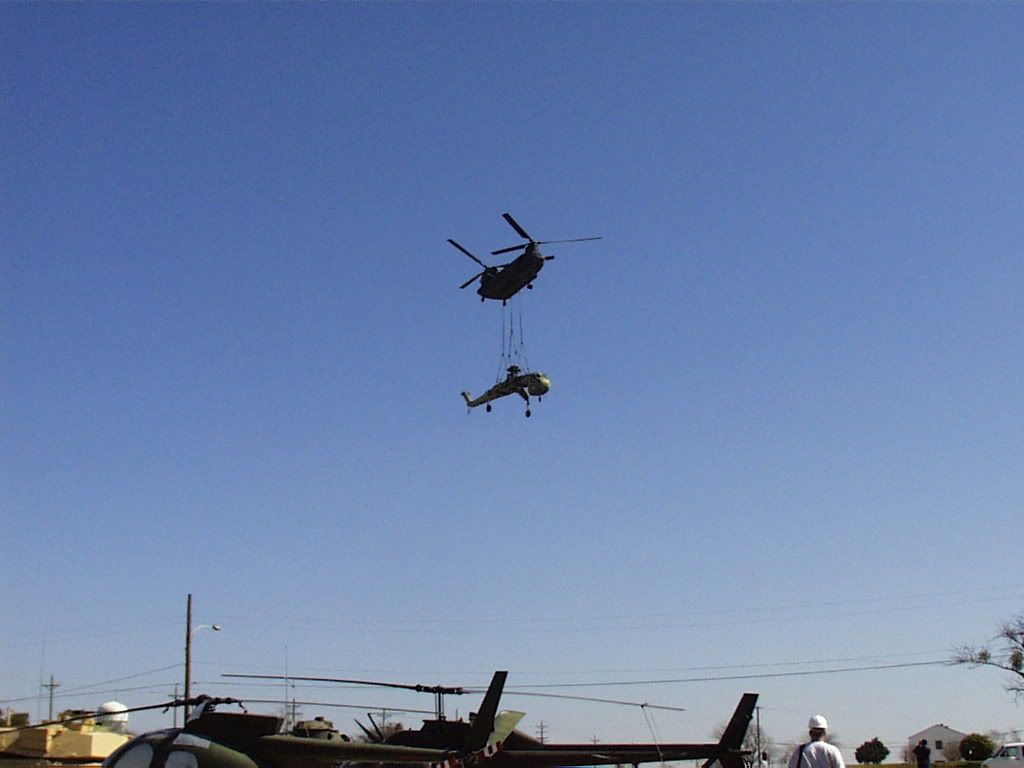
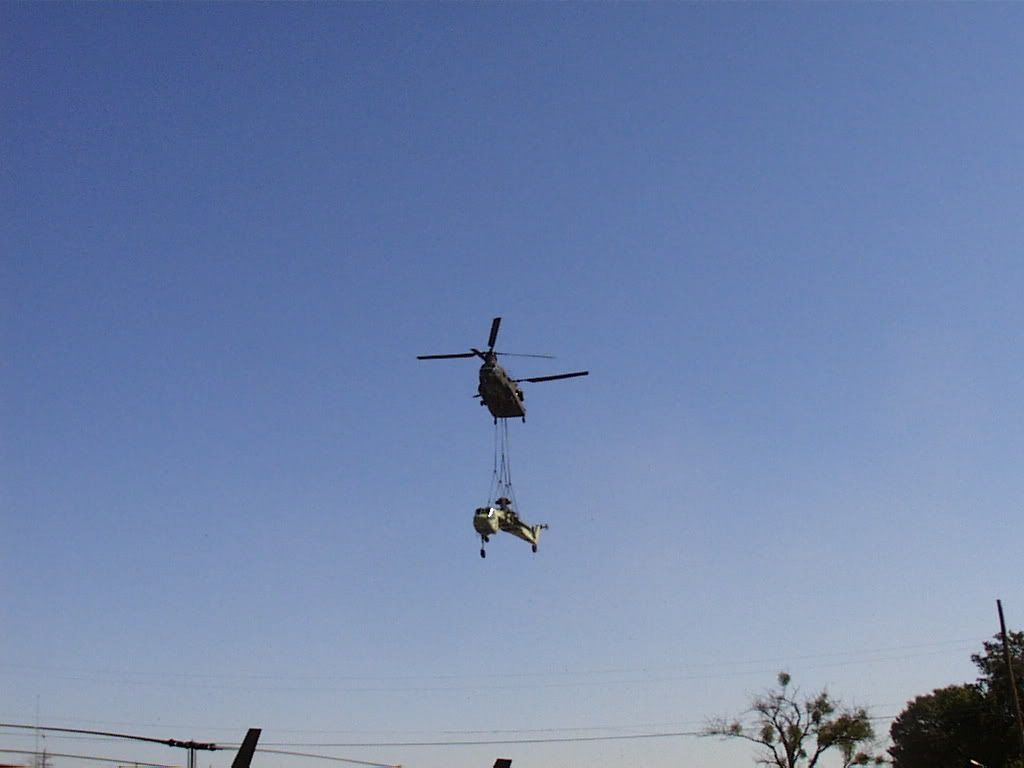
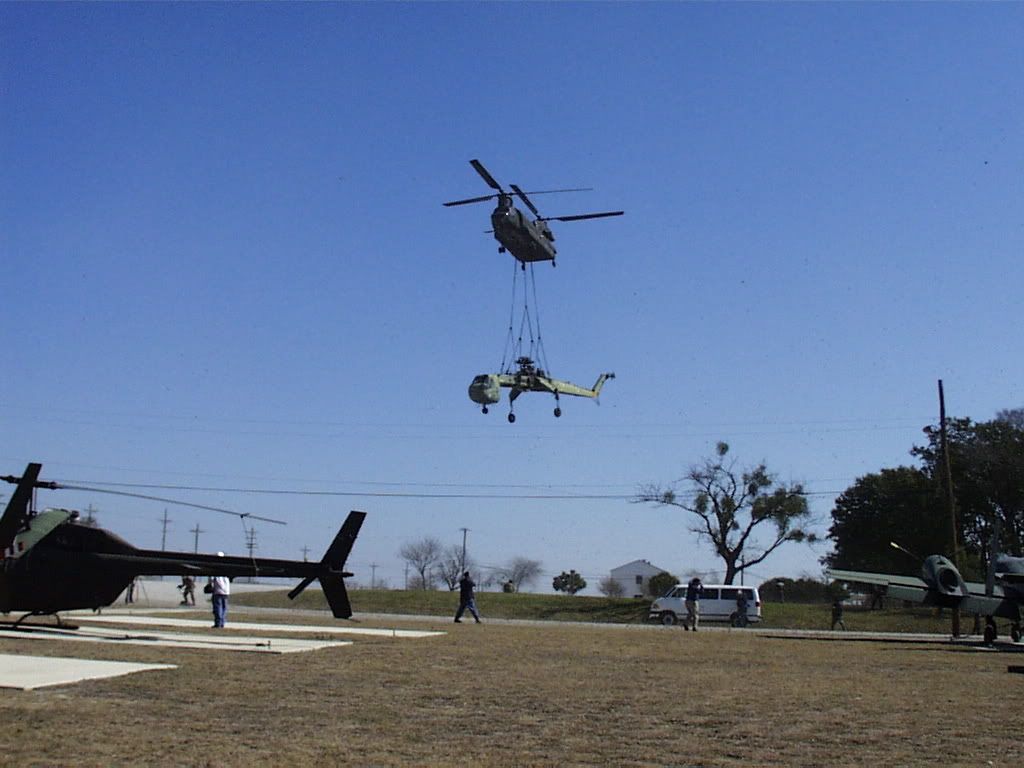
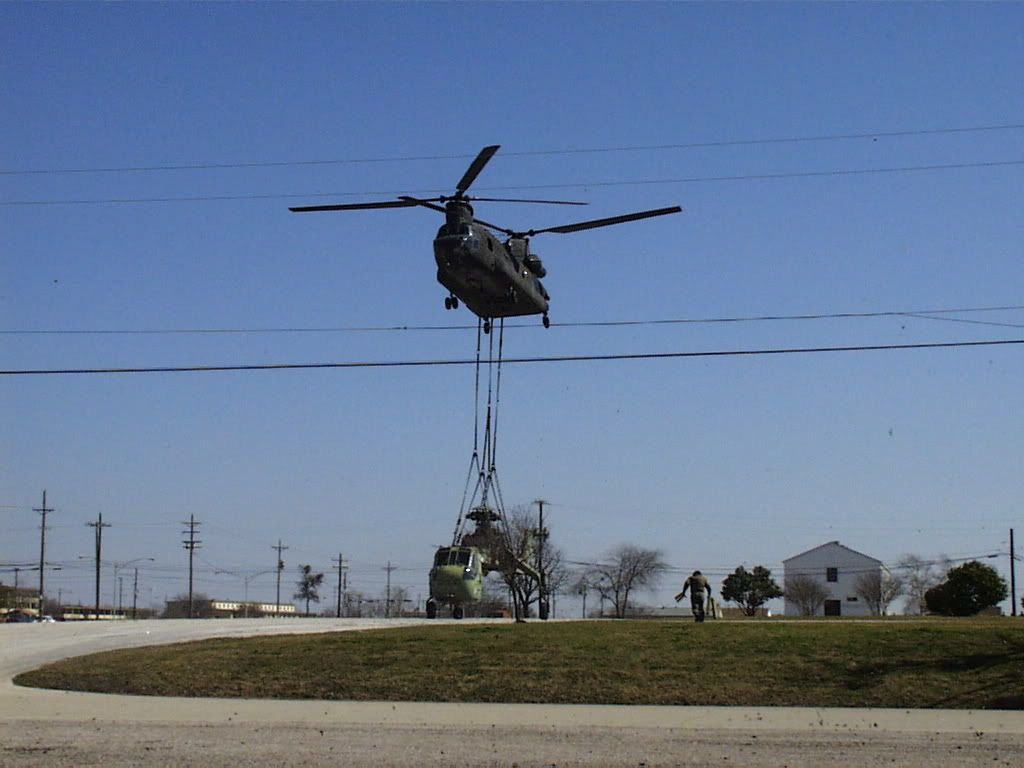
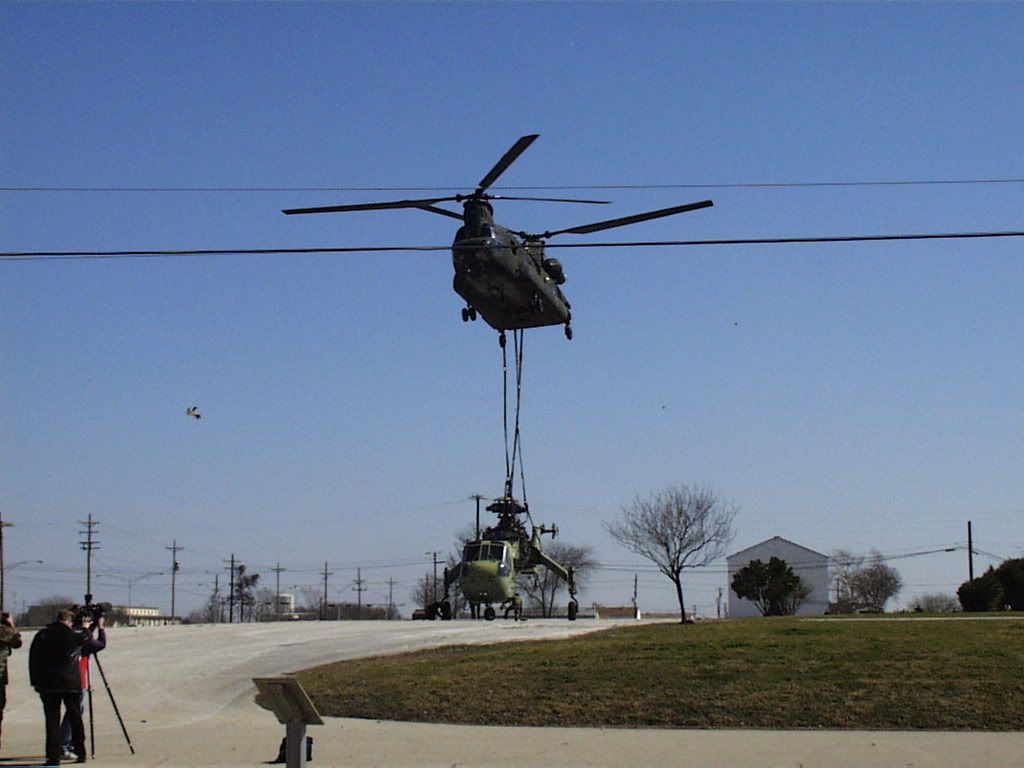
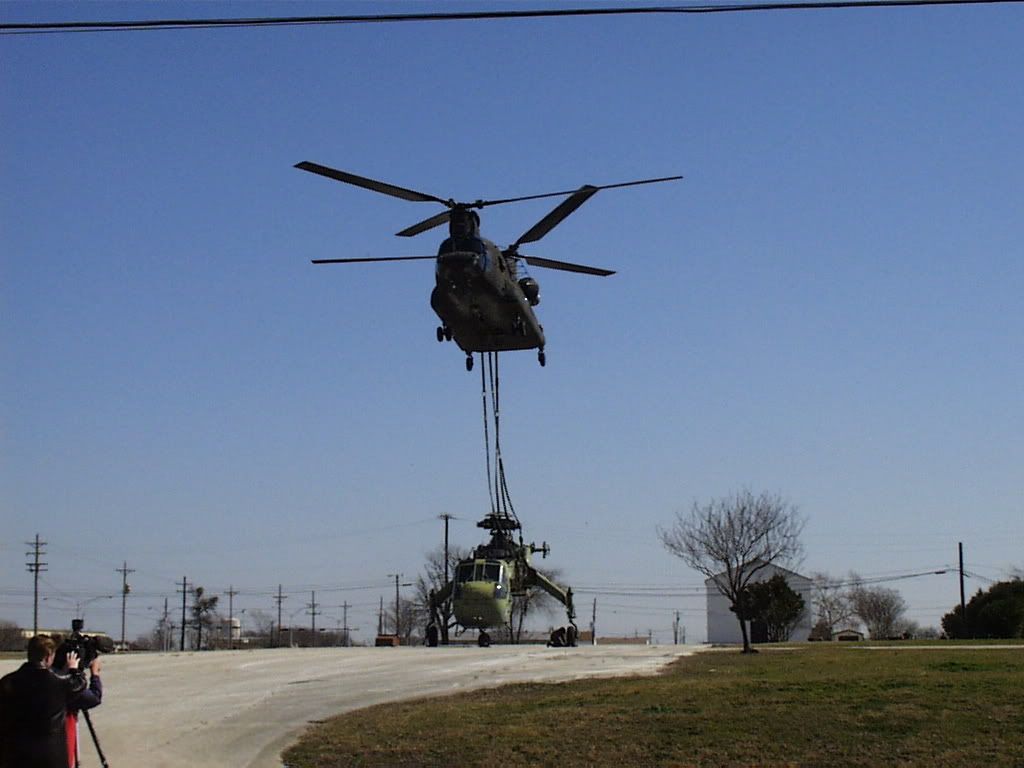
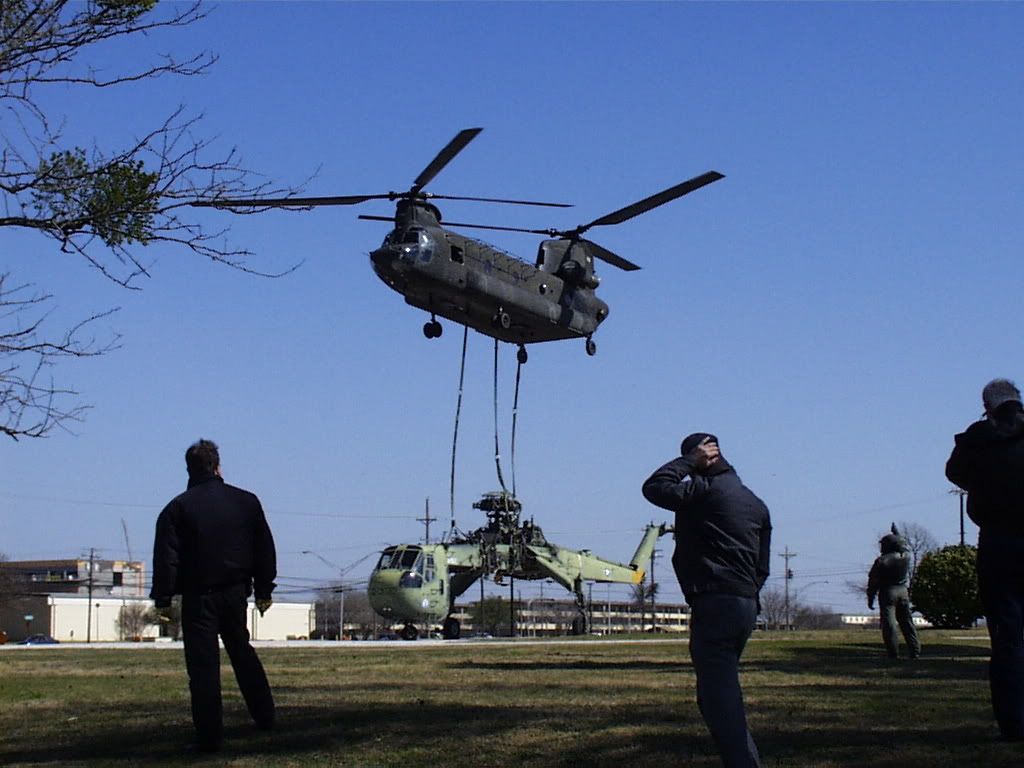
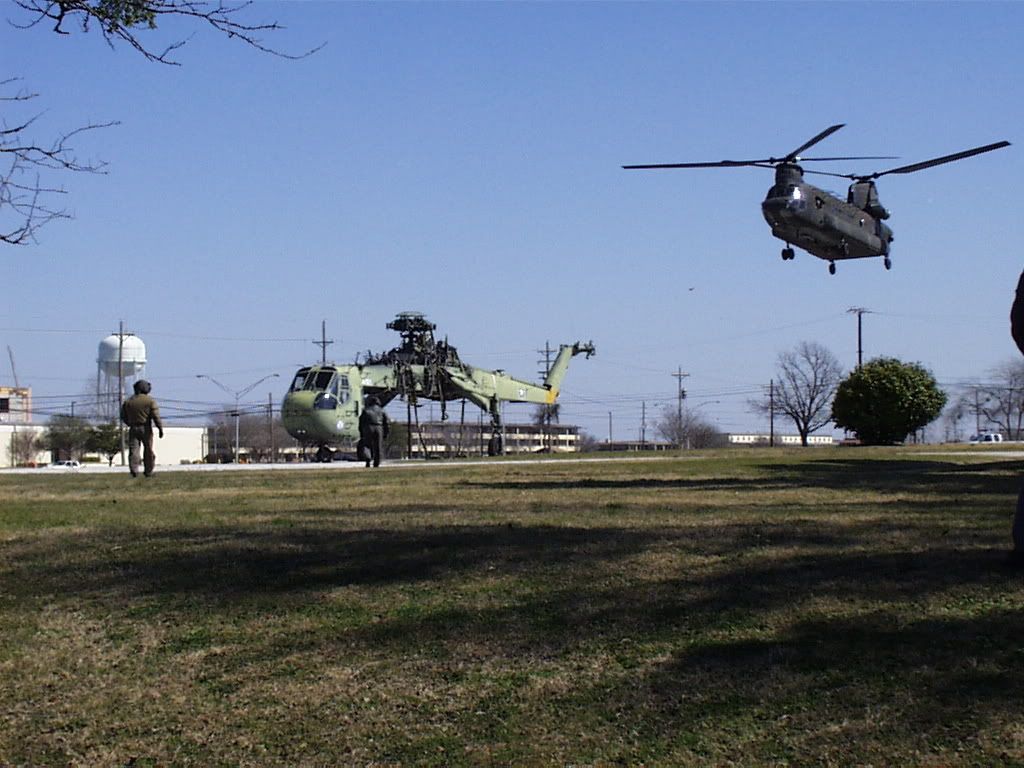
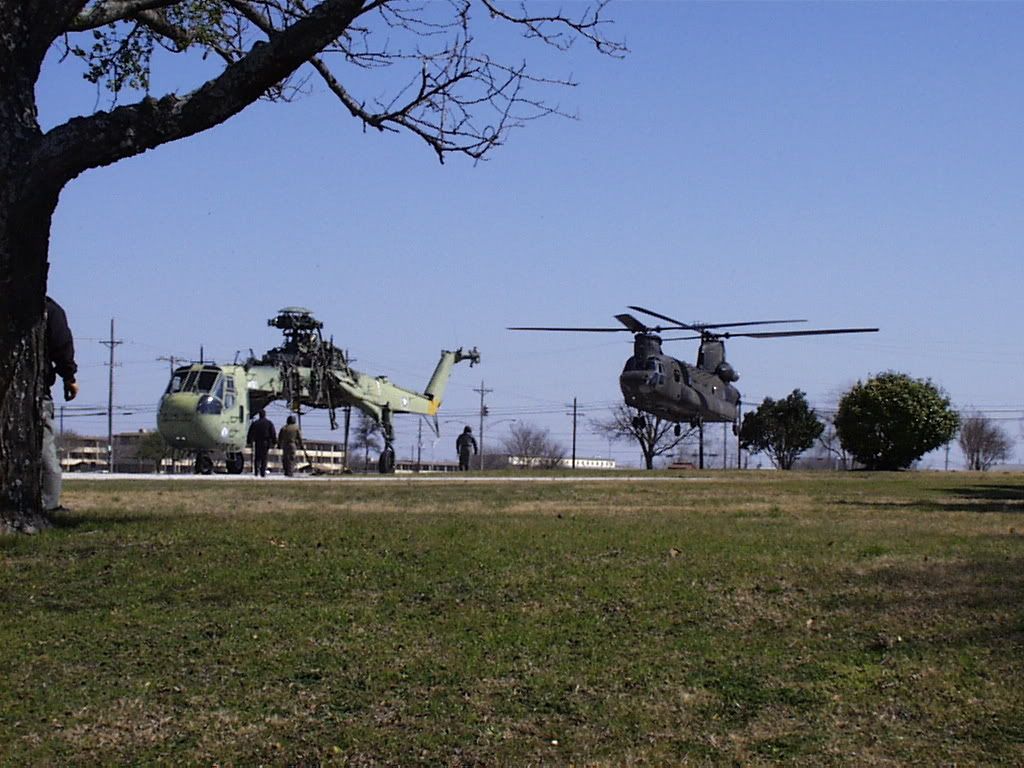
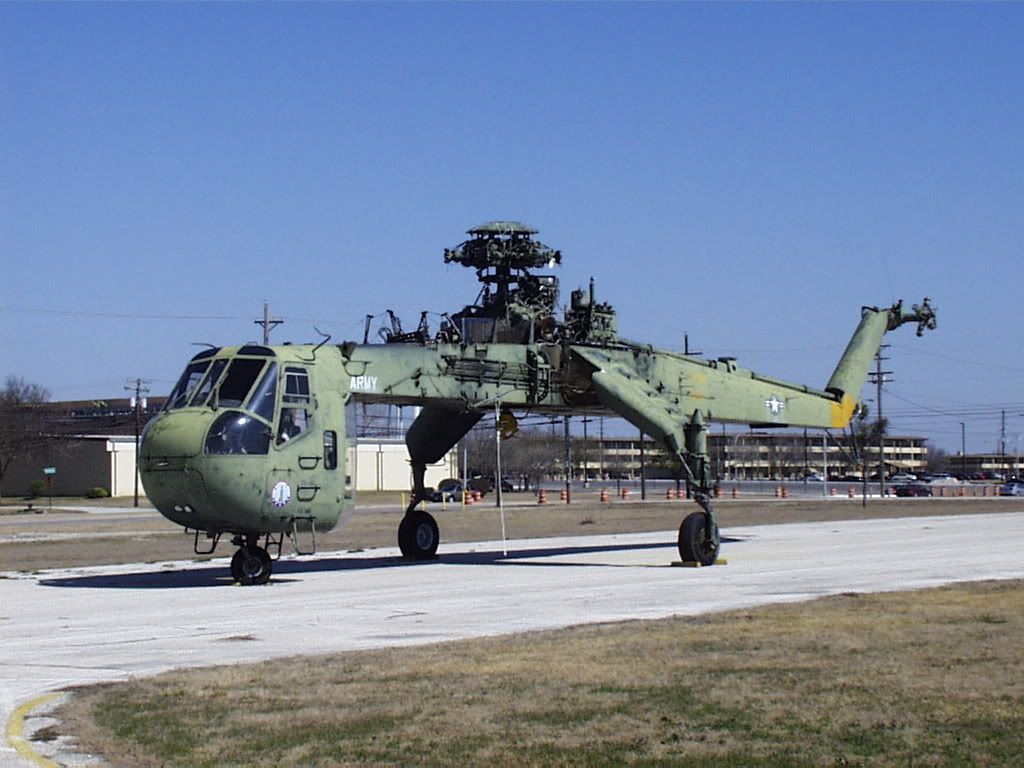
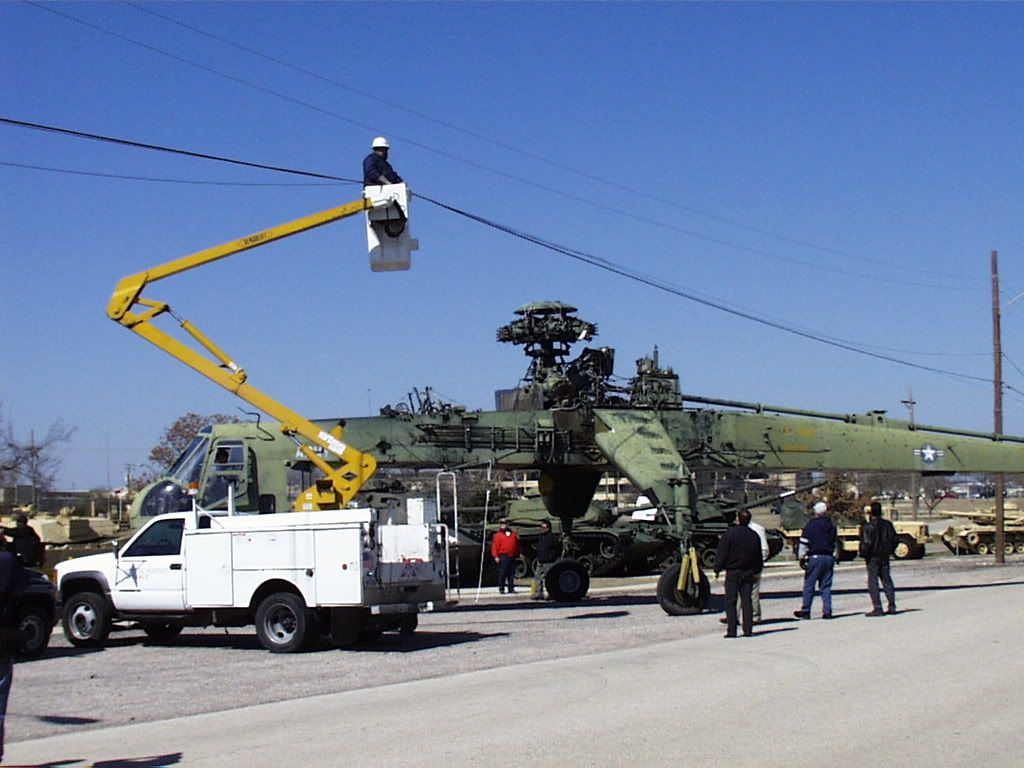
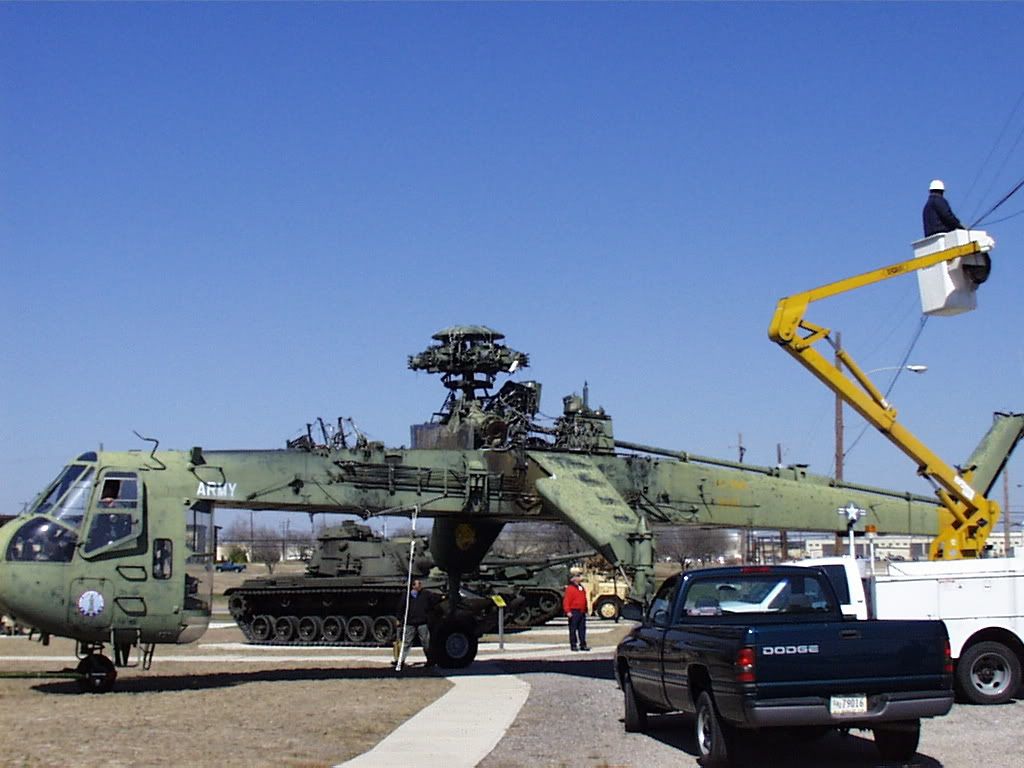
If you are a fan of the heavy lift rotory winged fellows this is for you. I was part of a restoration project on a CH-54 that was delivered to the First Cavalry Museum at Fort Hood Texas. This Helicopter’s seriel number was traced back to the one in the black and white photo. I was fortunate enough to see the whole project through and be part of a dedication cerimony that included the real piliots and crew members of these monsters. I have also participated in operations with some when they were disappearing at Fort Stewart Ga. In the early 1980’s. To see them flying with the large conex containers was awesome. When they flew light it really reminded me of the bugs that flew around the Georgia swamps. This aircraft has been restored and is on display at the 1st Cav Museum. Hope you like the pics.
Another Ch-47 actually carried the rotors and engine stuff separately. What is truly amazing is both those C-47 carried that thing all the way from Missouri to Texas sling loaded. Not an easy feat. Hope you like the pictures! Go 1st Team!
I was lucky enough to get up close and personal with one of these monsters (CH-54) a number of years ago when they were doing water bombing missions in southern california.
They were operated by Ericson air crane here in Oregon.
On anouther note, I think both the CH-54 and the CH-47 are still in use in helicopter logging.
P.S. What is the Sky crane carrying in the black n white pic?
That is actually a big bomb. The Vets told me they refered to it as a daisy cutter. They participated in many bombing missions. Pretty unique. A helicopter in a bomber role.[}:)]
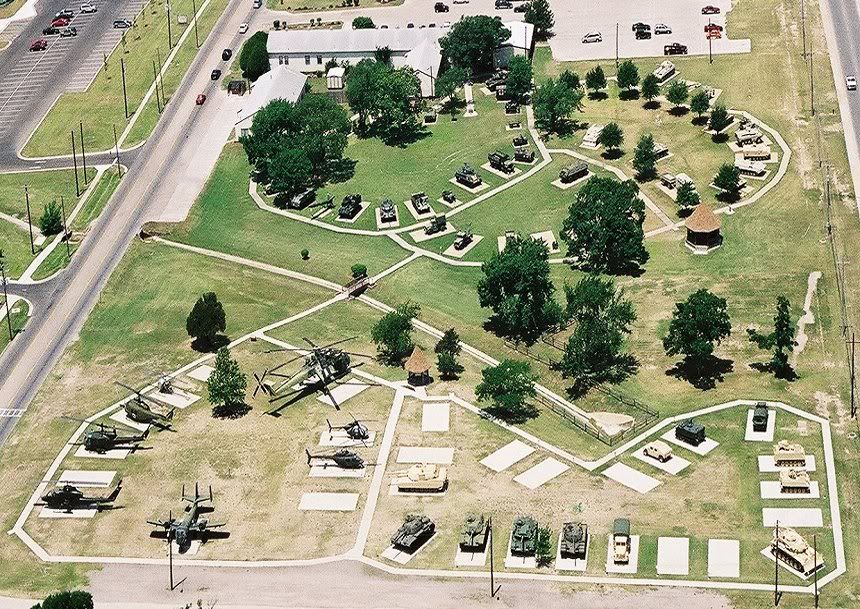
Well I am not an expert. All I know is what the pilots and crews told me. The dropping of the bomb to make an instant LZ is right in line with the storys they told me. It cleared everything out hence why they called it Daisy Cutter. There may have been other daisy cutters. I have actually flown in a Chinook many times and even jumped outta one for an Airborne Graduation ceremony at Fort Bragg. Very memorable as was hitting the ground. The rotor wash gives you a sensation of being pushed down. I miss the days when all I had to do was show my dogtags , put in my earplugs and go for a ride. I have incredable memories of the German country from helicopters. Nothing else quite like it. Here is a picture of the museum from the very last operational flight of the UH-1 Iroquois (for the active duty Army) It was an end of an era and kinda sad. The pilots still really loved them. One line I always heard from the CH-47 Pilots was don’t worry about all the leaking oil on the ground. That’s good. When it stops leaking it means your out of oil. That’s bad.
You can see the size of the sky crane and get an idea of the outdoor displays. Kinda makes me feel all nostalgic.[C):-)]
I’ve heard two separate references as to what exactly is the “daisy cutter”. AF types tend to refer to the fuse extender as a “Daisy Cutter” because it looks like a weed whacker. I have also heard the BLU-82 referred to as the same. I made reference to it once and was corrected by the former Air Force officer I was speaking to. They referred to it as “Big Blue” (from the bomb’s designation BLU-82). I don’t know if the Army referred to it as such. I’ll have to do some digging on that.
SFC, don’t worry, we’ve still got Hueys flying here, although their days are numbered now that the UH-72 is coming in. I’ve put in for the Huey course 3 times and keep getting denied. I love the Apache, but the Huey IS history…
I was at Hunter AAF from 80 to 81 with the 132nd Avn Co, and later from 95-97 but by then “Hercules” had changed designation from the 132nd to B Co 2/159th Avn.
Friends of mine who were there in the mid 80s told me the story of sling loading one of the GA NG '54s from Florida only to have to stop short so another GA NG '54 could sling the disabled bird back to Hunter, I guess the National Guard didn’t want to be embarassed by having a '47 sling load a '54 in front of the whole post.
Columbia Helicopters operates (or at least operated) Boeing 234s (civil version of the CH-47) in Oregon and Washington for logging. When I worked for Columbia, we took all the gear for fire fighting as well as logging every where we went. At the time (1997) '234s were also being used in Papua New Guinea for logging and Peru for oil field work. Besides the '234s, Columbia also operates BV-107s (civil version of the CH-46) for logging and fire fighting.
AFAIK, Erickson was operating Skycranes for fire fighting, and probably for logging as well.
Columbia still operates the 234 and 107, they actually became type certified with both a few years ago so could begin building new airframes like Erickson does with the S-64.
If I recall correctly, the fuse extender is what makes it a daisy cutter. The extender causes the bomb to explode right at ground level. The blast and shrapnel levels everything within a large radius, creating a large level opening in the jungle, ergo daisy cutter. Without the fuse extender, it would burrow into the ground as it was exploding, creating more of a crater than a clearing.
I miss the Huey too. In the early part of my career they were ubiquitous - there were so many around everybody who wanted one had one. Some of my most remembered flights are sitting on the side of a Huey, legs out in the breeze, whop-whopping along at 120 kts. When I started in flight test, we had a UH-1M as an ash-and-trash bird. Used it for chase, hauling supplies to the test site, etc. Wonderful aircraft - UH-1C (B?) fuselage, AH-1G dynamics, cruised at 140 kts. We called it the hotrod Huey.
As for the UH-72, I wonder how long it will be before those high-time NG aviators figure out that it’s capable of aerobatics? That rigid rotor system will easily pull it through loops and rolls.
Thanks! That is the best, full-aircraft picture of ‘Big Mother’ I have seen but I still can’t quite make out the serial number. Does anyone know the serial, please? Also, what about the colours of the cockpit artwork? From memory, the cover of a Squadron Signal book featured a painting of this helicopter. I wonder if the colours used in the painting were known for certain or a ‘best guess’?