Painting parts while still on the sprues, I’ve read that a lot of builders paint that way, I’ve tried it, seemed to me more work than it’s worth. You still need to cut it, sand it then touch the paint up so what’s the point? Certainly one of you pro builders can shed some light on this for me? Or is it a non issue and no one really does it? I also read about builders cutting all the parts off the sprues then organizing said parts in bins, I would never complete a project if I did that 

3 Likes
I’ll only use this method on the tiniest of parts, those I have no hope of gripping in tweezers or alligator clips. Those that are so tiny need no sanding typically. Glue in place, touch up and move on.
4 Likes
I do the same as mrbill865 otherwise you’re doing double the work(paint,snip,sand,touch up)
3 Likes
For me, it really depends on the part. Working on my Lysander tonight, I left the bombs and ladder attached to the sprues while painting. But I removed the propeller blades and central hub from the sprue and glued them together before painting the assembly.
4 Likes
I’d say it’s one of those ideas that sound great at first, but after you try them or at least think about them more they are almost useless…
I tend to “glue everything then paint” - which is not always possible, like obviously the insides of the aircraft have to be painted befoure you glue the fuselage shut - BUT I tend to paint the canopy after it is installed - again, with the exception of canopy insides where necessary.
But once you start working with resin parts, where all the details are mostly in one part - and they get nicely painted anyhow - like resin stowage blocks, ejection seats or engines - you get used to painting details and so it gets more practical to cut the parts out, clean them up, glue together and then paint while holding the subassembly.
4 Likes
I do it often…very easy to touch things up with the AK Markers.
3 Likes
I’ve been doing this for years for certain types of parts. Smaller parts as mentioned earlier, but also things like cockpit components such as side walls or the floorboard will get at least a base coat while still on the sprue. I did recently try a different approach (not new, as I’ve seen plenty of videos using it) where I built the entire cockpit first, then painted it. Both approaches work fine.
3 Likes
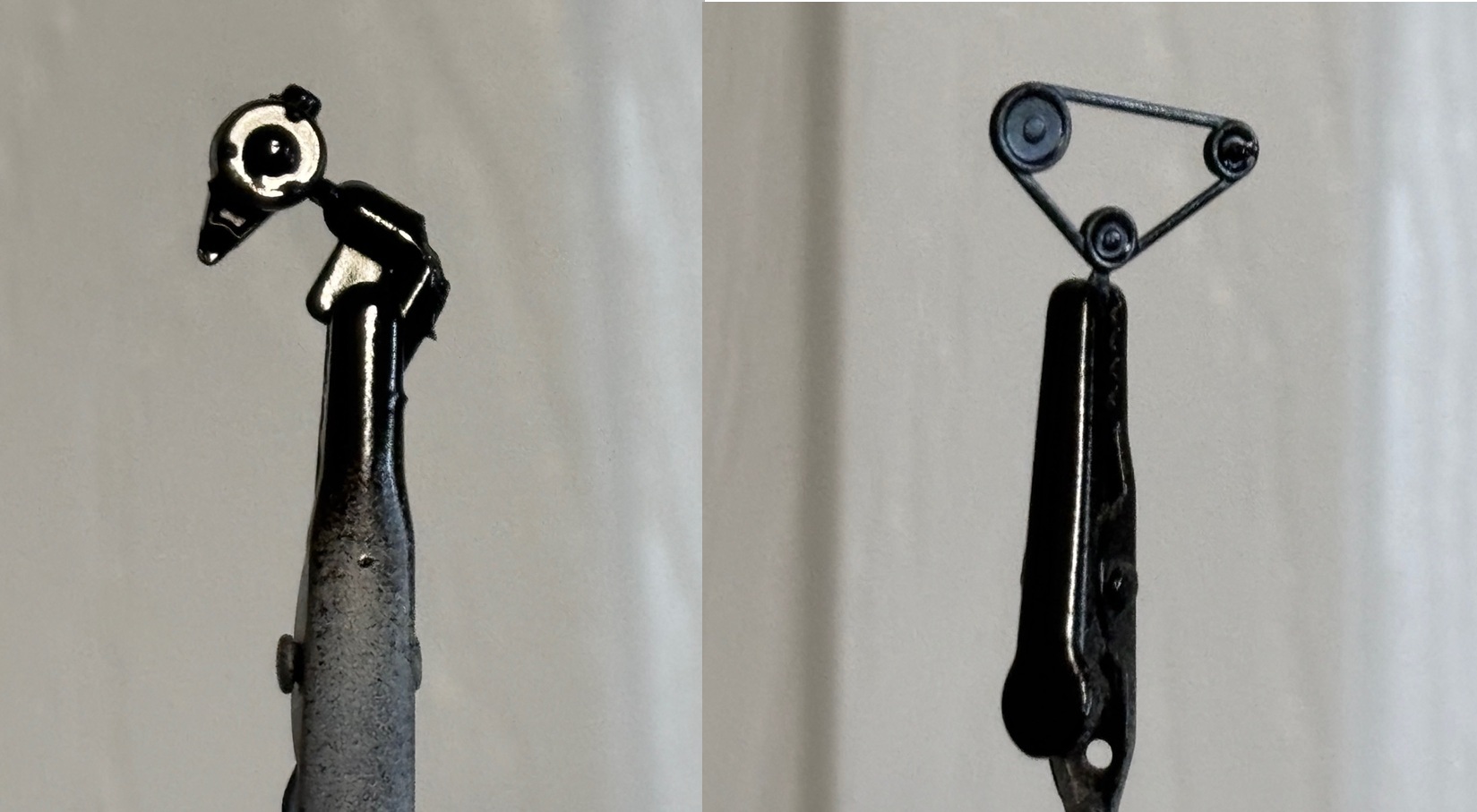
This is genius, I’m going to do that!
1 Like
That what I was talking about!
It really depends on the situation. It is an old, old tip, going back to the earliest kits and their instructions. And there’s no right or wrong, it all comes down to what each of us finds to be the easiest and most effective way to do it.
I’ll paint some things on the sprues, as others have described, particularly if it’s a small piece that will be hard to hold, or if the part would be hard to reach to paint once it’s installed.
I do tend to prime pieces on the sprues, because it’s usually easier for me to do that.
Best regards,
Brad
3 Likes
I do the bulk of my painting with the parts still on the sprues. I’ve done this since I began painting models back in the late '60s. I have big “honker” hands, so handling the sprues is much easier for me. Yeah, I have to do a bit of touch-up (sometimes), but it’s never been enough of a deal breaker to make me change my habits.
2 Likes
I’ve been doing this for years. All sub assemblies are on one block. For instance, the landing gear for an F-16.No need to handle individual parts. Paint, decal, and weathering. Once it’s done, pop it off the end of the toothpick and assemble. Floral foam blocks.
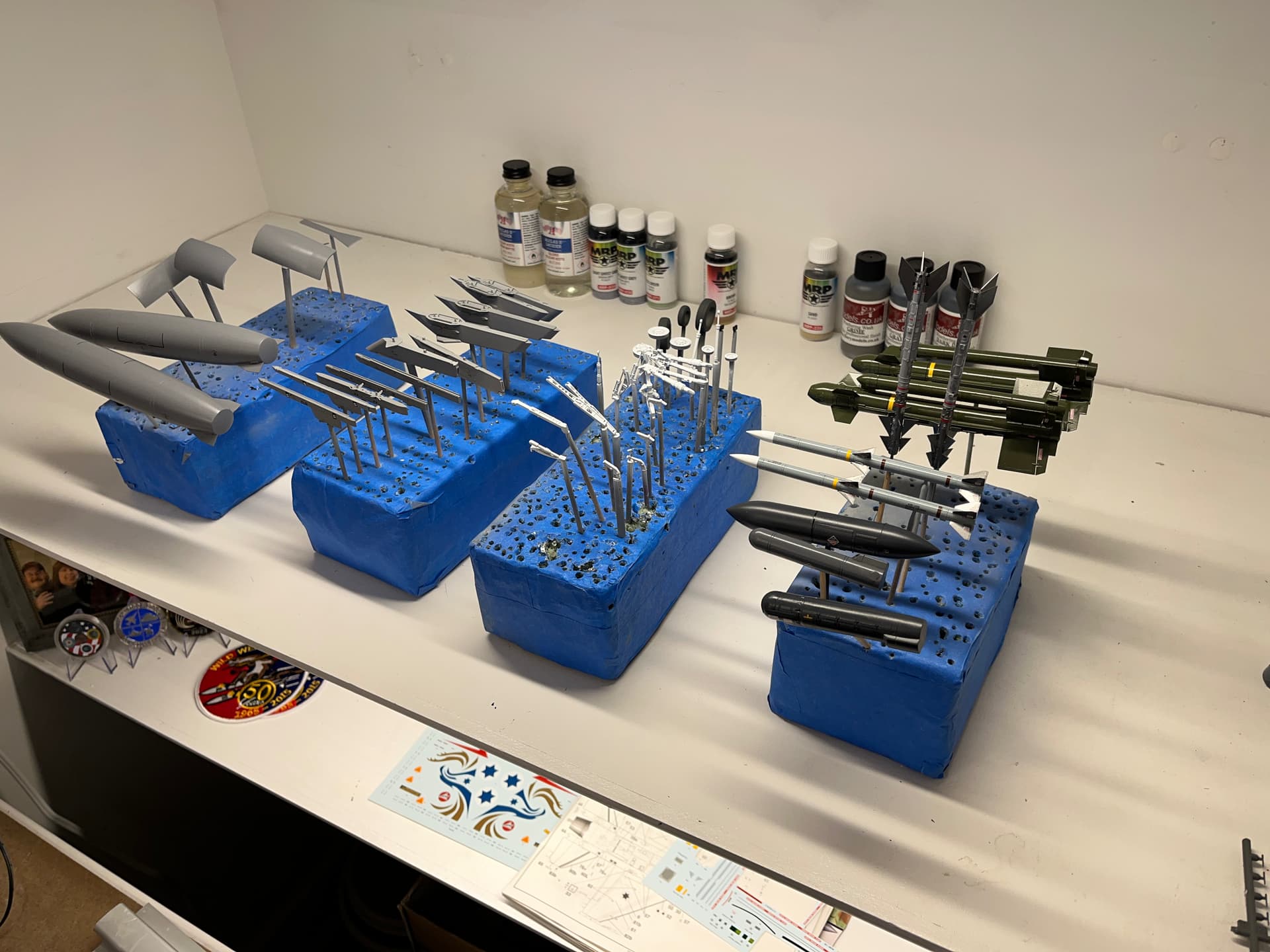
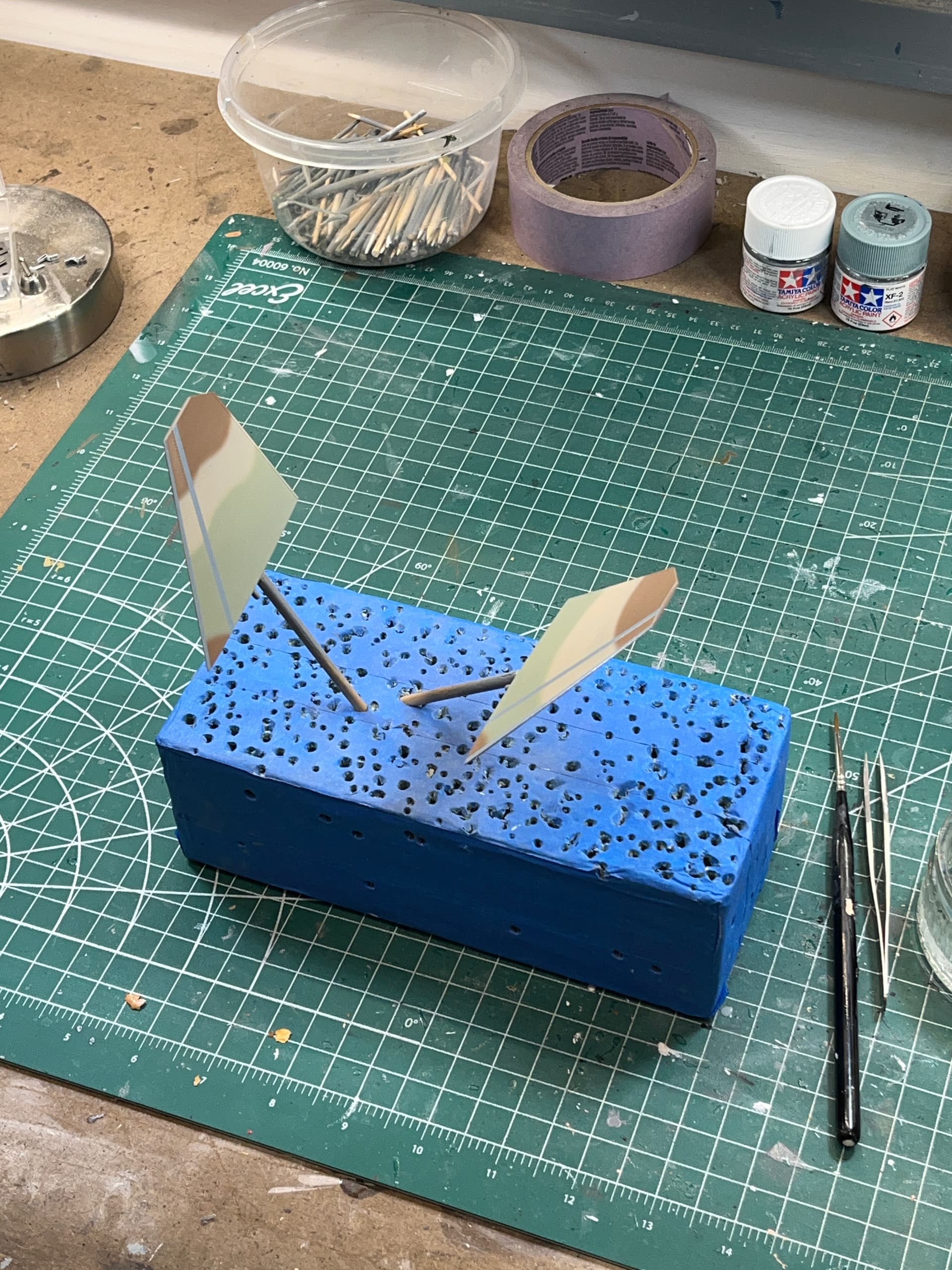
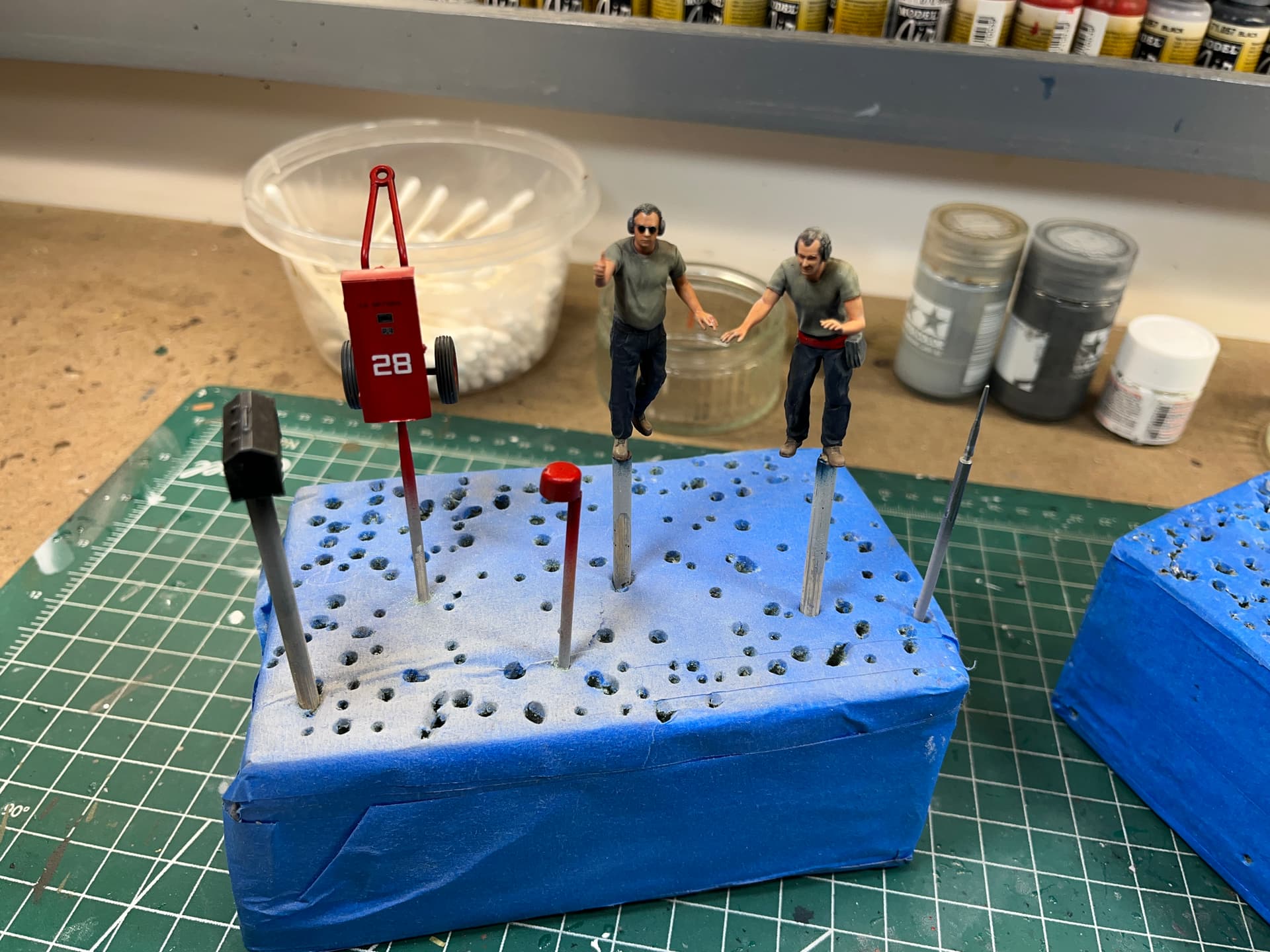
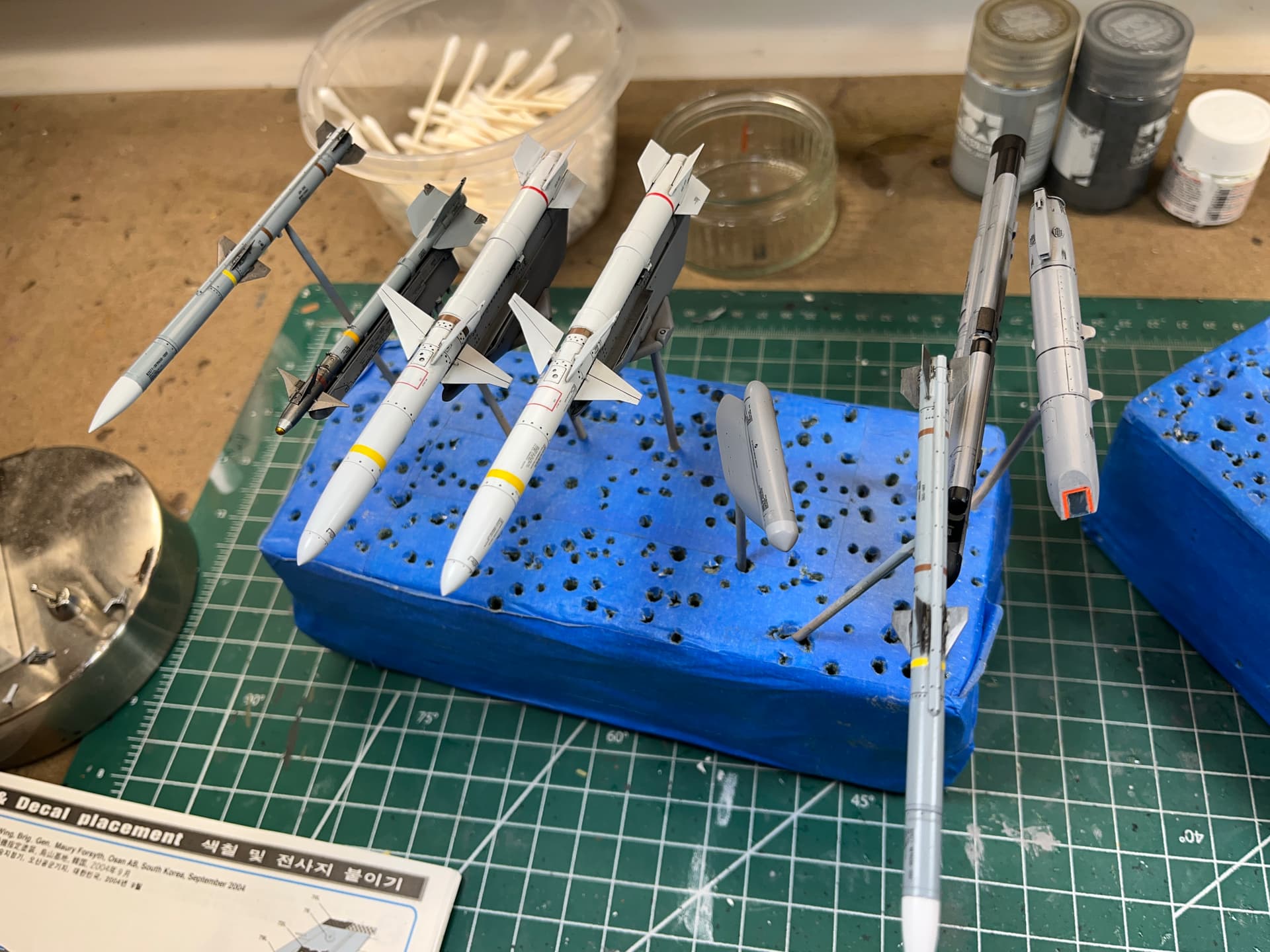
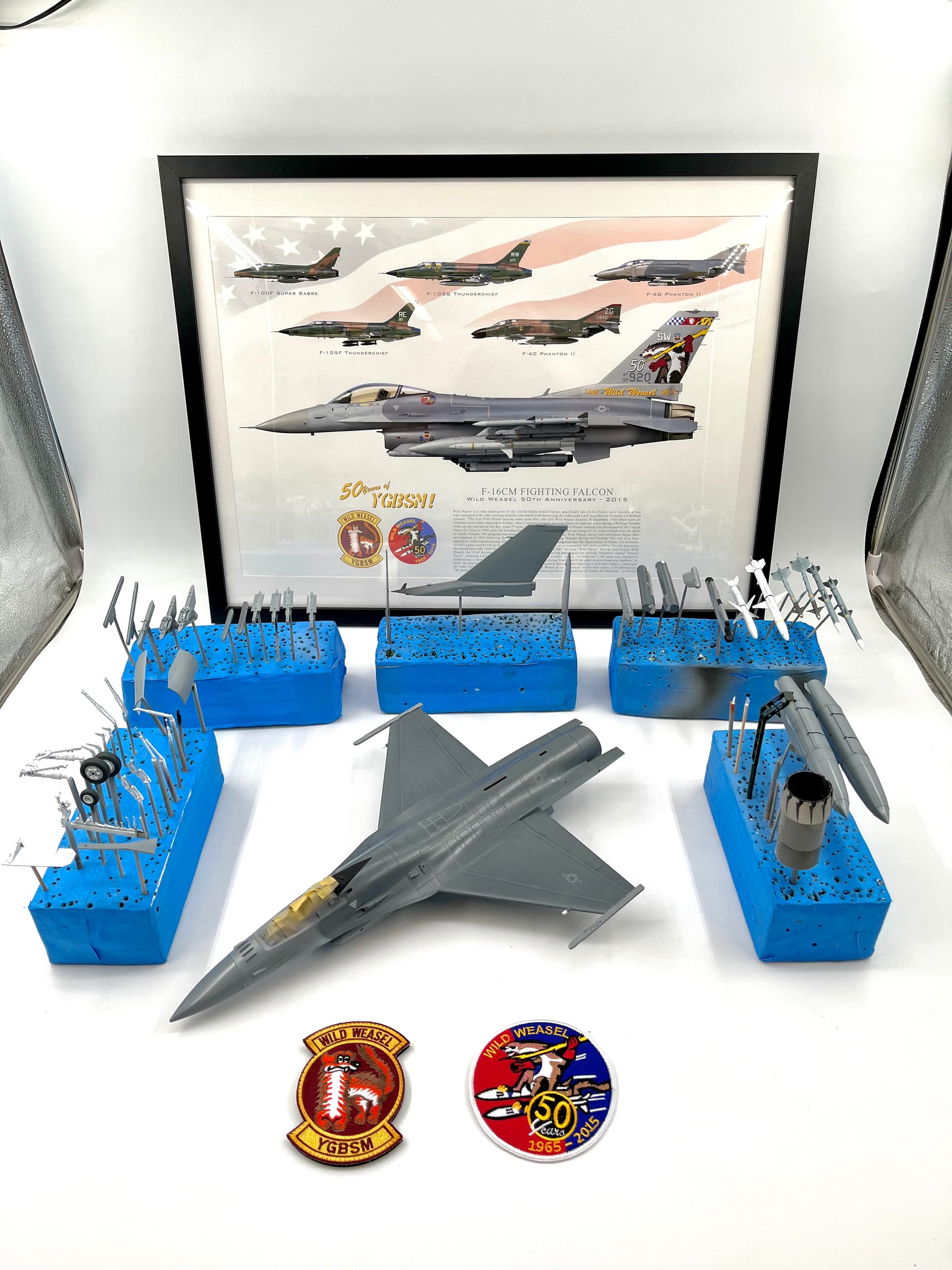
2 Likes
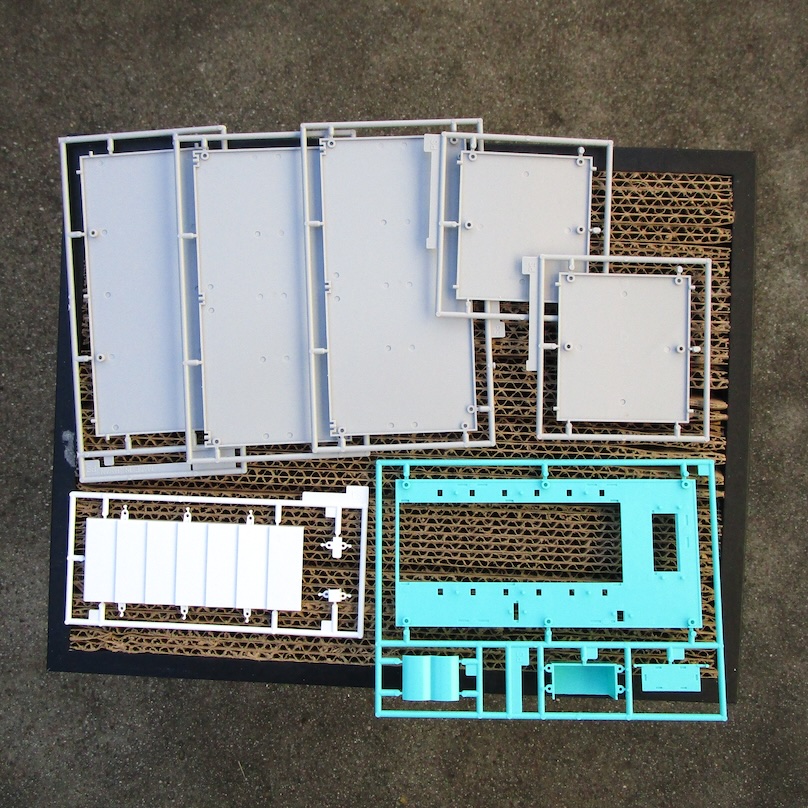
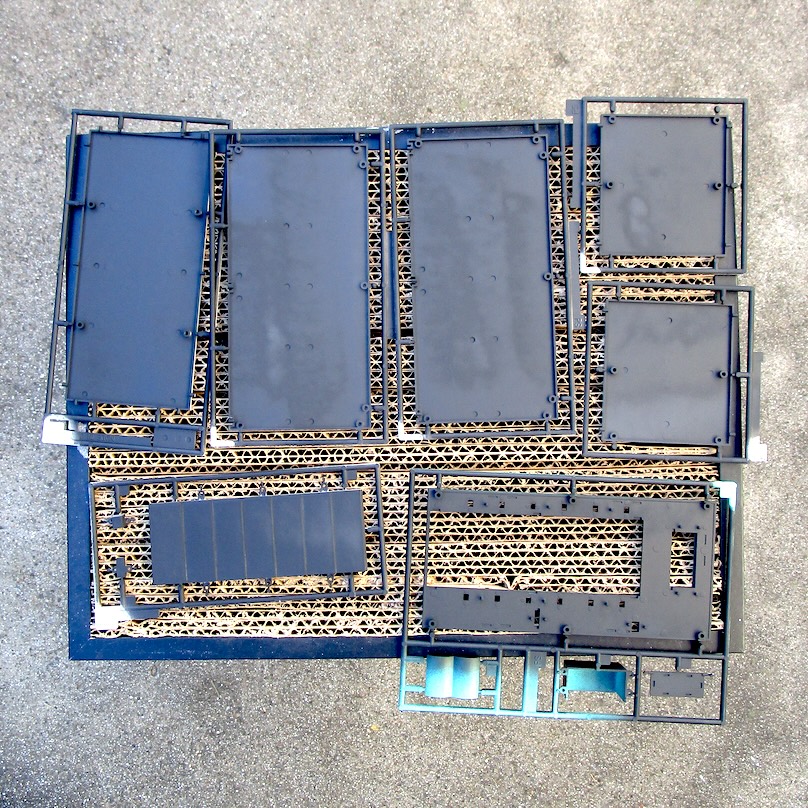
Yeah, I pin some things for holding, too. Usually figures-a pin in the foot, and then the pin gets stuck in a wine cork. The pin usually winds up as the pin into a base when finished.
I have stuck some parts on a toothpick with white glue, too, but it’s not so strong a bond.
I made my own clamps for airbrushing with a five-dollar bag of alligator clamps and a dollar bag of bamboo skewers. And I cut up an old corrugated cardboard box to make the holder. I’m damned if I will pay someone to make something I can make myself, more cheaply.
All of these methods find use, along with painting parts still on the sprues. As with many things, there is no one method, but a combination of things that all have their place.
4 Likes
That is the trick! Clean up as much of the part as possible and leave a small handle for an alligator clip. That minimizes work after the painting is finished. The alligator clip makes it dead easy to turn the part during painting without a sprue getting in the way. With any luck the handle for the part is on a gluing surface so there is no touch up required after the fact.
2 Likes
I do this as well for the small parts.
I’ve tried painting on the sprue and it’s more work as I tend not to remember what part gets what paint. I can see priming parts on the sprue. ??
4 Likes
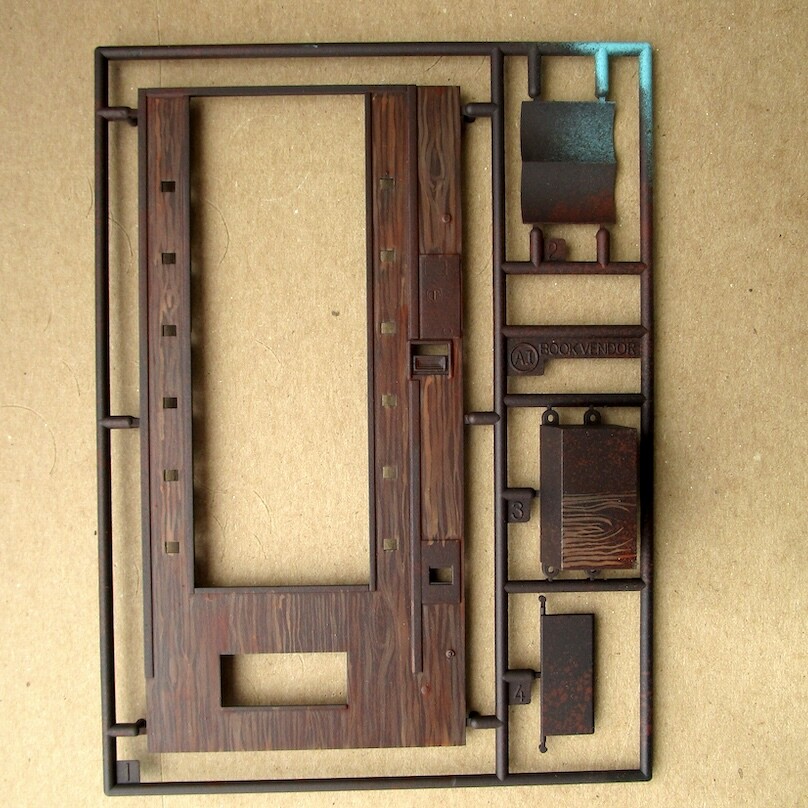
Nice job on the woodgrain!
1 Like
That is a what ever works best thing. For spraying the sprue comes in handy, if i can leave a small inconspicuous sprue attached for brushing, that helps too.
@PaulC , Thank you for your compliment 
1 Like