I’m currently reading the article “Model a Falklands War Mirage” by Ricardo Dacoba in the Essential Techniques for the Model Builder (FSM Special Issue). In it he modifies an old Heller kit and is painting a three color scheme using Humbrol and Tamiya paints. What I find puzzling is that he uses Tamiya XF-1 flat black to paint the antiglare coating over the Humbrol enamels without any mention of putting a barrier between the enamels and the acrylic.
I was under the impression that you couldn’t put acrylic over enamel without some type of barrier to keep the two separate - the old water and oil don’t mix scenario.
Are my impressions wrong? If I am painting a model in a three color scheme and two of the colors I have on hand are enamel but one is acrylic, or vice-versa, can I use them? That would keep me from having to buy all acrylic or all enamel or even all laquer for a particular project!
i have tried mixing enamel with acrylic and oil with acrylic and i get very bad results. the paints becomes gummy unworkable so you must have some barrier separating the two. in some cases if you mix a certain type of oil paint with acrylic it can melt the plastic of your model like gasoline melting Styrofoam. this is a good question because i am sure there are many other modelers that want the same answer. thank you
Maybe the enamels are thoroughly dry before applying acrylics that could be done. I also have that magazine, maybe some sort of editing,if you will also noticed in the Paul Boyer article in decaling the red nose of an F-16, it did not show how the 2 edges of the decals met, instead it was airbrushed. Another magazine, a Darren Roberts article the YF aircraft !? (I could not remember) one wing is missing.
No issues on that, I prefer enamel for base coats and arcylics for pin washes. Careful with useing isoprople for the wash as it may discolor flat clear.
A good way to see if something is enamel based or arcylic is to put a few drops of mineral spirits enamel thinner on glass, drop new color in IE: India ink. If it balls up on surface its not enamel but arcylic based. It will react like oil and water if not compadable.
BTW~ Novice questions are welcome here, you may get a sarcastic answer or two. Most will be very helpful and share their expertice.
My base undercoat/primer is an enamel (either humbrol primer or any light grey matt enamel). I prefer to work in acrylics (less smelly), no probs so far. I have also never encounted any issues with using either enamel or acrylics over the other if at least touch dry. Would they mix very well in liquid form? I’d say prolly not but if using laquer thinner even that may work, but dont quote me on it
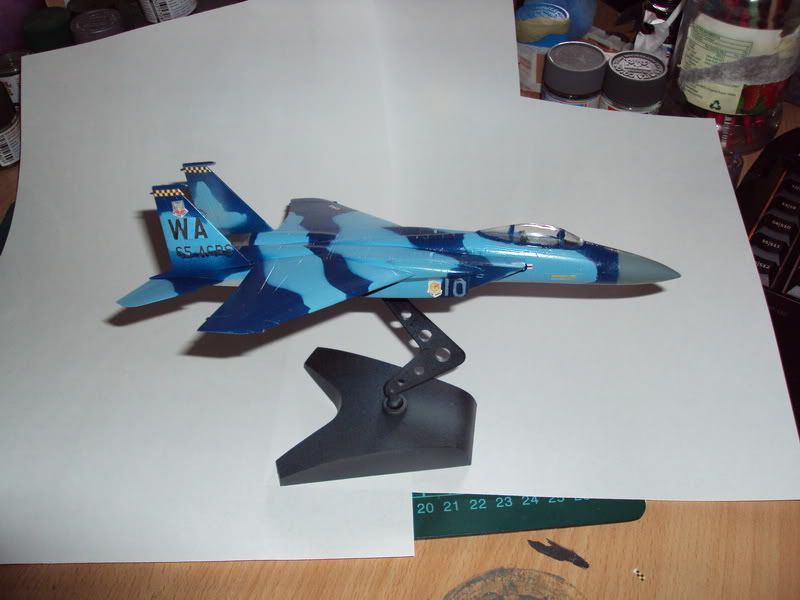
This f-15 was painted with acrylics over enamel primer as the paint kept peeling up with out it
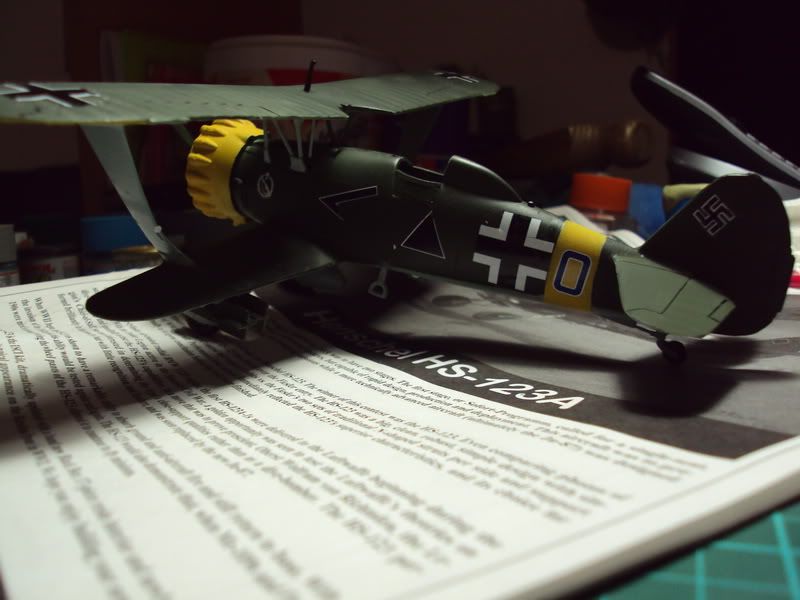
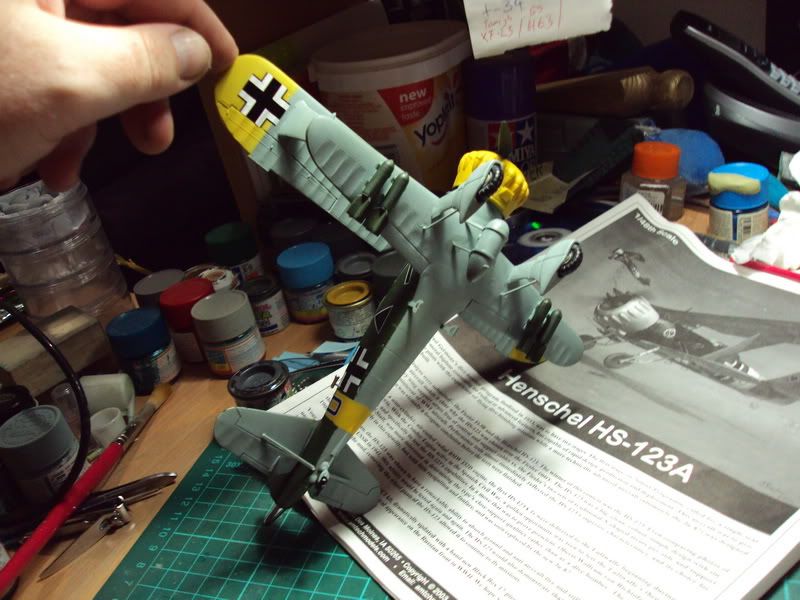
This Hs-123 was painted with a mix of acrylic and enamels
I am yet to see nor from a first year university chemistry point of view see how a mix of enamel and acyrilic could melt a model, certain thinners yes, not the paints themselves in brush or airbrush useage
You can apply either over the other, provided that the underlying paint is fully cured. For an acrylic, that means a minimum of 24 hours, or a forced cure.
The only other consideration is surface cleanliness and paint adhesion. For an acrylic to adhere well enough to the plastic surface to be overcoated with an enamel, the surface to which the acrylic is applied must be clean—absolutely free of surface contaminants of any type.
Do not attempt to apply a lacquer over either without testing the combination on scrap, first. Many lacquers contain solvents that will attack both types of paint.
Also be careful not use the Rustall weathering products on your dullcote-flattened finish. Found out the hard way that it clouds up the dullcote. I suspect Rustall may have an isopropyl base, so I second PontiacRich’s warning! (Note: if you are looking for an interesting technique to model winter snow/frost, you might actually experiment with this scenario, otherwise steer clear
Otherwise I’ve had decent success alternating enamel and acrylic coats, as long as they are allowed to cure well in between applications…