On a whim for extra padding in an online hobby purchase, I decided to pick up some Micro Weld model cement. I had seen it for years at local shops on the Micro Scale products display racks, but never bought or used the stuff. With the current COVID stuff going on, and associated difficulties of getting some supplies due to shortages, I decided that it was time to try it out.
It comes in the typical Micro XXX plastic product bottle, that we know from their decal solutions and other products. But with a green lettered label in this case.
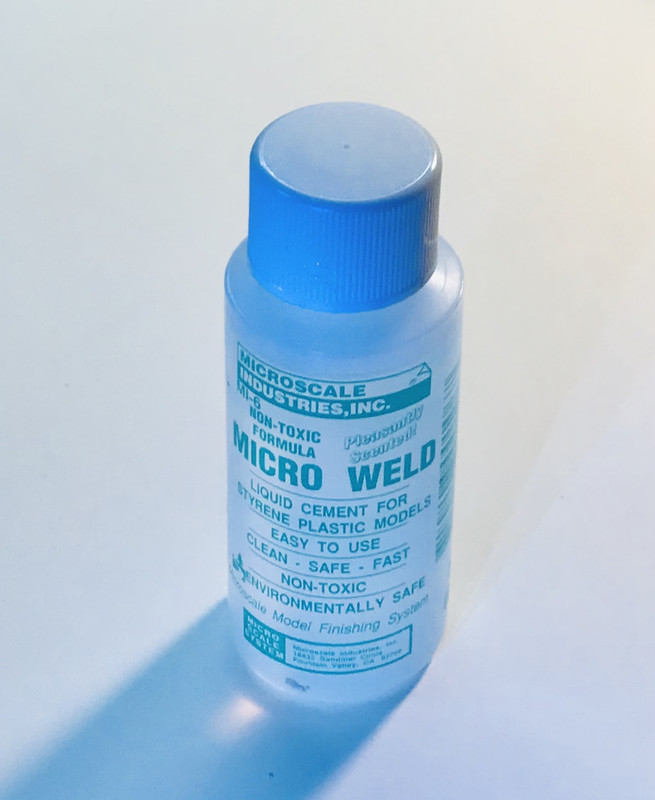
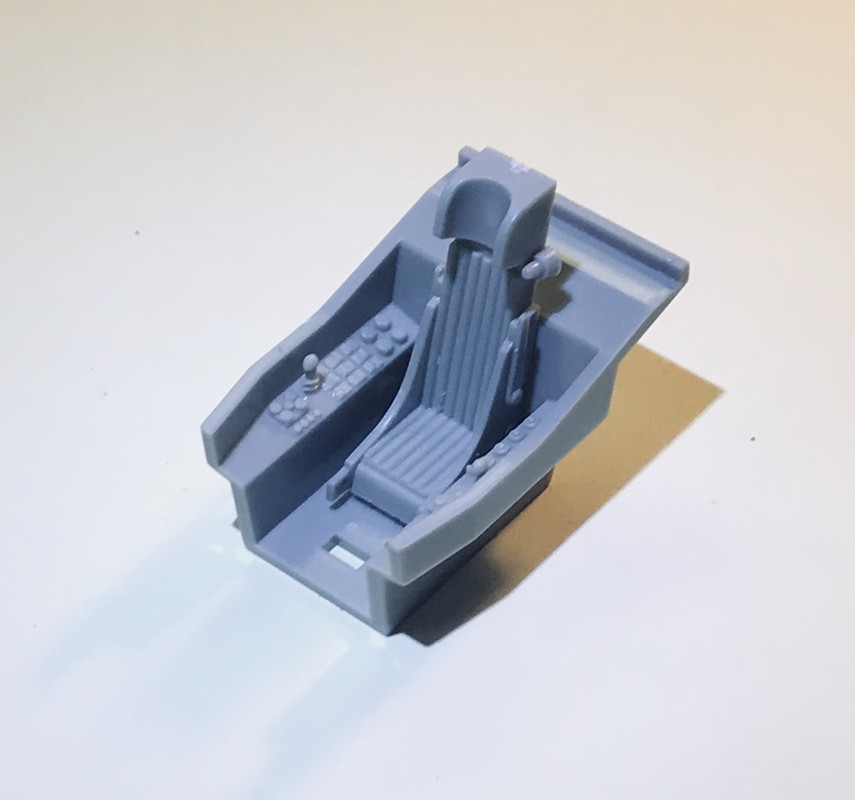
The label says non toxic, so that aroused my curiosity and suspicion. Was this like the terrible lemon scented Testors tube glue from the 70’s that didn’t work worth spit? Well now I had to find out. I have an aircraft project on deck, so I decided to kick it off by building the simple cockpit, a grand total of six parts. Tub, throttle and control stick, and three part ejection seat. Easy as pie.
The bottle instruction say to place the parts together and apply the paint with a brush, not provided, and allow capillary action draw the cement into the contact areas. Or, alternately, brush cement onto the contact area of both parts, then place them together. I opted for capillary action method one using an old #0 synthetic paint brush.
I started with the ejection seat. I opened the cap of the bottle and caught a whiff of a citrusy scent. Not a good omen, my grade school memories flashbacks reminded me. But, following the directions, holding the two parts together with one hand, I dipped my brush in the cement and applied the glue where needed. It flowed just like Tamiya Extra Thin into the proper areas. One ejection seat side glued on. Repeat for other side. Bang seat done. I then glued the two control sticks into their proper location holes on the cockpit tub. Easy peasy. Now allow it all time to dry.
After about 10 to 15 minutes of drying time I decided to try a few challenges. I push the parts to see if they’ll move easily. Nope… solid as a rock. I then try a shock test. Pick it up and drop it about 8 inches or so to my worktable top surface. Nothing pops free from impact. Now, the final test, drop it about four feet onto the epoxied concrete floor of my work area. No damage. Nothing pops off, shifts position, zero I’ll effects. I’m sold on this stuff so far. It’s putting to rest the ghosts of Testors past so far.
The only gig that I have against the stuff is the packaging. The bottle can be easily knocked over, and it is easily confused with all the other Micro Scale products in my supply area. Gotta pay attention to the labels. And figure out a way to stabilize the bottle.
This is the work done so far
I’ll do another bit with fuselage seams and other stress bearing joining surfaces in the future as I reach those points of assembly. As well as some styrene figure assembly some time. But so far, so good. Another option for you to consider when your primary styrene cement is out of stock.