Frank, in a past post you asked me if I have heard of the luftwaffe detunning engines. I looked into this and found out interesting stuff. Real quick tech stuff here. All aircraft engines are set up (tuned) to run at a specific altitude and RPM/power range. All of them have a sweet spot where they get the most power (rpm vs altitude). it’s nearly impossible to get a aircraft engine in 1945 to make good power at 1000 and do the same at 30,000 feet. The operating margin is too large. By adding things like mulit speed superchargers, fuel injection and what have you, you can increase the overall performance of the engine but you still have an engine that performs better at either high or low altitude. For example The P-51 engine was set up to make power at high altitudes and thus performance below 15K fell off. Below 12K the allison engine was actually better (set up for low alitiude not high).
The luftwaffe was fighting an air war in the west at high altitudes and in the east a low altitudes. Rather than swap engines or make a low and high altitude 109’s they simply make the engine field adjustable to the needs. This could be done in about 1 hour with a screw driver and a wrench. The difference between a DM and the DCM engine is tunning. The DM engine is tuned max performance at altitudes from 0 feet to 18,000 feet. The DCM engine on ther other hand is set up for max performance between 18,000 and 30,000 feet. So If you were an american crew chief looking at 2 109’s BUT one was set up for the eastern front and all american aircraft are set up for high altitude performance I guess you would think the engine was detuned. In truth it’s not really detuned but set up to make the most power in a different combat altitude.
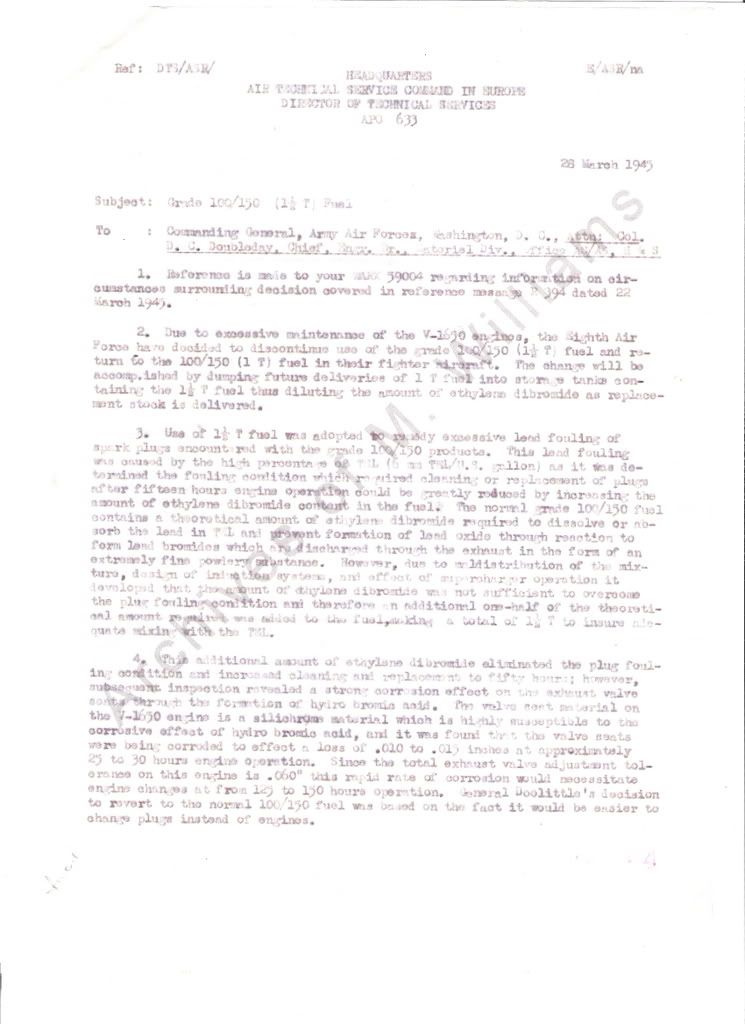
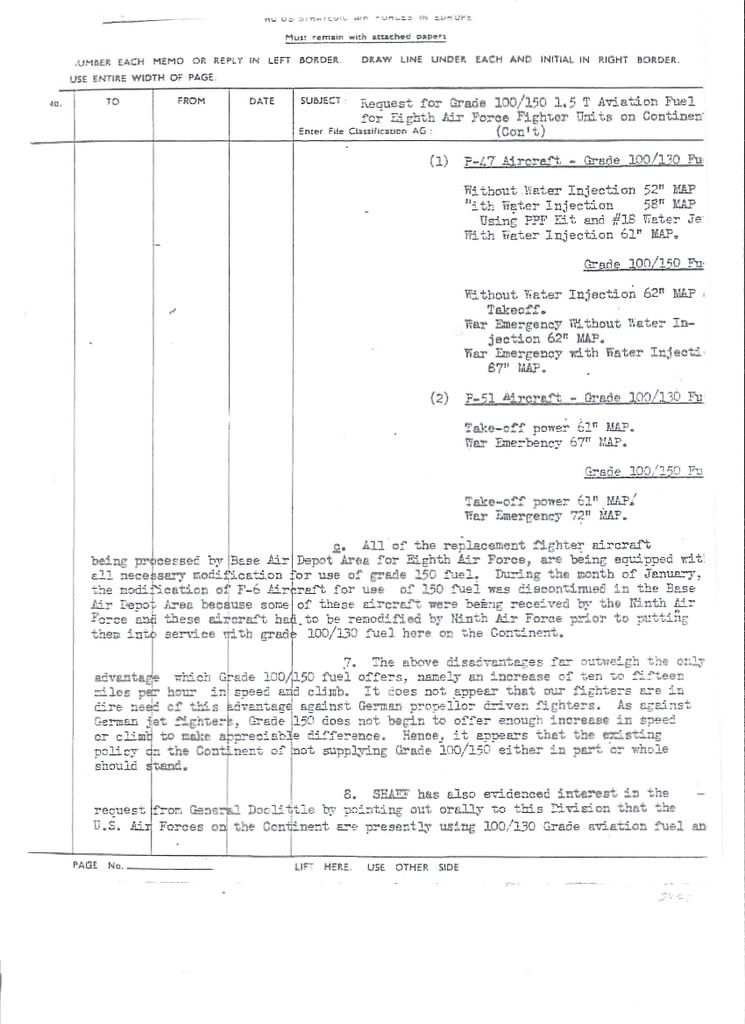
Here’s another interesting tid bit I came across. When the AS powered 109 showed up there high altitude performance was getting as good as most allied fighters. To counter this the US upped the octane level. When the Fw190D’s and DCM powered 109’s appeared the US again upped the octane rating to 150. The US didn’t want to make production line changes and slow things down. But they had problems, the merlin engine was already running over what she was ever designed to do. When 150 octane and 72" of boost were given the OK engine life went right into the dumster. Some P-51’s could only go 2 missions before needing work. To fix this they mixed 150 with either 100 or 120 to make a 130 mix. Most P-51’s were only operating at about 1,450 hp or about 65" NOT 1,720 at 72". In a nut shell the merlin had no more to give.
It also looks like messed around with BMW 801 a well. Changing the spark plugs, adding MW50 and retuning them for higher altitudes. But these modifications did not have the same effect as it did on the Db605 engine.
Now a quick word on luftwaffe fuel/testing. It appears the luftwaffe synthic fuel octane rating was not the same as allied octane rating (who knew?? I didn’t) . Luftwaffe 87 was close to allied 100. Luftwaffe 100 was close to allied 130. Add MW50 to the mix and you kinda get allied 150, but actually better due to oxygen content. Correcting the luftwaffe engine testing to allied standereds you get this. the Db605DCM at full combat power was making about 2200 Hp. The jumoA about 2100 Hp. The BWM 801D about 2000 Hp. The JumoF was a wopping 2400 to 2600 Hp. In allied numbers.
Below are 2 document pages you might find insteresting. I have about 6 to 8 pages on this, but these 2 give a good amount of info. It looks like at the least 150 octane it cut engine life to under 200 hours on the p-51. Doolittle made the decesion to go back 130 fuel for all of europe instead of shiping over another fuel grade and replacing merlin engines. So 150 was available but was not usually used.
If want all the allied info on the use of 150 fuel let me know and I’ll post them. Hope you find this interesting frank, I did.
Great stuff, Stan! Very good read. I guess it makes sense about an engine not being able to be good at all altitudes… I mean look at all the tuning that goes on with Top Fuel dragsters when the temperature changes 5 degrees…
The phenomenon of tuning even affects rocket science. The exhaust nozzles for lift-off from Earth are a compromise shape to get the best “average” performance as the missile climbs through the various densities of atmosphere. Ideally, the nozzle(s) would need to have varying aperatures and depths to get the optimum performance.
Also…
Many folks don’t realize the octane differences in fuel for the combatants.
The German gas was very wimpy (low octane) and they still were getting incredible performance out of it.
Thats some cool info Stan. I find it interesting because I have built many automobile engines in my day and it is impossible to buid one engine that does everything good. Large displacment engines with big intake runners have very poor performance on initial acceleration due to poor air flow from the large runners but once they get wound up and the volume of air flow increases then they perform very efficently. A engine with a smaller displacement and smaller air intake will reach its optimum flow very quicky but it will soon reach its limitations of volume of air flow and it will then be overtaken by the engine that can flow more air. Your information makes perfect sense when these same principals are apllied to air densitly At specific altitudes. most likely adjustments were probally made to injector flow and timing to adjust for the amount of avalible O2 in the air. The more boost applied the higher the intake tempatures and then the need for fuels less likely to combust prematurely due to the high tempatures. That basicly what the octane ratings mean. The higher the number the harder the fuel is to ignite. You need a hotter spark i.e. the different sparkplugs to set this fuel off. You can put much more fuel in an aircraft flying at low altitudes because of the avaliblilty of O2 in the denser air. At higher altitudes you would have to back off on the fuel to achive good performance. Really cool stuff Stan!
I would point out that the octane ratings used by the US were 80/86, 90/91, 100/130, and 115/145. In order to identify the octane of a given rating, the different fuels were colored with dye - red, blue, green and purple respectfully. Today the only commonly available avfuel is simply called 100 octane low lead and is dyed blue (although a batch of 115/130 is released each year for the Reno Air race). 115/145 is really nasty. Although any gas will blister you if it remains next to the skin for a while (such as spilling some on your pants and not changing them immediatly), the purple fuel will blister your skin immediately. Plus you have to have a special rubber to use in the seals and fuel bladders. Other wise the rubber was eaten as if by an acid. (plus my old boss (and the rest of us who were there at the time) can testify that if you run a 1965 Corvette for a couple of months of pure 115/145, it literly melts the exhaust valve and pistons out of the engine)
With those hard facts included, the story I had read makes perfect sense. Hadn’t really considered the fact that different aircraft would be tuned differently for specific theatre/mission requirements. Thank you so much for posting that info, what a great read! [^]
One of these days, may have to put together a secret op to raid your library!
That is done even today with jet engines. State side or peace time jet engines are trimmed from 94 to 96% RPM. In a war zone they are trimmed from 102 to 104% RPM. The higher the RPM the hotter the engines run. The hotter they run, the greater the thrust. The downside is the engines wear out faster. But when you are in combat, you need the added power and thrust.
A low trimmed jet engine can last 1,200 hours, with a tear down and replacement of high wear parts at 600 hours. Our engines in SEA had to be replaced at 400 hours and sent back to DEPOT at 800 hours. As you can see, the engines would last only 2/3 of its original life span.
Thanks for that info berny. Modern jets go through the same type of life extending piston engines do. I did notice from some of the info I dug up that the radial engines on both sides can go longer between major services. Infact the R2800 can go about 25 to 30% longer than the merlin. The 801 is going about 10% longer then the 605 and about 20% longer than jumo. This makes the R2800 the most relieable of all the engines I checked out. Another thing is that R2800-77W makes goo gobs of power. The late variants of this engine are powerhouses. No wonder the P-47N/M and bearcat so dang fast for such a big fighter. That engine is pushing almost 3000 Hp at full combat power! Even the -34 is is impressive. No wonder many luftwaffe pilots would rather dogfight a P-51 over a P-47. Impossible to take down, 8 50’s and besides for some low altitude and climb performance against lufty aircraft a good dogfighter. I hate to say it but If I had to fly an aircraft into combat in WWII, my butt would be in a late P-47.
My uncle, who flew P-51D’s in Europe during the war, told me after one hour of operation at high altitude on bomber escort, they had to go full rich and full power to clean out the engines. The engines would get carbon buildup and after an hour would start to run rough. If they didn’t clean them out, after several hours the spark plugs would get coated with so much carbon, the engines would run so bad they would have to return back to their base. He said the engines would throw out puffs of black smoke when they started to carbon over.
I read this and though wait a minute I’ve read something similar to this before. The Germans did a lot of work with the radial 801 engines as you said, but there was more. The Water to methanol ratio was 49.5% to 50% with the other .5% being an anti corrosive compound of somekind. Water was used for detenation problems created from running a lot of boost from the supercharger. It also gave them a second plus in that the expansion rate of steam is very fast as long as you don’t go overboard with the ratios. How they were able to make the methanol and water work together is beyond me as the two don’t work all that well together (methanol by itself is a moisture attractant). Also with some of the vee twelve engines (TA 152H for one) there was also a nitrious oxide tank right behind the pilot (MW was located in the left wing) for a very serious short burst of power (probably less that two minutes total). There also was some work done with the radial engines using the GM1 setup (nitrious oxide injection) to help the planes fly better at the normal altitudes four engined bomber flew. This evolved into the “B” series 190 that used the 603 engine and never did quite get the job done, so it was cancelled. The main reason they went to the 603 engine was because BMW couldn’t get the supercharged 801 engine done in time. This project further evolved into the “C” project, and just kinda died.
German horse power ratings (for Europe) are rated in DIN horse power instead of what we now of as SAE power ratings. They compare closely to SAE at about .9:1 ratio (have also heard .85:1). So a 100 horse power engine would be 90 horsepower DIN (I really don’t remember what the exact ratio here is but something similar to these). I’ve never heard anything about the octane ratings, but do know that German vee twelves would run on 103 octane gas. Never heard of 150 octane fuel, and this sounds scarey (gasoline contains more BTUs than methanol or nitro/methane combos). Bet those guys went thru pistons as fast as they could make them!
I saw a couple motors waiting to be finished out about a month ago, and another was in a car. The were 470" engines, and all two were identical and one was different in one way. It had this odd camshaft that had so much lobe seperation that I don’t see how it would run. Idled as smooth as most any car I’d ever seen. Yet ran 11.6 shutting off at the 1000ft mark. The ports were big, and the carbs were really big. The other two were for another guy and were identical except for the camshafts. They had a really radical profiles and ran slower! Now there’s an airflow lesson I still have trouble grasping
fascinating stuff, do you have any stats on performance of AC with DB605As powerplants. If memory serves they differ only a few tenths of a point of C.R., ergo 109 G14 AS’s should move well above 400 mph. On the subject of muscle cars, several companies sold water injection kits, chiefly to control detonation. However there were a few that claimed big performance bumps when used in a MW50 blend, though it never really caught on. I love to learn about AC engines particularly German, how DB605 camshaft spun @ 25% crankshaft revs(As opposed to the familiar 50%.) only one set of etcentrics opened both sets of valves. Or water pumps motivated by steam driven impellers. And the totally counter intuitive descision to turn the motor upside down, a move that had to be at the heart of it’s oil control/airation woes. Lastly do you know how the surface evaporative cooling was achieved(As used by Heinkel He 100D.) I can only speculate the heat exchange was in the open sans any radiator persay, and that just sounds nuts.
Reading this thread remined me of a engine rebuild I did with a friend a few years ago. He had just put a Chevy 327 in a Camaro and it was running great except off the line. I told him that we should check the carb. So we disassembled and checked over the Holley. He had taken this carb off a 427 and never checked the jets. Needless to say the smaller engine was getting way to much gas and was bogging. When we took the jets over to the parts store, the guy behind the counter almost choked on his lunch, because the jets were so big. After putting in the smaller jets the car ran flawlessly. Until he blew it up a year later[:(]
don’t forget that German figures are in “DIN” horspowernot SAE horsepower. The DIN power rating is actually a conservative rating that’s about 10% to 15% lower than it actually is. What the British used as a system; I don’t know. But the best way to compair all of them is in kilowatts (I think that’s the way anyway). I remember converting them in one of my physics classes a hundred years ago. This same system can also be used for steam and jet engines too.
The higher the temp is in the combustion chamber the harder it is on pistons and the chamber roof. Taking this into context with the state of metalurgy in 1944 I can see engine life being down to less than fifty hours. You then factor in a supercharging system for more added heat, and then add a turbo charger instead. Now engine life is down to twenty five hours. Intercoolers only compound the situation by adding a denser charge. This is one of the reasons we see water/alcohol injection to help combat detenation. The good part is that they were running low compression ratios; which helped to keep detenation down to a controllable measure. What gets me to thinking now is how in the devil did they all make this work on air cooled engines that tend to have a higher head temp? Taking that into effect you then add nitrious oxide injection to completely destroy the main bearings in the engines after a few minutes of wide open throttle. I can see it being controllable in a radial engine, but not with an inline engine.
a lot of the reason that radials have a longer life span is in the main bearing setup. As the engines is running the bearings are loaded 360 degrees where as an inline engine only loads the bearing from one general direction. We see the same effect in a boxer type engine when each piston unloads the bearing load on the opposite side. If I remember right most of the high performance radials used Stellite for material in the valves (will withstand much more heat than steel). Also take into fact that radials were a much larger displacement than most inlines, so they were not always taxed as much as an inline. Heat is the real killer in aircraft engines with the main bearing loads being right behind them. With the steel alloys developed in the fifties, and applied to the inline engines the actuall engine life was probably better than radials. The same scenero can also be made for early jet engines. They got hot and burnt compressor blades like they were going out of style. In WWII Inconell was kind of the standard; although it also was very heavy for that particular usage. The jets the Allies used were operating at lower pressures and thus developed much less heat (internally), but heat is power. The Germans used compressor stages similar to what we think of know. These built up a lot of heat, and is why the went with Inconell (will take many times more heat than steel alloys). But still engine life was down to about thirty or forty hours at best.
quarter speed camshafts were fooled around with in race cars back in the early sixties with some good results and some others that were performance limiting. The camshaft just has two lobes on it instead of one. Work best with rollers, but also are limited in profiles due to basic shape and size.
Man I am so far behind the power curve. My last question was what kind of toilet paper did they use in WW II? [D)] Golly well thanks I am no armed with some very advanced knowledge! BTW if anyone knows the answer to my question… [:-^]
that’s a good point squeakie, I never thought about the radial engine having a more even load being a big factor to it’s longer service life.
Here’s what I find funny. In 1939 a me 209 broke and held the piston aircraft speed record. in 1940 the US would not send over turbocharged P-38’s becasue they didn’t want that technology falling into the hands of the reich. The US had there heads so far in the sand that they didn’t even realize that the reich was already using a barometricly controlled hydraulic clutch Centrifugal superchragers. These didn’t have the fall out of 2 stage compressors the allies were using. Also by 1940 the luftwaffe were building axial flow jet engines and high volume air screws. It wasn’t untill the US inspected a 109F that they figured out they were not ahead of the tech race but infact far behind. In the area of induction and mechanical tolerances the Db engine utilized things never even fielded by US engine makers. You would think knowing the reich had an aircraft capable of flying 469 MPH at the time most aircraft were hard pressed to hit 300 MPH that they had perfected both turbo and superchraging engines.[D)]