I’m finding the hardest part of finishing a tank is applying a light dirtying - just enough to make it look like the tank tank has been used, but without plastering it with mud.
If I’m honest, when I look at a model plastered in mud, I think someone’s taken the easy way out - because I think adding a lot of mud is relatively easy. What I struggle with is a realistic light dusting of dirt, and I think that may be more realistic condition for a tank in service. But is it?
So … how often were tanks cleaned in service? Would muck build up over time, or would a good caking of mud only stay in place until the next clean?
Tanks in the past had to be serviced a lot to keep them going. For example, the T34 Service manual states that the tank should be serviced every 12 hours or 300 miles of travel. Would this maintainance include cleaning (a good washdown with a hose at least).
I think dirt would make it harder to keep a tank in good running condition, and if you have to service them so often, part of that maintenance must be cleaning - if only so you can get to the parts that need to be maintained.
Again from the T34 manual - every 1000km/50hrs running, the Bogie arm bushes had to be greased and that required some dismantling of the suspension arms. Surely the running gear would need to cleaned off before that was done.
Simple mud and dirt builds up quickly in the field.Look at films of tanks churning thru amuddy field,dusty road,or the desert.Or how about how quickly off road vehicles get filthy.I certainly don’t drive my vehicle in field conditions,but I do drive unpaved roads and driveways and my truck gets pretty bad at times.So I think a model of a muddy dirty tank is certainly appropriate as a fairly clean one.
However rust,wear and tear might be another story.
AFV’s do build up dust and dirt very fast. After a couple of weeks driving around Salisbury Plain, it was almost impossable to see the camo on our Warriors and there would usually be a build up of dried mud around the running gear if there had been any rain.
keep in mind that in WW2 front line vehicles might not have a long service so would not have the long term build up of dir that we had with many years service.
When i build armour, i go for a comprimise, i want a realistic look, but not so much you can’t see the scheme or markings.
Military tactical vehicles are magnets for dirt, grime, dust, mud etc. Depending upon the locale and climate, that can range from simple dust build up to mud caked on like you would not believe. Running gear throws that stuff everywhere. In the field, there is only minimal cleaning going on, just enough to get at access points to conduct the required maintenance. In my personal experience that meant taking a screwdriver to clean up the mud surrounding the grease nipples for attaching the grease gun and pumping in a few squirts of GAA (Grease, Automotive and Artillery) to lube where needed or adjust track tension. Tactical vehicles usually do not operate on a paved roadway, so they are constantly in the local soil, and in some parts of the world there is so much dirt on the road that when weather conditions are damp or wet, you get muddy on a paved roadway.
This is an example of a more extreme case of how they get muddy, but I’m sure you get the point.
Now the opposite side of the coin is in garrison. Upon return from the field and into the motor pool, vehicles are cleaned inside and out thoroughly for several days.
We would spend hours on the wash rack trying to get the mud off of the tanks with high pressure hoses. After a few days of heating and cooling, mud cakes into nooks and crannies and is almost “brick-like”, coming off in chunks.
In the desert, what often remains on the tank is a fine talcum powder like coating that never really comes off the tank until it’s repainted and covered over.
Even after the wash rack, the trip back to the motor pool rattles loosened mud that you missed and leads to chunks of mud on the concrete. Then you have to sweep up that mess. Once a tank is manufactured or remanufactured, it’s never really clean again.
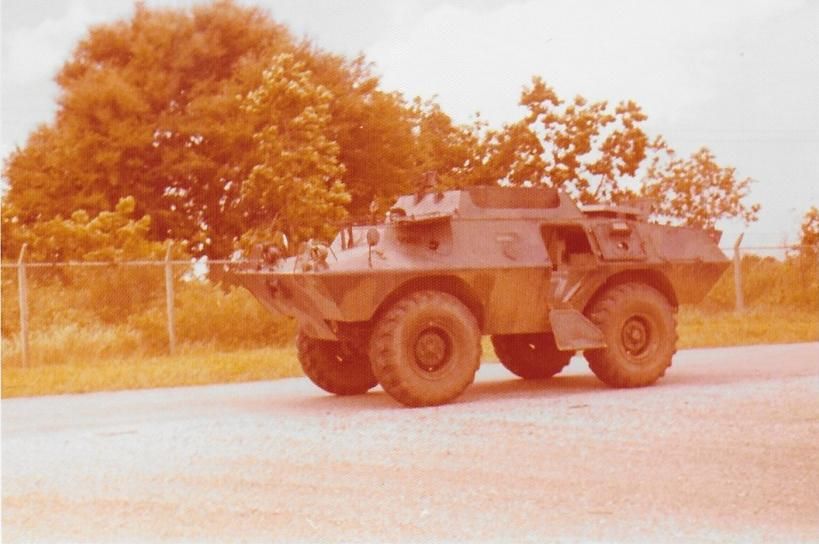
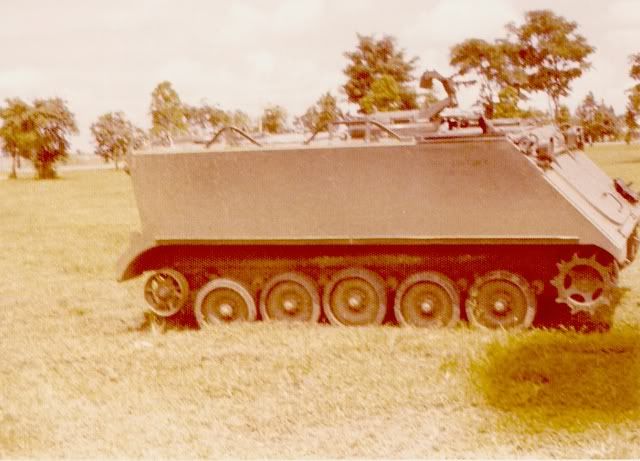
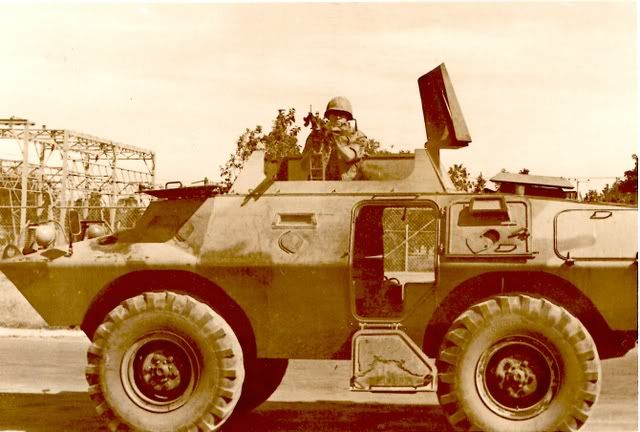
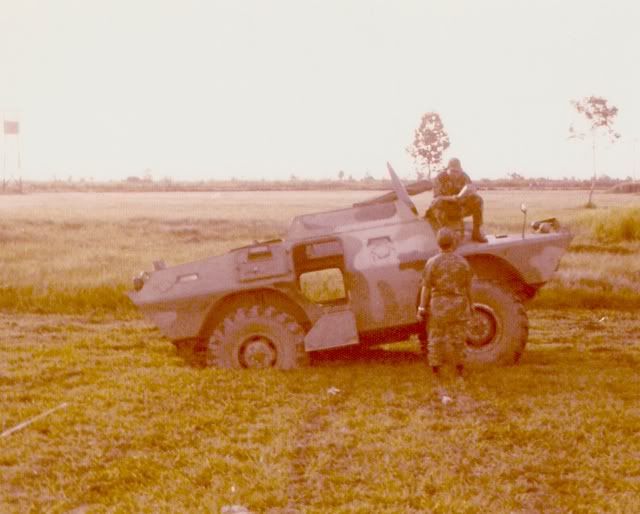
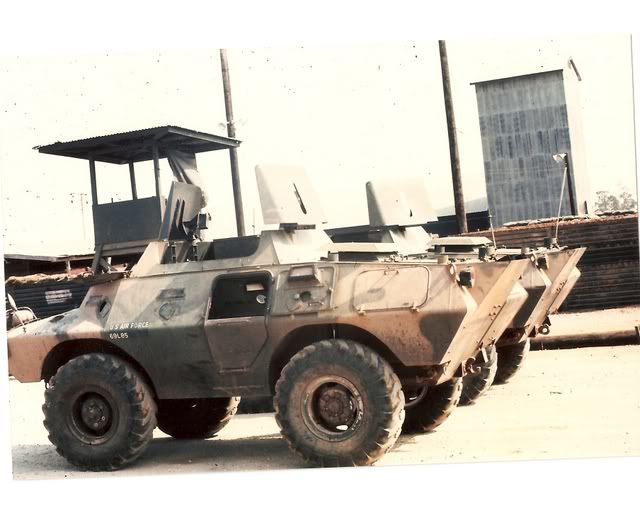
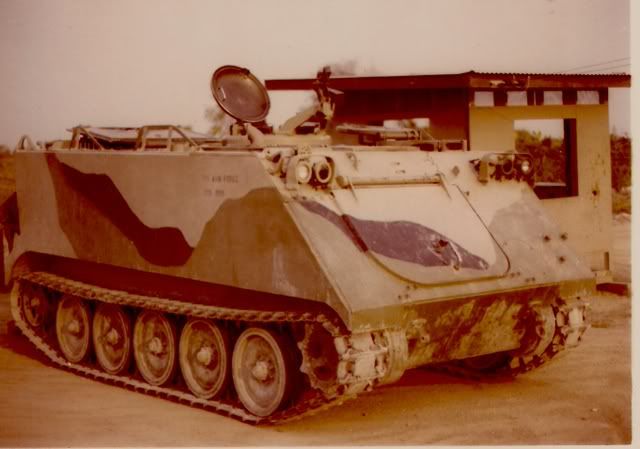
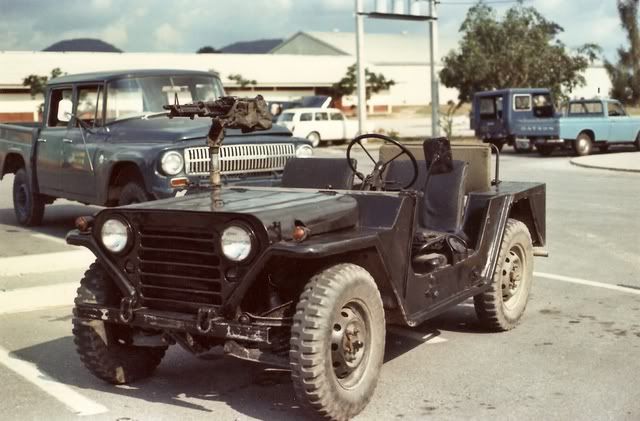
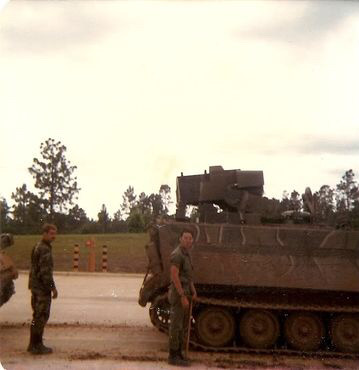
We had the XM-706E2 Commando and the M-113 A.P.C. in S’E’A’. They almost never left the base but still got dirty . Sometimes from the dust of the perimeter road and then again driving through the grass and dirt around the base sectors. When turning them in at the armory, we would have to take them to our washrack area and use hoses and street brooms to get themn clean enough to turn in.
Most of the timethey never really got clean and I think they just painted over the dirt at motor pool. Lighter vehicles were usually left to get a basic wash and the grey dust on the tires from the perimeter was left alone. On the one shot you can see where the dirt has gone up almost all the way up the side of the 113. They were cfrawling out of a drainage ditch when the track broke. The 706 just sank into the mud during monsoon season.
The top photo is mine. I have another photo of the reverse angle of the bottom photo, but it is being held for extortion money by Photobucket. So I googled Ft Polk washrack and found that one of much better quality.
Pawel, the sector of fire stakes on the pressure washers are there to keep 19 year old GIs from doing what they would otherwise do if they were not there. Nail your buddy on the same detai manning the other one. So you had to settle for trying the drench the driver thru leaky hatches…
You could knock someone on their backside with one of those hoses.
My the time I got in, bird baths were a thing of the past and we just had stationary stations with pressure hoses. The way the Abrams sucked in air for the turbine engine caused the engine to abort when they were driven thru birdbaths.
Hmmm … that raises another thing that often strikes me - When I recall seeing army tools such as spades and shovels, they are painted green. It feels almost like - give a soldier a spray gun/paint brush, and they will paint everything that doesn’t move out of the way fast enough. So is it realistic spending ages painting detailed tools, with wood coloured handles etc. Surely they would have just been painted green (or other camouflage colour).
Tools can be in all sorts of colors. When new, they look like the ones you get at your local hardware store; wooden handles, steel spade, etc. They can also have colorful plastic handles or fiberglass shafts. They are ordered through supply or bought by a crewman who loses one. When the crew prepares for an inspection, they will usually paint the tools with green handles and black metal parts so they all look uniform and clean.
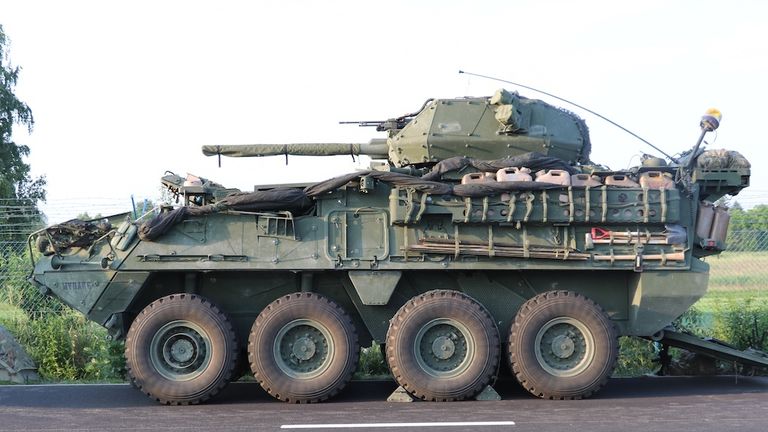
You can see the wooden shaft and red handle on the shovel attache dto the Stryker below. Wooden shafts on other tools as well.
I like to use colored tools to add a bit of interest to my models.
Tools are routinely are frequently painted when not in the field and time allows. Ours were usually also stenciled with the vehicle bumper numbers to discourage last minute GI requisitions during inspections. We were given cans of OD and Black spray paint from supply and would paint the wood OD and the metal Black, or vice versa, depending upon who was in charge at that time.