Closed gear cover aircraft and display

Good morning all

With a handful of builds under my belt I think I want to tackle an F14 or F18 in flight using one of Coastal Kits displays. Coastal makes a blur scene over water. I think I have an easy solution using an acrylic rod showing the airplane flying over the water display below. Clearly this will have pilot(s) in the cockpit. I’m going to have to practice figuring painting this will be my first time using those. So the other piece of this build is the gear cover doors closed. Every instruction booklet I’ve seen doesn’t give an option for doors closed. Any challanges I should be aware of? With this configuration no one is going to see the underside of the jet but I’d still like it accurate.

Also, If any of you know of a F14 or F18 in 1/48 that has the easiest closed door asembly I’m all ears.

Be safe. Thanks for reading

Paul

Not sure about the gear doors open or closed,but I can tell you that the Tamiya versions combine ease of assembly and great looking builds.The only complaint that I have heard is that the flaps can only be modeled one way,not sure how that affects flight.

Most builds that I’ve had to tackle dealt with instructions only providing the optio for the landing gear down with door sopen. My remedy is to trim the tabs and just attach the doors in the closed position. You might have to do some trimming since sometimes oddly enough, the doors to not fit, but it can be done. I’ve attached using brass rod for my builds. Good luck on the build!

Hi;

I really don’t know of too many. For some reason I’ll never figure out, even the most Expensive static Aircraft Model I have has lousy fitting gear doors. You’d think with all this hi-tech mollding and all they would get them right, wouldn’t you? If they are multiple pieces I glue them together at the edges and then see if they fit the hole. If not I use Evergreen strip to make up the difference and provide support from inside the pocket!

Be prepared for a fair amount of work. The doors usually don’t fit closed. I would make the closed doors task #1 on the kit, not something to take care of after the fuselage is buttoned up.

Thanks for all the answers. I do like Tamiya kits. It is a bit surprising that the in flight option isn’t on instructions.

Most jet main landing gear, the door segments are attached to landing gear sections so that they move in concert with the uncompressed landing grar sections. You will need to cut apart the gear doors and spread the parts to account for the compression. Fill in gaps with sheet styrene

Howdy Paul, I’ll drop my two cents into your bucket…

I agree with GMorrison, try to knock out this task first. I know it may not be possible, but the earlier you do it in the build, the better.

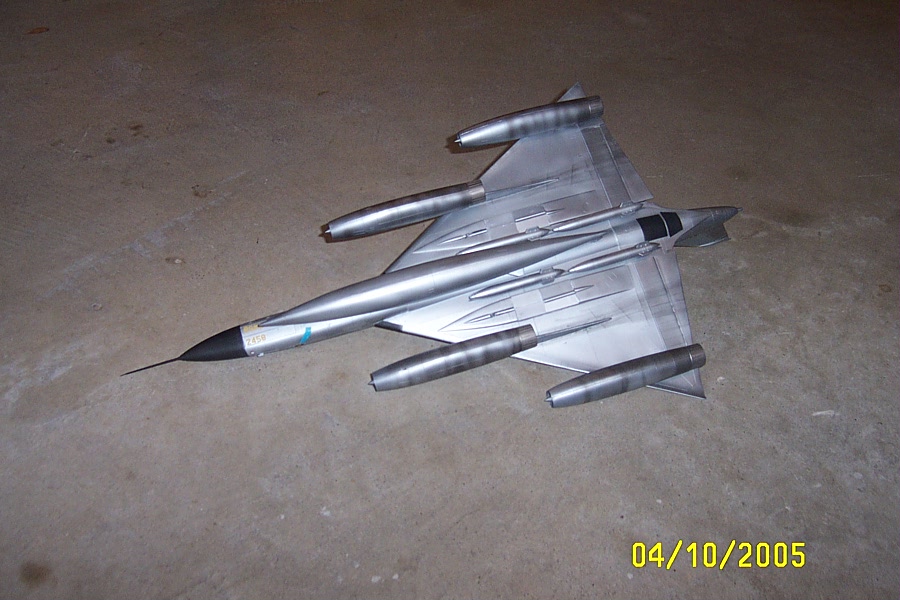
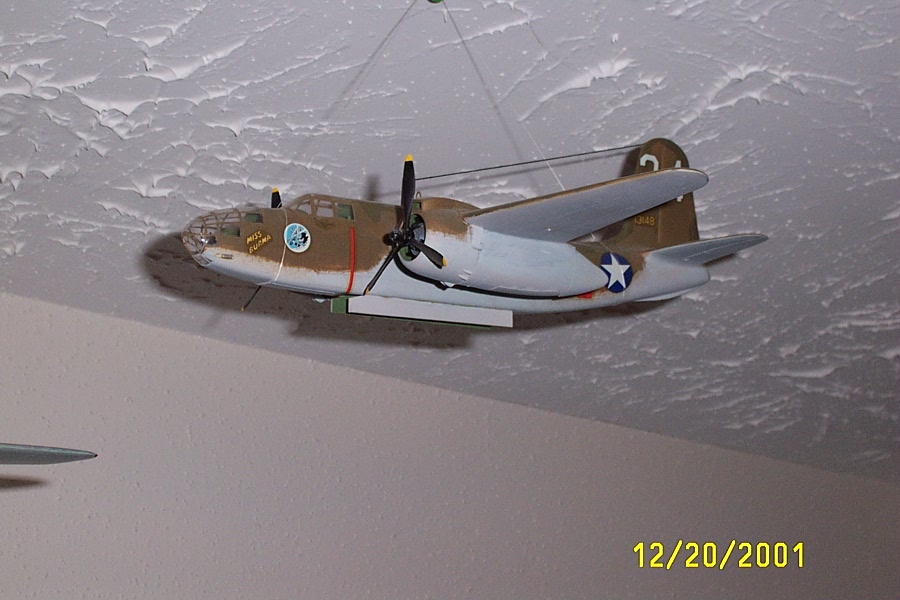
For what it’s worth, I’ve only built 3 kits in flight, but I’ve used two processes for closing gear doors both permanently and temporarily for painting.

For larger wells, like my 1/32 Revell Corsair and my 1/72 Space Shuttle, I stuffed the gear bays with wet tissue or paper towel first. Then I used the gear door to “smash” the stuff down until the gear door is flush with the surrounding surface(s). This gives you some backing so that the gear doors don’t fall in during glueing. Also, it give some rigidity to the area for any subsequent filling, sanding, and rescribing.

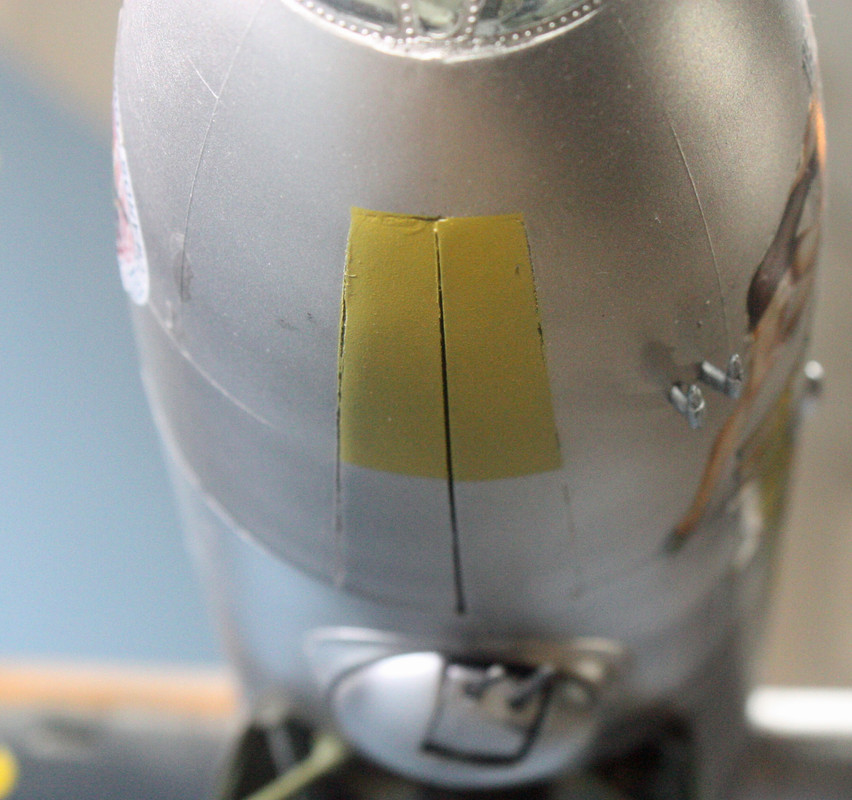
Unfortunately, you can see I accidentally scribed through the seam on my Space Shuttle. I didn’t notice this until after I painted. Since this is just a ceiling hanger for my classroom, I didn’t bother to fix it. You can see the Corsair’s doors came out much better.

So, the second way I’ve attached doors is by using Silly Putty instead of tissue. I used a bit of Silly Putty on a 1/48 Sabre because the bays were much smaller and I only needed a little ball. A negative about SP is that it doesn’t offer the rigidity that the dried paper towels do. Also, I don’t know if there’ll be any long term chemical reactions between the SP and styrene.

As an aside, the SP method is a great way to temporarily tack gear doors in place while painting the airframe. The paper towel method works too if you tack the gear doors in place with white glue.

Anyway, I hope that helps a bit. It’s a drag that gear doors don’t fit as well in the closed position as they should. I think I’d be more inclined to build more in-flight models if I didn’t have to deal with the doors.

Good luck with your project(s)!

Cheers,

-O
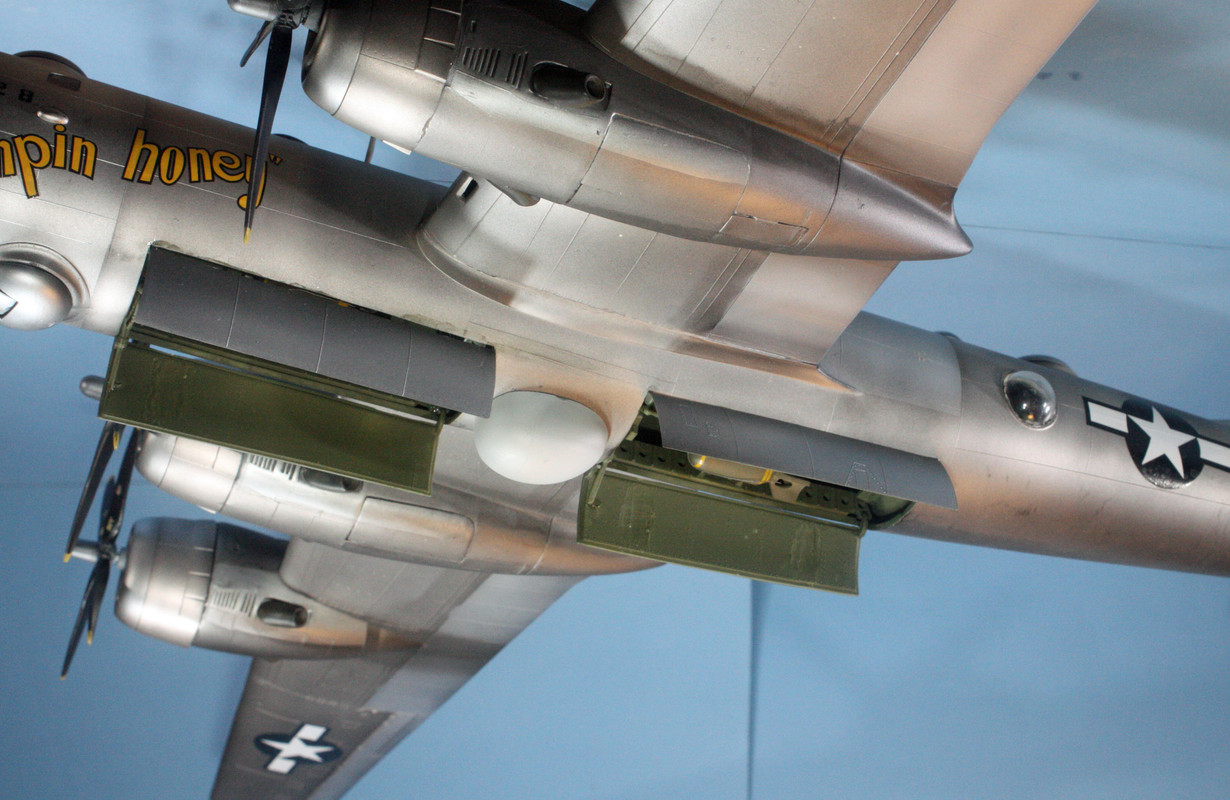
If you are going to have your gear doors closed for flight, I suggest that you reinforce them underneath. If you just glue them around the edges; it will be a matter of time before you place a finger on it and poke it through! You can prevent this by bridging the wheel well gape with a few strips of styrene glued inside the air frame and then you will have something solid to glue the doors to. Sprue works fine! You need to do this before you button up the air frame.

Thanks Ship and Oortiz

Good idea to have something rigid in those wells before gluing the doors shut. I use the wet tissue/paper towel thing to mask the wells for painting so I’m comfortable with that method.

Oortiz10

I saw where your from. I wa born in a little town called Hemet. Have you heard of it? Not many people have.

Hemet? Heck yeah! Off the 74. Been through there a few times on my way up the hill to Jacinto.

Right on! Thanks again for the advice. Stay safe.

Well, was a time when the kits came with with scribed edges of the doors in the closed position. If the modeler wanted gear down, they cut the doors out, scratched a wheel bay, and installed the gear.

Bill

This is going to be a one off project. I usually go wheels down on aircraft builds. But since we are on the subject why dont manufacturers make parts for a closed door option? They can simply supply parts for doors closed. And another thing -how about a full canopy to close the cockpit for masking? It doesn’t have to even be detailed. I would pay a couple bucks more if that was in the box.

I’ve done the closed gear doors on many of my builds. The first time I did that way back in the '90s, I was doing a large scale Revell Beaufighter that I knew I didn’t have room to display other than hanging, so I stuffed the nacelles with clay to form a support for the doors. I don’t recommend this approach as it results in an overly heavy model.

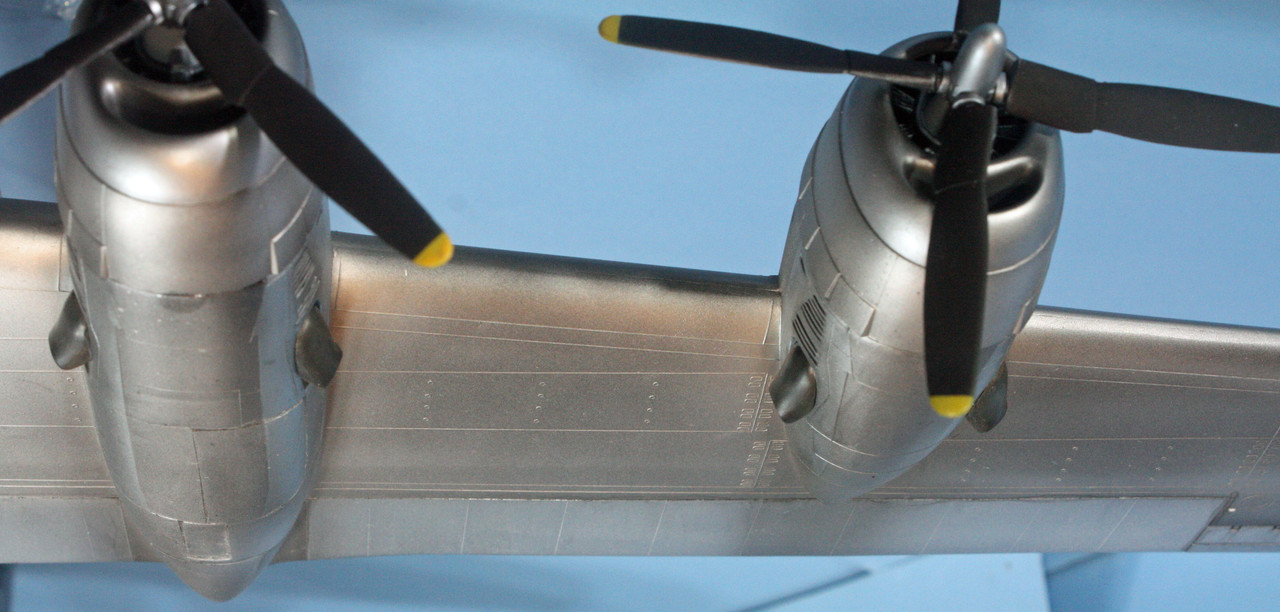
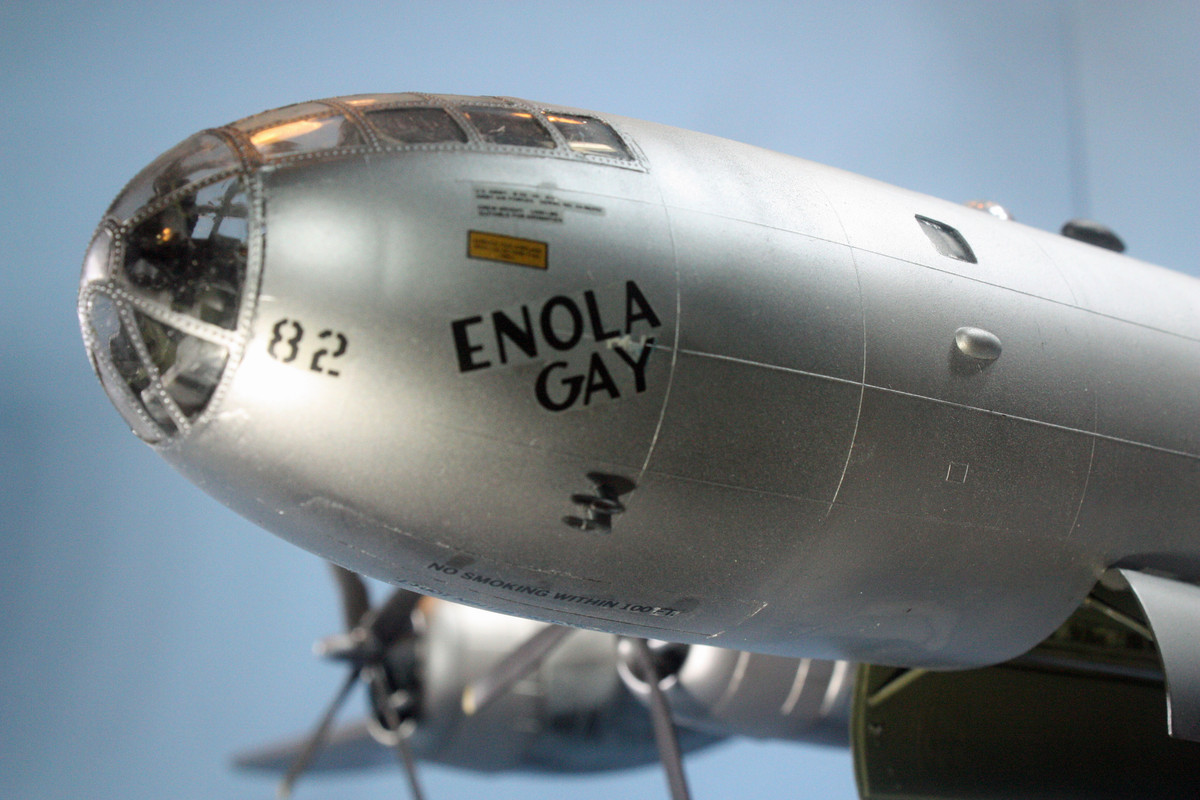
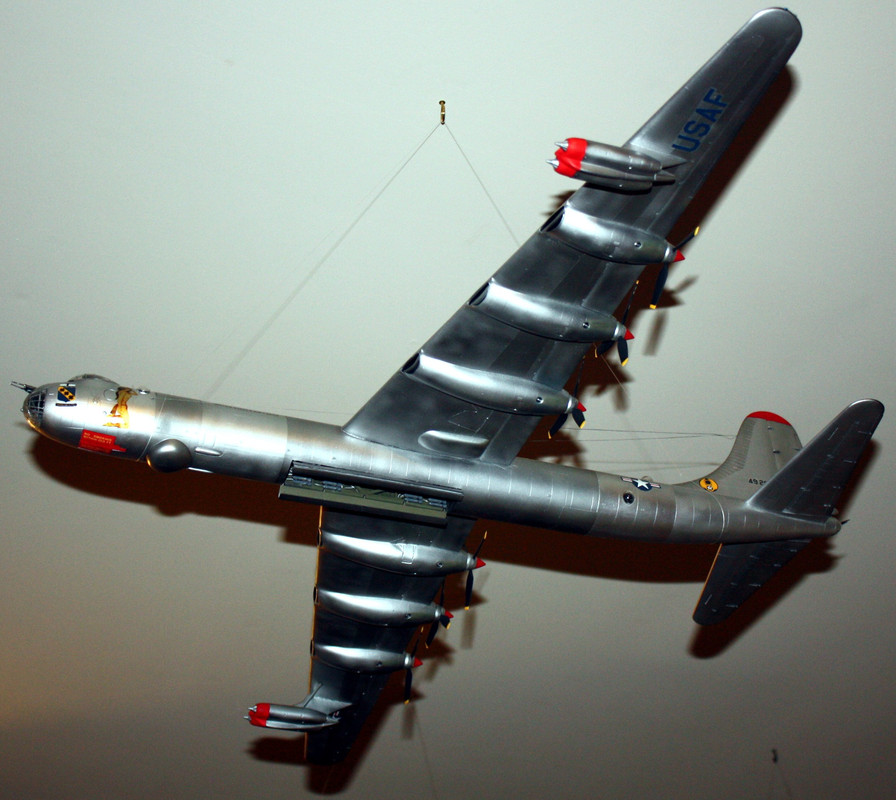
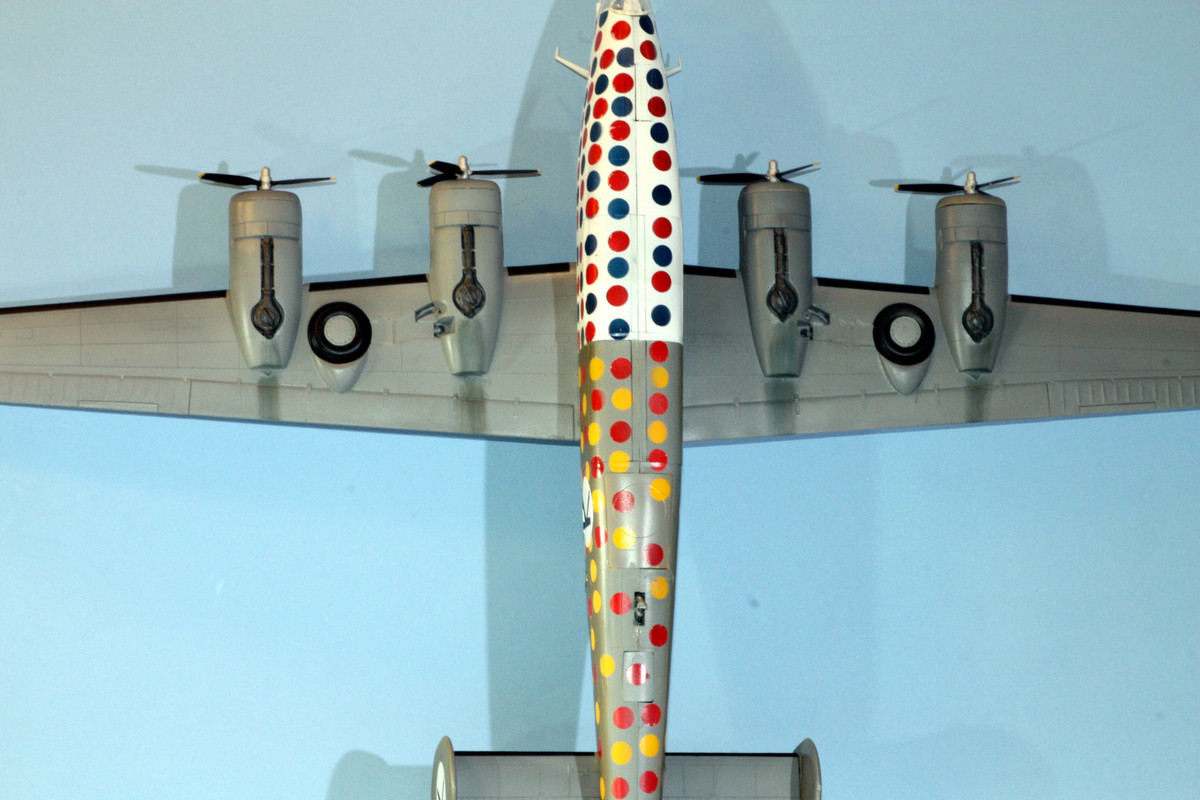
More recently, I did two Monogram B-29s (1/48) that are now hanging from the ceiling of my garage work room. By now I’ve taken the approach of installing lengths of sprue or tabs I cut from sheet styrene to assist in door installation. I always install the doors prior to doing any major construction. So for the B-29s, I installed the nose gear doors while the fuselage was still in two pieces. For the main gear doors, I built up the area with sheet styrene and used sprue as a mount for the doors. I installed those doors before I constructed the wings.

Some times, though, especially on those older kits like the B-29, the doors aren’t really intended to be installed in closed position. This results in a lot of mis-alignment even with all the steps I’ve mentioned, so then I’ll sand the parts down to as flush as I can get it without fully destroying the part.

Many of you suggested tackling this before joining the fuselage together. I would have never thought of this. Thanks.

Aggie

Thanks for the pics

I have limited space so most of my aircraft builds are hanging from the ceiling of my shop or on the wall nose down. I’m by far no expert but, depending on the aircraft and kit, I’ve used strips to reinforce inside the wells. If it’s a shallow bay, using some blue tack to fill the void and then attach the doors has worked well. I usually end up sanding a good bit and filling gaps with putty. Then, I carefully rescribe the area if needed.

Pretty sure the kit makers skip the wheels-up/closed canopy option as it would increase the number of fit issues the parts engineering would have to sort out (like needing to add a part of two to actually close the doors).

Those a/c with a lip around both bay and door would need more engineering for those lip dimensions to work with what can be cast in plastic (or shape a plug to mold PE over).

Canopies have complicated shapes which are already complicated to mould (and in brittle clear plastic, besides) so maiking them as one piece without ugly seams probably makes the multi-part casting easier.

What might be a work-around would be to get thin copper or brass, annealing same, and mould it over the kit doors and leaving that oversize to be trimmed to fit.

Watch for equipment bay doors that the kit displays as open–these will have equal fit issues to gear bay doors.

Now, for your consideration, naval aircraft near the sea surface often have gear and flaps down for landing approach. Technically, there is an issue in that the oelos ought to be at maximum extention like that, but displaying with expended ordnance could be visually interesting.

F-14 will likely be the easiest to get to flying, other than the cranked doors over the main gear, those doors are pretty simple. Also, few of the kits will have separate flaps to have to fuss with.

Most of the F-18 kist show them in grounded state with flaps & slats down. The flaps might need fussing with the tabs on the kit. The slats will want trimming on several kits, to fit back to flush. (But, probably easier than, say, an A-4 slats.)

For prop planes in flight I like to have rotating props. Here is how I make them. I scan the kit propeller. My graphics program has something called rotational blur. I center the blur and add about ten degrees of blur. I set the opacity to about 35 % and print out a decal for each prop. I then cut a piece of transparent plastic the right diameter, and apply the decal to the disk. Each prop is different on how the hub is treated, but generally one saws the hub in half and mounts the disk between the halves.

Some do. I built an Academy F-35 and I beleive it had the oprion for closed doors. I know it had the option for open or closed bays. I wana say some newer Airfix do as well.