I posted this in the techniques forum, but things move exceedingly slowly down there. As it is really an armour-specific question, perhaps I can get away with putting it here as well.
I’ve noticed some very fine work from armour modelers. I like the look of weathering, and there’s a trick I just can’t wrap my mind around. Scratches. The ones I’ve seen that look good seem to be either a grimy grey, or sometimes a grimy german primer. Either way, they are put on with a very natural look to them…various shapes and sizes, etc.
For paint rubs and minor scratches, I run a paint brush handle, or xacto handle down the side and scratch it. For scratches down to bare metal, take a #2 pencil and draw them on. You can blend them in a little by rubbing them with your finger as well.
I use Prismacolor colored pencils to simulate scratches, rust streaks, bare metal, etc. The nice thing about these is that they are water-soluble, so the effect can be blended, faded, streaked or if you screw it up, removed completely and start over. I have a bundle of about 25 different colors and I use them for a number of different effects.
For a 3-D effect, I add the surface texture then I use the knife blade or whatever I pick up, place my thumb or convenient finger where I want the blemish and pivot the tool down and against the surface. Lastly, scotchbrite and/or flood with fast drying liquid cement. Oh, for color I use partly the wash color and colored pastel pencils. Also the base color will show through to good effect if you are careful about how deep you scratch. You can see how the effects look by viewing the following post at : http://www.finescale.com/FSM/CS/forums/598174/ShowPost.aspx Hope this helps. Steve
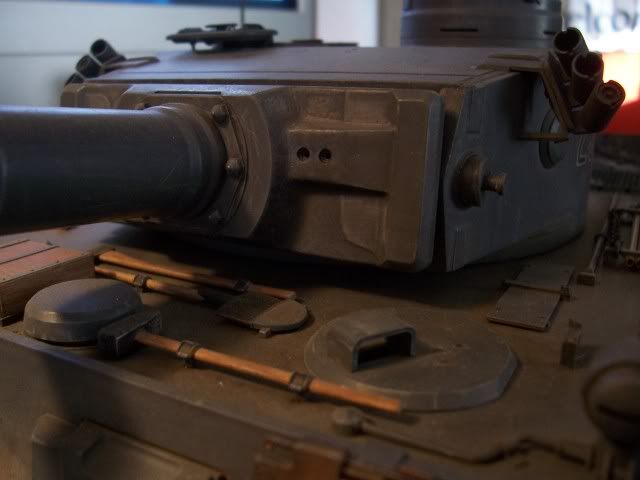
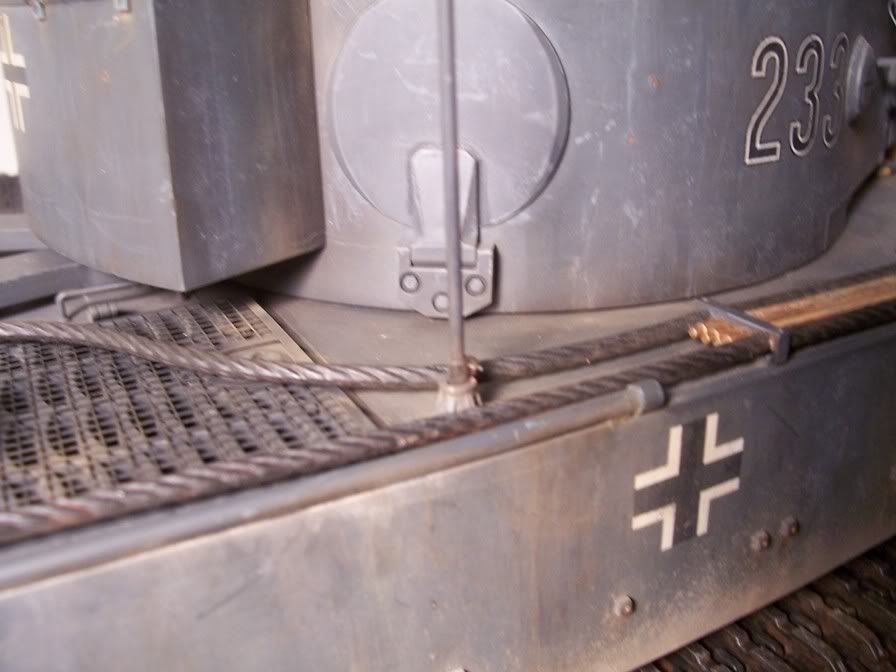
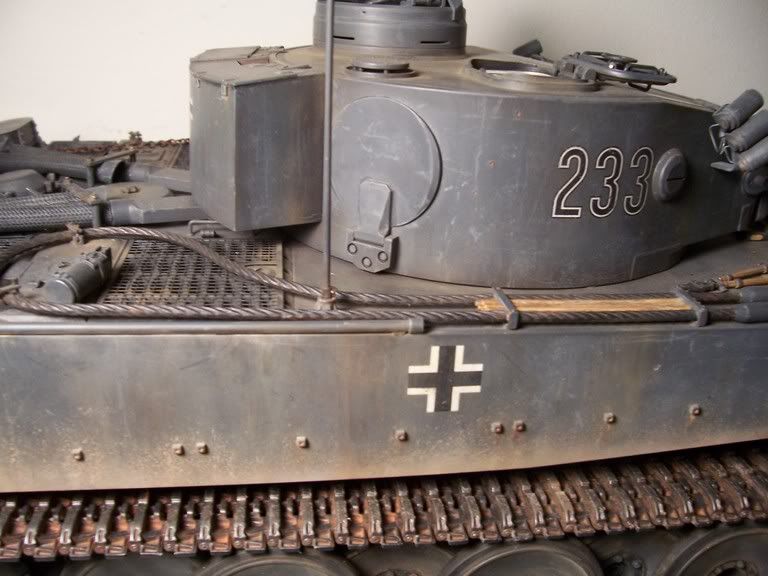
on this 1/16 tiger, i first painted the whole tank with panzer gray lightened by 20-30%-- then painted again regular panzer gray-- then all the associated weathering, then scratched in the ‘scratches’ with a NEW # 11 exacto, being careful not to go to deep-- a tiny bit of pressure is all that is needed-- then blended them in accordingly–some of the scratches are carefully painted on with the same color i started with–some areas are lightly sanded thru with 1500 grit to show lighter color-- treadwell[:D][8D]
I’d like to jump in and extend on qtaylor’s orginal question.
I assume that, in my case an early Tiger 1, all German tanks were primied with that rust-colored primer. I’m sure the paint did sctrach or chip down to metal on occasion, but I would suspect that since the primer is somewhat rust colored, it would be difficult to differentaite between seeing primer and seeing rusted bare metal. Is that a true statement?
i agree with you–the german tanks were painted in oxide red primer-- my technique is to highlight areas scratched,dirt scraped away ect,-like driving through wooded or brushy areas, but not heavy damage down to primer or bare metal-- these areas would look rusted as you said-- it is an imperfect technique, but,results in an o.k. simulation-- the actual ‘look’ i am going for would be a really dirty tank scratched down to it’s original panzer gray,(not primer or metal)—i start with a lighter color so in my mind it looks more scale(i.e. not to dark)–treadwell[:D]