I’ll probably go to airbrush cleaner’s purgatory for this but I use carburetor cleaner, in a spray can, between colors. I still do a strip down clean at the end of the day but I still use carb cleaner for that. Works on enamels, lacquers and acrylics. Just a word of caution, carb cleaner does not like plastic.
1 Like
Very interesting method, interesting to see how everyone cleans there airbrushes
Carb cleaner is interesting. How does it treat the rubber seals and o-rings?
Of course that stuff isn’t very healthy for indoor use (the flash fire risk is also real), but I could bring my airbrush outside for a quick blast once in a while.
1 Like
I’ve had no problem with the rubber o-rings on my Iwata Eclipse but I also don’t soak them in carb cleaner.
3 Likes
Carb cleaner does expand seals and o-rings sometimes from what I’ve seen.
1 Like
I agree with you, the MCW paints are top notch. I use both the lacquer and enamels.
As far as cleaning goes I have a Grex Tritium TS5 which uses all Teflon seals which are impervious to just about any cleaner. For this reason I run acetone thru the gun after every paint job so it is always clean.
Looing at your setup you might want to add a tank(s) to your setup. It will cut down on wear and tear on the compressor and also help with the the spray consistency.
1 Like
I was thinking of a tank, maybe will be my next big purchase. My spray-booth is outdated, maybe get two and connect them to make a big spray-booth. You got me thinking now.
I mostly use Vallejo Model/Air paints and I will clean with isopropyl alcohol either between colors (depends on the color)or after I spray. Sometimes I will flush with hot water in between colors but deep clean and break downs is actually done with hot water since it strips Vallejo paints pretty well. Then a flush with isopropyl alcohol. To clarify, most times I only stick with using hot(near boiling) water. The 91% isopropyl alcohol is used as the final steps.
1 Like
Very interesting method, never thought of Isopropyl Alcohol for cleaning
I use 91% Isopropyl Alcohol with Tamiya acrylics – it melts them almost instantly.
However, I’ve had cleaning disasters trying to use it with Vallejo Model Air – it turns into chewing gum in my airbrush.
It’ll never cease to amaze me how a combo of paint/solvent will work perfectly and reliably for one person, but fail spectacularly for another.
1 Like
I never thought of using Isopropyl Alcohol
Hmm… I haven’t run into the alcohol gumming up the Vallejo paint, but I will definitely keep an eye out for it.
2 Likes
Ahoy Toimi Tom. I just now mixed up a batch of Vallejo Air RLM70 blackgreen and some 91% Isopropyl Alcohol and ran it through my Badger 100G airbrush. It airbrushed through my .5mm needle OK, but didn’t cover very well, at a 50/50 mix it was very thin and created a dull finish. Attached is a photo of the mixing cup and you can see by the dried residue on the side of the cup, the paint and the alcohol didn’t bind very well.
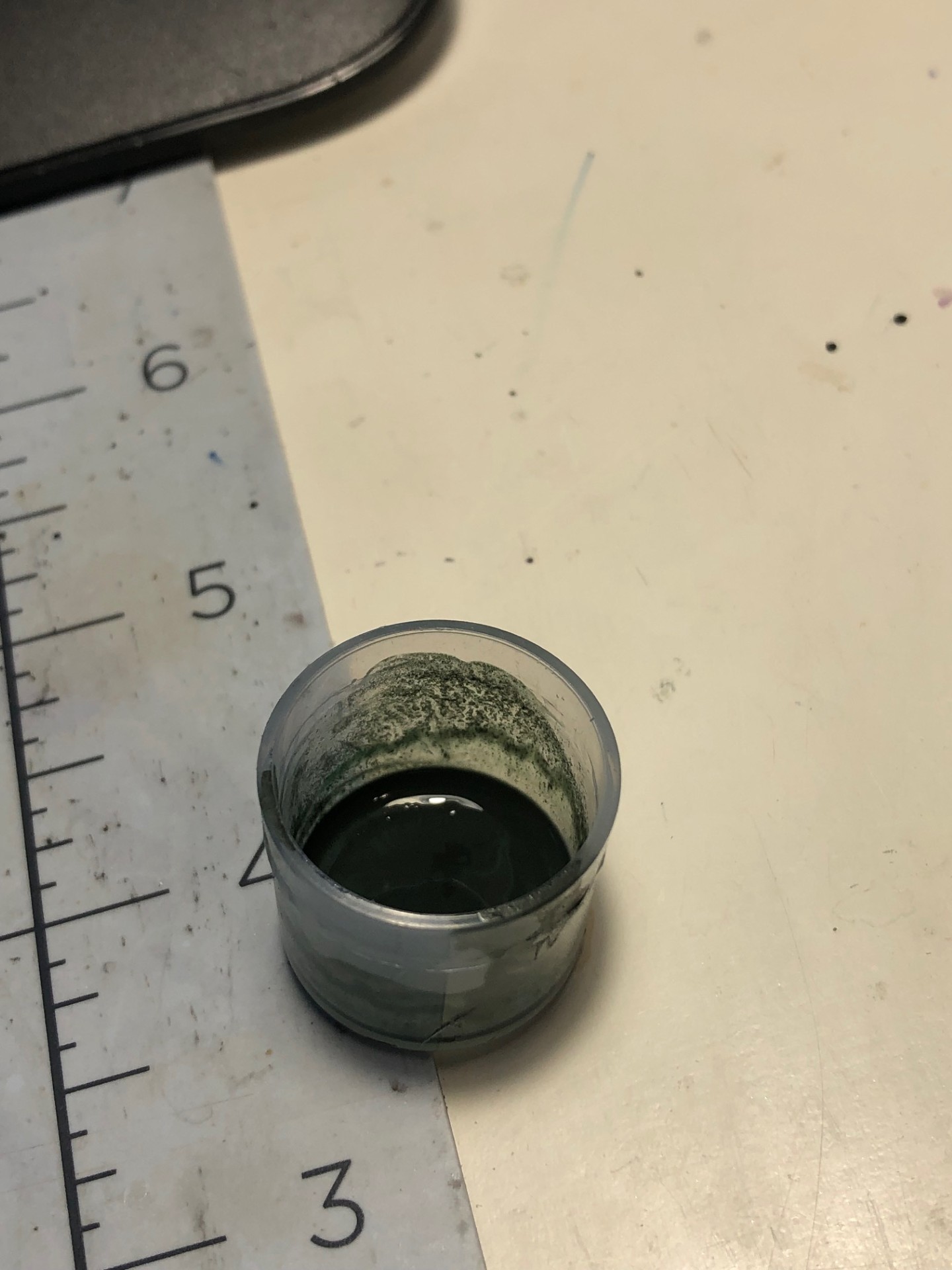
It was the same when using Iso to clean the airbrush. I didn’t act as a solvent but rather as a flushing agent leaving residue behind. I used lacquer thinner and it cleaned up nicely.
2 Likes
Very interesting, thank you for the information.
At the beginning of each session, I’ll run one cup of lacquer thinner through an already clean airbrush. In between colors (either Tamiya, or Vallejo) I’ll use good old Windex. At the end of the session, the airbrush is completely disassembled and cleaned with lacquer thinner. The needle is left out and placed in a protective cover.
1 Like
Interesting method, i’m finding out a ton of different ways to clean a airbrush
1 Like
I use Aqua Color Clean from Revell and I must say nothing beat it. It’s fast and doesn’t afect seals. It’s way better than paint thinners or generic airbrush cleaners. You can save paint thinner and it is also good if you use different acrylic types or you have airbrush clogging. You can use very little cleaner because it does the job very well.
1 Like
Very interesting, i have yet to try Revell Aqua paint
I mostly shoot acrylics. I used to use Windex, but it has ammonia, which isn’t good for chrome, so I switched to Simple Green. I flush with distilled water after cleaning.
2 Likes
Interesting method of cleaning