Certainly… At least on a road outside a forward US airfield in Western Europe. But the tanks likely would have been on a transporter of some sort and not rolling on their own tracks. Lastly, the Invasion stripes would be on the way out. The first Easy 8s reached the front as replacements in late December’44 as replacements for losses in the Bulge. Invasion Stripes were ordered removed from the upper surfaces of aircraft about 4-6 weeks after the invasion and in the fall of ‘44 ordered removed from the lower surfaces.
2 Likes
That’s great information. I had no idea about the timeline for removing the invasion stripes, or really much about the markings during this period at all. That’s exactly the kind of information I’m trying to learn as I put this together.
I really appreciate you contributing to the project. This is one of the reasons I threw the idea out here before I got too far down the road with it.
2 Likes
Allied aircraft markings were constantly changing. Aside from the invasion stripes, other basic markings changed. US aircraft in the ETO started with white cowlings and stripes on the wings and tails as IFF ID. RAF aircraft used a Sky spinner and rear fuselage band along with Yellow wing leading edges as IFF markings. By 1945 all of that was out the window. US aircraft were almost as colorful in markings as Richthofen’s Flying Circus and the RAF went back to Black Spinners and full color upper wing roundels among other changes, along with removing the Sky rear fuselage band.
The German army had a saying during the late war of, “if an aircraft is light in color, it’s American, if it’s dark in color, it’s British, and if you can’t see it at all, it’s Luftwaffe”.
2 Likes
They were wringing there hands along with the German and Italian camo designers thinking years later we will challenge and frustrate modelers across the globe 
2 Likes
This is great information. I really appreciate you guys volunteering all of this history, because this is exactly the stuff I’m trying to learn as I figure out what this diorama should actually look like.
Now you’ve got me wondering about something else. When they were ordered to remove markings like the invasion stripes, how did they actually do it?
I understand simply painting over them on an already painted aircraft, but what about a natural-metal P-47 where you wanted to get back to bare aluminum? And on some British aircraft you’re dealing with fabric-covered surfaces as well. Were these markings applied with some kind of removable paint, or did the ground crews actually have to strip them off somehow?
I’m curious if you know how they handled that.
From what I’ve read or seen in interviews with those who were there, the invasion stripes could be overpainted or removed with solvents. If you look at photos, they show evidence of both.
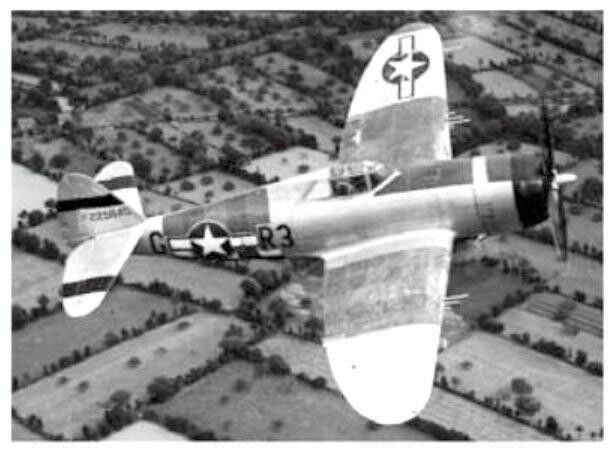
Overpainted with OD on NMF
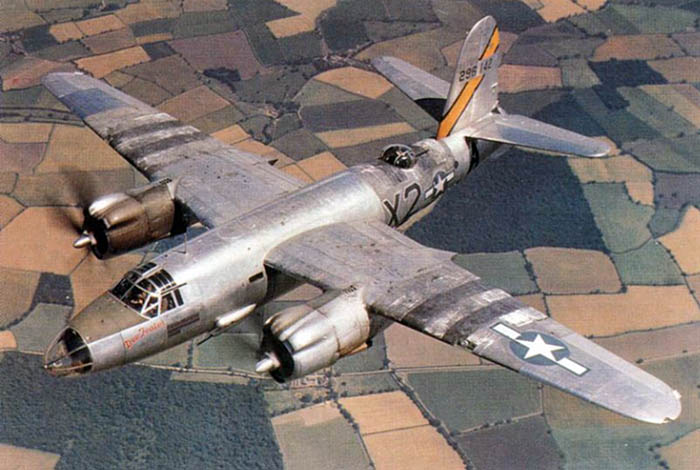
Looks to be poorly removed with solvents
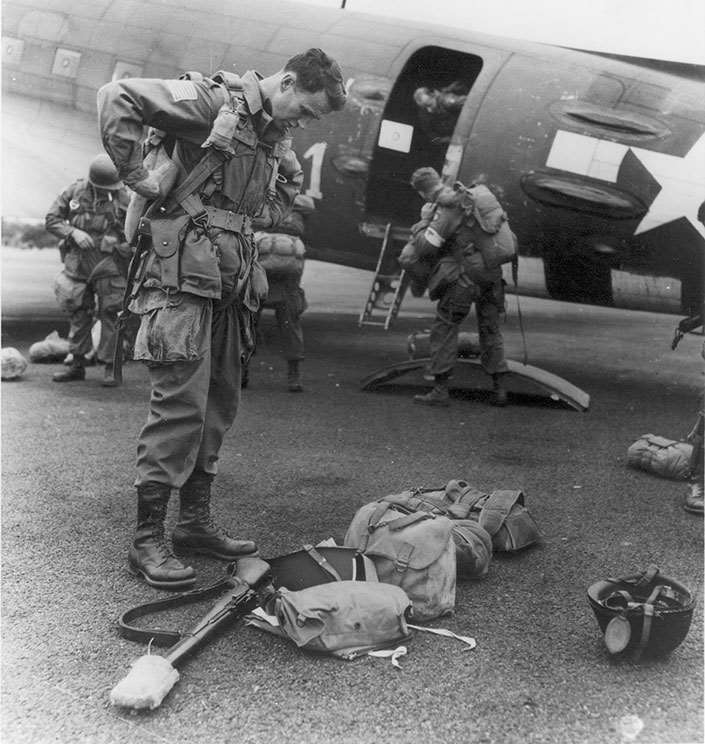
Looks to be a combination of paint over the white, and solvents removing the black by the time that this C-47 is shown on September 17 for Market Garden as “Jumping” Jim Gavin rigged up before his fourth combat jump.
1 Like
Here’s a couple things I can add.
At that stage in the war, the P-47 most probably would be a bubble top version, and also would probably be a natural metal. Also probably from the 9th AAF. The codes on the P-47 in the picture are 62nd FS, 56th FG and they did not fly from mainland Europe. I think by then, they were flying the P-47M and were still flying mission escort. Check on the 405th FG and their whereabouts. They were usually natural metal with a lot of colorful stripes and markings for squadron ID.
I think in theory, that the image was quite possible having a tank pass by, or through, an advance allied air base, either headed to the front lines or returning.
You can do away with the D-Day stripes as well as they pretty much wore off by then, or were very faint
1 Like
That’s really interesting. I hadn’t thought about the invasion stripes being removed in different ways and leaving evidence behind like that.
And @fjs3, you’ve given me some more homework.  I’m going to do some digging into the 405th and see where that takes me.
Thanks, guys. This is exactly the kind of information I was hoping this thread would turn up.
Hey Scott
The invasion stripes were a temporary measure to keep jumpy allied AA gunners from shooting at their own planes. They were water based paints and while some were carefully and painstakingly masked and painted, as the invasion got closer, some were applied with mops and rags.
In months following D-Day, the paint gradually wore off of most aircraft, while others had it removed later in 1944. Depending on the severity and frequency of missions, I do not believe there was a concentrated effort to clean up the aircraft, ground crews would rather let nature do the work.
Now this is all my opinion on how the stripes came to be removed, and I’m sure there are others who know a lot more than I on the subject.
As far as the 405th is concerned, there is a LOT of really neat nose art connected with them so you will have a great time choosing which aircraft to portray!
1 Like
Thanks for all of this! This is exactly the kind of detail that’s going to add so much realism to the diorama.
Your comment about the invasion stripes immediately got me thinking about whether I could paint just the faded, worn remnants of them—almost a ghost of the original stripes. That could be really interesting visually and would help tell the story of an airplane that’s been operating out of a forward field rather than something that just rolled out of the paint shop.
And now you’ve got me thinking about nose art too.  I’ve got some more research to do—unless you have some nose art suggestions for me, which I would very much appreciate!
I think that, the scene you’re proposing, in early spring 1945, you won’t have to worry about the invasion stripes. Any aircraft that DID have them, most probably had worn off, or had been removed; OR was already considered War Weary and removed from the combat area or to training command.
1 Like
This has really got me thinking Freddie. Until yesterday I hadn’t even considered invasion stripes as part of this build.
Even if they were completely removed by the period I’m depicting, I’m wondering what the aircraft actually looked like afterward. Would the wings really have gone back to looking like pristine natural metal, or would there still have been some staining, discoloration, or even just a ghost of where the stripes had been?
Now I need to go looking for some period photos and see what I can find. You’ve sent me down another rabbit hole.
They either left them on the plane or they used MEK to strip the paint off.
2 Likes
I like where this is headed. Maybe a tanker and a soldier can be at the fence, talking/trading. Like a moment in time where the tank crew decides to stop for a bit to see if the soldiers and air crew have any chocolate on them?
1 Like
Ohh, I like that idea!
1 Like
Maybe asking the flyers the lay of the land since they get an eagles view and trading for a carton of luckies..
2 Likes
“You give me that ciggarette box, I give you this chocolate bar”
2 Likes