A Mule's Tale - Tamiya 1:35 Scale Panzer II Ausf F (not G) (#35009)

My return to scale modelling has been characterised by the risk of ruination of a few cheap 1:72 and 1:76 scale kits - While they’ve been great for getting the hang of fundamentals like proper decal application, washes and airbrushing, I feel I’m now at a stage where I can’t afford the time to lovingly build a model to completion for the sake of unlocking an extra skill point - And many skill points are available!

What I need… is a “Paint Mule”… A tragic chunk of plastic who will never be finished, only completed to a point of serving a purpose and then stripped back to do it all again
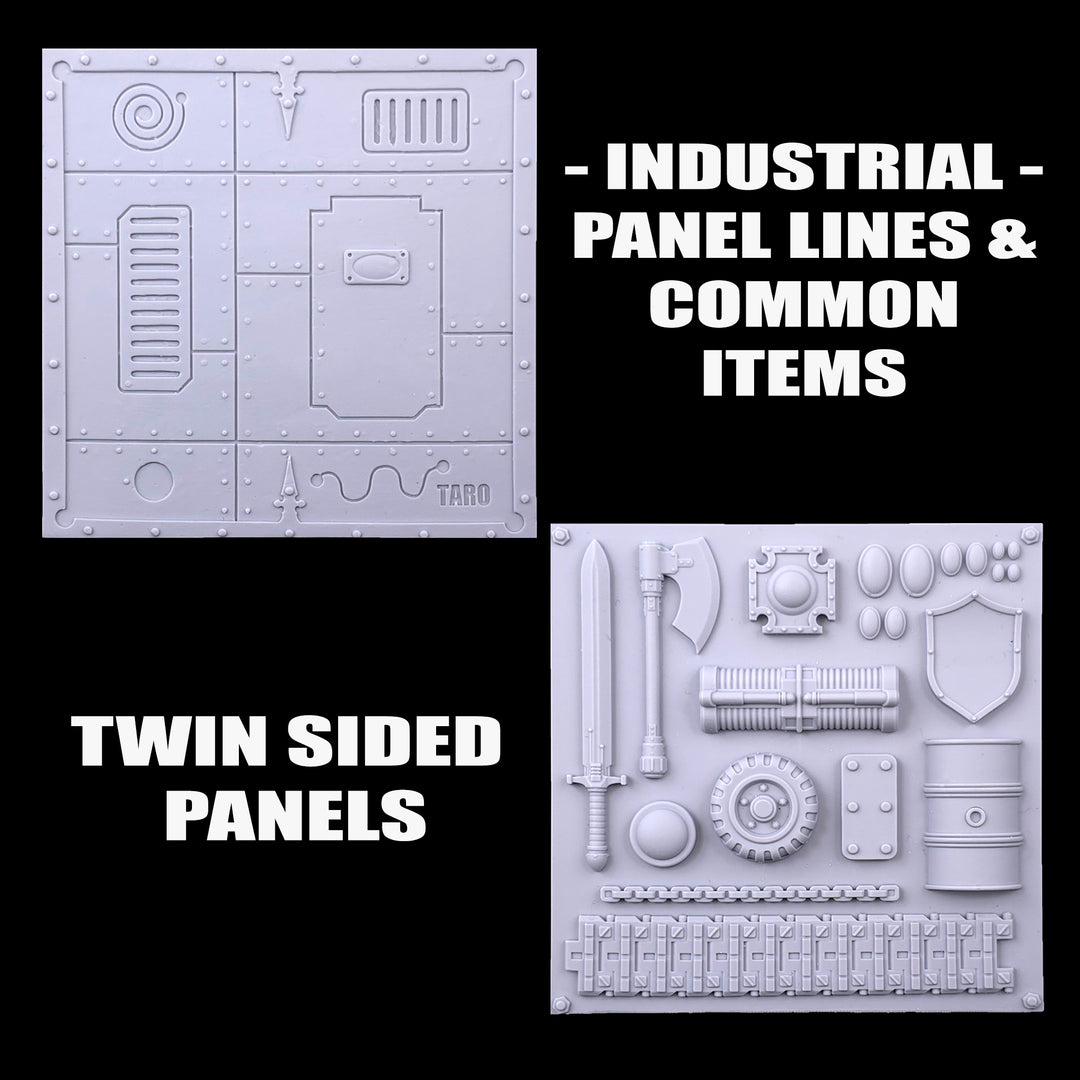
I started off looking at these resin texture pads from Taro Model Maker. They seemed like a perfect fit since they’re not a kit, therefore there’s no motivation or temptation to complete. Unfortunately their $14 resin practise pad came with a $31 postage charge to Australia.
After a bit more Googling I went to King Kit’s “Salvage Yard” which comprises incomplete or faulty second-hand kits - And there we found it… Tamiya’s 1:35 Panzer II Ausf F/G
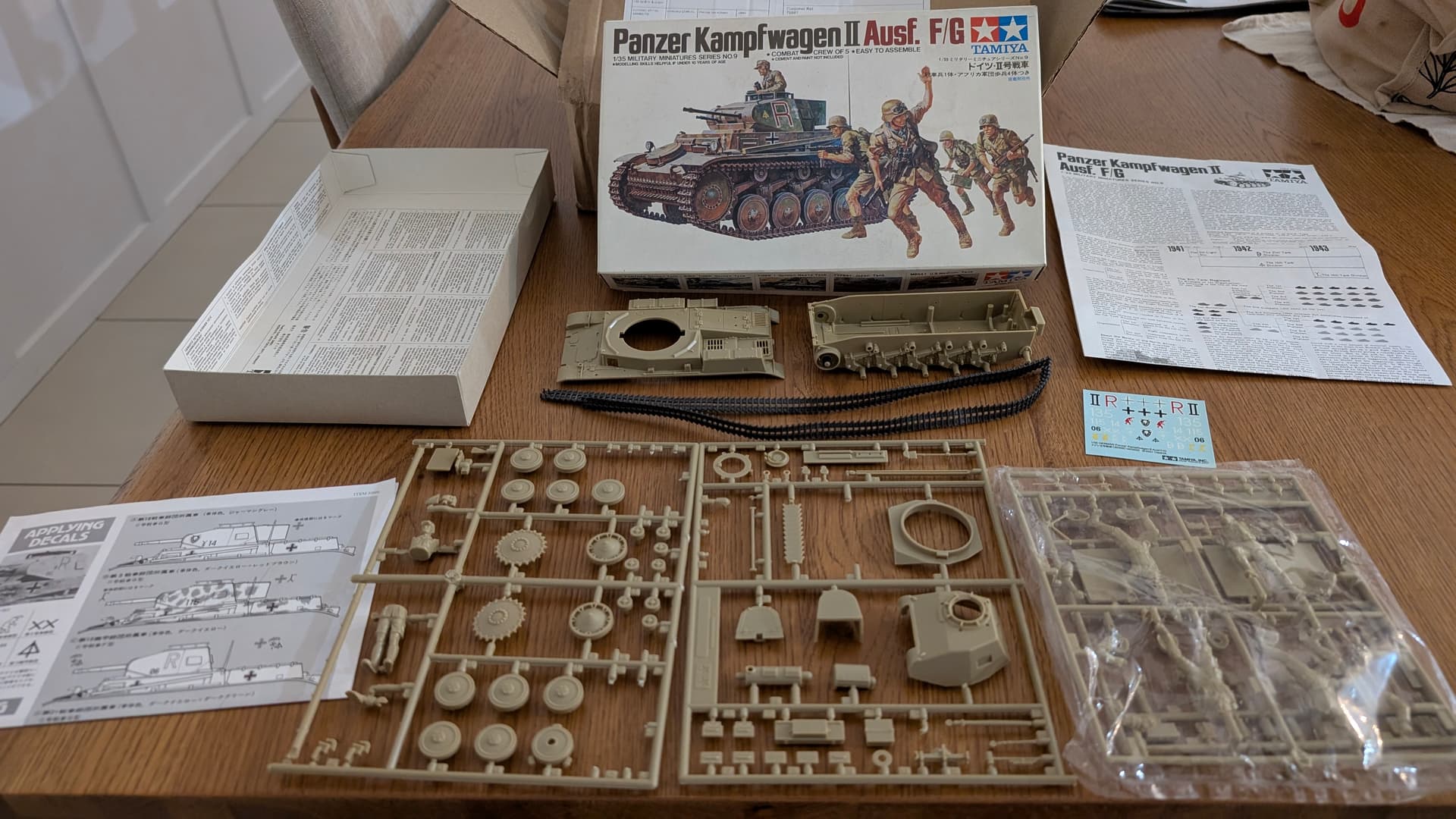
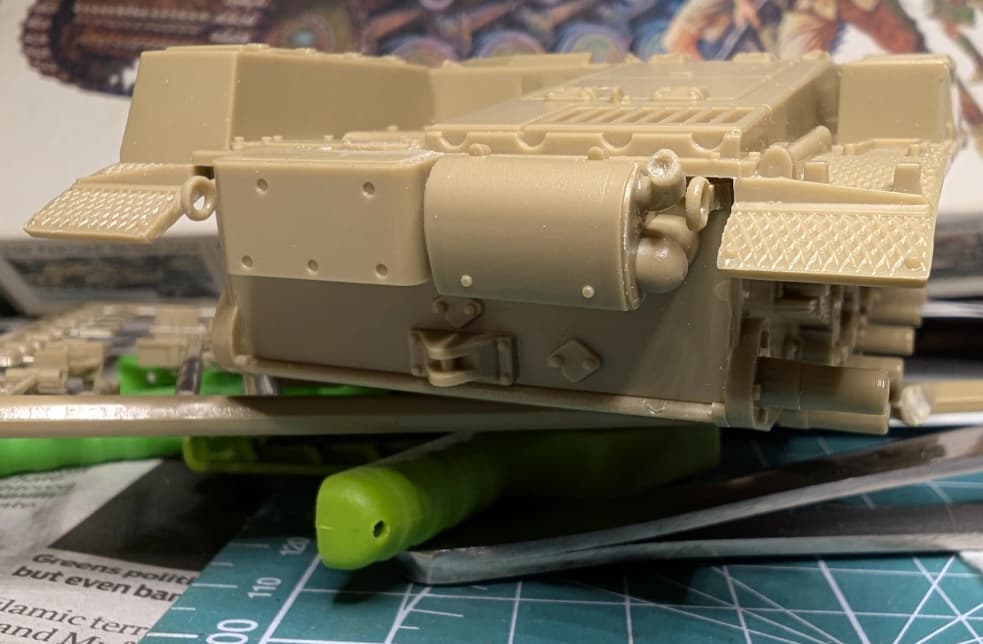
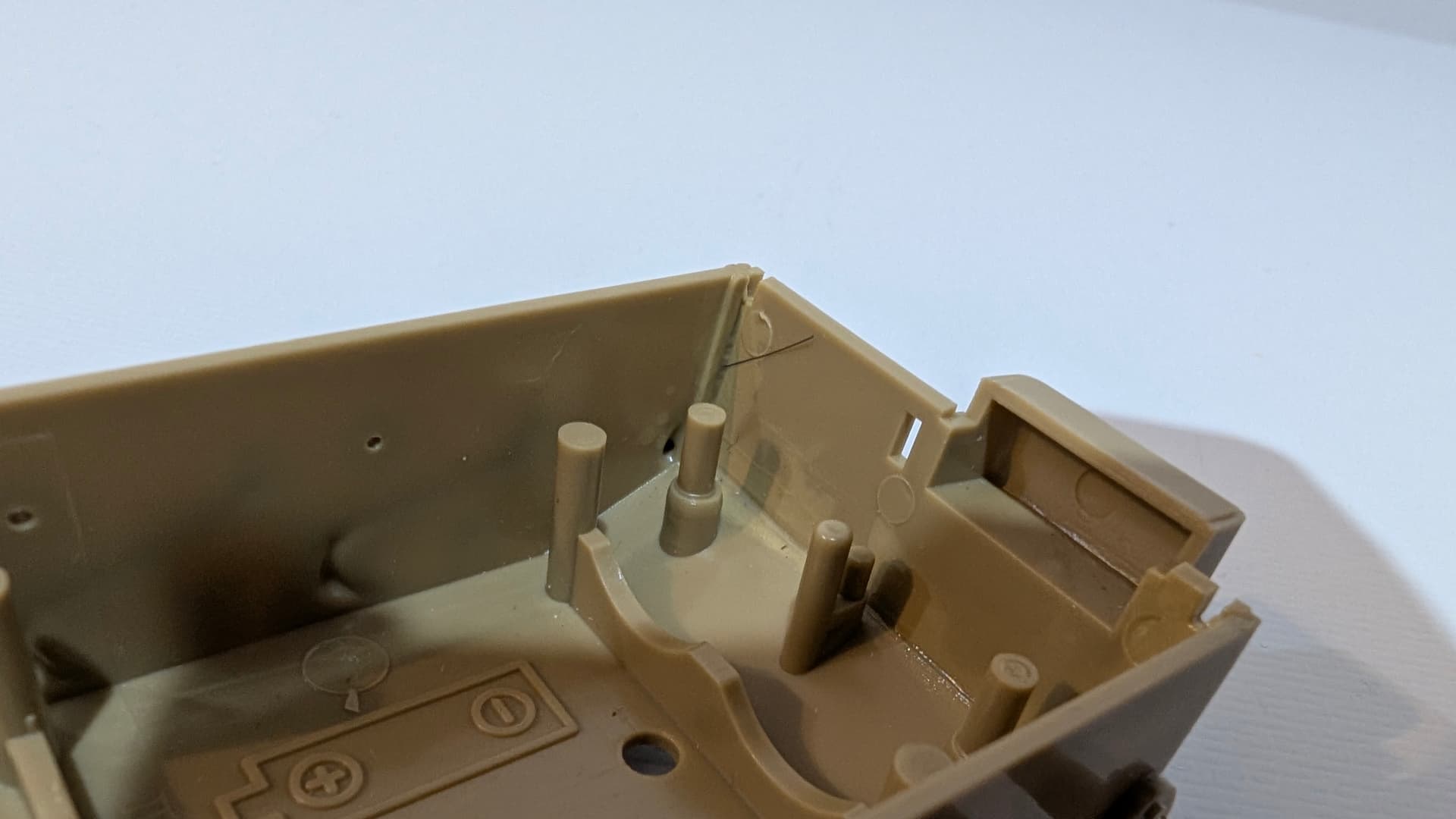
It arrived from Britain to Australia yesterday! The hull was partially assembled but the kit was otherwise in good condition, with all parts, decal sheets and instructions included. I have no complaints about the second-hand condition of the kit, but a first-hand owner attempting a faithful reproduction of this WWII workhorse might have struggled with the savage degree of mould misalignment and injection errors. It’s probably what put this kit on the second-hand market in the first place…

Fortunately, I’m not trying to make a work of art, rather I’m trying to ensure my future works of art don’t become unintentional experiments in surrealism. If anything a couple of moulding goofs will make me less attached to the model for ultimate completion and display as we find more indignities of experimentation to inflict upon it…

An amusing quirk of buying a second-hand kit, we have a possible trace of former owner or their beloved family pet has been glued in…
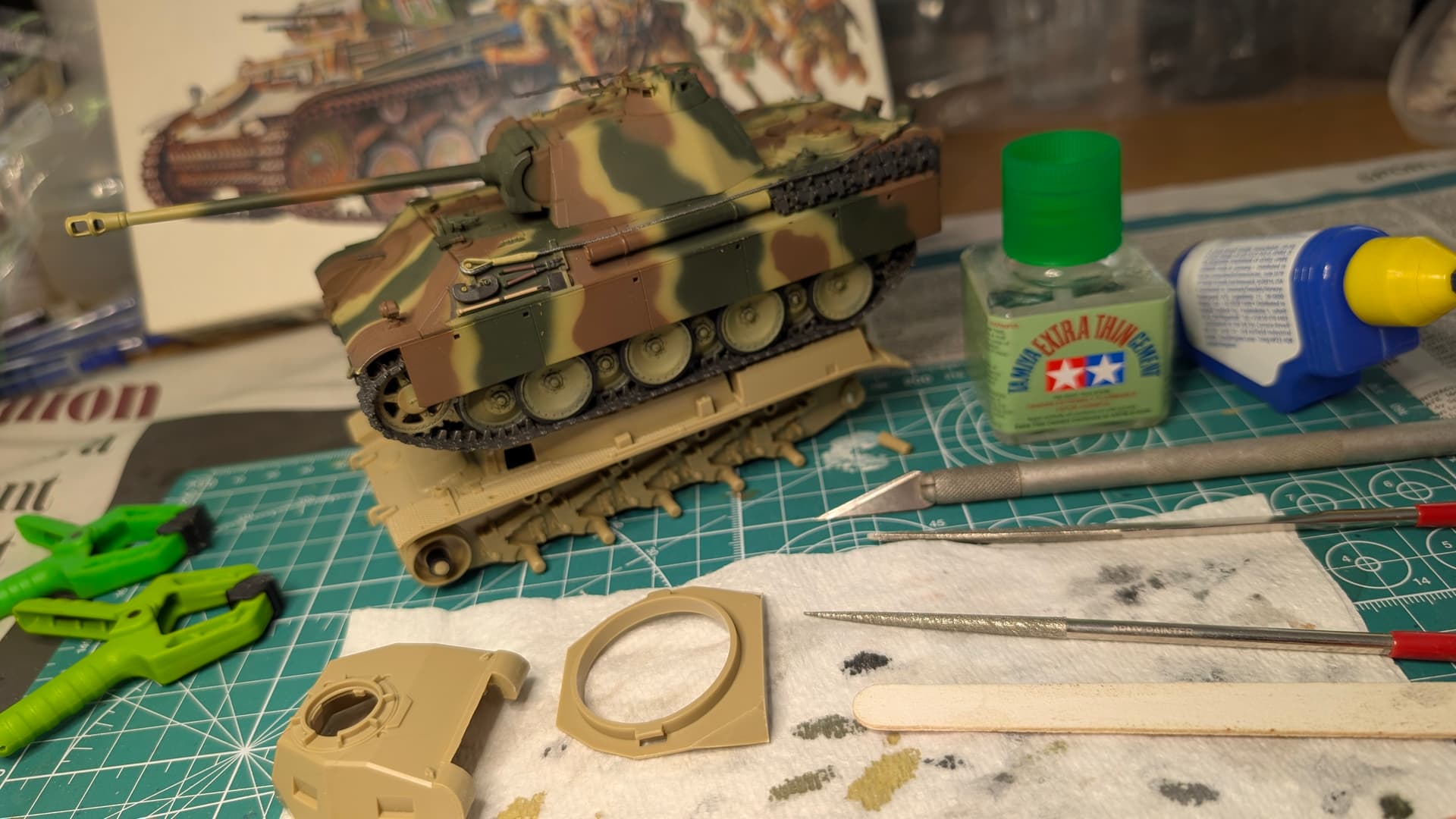
This is also a kit in a new scale for me, so I like to compare with what I’m used to. To assist in clamping the upper and lower hulls, I’ve employed the very 1:48 scale Panther whose decisions on weathering technique will ultimately be informed by this kit.
I feel like a bit of a (insert apt description disallowed by forum) for doing it, but this is a kit which I expect to suffer the indignity of being a constant works in progress. Follow us through what might well become an interminable cycle of painting, testing, stripping and repainting…

Contents:
Construction - Hull Mating, Turret & Front / Rear Details
1 Like

This post pleases me.

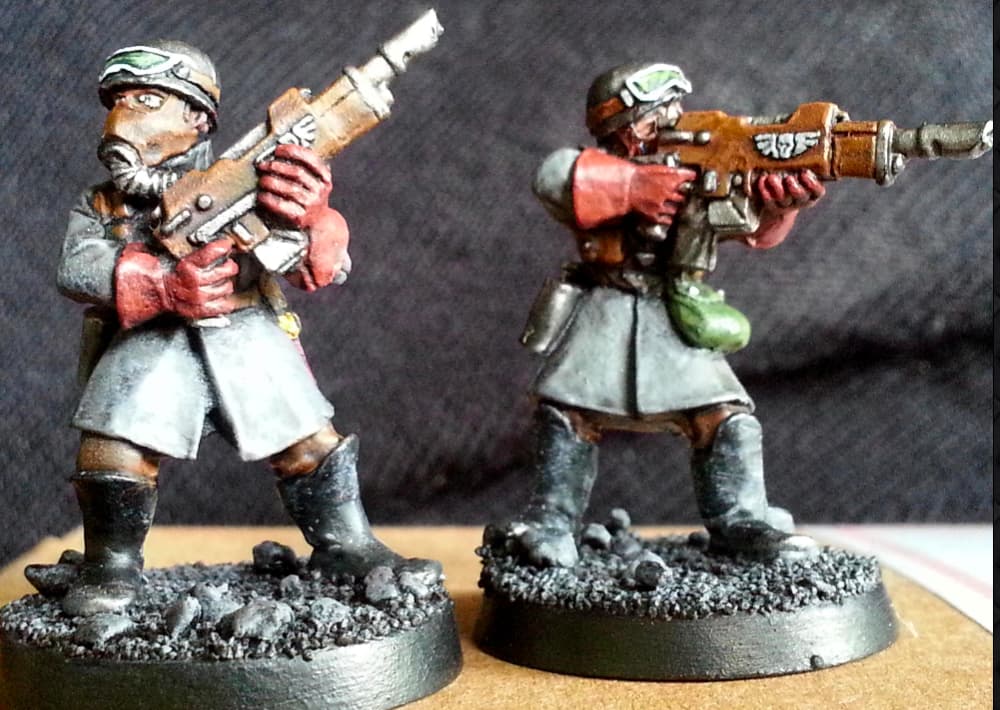
How about those DAK infantry?

1 Like

They were a most welcome inclusion! I might attempt a little vignette with them in isolation later down the track, as I don’t have any other DAK projects planned.

I have Tamiya’s 1:35 M10 IIc Achilles in the stash, which is an open topped tank destroyer with an exposed crew. At the very least the DAK infantry will make fine practise runs, if only to keep my figures from looking like the Meme Marine…

But having done a little wargaming miniature painting in the past I’d like to hope my figure-painting game hasn’t slipped that hard in the intervening years :sweat_smile:

1 Like

Construction - Hull Mating, Turret & Front / Rear Details

I wasn’t planning on doing a detailed log of the build here, since Tamiya kits are generally pretty simple and we’re really kist trying to get this kit built, based, camouflaged and ready for its first weathering trials so we can move on with our main project - As it’s progressed though, I’ve found a few cautionary tales and deviations from the original vehicle which other modellers building the kit would do well to be aware of.

It must be reiterated that misclose between the two injection mould halves has been a persistent issue with this kit, resulting in much sanding, filing and carving to restore some illiusion of homogenaiety to the parts. We were way beyond tolerance for factory casting lines.

Mating the Upper & Lower Hull

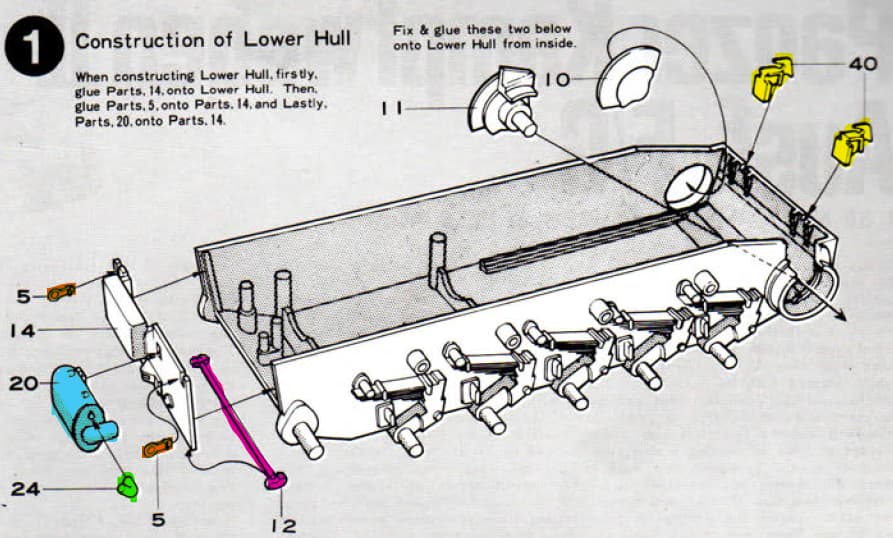
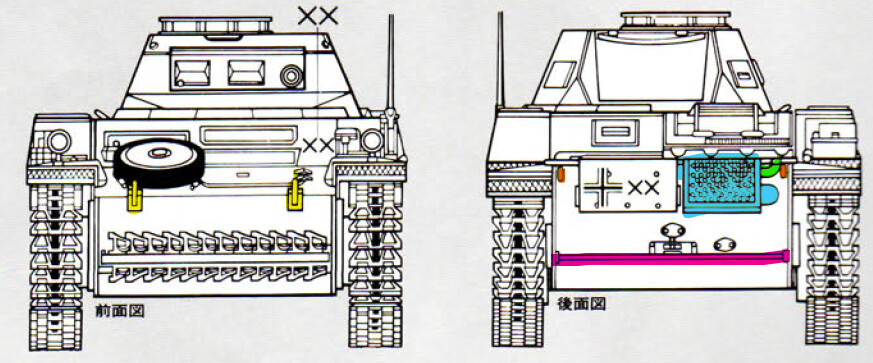
I’m pretty big on trying to mate upper and lower hulls as early as possible, as I’ve been burned by previous kits that have advanced the installation of certain details for graphical convenience on the instructions but led to critical miscloses later in the build. Once the drive hubs (#10 and #11) are installed I would recommend installing the front tow hooks (yellow), followed by landing the upper hull, and then closing off with the rear plate (#14). Apply pressure with a half-painted Panther Ausf G, a feat achieved thanks to its cast aluminium lower hull

Rear Assembly

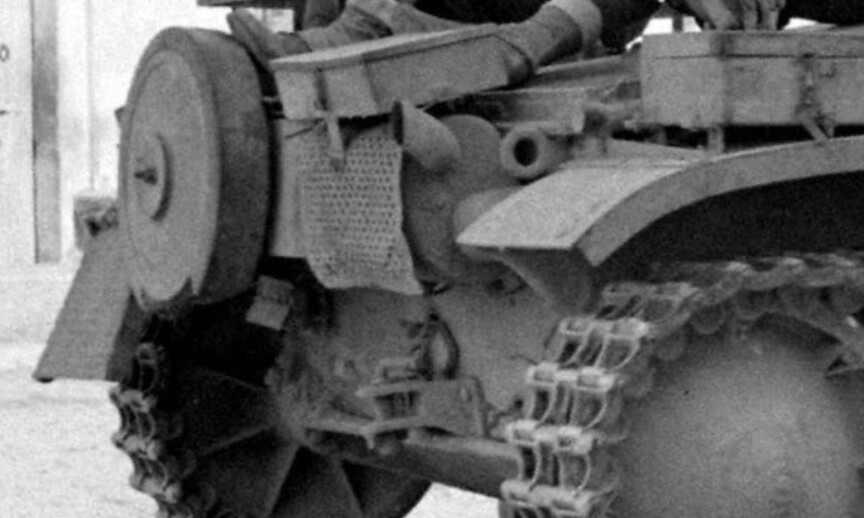
This kit was made with a tooling from the early 70’s, and the newer tooling of Tamiya’s Panzer II Ausf A/BC shows just how far technology has come. Although moulded solid, even the kit’s own decal instructions acknowledge the perforated muffler cover


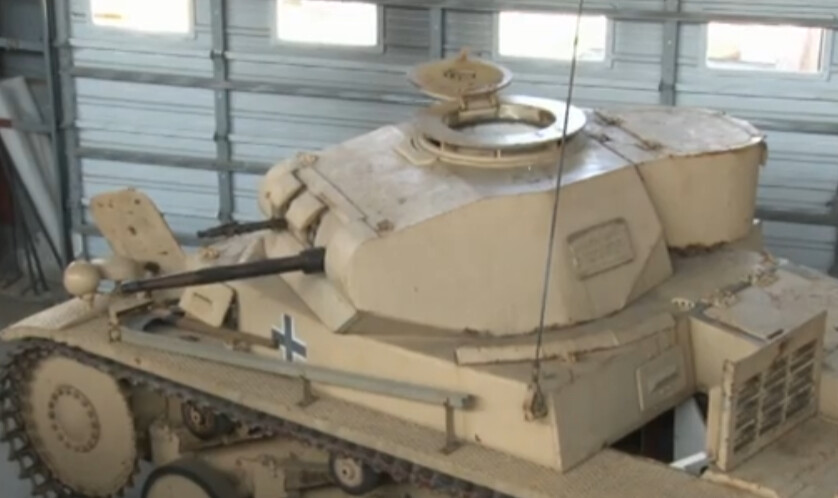
With reference to historical photos from a captured example (which now sits at the National Armor and Cavalry Collection at Ft. Benning, GA), a more detail-obsessed hobbyist would probably

  • Pick up the Eduard PE set for this kit, which includes the perforated screen
  • Drill out the exhaust pipe (unfortunately moulded solid)
  • Replace Part #12 with a stiff wire as there should be daylight between it and the hull

Front Lower Hull Assembly

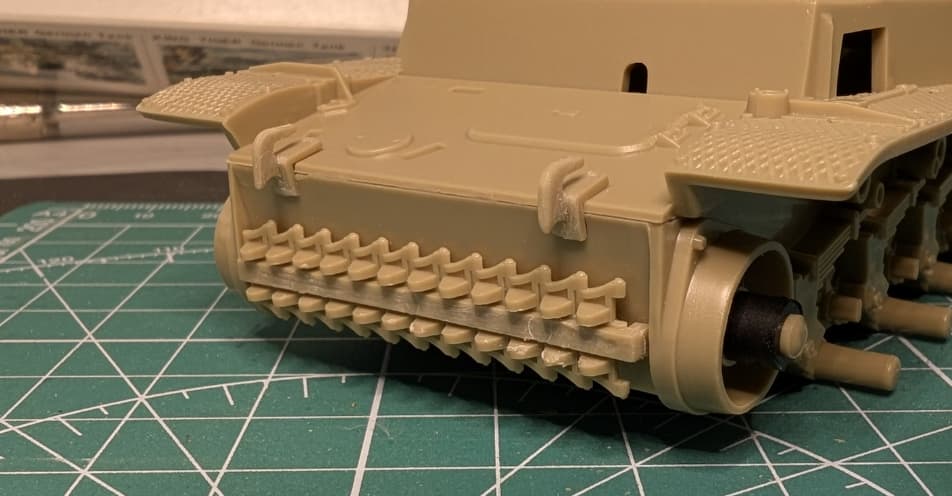
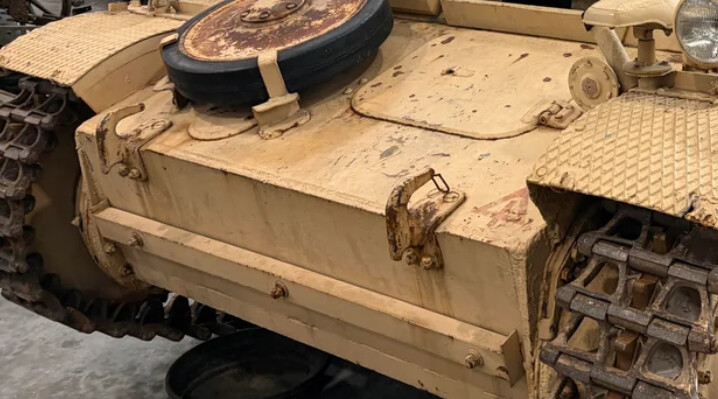
Some ugly mould marks in the spare track carrier prompted some even uglier application of abrasives. Further cleanup and putty work is required. If I wanted to have a semi-serious crack at a faithful replication, adding those bolts in the track carrier and tow hooks couldn’t hurt…


Turret Assembly

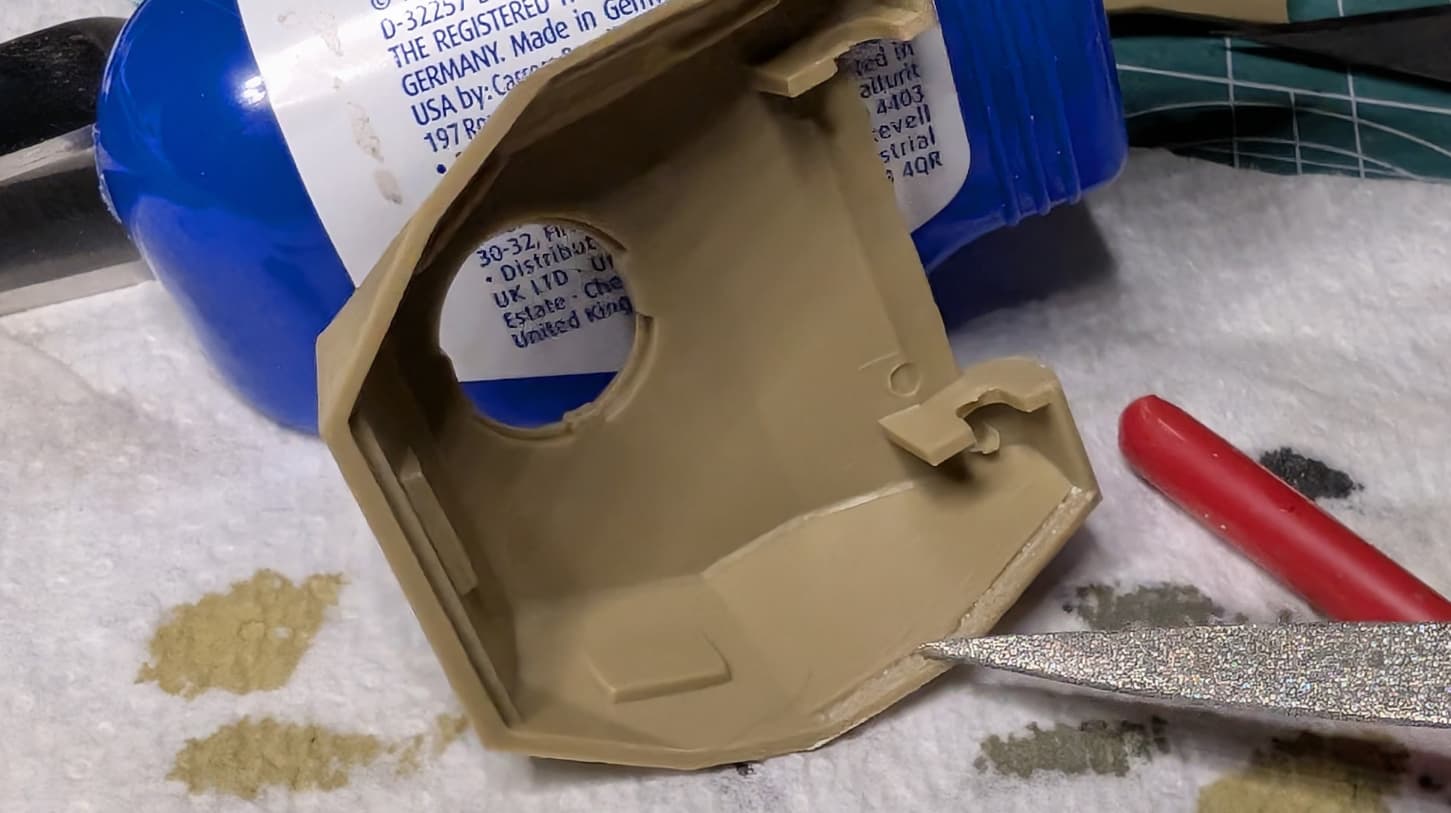
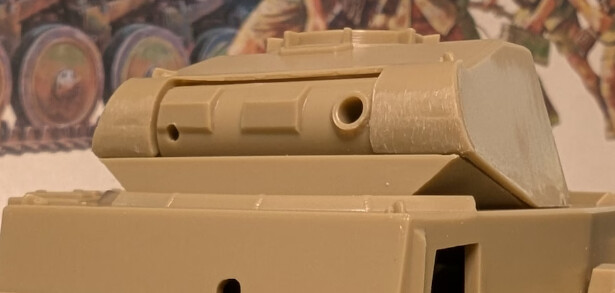
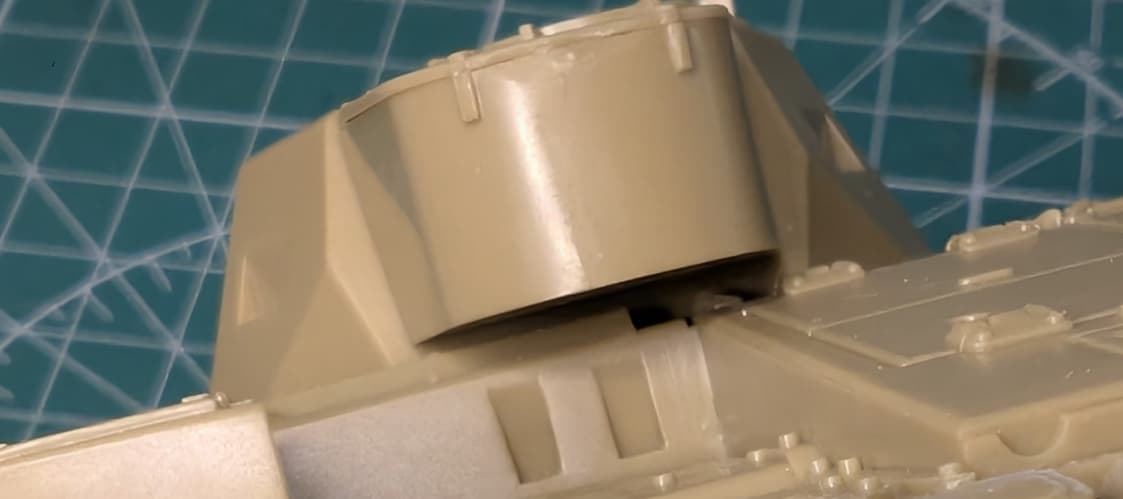
Moulding errors resulted in bubbling inclusions on the upper turret part where the upper and lower turret pieces meet. These needed to be filed back to enable proper fit, but the turret upper, lower and gun mount otherwise went together without incident beyond those darned mould lines

Turret Stowage Basket

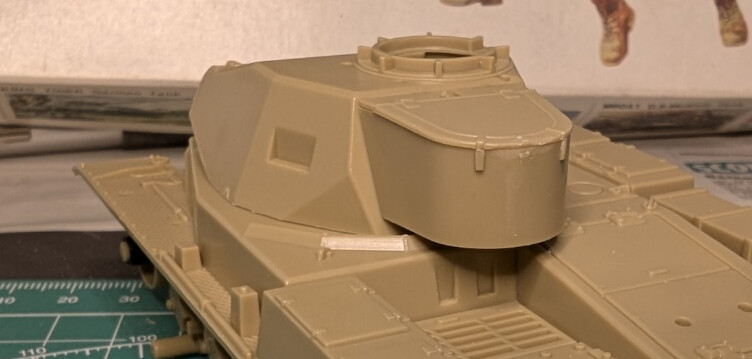
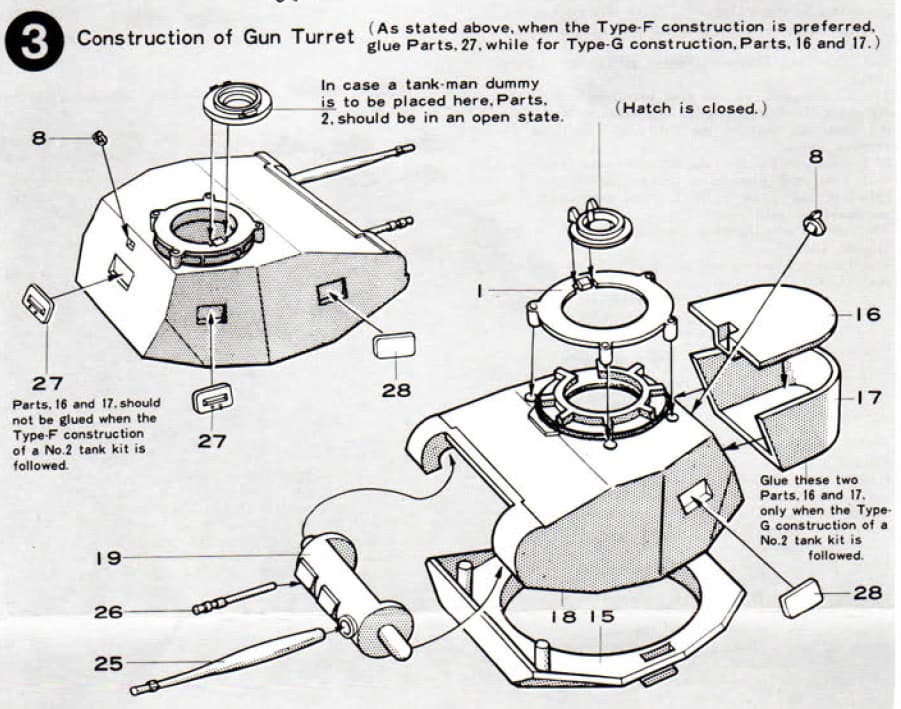
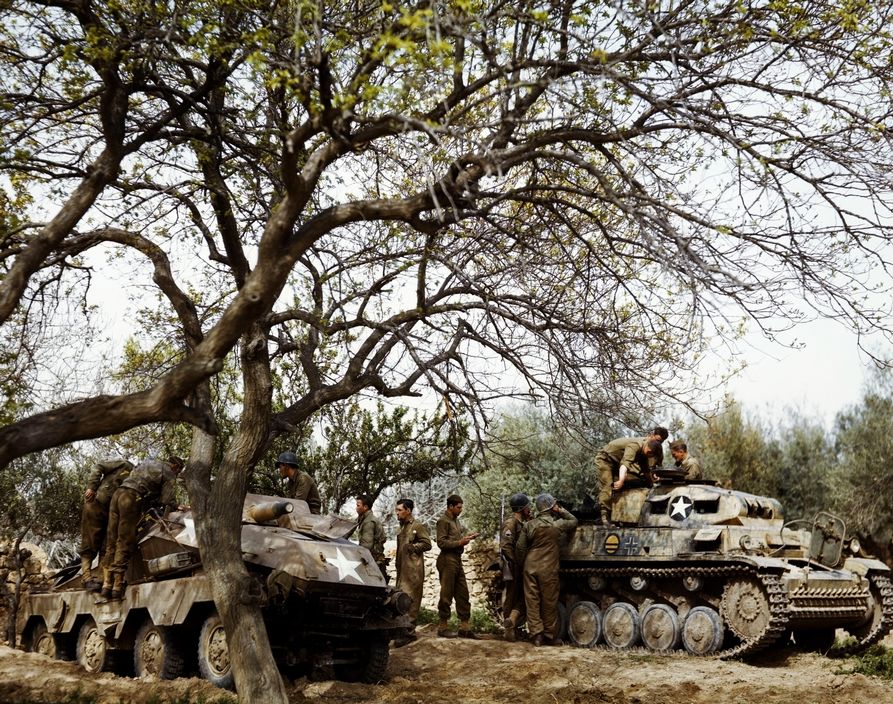
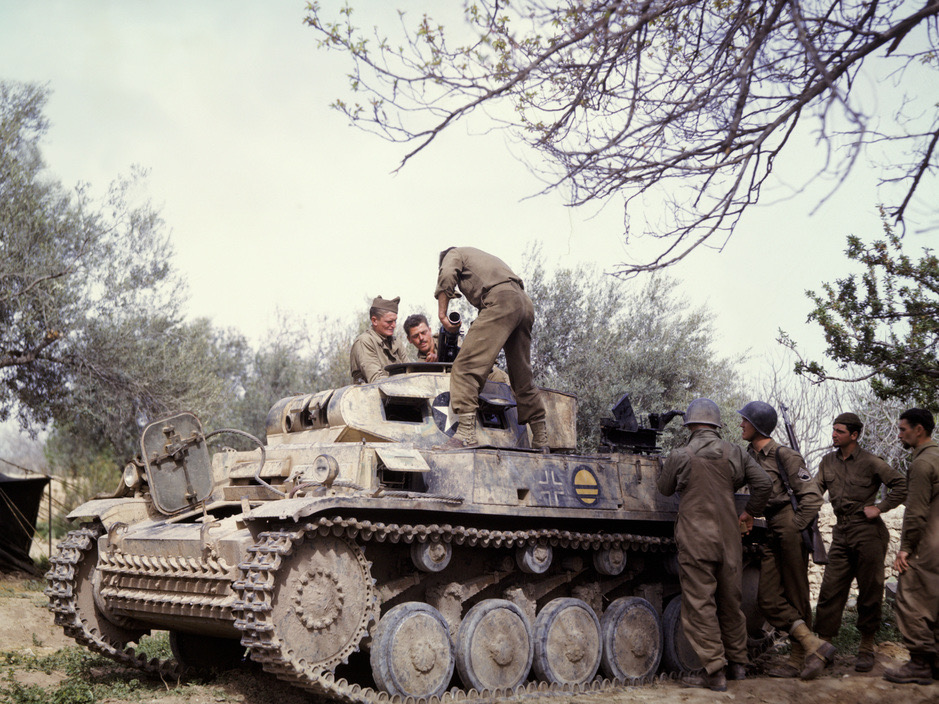
Some examples of Panzer II had a stowage bin mounted at the rear of the turret, and Tamiya gives the option to include it. This doesn’t appear to be a common addition, but such an example was captured by US forces in Tunisia in 1943 which was hosted at Aberdeen Proving Ground until 1989 and then various museums since. It appears to have been used extensively as a reference by kit manufacturers, leading many kit builders to believe the stowage bin to be standard issue when this wasn’t really the case…


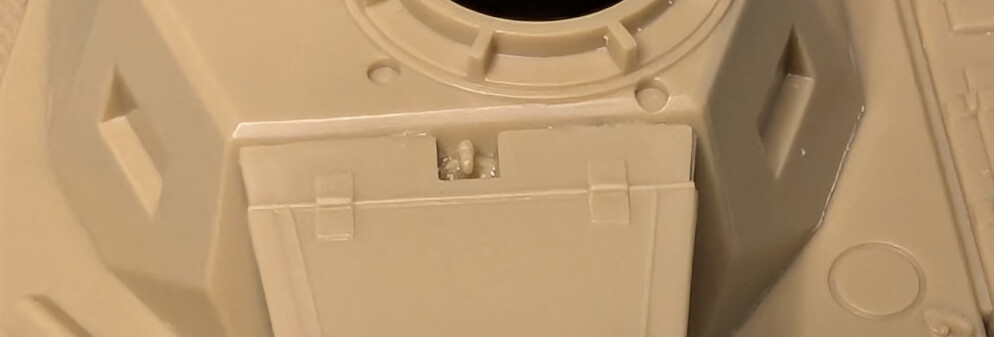
The turret stowage bin has a notch revealing this hook at the rear of the turret, likely associated with how the stowage bin was mounted. Installing this hook first will help you align the rest of the stowage bin, should you choose to represent it on your model
(Edit: For clarity this stowage hook is common for Panzer II, not just those isolated examples with the stowage bin. The notch in the stowage bin is indicative of the hook being used to mount the bin)

Bear in mind there are no moulded locating guides for the turret stowage bin, so care must be taken to ensure that you don’t mount it too low or you will prevent the turret from rotating. Reference photos from the example at Fort Benning (at the time of writing, anyway) will provide some guidance

I’ll keep chipping away at this anyway - The #1000 grit sanding pen and I have a bit of work to do - Unfortunately cleaning mould lines and mould miscloses can become rather like treating pimples when your first pass of carving and sanding is a little too aggressive…

The turret basket was only on a single unit in Tunisia: PzAbt 190. (5thSSPD Wiking also had a similar version on its recon Pz IIs). It was coincidence that one was captured and survived – you’re correct that Tamiya incorrectly assumed it to be a wider use. It wasn’t.

If accuracy is a goal, you should omit it. None of the decal options are for Pz Abt 190. The hook on the rear turret wall had nothing to do with the added bin. It was on every Pz II.

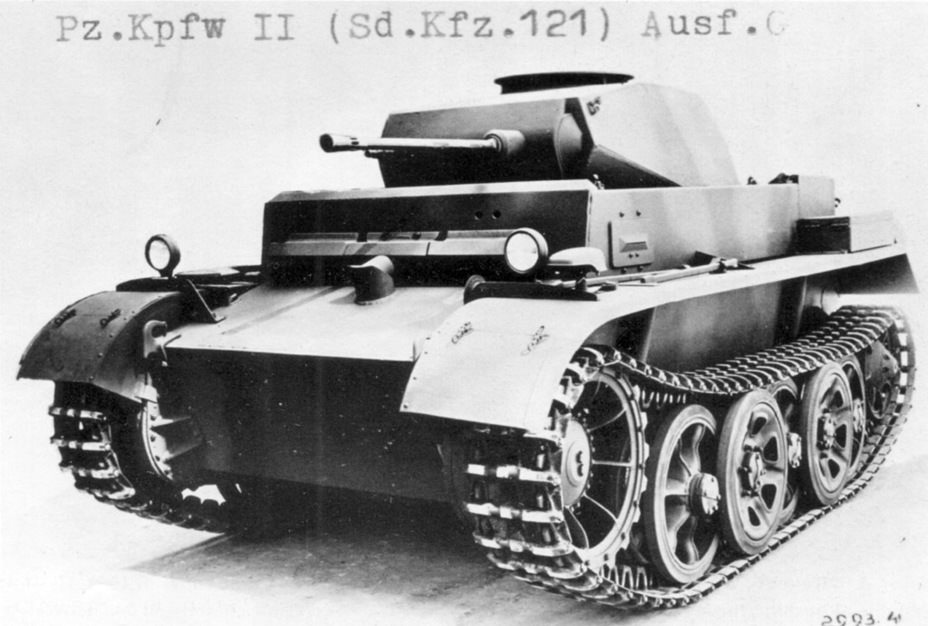
BTW: Tamiya erred when calling this a Pz II ausf F/G. The ausf G is a completely different vehicle (see below). The model can only be built as an ausf F, despite what the instructions say.

1 Like

Agreed on all counts Super Pershing! Unfortunately much of my research for the writing took place after assembly, which was guided by an alternative view of reality in the instructions :sweat_smile: They do lead the uninformed modeler to think the difference between Ausf F and G is the stowage bin.. On that note, I’d best retitle the post!

Knowing the prevalence of the stowage bin amongst real-world examples or not, this probably wouldn’t have altered my decision to install it in this case. The fact is it creates more surface area and angles with which to test theories on painting and weathering, which was the primary purpose of this build. If I was to attempt this subject as a build to completion/display, I’d probably hunt down a more modern kit that’s more representative out of the box

1 Like

Regarding the rear turret stowage bin, the vast majority of Panzer IIs did not have them. The example at Benning was captured in North Africa and was one of the few to have such a feature… along with the stowage box on the left rear fender. Tamiya based their kit upon that vehicle.

The captured example…. Units in Africa also occasionally added the right side fender stowage box to the left rear fender.

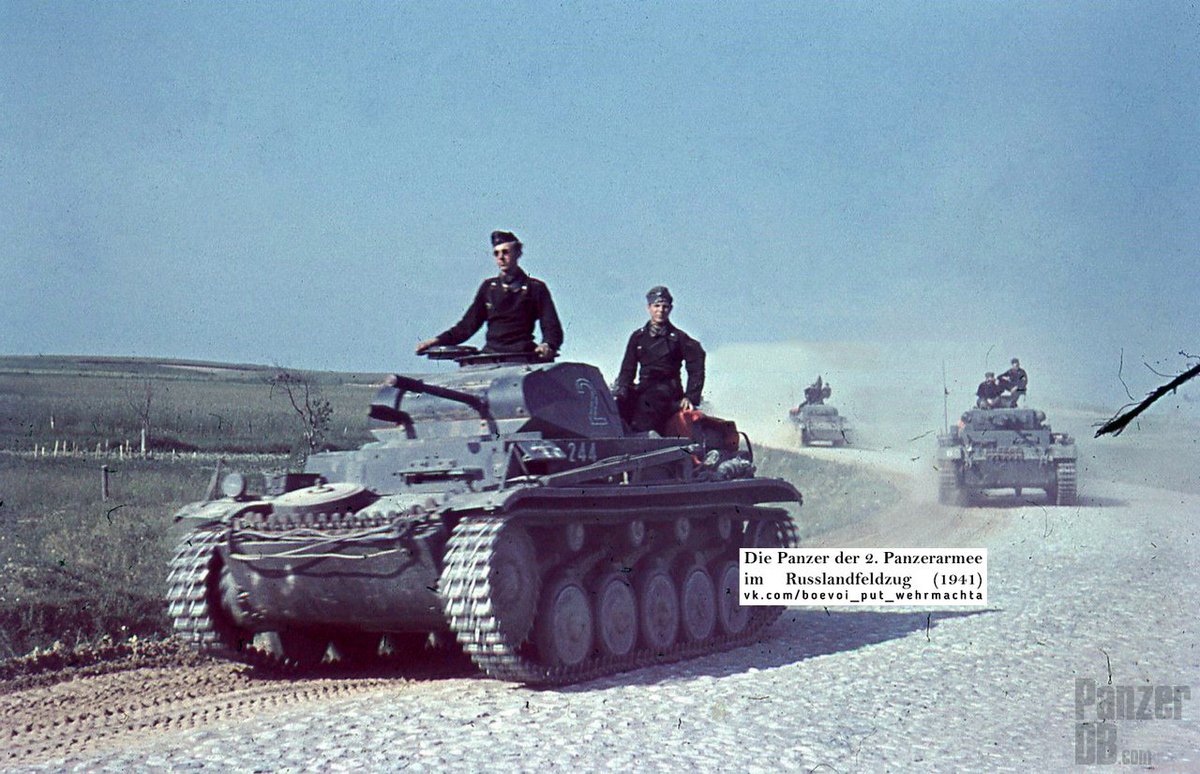
Standard Panzer II left side fender

1 Like

Great photos - Thankyou for contributing! May the discussions around the stowage bin be a cautionary tale for modelers concerned with a faithful representation of Panzer II!

1 Like