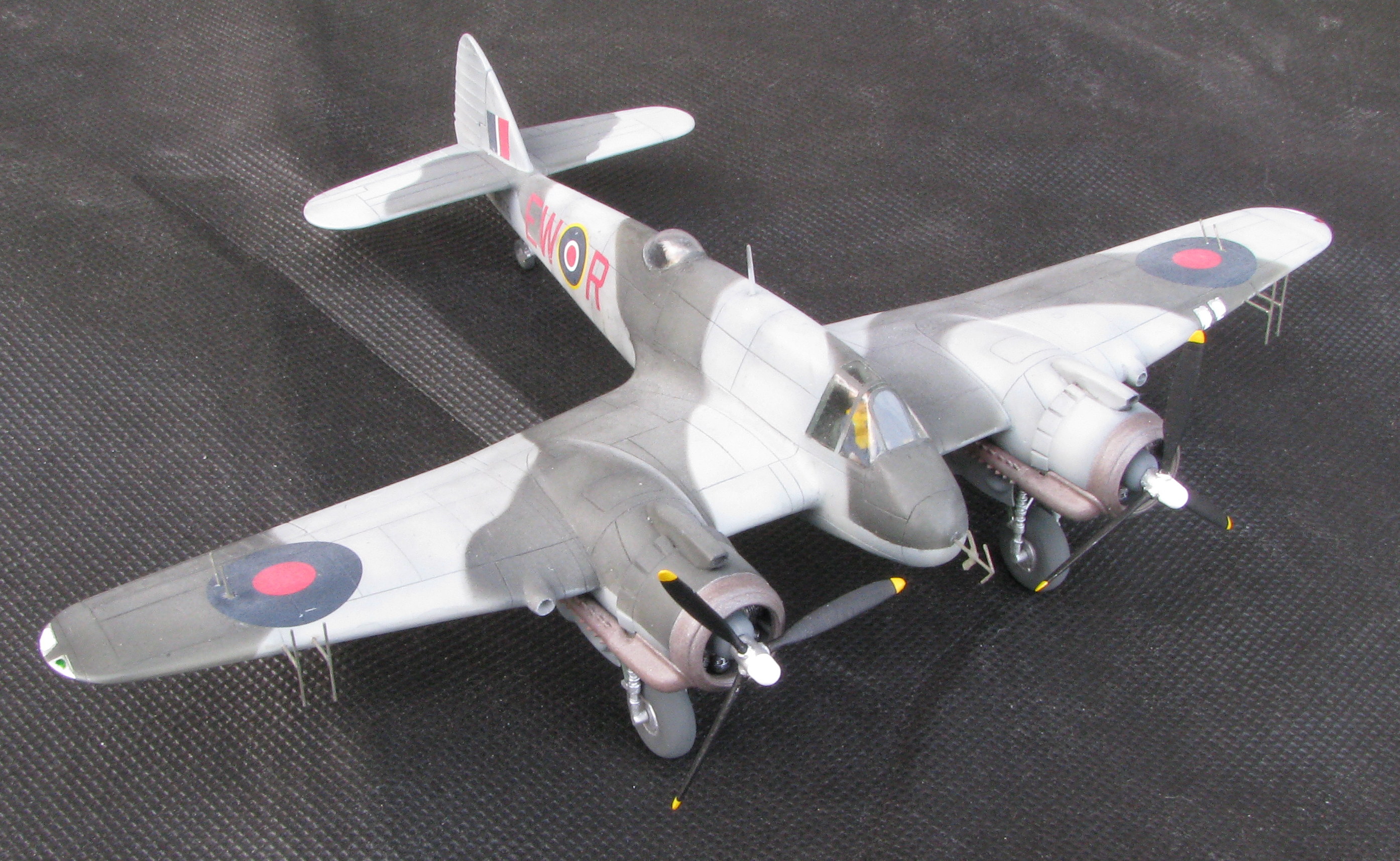
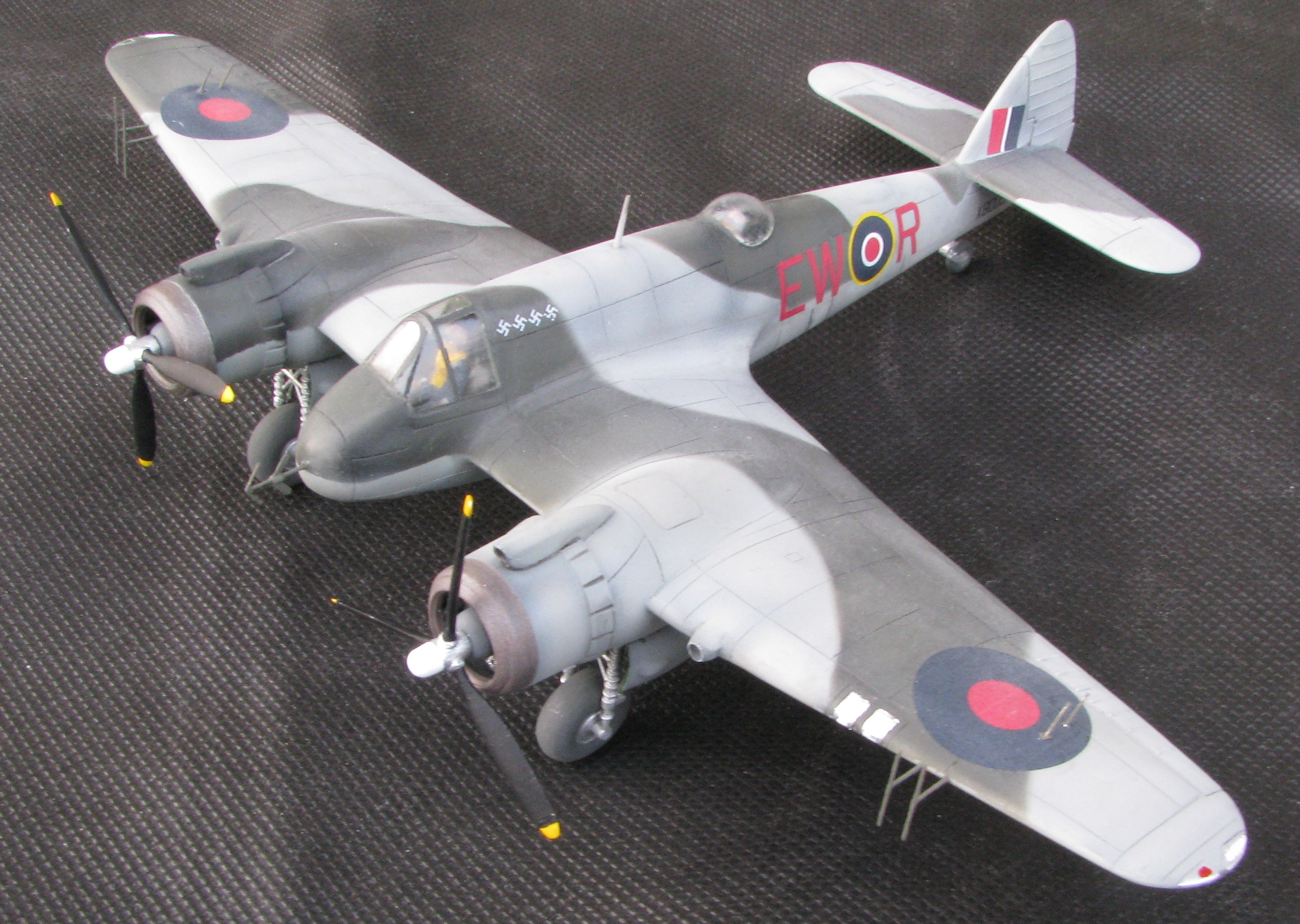
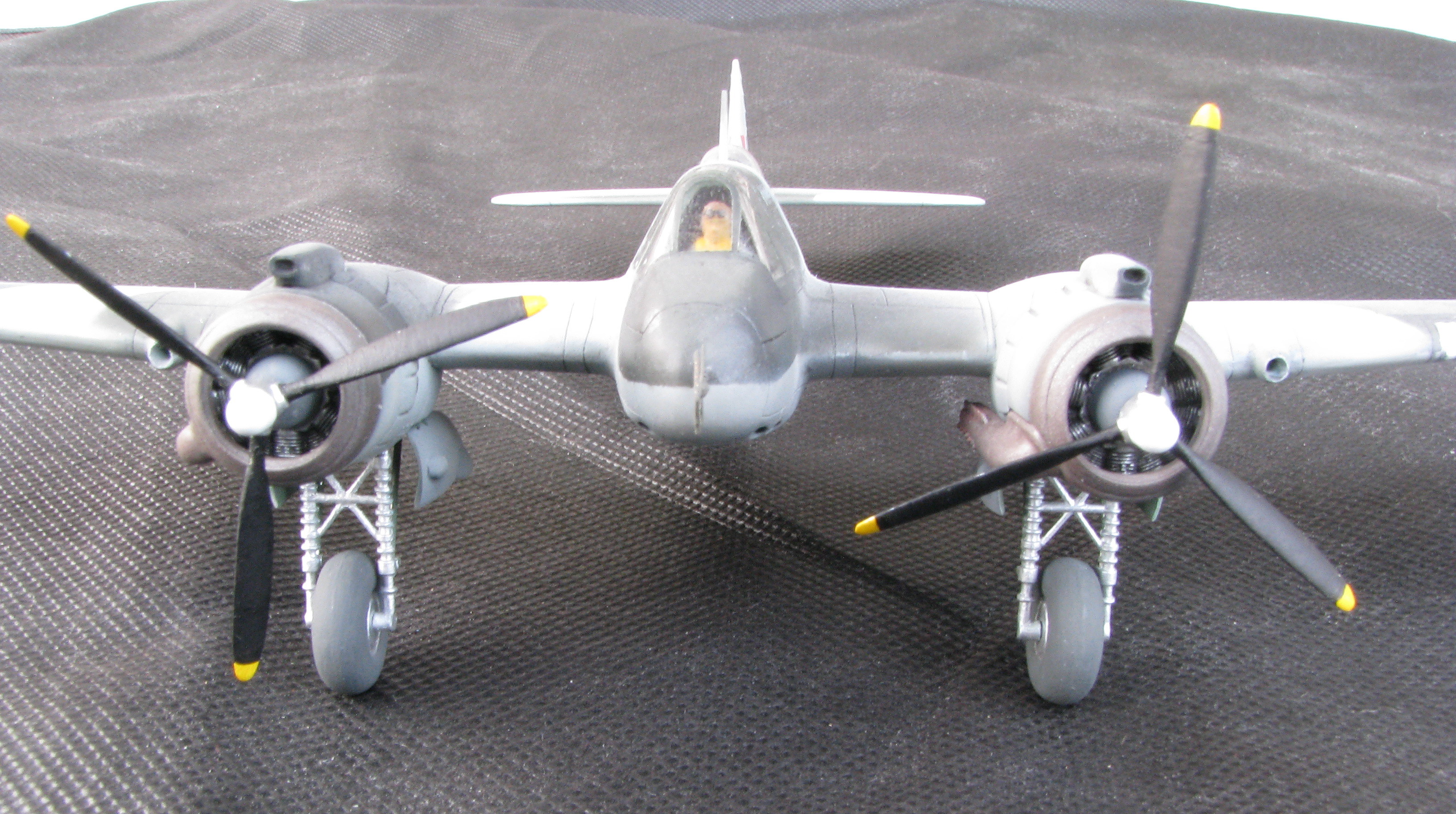
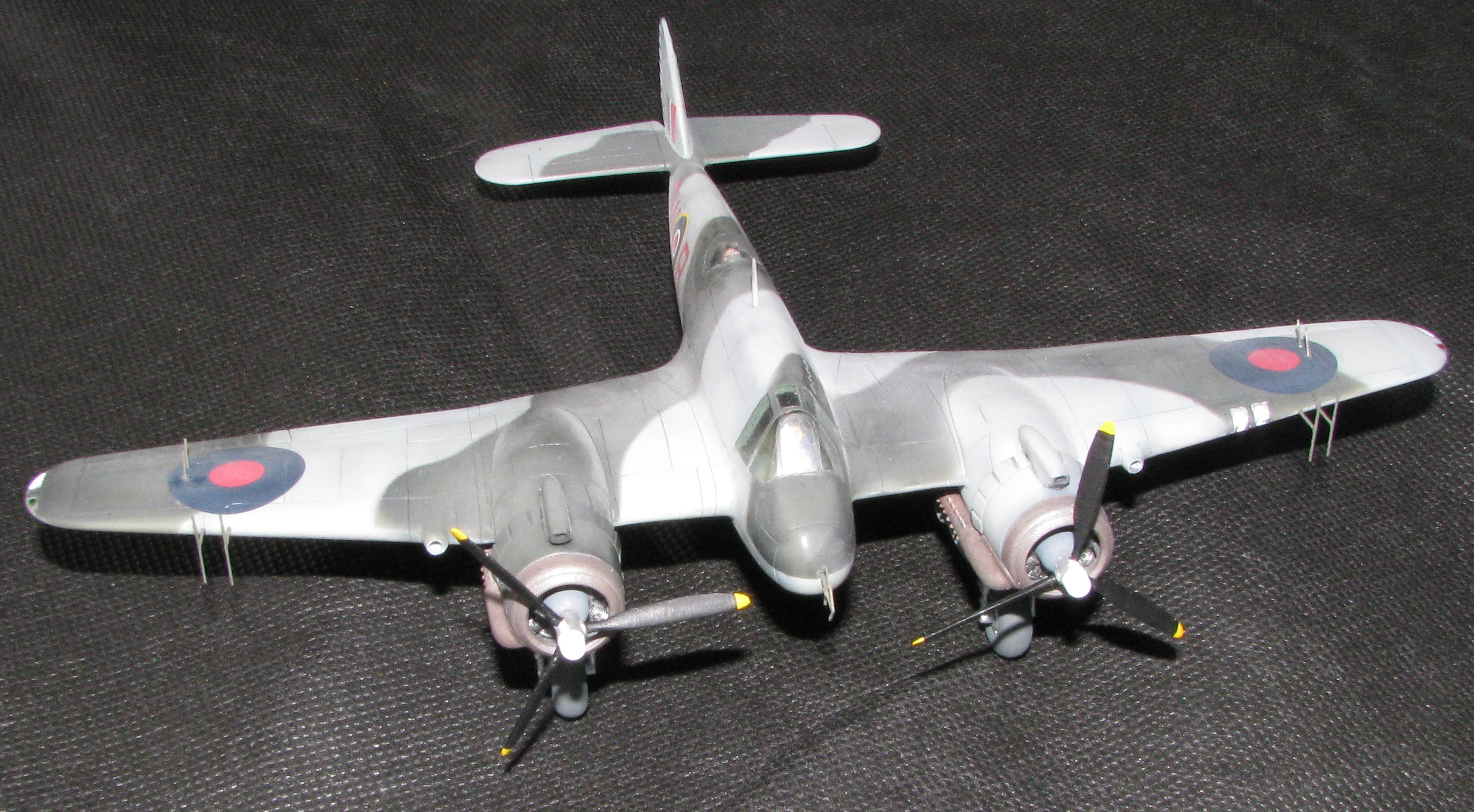
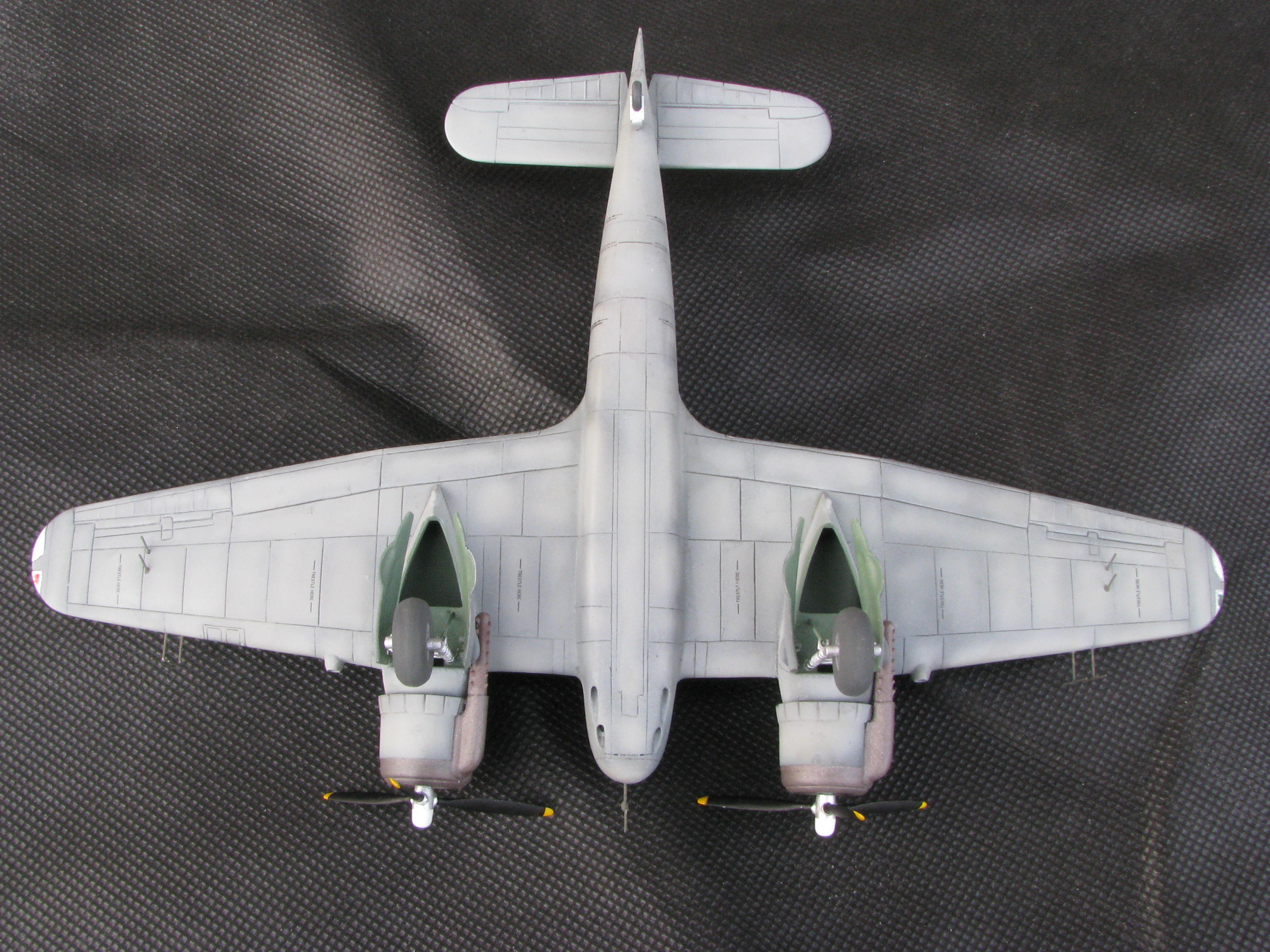
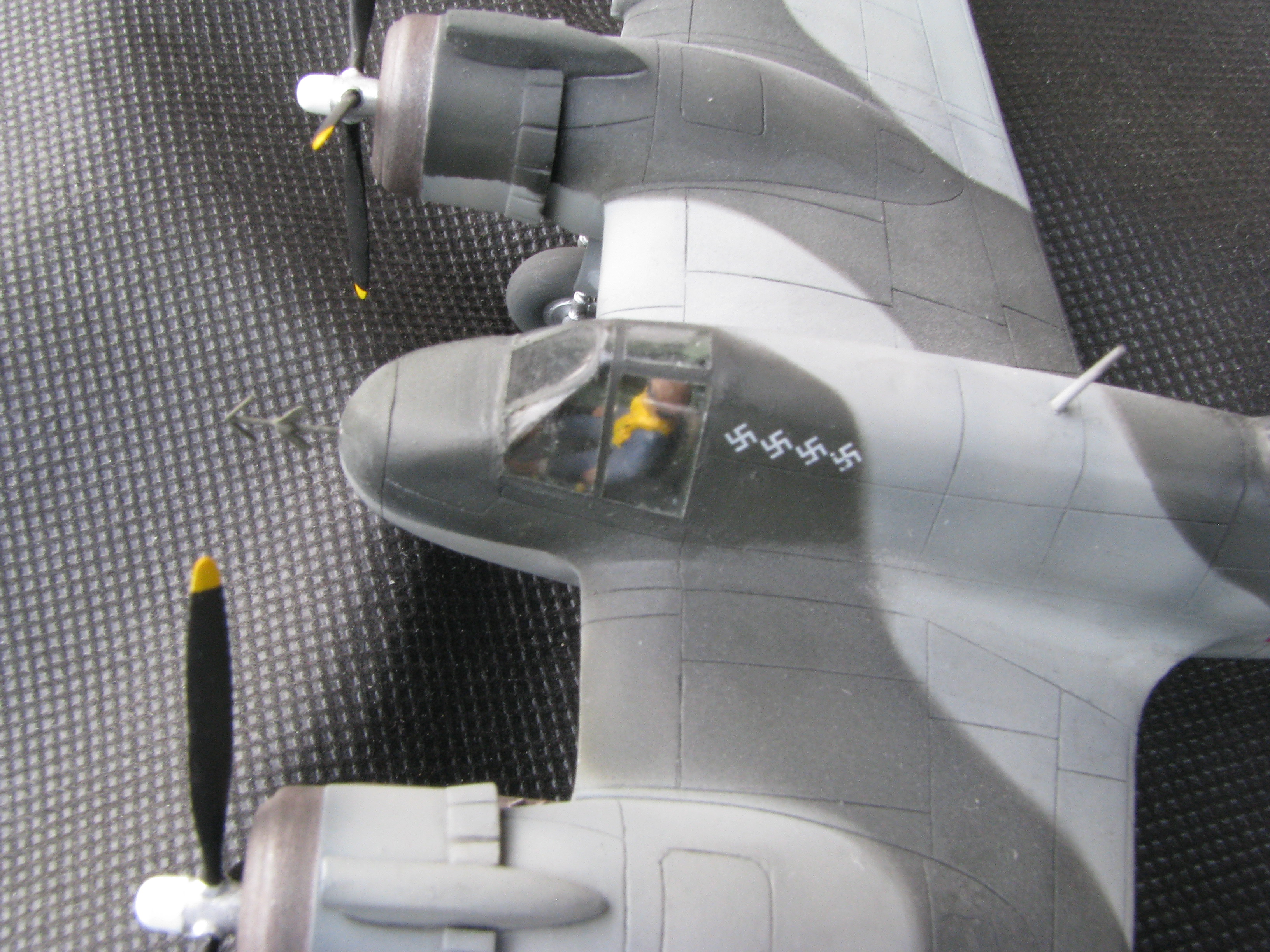
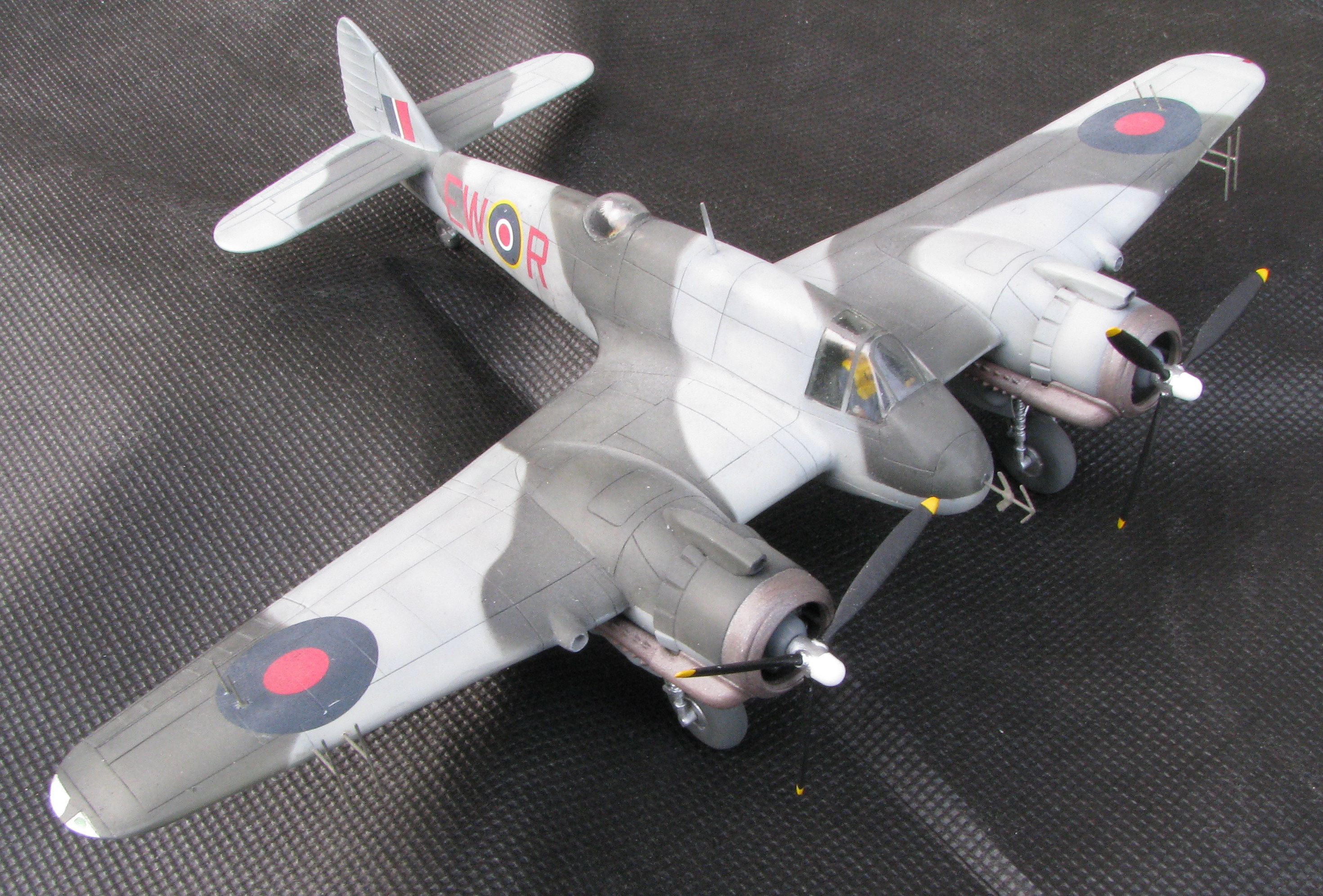
Today I finished a model that I started building some 25 years ago. My mother brought it for me from the Soviet Union. The company that made the kit was called Novo and they bought some molding equipment from the Frog company and sold copies of their kits for decades. As plastic models in then socialist Poland were pretty hard to get, I jumped right in and built the model. It wasn’t especially good, to say the least, but I was sentimental (probably still am) and kept the glue bomb for all the years. After a move, like two years ago, I decided to rebuild it. I bought a sheet of decals from the Polish Techmod company and went on from there. I stripped the paint and old glue from the model, glued it back together, and gave it it’s share of filling and sanding. I rescribed all the panel lines and made my own vacuum-formed canopies to replace the old stuff, barely transparent by now. I painted the model with Humbrol paints, 165 for the gray and 163 for the green. The markings are for a night fighter from a Polish 307 Squadron flying in Great Britain in the end of 1942. The four kill marks on it were what attracted me to this particular scheme. The pilot, Gerhard Ranoszek managed a blind landing on this bird, after the oil from the bomber he just shot down splashed on his windscreen. Awright, enough of the writing, here are the photos:
Hope you liked it - thanks for reading and have a nice day!
GMorrison - You’ve got that right with those Novo kits! As for the horizontal tailplanes - it’s also a mystery to me, as per the book they should have a dihedral, but the photo evidence clarly shows at least this one didn’t. Maybe a rebuild from earlier version?
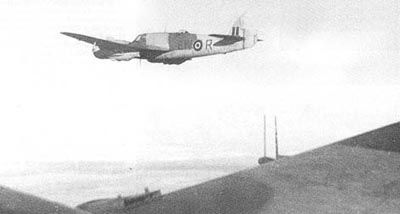
antoni - thanks a lot for the photo, I was going to post it and now I don’t have to, thanks a lot!
As I understand, tailplanes with 12o dihedral were introduced because of problems with stability when carrying torpedoes. It is often said that the whole production of Mk IIs were fitted with these tailplanes but it is obvious from photographs that flat tailplanes were fitted throughout the entire production. Early Mk IVs were converted from Mk Is and had flat tailplanes. X8005 was built by the Bristol/MAP Shadow Factory, Old Mixton, Weston-Super-Mare. 500 aircraft were ordered and built as Mk If, Mk Ic, Mk VIf & Mk VIc.
Serial numbers X8000 to X8029 were Mk VIf folowed by X8030 to X8039 MK VIc.
I would not be surprised if there are photographs of examples of Mk IVs from later production batches that have the flat tailplanes.
This is really neat Pawel. It got me to thinking about my old friend Jerzy “George” Solak. He flew in 151 and 249 Squadrons during the BoB and onward with other Squadrons until he was shot down in 1944.
GMorrison - yeah, those pilots were really something special, weren’t they? So cool you had a chance to meet one! History and politics really messed with their lives during and after WWII…
CodyJ - thanks a lot, glad you liked it!
Chris - I understand you. A model is not an ordinary object - time and especially work put into it make it very personal. Thanks for your kind words!
Cadet Chuck - thanks a lot!
Jack - maybe a build like that should be mandatory for all the people complaining about the quality of some modern day kit - should put things into correct perspective [:D] Thanks for your kind words!
Thank you all for your comments and have a nice day!
A beautiful restoration of an old kit/model. My only issue is with the engine gear casings. You have them painted grey but they should be a semi-gloss black.
Otherwise, a fine job and something to be proud of.