The X-Files Group Build

The Douglas D-558-2 Sky Rocket is coming along. I’ve manage to putty most of the seams and begin sanding. It will need a bit more of this before she’s ready for primer.

Considering this model is as old as I am, I’ve had few problems with it. Painting is usually where I have problems. Oh, well!

Gary

The Douglas D-558-2 Sky Rocket

The Douglas D-558-II “Skyrockets” were among the early transonic research airplanes like the X-1, X-4, X-5, and X-92A. Three of the single-seat, swept-wing aircraft flew from 1948 to 1956 in a joint program involving the National Advisory Committee for Aeronautics (NACA), with its flight research done at the NACA’s Muroc Flight Test Unit in California. The Skyrocket made aviation history when it became the first airplane to fly twice the speed of sound.

The II in the aircraft’s designation referred to the fact that the Skyrocket was the phase-two version of what had originally been conceived as a three-phase program, with the phase-one aircraft having straight wings. The third phase, which never came to fruition, would have involved constructing a mock-up of a combat-type aircraft embodying the results from the testing of the phase one and two aircraft.

The D-558-II was first flown on Feb. 4, 1948, by John Martin, a Douglas test pilot. An NACA pilot, Scott Crossfield, became the first person to fly faster than twice the speed of sound when he piloted the D-558-II to its maximum speed of Mach 2.005 (1,291 mph) at 62,000 feet altitude on Nov. 20, 1953. Its peak altitude, 83,235 feet, a record in its day, was reached with Lt. Col. Marion Carl at the controls.

The three aircraft gathered a great deal of data about pitch-up and the coupling of lateral (yaw) and longitudinal (pitch) motions; wing and tail loads, lift, drag, and buffeting characteristics of swept-wing aircraft at transonic and supersonic speeds; and the effects of the rocket exhaust plume on lateral dynamic stability throughout the speed range. (Plume effects were a new experience for aircraft.) The number three aircraft also gathered information about the effects of external stores (bomb shapes, drop tanks) upon the aircraft’s behavior in the transonic region (roughly 0.7 to 1.3 times the speed of sound).

The need for transonic research airplanes grew out of two conditions that existed in the early 1940s. One was the absence of accurate wind tunnel data for the speed range from roughly Mach 0.8 to 1.2. The other was the fact that fighter aircraft like the P-38 “Lightning” were approaching these speeds in dives and breaking apart from the effects of compressibility-increased density and disturbed airflow as the speed approached that of sound, creating shock waves

The Navy contracted with Douglas to design the airplane, and in the course of the design process, the D-558 came to be divided into two separate phases, with phase one being a straight-wing turbojet aircraft and phase two consisting of a swept-wing design with turbojet and rocket propulsion. At the NACA’s suggestion, based on the research of Robert Jones at Langley and captured German documents, Douglas and the Navy had agreed to the swept-wing design, and to provide sufficient power to propel the swept-wing airplane past Mach 1, they also agreed to add rocket propulsion.

The three airplanes flew a total of 313 times-123 by the number one aircraft (Bureau No. 37973-NACA 143), 103 by the second Skyrocket (Bureau No. 37974-NACA 144), and 87 by airplane number three (Bureau No. 37975-NACA 145). Skyrocket 143 flew all but one of its missions as part of the Douglas contractor program to test the airplane’s performance.

NACA 143 is currently in storage at the Planes of Fame Museum, Ontario, CA. The second Skyrocket, NACA 144, is in the Smithsonian Institution’s National Air and Space Museum in Washington, DC. NACA 145 is on display in front of the Antelope Valley College in Lancaster, CA.

Very cool Gary!

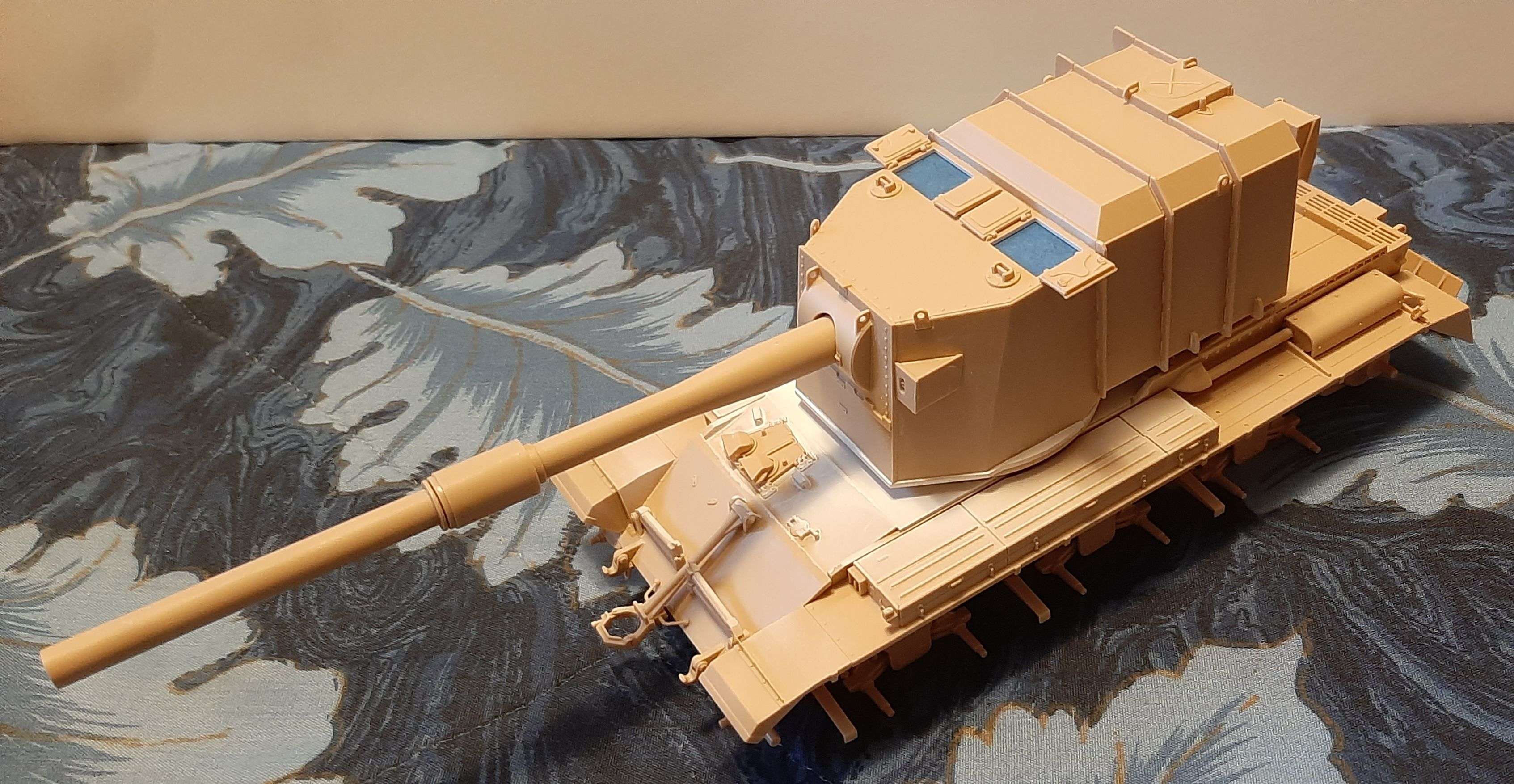
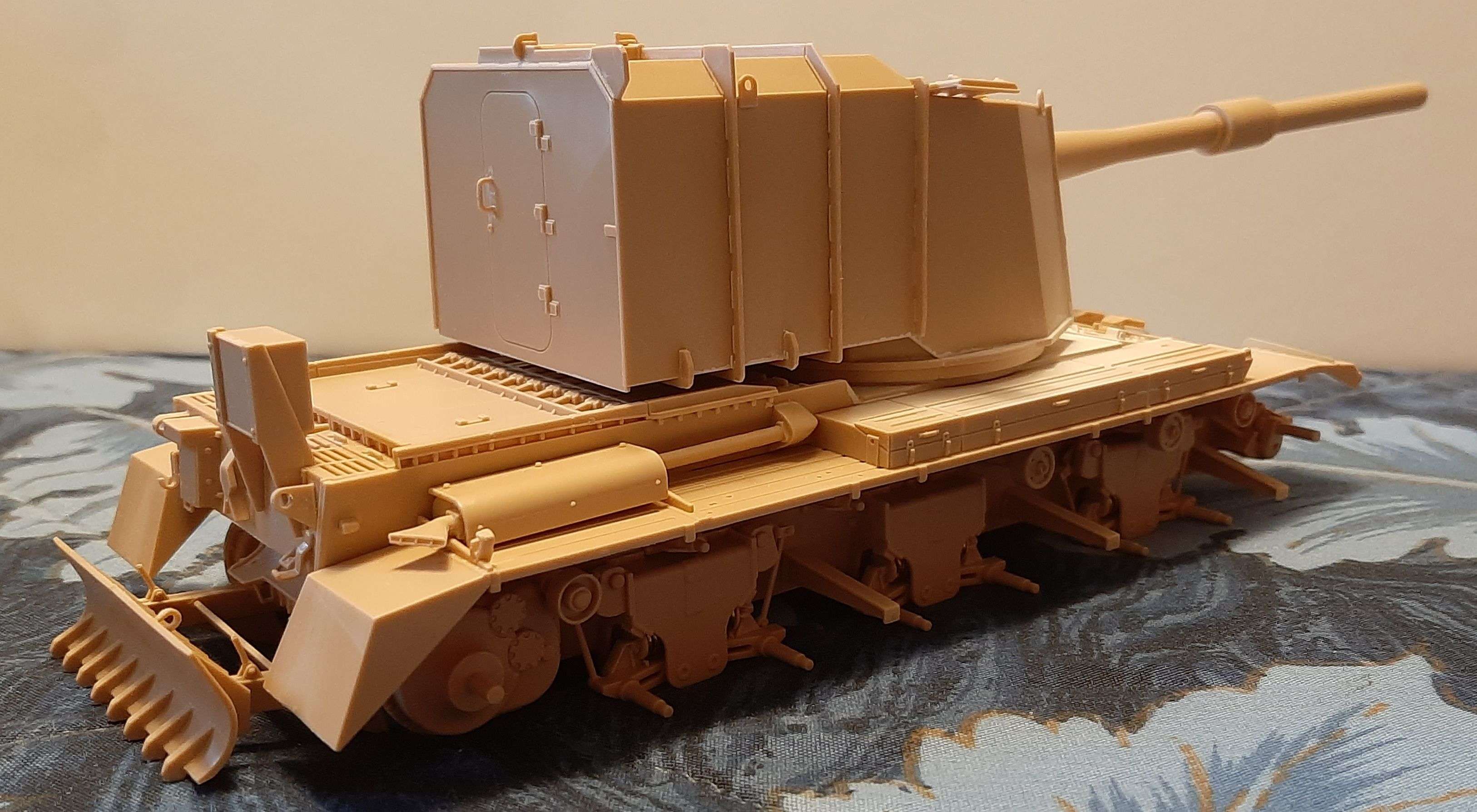
I’ve got the FV2005 mostly assembled by working on it in the evenings while on vacation. Need to get the photos up soon. Probably won’t get to painting it till next year though.

That’s dedication, working on it through your vacation. I eagerly anticipate seeing those photos. But, I understand it’s the Holidays and people have other things on their minds (like what models they’ll get from Santa)! [:)]

Gary

Well, not really dedication. I just need something to do in the evenings while watching TV or YouTube videos on my phone.

Hopefully I’ll have some photos up before too long.

Great job, Gary, that’s a nice orange finish.

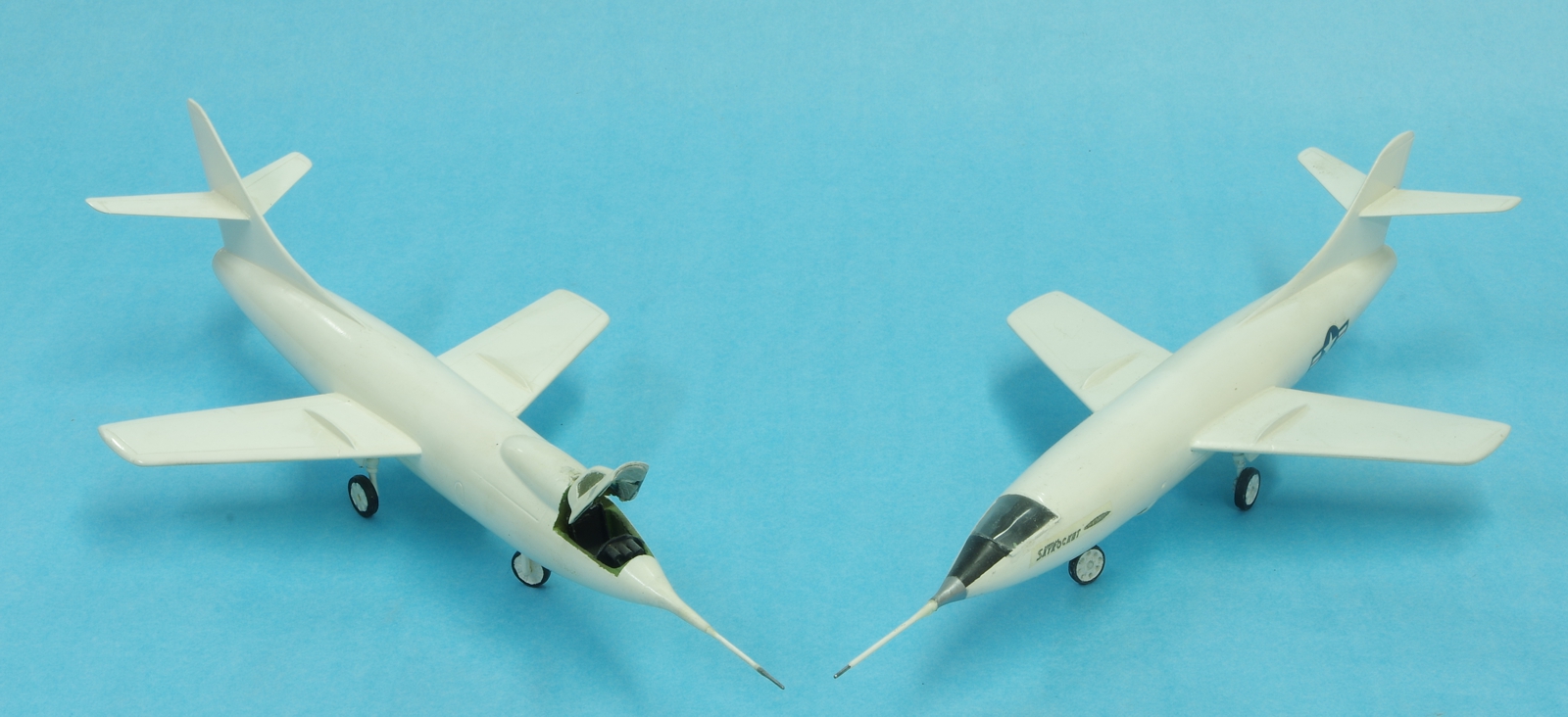
Since the D-558 II is being posted, here are two of the Revell kits I did 15 or more years ago, though I count them as “not quite” finished. The one with a flush canopy is how the airplane was for it’s first flight but after takeoff visibility was nil over the nose for most of the flight so it was changed to the shape we are used to seeing.

Thanks, John! Those are neat representations of the Sky Rocket, especially the early one!

Well done!

Gary

Krupp Räumer S

One of the most bizarre vehicles created during the Second World War is the Räumer S, a massive 130-ton machine built by the German company Krupp. It is comprised of two separate halves, connected in the centre and able to articulate, each end is powered by its own engine.

Germany’s rapid re-armament from 1934 onwards focused mainly on ground warfare capabilities, along with a well-equipped air force to support the army on the battlefield. With the rapid acquisition of large numbers of tanks and other armoured fighting vehicles, the German Army command recognised the need for a specialised mechanical mine clearing system with the ability to keep up with armoured spearheads in the field.

In September 1940 the General Army Office (AHA) issued a formal requirement for a heavy mine-clearing vehicle, and on the 16th of that month the Weapons Office ordered a prototype from the Alkett group of companies. Later, the Krupp conglomerate was also invited to respond to the design proposal.

The design concept had strict parameters: the vehicle should be armoured, self-propelled and fitted with rollers that could clear a path three metres wide. It was not to weigh more than 40 tons, and no taller than 2.7 metres, wider than three metres and no longer than 10 metres. The crew had to be totally protected from artillery fragments, small arms fire and naturally, the blast from detonating mines.

Both companies proceeded with their separate design proposals, but experienced repeated and prolonged delays due to problems sourcing some components, and a lack of urgency on part of the government and German Army towards some projects like these. The Alkett design was presented to the general staff in August of 1942, but this prototype, which was known as the VsKfz 617 Minenräumer, was deemed unsatisfactory, and work was suspended on this vehicle by the company.

Krupp showcased their competing design in September 1942, and this prototype was also judged to be unsuitable but enough redeeming features were found for further development to be authorised.

Krupp developed their original proposal into the Räumer S, and this new design was much larger and heavier, but was an innovative blueprint that promised great efficiency if manufactured according to Krupp’s new specifications. The new design plans were forwarded to the Weapons Office in June 1943, and these were approved for prototyping shortly thereafter.

Construction on the prototype proceeded slowly, and further delays occurred when the Krupp factory in Essen was bombed, which necessitated the relocation of the project to a facility near Hillersleben. The project vehicle was shown in an incomplete state to the general staff on the 10th August 1944, and although Krupp promised to have the prototype finished by September, it was not shown to the Weapons Office as completed until November 1944.

With Germany obviously losing the war by 1944, any urgency for the project ceased as it was obvious that no more large-scale mechanised offensives were going to be conducted again by the Wehrmacht, and the prototype never left the Hillersleben facility. It was captured intact by the United States Army in 1945, and taken to Paris for testing.

Due to a lack of records the vehicle fades from history at this point, but one fragment of an American assessment of the Räumer S speculated that the vehicle could also tow a trailer for mine clearing duties, to enhance the total area being cleared of mines.

The Räumer S was an innovative concept, and Krupp were able to finalise a design that fit well within the technical hurdles they were trying to overcome. For crew safety and battlefield mobility a ‘penny-farthing’ concept was used for the vehicle wheels, which were nearly three metres in diameter.

The Räumer S was designed as having two cabins with an axle each, and these segments were joined by a pivoting pin, which swivelled when impelled by hydraulic cylinders.
Each half of the vehicle was equipped with its own power plant, and had a separate driving station that allowed the Räumer S to be driven either forward or in reverse. This was done because the turning circle of the vehicle was overly large, and having two driver stations allowed tactical retreats to be made in relative safety.

The crew consisted of eight personnel, one driver and seven observers/sappers. All crew were seated on sprung seats, and the crew pods had plating to 25 mm in thickness – the high ground clearance of 1.4 metres along with the armour and sprung seats ensured the crew did not suffer any ill-effects from mines detonating in close proximity.

The dimensions of the Räumer S were certainly impressive, and far exceeded the original specifications outlined in the 1940 design proposal. The vehicle had a length of 15.63 metres, a height of 2.93 metres and the different lengths of the two axles (this was done to increase the total of the ground area covered in mine-clearing operations) meant that the Räumer S had a wheel-track width of 3.3 metres.

The total weight of the Räumer S was a staggering 130 tons, and this weight reached the high ground pressures needed for triggering pressure-sensitive mines.

The wheels were 2.7 metres in diameter, and had a width of 530 mm. Each wheel was fitted with massive rubber pads up to 15 centimetres in thickness, and each axle had a very long suspension travel. This was necessary because a wheel could be blown up to half a meter in the air by the blast of a mine, or suddenly drop up to a metre into a mine crater, while still supporting the vehicle body.

The Räumer S was completely unarmed, though the crew had provisions to carry their personal weapons in the vehicle cabins.

The vehicle was fitted with two Maybach HL-90-P-20-K engines, which produced 350 BHP each, with one engine in each of the vehicle’s halves. It was capable of travelling at 15.5 mph (25 km/h) on the road, and operated at 2.5-5 mph (4-8 km/h) when in mine clearing mode.

The German war effort in the Second World War is littered with examples of weapon systems proposals that either never came to fruition, entered service too late to provide a technical advantage over the enemy, or employed in numbers too small to make any appreciable impact on the course of the conflict.

Hi GAF! I would like to join this GB. I just finished “Box art” GB and I try to attend one GB at the time that all my builds would not end to “Get it done!” GB [:$]

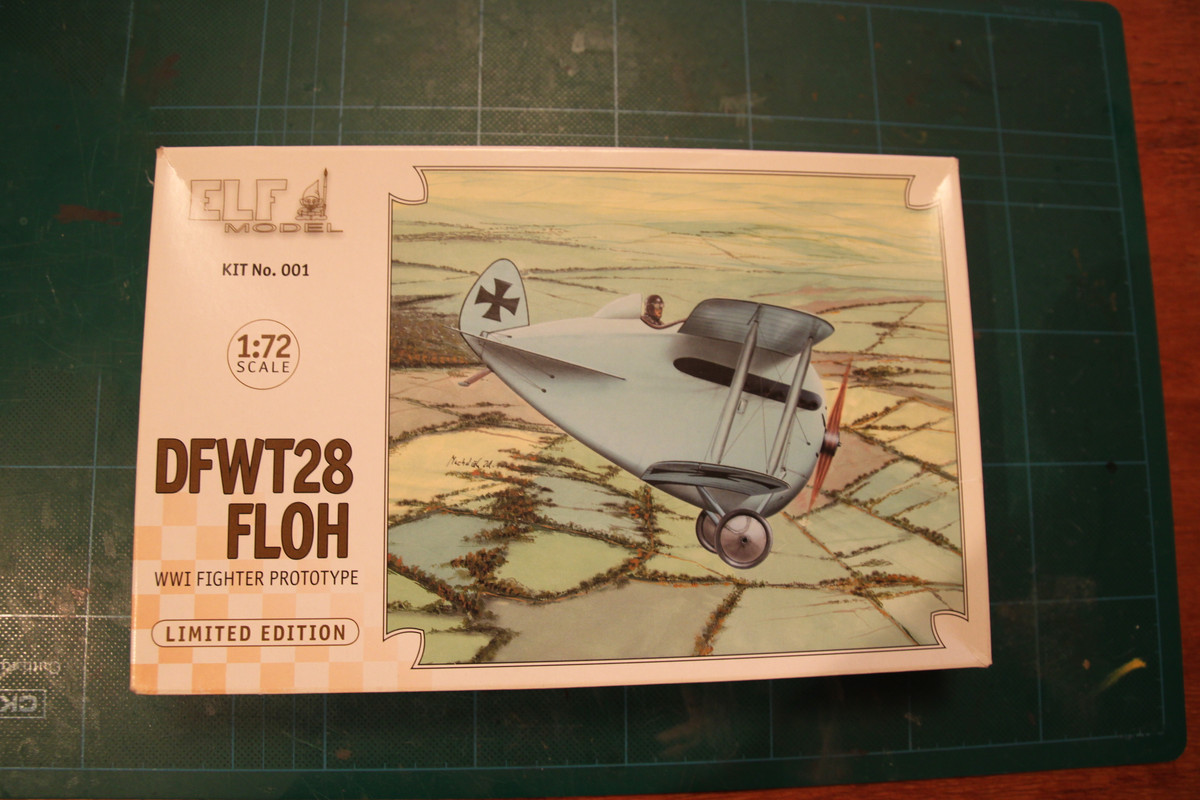
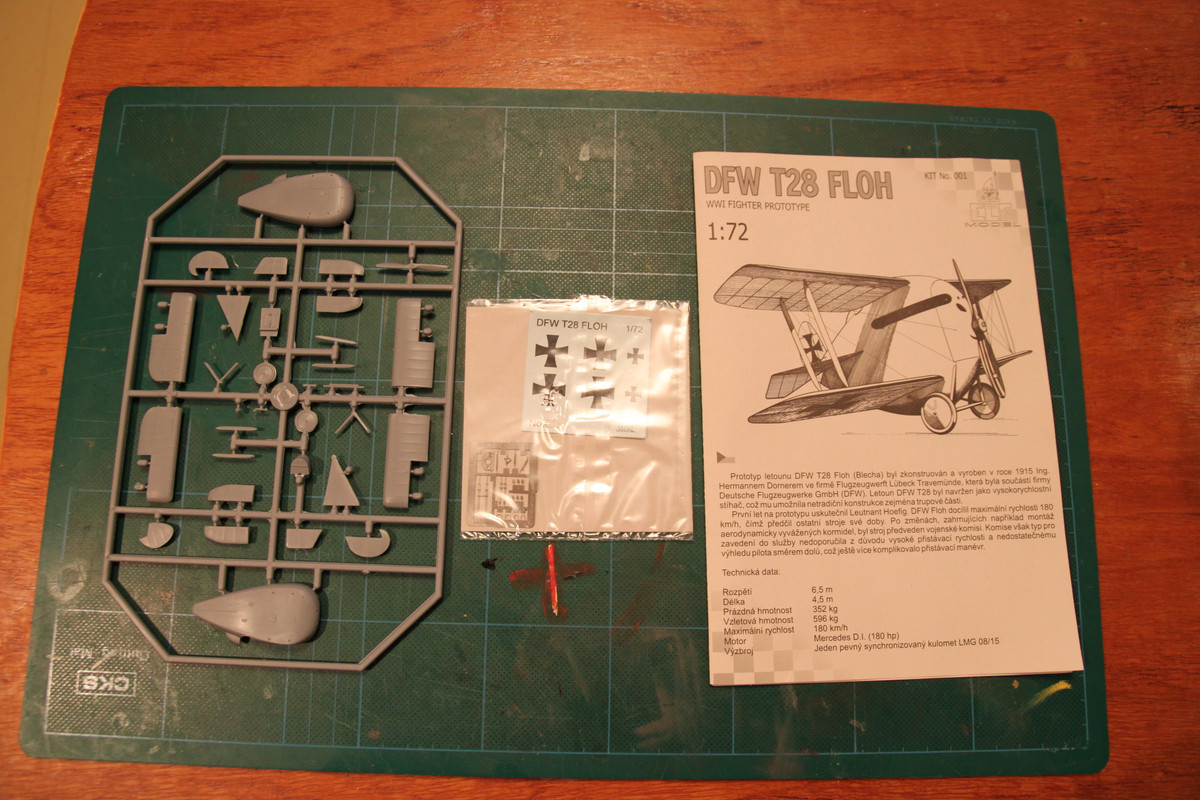
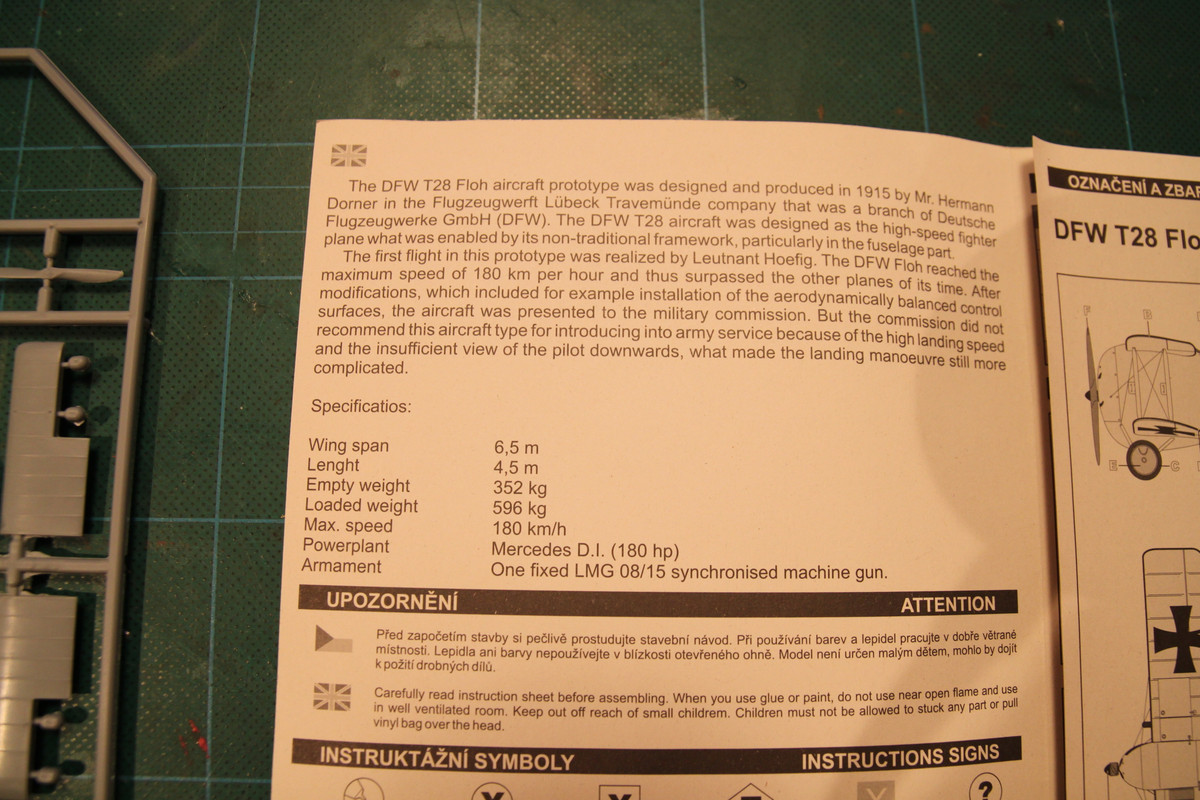
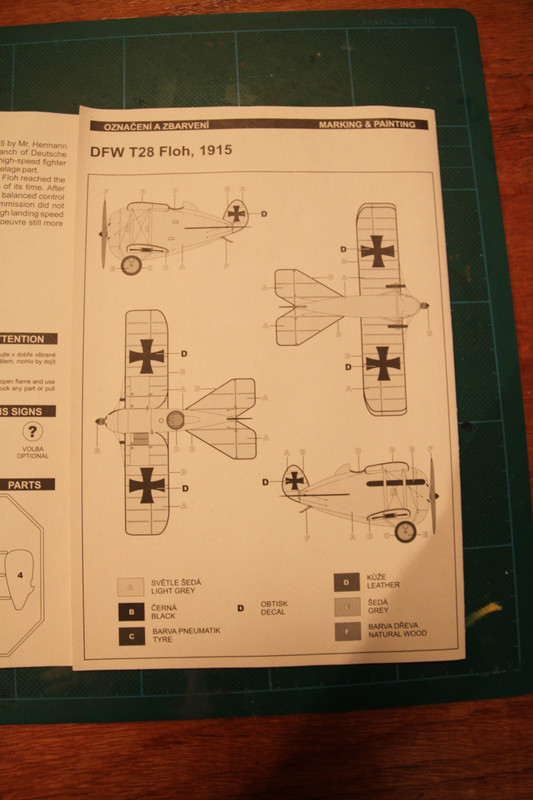
My kit is ELF Models DFWT28 Floh WW1 fighter prototype.

Welcome, Trabi! That is a unusual aircraft. It almost looks like one of the “egg” aircraft put out by Hasegawa! I’ll get you on the list.

Gary

Yeah wow, that’s so cool Trabi! I’ve seen it in books but had no idea anyone made a model of it.

Beautiful paint job on the X-1, Gary. The paint might have been the biggest problem but it sure did turn out pretty.

I’m calling these two done. Both were fun little builds. These were massive machines in real life so that even in 1/72, there weren’t many tiny parts. Minimal weathering on the Raumer S as it was only ever a prototype. The minenraumer did get a little dirty on a test trip through a minefield or two though.

Nice job! Those things are quite beastly, understandable due to there role.

Those look superb, Cary! I’ll get you up on the front page ASAP. Congrats!

Gary

Yeah those look fantastic Cary!

Great job on them!!!

The FV2005 is almost assembled. I put down a few coats of British bronze green a few days ago. I had to paint some of the vehicle before adding stuff like the muffler guards since there’s no way to paint behind them after assembly.

Talk about the “broadside of a barn”! That looks like it belongs on a destroyer instead of a tank!

Looks good!

Gary

Yeah, no kidding! I hear in World of Tanks their version of the FV2005 is called s**tbarn of doom… [:|]

There are a few patches in the paint I want to get evened out before I get the painted version up. Hopefully soon.