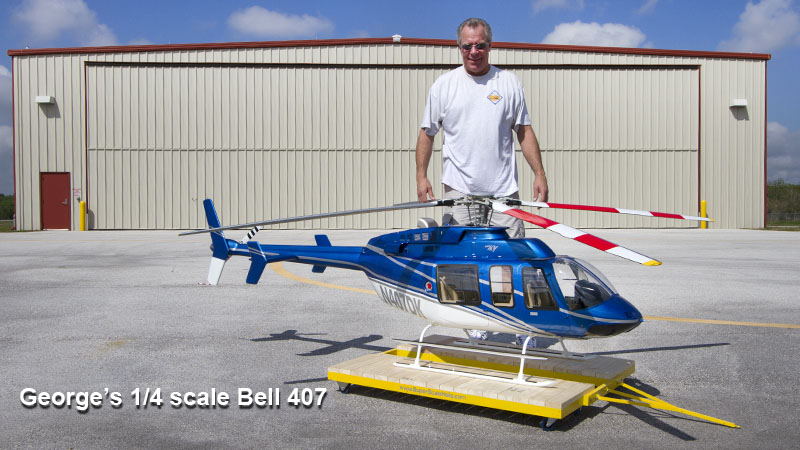
Ok, I need help. Until I am up to speed on this I am never going to be able to buy the right model.
I am going to make a statement and someone, PLEASE, set me straight or tell me I’m on the right bus.
The larger the number after the 1/ the smaller the model turns out to be when assembled.
I just bought a 1/35 scale model and was personally disappointed when I saw how big the box but how little the parts. One of the reason’s I like the UH-!D Gunship, because it makes a model of the bird that is big. The fuselage is big, the tail rotor is big, the main rotor is big, the mini gun is tremendously tiny compared to the modified M60’s and the rocket launchers. Even the tail rotor drive shaft is large compared to the ‘tip of a pencil’ drive shave you have use a microscope to see in the 1/48 scale version. It’s odd to me the difference in size of the parts between 35 and 32. You go from Shaq (32) to Spud Webb (35) to Tom Thumb (1/48). I am afraid to even attempt assemble a 1/72. I’d need the Hubble telescope to see the parts.
Based on the pathetic rant, do I need to stick to 32 and shoot for say 1/10 scale?
The easier way is this. Pick the subject you want to model, say a UH-1 as in your example. Look it up using your favorite search engine (or physical reference) and find out it was 59 ft 9 in long including the rotor (plus a fraction of an inch, but that’s close enough). So, that’s 59.75 ft long.
So, you say at 1/35 scale that would be an overall length of 59.75/35 = 1.7 foot long. Roughly 1ft 8 in. Then just ask yourself, is that big enough for you? IF not, 59.75/32 = 1.87 foot long in 1/32 scale. Next maybe 59.75/24 = 2.49 foot long in 1/24 scale. Repeat until you think you’ve got one the size you want. Then go buy that one. No guesswork needed.
1/72nd scale is the default scale, equals 1"=72"… a 6’ human would be 1" tall…
1/48th scale is a larger scale and is 50% larger 1"=48"… a 6’ human would be 1.5" tall
1/35th scale is a metric scale 1"=35.04"… A 6’ human would be 2.06" tall
1/32nd scale is an even larger scale, 1"+32" (1’8") a 6’ human would be 2.25" tall
How you apply such to figuring out how large your model will be has been answered by DS Webb above…
Just take the real life size measurement and divide by the desired scale will give you the overall size of the object in scale…
OR, you can take the overall real life measurement and divide it by the space measurement you want it to fit into and that will give you the approximate scale…
For example a 400 foot ship hull (4800 inches) in a 24 inch space 4800/24 = 1/200th scale
Look at it this way, one inch of scale equals n inches of the real thing. It is a ratio.
One inch on your scale ruler represents 35 inches in 1:35 scale. One foot represents 35 feet, one meter represents 35 meters …. One inch is 72 inches in 1:72 scale, one inch is 48 inches in 1:48 scale, one foot is 700 feet in 1:700 scale
Math! No one told me there would be math in modeling!
OOOOOK, that helps tremendously. I am a model train enthusiast. O Gauge, 1/4 inch scale (1:48) So back to my usual conflict with scale. I fully understand the ratio thing now. I was right and didn’t think I was. Quarter inch scale was easy for me to follow. 1/4 inch equals 1 inch in scale. So naturally, 1 inch=4 feet or 48 inches. Multiply by 4. So, a 60 foot Huey should measure 15 inches long in the box. 15x4=60. In my example, 60/4=15. So why is the fuselage in the italyeri and my guess the Kittyhawk model, only 11 inches long? They say right on the box, 1/48. I measured the Italyeri and it was only 11 inches give or take where you started at the nose and stopped a the tail gearbox. So according to IT and KT (abbreviating), they think Huey’s are only 44 feet long?
Now as for 1/32 and 1/35 it’s easy peasy for me. Lower the number behind the / the bigger the model and parts inside the box. So based on what I know now, 1/72, for me, is a microscope waiting to happen. Now I can ask this, how low does that number on the opposite side of the1/ actually go?
Well - I like 1/144 and 1/200 airliners. There’s 1/350 and 1/700 ships and I think sci-fi probably wins with some tiny scales like the Bandai 1/14,500 scale Star Destroyer.
I’m back. Been watching MNF. Yes. How big. 1/32 is the lowest I’ve looked for because 1/32 is the lowest I know of. Is there a 1/24 for instance. 1 inch equals 2 feet? Nice Tiger. Chenault would be honored.
Yes, there are 1/24 aircraft models, but not all that much variety. You’d have to just search. Some of the online hobby stores let you filter by scale. I believe hobbylinc.com is one, maybe scalehobbyist.com is another. Check some out.
I know there are larger scale figures available, as well as large armoured vehicles. If I recall correctly 120mm figures are in the 1/15 to 1/16 range, while 200mm figures are 1/6 I think.
Armour at 1/16 scale has seen a major build up in the past few years, and I think I’ve seen 1/10 maybe also.
Aircraft are generally much larger in real life, so 1/24 seems to be the largest I recall aside from kits meant for RC, which can be much larger.
The largest ships I know of is 1/72, usually for smaller craft although there have been some patrol boats in 1/35. Things like destroyers and larger tend to be 1/100 all the way to 1/700 or so. There are exceptions as there have been a few 1/72 aircraft carriers built - measuring 15+ feet long.
Civilian cars max out around 1/6 to 1/8 scale, most 1/20 to 1/32.
Sci-fi kits are all over the map in terms of scale, so it’s more about checking the built up size for your purpose.
1/35 scale for armour continues to bug me… My working theory is that the average height of a U.S. male in the 1950’s was 5’10" or 70". A 2" tall figure represesenting a 5’10" person would therefore be at 1/35 scale. There may have also been a pragmatic reason based on an intended size of the finished product and/or its packaging, which I understand has driven ship model scales over time.
Apparently Monogram started this trend in the late 1950’s, which Tamiya had followed in the early 60’s with their motorised models, and ultimately rendered 1/32 and 1/48 scale armour the exception rather than the rule (granted Tamiya still have a few 1/48 tanks in circulation).
Because you are only measuring the fuselage, 57’ .5" is the overall length of a Huey… NOT the fuselage length,
The fuselage length, (to the tip of the ground strike rod on a Huey, (according to wikipedia) is 40’5" divide that by 48… 40.5’ = 486" divided by 48 = 10.125"
If the kits fuselage actually measures 11 inches, it’s not 1/48th scale…
This is true, I’m building their Panther G Late and have their M1A2 Abrams in the stash, both at 1:48 - My point is it’s less common than 1:35, and 1:32 is rarer still