Thanks for the background on this weird aircraft. It’s always a pleasure to see something unusual.
Hey the triebflugel is awesome too! Great job on a not so great kit.
Thanks for letting us see her.
Great looking builds and interesting subjects. I too love these off the beaten path planes. But the concept of forward swept wings continues to fascinate. NASA tested forward swept wings in the early 90’s with the X-29

The Russians did also in the late 90’s with the S-47

Thanks guys for the comments! I’m glad you enjoyed the pics. I hope I have infected inspired some of you to jump on a project. It’s like going to kindergarten and spreading your cold germs. [+o(] “Hey guys, guess what I’ve got! Cough-cough.” (Don’t worry, the Triebflugel’s spots aren’t contagious!) But seriously, I think sharing is an important part of a forum, as seeing other people’s work really gets my modeling juices flowing! Believe me, you guys are a huge help to get me off my butt.
Okay, last one for the road. These little guys are the aformentioned Huma DM-1 and P.13. The P.13 was inspired by the insanely overpriced 1/48 Mauve kit. I figured the DM-1 was close enough to pull off a conversion, and the base kit was around $11.00, as opposed to the $80-90 for the Mauve kit. The P.13’s intake was from an old Rapidograph pen handle, and the exhaust was formed from a sheet plastic box that was faired into the wings with Miliput epoxy putty. The canopy was heat formed from scrap blister packaging, which has yellowed terribly over time. The trolley was made from sheet plastic, using photos of the Mauve kit as featured in Tamiya Model Magazine. Thankfully there were enough clear photos to get the basic proportions and details. The funny thing is that Revell Germany reboxed the 1/48 Mauve kit - and sold it for around $11.00! I wonder if I should do a 1/48 DM-1 conversion now?

Waikong,
Yes, the FSW concept is possible today thanks to the advent of digital flight controls and active damping. Back in the analog days of WW II, the designers had to rely on the instincts and reflexes of the test pilot. Them were wild and wooly days! It is interesting to note that to date, the Germans are the only ones to have pulled off a production FSW aircraft, the Hansajet. I’d like a nice 1/72 kit of that one!
Now those are very nice. The Germans certainly had some strange designs. And there are some nice kits out there, especially if you don’t mind pricey resin. Would be nice if Revell would bring out some more Luft 46 kits, as they have a few nice ones.
Nice to seen another fan of the what if’s, i’ll never get tired of seeing them, especially when they are of that quality.
They certainly didn’t feel restrained by “what an airplane should look like” did they?
VanceCrozier,
Hey, they didn’t know what should look right back then! The Germans were desperately pushing the boundaries of theoretical aeronautics at the end of WW II, and there was really nothing out at the time to tell them if they were headed in the right direction. But the old adage “if it looks right, it will fly right” was true back then as it is today. Poor, poor Richard Vogt, designer of the BV-141. He’s one of my aircraft designer heros.
BTW, has there ever been a GB for freaks, flops, and failures? (I got a closet full of them!)
that’s smells like teen spirits a sort of weid flying things gb feeler … sniff
And who knows how many of them may have actually worked. After all, the flying wing would have looked, and still des look, like an odd concept.
What ever happened to the idea of the FSW. Did the US decide it was a no go.
-
I’d claim that no one knows what any aircraft ‘should’ look like. Form follows function. Even engineers only have prejudices (extremely expensive and well educated prejudices) as to how their work ‘should’ look; the laws of physics (and economics) get the final say.
-
Blohm & Voss was (and is) a shipbuilding concern. [See below.] Their attempts at building aircraft were decidedly weird, visually, nonetheless as they say, ‘if it’s stupid, but it works, it ain’t stupid.’
-
There is no #3. It was stealthed. Shhh!
Bish,
I think the Ho-229 flying wing fighter might have actually worked, without the endorsement of that stupid NatGeo show on the aircraft. The bomber vesion not so much, as they would have had the same stability problems of the Northrop XB-35/YB-49 flying wings. Unstable fighter - yes. Unstable bomber - no. The Triebflugel might have functioned but not worked well. Again, real world experience with the Convair “Pogo” showed that landing was a real bugger with tail sitter aircraft. Imagine trying to touch down in the Black Forest with dozens of hungry jabos swarming around you like flies at a picnic. The P.13 was a no-go from the get-go, as its airfoil was too blunt for supersonic performance. Its propulsion system was also highly suspect, as it was supposed to be a ramjet fueled by coal!
I think the fundamental problem with FSW is that it is always unstable. With other aircraft like the F-16, you can dial in negative stability by shifting the C.G. back using fuel. If the flight computer craps out, it would be possible to manually adjust the C.G. back to a forward location, thus making the aircraft controllable. (I think - isn’t that the way it works?) That is not possible with FSW, so a computer malfunction would render the aircraft unflyable.
But damn, it sure looks cool!
Ye, i think it would have worked, and hadn’t they proved the concept with gliders. Interesting that you say the bomber version would have been to unstable. I don’t know alot about the B-2, but would i be right in assuming that thats largely helped by the use of computers, and with them that to would be to unstable.
As for the FSW and the computer malfunction, well the same is true of the Eurofighter. Without it’s computers, it would fall out of the sky. But its interesting to note that the US actually wnet as far as building an FSW to fin d out about it.
Actually, for WWII and later fighters, it frequently isn’t (the way it works, I mean). Aircraft like the Zero were only marginally stable. (Let go of the stick and bye-bye!) The engineers weren’t stupid. They didn’t WANT their fighters to be fully stable; they wanted them maneuverable and that means aerodynamically unstable (at least that’s how I was taught to built ‘em). For the worst case, the F-117, if the on-board computers are disabled, even the best pilot cannot control it — they’ve GOT to punch out, but that’s more a side-effect of its faceted geometry than the designers wanting to make it unusually maneuverable.
TomZ2 - Huh, I never knew that the F-117 was unflyable without a computer. I didn’t think it would have sparkling handling, with those sharp faceted edges and all. I always thought that the “wobbly goblin” nickname was something the press grabbed on to, to criticize the F-117. Regards to earlier fighter designs, you are absolutely right in pointing out marginal stability being a desirable characteristic. Thanks for setting the record straight!
Bsyamato - You smell a GB feeler? Yeah, I’m a trouble maker at heart, but I shouldn’t be starting another project right now. Maybe later.
Teeny, tiny point: it’s “wobblin’ goblin” [the AF may have even trademarked it], not “wobbly goblin”. Watch this video. About mid-way through, you’ll see a fine display of “wobblin’” action.
As you know i am busy too, keep it in mind for the gb idea, i have a reaaly weak memory [:'(]
Really nice looking build !
Must be gigantic next to the Triebflugel…[:O]
Dunno how I missed this thread the first time around.[:P]
I think Bish hit on the proper title, “Strange Designs of the Luftwaffe”. Strange and weird indeed and then there is the futuristic Horten design. Great job on an unusual subject.[B]
And it should not be forgotten that some of these designs were tried again after the war. Some did not make it to production.
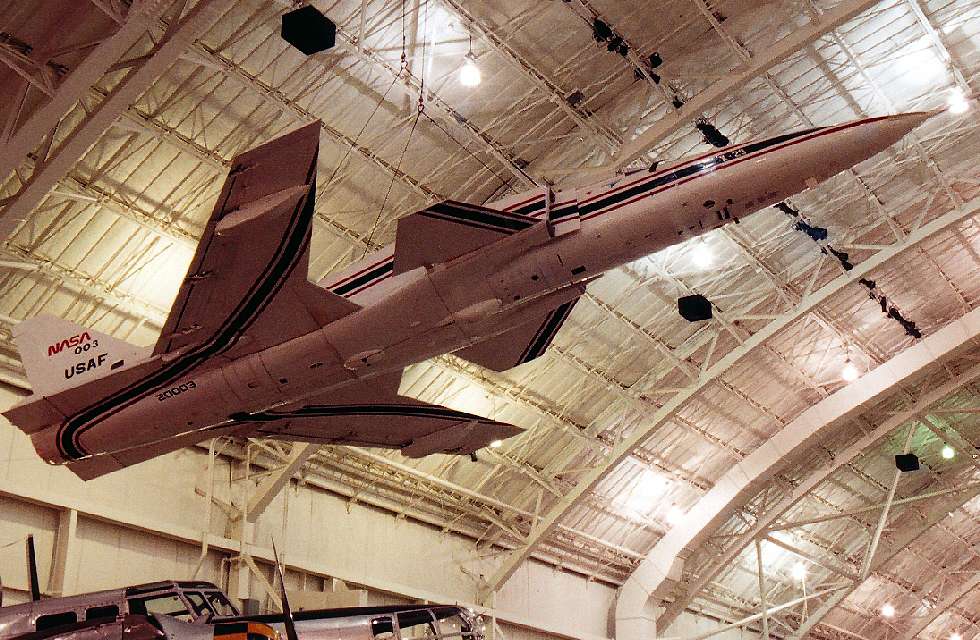
But others certainly did.

You never know if it will work until you try it.