I’m not sure how to ask what it is I want an answer to.
Paint booth primary purpose is not to collect and contain the smell or voc’s but to contain the atomized paint aka paint droplets that become airborne, correct?
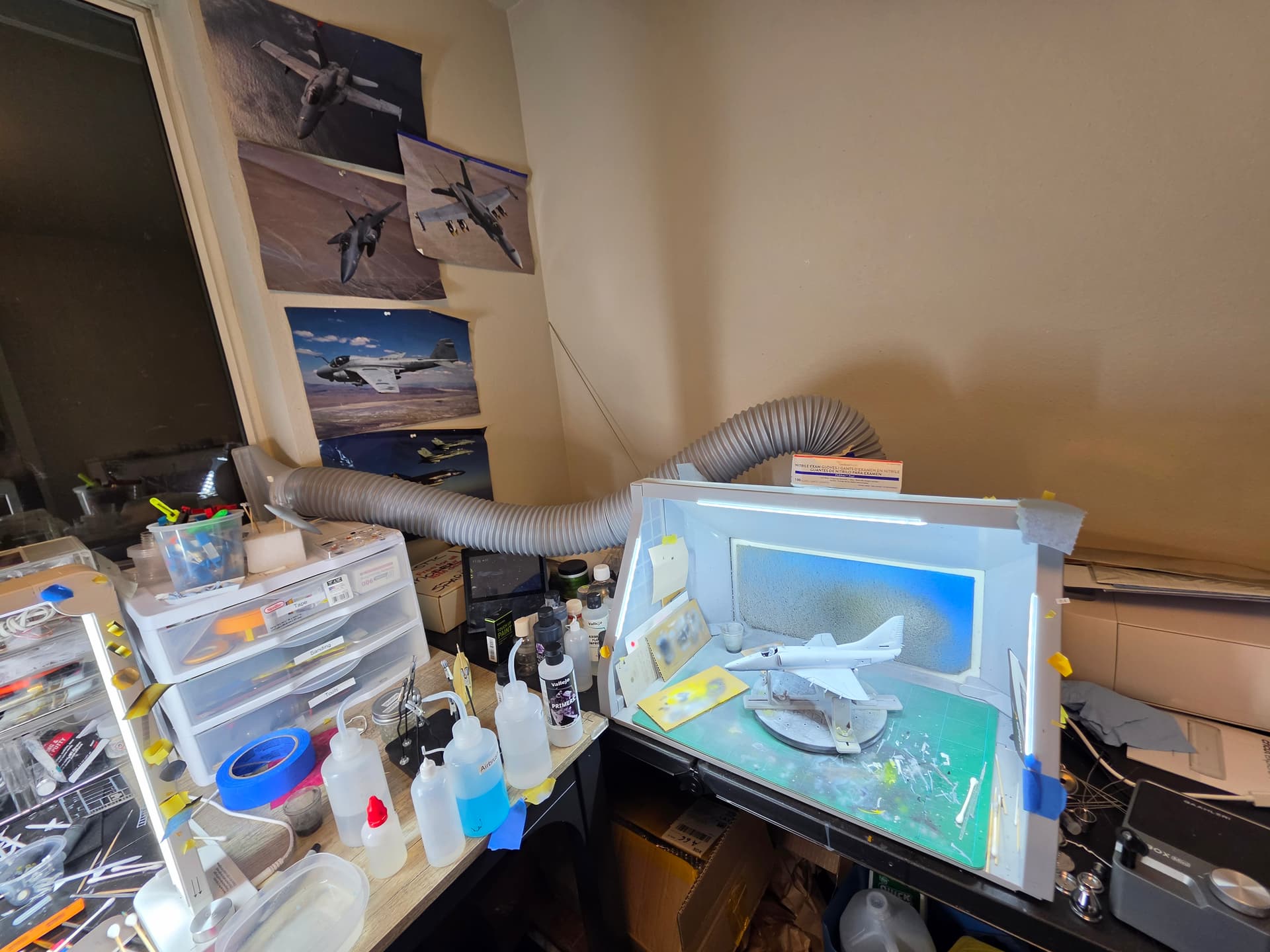
I’m not far from begining to set up my work area which will include a paint booth I aquired in one of my estate buy outs. what I did there was bid on estate sales that sold whole model collection/tools and I would sort and keep what I want and sold the rest. I did well in doing this other than my time financially I always came out ahead money wise.
in one of those buyouts that was an unused paint booth and I want to make sure there are not any special requirements to setting up a basic paint booth.
I’ll have to say that I’m not concerned about the fumes or smell.
You should be concerned about the fumes and smell, that’s the whole purpose of a booth. A spray booth’s job is to remove the over spray and fumes via ductwork that leads outside, the filters are meant to catch the over spray and keep it off your exhaust fan blades.
Steve
As @USAF_462_2W1 has pointed out, you want to vent outside. A paint booth’s purpose is to remove particulate and fumes from the work space. It’s the best compromise between spraying outside in the clear and being able to spray in any weather.
Years ago I would just spray into a cardboard box in the basement. Overspray was mostly contained, although there was some evidence left on the concrete floor, however the fumes and such permeated the whole area for some time after. Moved onto a Rubbermaid box so I could close it after spraying, same issues arose, but were lessened.
A properly vented booth will virtually eliminate all overspray and most chemicals and fumes while spraying. Leaving the fan running for a few moments after completion will allow you to purge any lingering particulate and fumes, replaced by “fresh” air from elsewhere in the house.
I may have missed it somewhere in the discussion, but is there a reason you can’t vent the booth outside?
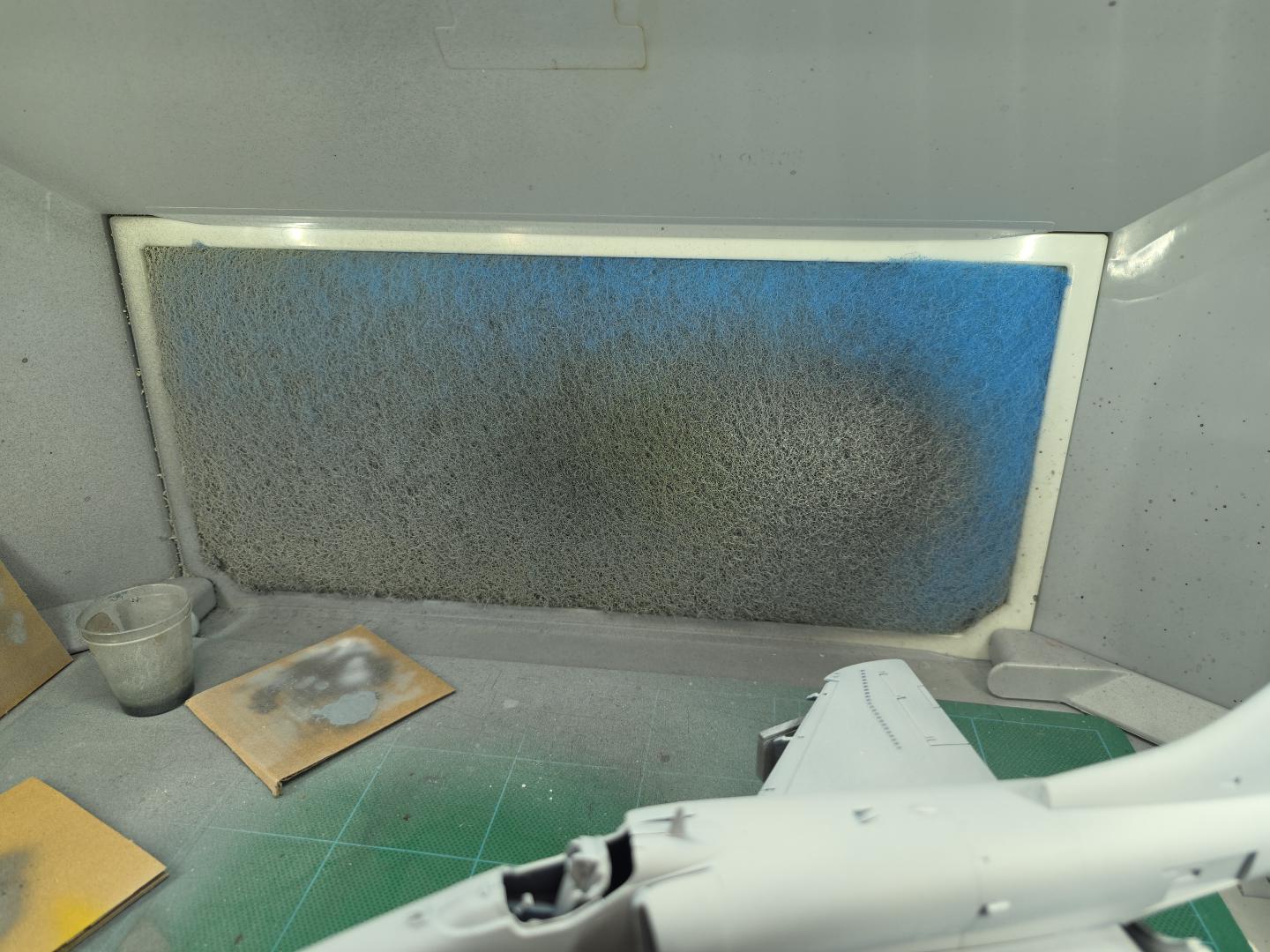
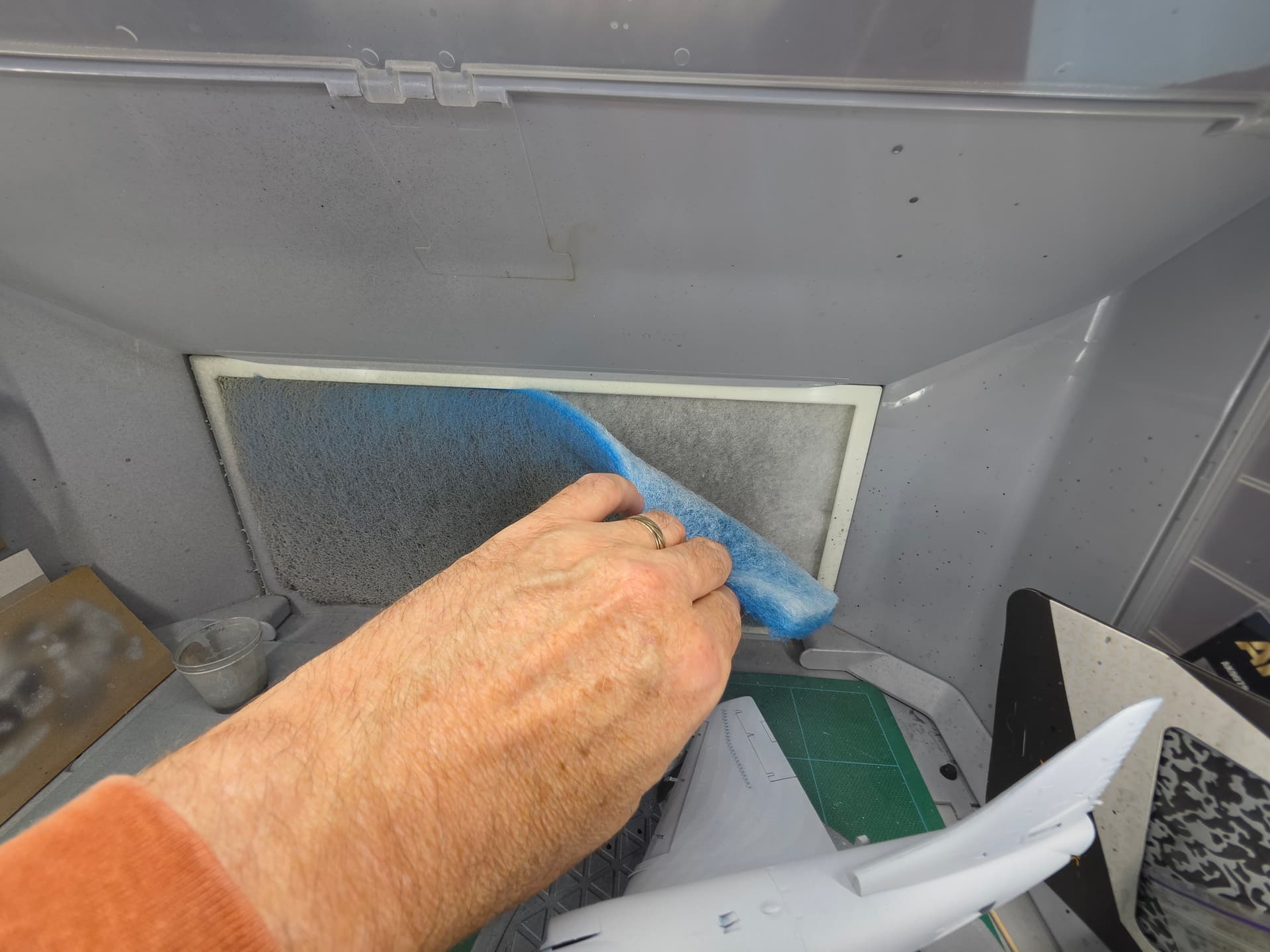
As others have said, venting outside is really the preferred way to go. Mine has two layers of filtration before the air ever reaches the fan, and then it exhausts outside. I primarily spray acrylics, but even with those I really don’t want whatever gets through the filters being blown back into the room. I change the filters after every major aircraft build because they’re inexpensive, and it’s pretty amazing to see how much overspray they’ve collected.
I also use the booth when I’m working with resin parts and doing other things where I’d rather not have the dust floating around my work area.
If venting outside really isn’t possible, I’ve seen some setups people have come up with specifically for that situation. They use more than just a charcoal filter to deal with both the particulate and the fumes. I’d probably look into one of those approaches before simply exhausting the booth back into the room through charcoal.
Interesting discussion. It’s one of those things you don’t think much about until you actually see what those filters are catching.
I have done brushing of laquer paints for years in what today we would call a confined space with little or no air movement/replacement.
Most of the paint I will be spraying is water soluble versus the old oil paints that used voc’s but unfortunately not all my paints a voc free.
I am a very low volume painter with airbrushing and charcoal filtering is near 100 percent if done right , I don’t see a need to vent out but if I were to become a higher volume spray painter I may seek to vent. right now with all things considered its just not practical or affordable option.
Just as you’re not sure how to ask, I’m not sure how to answer.
Sounds to me that you want an answer you want to hear, not an answer you don’t want to hear.
As others have said, vent outside. Not understanding why you would want to contain toxins.
I just saw a couple pictures of your work area in another thread. It’s coming along nicely. I also noticed that it looks to maybe be in an area without easy access to the outside. If that’s the case, then I understand the lack of interest in trying to vent outdoors.
There was a thread on here (I think) where someone showed a filtration system that also didn’t vent outside, but I can’t seem to find it right now, so if done properly and you’re careful with paint choices, you might be ok. That said, if you do have a window in your modelling room, a flexible dryer hose can be used to get the vent to the window and you can use a piece of rigid styrofoam insulation (I use 2” thick) with a hole cut into it for the exhaust. This seals up the window while painting and is easy to remove and close the window when done - keeps the weather and bugs outside where they belong.
How ever you do it, it sounds like you have a plan, please show us what you come up with.
You might want to check Barbatos Rex YouTube channel - he has demonstrated a design that vents through a filter, and maybe charcoal, then into water in a five gallon bucket. If you can’t get to outside that may be a viable option for you. Every additional trap will help.
I started populating the work area last night after installing the third shelf.what is not in that pic is the desk that was on that wall, it now forms the support of the end of the cabinet on the left side and slightly under. my work bench is effectively an U shape and the desks forms an L on one leg of the U.
There will be a few more pic to come I’ll add in the other thread probably next week end . I have a lot of nicnaks to find places for and places for my nicnaks..
You know the saying “everything in its place and every place its things”…
You should check out some YT videos with regard to setting up a DIY spray booth. I have watched several of them (am prepping to build my own DIY booth) and the ones that do not vent outside often take a 5 gallon bucket and vent into it from the booth via ducting and place filters of differing kinds into them to pull out the fumes/vapors.
I live on 16 acres of property, though still plan to use my booth indoors (it’s usually VERY windy where I am) and haven’t decided if I want to vent to a bucket/filter (I do have a couple of large and NICE filters from my failed indoor gardening tent ( we had a power outage that lasted 6 days of rolling blackouts that killed all my veggies during the winter) that I could use.
That said, I plan on doing at least one 5 Gal bucket method. Not sure if the first line of paint overspray filtering is 100% effective and I’d hate to have the house outside where the vent goes getting all manner of colors on it.
These filters are cheap enough that I don’t try to get every last bit of life out of them. I generally replace them after each build. Looking at how much paint that first stage catches, I’d much rather have all of that in a disposable filter than traveling down the duct and out onto the side of the house.
Obviously it’s going to depend on the filter system and how much you’re spraying, but based on my experience, a properly filtered booth venting outside shouldn’t be decorating your house along with your models.
I’d be much more concerned about making sure you’ve got adequate airflow and filtration than I would be about the exterior of the house changing colors.