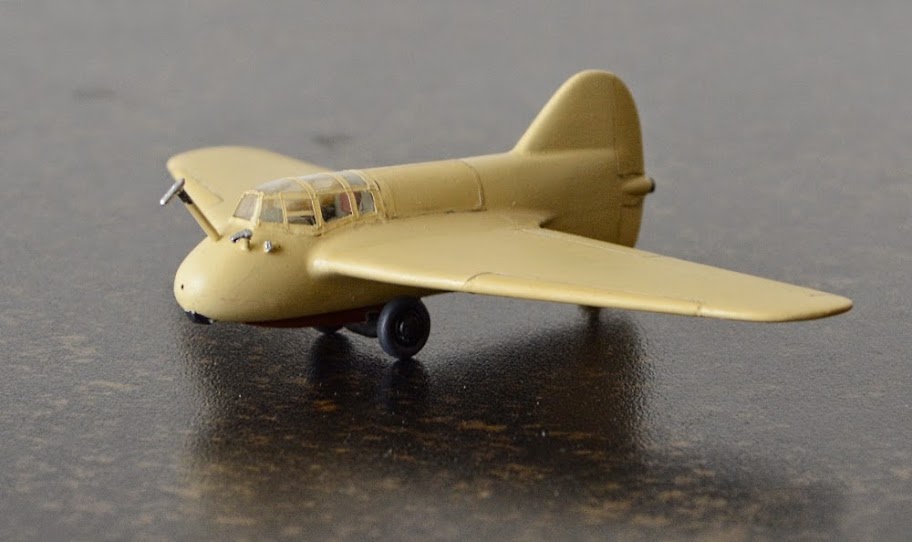
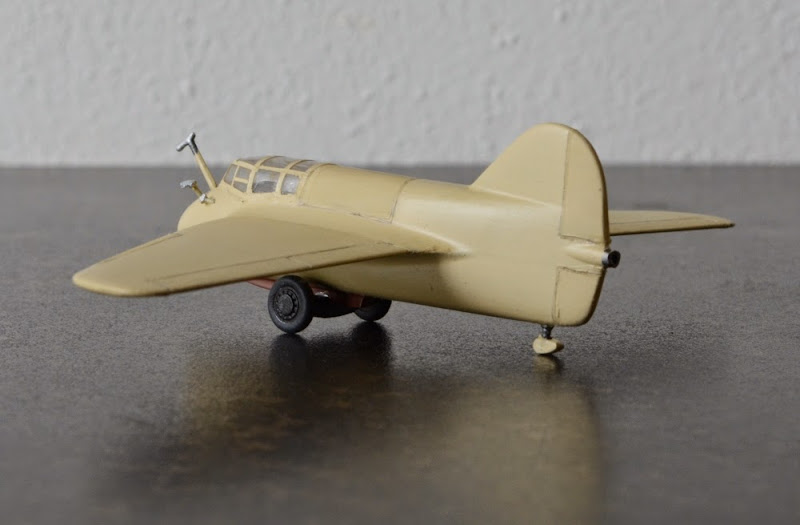
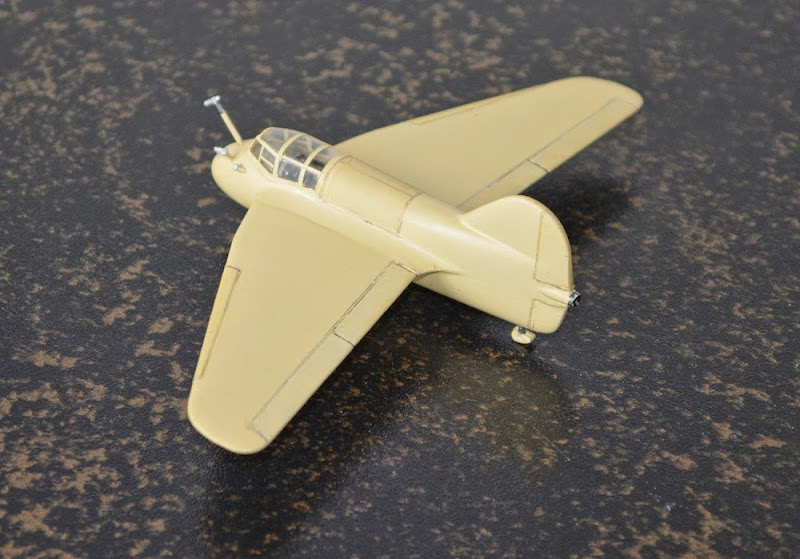
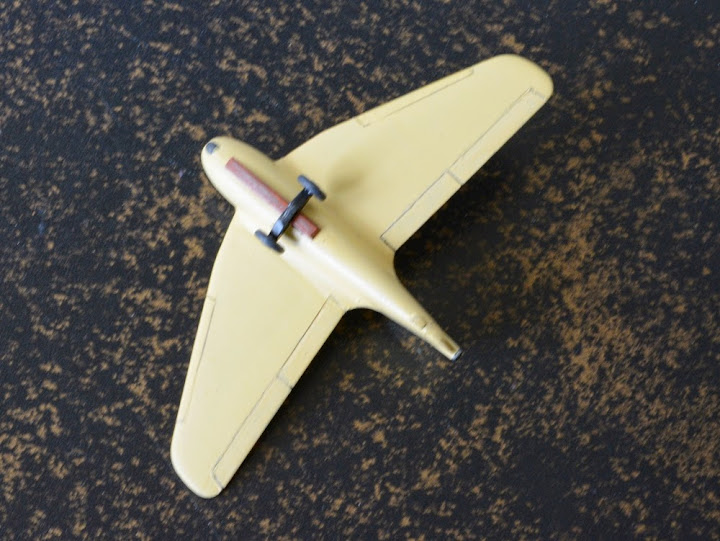
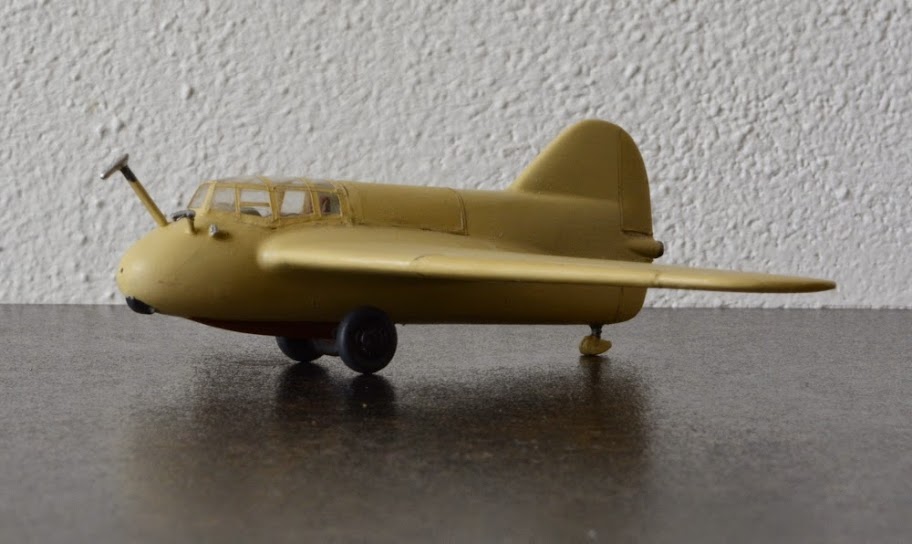
Just finished this one today. This glider was especcially designed by A.Lippisch to test the Walter rocket engine in 1939 and was for the most part made of wood. The project was adopted by Messerschmitt who continued the development which led in the end to the “birth” of the Me 163 Komet. “DFS” stands for “Deutsche Forschungsanstalt für Segelflug” which means German Research Centre for Gliding.
I now have my Komet family complete, though I’m still looking for the Me 263 V-1, which made some test flights in 1945.
Is there any credibility in German claims that a Me-163 broke the sound barrier during World War Two?
From Wikipedia (I know, but it was the only reference to this flight I could quickly find):
“On 6 July 1944, the Me 163B V18 (VA+SP), like the B V6 basically a standard production Me 163B airframe outfitted with the new-twin chamber “cruiser” rocket motor with the aforementioned modifications beneath the original rocket motor orifice to accept the extra combustion chamber, set a new unofficial world speed record of 1,130 km/h (702 mph), piloted by Heini Dittmar, and landed with almost all of the vertical rudder surface broken away from flutter.[27][5][28] This record was not broken in terms of absolute speed until 6 November 1947 by Chuck Yeager in a flight that was part of the Bell X-1 test program, with a 1,434 km/h (891 mph), or Mach 1.35 supersonic speed, recorded at an altitude of nearly 14,820 m (48,620 ft).[N 1] The X-1 never exceeded Dittmar’s speed from a normal runway liftoff. Heini Dittmar had reached the 1,130 km/h (702 mph) performance, after a normal “sharp start” ground takeoff, without an air drop from a mother ship. Neville Duke exceeded Heini Dittmar’s record mark in 31 August 1953, with the Hawker Hunter F Mk3 at a speed of 1,171 km/h (728 mph), after a normal ground start.[29][N 2]”
No, Yeager stills holds the record. The fastest Me 163 flew 1006 km/h. The rest is propaganda or wishful thinking. Ditmar a.o. however experienced the flutter when they approached the sound barrier but they did’nt break it. if so, the Komet would have fallen apart…
The speed of sound depends on altitude. The higher you go, the slower the speed of sound is. So, if the Komet was going 702mph, that’s fast enough for Mach 1 IF it was high enough above sea level. The article never mentions the altitude of the Komet’s flight. Mach 1 is approximately 763mph at sea level, and about 650mph at 45,000 feet.