Hello Guys, it has been a while since my last visit here but as they say “life takes over”, anyway i’m back at my work bench, i’ve been using Tamiya spray paint cans but not liking the amount of mist that floats around, i’d like to get an airbrush compressor and airbrush, any recommendations on a decent name model would be much appreciated, thanks.
4 Likes
I always refer people to this guy for advice and comparisons
1 Like
Coming off rattle cans, would I be correct in assuming that you’re mostly looking for consistent wide coverage or are you looking to do something a bit more detailed?
I started my airbrush journey off the back of a set containing everything I needed, including a compressor with an air tank (essential for regulating the airflow), hoses, a discharge pot and a cheap Chinese airbrush. On its own that airbrush would probably retail for $20-$30 so most of the value was in the compressor and the convenience to set up and start spraying.
The cheap Chinese airbrushes can be a trap for beginners. Poor machining and an absence of spare parts can lead to frustration when attempting detailed work or not operating within the confines of a mask. This frustration can be unfairly applied to the whole concept of airbrushing leading to abandonment of airbrushing as a hobby or jumping straight to a $200-$300 Iwata. For base coats and wide area applications these cheap Chinese jobs are perfectly fine, and will replace what you otherwise use a rattle can for currently.
If you want to take the opportunity to get into more detailed work, there’s no reason to jump straight to dropping hundreds of dollars on an Iwata. Other brands like Ghaaleri, Badger or Harder & Steinbeck will provide a more quality-controlled product at an intermediate price range, at least to the point that you can’t blame your tools for the result you’re getting. As a detailed airbrushing beginner, a slightly better airbrush will let you focus on getting your combinations of thinner ratios, air pressure and cleaning routine right instead of getting let down by needles and nozzles that simply don’t sit properly.
I personally found this video to be quite illuminating as to the dangers of the cheap airbrush and a few suggestions for beginner-friendly airbrushes that won’t break the budget…
One other thing, if post-spray mist is a concern and you’re unable to properly ventilate your work area, consider buying a spray booth. These will promote airflow that you can discharge in a suitable direction (like the neighbours bathroom window) and a few even have striplights that will illuminate your workspace while you spray.
3 Likes
A lot of it depends on how serious you are about sticking with an airbrush and what are you going to use it for. If you’re positive you are going to stick with an airbrush, I wouldn’t even consider a cheap Chinese airbrush or all-in-one kit off Amazon. Gaahleri is just another Chinese manufacturer with better marketing. Quality has been all over the place.
As a minimum you should look for a compressor with a tank Lack of a reliable air supply will be a bigger frustration than a cheap airbrush. I gave up on compressors 25 years ago and use a CO2 tank. CO2 is silent, dry, power free, relatively compact and more pressure than an airbrush could ever use, but you have to deal with refills or swapping empties. A 10lb tank lasts me about a year and it was $35 last time I had to swap an empty tank.
Everyone will probably recommend a gravity feed, double action airbrush. Simpler tasks like spraying primer and clear coats or single color paint jobs like model car bodies, you can handle with a single action airbrush like a Paasche H or Badger 200 that are both siphon feed. In a lot of ways these are just a more precise spray can you load with your own paint. You have a knob to adjust spray pattern, but it’s on or off when you are spraying like a spray can.
I got a Badger 200 for Christmas as a kid around 1980. For 10 years that’s all I had and learned to deal with the limitations. I still use that airbrush frequently. I’ve since acquired a couple dozen other airbrushes, mostly used. A quality airbrush can last a lifetime and name brands still have parts available decades after the airbrush was made. My airbrushes are about 1/3 Badger, 1/3 Iwata and 1/3 a mix of others. I’ve tried a couple of the cheap Chinese brushes and they just aren’t worth wasting time with to me.
If you want to do stuff like free hand airplane camouflage, a double action can make it easier. Starting out I’d look for something around 0.3-0.35mm gravity feed double action. It should handle most anything you will need. 0.3mm is considered a general purpose size. Smaller sizes are generally considered a detail brush and as a newbie you really won’t have the skill to take advantage of these yet and may not for a while. Larger nozzles are sometimes useful for larger spray patterns or thicker mediums, but not absolutely required when you learn how to thin your paint.
If you’re really serious about this, my first suggestion would be an 0.35mm Iwata Eclipse HP-CS. This would be the high end for a first airbrush. I have the side feed Eclipse Takumi. It’s drop in nozzle is easier to handle while cleaning than designs that use small threaded nozzles.
Available from Spraygunner are the Richpen airbrushes. Richpen is the “house” brand for the factory that makes Iwata and GSI Creos airbrushes. Same quality, but each a little different. The Apollo line is a steal to me. The Apollo 113CA is equivalent to a 0.3mm Iwata HP-C. These have the tiny nozzles that a lot of people break taking apart their airbrushes too often.
For a cheapish Chinese brush, Spraygunner’s No-Name Trinity is getting rave reviews from people I consider knowledgable, but it’s new and they are backordered. I don’t have one or plan on getting one, but I’d trust anything from Spraygunner’s No-Name line to be more consistent quality than Gaahleri or the other Chinese makers. Spraygunner’s compressors also get great reviews.
Paasche has a 50% off sale on their site through Halloween (coupon code: Haunt50). I know it works from ordering another airbrush I didn’t really need along with a spare parts for a used Paasche H I got off ebay.
100% agree with the move to CO2. I did it 30 years ago.
Here’s a reply that offers a different perspective without dismissing anyone else’s experience. I think your firsthand experience is particularly useful to someone just getting started.
Some folks here will probably disagree with me, but I’ll offer a somewhat different perspective based on my own experience.
I’ve been using a little Gaahleri tankless compressor that comes bundled with an airbrush for around $70, and I’ve been extremely happy with it. I don’t actually use the airbrush that came with it. I use a slightly higher-end Gaahleri airbrush, although we’re certainly not talking about anything particularly expensive.
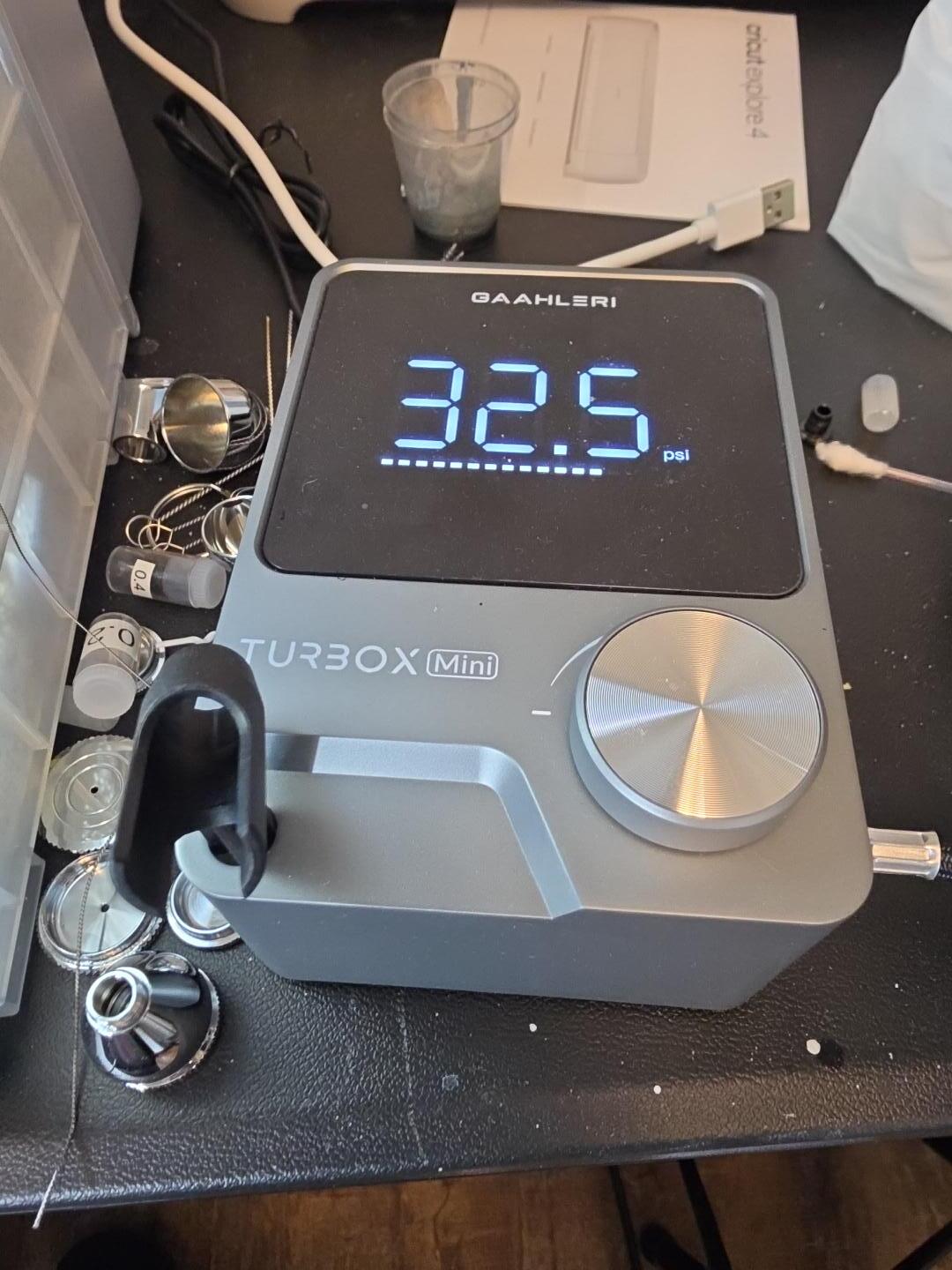
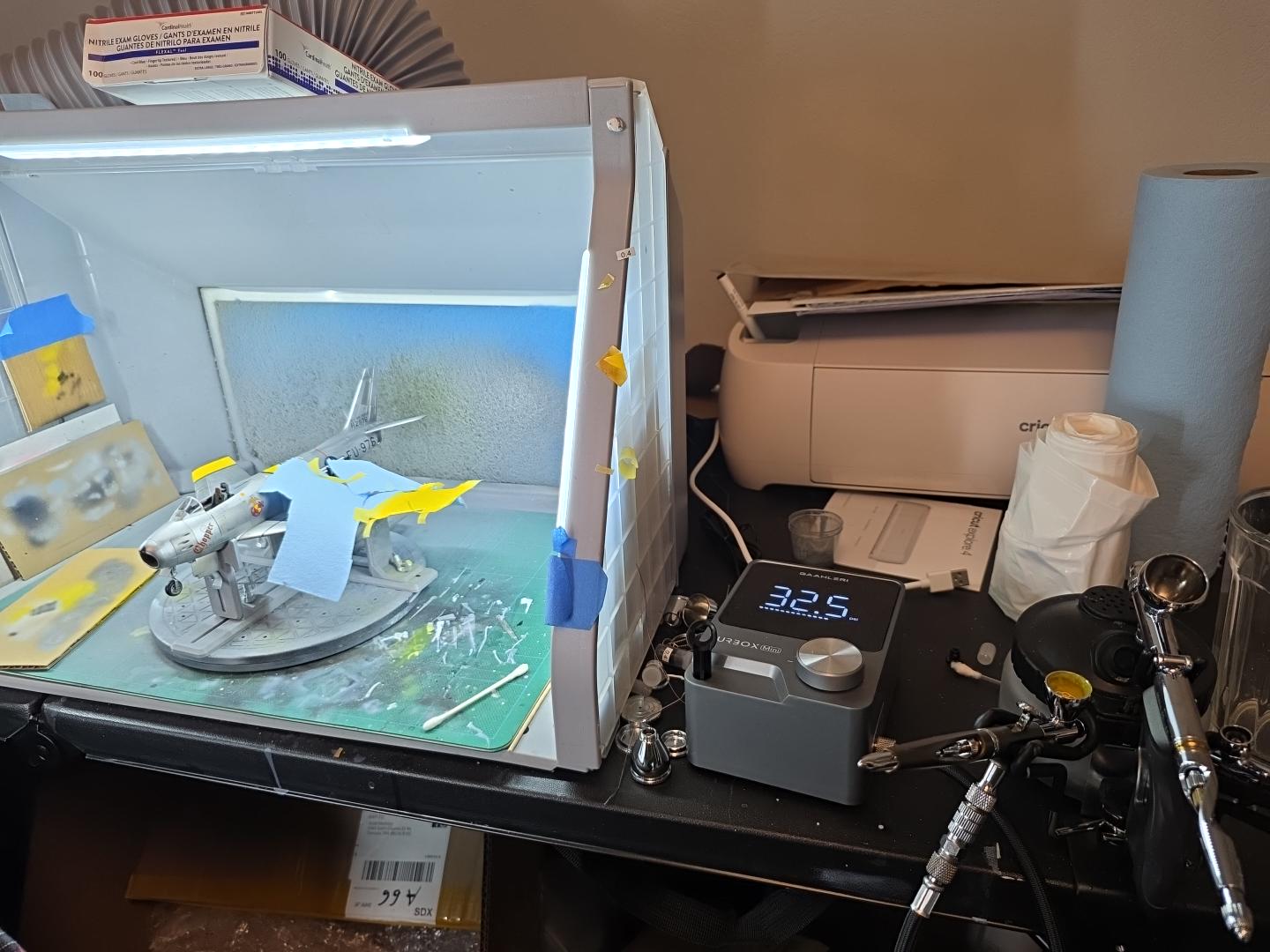
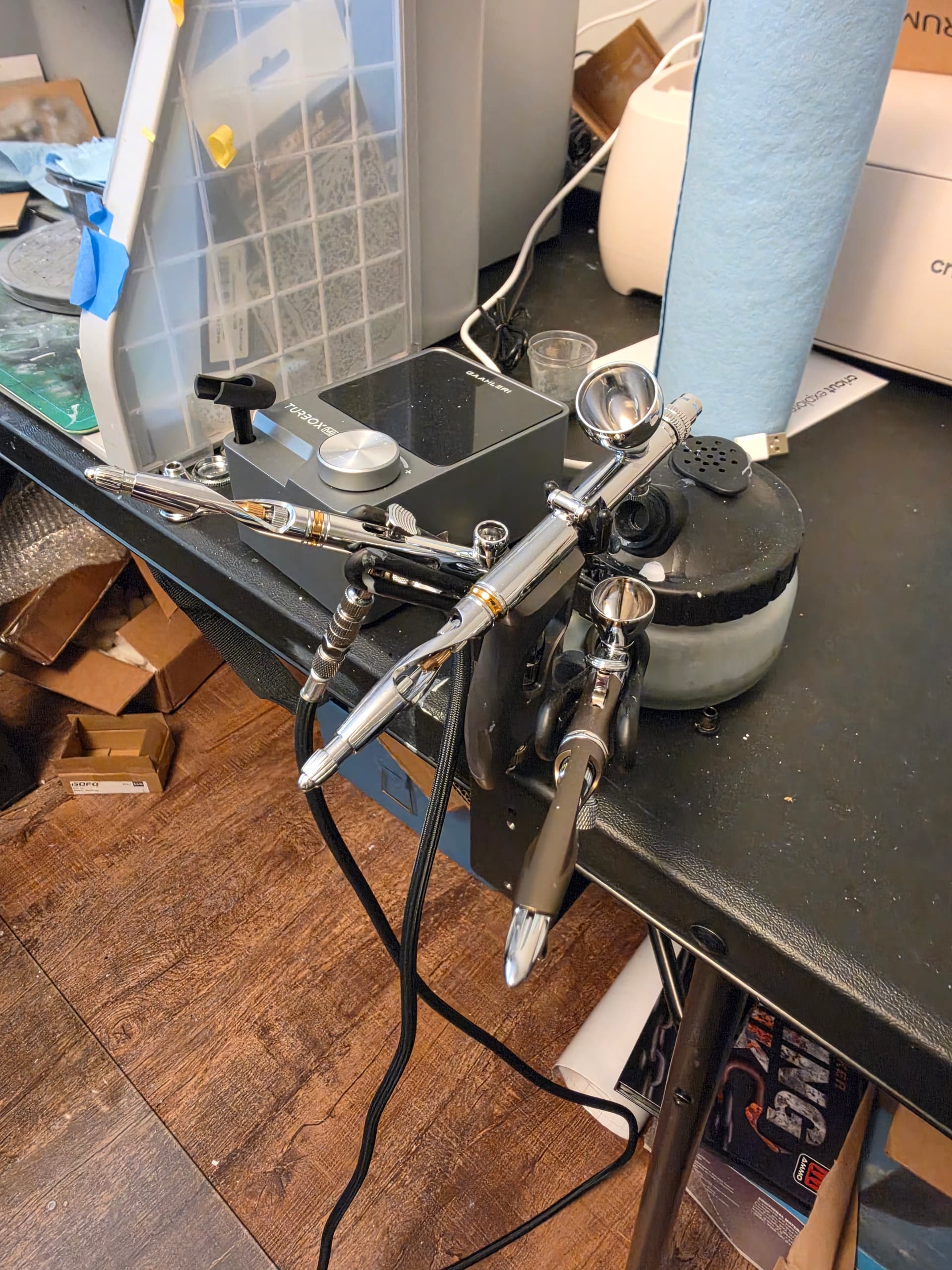
What I really like about this compressor is its size, how quiet it is, and how well it performs. It takes up very little space on my workbench, and I’ve had absolutely no problems with inconsistent airflow or anything else that would make me wish I had a tank.
This is actually my second tankless compressor, and I’ve been very happy with both of them.
I know there’s a lot of conventional wisdom out there about needing a compressor with a tank, buying expensive equipment, and so forth. I’m not saying those recommendations are necessarily wrong, but I do think some of that advice deserves reconsideration given what’s available today.
I paint primarily 1/48 scale aircraft, everything from large surfaces and clear coats down to fairly fine detail work, and this inexpensive setup has handled everything I’ve asked of it.
My point is simply that you don’t necessarily have to spend hundreds of dollars to get started, or even to get very good results. At least that hasn’t been my experience.
Whatever you choose, I’d strongly recommend a spray booth that vents outside. Switching from spray cans to an airbrush will give you considerably more control over your paint, but you’ll still have overspray to deal with.I deliberately kept the disagreement friendly, particularly since another member specifically said a tank was essential. Your experience makes a good counterpoint without turning it into an argument about whose equipment is better.
1 Like
Lots more knowledge on this site than I have, as I am pretty new to airbrushing and just picked up modeling again after 50+ year away. But I purchased this to use with my new airbrush and paint booth. It is really quiet, and I can use it occasionally to operate a few air powered tools that I own. It is from Harbor Freight and works well for me-it is especially quiet and has a tank so it is not constantly running, and when it comes on it doesn’t startle you.
I currently use an inexpensive air brush from Amazon that works well enough (although I will probably spend more money when this needs to be replaced and get an Iwata or Pasche or Badger).
I use this booth that I purchased on Amazon and it seems to work fine and I like it.
2 Likes